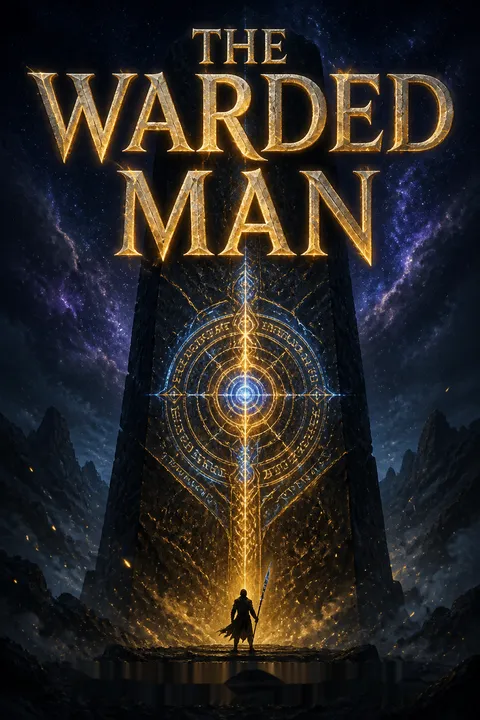


Plot Summary
Ashes at Tibbet's Brook
The horn summons eleven-year-old Arlen Bales and his parents to the Cluster by the Woods, where demons have destroyed fifteen homes and killed twenty-seven people. While the villagers rebuild, Messenger Ragen arrives with Keerin, a Jongleur whose performance briefly lifts the children’s spirits. Ragen tells Arlen of distant cities and of people who still fight demons, planting a dangerous question in the boy’s mind: why must everyone hide?
On the return journey, Arlen spots his uncle Cholie hanging from a tree. Ragen cuts him down, but Cholie is already dead. The attack did not kill him; the terror and grief that followed did. Arlen begins to understand that surviving a night can leave a person broken enough to surrender afterward.
The attack gives Arlen two models of survival. His community’s work of rescue and rebuilding shows care as a practical response to catastrophe, while Cholie’s suicide exposes the private damage that public rituals cannot repair. Ragen’s account of Krasian resistance complicates the village’s accepted helplessness: fighting is possible, but costly. Arlen’s new conviction is not yet a plan. It is a moral refusal to treat endurance as the same thing as living. That distinction will shape his choices, even when his own courage is mixed with anger and grief.
The Porch That Held
A storm darkens the Bales farm before sunset, and Silvy and Marea rush outside to rescue a dog as demons begin to rise. Flame demons attack the women. Arlen breaks free of Norine’s grip, knocks one demon from his mother, and drags Silvy behind the warded day pen. Marea is killed, while Jeph watches helplessly from the porch.
Silvy survives the night but develops a lethal infection. On the road to find a healer, Jeph turns back rather than risk traveling after dark. Silvy dies before they reach safety. Arlen accuses his father of choosing fear over his family, then runs into the woods, unable to return to a home that now feels like a betrayal.
Jeph is not simply cowardly. He is a man whose protective habits have become indistinguishable from avoidance, and Arlen’s accusation lands because Jeph himself knows the difference. The scene also turns warding into an ambiguous symbol: it keeps demons out, yet it can leave people watching suffering from behind a line they will not cross. Arlen’s rescue of Silvy proves that action is possible, but it does not save her. His anger therefore has no clean victory to settle into. It becomes the fuel and the wound he carries away from home.
A Circle in the Dark
Arlen follows the wrong road toward the Free Cities, then chooses not to turn back when he realizes his mistake. Alone at night, he draws a dirt warding circle and faces the demons that have always been safely beyond his windows. When a giant rock demon breaks through a damaged section, the ward shears off its arm, but Arlen is badly wounded.
The next night, a hare scuffs another ward and demons flood the outer ring; Arlen survives by holding the animal inside a second circle. Fever nearly kills him. Ragen finds him in ancient ruins, drains the infected wounds, and treats them with hogroot. Arlen refuses to return to Jeph and persuades Ragen to take him to Miln, where Warder Cob agrees to train him.
Arlen’s first nights alone replace inherited fear with knowledge gained at terrible cost. His warding skill is real, but not yet reliable enough to support his confidence; the damaged circles expose the gap between talent and mastery. Ragen’s rescue makes survival collaborative rather than solitary, yet Arlen insists on choosing his destination. His flight is both liberation and avoidance, a pattern he will need to recognize later. The cure also reveals how easily communities can mistake ignorance for fate: a common weed might have helped Silvy, but that knowledge arrived too late.
Leesha Learns to Heal
In Cutter’s Hollow, thirteen-year-old Leesha runs toward a fire that has consumed several houses, including the home of her promised husband, Gared. She helps form a bucket line, then assists Herb Gatherer Bruna as the wounded arrive.
Bruna’s apprentice, Darsy, makes a dangerous mistake with the herbs and storms away after Bruna scolds her. Leesha stays, learns the work, and treats the injured until Bruna collapses from exhaustion. Given a pouch of medicine, Leesha recognizes the ingredients and brews the remedy that steadies her mentor.
Her mother, Elona, tries to claim the credit, but Bruna corrects her publicly. Later, Bruna opens her library of old-world knowledge to Leesha, giving the girl a glimpse of a life beyond marriage and papermaking.
Leesha’s competence emerges not as a sudden gift but as attention under pressure. She watches, remembers, and acts when an older expert can no longer direct her. Bruna’s knowledge offers a counter-institution to the village’s gendered expectations: women’s learning is not merely domestic service, and practical expertise can command public authority. Elona’s attempt to appropriate the rescue shows how recognition can be controlled inside a family. Bruna’s books do more than invite Leesha into a profession. They give her a language for imagining herself as a person with choices.
A Promise Becomes a Cage
Bruna tells Leesha that Elona’s contempt hides her own history of premarital affairs and dangerous use of fertility herbs. When Gared falsely boasts that he and Leesha have had sex, the village begins treating the rumor as fact.
Leesha confronts him, rejects the marriage, and refuses to let her reputation decide her future. Elona beats her and threatens to continue until she obeys. As Leesha’s first menstrual blood appears, she flees into the night.
Bruna saves her from a wood demon, shelters her from Elona and Gared, and later exposes Gared’s lie before the village. Leesha’s father, Erny, finally stands against his wife. Bruna makes Leesha her apprentice for seven years and a day, giving her a vocation and a home outside her mother’s control.
Leesha’s crisis turns on who gets to define her body and the story attached to it. Gared’s lie works because the village grants male boasting credibility while assigning women the burden of proof and shame. Bruna counters this not with abstract reassurance but with shelter, medical skill, and public confrontation. Erny’s late resistance matters, though it cannot erase years of silence. The apprenticeship is both escape and obligation: Leesha gains authority by taking on responsibility for others. Her independence begins not when she stops needing people, but when she chooses which commitments are hers.
The Fiddle After Riverbridge
At three, Rojer watches demons break into Riverbridge’s inn. His father, Jessum, fights to buy time, while his mother, Kally, kills a flame demon in a water trough and pushes Rojer toward safety. A demon bites off two fingers, and Kally dies outside the bolt-hole. Arrick, the duke’s Jongleur, escapes with Rojer and sings to him as the town burns.
Years later, Arrick’s drinking and falling fortunes leave the boy carrying much of their act. Rojer discovers that his crippled hand works naturally on the fiddle, and a performance in Angiers draws a crowd. When Master Jasin’s apprentice breaks the instrument and attacks them, Rojer and Arrick flee. Rojer’s music is becoming his own craft, not merely an accompaniment to his master.
Rojer’s childhood binds music to both abandonment and care. Arrick’s first instinct is to escape, yet he keeps the child alive and gives him a sound that can soothe terror. Rojer must hold these facts together rather than simplify Arrick into either villain or savior. His missing fingers become a visible limit, but the fiddle turns that limit into a different kind of dexterity. The performance offers a fragile form of agency: applause cannot undo Riverbridge or protect him from Jasin, but it gives Rojer an identity not wholly defined by the night that injured him.
Cob's Open Grimoire
In Miln, Cob teaches Arlen to read, calculate ward patterns, and build weapons for the road. Arlen records the defensive symbols he learned in Tibbet’s Brook, then objects when Cob considers keeping the rare wards secret for profit.
Their argument leads Cob to exchange his knowledge with other Warders, and the shop prospers. Arlen befriends Jaik, a miller’s son who wants to become a Jongleur, and learns that skill requires more than desire.
When Keerin performs in Miln and claims credit for crippling One Arm, Arlen publicly challenges him and is beaten by the Jongleur’s apprentices. Cob makes him consider whether the false tale still offers people hope. Arlen remains unconvinced: the crowd needs evidence that demons can be hurt, not only a comforting story.
Arlen’s ethics develop through a conflict over knowledge rather than a battle. Cob sees wardcraft as a trade; Arlen sees it as communal protection, shaped by the cooperative habits of his home village. Their compromise suggests that sharing need not erase expertise or livelihood. Keerin’s theft of Arlen’s feat then sharpens the question of storytelling. A lie can comfort an audience, but it can also deprive people of a usable example. Arlen’s insistence on proof reveals both moral seriousness and an appetite for recognition he does not yet understand.
One Arm Breaks Miln
One Arm, the rock demon Arlen wounded as a boy, eventually breaks through Miln’s outer wardwall. The breach brings demons into the streets and leaves guards, Warders, and civilians dead. Arlen and Cob carry wardposts into the chaos while Ragen protects them on horseback.
When the giant demon crosses the defenses and threatens Ragen, Arlen draws its attention, then slips back behind the restored wardline just as Cob repairs his post. The demon is trapped outside the city’s inner barrier.
The duke responds by executing Warder Macks, despite having no proof that the man caused the failure. Arlen also sees beggars left exposed to the demons. The breach teaches him that technical defenses can fail, and that a city’s institutions may punish the vulnerable instead of protecting them.
The breach converts Arlen’s private enemy into a public catastrophe. His childhood encounter gives him a particular hold over One Arm, but survival depends on teamwork: Cob must repair the post, and Ragen’s intervention buys time. The duke’s execution of Macks offers the appearance of control without improving the city’s defenses. Meanwhile, beggars are sacrificed by policy rather than accident. The chapter makes vulnerability political. A wall can be technically strong and socially unjust, and the difference becomes visible when danger reaches the gate.
Mery's Roofside Question
While warding the Duke’s Library, Arlen discovers a map of the old kingdom of Thesa, knowledge the duke has suppressed because it threatens the Free Cities’ independence. Mery, the librarian’s daughter, introduces him to the religious account of the demons as a divine Plague; Arlen resists the idea that his mother deserved to die.
Their friendship deepens into love, but Mery wants a settled Warder’s life, while Arlen wants to travel as a Messenger and pursue a way to fight demons. Elissa, Ragen’s wife, tries to keep him from a dangerous journey and later reveals she is pregnant. Arlen leaves Miln anyway, writing farewell notes to Mery, Ragen, Elissa, and Cob. His departure costs him the people who had begun to feel like family.
Arlen’s departure is not a simple rejection of intimacy. He wants connection, but experiences dependence as the first step toward confinement. Mery’s wish for a stable household is reasonable, just as Arlen’s need for movement is real; their incompatibility cannot be solved by deciding one is more virtuous. The Thesan map and religious dispute enlarge the same problem: accepted boundaries may be comforting, but they hide other possibilities. Arlen’s notes show care, yet also permit him to leave without facing the emotional cost in person.
Leesha Takes the Road
After seven years of apprenticeship, Leesha has become Bruna’s successor in practice, trusted with the village’s illnesses and secrets. Bruna sends her to Angiers to advise an old student about a gravely ill boy and to continue her training.
Leesha leaves despite Elona’s objections, carrying Bruna’s money and her father’s love, while the villagers gather to say goodbye. Messenger Marick escorts her. On the road, he repeatedly forces himself on her, and Leesha uses herbs to make him temporarily impotent.
She reaches Angiers without submitting, but Marick threatens her into silence. Leesha enters the city with deeper medical knowledge and a sharper understanding of how easily a woman’s expertise can be undermined by a man’s account of events.
Leesha’s departure is a chosen risk, not a rejection of Cutter’s Hollow. She leaves because her knowledge has outgrown the place that formed it, and because she wants to see what more she can become. Marick turns the journey into a test of power: he treats her consent as a fee he is owed, while she uses medical knowledge to protect herself. Her survival should not be mistaken for safety or consent. The episode makes expertise double-edged, granting Leesha means of resistance while exposing how little institutional recourse she has on an isolated road.
The Last Night with Arrick
On the road to Woodsend, Rojer finally remembers the Riverbridge attack clearly: Arrick fled before Kally died, leaving her and the child exposed. During a later night in a portable circle, Rojer confronts him with Kally’s hair talisman. Arrick’s sorrow and a lullaby recall the years he did care for Rojer, but they cannot erase his failure at Riverbridge.
Drunk and furious, Arrick burns the talisman and shoves Rojer outside the warded circle. When demons attack, Arrick turns back to save him and is killed. Rojer plays his fiddle through the night, driving the demons away with painful, discordant notes. At dawn he gathers a piece of Arrick’s hair and continues toward the hamlets, carrying grief without letting it end his work.
Rojer’s memory refuses the comfort of a single verdict. Arrick failed Kally, then raised her son, and finally risks his life for him. These actions do not cancel each other; Rojer has to live with their contradiction. The talisman makes grief tangible, and its destruction removes a private source of protection just as Rojer discovers his music can hold danger at bay. His performance is not a triumph over trauma. It is an act of attention that keeps him alive until morning, then gives him a reason to continue.
A Spear from Anoch Sun
Three years into his travels, Arlen explores the buried city of Anoch Sun and opens an ancient tomb just before sunset. Inside, he finds a metal spear covered in unfamiliar wards. Its power becomes clear when he wounds a sand demon, whose pack turns on it. Arlen later uses the spear to kill One Arm, drawing the giant into a warded ring and driving the weapon into its body.
The demon’s death brings no easy joy. Arlen cannot even remember his mother’s face as he dedicates the victory to her. The spear gives him proof that demons can be killed, but the emptiness afterward reveals that revenge cannot restore what he lost or tell him what to do next.
The spear is both a technological discovery and an emotional test. Arlen has spent years imagining that killing One Arm will complete the story of his mother’s death. Instead, the victory exposes how little revenge can repair. His inability to picture Silvy’s face makes the loss more painful, not less; memory has eroded while the desire to honor her has endured. The ancient weapon also shifts the problem from individual heroics to transmission. Its value lies not simply in what Arlen can kill, but in what others might learn from it.
Jardir Claims the Spear
At Fort Krasia, Arlen fights beside Jardir and the dal’Sharum, using the ancient spear to kill demons in the Maze. His victories turn him into a celebrated outsider, but Jardir sees the weapon as the property of the future Deliverer. When Arlen refuses to surrender it, Jardir’s elite warriors beat him and throw him into a pit with a sand demon.
Arlen carves rough wards into the dirt, uses the creature’s momentum against it, and climbs the pit wall with the broken spear. Jardir strikes him down rather than face the consequences of releasing him. Arlen wakes on the desert, stripped of his spear, horse, and supplies, left to die beyond the city.
Jardir’s betrayal grows from a political theology in which authority and salvation are inseparable. Arlen offers knowledge that could help many, but Jardir sees the weapon as proof of a destiny that must belong to one man. Arlen’s refusal is therefore about more than possession. He fears that Krasia will keep the advantage rather than share it. In the pit, survival depends on improvisation, not the enchanted spear. The episode dismantles the easy image of the heroic warrior: a culture that fights demons can still use violence to silence a rival.
Ink Against the Core
Arlen crawls through the desert with little water, fever, and injuries from Jardir’s beating until he reaches the Oasis of Dawn. His notebook has survived, preserving the spear’s wards. While recovering, he paints offensive symbols onto his palms and tests them against a sand demon. The magic burns through its armor when he grips it, giving him a weapon no enemy can disarm.
Arlen returns to Anoch Sun and studies its tombs, copying wards and images of an ancient conflict. He begins to examine demon bodies and discovers that their anatomy is physical beneath the armor. The transformation is exhilarating, but it isolates him further: his body now carries the power he sought, and the possibility that it is changing him.
Arlen’s tattoos turn the body into a portable technology, collapsing the boundary between weapon and wielder. The innovation is born from deprivation: he has lost the spear, but kept the record of how it worked. This is a more disciplined form of courage than his childhood defiance, built through testing and observation. Yet the solution creates a new uncertainty. Power no longer sits safely in an object that can be set down; it is incorporated into Arlen himself. The method that makes him effective against demons may also alter his sense of human belonging.
A License Paid in Blood
After years of performing in the hamlets, Rojer returns to Angiers hoping to earn a Jongleur’s license. He finds old Jaycob willing to sponsor him, but his test is interrupted by Master Jasin, who mocks Arrick’s death. Rojer punches Jasin, earns a probationary license, and begins performing under guild supervision.
Months later, Jasin’s apprentices ambush Rojer and Jaycob, smashing Rojer’s fiddle and beating them badly. City guards carry them to Jizell’s hospit, where Leesha treats Rojer. A letter from Cutter’s Hollow reports that Bruna and others have died in a spreading flux, while Leesha’s father is gravely ill. Unable to find a trustworthy Messenger, Leesha prepares to go home, and Rojer insists on accompanying her.
Rojer’s return to Angiers is an attempt to turn survival into recognized status. He has developed real skill, but the guild’s hierarchy and Jasin’s political connections make merit precarious. Rojer’s punch is emotionally understandable and strategically costly; his anger repeats the pattern of acting before considering what the next day will require. Jaycob’s presence offers a rare alliance across generations, while Leesha’s care begins to redirect Rojer’s attention from proving himself to helping someone else. The Hollow’s crisis gives that impulse a concrete destination.
The Warded Man Appears
Leesha and Rojer travel toward Cutter’s Hollow on a borrowed horse, but bandits rob them, take their portable circle, and assault Leesha before abandoning them on the road. Near sunset, a tattooed stranger finds them as Rojer attempts to draw an unreliable circle. The stranger kills a wind demon with his bare hands and leads them to his camp.
There, Rojer repairs his fiddle and discovers that its music can make demons sway, then drive them back with discordant notes. The stranger recognizes the power in the music but refuses to explain himself. Leesha treats his wounds and learns that he has not been a Messenger for years. Rojer recognizes him from the tales he has performed: the feared Warded Man, a hunter who walks the night.
The rescue arrives after Leesha and Rojer have lost nearly every ordinary protection: horse, money, supplies, and bodily security. The Warded Man’s violence saves them, but his refusal to explain himself keeps rescue from becoming trust. Rojer’s fiddle offers a contrasting kind of power. It does not kill demons; it changes their attention and behavior, making survival possible through sound. The encounter places two forms of agency beside one another, force and performance, while Leesha’s medical work creates a third. None is sufficient alone.
Arlen Beneath the Tattoos
The Warded Man secretly retrieves the stolen horse and portable circle, but the bandits are later torn apart by demons. Leesha condemns his choice to leave them exposed, and Rojer admits that he helped recover their belongings.
During a rainstorm in a Messenger’s cave, Leesha tells them how Gared’s lie and Elona’s abuse shaped her departure from home. The stranger finally gives his name: Arlen. Rojer’s music draws demons into a dance, briefly revealing their response to beauty before Arlen attacks when the sound turns harsh.
Before dawn, Leesha and Arlen make love. A wood demon interrupts them; Arlen fights it in the mud and is pulled partway toward the Core before dragging it back into sunlight. Terrified by what this means, he withdraws from Leesha.
The bandits force the characters to confront justice without clean institutions. Arlen’s choice is not a simple execution, but he recognizes that his concealment of the danger helped condemn the men. Leesha’s insistence on moral responsibility challenges his habit of treating human life as secondary to the war. Rojer’s music complicates the idea of demons as mindless destruction, though it does not make them safe. Arlen’s intimacy with Leesha briefly permits a self beyond combat, then the Core’s pull makes that possibility frightening. His power has become a question of identity, not just technique.
Cutter's Hollow Burns
Leesha, Rojer, and Arlen reach Cutter’s Hollow to find homes burned and more than a hundred dead. The flux has weakened the survivors, ruined the wards, and killed Bruna; Leesha’s father is still alive but gravely ill. Leesha refuses Elona’s plan to shelter only the family and turns the Holy House into a refuge.
Arlen offers warded weapons and proof that demons can die, using a fallen rock demon’s horn to convince villagers to fight. Leesha fetches Bruna’s supplies, including liquid demonfire, and brews medicine for the sick. Arlen organizes circles, trenches, a pit, and weapon teams. Even Gared joins the defense after his father is killed, while Leesha’s mother remains behind the family’s wards.
The ruined village makes the private histories of the three travelers public. Leesha returns not to a home that can restore her, but to a community that needs her skill. Her refusal to prioritize family is not rejection of her father; she tends him while delegating care and treating the larger crisis. Arlen’s demonstration turns abstract hope into evidence, and his plan gives frightened people roles they can perform. The preparations also show that courage is collective labor: weapons, medicine, animal handling, and ward placement matter as much as a single fighter’s strength.
A Village Fights Back
When demons rise, Arlen steps out first and kills a wood demon where the villagers can see him. His display steadies them, and they hold their positions as the attack gathers. Drugged cows draw many demons into the square, where villagers strike with newly warded axes and spears.
Leesha’s liquid demonfire, flamework, and glass flasks ignite the wood demons, while the children fire arrows and slingstones from behind wardposts. Gared and the cutters break from their circle to reinforce Arlen.
The battle turns costly when the defenders’ wardline at the Holy House fails and demons enter. Inside, Rojer uses his fiddle to mesmerize a giant wood demon, giving Leesha time to stab it with her spear. He then drives the other demons from the doorway while Leesha and Darsy carry wounded survivors inside.
The battle’s reversal depends on changing what the villagers believe their bodies can do. Arlen’s public demonstration counters fear, but it does not make the defense invulnerable. The plan works because distinct forms of knowledge cooperate: Leesha’s chemistry, Arlen’s wardcraft, the children’s aim, the cutters’ strength, and Rojer’s music. When the wards fail, the story does not return to a single savior. Leesha and Rojer act together inside the hospital, while others keep fighting outside. Courage becomes distributed, and therefore more durable than spectacle.
The Hollow Sends Them On
Dawn ends the battle, leaving the survivors to bury their dead and rebuild. Leesha helps restore the village and studies demon bodies, hoping to understand what Arlen’s accumulated magic has done to him. Arlen admits that his task is larger than killing demons in the wilderness: he must share wards and teach settlements to defend themselves.
Leesha and Rojer ask to travel with him, offering medical knowledge and music as well as companionship; Arlen accepts their help. The Hollow’s council wants to rename the village in his honor, but he refuses the title of Deliverer. The book closes far away, with Jardir leading a vast Krasian army toward Anoch Sun, carrying the ancient spear and claiming the Deliverer’s mantle.
The resolution makes survival a beginning rather than a return to normal. Leesha’s home is no longer the village she left, and Arlen’s relationships are no longer simply obstacles to his mission. He accepts companions without surrendering his purpose, while they join him without becoming accessories to it. His refusal of the Deliverer title rejects the fantasy that salvation belongs to one extraordinary body. Jardir’s final march preserves the threat of that fantasy: the same weapon can become a tool of collective defense or a symbol of concentrated authority.
Analysis
The Warded Man builds its world around a practical terror: every night, demons rise, and every morning, survivors must decide what the damage means. Its wards are technologies, but also social arrangements. A family’s safety depends on labor, materials, and knowledge; a city’s protection can coexist with cruelty toward those excluded from its walls. The book’s sharpest contrast is not simply courage against cowardice. It is between systems that teach people to endure danger privately and practices that make defense shareable.
Arlen begins by reading his father’s fear as moral failure. That judgment is understandable, but the story complicates it through Arlen’s own flight from people who love him. He discovers that independence can become another shelter, one that protects him from grief and obligation as effectively as a ward protects him from demons. His increasing power does not resolve this problem. The possibility that he is changing into something less human makes connection more urgent even as he fears its consequences.
Leesha and Rojer offer forms of agency that do not depend on Arlen’s strength. Leesha’s medical knowledge gives communities a means to resist illness, shame, and violence; Rojer’s music can redirect fear and create openings in battle. Their skills matter because they are specific and teachable. The climax succeeds through collaboration, not a miraculous deliverer acting alone. Its strongest claim is that courage becomes useful when paired with knowledge, preparation, and responsibility for other people.
The final march toward Anoch Sun keeps that claim unsettled. Jardir’s army carries the same weapon Arlen wanted to share, but under a leader who believes authority should gather around a chosen figure. The ending therefore asks whether a society can learn to fight without rebuilding the hierarchies that made it vulnerable. The answer is not yet secure. What has changed is that the people of Cutter’s Hollow have seen themselves act, and that experience cannot be taken from them.
Review Summary
The Warded Man received mostly positive reviews for its unique world-building, compelling characters, and engaging plot. Readers praised the demon-infested setting, the magic system of wards, and the character development. Some criticized the pacing, writing style, and treatment of female characters. Many found the book to be a page-turner with a fresh take on fantasy, while others felt it relied too heavily on tropes. Despite some flaws, most reviewers considered it a strong start to the series and looked forward to continuing.
People Also Read






Characters
Arlen Bales
The demon-hunting innovatorRaised on a farm in Tibbet’s Brook, Arlen is observant, stubborn, and unusually gifted at warding. His mother’s death and his father’s failure to act leave him with a deep distrust of passive safety. He seeks a way to fight demons, first through Messenger training and ancient knowledge, later through increasingly personal experiments. His drive is not only revenge: he wants people to have choices beyond hiding. Yet he often confuses independence with refusing attachment, and his certainty can conceal grief or a desire for recognition. Arlen’s central tension is whether his unusual power will connect him to other people or persuade him that only he can carry the burden.
Leesha
The healer who choosesLeesha is an intelligent, compassionate girl raised under the demands of her mother, Elona, and the expectations of a small village. Her early interest in healing grows into a serious vocation after Bruna recognizes her aptitude. Leesha values consent, practical knowledge, and the trust patients place in her, but her years of resisting other people’s plans leave her guarded about intimacy. She can be decisive in a crisis and uncertain in private, particularly when she has to ask what she wants rather than what others need. Her work as an Herb Gatherer gives her authority, while her curiosity keeps that authority from hardening into complacency.
Rojer Halfgrip
The fiddle-playing survivorRojer is a Jongleur whose damaged right hand, red hair, and quick imagination make him memorable before anyone hears him play. Childhood loss leaves him fearful of becoming the reason someone else is hurt, and he often disguises that fear with jokes, stories, or an invented confidence. Music gives him a genuine skill that does not depend on his missing fingers, while performance teaches him how to command attention without physical strength. He longs to be treated as capable rather than protected, but his desire to prove himself can make him reckless. Rojer’s gift is not merely entertaining people; he can alter what others notice and how long they remain afraid.
Ragen
The fearless MessengerRagen is a seasoned Messenger who knows the dangers of the road and the politics of the Free Cities. He treats Arlen with candor rather than condescension, teaching him that courage and caution must coexist. His humor softens his authority, but he expects respect from dukes and guards alike. Ragen’s marriage to Elissa complicates his love of travel, showing that risk affects the people waiting at home as much as the person on the road.
Jeph Bales
A father ruled by fearJeph is Arlen’s practical, hardworking father and Silvy’s devoted husband. He believes caution preserves families and communities, a belief shaped by generations of nightly danger. His care for his family is real, but fear can make his decisions look like abandonment to his son. Jeph represents the painful difference between loving someone and being able to act when terror takes hold.
Silvy Bales
Arlen's warm-hearted motherSilvy is affectionate, resilient, and skilled at easing Arlen’s pride without belittling him. She works beside her family and treats care as something people both give and receive. Her closeness with Arlen gives him an early model of tenderness that survives even in a brutal world. She sees the frightened child beneath his claims of bravery.
Bruna
The village's fierce healerBruna is Cutter’s Hollow’s ancient Herb Gatherer, feared for her temper and trusted for her knowledge. She sees through the social performances that limit women, and teaches Leesha medicine, science, and the obligation to keep patients’ confidences. Bruna’s manner is blunt and often intimidating, but her authority is grounded in service and competence. She understands that knowledge can heal or destroy, so she guards dangerous techniques rather than distributing them indiscriminately. Her mentorship gives Leesha both a profession and a model of independence.
Elona
Leesha's demanding motherElona is beautiful, controlling, and fiercely invested in status, marriage, and motherhood. She directs her disappointment at Leesha and Erny, while concealing choices of her own that complicate her moral certainty. Her cruelty is not softened by her occasional concern; she tends to express care as control. Elona reveals how social rules can be enforced most harshly by people who have themselves been constrained by them.
Gared
The powerful promised suitorGared is a physically imposing woodcutter, admired for his strength and accustomed to having others make room for him. His affection for Leesha is tangled with entitlement and pride. He is capable of courage in danger, but does not initially understand that strength without respect can become another form of threat. His relationship with Leesha exposes the gap between being promised to someone and earning their trust.
Erny
Leesha's gentle fatherErny is a papermaker who offers Leesha steady affection and encourages her curiosity. His quiet temperament makes him a refuge from Elona’s hostility, but it also leaves him slow to confront that hostility directly. He values people over his business and recognizes that Leesha’s future need not reproduce his own. His tenderness is sincere, though his passivity has consequences.
Cob
Arlen's demanding mentorCob is a retired Messenger and experienced Warder who trains Arlen in both craft and survival. A failed investment in a warded road has left him cautious about grand schemes, but not cynical about them. He wants to protect Arlen from the costs of the life he once lived. Their disagreements over secrecy and profit reveal Cob’s capacity to revise his assumptions when Arlen makes a persuasive case.
Elissa
Ragen's watchful wifeElissa is a proud, intelligent woman whose marriage to Ragen asks her to endure long absences and the possibility of loss. She wants a child and tries to shield Arlen because she has grown attached to him. Her protectiveness can cross into control, but it comes from genuine fear rather than indifference. Elissa understands that people sometimes seek danger to feel alive, a perception that helps her read Arlen’s restless drive.
Mery
The learned girl from MilnMery is the daughter of the Duke’s librarian and one of the most educated young women in Miln. She is confident with books and scholars, but more tentative in personal relationships. Her affection for Arlen is sincere, and her desire for a settled life reflects both prudence and fear of losing him. Mery challenges his assumption that love should automatically accommodate the life he has chosen.
Jaik
The aspiring JongleurJaik is a miller’s son who wants to become a Jongleur. His friendship with Arlen gives both boys a rare companion outside adult expectations. He is talented but uncertain, and his hesitation about leaving home contrasts with Arlen’s determination to travel.
Arrick
Rojer's gifted, flawed mentorArrick is a charismatic Jongleur whose voice and performance once earned him a place near Duke Rhinebeck. He can be generous and tender, especially toward Rojer, but drink, vanity, and resentment increasingly narrow his judgment. His history with Rojer is shaped by a terrible failure and a long effort to care for the child he helped raise.
Kally
Rojer's courageous motherKally runs the Riverbridge inn with Jessum and worries more about her family’s warding than about pleasing visiting nobles. She is quick to notice danger and acts decisively when Rojer is threatened. Her fierce care shapes the boy’s earliest memories of love and loss.
Jardir
Krasia's First WarriorJardir is a gifted commander and religious leader among the Krasian warriors. He believes that discipline, combat, and devotion can restore his people’s strength. His confidence is magnetic, and he respects courage, but he sees political unity as something that must be directed from the top. Arlen’s friendship challenges him because it offers power and knowledge outside Krasian authority.
Abban
Arlen's Krasian allyAbban is a shrewd merchant and social outcast in Krasia, where his disability bars him from the warrior and priestly classes. He has built influence through trade, language, and careful observation. His friendship with Arlen is genuine, though he also recognizes the political value of their connection. Abban understands the costs of hierarchy because he lives at its margins.
Jizell
Leesha's Angierian mentorJizell is an experienced Herb Gatherer who trains Leesha in Angiers. She is direct, funny, and more willing than Leesha to challenge the younger woman’s defenses around intimacy. Jizell respects Leesha’s skill and offers her a future in the hospit, while insisting that professional confidence should not become a pretext for avoiding personal life.
Darsy
The stubborn village healerDarsy is Bruna’s physically strong but less skilled former apprentice. She resents being measured against Leesha, yet continues to serve Cutter’s Hollow when the work becomes difficult. Her practical courage and willingness to learn complicate the village’s tendency to reduce people to their shortcomings.
Tender Jona
The village's religious guideJona is a former acolyte who becomes Cutter’s Hollow’s Tender. He offers the village a religious account of suffering and hope, while his physical limitations keep him from the work expected of warriors. He is observant, compassionate, and willing to see meaning where Arlen sees human responsibility.
Plot Devices
Warding symbols
The night's invisible boundaryWritten wards form barriers against demons, protecting homes, roads, and cities. Their reliability depends on careful lines, sound materials, and constant maintenance; smoke, weather, damaged surfaces, or a single misplaced mark can create an opening. Portable warded circles allow Messengers to sleep beyond city walls, but they are smaller and more vulnerable than permanent defenses. The wards are also a craft that can be shared or hoarded, making their technical use inseparable from questions of access and communal responsibility.
Ancient combat wards
Magic turned into a weaponThe old combat wards use a demon’s own magic against it, weakening its armor or strengthening an impact. Arlen discovers these symbols on a buried spear in Anoch Sun, then experiments with applying them to weapons and eventually to his skin. The device changes the story’s central practical question from how humans can endure demons to whether they can injure them. It also raises a personal cost: the more magic Arlen absorbs, the less certain he becomes about what he is.
Rojer's fiddle
Music that changes attentionRojer’s fiddle can draw demons into a patterned stillness and make them mirror his movements. Harsh, discordant playing drives them away or provokes them into reckless attacks. Music does not permanently control demons, and it cannot replace a ward or a weapon, but it creates openings that others can use. The fiddle also gives Rojer a distinctive form of power rooted in listening, timing, and performance rather than physical strength.
Herbcraft and demonfire
Knowledge that heals or burnsHerb Gatherers combine plants, minerals, and careful preparation to treat wounds and illness. Their knowledge can be practical and lifesaving, as with hogroot for infected wounds, but it also includes dangerous compounds. Bruna guards the recipe for liquid demonfire because it can burn wood demons and threaten forests and settlements if misused. Leesha’s healing work and the battle preparations show the same knowledge serving two different ends: preserving vulnerable bodies and turning fire against the creatures that hunt them.
The Deliverer legend
Hope that can commandThe religious and popular story of a returning Deliverer offers people a way to imagine an end to the demons. Jongleurs preserve and reshape the legend, while Tenders teach it as a moral explanation for the Plague. Arlen resists being cast as its fulfillment because he believes people must act rather than wait for one savior. Jardir embraces the title as a source of religious and political authority. The legend can therefore sustain communal courage or concentrate power in a single claimant.
FAQ
Synopsis & Basic Details
What is The Warded Man about?
- Humanity's desperate struggle: The story is set in a world where demons, known as corelings, rise from the planet's core each night to hunt humans. Humanity survives by hiding behind magical wards drawn on structures and objects.
- A boy's defiance: The narrative primarily follows Arlen, a young boy from a small, isolated hamlet, who grows disillusioned with a life of constant fear and hiding. Witnessing tragedy, he rejects the prevailing cowardice and seeks a way to fight back.
- Journey of discovery: Arlen leaves his home to become a Messenger, traveling between the scattered Free Cities and hamlets. His journey leads him to uncover lost knowledge, ancient wards, and the possibility that humanity can reclaim the night.
Why should I read The Warded Man?
- Unique world-building: The novel presents a compelling post-apocalyptic fantasy world where the primary threat isn't other humans, but terrifying, elemental demons that rise nightly, forcing humanity into a defensive, fearful existence.
- Deep character arcs: The story offers profound psychological depth, particularly in Arlen's transformation from a fearful boy to a determined, complex man grappling with the costs of his choices and the nature of courage.
- Action and mystery: Beyond the character development, the book delivers thrilling encounters with demons and unravels mysteries about the world's past, the nature of wards, and the potential for humanity to fight back.
What is the background of The Warded Man?
- Post-apocalyptic setting: The world exists centuries after a catastrophic event called the Return, when corelings reappeared in massive numbers, destroying advanced civilizations (the Age of Science) and forcing survivors into scattered, fearful communities.
- Loss of knowledge: Much of the advanced science and powerful magic (including "fighting wards") from before the Return has been lost, leaving current generations reliant on basic defensive wards and fragmented historical accounts.
- Fragmented society: Humanity is divided into isolated hamlets and larger, somewhat safer Free Cities (like Miln, Angiers, Lakton, Rizon, and Krasia), connected only by the brave Messengers who risk traveling at night.
What are the most memorable quotes in The Warded Man?
- "Cowards deserve no better.": Spoken by the Warded Man (Arlen) about those who hide from demons, this quote encapsulates his harsh philosophy forged by years of witnessing fear and inaction, highlighting the theme of courage versus cowardice.
- "It is not you that should fear them... It is they that should fear you!": The Warded Man's rallying cry to the villagers of Cutter's Hollow, this line marks a pivotal moment of empowerment, shifting the narrative from passive survival to active resistance against the corelings.
- "What you put in your mouth becomes a part of you.": Coline Trigg's simple advice to young Arlen about not eating sick fish takes on profound symbolic weight later in the book when Arlen consumes demon flesh, exploring themes of identity and the blurring lines between human and demon.
What writing style, narrative choices, and literary techniques does Peter V. Brett use?
- Multiple POVs: Brett employs shifting third-person perspectives, primarily focusing on Arlen, Leesha, and Rojer, allowing readers to experience the world and its challenges through different eyes and understand varied responses to fear and adversity.
- Detailed world-building: The author meticulously describes the mechanics of wards, the different types of corelings, and the distinct cultures of the various human settlements, creating a rich and believable fantasy setting grounded in practical details.
- Focus on psychological realism: Brett delves into the emotional and psychological toll of living under constant threat, exploring themes of fear, trauma, resilience, and the complex motivations behind characters' actions, often using internal monologue and character reactions to reveal deeper truths.
Hidden Details & Subtle Connections
What are some minor details that add significant meaning?
- The smell of dung fires: Early descriptions of Tibbet's Brook mention the pervasive smell of burning dung for warmth (Ch. 1). This seemingly minor detail highlights the poverty and limited resources of the hamlet, contrasting sharply with the wealth and amenities Arlen later finds in the Free Cities, emphasizing the economic disparity and the struggle for basic survival outside protected zones.
- The Messenger's tattoo: Ragen's tattoo of Fort Miln (Ch. 1) is initially presented as a symbol of pride and travel. Later, Arlen gets his own tattoo (Ch. 24), not of a Free City, but of his humble home, Tibbet's Brook, using his Earl's crest. This subtle detail foreshadows Arlen's eventual rejection of the cities' values and his focus on protecting the forgotten hamlets, linking identity to origin rather than status.
- The missing fingers: Rojer's crippled hand, missing two fingers (Ch. 7), is a physical manifestation of the trauma he suffered during the Riverbridge attack. It's not just a disability but a constant, visible reminder of the night's horror and his mother's sacrifice, deeply influencing his self-perception and later his stage name, "Halfgrip."
What are some subtle foreshadowing and callbacks?
- Ragen's comment on fighting demons: Ragen tells young Arlen that while you "can't fight a demon" with normal weapons, he's "heard that you can stun them by pinning them against your wards" (Ch. 1). This throwaway line foreshadows Arlen's later discovery that wards applied directly to demons or weapons can indeed harm them, hinting at the lost combat wards.
- Bruna's knowledge of demonfire: Bruna mentions knowing how to make "liquid demonfire" (Ch. 6) and other potent substances from the Age of Science, but refuses to share the recipe widely, stating "men cannot be trusted with the secrets of fire." This foreshadows the destructive potential of such knowledge and sets up Leesha's later role as a guardian of dangerous alchemical secrets.
- The one-armed rock demon: The rock demon Arlen cripples in his first solo night (Ch. 3) becomes a recurring antagonist, "One Arm," that specifically hunts Arlen (Ch. 10, 11, 17). This callback symbolizes the lasting consequences of Arlen's early defiance and the personal nature of his war against the corelings, showing that his actions have earned him a unique, relentless enemy.
What are some unexpected character connections?
- Rusco Hog and Jenya: The seemingly greedy merchant Rusco Hog in Tibbet's Brook is revealed to have a connection to Ragen's deceased Messenger friend, Graig, and his widow, Jenya (Ch. 1). Hog shows unexpected generosity by giving Ragen a valuable ring to help Jenya, revealing a hidden layer of compassion beneath his avaricious exterior and highlighting the quiet bonds that exist even in a harsh world.
- Elissa's desire for motherhood: Ragen's wife, Elissa, initially appears cold and status-conscious, but her intense desire for a child is a driving force behind her actions, including her attempts to keep Arlen safe (Ch. 9, 16). Her struggle with infertility and eventual pregnancy reveal a vulnerability and depth not immediately apparent, connecting her to the fundamental human need for family and legacy in a dying world.
- Jasin's connection to Janson: The arrogant Jongleur Master Jasin is revealed to be the nephew of Duke Rhinebeck's first minister, Janson (Ch. 15, 25). This connection explains Jasin's influence and arrogance within the Jongleurs' Guild and highlights how power and politics permeate even seemingly unrelated professions in the Free Cities, influencing Rojer's struggles within the guild.
Who are the most significant supporting characters?
- Cob: Arlen's Warder master in Miln (Ch. 9). Cob is a former Messenger who lost his fortune on a failed project to build a warded road. He teaches Arlen the technical aspects of warding and survival, but also imparts lessons about the harsh realities of the Free Cities and the dangers of ambition, serving as a cautionary figure and a source of practical knowledge.
- Bruna: Leesha's ancient Herb Gatherer mentor in Cutter's Hollow (Ch. 4). Bruna is fiercely independent and possesses a vast, almost forgotten knowledge of herbs, poisons, and alchemical secrets from the Age of Science. She challenges Leesha's conventional views, teaches her the true depth of healing, and acts as a protective shield against the village's judgment, shaping Leesha into a powerful healer and leader.
- Rojer: The Jongleur who travels with Arlen later in the book (Ch. 22). Rojer is initially presented as a talented but somewhat naive performer haunted by trauma. His unique ability to influence corelings with his music becomes a crucial asset, and his journey alongside Arlen explores themes of identity, courage, and the power of art in a world of conflict.
Psychological, Emotional, & Relational Analysis
What are some unspoken motivations of the characters?
- Jeph's need for validation: While Jeph claims his fear is prudence (Ch. 2), his desperate attempts to justify his inaction to Arlen and his later, almost performative, determination to find an Herb Gatherer for Silvy suggest a deep-seated need to prove his masculinity and worth, particularly after being challenged by his son. His shame is a powerful, unspoken driver.
- Elona's desire for status: Elona's constant criticism of Leesha and her obsession with marrying her off to Gared (Ch. 4, 5) are fueled by her own regrets and perceived failures, particularly her inability to bear Steave's children and her "marrying down" to Erny. Her unspoken motivation is to use Leesha's marriage to gain the status and connection to the powerful Cutter family that she feels she was denied.
- Arlen's pursuit of validation: Arlen's relentless drive to fight demons and seek lost knowledge, even at great personal cost and by abandoning those who care for him, is subtly motivated by a need to prove his father wrong and validate his own path (Ch. 2, 3, 16). His actions are a constant, unspoken argument against the fear and inaction he witnessed in his youth.
What psychological complexities do the characters exhibit?
- Trauma and coping mechanisms: Characters like Arlen, Leesha, and Rojer exhibit complex psychological responses to trauma. Arlen internalizes his fear and channels it into aggression and a need for control (Ch. 3, 18). Leesha initially retreats into crying but later develops a fierce protective instinct and uses her work as a coping mechanism (Ch. 4, 5, 26). Rojer suppresses his memories but uses his music and storytelling to process and externalize his fear (Ch. 7, 22).
- Identity shaped by experience: Arlen's identity is profoundly shaped by his experiences, particularly his first solo night and his encounters with the Warded Man (Ch. 3, 27). He struggles with the idea of becoming like the demons he fights due to his wards (Ch. 29), highlighting the psychological toll of his transformation and the blurring lines between human and monster.
- Fear as a pervasive force: Fear is not just an external threat but an internal psychological state that paralyzes characters like Jeph and Keerin (Ch. 1, 2). The novel explores how this fear can lead to inaction, betrayal, and even self-destruction (Cholie, Ch. 1), contrasting it with the conscious choice of courage made by others.
What are the major emotional turning points?
- Arlen witnessing his mother's injury and father's inaction: This event (Ch. 2) is the catalyst for Arlen's emotional break from his father and his decision to leave Tibbet's Brook. The combination of his mother's suffering and his father's paralysis by fear ignites his deep-seated rejection of a life defined by hiding.
- Leesha's confrontation with her mother and Gared: Leesha's decision to defy her mother and break her promise to Gared (Ch. 5) is a major emotional turning point, marking her rejection of the life planned for her and her assertion of independence, even at the cost of her reputation and relationships.
- Rojer witnessing Arrick's death: Arrick's death (Ch. 22), particularly the circumstances surrounding it and the revelation of Arrick's past cowardice, forces Rojer to confront the complexities of his mentor and his own reliance on others. It's a moment of profound loss and disillusionment that pushes Rojer towards self-reliance.
How do relationship dynamics evolve?
- Parent-child relationships: The relationship between Arlen and Jeph deteriorates from typical father-son dynamics to one defined by Arlen's contempt for his father's perceived cowardice (Ch. 2). Leesha's relationship with her mother, Elona, is consistently strained by Elona's manipulation and criticism, culminating in Leesha's forceful rejection of her mother's control (Ch. 5, 30).
- Mentor-apprentice bonds: Arlen's apprenticeship with Cob (Ch. 10) evolves from a formal arrangement to a genuine bond of respect and affection, with Cob acting as a surrogate father figure. Leesha's relationship with Bruna (Ch. 4) transforms from fear and resentment to deep respect and love, as Bruna becomes her true mentor and confidante.
- Romantic relationships: Arlen's relationship with Mery (Ch. 16) develops from friendship to young love, but ultimately fractures over their differing visions of his future. Leesha's relationship with Gared (Ch. 4, 5) is initially based on societal expectation but is irrevocably broken by his betrayal. Her later encounters with Marick (Ch. 13, 14, 26) highlight the challenges of trust and vulnerability after trauma.
Interpretation & Debate
Which parts of the story remain ambiguous or open-ended?
- The true nature of the Core: While the Core is the source of the demons, its exact nature, depth, and connection to the demons' existence remain largely mysterious. The Warded Man's brief, terrifying connection to it (Ch. 29) hints at deeper, unexplained magical or elemental forces at play.
- The ultimate fate of the Deliverer's myth: The story ends with Jardir embracing the title of Deliverer and leading a Krasian army, while Arlen rejects the title but embodies the spirit of fighting back (Ch. 32). It's left ambiguous whether Jardir's path will lead to true salvation or merely another form of conquest, and whether Arlen's approach of empowering others will gain widespread traction.
- The long-term effects of Arlen's wards/demon absorption: The Warded Man's ability to absorb demon magic and heal rapidly is established, but the full extent of its impact on his humanity and potential future consequences remain unknown (Ch. 29, 32). His fear of becoming a monster and the potential for his "tainted seed" are left as open questions.
What are some debatable, controversial scenes or moments in The Warded Man?
- Jeph's inaction during the attack: Jeph's paralysis by fear while his wife is attacked (Ch. 2) is highly debatable. Some readers may sympathize with his overwhelming terror in the face of impossible odds, while others may condemn his failure to act as a husband and father, sparking debate about the definition of courage and cowardice in extreme circumstances.
- The treatment of women in Krasia: The depiction of Krasian women as subservient property (Ch. 19) is controversial. While presented within the context of a specific culture's response to demon threat (men are too valuable to risk in daily tasks), the casual acceptance of their subjugation and the practice of passing wives to brothers upon death can be disturbing and spark debate about cultural relativism versus universal human rights.
- The Warded Man's actions towards the bandits: Arlen's decision to leave the bandits who attacked Leesha and Rojer to be killed by corelings (Ch. 27, 28) is morally ambiguous. While they were criminals who committed horrific acts, his deliberate act of removing their protection and leaving them to a brutal death raises questions about justice, vengeance, and whether his actions make him as ruthless as the demons he hunts.
The Warded Man Ending Explained: How It Ends & What It Means
- A shift in focus: The book ends not with the complete defeat of demons, but with a fundamental shift in human response. The people of Cutter's Hollow, inspired by the Warded Man, choose to fight back rather than just hide (Ch. 31). This signifies a rebirth of courage and hope, symbolized by their renaming the village Deliverer's Hollow.
- The rise of two "Deliverers": The ending presents two figures embodying the Deliverer's myth: Jardir, who embraces the title and leads a Krasian army with warded weapons (Ch. 32), and Arlen (the Warded Man), who rejects the title but continues his personal war, now joined by Leesha and Rojer (Ch. 32). This suggests that salvation may come not from a single prophesied hero, but from multiple sources and different approaches.
- A new journey begins: Arlen, Leesha, and Rojer set out together (Ch. 32), forming a new kind of unit dedicated to fighting demons and spreading knowledge. Arlen grapples with his changing nature and fear of connection, Leesha seeks to understand corelings and heal the world, and Rojer finds purpose in documenting their struggle through story and music. The ending is less a conclusion and more the beginning of a larger quest to empower humanity and reclaim the night.
The Demon Cycle Series


About the Author

Download PDF
Download EPUB
.epub digital book format is ideal for reading ebooks on phones, tablets, and e-readers.








