


Plot Summary
Blue Vanishes at Sea
Four days after losing Garriston, the Prism, Gavin Guile, sees blue as gray and cannot explain why. Then a sea demon turns toward the refugee fleet. When a frightened sailor fires a signal mortar, the creature doubles back, smashing ships with its tail. Gavin races after it on a luxin skimmer, draws its attention away from the fleet, and escapes its snapping jaws by driving himself through its wake.
The people cheer when he returns, having lost only two small boats and no lives. Alone below deck, he weeps. The next morning he tells General Corvan Danavis that he has lost blue, a color central to his power, and fears his time as Prism is running out.
The sea demon rescue gives Gavin an almost religious victory, but the private collapse that follows changes its meaning. Publicly, his willingness to risk himself makes the refugees his people; privately, the loss of blue exposes how much of his confidence rests on powers he cannot command. The contrast establishes the novel's central pressure: a leader may be worshipped for what he can do while quietly fearing that his usefulness, identity, and authority are disappearing together.
The Prisoner Changes Cells
Elsewhere, a prisoner who calls himself Dazen has spent sixteen years sealed inside a blue luxin cell. He escapes through a hellstone tunnel, falls into a green prison, and reaches it feverish, wounded, and almost out of strength. Green tempts him with the power to smash his way free, but he knows that its wildness could drive him mad.
When he reaches for food through a chute, a hidden mechanism snaps off his luxin arm and knocks him unconscious. A loaf eventually arrives, dyed blue so he can draft from it under the green light. He studies the prison's weaknesses, builds up his strength, and begins blasting through the green wall, not knowing that each escape leads into another carefully designed trap.
The prison strand makes survival an argument between patience and appetite. Blue has trained the captive to reason, while green promises immediate strength at the risk of obliterating judgment. His escape therefore depends not simply on magic, but on managing the parts of himself that magic amplifies. The cell's engineered cruelty also introduces a moral complication: the jailer understands his captive well enough to sustain him, yet uses that knowledge to prolong confinement rather than grant freedom.
A Son Sent Inland
As Karris White Oak begins to suspect that the man she knows as Gavin is really Dazen, the Prism confides his crisis to Corvan: he may lose more colors, and returning to the Chromeria could expose him. He plans to seek forbidden histories among the Parians, where he hopes to learn what happens when a color escapes a Prism's control.
Before leaving, he sends his newly acknowledged son, Kip, to the Chromeria with orders to enter the Blackguard and force Luxlord Klytos Blue off the Spectrum, by persuasion, blackmail, or even murder. Kip is shocked by the assignment, but Gavin insists the approaching war makes hesitation dangerous. Karris secures a place beside the departing Prism, determined to protect him and uncover what he is hiding.
Gavin's plan treats people as pieces on a political board, including the son he has only just acknowledged. Yet his assignment to Kip is not simple exploitation: Gavin believes a seemingly harmless boy can reach a target without attracting suspicion. The strategy reveals a paternal contradiction. He wants Kip to become capable enough to matter, but gives him a task whose moral burden no fifteen-year-old can carry cleanly. Karris's decision to accompany him adds a witness who knows his habits too well to accept charm as explanation.
Seers Island Refuses
Gavin chooses taboo Seers Island as a home for the refugees, since nearby towns cannot feed or defend them. Its people, led by a Third Eye named Caelia, resist his arrival, but Gavin begins clearing the reefs and constructing a harbor anyway. When the Third Eye finally meets him, she warns that the settlement will destroy the island's existing way of life, then agrees to shelter the starving newcomers.
Her visions bring worse news: Gavin is dying, his captive counterpart has escaped the blue cell, and a blue bane is moving through the sea. Blue snow falls on the island, a sign that magic is slipping out of balance. Gavin leaves the refugees in Corvan's care and begins searching the ocean for the floating source.
The refuge is both an act of rescue and an act of conquest. Gavin saves fifty thousand people by imposing a new settlement on a community that did not invite them, then justifies the disruption through urgent need. The Third Eye refuses to let good intentions erase that cost. Her warnings also connect personal decline to political and magical instability: Gavin's failing body, the escaped captive, and the wandering bane are not separate crises but signs that the structures holding the world together are loosening.
The Bastard's First Trial
At the Chromeria, Kip learns that being recognized by Gavin does not protect him from his grandfather, Andross Guile. Andross strikes him in a darkened chamber, then formally disavows him, leaving Kip without the family sponsorship he expected.
Commander Ironfist nevertheless lets him try for the Blackguard, whose brutal training exposes Kip's weakness and his temper. Kip breaks another trainee's arm after a barracks bully threatens him, then spends the night reliving the violence he committed at Garriston.
His assigned partner, the sharp and guarded Adrasteia, tells him she is a slave and is trying to earn a place where service can become her own choice. Their uneasy partnership gives Kip his first foothold among the Chromeria's outcasts.
Kip's first victories are morally unstable. He discovers that force can end a threat quickly, but the broken arm leaves him fearing that battlefield violence has changed him into someone he cannot control. Andross's rejection strips away the protection of status, while Ironfist's training offers a harsher alternative: belonging must be demonstrated through conduct. Teia sharpens that lesson. Her ambition is constrained by ownership, so the freedom Kip takes for granted becomes a concrete privilege rather than an abstraction.
Liv Chooses the Free
In conquered Garriston, Liv Danavis watches the Color Prince redistribute property, repair canals, and plan for trade, work the Chromeria never attempted for Tyrea. His tutor, Zymun, tells her that the old gods are real and that drafters need not accept the Chromeria's rule. Liv is drawn to the promise of a world without slavery or inherited rank, but the prince's own violence keeps puncturing the ideal.
When she challenges his assumptions, he nearly chokes her with luxin, then apologizes and continues teaching her. Liv decides that inherited doctrine cannot substitute for evidence, and she stays with the Free to learn more, even as she understands that their leader's vision may demand terrible sacrifices.
Liv's conversion begins not with certainty but with the collapse of a trusted framework. The Color Prince offers practical evidence of reform, yet his near-strangling of her demonstrates that liberation can coexist with domination. Liv's superviolet detachment helps her question the Chromeria, but also distances her from the emotional costs of the alternatives she considers. Her choice is therefore less a clean escape from indoctrination than a wager that she can keep judging the Free after joining them.
Teia's Invisible Color
Teia's sponsor, Lady Aglaia Crassos, sends her into Big Jasper's market to steal a nobleman's snuffbox. Teia disguises herself and uses paryl, an almost invisible outer-spectrum light, to locate the box through his clothing. While watching another marked target, she sees an unseen drafter send a thread of paryl into a woman's body. The woman soon collapses from a stroke.
Teia reports the incident to Aglaia, who reveals that she owns Teia through a concealed identity and threatens to send her to the brutal mines if she disobeys. She rewards Teia with a paryl tutor, but the lesson comes with a warning: the Chromeria has hunted paryl drafters before, because their ability to see concealed objects makes them useful and frightening.
Teia's paryl talent grants access to information that ordinary sight cannot reach, but visibility is also a liability: she can witness an invisible act without having the power or status to expose it safely. Aglaia's reward and threat belong to the same system of control. By offering instruction while reminding Teia that her family remains vulnerable, she turns opportunity into leverage. Teia's skill thus becomes a source of agency only when paired with secrecy, discipline, and a clear understanding of who owns the consequences.
The Mirror's Forbidden Deck
Kip's losses to Andross force him to study Nine Kings, and librarian Rea Siluz points him toward Janus Borig, an eccentric card maker with access to the forbidden black cards. Janus shows Kip originals that let a drafter experience the memories of the people depicted. Through them he witnesses an ancestor's battle and learns that his own unusual range of colors is greater than the Chromeria has admitted.
He uses copied black cards to defeat Andross and win Teia's title, then refuses to keep her as property and gives her the papers that can free her. Assassins attack Janus's home before Kip can return safely. He kills both intruders, but Janus dies in the fire, leaving him her cards, two shimmercloaks, and a strange white dagger.
The cards make history bodily: Kip does not merely read a suppressed account, he temporarily inhabits its sensory limits and emotional pressures. That device challenges the Chromeria's monopoly on interpretation, while also warning that access to truth can overwhelm the person receiving it. Kip's decision to free Teia is his first clear refusal to convert victory into ownership. Janus's murder immediately raises the cost of forbidden knowledge, turning the deck from a game advantage into evidence powerful enough to make its keeper a target.
Slaves March Toward Idoss
The Color Prince marches into Atash and captures the silver mines of Laurion, where thirty thousand people have been enslaved. He frees them and offers food, wages, and a place in his army. At first, few join; hunger and the absence of other options eventually bring twenty-two thousand into his ranks.
When the walled town of Ergion resists, the prince orders a massacre and leaves five hundred women and children alive as hostages. Outside Idoss, he threatens to fling those captives over the walls unless the city surrenders.
Liv watches him enforce surrender, kill the city mother's leader, and lead his army over bound luxiats. She chooses to remain with him, believing his revolution can still produce a world better than the one he is destroying.
The prince's liberation of Laurion is real, but it is inseparable from coercion: he frees people from owners, then recruits them through hunger and directs their violence toward his campaign. His treatment of Ergion makes moral arithmetic brutally explicit, presenting a few deaths as the price of preventing a larger slaughter. Liv accepts that logic because the old system also hid its victims behind respectable institutions. Her choice is not innocence; it is a decision to work inside a cause whose promised freedom is already being enforced by terror.
Mot Burns on Blue Ice
Guided by the Third Eye, Gavin finds a floating island of blue luxin near White Mist Reef. Hundreds of sleeping humans are transforming into blue wights, and at noon a figure begins forming inside a pillar: Mot, a new god. Gavin stabs the half-formed being, tears it from the pillar, and burns its remains. The island collapses, releasing the newly awakened wights into the sea.
Gavin pursues and kills them before they can escape. The victory saves the surrounding lands from a blue catastrophe, but it costs him green. Back at Seers Island, he names Corvan its satrap, giving the refugees a government and a reason to stay. Then he sails back toward the Chromeria, aware that his powers are failing faster than he can repair the world.
Gavin's victory is an act of prevention whose proof is largely absent: the catastrophe he stops never becomes visible to the people it would have destroyed. Yet the method is slaughter, and the final chase makes clear that his role as protector and executioner cannot be separated. Losing green also turns magical balancing into a personal countdown. Meanwhile, granting Corvan a satrapy shows Gavin trying to build institutions that can survive him, not merely perform another spectacular rescue.
Tyrea Returns by Resolution
At the Chromeria, Gavin uses a resolution condemning the dead King Garadul to secure a vote that also allows him to declare Seers Island a new satrapy. When the council tries to reverse the decision, he points out that dissolving a satrapy requires a supermajority and that Tisis Malargos's seat represented the now-defunct Tyrea.
She is forced to leave the meeting, allowing Gavin to block the repeal and win a declaration of war. He publicly claims Kip as his legitimate son, contradicting Andross's denial. Before the political struggle ends, Karris receives a letter from Gavin's dead mother, Felia, explaining that the man she knows as Gavin is actually Dazen, and that the fire at her family home was not the simple betrayal she believed.
Gavin's parliamentary maneuver turns procedure into a weapon. He uses the Spectrum's own rules to restore representation to a people it had politically erased, while simultaneously consolidating his personal authority. The move is neither cleanly democratic nor simply tyrannical: it secures aid for refugees whom the council might otherwise abandon. Felia's letter unsettles the same structures at an intimate scale, showing Karris that public history and family memory have both been shaped by strategic lies.
The Brother Behind the Mask
After Andross pressures him to marry Tisis, Dazen returns to his rooms and is deceived by a student, Ana Jorvis, who is allowed past his guards. Karris arrives dressed for a reconciliation and finds Ana in his bed. When Ana insults Karris, Dazen throws her from the balcony; she falls to her death.
He flees the room and checks the alarms on the hidden prisons, discovering that the captive has escaped the green cell but remains trapped in yellow. Dazen opens the cell, hoping to release his brother, but the prisoner attacks and threatens those he loves. The captive is the real Gavin. Dazen shoots him rather than set loose a furious, unstable man, then returns to a world where the murder and his own failing powers threaten to expose him.
The mask has protected Dazen from political collapse, but it has also made every intimate decision morally contaminated. Ana's death begins as a rage-driven mistake, not a planned execution, yet Dazen's flight shows how quickly self-preservation can follow violence. The imprisoned Gavin's threats complicate the easy image of Dazen as a usurper and his brother as a victim. Dazen still chooses lethal control, however, because he cannot imagine a safe form of freedom for the man he has kept captive.
Karris Chooses Dazen
After Karris leaves Dazen's rooms, hired men beat her in the street, carefully leaving her alive but badly injured. She is found and carried to the Chromeria, where Dazen waits beside her. Once she wakes, he admits that he has lived as Gavin since the war and explains why he broke their betrothal: he believed she loved his brother and would not take her under a false name.
He also confesses that he killed the real Gavin and that his own powers are collapsing. Karris does not absolve him, but she chooses him with full knowledge of his lies and failures. The White marries them before Dazen leaves for war, turning their long-delayed love into a commitment made under immediate danger.
Their reconciliation does not erase the past; it changes what Karris is willing to do with it. She knows Dazen has deceived her, killed his brother, and failed to protect her, yet refuses to reduce him to those acts alone. Her choice is grounded in informed commitment rather than the youthful idealization that once left her vulnerable. Dazen, in turn, stops using duty as a substitute for honesty. Their marriage offers emotional shelter, but it also raises the stakes of every risk he takes.
Breaker Earns His Pin
Kip's Blackguard class loses Lucia when a hidden shooter kills her during a test, and the injury makes the final selection more urgent. On testing day, Kip fights his way upward, using blue and green luxin but still relying on luck and stubbornness.
He discovers that Aram and two friends have arranged their rankings to keep Kip below the fourteen places that qualify. Kip challenges Aram, but loses after an impulsive insult costs him a color and Aram nearly breaks his neck. The commander stops the fight before Kip is killed.
Cruxer then cripples Aram for taking money to sabotage a fellow trainee, accepting that he may be expelled for it. With Aram disqualified, Kip takes the open place and becomes a Blackguard trainee, finally earning a place through persistence rather than his father's name.
Kip's admission is not a triumph of natural superiority. He loses the decisive fight, and the system admits him only after Cruxer exposes corruption and accepts personal risk to defend the unit's standards. That distinction matters to Kip, who has spent the novel fearing that every opportunity was merely a gift attached to his lineage. The Blackguard's code remains harsh, even punitive, but it recognizes loyalty as more than obedience. Kip's emerging identity is built through choices under pressure, not through winning every contest.
Sea Chariots Sink Gargantua
With the Chromeria fleet heading for Ru, Dazen takes Kip and Commander Ironfist to attack Pash Vecchio's enormous flagship, the Gargantua. The Blackguards split their fast skimmers into sea chariots, cutting rigging and planting explosives while cannons and muskets rake the water.
Kip uses his many colors to ignite the loaded guns on one side of the ship at once, triggering powder explosions that tear through its decks. Dazen and the Blackguards keep attacking until the ship's powder room detonates and the vessel folds into the sea.
They lose seven Blackguards and leave hundreds of enemy sailors to drown, but remove the greatest threat to the fleet. Ironfist names Dazen Promachos, recognizing the work he has done even without the Spectrum's title.
The attack demonstrates how innovation can turn a smaller force into a decisive one, but it makes efficiency morally costly. The sea chariots allow the Blackguards to strike where the Gargantua is vulnerable; Kip's colors transform the ship's own ammunition into its destruction. The victory is substantial, yet its tally is not abstract: seven Blackguards die, and hundreds of sailors sink with the vessel. Ironfist's title recognizes Dazen's actual service rather than institutional permission, restoring honor even as Dazen distrusts the praise.
Atirat Rises and Falls
At Ru, Liv uses the Great Pyramid's mirror to send concentrated green light to the floating bane, following the Color Prince's plan despite seeing Dazen, Karris, and Kip fighting on the island. The beam helps the green god Atirat take shape and intensifies the power of the wights. Dazen, Karris, and the surviving Blackguards fight toward the central tower while a cannon from Ruic Head tears apart one of its supports.
Kip kills the cocooning giants with the strange dagger, whose colored jewels flare as it drains their luxin. When Atirat takes control of the others and nearly kills Dazen, Kip lunges and drives the blade into the god's skull. The green light stops, the giants collapse, and the island begins sinking beneath them.
Liv's act is a deliberate betrayal of the people she once hoped to protect. She chooses the Color Prince's promised future over the lives of her friends, believing that the old order can only be replaced through sacrifice. The scene tests that belief against immediate human bodies: the beam she sends enables the god's birth, while Kip's knife becomes the only weapon capable of ending it. The dagger's power is no longer merely a family mystery; it is a force that can interrupt the relationship between a drafter and the light sustaining him.
Two Heirs Adrift
As the green island sinks, Dazen and Kip are swept into the sea and separated. Dazen is rescued by Captain Gunner, who chains him among the galley slaves; when Dazen tries to draft, he finds he can no longer see or use any color. Kip is later found by Zymun, who takes his spectacles and forces him to row.
Before the separation, Andross is wounded by the Blinder's Knife during the fight on the flagship. The dagger heals his broken halo, restoring his full drafting ability and changing him from a concealed red wight into a powerful polychrome once more. The novel ends with Dazen powerless and captive, Kip blindfolded in Zymun's boat, and the Color Prince's revolution still advancing.
The ending reverses the apparent victories. Dazen has helped stop a god, yet loses the defining ability that made him Prism; Kip survives the battle, yet becomes a captive; Andross gains power from the very weapon that has been protecting Kip. The knife therefore changes from a symbol of dangerous history into an active political force. The final image of two Guile heirs separated and controlled by their enemies leaves the book's central question unresolved: who can still choose freely when power, family, and magic have all become instruments of capture?
Analysis
The novel's central conflict is not simply between the Chromeria and the Free. It is a struggle over who may interpret power, who must pay for it, and whether any institution can remain humane while claiming to protect the world. The Chromeria manages drafting through training, status, and the Freeing, but its order has protected exploitation as readily as stability. The Color Prince names those abuses accurately, then reproduces coercion through forced marches, hostages, and massacres. Neither side's ideals exempt it from the consequences of its methods.
The characters make this political argument intimate. Dazen's long impersonation of Gavin shows how public duty can become a shelter from personal accountability. He saves cities and refugees while withholding the truth from Karris and treating Kip as a strategic asset. Kip, by contrast, begins with little status and little control, yet repeatedly has to choose whether victory entitles him to dominate someone else. Freeing Teia and refusing to exploit her contract mark a moral growth more significant than his developing magical ability. Teia's own pursuit of the Blackguard shows that freedom is not merely escape from ownership; it is the chance to define what service means.
The magic system makes power psychologically legible. Blue and green do not excuse behavior, but intensify dispositions, giving every act of drafting a bodily and ethical dimension. The banes magnify that premise until individual choices threaten entire populations. The Nine Kings cards offer a counterforce: history can be recovered from the people who lived it, even when official narratives have buried it. Yet memory alone cannot guarantee justice. The characters still have to decide what to do with what they learn.
The ending refuses a clean victory. Atirat is stopped, but Dazen loses his colors, Kip is captured, Andross regains power, and Liv remains committed to the revolution that helped create the god. The book closes with its people more informed and less secure, suggesting that the first necessary act of reform is not triumph, but the willingness to face the cost of one's own choices.
Review Summary
The Blinding Knife is highly praised as an improvement over its predecessor, with readers enjoying the expanded magic system, character development, and intricate plot. Kip's storyline at the Chromeria magic school is a highlight, though some find him annoying. The political intrigue and world-building are commended, as are the unexpected twists. While a few reviewers dislike certain characters or find parts slow, most consider it an entertaining and engaging fantasy read, eagerly anticipating the next installment.
People Also Read


Characters
Gavin Guile
The embattled PrismThe charismatic Prism commands extraordinary magical and political authority, and has spent years using both to contain wars and protect people the Spectrum neglects. He is quick-witted, self-protective, and skilled at turning charm into a tool, but his secrets isolate him from the people closest to him. His public confidence conceals a fear of failure and of being judged by the consequences of choices made long ago. He believes responsibility means accepting costs others would refuse, sometimes without asking whether those costs are his to impose. His relationship with Kip forces him to confront the difference between claiming a child and behaving like a father, while his history with Karris challenges his habit of replacing honesty with strategy.
Kip Guile
The unlikely BlackguardKip is a bright, funny, insecure Tyrean boy newly acknowledged by the Prism and abruptly removed from the life he knew. He uses jokes to hide shame about his body, his social awkwardness, and his fear that he has become violent beyond repair. His talent for noticing patterns grows through Nine Kings, training, and the strange historical cards, but he does not begin as a natural fighter or leader. What distinguishes him is his capacity to reconsider what he wants when someone else has fewer choices. He is drawn to belonging, especially among the Blackguards, yet gradually learns that acceptance matters most when it is earned and shared rather than granted through family privilege.
Karris White Oak
The Prism's fierce equalA veteran Blackguard and skilled red-green drafter, Karris is disciplined, observant, and more emotionally perceptive than she likes to admit. She holds herself to the same standards she demands of others, which makes betrayal difficult for her to forgive and duty difficult to abandon. Her old history with the Prism complicates every interaction: she can recognize his charm while resenting how effectively it distracts from his evasions. Karris is not simply a guard assigned to protect a powerful man. She is a moral counterweight, willing to challenge his decisions even when she still loves him. Her courage combines physical skill with a hard-won willingness to face truths that may change her life.
Liv Danavis
The searching supervioletLiv is a young Tyrean drafter whose superviolet perspective makes her analytical, skeptical, and alert to contradictions. Her father's loyalties and the Chromeria's treatment of Tyrea have left her hungry for an account of the world that does not dismiss her people. The Color Prince gives her intellectual attention and responsibility, making her feel recognized in ways she has rarely experienced. She is not naturally cruel, but her faith in reason can become a means of distancing herself from emotional consequences. Liv wants truth more than comfort, yet must learn that rejecting one institution's lies does not make a rival movement truthful or just.
The Color Prince
The revolutionary warlordThe Color Prince is a burned, luxin-armored polychrome who leads the Free against the Chromeria. He combines practical administrative intelligence with a sweeping ideological vision: an end to slavery, inherited rank, and the Chromeria's monopoly on drafting. He can be generous to the conquered when it advances his plans and ruthless when resistance threatens them. His self-command and theatrical presence inspire devotion, but he also shapes choices so that every available path serves his campaign. He values talent and ambition, especially in Liv, while treating people as instruments when necessary. His ability to articulate injustice does not prevent him from creating new forms of coercion.
Andross Guile
The calculating RedAndross is an old, blind Spectrum leader whose strategic intelligence has made him feared across the Seven Satrapies. He treats conversation, family, and even kindness as parts of a contest whose stakes he must control. His games of Nine Kings reveal both his love of mastery and his habit of testing people by taking away what they value. He is not easily moved by sentiment, but the losses in his family and his dependence on control suggest a deep fear of being rendered powerless. Andross understands that institutions are shaped by those who can exploit their rules, and he expects everyone around him to do the same.
Dazen Guile
The imprisoned brotherDazen is the younger Guile brother whose rebellion helped ignite the devastating war that reshaped the Seven Satrapies. He is formidable, ambitious, and accustomed to treating will as the decisive difference between himself and other people. His fate is obscured by the Prism's secrets and by the history told about the war. The prison strand reveals a mind trained in color and logic, but also a capacity for anger sharpened by isolation. Dazen's presence matters even when he is absent from public life, because the unresolved conflict between the brothers continues to govern the choices of those who survived their war.
Commander Ironfist
The Blackguard's anchorIronfist is a formidable Parian warrior and the disciplined commander of the Blackguard. His authority comes less from speeches than from competence, restraint, and the willingness to share hardship with those under his command. He takes Kip seriously without pretending the boy is ready for what lies ahead, and his training combines physical rigor with honest attention to fear and grief. Ironfist's faith is tested by war and personal loss, but his sense of duty remains concrete: protect the people in his care and prepare them to survive. He is one of the few leaders who can challenge the Prism without confusing loyalty with obedience.
Adrasteia, Teia
The paryl BlackguardTeia, usually called Adrasteia, is a slave and Blackguard candidate whose rare paryl sight lets her detect hidden objects and perceive what others cannot. She is observant, quick, strategic, and practiced at disguising fear because survival has required it. Her ambition is complicated by family debt and by an owner who rewards her skill while threatening her with brutal punishment. Teia wants a place in the Blackguard for herself, not simply because others have ordered her toward it. Her partnership with Kip begins in mutual awkwardness and develops through shared work, humor, and a careful negotiation over what freedom should mean.
Corvan Danavis
The patient generalCorvan is a gifted strategist who once led armies and later lived quietly in exile, raising Kip at a distance. He is less hungry for power than for useful work, yet repeatedly accepts leadership when events leave no one else capable of carrying it. His loyalty to Gavin is based on years of tested judgment, not blind devotion, and he is willing to challenge the Prism when personal responsibility is being evaded. As a father, he is loving but imperfect, having kept important truths from Liv in the hope of protecting her. Corvan's steadiness offers a different model of authority from the Guile family's appetite for control.
The Third Eye
The Seer of Seers IslandThe Third Eye is the leader of Seers Island and a rare seer whose visions arrive imperfectly, shaped by her own limits and interpretations. She is candid, playful, and politically perceptive, refusing to let Gavin treat prophecy as a convenient service. Her willingness to shelter refugees despite the damage they may bring reflects practical compassion rather than naïve idealism. She recognizes that knowing the future does not grant control over it, and she weighs carefully which truths to disclose. Her presence complicates the novel's repeated struggle between certainty and responsibility.
Janus Borig
The living historianJanus is an eccentric artist and card maker who preserves histories the Chromeria would rather suppress. Her home is crowded with valuables, weapons, and danger, but her workroom is precise and ordered. She regards the original Nine Kings cards as records of real lives, not merely game pieces, and knows that truth can be as dangerous as any weapon. Janus is willing to help Kip because she recognizes both his unusual gifts and his ignorance. Her concern is not to protect him from every difficult memory, but to ensure that knowledge does not become power without judgment.
Orea Pullawr
The dying WhiteKnown as the White, Orea leads the Spectrum and has spent a lifetime balancing political authority with the Chromeria's religious claims. Her body is failing, but her intelligence remains sharp and her understanding of people is formidable. She reads silence, hesitation, and institutional maneuvering as carefully as others read documents. Orea can be tender without becoming sentimental, and she is willing to gamble with her own authority when she believes a greater danger is approaching. Her relationship with Ironfist rests on mutual respect and a shared awareness that duty can require uncomfortable compromises.
Zymun
The charming dangerZymun is a gifted young polychrome in the Color Prince's army, ambitious and confident in his appeal. His intelligence and charisma make him an effective tutor and a persuasive presence around Liv, but he treats admiration as something he is owed. He is fascinated by power and status, and his flirtation with Liv carries an undertow of possessiveness. Zymun's ease with violence and his belief in his own exceptional destiny make him difficult to read as either a simple ally or a simple rival. He represents the danger of talent developing without humility or reciprocal concern.
Marissia
The Prism's trusted attendantMarissia has served Gavin for years as his room slave and confidante. Intelligent, efficient, and attentive, she knows the hidden routines of his rooms and the pressures that follow him through public life. Her service is shaped by the unequal terms of slavery, even when she expresses genuine affection and loyalty. She understands that freedom on paper cannot instantly erase emotional dependence or practical vulnerability. Marissia's presence reveals how care can flourish within a coercive arrangement without making that arrangement fair.
Lucia
Cruxer's loyal partnerLucia is a well-liked Blackguard candidate and Cruxer's training partner. She is not among the class's strongest fighters, but her courage and loyalty make her a valued member of the group. Her presence helps show that the Blackguard's worth cannot be measured only by ranking or physical ability.
Cruxer
The legacy fighterCruxer is a third-generation Blackguard candidate, trained from childhood and widely regarded as the strongest fighter in his class. He is disciplined, religious, and careful about what leadership requires. His confidence comes from work rather than swagger, though he is still young enough to feel the thrill of discovering that his training holds up in practice. He becomes an important peer for Kip, demonstrating that excellence can include loyalty to the whole group.
Aram
The compromised rivalAram is a talented Blackguard candidate and a lifelong martial arts student. He is skilled enough to rank among the strongest in the class, but his ambition makes him vulnerable to the promise of advancement through manipulation. He regards Kip as an undeserving outsider and mistakes exclusion for proof of his own superiority.
Captain Gunner
The sea's rogue captainGunner is an Ily tian pirate and cannoneer who turns survival into performance. He is resourceful, brutal, and quick to seize command when a shipwreck leaves him among desperate survivors. His humor and extravagant self-confidence obscure a practical understanding of the sea, weapons, and fear. Gunner does not share the moral framework of the Chromeria or the Free; he makes his own rules and expects others to survive them.
Tisis Malargos
The ambitious green ColorTisis is a young, beautiful green drafter from a Ruthgari family with deep political and financial interests. She enters the Spectrum at an unusually early age and is used to being underestimated, watched, or maneuvered by older power brokers. Her loyalties are shaped by family history as well as personal ambition. Tisis is not simply a pawn: she understands that political offices are held on behalf of satrapies and can be lost when their foundations change.
Plot Devices
The Luxin Spectrum
Magic with a bodily priceDrafters transform light into colored luxin, each color bringing distinct physical properties and emotional pressures. Blue encourages order, green wildness, red passion, and other colors shape perception in their own ways. Drafting also consumes a person's limited lifespan and can end in the broken halo, madness, or the Freeing. Gavin's role as Prism adds the ability to balance color imbalances across the world, but that power is failing. The system makes magic inseparable from psychology and politics: access to light grants practical power, while the cost of using it gives the Chromeria authority over the people who can draft.
The Prism's Balance
A failing world's regulatorThe Prism can sense and correct imbalances in the world's colors, preventing runaway magic and the disasters associated with color wights and banes. The office is both sacred and political: the Spectrum can appoint a Prism, but the Prism's public rituals and power make him a potential ruler. Gavin's loss of blue, then green, turns this stabilizing role into a countdown. The device links personal decline to environmental danger, since a weakened Prism cannot simply stop a growing bane. Its use in the novel also raises the question of whether an institution's legitimacy rests on its ability to protect people or on the ceremonies that claim it does.
The Original Nine Kings
History playable through memoryJanus Borig's original cards contain images and records of real people. When a drafter touches one while using light, the card can transmit the subject's memories, with more colors allowing a fuller experience. The Chromeria suppresses some cards because their histories threaten official accounts. Kip uses the cards to understand Nine Kings and challenge Andross, but their value extends far beyond winning a game: they preserve evidence that can expose hidden histories, secret identities, and forbidden techniques. The cards make knowledge vivid and powerful, yet they risk overwhelming the person who experiences them.
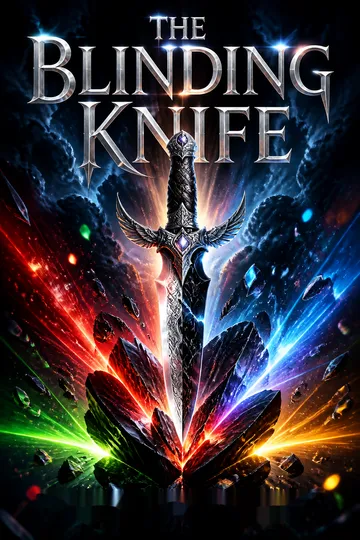
The Blinder's Knife
A weapon that changes magicThe white blade threaded with black luxin and set with seven gems is known by several names, including Hellfang and the Blinder's Knife. Kip inherits it from his mother and spends much of the story trying to conceal it. Its purpose is unclear, but its jewels respond to color and its blade can affect a drafter's connection to luxin. The knife becomes decisive against the green giants and Atirat, while its contact with Andross alters his condition. Its changing form turns a family relic into a major force in the struggle over who can wield magic.
The Banes
Temples that grow godsBanes are ancient sites or moving concentrations of color that draw drafters and accelerate the creation of wights and gods. The Third Eye's visions and the unnatural blue snow introduce them as a threat before Gavin finds the blue island and stops Mot from forming. The green bane later rises in the sea after Liv channels light from Ru's Great Pyramid. These events reveal that killing one emerging god does not end the danger, because the banes can re-form and other colors may rise. The device binds theology, environmental catastrophe, and the military conflict into one escalating threat.
FAQ
Synopsis & Basic Details
What is The Blinding Knife about?
- A World Unraveling: The Blinding Knife plunges readers into a world where magic, known as chromaturgy, is drawn from light, and its misuse can lead to madness. The story follows Gavin Guile, the seemingly infallible Prism, as his powers mysteriously begin to fail, threatening the delicate balance of the Seven Satrapies.
- Looming War & Hidden Agendas: As a devastating war with the enigmatic Color Prince escalates, Gavin races against time to uncover ancient secrets, secure his legacy, and protect his people, all while battling personal demons and the relentless machinations of his cunning father, Andross Guile.
- Identity, Sacrifice, and Legacy: The narrative weaves together multiple perspectives, exploring themes of identity, sacrifice, and the burden of power through the eyes of Gavin, his imprisoned brother Dazen, his newly discovered son Kip, and the conflicted Blackguard Karris, as they navigate a world on the brink of chaos.
Why should I read The Blinding Knife?
- Intricate Magic System: Dive into a unique and deeply explored magic system where light is transformed into physical "luxin," influencing not just the world but also the drafters' personalities, offering endless creative applications and dangerous consequences.
- Morally Complex Characters: Engage with protagonists and antagonists who defy easy categorization, grappling with difficult choices, hidden pasts, and ambiguous motivations that challenge traditional notions of good and evil.
- High-Stakes Political Intrigue: Experience a narrative rich with political maneuvering, betrayals, and shifting alliances, where every decision has far-reaching consequences for the fate of nations and the lives of thousands.
What is the background of The Blinding Knife?
- Post-War Instability: The story is set sixteen years after the "False Prism's War," a brutal conflict initiated by Dazen Guile (the true Gavin) and ended by Gavin Guile (the imposter Dazen), leaving deep scars and political instability across the Seven Satrapies.
- Chromeria's Dominance: The Chromeria, a powerful religious and political institution, governs the satrapies through its Spectrum council and the singular Prism, who is responsible for balancing the world's magic and preventing catastrophic imbalances.
- Ancient Prophecies & Rising Threats: The world is steeped in ancient prophecies, particularly concerning the "Lightbringer" and the "bane" – powerful, corrupting magical entities tied to the old pagan gods, whose resurgence threatens the Chromeria's established order.
What are the most memorable quotes in The Blinding Knife?
- "Love is not a whim. Love is not a flower that fades with a few fleeting years. Love is a choice wedded to action, my husband, and I chose you, and I will choose you every day for the rest of my life." (Karris White Oak, Chapter 104): This quote encapsulates Karris's profound understanding of love as a deliberate, enduring commitment, reflecting her steadfast loyalty and pragmatic nature, a stark contrast to the fleeting passions often depicted.
- "Evil is simple and empty. Evil has no mysterious depths. We stare into a dark hole and fill it with our fears, but it is only a hole." (Andross Guile, Chapter 65): Andross's chillingly pragmatic view of evil strips it of any romanticism, portraying it as a void born of human fear and inaction, a philosophy that underpins his own ruthless manipulations.
- "I'm not the man you think I am." (Gavin Guile, Chapter 100): This recurring sentiment from Gavin (Dazen) highlights his profound identity crisis and the heavy burden of his deception, underscoring the central theme of hidden truths and the chasm between public perception and private reality.
What writing style, narrative choices, and literary techniques does Brent Weeks use?
- Multi-Perspective Narrative: Weeks employs a dynamic, shifting third-person limited perspective, allowing readers deep insight into the thoughts and motivations of various characters (Gavin, Kip, Karris, Liv, Dazen, etc.), enriching the emotional landscape and revealing different facets of the unfolding plot.
- Fast-Paced, Action-Driven Prose: The writing is characterized by its brisk pace, vivid action sequences, and sharp, often witty, dialogue, keeping the reader engaged through intense battles, political confrontations, and personal struggles.
- Intricate World-Building & Foreshadowing: Weeks meticulously crafts a detailed world with a complex magic system, political structures, and historical lore, subtly weaving in foreshadowing and callbacks that reward attentive readers and deepen the narrative's layers.
Hidden Details & Subtle Connections
What are some minor details that add significant meaning?
- Blue Luxin Snow as Omen: The seemingly innocuous "blue luxin snow" (Chapter 45) that falls on Seers Island is not just a strange weather phenomenon, but a direct manifestation of Gavin's failing control over blue luxin and an early sign of the blue bane's reawakening, linking his personal decline to a global magical imbalance.
- Blackguard Training's Hidden Purpose: Trainer Fisk's explanation of the "no spectacles" rule in Blackguard training (Chapter 35) reveals a deeper, almost heretical purpose: to force drafters to use their natural eyes and potentially discover latent polychromacy, a subtle subversion of Chromeria doctrine within its elite guard.
- The "Almost" Inscription: The word "Almost" etched in unstable luxin at the entrance to Dazen's yellow prison (Chapter 83) is a cruel, personal taunt from Gavin, highlighting his brother's repeated near-escapes and the psychological warfare inherent in their sibling rivalry.
What are some subtle foreshadowing and callbacks?
- The Third Eye's Cryptic Prophecies: The Third Eye's vague pronouncements to Gavin about his impending death and Karris's role (Chapter 45, 97) initially seem unhelpful, but later prove chillingly accurate, hinting at the sacrifices and betrayals to come.
- Ironfist's "Butcher" Past: The "Butcher of Aghbalu" card (Chapter 66) and Ironfist's subsequent confession about his brother's massacre (Chapter 66) reveal a dark, traumatic past that profoundly shaped his stoic demeanor and unwavering loyalty, explaining his deep understanding of violence and its costs.
- "Light Cannot Be Chained" Motif: This phrase, a core tenet of The Color Prince's philosophy (Chapter 97, 102, 108), subtly foreshadows the literal unchaining of luxin through the rising banes and the emergence of unchained wights, suggesting that the Prince's revolutionary ideals have a dangerous, magical foundation.
What are some unexpected character connections?
- The Color Prince's True Identity: The shocking revelation that The Color Prince is Koios White Oak (Chapter 38, 97), Karris's supposedly deceased brother, transforms the political conflict into a deeply personal one, adding layers of emotional complexity and moral ambiguity to the war.
- Zymun's Hidden Parentage: The late-book reveal that Zymun is Karris and Gavin's son (Chapter 114) recontextualizes his arrogance, ambition, and manipulative charm, suggesting a darker, more complex legacy for the Guile and White Oak families.
- Janus Borig's Guile Lineage: Janus Borig's connection to the Guile family through Zee Oakenshield (Chapter 47) and her role as a "Mirror" who records true history, positions her as a pivotal, albeit short-lived, figure who holds the keys to the Guile family's hidden past and the true nature of the world's magic.
Who are the most significant supporting characters?
- Janus Borig (The Mirror): Her unique ability to create "true" cards that allow drafters to experience historical memories (Chapter 47) makes her an invaluable, albeit dangerous, source of hidden knowledge, directly influencing Kip's understanding of his family and the world's true history.
- The Third Eye (Seer of Seers Island): Beyond her role as a prophetic guide for Gavin, her insights into the banes, the nature of luxin, and the true identities of key players (Chapter 26, 45, 97, 101) are crucial for advancing the plot and revealing the deeper magical and theological conflicts.
- Marissia (Gavin's Room Slave): Despite her seemingly subservient role, Marissia acts as Gavin's loyal confidante and an unacknowledged intelligence operative within the Chromeria (Chapter 78, 86), providing critical information and emotional support, highlighting the hidden power and agency within the slave system.
Psychological, Emotional, & Relational Analysis
What are some unspoken motivations of the characters?
- Gavin's Atonement for Dazen: Gavin's relentless drive to save the Seven Satrapies and his self-sacrificing tendencies are deeply rooted in his guilt over imprisoning his brother Dazen (Chapter 1, 18, 80), seeking to atone for his past actions and prove his worthiness as the Prism.
- Andross Guile's Legacy Obsession: Andross's cruel "tests" of Kip (Chapter 29, 31, 49) and his relentless political maneuvering (Chapter 74, 76) are driven by a desperate need to secure the Guile family's legacy and control, especially after the perceived failures of his sons and the loss of his wife.
- Teia's Pursuit of Self-Worth: Teia's fierce determination to excel in Blackguard training (Chapter 42, 54, 82) is fueled by her past as a slave and her desire to prove her inherent worth beyond her status, seeking a sense of belonging and respect that transcends societal labels.
What psychological complexities do the characters exhibit?
Lightbringer Series


About the Author

Download PDF
Download EPUB
.epub digital book format is ideal for reading ebooks on phones, tablets, and e-readers.








