

Plot Summary
Two Shadows at Dinner
At a victory banquet in Dúnbheo, Kip Guile is still learning to govern the city he helped free when Mighty guards Ferkudi and Big Leo smell what they think is a superviolet message. Their mismatched alarm sends nobles fleeing. A paryl assassin slips through Cruxer’s blue shield, shoots at Kip, and is exposed when Ben-hadad shatters wine jugs so spilled wine outlines invisible feet.
Kip uses chi to see through the assassin’s shimmercloak and kills him, destroying the valuable cloak with him. Then Winsen turns his bow on Cruxer. The Mighty nearly attack their own archer before Winsen reveals a second Shadow behind them and kills him. The dinner’s false alarm was a warning: the Order can reach Kip even among his closest protectors.
The opening makes security itself a problem of interpretation. The Mighty’s training gives them procedures, but a mistaken scent turns procedure into panic; their survival depends on noticing what the rules cannot predict. Kip’s chi lets him see the attacker, yet his uncontrolled violence destroys an intelligence asset. The second Shadow also exposes the cost of mistrust: Winsen’s silence looks like betrayal until the hidden threat is revealed. The scene begins with a ruler surrounded by loyal friends and ends by showing that loyalty alone cannot tell him whom to fear.
Teia Leaves the Ship
The Order sends young Blackguard Teia to kill a man aboard Captain Gunner’s ship, threatening her father if she refuses. At the dock she recognizes the captive as Gavin Guile, the missing Prism, and learns that the Old Man of the Desert has arranged his dangerous voyage. Gavin tells her that the Order plans to betray him, but he will continue because the Blinding Knife might save the Chromeria.
Teia abandons the ship before it sails, choosing to hunt the Order and find her father instead. She sneaks to Karris, only to discover that the White has just Freed Blackguard Gav Greyling. Teia’s grief hardens into resentment: Karris asked her to commit terrible acts, then faltered when she had to kill one of her own.
Teia’s choice is not a clean conversion from evil to good. The Order holds her father, and her training has already taught her to treat murder as professional work. Yet recognizing Gavin changes the abstraction: her intended victim is Kip’s father and the man her own oath was meant to protect. She chooses disobedience while still believing the Order may kill her family. Her anger at Karris adds a second fracture. Teia is trying to recover moral agency, but she has learned to distrust the very people she serves.
A City Offers Kip a Crown
As crowds gather to admire the restored ceiling mural, Kip’s wife, Tisis, recognizes that many Foresters want Kip to become king. Kip resists the idea, but he uses the crowd’s support to force the Council of Divines to stop delaying essential decisions.
When Satrap Willow Bough’s ambassador offers binding authority over Blood Forest’s army in return for saving Green Haven, Kip demands control of the satrapy’s forces, a share of noble wealth, and power to replace its commanders. He accepts the cost of becoming a near-dictator because the siege is closing in.
Meanwhile, Conn Arthur returns after deserting in grief. Kip refuses to hang him, gives him the chance to choose life, and expects him to serve. The choice restores a valuable general but leaves Kip wrestling with unequal justice.
Kip’s political authority comes from concrete services, not inheritance: he saved Dúnbheo, fed its people, and restored a piece of their history. The crowd’s hope is therefore understandable, but it threatens to turn gratitude into a crown he does not want. Kip learns to use public trust as leverage while accepting powers that could make him resemble the rulers he distrusts. His decision to spare Conn Arthur reveals the personal cost of leadership. Kip knows the choice risks appearing corrupt, yet believes this particular friend can still serve the people.
Liv Bargains with Koios
Aliviana Danavis, once Kip’s childhood friend and now the superviolet goddess Ferrilux, meets the White King to negotiate a partnership rather than submit to him. Koios distrusts her and hides his plans, but she explains why her rational, oath-bound nature may make her a useful ally.
She offers knowledge of magically binding oaths and warns him that the Angari may invade if the Everdark Gates open fully. Koios accepts the bargain, then reveals the scale of his strategy: hidden water-wights have seized the Great River, and his army is preparing to attack the Chromeria with bane that can paralyze its drafters.
Liv learns he is willing to sacrifice enormous numbers to win. She has agreed to work beside him, but his contempt and ambition leave no illusion that he considers her an equal.
Liv’s new godhood has not erased her need for security; it has changed what security means. She negotiates an oath because ordinary trust no longer seems adequate, then discovers that Koios treats partnership as a temporary tool. Her superviolet detachment helps her read political incentives, but it also distances her from the human cost of the plan she has joined. Koios, meanwhile, mistakes fear for loyalty and power for legitimacy. Their arrangement is stable only while each believes the other remains useful.
Gavin Faces White Mist
Gavin travels with Gunner toward White Mist Reef, accepting the Old Man of the Desert’s demand that he climb the Tower of Heaven and destroy what he believes is magic’s central source. His slave-rower companion, the old prophet known as Orholam, and the pirate captain all warn him in different ways that the mission may destroy more than it saves.
Near the reef, eight sea demons attack a black whale and the Golden Mean. Gunner steers through a narrow coral gap, but the largest sea demon smashes the ship against the reef. Gavin is hurled into the lagoon. He swims through wreckage and sharks to save Orholam, then reaches shore. Gunner survives on a stranded piece of wreckage, while Gavin and the prophet find an ancient road leading inland.
Gavin has spent his life turning danger into a problem he can solve through speed, magic, or charm. Now he is color-blind, powerless, and dependent on other people’s decisions. Gunner’s shipwreck strips away the last machinery that made Gavin feel invulnerable. His choice to rescue Orholam is significant precisely because it does not advance his stated mission or guarantee his survival. The rescue is an unplanned act of compassion, an early sign that Gavin may be capable of choosing more than victory.
The Keeper Reveals the Bane
Kip’s army faces a siege, blocked supply routes, hostile nobles, and the risk that bandits will trap them in Dúnbheo. He asks the city’s veiled Keeper of the Flame for access to her Great Mirror, then discovers that chi is killing her and that she has hidden far more than a communications device. Beneath the mirror sits a chi bane, a dangerous seed crystal the Keeper’s order has secretly preserved.
Kip takes it, exposing her people to the Chromeria’s wrath but gaining a chance to understand the ancient defenses. Ben-hadad finds coordinates and mirror mechanisms hidden in the tower’s design. Kip realizes the network may counter the White King’s bane, but only if it can be used quickly and by a drafter with unusual range and control.
The Keeper’s body makes the cost of suppressed knowledge visible: her armor contains a lethal power that her society was forced to hide. Kip’s demand for the chi bane is strategic, but it also repeats the governing habit of the Chromeria: institutions conceal dangerous tools, then claim only they can decide when those tools are used. Kip sees that the Keeper protects her people as well as her authority. His discovery offers a military advantage, but it also forces him to decide whether saving an empire justifies exposing a marginalized community.
A Spy Finds a Friend
The Order’s master assassin, Murder Sharp, captures Teia after she refuses to kill Gavin. He reveals that the Chromeria once recruited him as a secret assassin, then abandoned him when his handler died; the Order later shaped his guilt into obedience.
He gives Teia a choice, but demands that she prove loyalty by bringing him a child’s head. Teia refuses the test. Karris, meanwhile, gives Teia the forbidden history of the Whites and asks Quentin Naheed to help her.
Quentin, a luxiat enslaved after murdering Lucia, researches Teia’s invisibility and becomes her confidant. She tells him what her mission demands, and he listens without pretending her crimes are harmless. Their friendship gives Teia a rare place to admit what the Order has made her do.
Teia and Quentin are both trying to live after institutions have defined them by their worst acts. Sharp’s story demonstrates how a justified secret mission can become an inherited excuse for endless violence. Teia recognizes the pattern because the Chromeria used similar arguments to recruit her. Quentin does not absolve her; he offers attention without collapsing her into her crimes. That distinction matters. Their friendship does not make Teia innocent, but it interrupts the isolation on which the Order depends.
The Whites Expose Their History
Reading the secret histories entrusted to the Whites, Karris learns that the Chromeria erased knowledge of black and white luxin, hid the old gods, and used sacred authority to disguise political crimes.
She tells a gathering of young luxiats that the immortals are real, that the Blinding Knife can threaten them, and that the faith has lied to protect its power. Rather than hide the damage, she invites the scholars to investigate and spread what they learn.
She also tries to reach Zymun, believing his account of a brutal childhood, but discovers that he treats her with sexual menace and seeks power over her. Karris ends their private access and begins training again with the Blackguards, accepting that truth and physical readiness are both necessary to lead.
Karris’s reform begins with confession, but not with a claim that confession will purify the institution. She gives young luxiats evidence and invites scrutiny, risking a rebellion within the faith because silence has already made the Chromeria complicit. Her renewed Blackguard training is equally important: she refuses to treat moral clarity as a substitute for bodily readiness. Zymun’s behavior reveals the danger of mistaking vulnerability for goodness. Karris’s compassion is real, but she learns it cannot require her to ignore predation.
The Siege Has a Hidden Door
Kip’s maps reveal that Koios has quietly blocked the Great River, but the pattern of missing reports suggests the blockade is meant to keep something from leaving, not merely to stop reinforcements arriving.
With help from Ben-hadad, he deduces that bane can float and that the White King plans to carry them across the sea to the Jaspers, disabling the Chromeria’s drafters before an invasion. Kip then accepts that the full army cannot reach the Jaspers in time.
He names Conn Arthur satrap of Blood Forest and leaves him to lead most of the forces toward Green Haven, while Kip takes an elite force overland toward the coast. The split preserves a chance to save both the besieged city and the Chromeria, but makes Kip’s own mission a race against Koios.
Kip’s breakthrough comes from asking what the enemy’s strategy makes possible, not simply what it blocks. The inference changes the scale of the war: the capital, not Green Haven alone, is the immediate target. His decision to divide the army is not a clean tactical solution but a moral allocation of risk. Conn receives the authority and the people needed to hold Blood Forest; Kip takes the smaller force that might prevent a wider catastrophe. Leadership here means choosing which danger others will face.
Apple Grove Keeps the Dead
Kip’s force reaches Apple Grove too late to intercept the White King’s fleet. Instead, they find a village where adults and older children have been murdered, valuables gathered, and toddlers left with food. Daimhin Web, a legendary hunter, has tried to keep the children alive; many still died. He tells Kip that the killers were Lightguards led by Zymun, who staged the massacre to conceal his movements.
The Third Eye’s message had sent Daimhin there, but too late to prevent the deaths. A leather band Daimhin wears proves to be immortal skin, which Kip recognizes from the shimmercloak and from his visions. It suggests the old gods can be killed. The discovery turns the ancient groves and mirrors from relics into possible weapons.
The massacre is not merely evidence of Zymun’s cruelty; its careful concealment shows how violence can be designed to disappear into ordinary life. The surviving toddlers make Daimhin’s failure intimate rather than abstract. He tries to turn guilt into lifelong care, while Kip resists treating a survivor’s grief as proof that he deserves punishment. The immortal skin changes the war’s metaphysics, but it does not erase its human evidence: children have died, and strategy cannot make their deaths clean.
The Fleet Becomes a Trap
Kip and the Mighty race toward the Chromeria, but a scout finds the Chromeria fleet already engaging Koios’s ships. The White King has grouped his fleet around a dragon-shaped vessel carrying a mechanism to raise the bane together. Kip’s small force attacks, sinking ships and drawing off some sharks, but hundreds of enemy drafters and the hidden eighth sea demon overwhelm them.
The Mighty retreat before the bane rise. The sea demon and a black whale help them escape, but the bane surface and paralyze the Chromeria’s drafters, leaving the fleet to be destroyed. Kip has reached the Jaspers too late to prevent the first blow. The failure leaves him and his friends facing a war they cannot fight by ordinary means.
Kip’s failed raid is a necessary correction to the fantasy of the invulnerable squad. The Mighty are skilled, brave, and still too few to defeat a prepared fleet carrying multiple bane. Their retreat is not cowardice but recognition of scale. Yet the emotional cost remains: Kip must live with having witnessed a disaster he could not prevent. The battle also exposes Koios’s central advantage: he turns the Chromeria’s dependence on drafters into a weapon against it.
Andross Wagers the Future
Back at the Chromeria, Kip confronts Andross Guile, who is trying to manage the crisis while concealing his own plans. Their Nine Kings games become negotiations over secrets, Gavin’s card, and Kip’s future.
Andross admits he has spent decades believing himself the Lightbringer, and that he sacrificed his sons to fulfill a prophecy. He offers Kip the Prism’s office if he will surrender his marriage to Tisis and marry Ironfist’s young cousin, securing Paria’s fleet.
Kip initially refuses, but realizes that the empire’s survival may depend on accepting a sacrifice he hates. Meanwhile Ironfist confronts Cruxer, who tries to stop him from reaching the execution. Their fight leaves Cruxer dead and Ironfist gravely wounded, yet Ironfist survives long enough to reach the Chromeria.
The games externalize the difference between strategic intelligence and moral wisdom. Andross can model consequences with terrifying precision, but his habit of treating people as pieces has helped create the suffering he claims to manage. Kip’s affection for Tisis becomes a political stake, not a private refuge. Cruxer’s confrontation with Ironfist similarly tests whether loyalty means obedience or moral resistance. Neither man can resolve the conflict cleanly: the choice to act carries an irreversible cost.
Gavin Climbs Toward Judgment
On White Mist Reef, Gavin and Orholam find an ancient city beneath a black tower. To climb it, Gavin must carry stones representing his sins and face trials built from his memories. The trials expose how he treated Marissia as property despite claiming to treat her well, and how his public role as Prism depended on killing drafters in the name of a faith he privately doubted.
At the summit he finds no simple answer, only a mirror and the Blinding Knife. Orholam reveals that Gavin’s brother Sevastian was sacrificed so Andross could make Gavin Prism, and that Gavin himself killed the real Gavin at Sundered Rock before black luxin erased the memory. Gavin must decide whether to keep serving a lie or face the truth without disguise.
The tower does not cleanse Gavin by making him suffer; it removes the stories he used to survive himself. Each remembered act connects private entitlement to institutional violence: Marissia’s constrained life and the Freeings belong to the same moral pattern. Learning that he killed his brother is not a new guilt so much as the recovery of a guilt already shaping him. The pilgrimage’s pressure is to stop outsourcing responsibility to role, memory, or prophecy.
Teia Poisons the Feast
After murdering Ravi Satish and her former owner Aglaia Crassos, Teia tracks Atevia Zelorn to a secret gathering of the Order’s priests. She learns they are preparing to coordinate with the White King, but cannot understand their coded discussion or follow the Old Man of the Desert.
Instead, she poisons the wine intended for the Order’s Feast of the Dying Light with lacrimae sanguinis, accepting that she may consume the poison herself. Murder Sharp captures her, takes her tooth, and reveals that he is dying from the same poison she hid in it.
Teia survives long enough to escape, while the Order’s gathering is struck by the toxin. She has damaged the organization, but the price is her sight, her health, and the possibility of a life beyond this work.
Teia’s victory is deliberately not clean. She uses the Order’s ritual dependence on secrecy and shared bloodwine against its leaders, but the method draws her into the same logic of expendable bodies that trained her. Her choice to spare or kill is no longer made by a handler; she decides who bears the risk and must live with that responsibility. The poison in her tooth turns intimacy into both weapon and vulnerability, while Sharp’s death shows that even a practiced assassin can be undone by the methods he taught.
The Glare Turns on Kip
On Sun Day, Kip returns to the Chromeria with the surviving Mighty and warns the Spectrum that Koios’s army and bane are already attacking. Andross agrees to let him use the mirror array, but the battle exposes Zymun’s instability: he kills Karris’s supporters and takes the Prism’s place. When Ironfist demands a Guile’s blood as the price of joining the defense, Karris accepts the threat rather than let Kip die.
Zymun rejects the bargain, has Kip bound to Orholam’s Glare, and begins the execution while claiming the mirrors as Prism. Kip, already stripped of his drafting halos by the concentrated light, survives only because he keeps fighting and because help arrives from beyond the people gathered below.
This is the story’s sharpest reversal of authority. The ceremony meant to affirm the Prism becomes a stage for Zymun’s private violence, while Karris’s public office cannot protect the people she loves. Kip is trapped between political expediency and the body’s limits: the array he needs to save the Jaspers is also burning him alive. His persistence is not evidence that he is invulnerable; it is the final expression of a life built around refusing to abandon others.
Light Returns to the Jaspers
At White Mist Tower, Dazen learns that Orholam is real and that his brother Sevastian was murdered by Andross to make him Prism. Orholam removes the living black luxin from Dazen’s eye, and Dazen chooses a final act of service instead of pursuing the power he once wanted. He returns to the Jaspers as the White King’s invasion reaches its height.
With the Blinding Knife, Karris kills Koios and removes the orange seed crystal; Kip, using the Great Mirrors, helps break the bane and survive Zymun’s execution attempt. Dazen’s return restores Karris’s hope, and Kip wakes from the Glare. After the battle, the Guiles and the Mighty gather to mourn their dead, rebuild, and celebrate Kip and Tisis’s renewed marriage.
The resolution does not restore the old order untouched. Dazen returns with a clearer account of his guilt, but no miraculous erasure of the harm he caused. The mirrors and the Blinding Knife defeat the bane because knowledge, courage, and coordination finally work together rather than being monopolized by one authority. Kip survives without the powers that defined his public importance. The family’s new beginning is therefore not a return to innocence; it is an attempt to build relationships after the truth has made denial impossible.
Epilogue
Three months after the battle, Teia returns to the burned remains of one of the Order’s meeting places. She has not put down the work, but she is no longer the frightened novice who entered the Order to save her father.
Her new life remains dangerous, and she still has to decide what kind of person her skills will make her. When she meets the surviving enemy leader, she carries both the master cloak and the knowledge that she can act without becoming the thing that trained her.
The postlude resists treating victory as moral closure. Teia’s survival does not erase the slaves she killed, and destroying the Order’s central gathering does not undo the structures that made it possible. Her return to the ruins shows that the war’s aftermath is another ethical test: she can continue as a weapon, or become accountable for how she uses what she has learned. The ending leaves her future open, but not her responsibility.
Analysis
The novel’s central conflict is not simply whether the Chromeria or the White King wins. It is whether power can be made answerable to the people who bear its costs. The Chromeria calls the Freeing a sacred duty, the Order calls murder a necessary defense, and Koios calls coercion liberation. Each institution protects itself by making its violence sound inevitable. Kip’s political and military decisions repeatedly test whether compassion can survive at scale: sparing Conn risks favoritism, dividing his army risks abandonment, and refusing to surrender Tisis risks thousands of lives. Andross embodies the opposite temptation, the belief that seeing the whole board makes one entitled to spend anyone on it.
The novel’s recurring images of mirrors, light, and color make this ethical problem visible. A mirror reflects but also frames; a card preserves a life but turns it into an object of strategy; a bane amplifies one color until it controls the field. The Great Mirrors promise a different relation to power: distributed light, shared defense, and coordinated knowledge. Yet even this technology cannot replace judgment. Kip must decide what to do with it, and Gavin must decide whether the hidden truth about the Prism excuses the killings performed in its name.
The emotional resolution is deliberately incomplete. Teia’s survival does not erase her victims. Karris’s honesty does not undo her complicity. Andross’s capacity for love does not absolve his bargains. Kip loses the magic that helped define him, but discovers that leadership can persist without spectacle or inherited power. The ending’s hope comes not from a purified world, but from people beginning to tell the truth, accept limits, and choose one another after they have seen what their choices cost.
Review Summary
People Also Read



Characters
Kip Guile
The reluctant LightbringerKip is the illegitimate son of Gavin Guile and Katalina Delauria, raised in poverty in Tyrea before becoming a Blackguard trainee and a leader. His humor often arrives ahead of his confidence, but his attention to people others treat as expendable makes him a gifted judge of motives. He is drawn to action because waiting feels like abandoning someone, a strength that can also make him accept too much responsibility. His marriage to Tisis gives him a partner who can challenge his self-image without diminishing his compassion. Kip is not naturally comfortable with power, yet he becomes increasingly willing to use it when others’ lives depend on his choices.
Gavin Guile
The fallen PrismGavin is the celebrated Prism, a charismatic warrior and political leader whose brilliance has long concealed an intimate distrust of himself. He can improvise machines, command armies, and charm a room, but he also uses wit and performance to avoid admitting fear or guilt. His role as Prism makes him the public face of an institution whose violence he has helped enforce. He is tied to Karris through love and history, and to Kip through a fatherhood he has not fully earned. Gavin’s deepest conflict is between his appetite for audacious action and his reluctance to face what his choices have cost.
Karris Guile
The Iron WhiteKarris is a former Blackguard and the White, the leader responsible for the Chromeria’s magical and educational life. Her authority rests less on polish than on endurance: she trained relentlessly, survived political cruelty, and learned to act under pressure. She loves Gavin and has a complicated maternal bond with Kip, while her relationship with Zymun forces her to distinguish compassion from unsafe trust. Karris is capable of hard choices, but she distrusts the ease with which institutions call their violence necessary. Her discipline and directness make her a formidable leader, even when grief and guilt leave her isolated.
Andross Guile
The calculating promachosAndross is the Guile patriarch, a master of politics, memory, and Nine Kings. He measures people quickly and sees how alliances, fear, money, and reputation can move them. His care for his family is real, but it is entangled with control and a willingness to sacrifice others for what he believes is necessary. He expects emotion to be managed as carefully as an army, and he often mistakes vulnerability for weakness. Andross is most dangerous when he is right about the stakes and least trustworthy when he assumes that being right excuses the means.
Adrasteia Teia
The unseen BlackguardTeia is a young Blackguard and a rare paryl drafter whose talent makes her valuable to spies and assassins. She is observant, quick, and stubborn, but her training and the threat to her father have pushed her into work that violates the person she hoped to become. She wants to protect people, yet is repeatedly asked to kill in the name of protection. Her bond with the Mighty and her friendship with Quentin offer different kinds of belonging: one rooted in shared danger, the other in patient honesty. Teia’s dry humor survives even when she feels isolated, and it helps her recognize when fear is narrowing her choices.
Tisis Guile
Kip’s political partnerTisis is a Ruthgari noblewoman with a sharp grasp of diplomacy, intelligence gathering, and the social performances that power requires. She is neither a decorative spouse nor a passive adviser: she reads a crowd, builds networks, and helps Kip turn good intentions into workable policy. Her marriage to Kip grows from a political arrangement into genuine intimacy, while she remains alert to the costs of his self-sacrifice. Tisis is practical without being cold, and her confidence often steadies Kip when he mistakes humility for unworthiness. She understands that love can support a leader, but it cannot substitute for strategy.
Koios White Oak
The White KingKoios is Karris’s brother and the leader of the rebellion against the Chromeria. Burned and remade by luxin, he presents himself as a liberator from the Chromeria’s authority, yet his rule relies on fear, magical coercion, and expendable armies. He is intelligent enough to plan on a continental scale and patient enough to hide his preparations, but his grievances have hardened into a belief that victory justifies almost any loss. His relationship with Karris carries the residue of family before it became war. Koios wants not merely to defeat the Chromeria but to overturn the order that made it powerful.
Corvan Danavis
The veteran strategistCorvan is a celebrated general, Liv’s father, and one of the few commanders able to see both logistics and human morale as parts of the same battle. He once helped shape Dazen’s military success, then withdrew into a smaller life after the wars took much from him. Kip’s years in Rekton gave him a fatherly role in the boy’s life, though their history includes losses and truths neither has fully discussed. Corvan does not mistake tactical competence for moral purity. His calm authority comes from knowing that plans fail, people suffer, and a commander must still make the next decision.
Aliviana Liv Danavis
The changed childhood friendLiv grew up with Kip in Rekton and later trained at the Chromeria, where her skill with superviolet made her a gifted analyst. Her intelligence is brisk and exact, and she often treats emotion as information to be managed rather than a force to be inhabited. That habit becomes more pronounced as her power changes her relationship to time and other people. She is linked to Corvan as his daughter and to Kip through the remembered intimacy of childhood, but neither bond guarantees what she will choose. Liv’s central tension is between independence and the danger of mistaking distance from others for freedom.
Commander Ironfist
The disciplined commanderIronfist trained generations of Blackguards, including Karris, Teia, and Cruxer. He believes discipline is a form of care because mistakes in combat can kill the people under his command. Reserved and duty-bound, he rarely shows how deeply he depends on the institution he serves. His pride lies in competence and loyalty, but those virtues become complicated when his family, his vows, and his command pull him in different directions. Ironfist is admired because he leads from the front and expects no risk from others that he would not accept himself.
Cruxer
The young commanderCruxer is the disciplined heart of Kip’s original Blackguard circle and later commands the Mighty. He is a gifted fighter who prefers clear duties, reliable rules, and loyalty expressed through action. His private guilt over Lucia’s fate makes him wary of mercy he cannot control, and he can mistake rigidity for righteousness. Yet Cruxer cares deeply about the people he leads and is often the first to notice when a friend is close to breaking. His relationship with Kip is built on trust, disagreement, and the expectation that each will protect the other from his worst impulses.
Quentin Naheed
The contrite scholarQuentin is a brilliant young luxiat whose learning ranges across history, language, and obscure magical scholarship. He is also a convicted murderer, a fact he refuses to hide behind excuses. As a slave serving Karris, he turns his punishment into a public challenge to clerical vanity and neglect. His manner is awkward, his intellect fast, and his faith more patient than his certainty. Quentin helps Teia by listening without pretending to absolve her, and his willingness to sit with difficult questions makes him a rare source of steadiness in a world that demands immediate answers.
Murder Sharp
The Order’s master assassinMurder Sharp is a paryl assassin whose skill and reputation make him one of the Order’s most feared operatives. He is disciplined in his craft but emotionally damaged by a lifetime of secrecy, coercion, and violence. He sees Teia as a distorted reflection of himself, which makes his interest in her equal parts mentorship, control, and self-recognition. His history reveals how institutions can make a person complicit by presenting each compromise as the only possible choice. Sharp’s charm and attention are real, but they do not make him safe.
Gunner
The pirate cannoneerGunner is an eccentric Ilytian captain whose brilliance with cannons is matched by restless curiosity and erratic speech. He prizes his ship, his crew, and the reputation earned by surviving dangers others consider impossible. Beneath the jokes and malapropisms is a man burdened by an old killing at sea and unsure whether he deserves another chance. His relationship with Gavin begins in captivity and develops through shared danger, argument, and reluctant trust. Gunner’s practical knowledge repeatedly matters where book learning alone cannot navigate.
Orholam
The elusive divine guideOrholam is the central deity of the Seven Satrapies’ faith, but his presence is disputed, mediated by scripture, ritual, and institutions that claim to speak for him. A figure called Orholam travels beside Gavin as a galley slave and later guides him toward the Tower of Heaven. He can be cryptic, humorous, and unsettlingly direct, refusing to make moral choices on behalf of the people who face them. His role challenges both Gavin’s cynicism and the Chromeria’s confidence that religious authority belongs to its leaders.
Conn Ruadhán Arthur
The grieving forest leaderConn Arthur is a powerful will-caster and commander of the Ghosts of Shady Grove, known for his great strength, his grizzly companion Tallach, and his deep attachment to his people. Grief over his brother leaves him unable to continue fighting, and he deserts Kip’s army. Kip’s refusal to reduce him to that failure gives Conn a chance to return to service. His leadership is rooted in the shared traditions of Blood Forest, not merely in titles or military rank.
Big Leo
The Mighty’s iron shieldBig Leo is an enormous warrior-drafter whose chain weapon and physical courage make him a natural shield for Kip and the Mighty. He is blunt, loyal, and less foolish than he sometimes pretends. His confidence in Kip is not based on pedigree or prophecy; he follows him because Kip is not simply another version of Gavin or Andross. Big Leo’s humor keeps the group from treating every fear as a command, while his willingness to put his body between danger and a friend makes that humor credible.
Ben-hadad
The inventive engineerBen-hadad is a disabled former Blackguard and an exceptional engineer who designs skimmers, weapons, and practical solutions to problems others have not yet recognized. His sharp mind can become impatience with people who do not follow his reasoning at once, but he is devoted to the Mighty and willing to put his inventions into danger beside them. His damaged leg limits some forms of combat without defining his usefulness. Ben’s work repeatedly turns abstract possibilities into machinery that can change the outcome of a battle.
Winsen
The fearless archerWinsen is a small, unnervingly fearless Blackguard archer whose perception and speed make him dangerous at range. His humor is abrasive, and he dislikes being treated as a mascot or a subordinate whose doubts should be hidden. He can be cruel in the way he teases friends, but he is also capable of loyalty without flattery. Winsen’s role in the Mighty is to see what others miss and to say what others avoid, even when the timing is poor.
Ferkudi
The brilliant oddballFerkudi is a blue and green drafter, a powerful grappler, and a gifted mathematician whose literal-mindedness makes him misread social cues. The Mighty often laugh at his odd questions, but they also rely on his memory for numbers and details. He is earnest rather than foolish, and his apparent obliviousness can hide a mind that sees patterns others overlook. Ferkudi’s loyalty is plain, unstrategic, and valuable precisely because it is not a performance.
Daimhin Web
The haunted forest hunterDaimhin is a legendary knife hunter from deep in Blood Forest, raised among traditions carried through stories rather than written records. His skill and self-discipline have made him seem almost mythical to others, but he is vulnerable to shame and grief. When he fails to prevent a massacre, he tries to make his guilt useful by caring for the surviving children. Kip recognizes both the hunter’s strengths and the danger of letting shame become his entire identity.
Zymun Guile
The dangerous Prism-electZymun is Gavin and Karris’s son, raised far from them and drawn to the privileges and authority his birth may provide. He can perform vulnerability when it serves him, but he is also impulsive, acquisitive, and hungry for recognition. His relationship with Karris is burdened by her guilt over their separation and his resentment of the family that excluded him. Zymun is a warning about what happens when entitlement is mistaken for a claim to love or leadership.
Grinwoody
Andross’s trusted secretaryGrinwoody is Andross Guile’s aged secretary and slave administrator, a precise legalist who manages information and access with quiet efficiency. He has served Andross for years and is disliked by many Blackguards for leaving their order before completing his vows. His unassuming manner makes him easy to overlook, while his knowledge of the Chromeria’s bureaucracy gives him unusual reach. Grinwoody represents the danger of mistaking unobtrusiveness for harmlessness.
The Keeper of the Flame
The hidden chi guardianThe Keeper leads a secret order in Dúnbheo and guards its Great Mirror and chi traditions. Her body bears the consequences of drafting a color the Chromeria has outlawed, and she uses armor and veils to conceal both her appearance and the danger she poses to those nearby. She is proud of her people’s knowledge and wary of outsiders who might destroy it. Her conflict with Kip concerns not only access to a weapon but whether a threatened community can trust a powerful ally.
Plot Devices
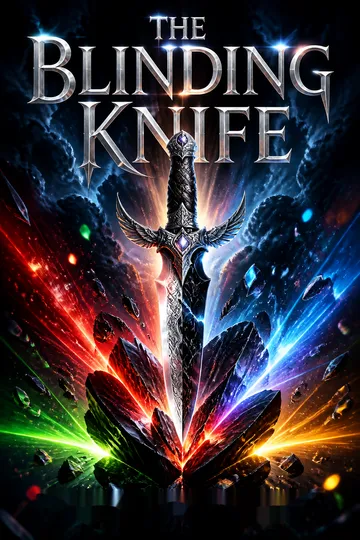
The Blinding Knife
The power-changing bladeThe ancient Blinding Knife can take a drafter’s color and, according to the secret histories, may threaten the immortals themselves. It has passed through several hands and is central to Gavin’s voyage to White Mist Reef, the Prism-making tradition, and the final conflict with Koios. The knife also carries a moral burden: the Chromeria’s rituals call lethal coercion a sacred duty, while the old Whites’ records suggest the weapon was created to make the gods vulnerable. Its use forces characters to distinguish the power to kill from the authority to decide who deserves death.
The Great Mirrors
Light as weapon and networkThe Great Mirrors are ancient, movable structures capable of directing powerful beams across great distances. The Chromeria treats them as tools for ceremonies and access to light, but their placement, hidden relays, and color filters reveal a larger defensive purpose. Kip’s discoveries turn them into a possible answer to the bane, which suppress drafters of their color. The mirrors make the novel’s central conflict concrete: the same light that supports magic can be organized as infrastructure, communication, and military force. Their operation demands coordination rather than a single heroic act.
The Bane
Magic turned against draftersEach bane is a vast concentration of one color, grown from a seed crystal and able to influence drafters far beyond its physical bounds. Koios gathers them to disable the Chromeria’s greatest advantage before invading the Jaspers. Their slow arrival creates suspense, while their control over color makes conventional magical strength unreliable. The bane also expose the danger of treating magic as an individual gift: a single hidden crystal can reorganize an entire battlefield. They are both weapons and evidence of a history the Chromeria has tried to suppress.
Nine Kings Cards
Memory disguised as playThe magical Nine Kings cards can contain experiences and images of the people they depict. Kip’s involuntary encounter with Janus Borig’s cards overwhelms him, while Andross uses games and unusual wagers to extract knowledge, test loyalty, and force choices into the open. The cards provide a way to make history playable, but they also distort it: a deck can seem to reduce people to strengths, weaknesses, and likely moves. Their most important function is to expose how the Guile family treats knowledge as power and how a person can resist being reduced to a card.
The Pilgrim’s Tower
A trial through remembered guiltThe Tower of Heaven forces Gavin to carry stones representing his vices and pass through trials tied to memories he would rather suppress. Its gates and shifting tests turn moral reflection into physical labor, while its unusual relationship to time makes delay dangerous. The tower does not offer a simple cleansing: it reveals how Gavin’s public virtues have coexisted with private entitlement and institutional violence. His ascent forces him to choose whether he will keep treating the mission as another prison to escape or take responsibility for what he has done.
Lightbringer Series

About the Author

Download PDF
Download EPUB
.epub digital book format is ideal for reading ebooks on phones, tablets, and e-readers.








