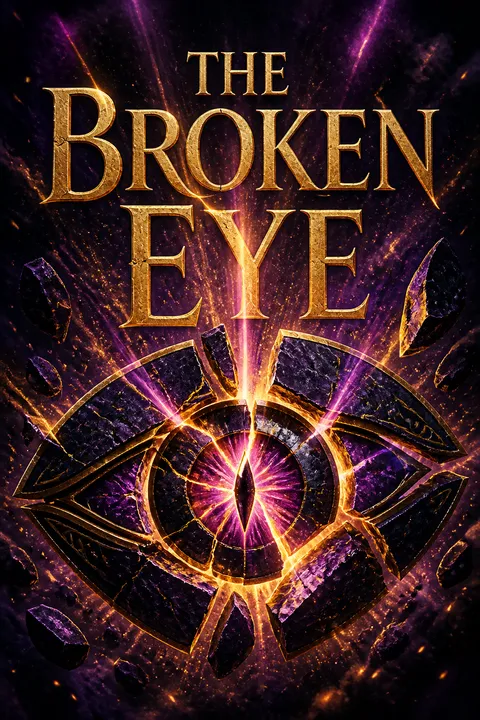


Plot Summary
The Black Whale's Warning
On the Feast of Light and Darkness, the White and two young Blackguards watch a blazing sea demon charge the bridge between the Jasper islands. Cannon Island fires, but every shot misses. A gigantic black sperm whale rises from the water and rams the monster away from the crowded bridge, saving hundreds.
The White sees an omen in the whale's return after centuries of absence, but its meaning remains uncertain. Beyond the spectacle, the fleet is already lost at Ru, and survivors are coming home to a war that has only begun. The black whale offers a reprieve, not a victory, while the equinox gives the frightened city one more reason to fear what is gathering.
The opening makes rescue spectacular but not reassuring. The whale saves people by force, yet its return signals that the natural order itself may be changing. The White reads history into the event, while the younger Blackguard Gavin Greyling cannot understand what it means. That gap establishes a recurring tension: institutions need symbols, but symbols do not explain what they demand of those who survive.
Two Guile Sons at Sea
After the battle at Ru, Gavin wakes on an Angari galley, his hands raw from rowing and his sight reduced to gray. The pirate captain, Gunner, recognizes the man who once fought him and demands to know whether he is Gavin or Dazen. Gavin admits that he is Dazen, the younger brother who took his elder brother Gavin's identity after Sundered Rock, then killed the brother he had imprisoned.
Meanwhile, Kip is blindfolded in a rowboat with Zymun, his half brother, who intends to reach the Chromeria and claim their grandfather's favor. Kip studies Zymun's laziness and secretly packs blue luxin, turning helpless captivity into a narrow chance to escape.
Both men are stripped of the identities that once protected them. Gavin's confession loosens a secret built into his public authority, while Kip's blindfold makes observation, normally his strength, impossible. Each responds by adapting: Gavin reads Gunner's vanity, and Kip treats his captor's habits as a game of strategy. Their survival depends less on power than on understanding the person holding it.
Kip Walks Out of Death
When a pirate galley appears, Kip uses the moment to launch himself into Zymun and knock him overboard. Zymun's hidden luxin leash saves him, but his pistol fills with water, and Kip escapes the burning boat by drafting water-pushing reeds. He reaches shore exhausted, then crosses jungle while hungry, feverish, and covered with leeches.
Blue luxin helps him remove them and survive inside a cocoon until a widow named Coreen finds him. She feeds and clothes him, then arranges passage to Big Jasper. Back at the Chromeria, Kip tells the Spectrum that Gavin is alive and held by Gunner, forcing Andross Guile to abandon his claim that Gavin is dead.
Kip's ordeal turns survival into a test of self-estimation. He repeatedly fails to plan for ordinary needs, yet keeps improvising with magic and refuses to stop walking. Coreen's care gives him something rarer than rescue: help that does not humiliate him. His return with news of Gavin then converts private endurance into public leverage, though Kip is not yet ready for the political consequences.
Teia's Bloodied Bargain
At Big Jasper's docks, the paryl-drafting slave Teia receives invisible messages directing her to an alley. She refuses the invitation and finds her former tutor Marta Martaens, whose coded letter confirms that the Order of the Broken Eye is real and wants her. Soon the Order's agent, Murder Sharp, corners Teia in Kip's room and threatens to return her freedom papers to Andross unless she steals documents from a spy.
Teia disguises herself, follows the target, and reaches for his papers. Sharp's paryl binds her arm, slashes the spy's throat, and leaves Teia holding the bloody knife. She escapes the watch, hides the evidence, and files the papers that finally make her legally free.
Teia's first freedom arrives inside a trap. Her skill at reading crowds and refusing an enemy's chosen ground keeps her alive, but the Order converts her caution into complicity by staging a murder around her. The pressure works because it exploits the real limits of her choices, including the danger to the people who might defend her. Freedom becomes a legal fact before it becomes an inward one.
Karris Loses Her Armor
Karris returns to the Chromeria grieving Gavin and expecting the White to share her uncertainty. Instead, Orea Pullawr orders her to stop drafting and resigns her from the Blackguard because she married the Prism. Karris feels stripped of the only identity she trusts, then challenges the White about sending her into danger during the war.
Orea explains that the assignment tested whether Karris could act without orders, and gives her a new role managing the White's spies. Karris begins learning the trade through meetings with contacts such as banker Turgal Onesto, whom she pressures into protecting Gavin's accounts and cooperating with the Chromeria. Her first lessons show her that influence can be wielded without a weapon.
Karris experiences authority first as loss, not promotion. The White removes the role that has structured her life, then asks her to exercise judgment in a less visible arena. This is not a simple replacement of combat by politics: Karris must learn to recognize power before it becomes violence. Her resistance to being treated as a dependent also makes her a better spy, because she knows what it costs to be underestimated.
Gunner's Galley Breaks
Gunner keeps Gavin rowing, then tests his skill with a miraculous musket-sword by shooting an apple from his mouth. Gavin survives, earns the pirate's wary interest, and learns that Gunner wants a great challenge more than a ransom. When an enemy galley collides with the Bitter Cob, the slaves use their oars to stop its sailors from firing on them.
Gavin helps kill the overseer Leonus, then backs Antonius Malargos as the slaves cut the boarding nets and escape. Antonius persuades them to sail for Rath rather than Big Jasper, warning that Andross now controls the government and may want Gavin dead. Gavin accepts the route, but later jumps into the river rather than trust the Malargos family.
Gavin's time as a slave forces him to recognize the difference between owning people and knowing them. He sees how fear can keep a galley moving, but also how collective skill lets the rowers turn a collision into revolt. Antonius, who has no inherited hatred of Gavin, offers a model of loyalty based on present action. Gavin's distrust still wins, revealing how thoroughly his old political instincts survive his loss of power.
Andross Takes the War
With Gavin missing and the fleet shattered, the Spectrum debates how to stop the Color Prince. Andross argues that the satrapies must abandon exposed towns, prepare for a long war, and use Gavin's sea chariots to control the sea. He also presents himself as a changed man, removing his dark glasses and gloves to show that his red halos have receded and his body appears younger.
The Colors accept his claim of divine restoration and elect him promachos. He immediately orders wider military training and opens restricted libraries to study forbidden magic. Later, the defeat at Ox Ford, where tens of thousands die, proves how little the new command can control the war's cost.
Andross turns spiritual language into political authority at the moment when fear makes the assembly desperate for certainty. His apparent recovery may be miracle, performance, or something between, but it changes what the room is willing to authorize. He does not promise an easy victory. Instead, he gains power by naming the sacrifices others would rather avoid. The ensuing defeat exposes the gap between commanding a war and controlling it.
Liv Follows the Bane
In Ru, Aliviana Danavis prepares to leave with guards and a mission from the Color Prince: find the superviolet bane near the Everdark Gates. A woman claiming to represent the Order of the Broken Eye warns that the black jewel the prince gave Liv may control or destroy her. Liv dismisses the warning, then meets her father, Corvan, in Wiwurgh.
He reveals that he has joined the Chromeria, become Tyrea's satrap, and is trying to stop the Color Prince after hearing about the women who died rather than face another sack of a city. Liv resists his appeal, but his news makes her question whether the prince's language of freedom can excuse the violence in Ru and Raven Rock.
Liv's conflict is not simply loyalty to father against loyalty to cause. She has witnessed the cost of conquest and helped create the conditions for it, so Corvan's evidence attacks her own moral self-image. The black jewel sharpens the problem: the movement promising release may be building a new form of control. Liv's continued refusal to switch sides remains understandable, but no longer comfortable.
Teia Learns to Split Light
The Order's leader tells Teia that the Chromeria's history is a lie and traces the Order to ancient guardians who used hidden cloaks to restrain dangerous drafters. Its doctrine recasts Lucidonius as a betrayer, and claims that death allows rebirth. Teia remains wary, but the Order tests her under a blindfold, asking her to identify colors without sight.
She correctly senses each spectrum, including colors she cannot draft, and realizes she may be a lightsplitter. The discovery gives the Order a reason to keep her close and gives Teia a skill no one at the Chromeria has taught her. She joins as an informant for Karris while hiding her handler's identity from the Order.
The Order's appeal lies in recognizing an ability the official institution has ignored, then attaching that ability to a sweeping alternative history. Teia's curiosity and hunger for mastery make the offer potent, but her judgment remains active: she understands that being wanted can be another form of being used. Her new perception also alters her sense of agency. She is not merely a color-blind paryl drafter with one narrow talent.
Kip Enters the Council
At the Spectrum meeting, Kip arrives with news that Gunner has Gavin alive. Andross stops calling him a bastard and publicly accepts him as a Guile, then dismisses him before he can say more. Kip knows the story he tells is partly false, but it gives Andross a way to retreat from blaming him for Gavin's disappearance.
The returned boy finds his squad changed by war and his own body altered by hunger and training. When Magister Kadah threatens Ben-hadad with expulsion for questioning forbidden lessons, Kip calmly invokes the commander's authority and walks out. He asks the White to transfer Kadah and find him a tutor, seeking preparation rather than special treatment.
Kip's first political success is built on a lie, but unlike Andross he does not yet know how to control its consequences. His public legitimacy brings protection while deepening his entanglement in family power. His defense of Ben-hadad marks a real change: he uses status to defend another person, not simply to win an argument. Yet his desire to be useful still makes him vulnerable to being assigned a destiny by others.
The Cards Keep Secrets
Kip and his squad use Andross's authorization to enter restricted libraries, where they uncover accounts of ancient human sacrifice and forbidden magic. Quentin Naheed helps Kip trace scattered Lightbringer prophecies and notices that passages about the Lightbringer and the black cards have been deliberately erased.
Meanwhile, Andross offers Kip access to every library in exchange for information about Zymun, a promise not to tell Karris about him, and a future chance to search for Gavin. Kip accepts the terms while discovering that his grandfather has stopped drafting and recovered from his apparent wighthood. The arrangement gives Kip knowledge, but also makes every truth he uncovers a potential weapon in someone else's game.
The archive is not a neutral storehouse. Its gaps reveal that institutions curate not only belief but the evidence available to challenge belief. Kip's research therefore becomes political before he knows what he is searching for. Andross's bargain mirrors the library: each offers access, but only under conditions that shape what may be known and to whom. Kip's hunger for knowledge is both his best defense and his easiest lever.
The Squad Chooses Its Cost
When Kip's squad is ordered to beat a preacher who is secretly a Blood Robe spy, Cruxer turns the assignment into a controlled operation. Big Leo attacks the preacher while Teia disrupts an assassin's attempt to stab him. On a later patrol, an unknown man follows Teia into an alley and attacks; she kills him in the struggle, then helps the squad hide the body and erase the blood.
Teia is shaken by having killed, but Kip argues that the Chromeria can fail and still be preferable to the Color Prince's promise of freedom, which serves his own power. Cruxer promotes Teia to second in the squad, and Kip accepts that leadership means carrying consequences rather than pretending they are clean.
The squad's moral argument grows out of concrete violence, not abstract debate. Teia's killing leaves her with an injury no promotion can erase, while Kip refuses both easy absolution and easy condemnation. His comparison of the institutions is pragmatic: flawed protection may still be better than a rival system that abolishes restraints only when useful. Cruxer's trust in Teia converts her competence under pressure into responsibility.
Gavin Faces the Nuqaba
After fleeing Gunner's galley, Gavin is captured near Rath and held by Eirene Malargos. He tries to persuade her that he can help defeat the Color Prince, but his explanations are tangled in old lies and the blood debts of the wars. The Nuqaba, Haruru, arrives with an orange seed crystal that exposes deception.
She reveals that she and Eirene are considering an alliance with the Color Prince, then shoots at Gavin; the ricochet wounds her instead. Their later bargain leaves Gavin in custody. On Sun Day, Haruru orders him publicly blinded for attacking her, using his missing drafting and altered eyes to deny his identity as Prism. Gavin is carried toward the arena while his last hope of escape narrows.
Gavin's old instruments fail one by one: charm cannot erase his history, and his title no longer commands belief without visible power. The seed crystal makes his habitual evasions materially dangerous, while the Nuqaba turns punishment into public theater. His captivity asks whether a person whose identity depended on competence can remain himself when stripped of the means to prove it. His silence is not surrender, but it leaves others to decide what he is worth.
Teia Steals the Shimmercloak
Murder Sharp orders Teia to steal a shimmercloak from the White's rooms, threatening her if she refuses. Teia climbs the outside of the tower with adhesive crescents, slips past Blackguards, and finds the burned cloak in the White's desk. When a guard enters, Teia's paryl cloud and a single yellow torch bend light around her, making her invisible without the cloak.
She escapes with the prize and discovers that the cloak responds to her will. Her success does not bring freedom: Sharp tells her the Order will still judge whether she is trustworthy. Teia now carries an artifact that can make her a more effective infiltrator and a more dangerous target.
The theft changes Teia's relationship to invisibility from a survival tactic into a disciplined practice. Her success depends on observation, timing, and restraint, not on becoming fearless. The cloak amplifies a power she is only beginning to understand, so it is simultaneously a tool and a demand for further training. Teia's fear of being used remains justified even as her abilities give her greater room to choose.
Kip Dies in the Library
Kip agrees to marry Tisis so her family will protect him from Andross and help him leave the Chromeria. Before he can go, Teia receives a warning that Blackguards Lytos and Buskin intend to kill him. Cruxer, Teia, and Winsen intervene; Lytos hesitates, Buskin attacks, and Winsen kills him with a long-range arrow.
Later, Kip discovers his father hid Janus Borig's card deck inside a training bag. The cards attach to his skin and stop his heart. In the Great Library, Kip meets the Lightbringer, Abaddon, and lives the memories encoded in the cards, completing them while Abaddon tries to steal their knowledge. Teia uses paryl to restart Kip's heart, and he wakes with the deck blank.
Kip's death and return turn information into an ordeal of embodiment. The cards do not simply provide facts; they force him to experience the choices and suffering of the people represented. Teia's rescue completes a different kind of knowledge, learned through emotional attention rather than archives. Their bond survives a painful misunderstanding, but the cards' loss leaves Kip carrying their memories without the evidence that could make them legible to others.
Karris Rescues the Prism
Karris and Ironfist reach the hippodrome as Gavin is strapped down for blinding. She enters in a borrowed dress, claims him as her husband, and demands trial by combat. When the Nuqaba sends her consort, Enki Hammer, Karris kills him with a concealed blade before he can strike.
She cuts Gavin free and leads him through the crowd, while Ironfist and their remaining allies clear a path to the river. Gavin, still wounded and with one eye destroyed, helps defend the skimmer as they escape. Meanwhile, the White's death leaves the Spectrum choosing a successor; Karris stands among the candidates, while Andross secures Zymun's position as Prism-elect.
Karris's rescue is a return to the bodily knowledge she feared she had lost, but she uses it within a political performance that exposes the Nuqaba's cruelty. Her demand for a trial creates the public opening she needs, while the killing of Enki makes escape possible at a terrible cost. The larger succession crisis does not resolve with Gavin's survival: Andross can still shape the institutions, and Karris must choose whether to inherit authority herself.
A Wedding Before War
After Teia saves him, Kip accepts Tisis's proposal, but he refuses to remain a pawn in Andross's plans. The White's final instructions, the Lightguard pursuit, and the squad's sacrifice of Blackguard careers leave him with little time.
Kip and Tisis complete a wedding at the docks, making their alliance legally difficult to undo, while Teia chooses to stay on her dangerous mission inside the Order. Kip, Cruxer, Ferkudi, Big Leo, Winsen, and Ben-hadad board a ship bound toward the war. They leave behind the Chromeria's certainties with no assurance that their new unity can survive what waits in Blood Forest.
The marriage is not a romantic resolution so much as a tactical commitment that Kip chooses with open eyes. He accepts intimacy and political obligation at once, while his friends give up the institution that had defined their ambitions to remain with him. Teia's decision to stay prevents the group from becoming a simple band of fugitives. The ending sends each character toward a different danger, bound together by loyalty rather than certainty.
Epilogue
On Sun Day, the cannon tower at Big Jasper explodes, destroying the Lightguards who were preparing to stop Kip's escape. Ironfist finds Tremblefist alive in the water, but his brother is fatally injured and dies after asking Ironfist to choose between his oaths to the Order and to the Chromeria.
In a separate aftermath, Gavin wakes imprisoned in the rebuilt blue cell he once made for his brother. Andross has found the hidden prison and knows the truth about Gavin's identity. The rescued Prism is once again captive, stripped of his name, power, and freedom, while the next struggle for the Seven Satrapies begins elsewhere.
The ending refuses to treat rescue as resolution. Tremblefist's death makes Ironfist's divided loyalties personal, while Gavin's recapture turns his old prison into a judgment on the life he built through concealment. The book closes with its central figures moving in opposite directions: Kip chooses action with allies, Teia enters deeper shadow, and Gavin is returned to the secret he tried to bury. Survival has bought time, not safety.
Analysis
The Broken Eye repeatedly asks whether power can be separated from the stories that justify it. The Chromeria claims to restrain drafters for the public good, yet hides its own history and depends on slavery. The Color Prince speaks of freedom while building hierarchy and punishing cities. Andross can present himself as a savior while treating people as pieces, and Gavin's authority has relied on a false identity that eventually becomes impossible to sustain. None of these contradictions makes every side equivalent: the novel insists on judging institutions by what they do, not only by what they proclaim.
Kip's growth is the book's emotional spine. He begins convinced that he is a burden, then discovers that survival, friendship, and leadership require more than enduring pain. His talent is not simply drafting every color. It is learning to read the people around him and to accept that his choices can cost them something. Teia's parallel struggle is sharper: legal freedom cannot undo the habits of submission, and exceptional power does not automatically make a person free. Her work for the Order may enlarge her agency while exposing her to new forms of coercion.
Gavin's imprisonment strips away the magic that made his public role seem natural. His failures are not redeemed by suffering, but suffering forces him to see how often he confused control with responsibility. Karris's movement from warrior to spy, then toward a larger office, tests whether she can accept authority without becoming its instrument. The novel leaves these arcs unresolved because its world is entering a more dangerous phase: old secrets are resurfacing, the rules around Prismhood are breaking, and even the people who escape are carrying obligations they did not choose freely.
Review Summary
People Also Read



Characters
Kip Guile
The reluctant GodslayerKip is the broad, sharp-tongued son of Gavin Guile and Katalina Delauria, raised in poverty in Tyrea before being brought to the Chromeria. He uses humor and Nine Kings strategy to manage fear, but his habit of speaking before he has considered the cost repeatedly exposes him and others to danger. Training with the Blackguard gives him discipline, friendships, and a body that begins to match his ability to endure. His deeper drive is to prove that his life has value beyond his family name or usefulness to powerful people. Kip is at his best when he turns that insecurity outward, defending someone with less power than he has.
Gavin Guile
The powerless PrismGavin is the celebrated Prism, a brilliant drafter and public figure whose authority has shaped the Seven Satrapies for years. He is witty, ambitious, and skilled at reading people, but his confidence often masks a need to control the story others tell about him. As war strips away his magic, rank, and physical strength, he must face what remains when others no longer respond to his title. He is tied to Karris by a long love and to Kip by a complicated fatherhood. His defining habits are improvisation, secrecy, and a refusal to accept that any defeat is final.
Dazen Guile
The brother beneath the nameDazen is the younger Guile brother whose history is inseparable from the public figure of Gavin. In the past, he was a gifted warrior and drafter shaped by rivalry, love, and the violence of the False Prism's War. His impulse to answer betrayal with force helped build the identity he later wears, while the cost of maintaining it grows harder to contain. Dazen is not simply a hidden identity beneath Gavin but a man whose guilt, skill, and need for control have altered the meaning of every relationship around him.
Teia
The invisible BlackguardTeia is a short, red-green color-blind former slave who can draft paryl, a rare spectrum few people can perceive. Years of pickpocket training have made her observant, agile, and wary of anyone who offers help with strings attached. She is proud of her Blackguard potential but must confront how much of her longing for the unit comes from wanting a safer, better-regulated form of obedience. Her friendship with Kip matters because he treats her judgment as valuable, while her clandestine work forces her to decide what she will risk for the larger community.
Karris Guile
The warrior turned spymistressKarris, born Karris White Oak, is a disciplined Blackguard whose years of service have taught her to read danger through posture, timing, and silence. She is direct, proud, and more comfortable in combat than in court politics. Her marriage to Gavin threatens the identity she built as a warrior, and the White's decision to redirect her into espionage tests whether she can lead without relying on force. Karris's deepest conflict is between command and care: she wants to protect those she loves, but must learn that controlling their choices can injure them too.
Andross Guile
The calculating PromachosAndross is the Red, Gavin's father, and one of the most formidable strategists in the Seven Satrapies. He treats information, money, family, and people as pieces in an ongoing contest, and rarely distinguishes between manipulation and legitimate statecraft. His immense memory and willingness to accept moral ugliness make him effective, but they also isolate him from ordinary affection. Andross values competence and victory more than approval. His complex attachment to Gavin and his expectations of Kip complicate the image of a purely self-serving patriarch, without making his methods less dangerous.
Orea Pullawr
The dying WhiteOrea Pullawr, known as the White, leads the Chromeria with patience, political intelligence, and a dry humor that softens neither her authority nor her judgment. Her failing health gives urgency to every decision, yet she refuses to treat age as a reason to withdraw from responsibility. She sees potential in young people and is willing to give them burdens before they feel ready, while understanding that this can injure them. Her relationship with Karris is both political mentorship and a form of maternal care, though Orea's secrecy often makes her kindness difficult to recognize.
Commander Ironfist
The Blackguard's anchorHarrdun, called Ironfist, commands the Blackguard with a combination of physical power, patience, and exacting standards. He trains by making people think under pressure rather than merely obeying drills. His loyalty to the White and his belief in service shape how he treats Kip, Teia, and the other recruits. Beneath his formidable reputation is a man who carries old grief and knows that discipline cannot erase it. He expects his people to become better than they believe possible, but also understands that leadership requires accepting limits.
Cruxer
The squad's steady captainCruxer is the natural leader of Kip's Blackguard cohort, a capable fighter whose moral seriousness can become stubbornness. He believes that duty matters most when it costs something, and he tries to protect his squad without pretending danger can be eliminated. His grief over Lucia's death shapes his view of sacrifice, while his trust in Kip allows the younger boy room to grow. Cruxer does not confuse compassion with softness, but he must repeatedly balance loyalty to a friend against the needs of a team.
Zymun
The polished rivalZymun is an ambitious young drafter raised outside the Chromeria, confident in his lineage and skilled at presenting himself as whatever a powerful person wants to see. He is physically capable and socially observant, but his charm serves his hunger for advancement rather than mutual trust. His relationship to Kip makes family feel less like a refuge than a competition. Zymun's composure is part of his weaponry: he prefers to make others underestimate how little he feels obliged to them.
Tisis Malargos
The embattled heiressTisis is a gifted green drafter from a wealthy Ruthgari family whose political strength has been weakened by war and loss. Her beauty draws attention, but her real defining trait is her willingness to accept personal cost to protect the people and lands she considers hers. She can be proud and sharp-tongued, partly because she has learned that others mistake softness for weakness. Her connection with Kip begins in hostility and grows through an unexpected recognition of each other's isolation.
Murder Sharp
The Order's smiling threatMurder Sharp is an agent of the Order of the Broken Eye, a paryl user who combines intimate knowledge of the body with a practiced gift for disguise and intimidation. He treats violence as a craft and recruitment as a test, believing fear can shape people more reliably than affection. His unnerving politeness makes his cruelty harder to predict. Sharp is not merely a hired killer; he is an ideologue who offers Teia a theory of freedom while trying to make her dependent on his authority.
Captain Gunner
The pirate with a legendGunner is an Ilytian pirate captain known for extraordinary marksmanship, a strange gun-sword, and a deliberately erratic manner. He longs for a challenge that might give his life meaning beyond the famous deed of his youth. His eccentricity is partly a performance that protects his authority, though grief and anger have made the performance difficult to separate from the man. Gavin's captivity reveals how Gunner treats his crew as both property and an audience whose respect he needs.
Eirene Malargos
Ruthgar's hard-minded powerEirene is Tisis's older sister, a non-drafter whose command of trade, ledgers, and political leverage makes her one of Ruthgar's strongest figures. She is practical to the point of ruthlessness and measures decisions by what they cost her people. Her history with Gavin's family combines genuine debts, grief, and anger, none of which cancel the others. Eirene is difficult to persuade because she distrusts charm and insists that power be accounted for in concrete terms.
Aliviana Danavis
The reluctant rebel's daughterAliviana, called Liv, is a superviolet drafter from Tyrea and the daughter of General Corvan Danavis. She has intelligence, ambition, and a fierce need to prove she can act independently of her father's reputation. The Color Prince gives her authority and a dangerous mission, while her experiences in Ru force her to confront the violence committed in the name of liberation. Liv is not naïve, but she is still learning how to distinguish a cause's ideals from the power structures growing around them.
Corvan Danavis
The general who changed sidesCorvan is a celebrated general whose strategic intelligence once helped Dazen's forces win the False Prism's War. He is also Liv's father, and his decisions carry both political weight and the intimacy of family disappointment. Corvan believes loyalty must extend beyond kin, an idea expressed in his family's motto, and he is willing to change allegiance when he believes a cause has become destructive. His confidence can sound like paternal certainty, but his experience has taught him that even wise choices have painful consequences.
Samila Sayeh
The blue war veteranSamila is a formidable blue drafter and veteran of the wars who now serves the Color Prince. She studies magic with an engineer's attention to structure, especially the risks of incorporating luxin into the body. Her interest in knowledge is genuine, but she recognizes how revolutionary language can be used to recruit people into another hierarchy. Samila is emotionally restrained without being cold, and her private reflections reveal the distance between the Prince's public promises and the authoritarian order she suspects he intends to build.
Quentin Naheed
The searching luxiatQuentin is a young luxiat scholar with an exceptional memory, broad curiosity, and an uneasy relationship with his own intelligence. His instinct is to trust the Magisterium, but Kip's questions force him to see how institutional loyalty can turn into concealment. Quentin is awkward with people and uncomfortable with physical contact, yet he takes truth seriously enough to correct himself when he has been evasive. His research helps expose the deliberate gaps in the Chromeria's account of its own history.
Tremblefist
The brother behind IronfistHanishu, called Tremblefist, is a Blackguard warrior whose reputation and chosen name reflect a complicated relationship with violence and leadership. He is extraordinarily skilled, but has spent years standing in his older brother Ironfist's shadow. His reserve should not be mistaken for indifference; he is capable of deep loyalty and sacrifice. Tremblefist's history shows how a person's worst act can become the identity others impose on him, even when he is trying to live beyond it.
Grinwoody
Andross's trusted operatorGrinwoody is Andross Guile's longtime servant, adviser, and keeper of secrets. He is controlled, observant, and difficult to read, with a loyalty that has survived years of political danger. His subordinate position gives him access to rooms and information that others cannot reach, but it does not make him powerless. Grinwoody understands that service to a powerful master can mean more than obedience; it can mean shaping what the master sees, and deciding which risks are worth taking.
Antonius Malargos
The honorable young heirAntonius is a young member of the Malargos family who encounters Gavin without the inherited hatred that might have shaped an older relative's response. He is brave, idealistic, and capable of reading a crowd, even though he has little experience of the political forces surrounding him. His willingness to promise freedom to the galley slaves gives Gavin an unexpected ally and reminds him that family history does not dictate every individual's choices.
Marissia
The White's quiet spyMarissia is Gavin's room slave and a highly capable organizer whose discretion has made her valuable to the White's intelligence network. She notices details others overlook and understands how information moves through servants, households, and political circles. Her relationship with Karris is complicated by rank, intimacy, and their shared concern for Gavin. Marissia rarely advertises her feelings, preferring competence and restraint, but she has a strong private moral life and knows the cost of being treated as invisible.
Plot Devices
Color drafting and the halo
Power with a visible costDrafters draw particular colors from light and shape them into solid or liquid luxin. Their eyes record the colors they use, and each drafter faces a limited span before the halo reaches its edge and the person risks becoming a wight. The Prism can split light within himself, draft every color, and balance dangerous magical imbalances across the world. This system makes power both spectacular and legible: a character's abilities can be seen in the eyes, while every use carries a cost in lifespan, self-control, or physical risk. It also grounds the conflict between the Chromeria's restrictive Pact and the Color Prince's promise of liberation.
The Blinding Knife
A weapon tied to PrismhoodThe knife, also called the Blinder's Knife or Hellfang, is a white blade with black veins and seven colorless stones. It can interfere with a drafter's power, and its history is entangled with the selection and survival of Prisms. Gavin is stabbed with it, Kip uses it against an enemy drafter, and Andross's fixation on recovering it shapes his bargains with Kip. Its nature is not fully explained in this book, but its effects make it clear that it is more than an ordinary weapon. The device links private family secrets to the public machinery of religious authority.
Nine Kings and the cards
Strategy becomes living memoryNine Kings is a tactical card game in which players weigh probabilities, timing, and sacrifice. Kip uses its habits to analyze Zymun and later plays against Andross, who treats a game as both entertainment and instruction in power. Janus Borig's painted cards are more than game pieces: they preserve figures and events, and their hidden knowledge becomes central to Kip's search for the Lightbringer. When the deck attaches to Kip, the cards make him experience their subjects rather than simply inspect their images. The device turns memory into a hazardous form of education.
Shimmercloaks
Invisibility weaponizes the unseenThe Order of the Broken Eye's shimmercloaks bend visible light around their wearers, allowing assassins to cross rooms and strike without being seen. Teia's ability to perceive and split light gives her unusual access to this technology, while her work for Karris makes the cloaks a source of intelligence and danger. A cloak does not make its wearer invulnerable: movement, sound, touch, and the unseen ends of the spectrum remain risks. Its power therefore depends on discipline as much as magic. The cloak also gives Teia a practical route toward the ancient mist-walker ability the Order claims to preserve.
Banes and seed crystals
Magic gathers into living threatsA bane is a concentrated nexus of magical power that can produce immense effects and may empower a drafter who becomes its host. Destroying a manifested bane does not necessarily end the danger, because its seed crystal can remain and allow the bane to regrow. The Color Prince seeks control of these powers, while rival factions search for them or fear what will happen if they are misused. The black jewel he gives Liv is connected to this system and may exert control over its bearer. Bane hunting raises the war's stakes beyond territory into the stability of the world's magic itself.
Lightbringer Series


About the Author

Download PDF
Download EPUB
.epub digital book format is ideal for reading ebooks on phones, tablets, and e-readers.








