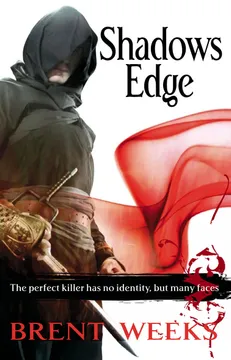


Plot Summary
The Night Angel Refuses
Cenaria is burning under the Khalidoran occupation when Momma K offers Kylar Stern a fortune to assassinate Garoth Ursuul, the Godking. Kylar refuses: he wants to leave with Elene and Uly, the child he has promised his dead mentor, Durzo Blint, to protect. In the castle, he disguises himself to study Baron Kirof, but witnesses Garoth punish soldiers and nobles through ritualized killings.
A carefully timed assassination attempt then fails. Wetboy Hu Gibbet kills the attacking assassin and his young apprentice, preserving the Godking's life. Kylar sees that the occupation has turned cruelty into public theater, yet he still will not take the contract. His refusal leaves him searching for a different way to become a man Elene can love.
Kylar's refusal is not a simple rejection of violence. He knows killing might save lives, but he fears that returning to the work will make violence his only language again. Garoth's public executions offer a counterexample to Kylar's hope: power can make cruelty look orderly, even sacred. The failed attack also complicates Kylar's moral position. By standing aside, he preserves his own resolve but lets the tyrant live. The novel begins by making his private attempt at change inseparable from a political crisis that will not wait for him to feel ready.
A Death for Hire
Jarl recruits Kylar for a scheme meant to discredit Commander Gher and strengthen the Sa'kagé, Cenaria's criminal underworld. Kylar impersonates the missing Baron Kirof while Duke Tenser Vargun stages the baron's murder in front of Gher. Vargun is meant to use a hidden blood bladder, but stabs Kylar for real, cuts his throat, and throws him into the Plith River.
Uly pulls Kylar from the water, and he wakes after a day and a night, alive through the black ka'kari bonded to his body. The experience frightens him more than he admits: he does not know how many times he can return. He leaves Cenaria with Elene and Uly, choosing a fragile household over the life of a wetboy.
The staged murder turns Kylar's chosen profession into a bodily fact. He cannot keep death at arm's length as a clever performance; Vargun's knife makes him confront the possibility that his survival has limits. Uly's role in pulling him from the river also reverses the expected family structure. The child is not merely someone Kylar protects, but someone whose competence keeps him alive. His departure promises a new identity, though the ka'kari makes that identity unstable: Kylar can leave the city, but he cannot leave the powers and habits that shaped him.
The Family Leaves Cenaria
While Kylar recovers, Garoth summons Vi Sovari, Hu Gibbet's apprentice, and orders her to find and kill the real Shinga, the hidden leader of the Sa'kagé. He offers her advanced training in magic if she succeeds. Vi has spent years learning to turn beauty, wit, and violence into protection, but the Godking's confidence makes refusal seem impossible.
Kylar, meanwhile, takes Elene and Uly out of the occupied city. Uly is the daughter of Momma K and Durzo, though Kylar has promised Durzo to care for her without claiming to be her father. Their journey gives Kylar the ordinary closeness he has never known. It also carries them away from the people and dangers he believes he has left behind.
The parallel departures establish two different forms of captivity. Kylar can choose to leave, but his past follows in the shape of skill, guilt, and an immortal body. Vi appears to have choices, yet the Godking's offer is backed by a threat she understands without needing it spoken. Their contrasting paths also unsettle the usual fantasy divide between the free hero and the coerced weapon. Kylar's escape depends on care from others; Vi's survival depends on performing a self that powerful men find useful.
The King in the Hole
Logan Gyre, the former heir to Cenaria, is imprisoned in the Maw's lowest pit after the coup. He has lost his wife, Jenine, and believes his country has been stolen from him. The Hole strips away rank through hunger, filth, and the constant danger of being pushed into its central abyss.
Logan first clings to the name King as a shield against despair, then learns that survival demands acts he once considered unthinkable. He eats human flesh to stay alive and shares food with Lilly, Tatts, Gnasher, and other prisoners. When Gnasher accepts his kindness, Logan gains an ally. He cannot restore the man he was, but he begins to preserve a remnant of decency inside a place built to erase it.
The Hole tests Logan's identity through bodily deprivation rather than political debate. His royal title first functions as a private defense, a way to keep humiliation from becoming his whole self. But the pit does not let him remain innocent: hunger forces him to violate his own standards. His choice to share what he can marks a more difficult form of moral life, one that does not depend on remaining untouched. Gnasher's friendship matters because it makes compassion reciprocal. Logan's humanity is not a possession he carries intact into suffering; it is something he practices with other damaged people.
Caernarvon's False Peace
In Caernarvon, Kylar tries to build an honest life as an herbalist with Elene and Uly. Aunt Mea, Elene's healer aunt, welcomes them, and Kylar discovers that his knowledge of poisons can also cure the sick. But a street encounter exposes the cost of his promise not to use violence: he frightens off local thugs rather than killing them, and their Shinga later marks him for revenge.
Soon an arsonist burns Aunt Mea's barn, their wagon, horses, herbs, and hidden money. Kylar's sword and wetboy clothes survive in a locked case. He keeps the weapon rather than selling it, and his growing shame turns domestic arguments into another reason to leave the rooftops at night.
Caernarvon offers Kylar a life in which competence can serve care, but it does not erase the moral habits he learned in the Warrens. His medical work is genuinely useful, yet he remains most fluent in threat and concealment. The fire makes that tension material: the household loses the tools of its new livelihood while the old instruments of violence remain intact. Kylar's refusal to sell the sword is therefore more than sentiment. It reveals that he has not yet decided whether his identity is something he can change or something he must keep hidden.
Jarl Builds a New Sa'kagé
Back in Cenaria, Jarl takes up the Shinga's role after Momma K yields authority to him. He recruits Brant Agon, a wounded former general, to train the underworld's thieves and laborers for resistance. Jarl wants the Sa'kagé to become more than a machine for smuggling and exploitation, and begins asking brothel workers to imagine a future beyond survival.
Momma K also organizes food, shelter, and protection for people trapped in the Warrens. Vi follows a clue to Jarl's identity but cannot bring herself to kill him. Elsewhere, Sister Ariel, a Chantry scholar, investigates the deadly boundary around Ezra's Wood and finds evidence that a powerful creature has been concealed there for centuries.
Jarl's political project depends on changing what the Warrens' people believe they are capable of becoming. He does not deny that the Sa'kagé has profited from their desperation; instead, he tries to redirect its organization toward collective survival. Brant supplies military discipline, while Momma K supplies the practical infrastructure that makes resistance possible. These are distinct forms of leadership, neither sufficient alone. Ariel's investigation broadens the book's scale from occupation politics to ancient magic, but her patient scholarship echoes Jarl's method: both look for structures others mistake for permanent facts.
The Sword's True Price
A tortured Ladeshian scholar, Aristarchos, is driven by a magical compulsion to kill Kylar, but instead explains that Durzo lived under many identities across centuries and belonged to a secret society studying immortals. The revelation leaves Kylar grieving a mentor he realizes he barely knew. Wanting to sever his tie to wet work, he takes Durzo's sword, Retribution, to a master smith.
The smith recognizes its impossible craft and offers a fortune, but Kylar accepts the sale anyway. He spends the entire sum on a pair of enchanted Waeddryner wedding rings he believes Elene will treasure. He also gives most of the money to Capricia, the young shopkeeper he once saved, so her family can escape the Shinga's threatened revenge.
The revelation about Durzo changes Kylar's grief from loss into belated recognition. He had judged the mentor's bitterness without understanding the centuries of isolation beneath it, and now has no chance to ask what those years meant. Selling Retribution is an attempt to convert inheritance into commitment: the sword becomes money for a future with Elene. Yet the exactness of his sacrifice does not guarantee that he understands her needs. The scene distinguishes material proof of love from mutual knowledge, a distinction the magical rings will later make painfully literal.
Jarl's Last Visit
Jarl reaches Caernarvon with news that Logan is alive in the Hole and that Cenaria needs Kylar to rescue him and kill the Godking. Kylar resists until Jarl describes the imprisoned women, including Magdalyn Drake, then agrees to return. Before they can leave, Vi's arrow kills Jarl through the open window.
She takes Uly as leverage and rides toward Cenaria, leaving Kylar to bury his friend and Elene to discover both the bloodstain and the abduction. Elene sets out after Uly alone. Kylar believes his return to violence has already cost him his family, but he follows Jarl's mission anyway. Vi's act is both a betrayal and the first step in a choice she cannot yet understand.
Jarl's death collapses Kylar's competing obligations into immediate grief. He has barely chosen to return to the work before the friend who asked him to do it is killed, making the decision feel less like a contract than a debt. Elene's pursuit of Uly prevents her from becoming a passive symbol of what Kylar has lost; she acts despite fear and limited power. Vi's kidnapping is cruel, but it also exposes her own entrapment. Her actions are directed by the Godking's coercion, yet the damage falls on people she has reason to care about.
Ariel's Dangerous Mercy
Sister Ariel captures Vi and Uly near Ezra's Wood, identifies Vi as an untrained wild mage, and discovers a lethal compulsion woven into her mind. Kylar, shot by a wetboy hired by Terah Graesin, dies on the road; Ariel witnesses his body heal and revive. She helps him absorb her magic, giving him the power to race toward Cenaria, but keeps Uly on the road to the Chantry.
In a parallel crisis, Dorian Ursuul gives up prophecy to resist Khali at Screaming Winds. Solon survives the resulting assault, but the garrison falls. Ariel's choice to aid Kylar risks her standing and gives him speed, while the revelations around Vi and Kylar make both feel less like ordinary wetboys.
Ariel's response to Kylar is shaped by a tension between scientific curiosity and ethical restraint. His immortality could make him a prize for the Chantry, but she recognizes that institutional research can become captivity when the subject cannot meaningfully refuse. Vi's compulsion similarly shows magic turning loyalty into a mechanism of control. Dorian's sacrifice of prophecy makes the cost of knowledge explicit: insight can help others while consuming the knower. Across these threads, power is not simply capacity. It is the ability to choose what one will surrender, and whether anyone else gets to make that choice for you.
The Maw's Hidden Road
In the Hole, Logan turns a stolen key into a plan to escape, but a guard's interruption sends the key into the abyss and leaves the prisoners trapped. He and Gnasher descend by rope into the cavern below, searching through human waste for the key. Fin attacks them, and Gnasher kills him before he can finish Logan.
The rope is cut above, so Kylar must find another exit. He carries Logan and Gnasher through a flooded connection from the Maw into Cenaria's Stacks, where a subterranean beast attacks them. Logan helps blind it, and Kylar brings both men to a tunnel guarded by Gorkhy. Logan orders the corrupt guard killed. The first command he gives after escaping is an execution.
Logan's escape is built from cooperation among people the prison has taught to distrust one another. The stolen key, Gnasher's strength, Lilly's rope, and Kylar's knowledge of the Stacks each offer only part of a route out. Logan's order to kill Gorkhy marks the moral ambiguity of his return to power: justice and survival have become difficult to separate. He has gained freedom, but not innocence. The scene refuses to make escape a clean rebirth; Logan exits the pit carrying its habits, its losses, and a new understanding of what command requires.
The Night of Blood
While Kylar is away, Momma K's brothel workers turn Jarl's murder into the Nocta Hemata, a coordinated uprising against Khalidoran soldiers who have abused them. The attacks spread through the Warrens, where residents ambush the occupying troops and lose no one in the fighting. Hu Gibbet then targets a hidden refuge holding hundreds of women, intending to create a massacre for the Godking.
Kylar arrives in a terrifying ka'kari disguise, drives the children away, and defeats Hu by trapping him in the refuge's water machinery. Hu dies, and Momma K's people escape before the Godking can use them as an example. The rebellion has changed from Jarl's appeal for courage into an action the occupiers cannot ignore.
The uprising turns people previously treated as victims or criminal stock into agents with tactical knowledge of their own city. The brothel workers use the very spaces built to contain them as organizing centers, while the Warrens' alleys become a defense system. Their victory is not cost-free in psychological terms: the women retaliate through violence, not through an untouched moral ideal. Kylar's intervention prevents an even larger massacre, but Hu's death also confirms that Kylar's attempt to abandon killing has failed. The section makes resistance concrete, collective, and morally compromised.
A Crown Refused
Logan returns to the rebel camp with Momma K and Brant Agon's newly trained fighters. Terah Graesin sees him as a threat to the coalition she has built and agrees to marry him only when the nobles demand unity before battle. Logan prepares to accept, then addresses the army instead.
He honors the women who fought in the Nocta Hemata and creates the Order of the Garter for them, turning public shame into recognized service. He refuses to marry Terah, but offers her his fealty if she will pardon his followers and establish the order. Terah accepts. Logan enters the coming battle not as the unchallenged king he once imagined, but as a leader who has chosen unity over possession of the crown.
Logan's most important act here is not claiming authority but limiting it. His speech links his experience in the Hole to the humiliation of women under occupation, and he converts that recognition into a public institution. Refusing marriage costs him the simplest route to power, while submitting to Terah preserves the army from civil war. His choice is politically shrewd, but it is also a test of whether he can govern without treating people as pieces in a succession struggle. The Order of the Garter makes honor something granted through action, not inherited status.
Curoch Changes Hands
Feir Cousat tracks Curoch, the legendary sword, to Ferl Khalius, a Khalidoran soldier who has stolen it. Feir kills Ferl and recovers the weapon, then discovers that Ceuran warlord Lantano Garuwashi and his sa'ceurai are nearby. When Garuwashi challenges him, Curoch changes into the Blade of Heaven recognized by the Ceurans.
Garuwashi's own iron sword breaks against it, and the warriors interpret the exchange as a sign that their leader is meant to rule. Feir cannot escape or reclaim the weapon without fighting a force he cannot defeat. He agrees to serve Garuwashi, while the Cenarian rebels remain unaware that a new army is moving toward their war.
Curoch's transfer shows how artifacts acquire political meaning beyond their magical function. Feir sees a weapon that could save Cenaria; Garuwashi's followers see proof that their leader has a destiny. The same object therefore produces opposing forms of legitimacy. Feir's defeat is not caused by a lack of skill so much as by the limits of individual agency when a symbol changes the loyalties of an entire group. His decision to serve preserves his life, but it also carries the sword into a future conflict that the rebels cannot yet anticipate.
The Ferali Beneath Cenaria
Kylar and Vi infiltrate the Maw to reach Garoth before the armies meet. The prison has been rebuilt around a vast chamber where Khalidoran meisters torture prisoners and feed them to a tattooed man whose body grows by consuming human flesh. Kylar sees the meisters use diamonds to control the creature and realizes they are preparing a ferali, a weapon that can absorb bodies and reshape itself.
He removes the diamonds, freeing the creature to attack its captors, then escapes with Vi through a hidden route toward the castle. The discovery explains why Garoth has been gathering prisoners and why the Maw has become the center of his magic. The weapon is now loose, but not yet beyond anyone's influence.
The ferali literalizes the political system around it: bodies are reduced to fuel, then reorganized to serve an authority that claims to control the result. The meisters' diamonds make that control visible, but Kylar's removal of them reveals how fragile the arrangement is. He interrupts the mechanism without knowing whether he can direct what follows. This is a recurring ethical problem for him: destroying a tool of oppression can release danger onto everyone nearby. The prison's transformation also makes the Maw more than a setting. Its accumulated suffering has become material that Garoth hopes to weaponize.
The Godking's Last Order
Garoth uses a compulsion to make Vi stab Kylar, killing him as the ferali devastates the Cenarian army. Kylar returns from death through a bargain with the Wolf, while Vi, trapped by the Godking's command, puts on the enchanted wedding rings she had taken from Kylar's abandoned proposal. The rings break the compulsion.
As Garoth turns his attention to the battlefield, Vi stabs him, and Kylar cuts through the vir when it reaches for her. On the field, Logan recognizes Lilly within the ferali and commands her to attack Khalidorans. The creature obeys, destroys the pit wyrm sent against it, and tears through the encircling army. Garoth dies, and the slaughter meant for Cenaria becomes Khalidor's rout.
The climax makes coercion and intimacy collide. Vi's first act of agency is enabled by a bond she did not ask Kylar to share, so her escape from one compulsion creates a new moral complication. Kylar's return does not undo the betrayal; it gives him another chance to act within its consequences. Logan's command succeeds because he recognizes Lilly as a person rather than treating the ferali as an object to destroy. The victory depends on three different kinds of resistance: Vi refusing her father, Kylar severing the vir, and Logan addressing the suffering mind still trapped inside the weapon.
Two Rings, One Wound
With Garoth dead and the Khalidoran forces broken, Cenaria's soldiers acclaim Logan as king. In the throne room, Kylar notices the ring Vi wears and recognizes it as the mate to the one he bought for Elene. Their magic has bound their feelings together, and Kylar feels the force of Vi's love alongside her guilt.
He cannot accept the bond as a substitute for the future he had intended with Elene, so he lets Vi flee rather than pursue her. He has lost his right arm, his sword, and the peaceful life he tried to build. Uly is on her way to the Chantry, while Elene remains missing. The kingdom has won its battle, but Kylar's private losses remain unresolved.
The rings turn an emblem of chosen commitment into an involuntary intimacy. Vi uses them to escape Garoth's control, but their magic does not make Kylar consent to a relationship; it forces feeling into the space where trust should develop. His rejection is not proof that Vi is beyond love. It is a boundary against treating her sacrifice as a claim on him. Logan's public victory contrasts with Kylar's private dislocation, resisting the idea that military success repairs every life damaged by war.
Epilogue
Dorian, having surrendered prophecy, sees Jenine among the Godking's guarded party and recognizes the woman he may love, then continues toward Khaliras. On the road, Elene escapes her Khalidoran captors when a Ymmuri stalker attacks their camp; she kills Ghorran to save a boy and accepts that she, too, can use violence to stop evil.
Kylar visits Durzo's grave, grieving the life he has lost and preparing to honor the Wolf's bargain by stealing Curoch. A hidden box yields Durzo's note: it says he received another life after Kylar killed him and warns Kylar against making bargains with the Wolf. Kylar's mentor may still be alive.
The ending refuses a single clean resolution. Elene's decision to kill Ghorran revises her earlier belief that moral goodness requires abstaining from force; she acts to prevent another child from being murdered, not to satisfy revenge. Dorian's approach to Jenine promises attachment but not relief from suffering, keeping love within the book's pattern of costly choices. Kylar's discovery of Durzo's note then reopens the grief that seemed settled. The revelation offers hope, but also deepens the uncertainty surrounding immortality and the Wolf. The book closes by converting an ending into another obligation, while leaving its characters' emotional debts unpaid.
Analysis
Shadow's Edge makes identity a contested practice rather than a stable possession. Kylar wants to leave wet work, but the habits that kept him alive remain useful whenever someone is threatened. His problem is not that he cannot tell right from wrong. It is that he experiences violence as both morally dangerous and exhilaratingly competent. The novel refuses to resolve this conflict through a simple renunciation. Kylar saves people with the same skills that make him dangerous, and his return to killing costs him the ordinary future he hoped to earn.
The parallel stories test power from different directions. Logan's captivity removes every social privilege that once separated him from the people he expects to lead. His later authority becomes credible when he recognizes the courage of the Warrens' women and gives that courage public standing. Jarl tries to transform the criminal network from within, while Momma K builds the food, shelter, and protection that make his political vision materially possible. Their resistance shows that institutions can be redirected, but not made innocent by a new purpose.
Garoth's rule depends on converting suffering into proof of his divinity. His system is not merely cruel; it makes cruelty appear useful, orderly, and inevitable. Against it, the book places forms of care that are practical rather than sentimental: Uly rescuing Kylar, Gnasher accepting Logan's trust, Ariel limiting the Chantry's claim over Kylar, and the brothel workers organizing together. These acts do not erase violence. They make it possible to imagine obligations beyond obedience.
The ending remains deliberately unsettled. Logan's army wins, but Curoch has passed to a rival power, Elene is still separated from Kylar, and the enchanted rings create intimacy without consent. Even Durzo's apparent return complicates rather than repairs the story's grief. Victory changes who holds power; it does not guarantee that those who survive can recover the lives they wanted.
Review Summary
Reviews of Shadow's Edge are polarizing. Many critics cite an overemphasis on virginity and a reductive virgin/whore dichotomy in female characterization, alongside excessive POV shifting that hinders character development. Common complaints include the slow, romance-heavy first half featuring an irritating Elene. Praise centers on Logan's compelling arc in the prison, Vi's complex development, thrilling action sequences, and a gripping ending. Most agree the story improves significantly in its latter half, with the overall rating averaging 4.25 stars despite divided opinions.
People Also Read



Characters
Kylar Stern
Immortal shadow-killerKylar is a gifted wetboy, a trained assassin whose black ka'kari gives him powers he barely understands. Raised in the Warrens and shaped by Durzo Blint, he has learned to read rooms, anticipate danger, and answer threats with lethal precision. His attachment to Elene and his promise to care for Uly reveal a longing for ordinary tenderness that conflicts with the satisfaction he finds in skilled violence. Kylar is not simply trying to become good; he is trying to discover whether goodness can include the instincts and abilities that made him a survivor. His central struggle is whether he can accept himself without letting power excuse harm.
Logan Gyre
Disgraced heir in exileLogan is the former heir of a powerful Cenarian family, accustomed to privilege but not yet tested by the responsibilities attached to it. His education and noble manners distinguish him in the Warrens, where he must learn how quickly status disappears when food and safety are gone. He wants to be honorable, but his understanding of honor initially depends on remaining clean of compromise. Suffering forces him to confront the difference between virtue as reputation and decency as repeated action. His evolving relationship with authority is central: he must learn to recognize people whom his former class treated as background.
Elene
Scarred moral anchorElene is a healer's apprentice with deep scars across her face, left by violence in her childhood. Her compassion is neither passive nor effortless; she works to understand people without pretending their actions are harmless. She loves Kylar while fearing what his life as a wetboy has done to him, and her religious convictions shape the terms on which she imagines a shared future. Elene's instinct is to protect others, especially Uly, but she is also capable of doubt and self-examination. Her challenge is to distinguish loving someone from demanding that they become a different person before she can trust them.
Vi Sovari
Weapon shaped by coercionVi is a beautiful, highly trained wetboy whose charm is as deliberate as her combat skill. Her master, Hu Gibbet, has taught her to use sexuality as a tool while denying her safety and control over her own body. She protects herself through contempt, sharp humor, and a carefully managed appearance, especially her hair, which she treats as a private possession. Vi is intelligent and observant, but has been trained to confuse obedience with survival and strength with emotional numbness. Beneath the performance is a person trying to imagine a self not defined by the men who have used her.
Garoth Ursuul
Conqueror worshipping powerGaroth Ursuul rules Khalidor through magic, military force, and the claim that his cruelty protects the empire from chaos. He is not a mindless brute: he studies people, manipulates rivalries, and considers how fear can make submission appear rational. His capacity to discuss morality does not restrain him; instead, he uses such questions to test and unsettle others. Garoth's fascination with power is joined to a need to make himself more than human, a project that shapes his treatment of family, prisoners, and the conquered. He sees compassion as weakness and is perplexed by people who accept loss rather than dominate.
Jarl
Reformer from the WarrensJarl is Kylar's lifelong friend and a former rent boy who has learned to read desire, fear, and social leverage with unusual precision. He is charming without being shallow, and understands that people who have been treated as disposable can still become a community. As Shinga, he tries to redirect the Sa'kagé from profitable criminality toward protection and political change. His own history makes him wary of easy promises, yet he is willing to ask others to imagine a better future. Jarl's leadership depends not on pretending the underworld is virtuous, but on persuading its people that they can choose what their power serves.
Momma K
Underworld matriarchMomma K is the calculating head of Cenaria's Sa'kagé and the owner of brothels that offer women relative safety in a violent city. She combines political intelligence with a practical understanding of hunger, commerce, and human desire. Her elegance is a form of authority, but she is not insulated from grief or regret. She has spent years arranging people and information from the shadows, and must decide when secrecy has become less useful than public action. Her care for Uly and her complicated ties to Durzo and Jarl sit alongside the hard choices required to keep the Warrens alive.
Uly
Sharp-eyed foundlingUly is an observant child who has grown up among servants and political dangers, learning to notice what adults try to conceal. She is quick with jokes and quick to recognize when people are frightened, though her intelligence does not erase her need for reassurance. Kylar's promise to care for her gives her a rare sense of belonging, while her early losses make separation especially painful. Uly is not merely a child to be rescued: she contributes practical help, remembers details, and has a capacity for loyalty that adults sometimes underestimate. Her hidden talent suggests a future beyond the roles others have assigned her.
Durzo Blint
Kylar's severe mentorDurzo is the legendary wetboy who trained Kylar, a man whose lessons prize discipline, preparation, and survival above comforting illusions. To Kylar, he was a harsh master whose knowledge seemed bound to the trade of killing. The revelations surrounding Durzo's past suggest a far broader life than the one Kylar witnessed, but his secrecy left his apprentice without a clear account of what that life meant. Durzo's influence persists in Kylar's habits, judgments, and sense of isolation. He represents both the skill Kylar depends on and the danger of allowing a life of service to harden into bitterness.
Dorian Ursuul
Prophet fighting his giftDorian is Garoth's estranged son, a healer and prophet whose visions let him follow possible futures through the lives of others. His gift brings knowledge at a psychological cost, threatening to overwhelm his ability to remain present. Dorian is thoughtful, humane, and capable of recognizing the danger of his own ambitions, but he cannot easily separate private pain from the consequences his foresight might prevent. His choices are guided by a desire to help people who may never know what he sacrificed. He embodies the book's uneasy question about whether knowing the future is worth losing the ability to live in the present.
Solon Tofusin
Exiled prince and mageSolon is a Sethi prince and gifted mage who has spent years away from his homeland, serving alongside Dorian and Feir. He is brave and competent, but his strongest vulnerabilities are emotional: regret over the life he left behind and uncertainty about what his power asks of him. His bond with Dorian is both friendship and a source of comparison, since Dorian's gifts often seem to eclipse his own. Solon must decide whether magical strength is worth the dependence it can create, especially when Khali offers power in moments of desperation.
Feir Cousat
Maker carrying a legacyFeir is a Maker, smith, and capable swordsman whose practical intelligence often compensates for his modest magical gifts. He travels with men of greater rank and power, and has grown used to measuring himself against them. His value lies in persistence, craft, and an ability to turn imperfect materials into workable solutions. Feir is not free of envy; he feels the distance between his own ordinary origins and the heroic reputations of his companions. Yet he continues to take risks for causes that may never reward him, making humility both a wound and a source of resilience.
Sister Ariel
Chantry scholarAriel is a powerful maja and an exacting scholar who prefers careful observation to social performance. Her intelligence can make her seem detached, and she often treats emotion as something to classify before she responds. Yet curiosity is not her only motive: she can recognize when institutions turn knowledge into control, and she is willing to risk her place in the Chantry to protect people from that outcome. Ariel's careful studies of ancient wards and living magic make her a bridge between scholarship and action. She is still learning that understanding people requires more than solving them as puzzles.
Brant Agon
Wounded veteran generalBrant Agon is an experienced Cenarian commander whose injuries have not dulled his strategic judgment. He distrusts romantic talk about war and pushes Jarl to turn the Sa'kagé into a disciplined force with a clear purpose. His bluntness can seem cruel, but it comes from an understanding that hesitation costs lives. Brant carries private grief and the unresolved uncertainty of a wife he cannot confirm is alive or dead. His discipline is not emotional coldness; it is a way to continue serving while refusing to let personal desire dictate every decision.
Count Drake
Rebel counselorCount Drake is a wounded noble and father who advises the resistance with patience and moral seriousness. He offers Kylar a kind of acceptance that does not depend on the young man's disguises or achievements. His counsel is shaped by faith, but he does not confuse belief with certainty or excuse difficult choices. As a father, he carries grief for his daughters and tries to protect the people still within his reach. Count Drake's influence lies in asking others to examine what they owe, rather than offering them an easy absolution.
Terah Graesin
Ambitious claimantTerah is a politically skilled noblewoman who wants to rule Cenaria and understands how desire, reputation, and marriage can become instruments of power. She is disciplined in public and willing to exploit the expectations placed on women when those expectations can advance her position. Terah is not simply vain or seductive; she is ambitious in a political world where influence is often indirect and unstable. Her dealings with allies reveal how quickly self-preservation can become a challenge to collective resistance. She treats compromise as a tactic, not necessarily as a surrender of intent.
Lilly, also called Lilene
Survivor in the HoleLilly is a prisoner who has learned to survive by reading danger without pretending that the Hole is fair. She gives Logan practical advice about hiding his vulnerability and recognizes his efforts to treat people as human even when the conditions make that nearly impossible. Her humor and pragmatism are forms of protection, not evidence that she is untouched by fear. Lilly's real name and history matter to her, though she has learned to bury them beneath the role that keeps her alive. She represents how survival can coexist with a desire to recover dignity.
Gnasher
Gentle giant prisonerGnasher is a physically imposing, misshapen prisoner whom the others fear for his strength and filed teeth. At first he appears almost incapable of speech, but he responds to patience, touch, and trust in ways the other inmates do not expect. His loyalty is direct and powerful, though his understanding of the world is limited by his isolation and the violence around him. Gnasher's bond with Logan shows how care can reach someone whom the prison has taught everyone else to treat as a monster.
Kaldrosa Wyn
Pirate turned resisterKaldrosa is a former Sethi pirate captain who enters Momma K's brothel after losing her ship and fearing for her husband, Tomman. She is resourceful, proud of her maritime skills, and unprepared for the humiliation of sexual slavery. Her story gives the Warrens' resistance a view beyond Cenarian nobles and wetboys: she is a woman trying to preserve love and self-respect under occupation. Kaldrosa's courage is practical rather than polished, forged by the need to protect someone she cares about.
Aristarchos ban Ebron
Tortured scholarAristarchos is a Ladeshian administrator and member of a secret society devoted to studying immortals. Garoth's torture and drug-based compulsion reduce him to an addict, but he fights to warn Kylar rather than simply obey. His pride in his former public service remains visible beneath his degradation. Aristarchos shows how knowledge can survive the destruction of status, and how a compromised person can still make a courageous choice.
Neph Dada
Godking's occult adviserNeph Dada is Garoth's aged Vürdmeister, an adviser whose apparent frailty conceals ambition and deep magical expertise. He supplies the Godking with intelligence, researches ancient artifacts, and helps shape the machinery of occupation. Neph is careful to display deference while continually seeking advantage for himself. His relationship with Garoth is not one of simple loyalty: he serves power while measuring how much power he might eventually claim.
Jenine Gunder
Young royal captiveJenine is King Gunder's daughter and Logan's young wife, thrust into royal danger before she has time to understand the life being imposed on her. She is thoughtful and observant, with a capacity to challenge powerful people even when she has little control over her circumstances. Her questions about evil and love show a mind forming its own judgments rather than merely repeating those of her court. Jenine's vulnerability does not erase her will, and Garoth's interest in her reflects how he recognizes strength even as he tries to possess it.
Lantano Garuwashi
Unbeaten Ceuran warlordLantano is a Ceuran commoner's son who has built authority through exceptional skill in battle and an unbroken record of victory. His followers read his history through the locks of hair he binds into his own, each marking an opponent he has defeated. He values the Ceuran code of swordsmanship as a matter of identity, not just technique. Because his birth limits the rank he can inherit, he has learned to make excellence itself a claim to leadership.
Hu Gibbet
Predatory master wetboyHu is the city's most feared wetboy after Durzo's death and Vi's abusive master. He combines genuine professional skill with a taste for cruelty that threatens to compromise his own discipline. Hu uses drugs, violence, and sexual abuse to keep Vi dependent, while presenting himself as the standard she must meet. His pride in being feared masks a need to prove himself against the respect Durzo commanded.
Plot Devices
The Black Ka'kari
Power with a hidden costThe black ka'kari bonds with Kylar and can cover him, reshape into weapons, consume magic, and help his body recover from fatal injuries. Its powers are not fully understood even by Kylar, and each new use raises questions about what the object wants and what its presence costs. It links the present conflict to Durzo's centuries of hidden identities and gives the Godking a reason to seek Kylar alive. The ka'kari is both practical equipment and an unstable inheritance, making Kylar's extraordinary survival inseparable from his uncertainty about what he is becoming.
The Vir and Khali
Suffering converted to powerKhalidoran prayers channel the life force of worshippers toward Khali, who returns magic to chosen servants as vir. Garoth uses this system to make conquest feel divinely sanctioned and to feed the Vürdmeisters' power. The cost is visible in the violence inflicted on prisoners, soldiers, and occupied communities, where intense suffering strengthens the magical order. The system also explains why the Maw matters: centuries of misery have made it a potent site for Khali's arrival and for experiments that transform human bodies into weapons.
The Ferali
A weapon grown from victimsA ferali is a magically controlled creature built by enlarging a tortured human body and feeding it more victims. Its skin consumes living flesh, its bones and limbs shift into new forms, and it can absorb weapons and armor into its body. Diamonds help the meisters control it, but the creature becomes difficult to direct once that control is disrupted. Garoth intends to release one against the Cenarian resistance, turning the battlefield into a feeding ground. Its human origins remain visible beneath each new shape, which makes it both a military threat and an image of power's appetite.
The Waeddryner Rings
Love made magically bindingWaeddryner wedding rings are sealed through a private ritual in which a bride places a ring in her husband's pierced ear. The rings are said to deepen understanding between spouses, but the strongest examples carry genuine magic capable of binding powerful feelings and loyalties. Kylar buys a matched pair for Elene, then loses them when Vi takes them from his home. Their later use turns a symbol of chosen commitment into an instrument of compulsion and emotional entanglement, forcing the characters to confront the difference between magical connection and freely given trust.
The Maw and the Stacks
A prison with a hidden exitThe Maw's lowest pit, known as the Hole, is designed to erase prisoners through starvation, exposure, and the threat of a central abyss. Above and beneath it, the Stacks contain vast pipes and mechanical shafts that connect parts of Cenaria in ways few people understand. Kylar uses this forgotten architecture to reach Logan after the ordinary escape route fails. The device turns a symbol of confinement into a route to freedom, but passage requires a dangerous swim past an ancient creature. Escape depends on seeing the city's infrastructure differently from the authorities who believe they control it.
About the Author



Download PDF
Download EPUB
.epub digital book format is ideal for reading ebooks on phones, tablets, and e-readers.








