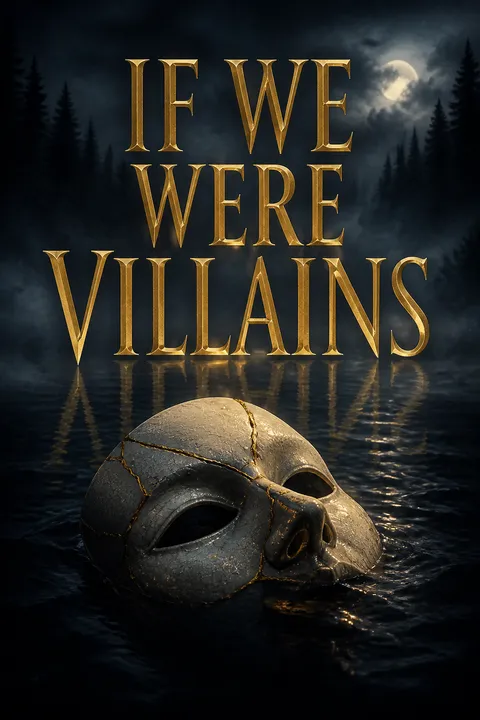


Plot Summary
Prologue
Ten years after Richard’s death, Oliver Marks sits cuffed across from retired detective Joseph Colborne. Oliver has served his sentence and is close to release, while Colborne is still troubled by the unsolved details of the case. He offers Oliver a private chance to explain what happened, promising the account will not be used against him or his friends.
Oliver agrees to tell the story only after leaving prison, and insists that his confession will not be an apology. The narrative then returns to his final year at Dellecher Classical Conservatory, where Shakespeare’s tragedies shape both the students’ art and the dangers they fail to recognize.
The frame makes the story an act of testimony rather than a conventional mystery. Oliver controls when he speaks and what the account means, but his insistence that it is not an apology signals that factual disclosure cannot undo moral participation. Colborne seeks a coherent explanation; Oliver remembers a world in which shared performance, loyalty, and guilt blurred the distinction between what happened and what the students chose to say happened. The opening also makes the reader listen for omissions. Oliver’s story is vivid, yet the very conditions of its telling warn that memory and confession are not identical to truth.
Seven at the Castle
In September 1997, Oliver Marks returns to Dellecher, an elite Illinois conservatory where fourth-year theatre students live apart in a stone building called the Castle.
He shares a room with James Farrow, the company’s gifted leading man, and belongs to a tight group that includes commanding Richard Stirling, his girlfriend Meredith Dardenne, Richard’s cousin Wren, the sharp-tongued Alexander Vass, and versatile Filippa Kosta. The seven have survived years of competitive purges and now prepare to audition for Julius Caesar.
Alexander correctly predicts most of the casting, while Oliver receives two smaller roles. He has learned to think of himself as a supporting player, especially beside James, whose talent and popularity seem effortless.
Dellecher’s selectivity creates intimacy and pressure at once: surviving the school’s annual cuts makes the seven feel chosen, while their isolation narrows their sense of what counts as normal. Oliver’s self-image as a supporting actor is more than modesty. It gives him a practiced way to observe, accommodate, and remain useful without asking to lead. That habit will later shape his moral decisions. The casting ritual also plants the story’s governing analogy: the students already interpret one another through roles, so personal conflict can be mistaken for dramatic pattern.
The Lake Turns Hostile
Gwendolyn, the actors’ demanding director, begins the year by forcing the students to name their strengths and fears. Their candor exposes hidden insecurities beneath their confident stage personas.
At Halloween, they perform Macbeth on the lake shore, with the three women emerging from the water as witches and Oliver appearing as Banquo’s bloodied ghost. The theatrical spell collapses afterward when Richard, drunk and furious, turns a chicken fight into an assault and forces James underwater.
Oliver and the others pull James free before he drowns. Richard calls the attack a game, but the group cannot restore its old ease. Oliver stays beside James on the dock, while the still lake becomes a reminder that their closeness has not protected them from violence.
Gwendolyn treats vulnerability as a tool for better acting, but the exercise also teaches the students to expose private pain under authority’s direction. Halloween then turns their theatrical language into an actual social script: Richard claims aggression is play, and the others initially accept that framing because it preserves the group. James’s near drowning breaks the fiction. Oliver’s instinct to stay with him reveals a loyalty more bodily and urgent than his usual supporting role, yet the group still chooses a temporary return to normal rather than confronting Richard’s capacity for harm.
Bruises Beneath the Costumes
As Caesar rehearsals intensify, Richard grows more volatile. James privately shows Oliver bruises left when Richard grips his arms during the assassination scene, but refuses to report him, fearing that confrontation will make the abuse worse.
Oliver watches Richard closely. During a dress rehearsal, Richard throws Meredith down the steps while improvising beyond the agreed blocking, cutting her arm and bruising her. Filippa confronts him in front of the company, and Gwendolyn warns that Oliver may replace him if he endangers the production again.
Richard apologizes, but James and Oliver no longer trust that restraint will last. The night before opening, they agree with Alexander to defend themselves together if Richard attacks during the show.
The injuries accumulate in a theatre where physical contact is routinely explained as craft. That makes abuse difficult to name: Richard can hide behind the language of intensity, while James’s refusal to report him reflects a survivor’s attempt to manage danger by minimizing it. Filippa’s public rebuke briefly supplies the boundary the others have avoided setting. Yet the group’s decision to answer violence with violence is not a clear act of justice. They choose a private counter-script, one that removes adult supervision and makes the coming performance a venue for retaliation.
Caesar’s Bloody Premiere
On opening night, the students reach the assassination scene with their plan already agreed. When Richard, playing Caesar, gives the cue for the conspirators to attack, the actors abandon the choreography and swarm him. Richard chokes Oliver against his collar before Alexander pulls him away; in the struggle Richard strikes Filippa hard enough to leave her winded.
James eventually brings the scene to a stop, and the company completes the play as though the disruption were part of the production. Afterward, Alexander hopes Richard has learned his lesson. At the Castle party, however, Richard isolates himself, drinks heavily, and remains angry. The others celebrate a successful opening while the violence they staged follows them home.
The performance offers the group a dangerous form of permission: they can injure Richard while appearing to fulfill the play’s action. Their audience sees a convincing assassination, but the students know the boundary between rehearsal and assault has vanished. Oliver’s attack on Richard is both retaliation and a first taste of power he rarely claims. The apparent success of the scene conceals its cost. Because the company resumes the play rather than stopping it, they convert a serious rupture into spectacle and leave the underlying conflict unresolved.
The Party Breaks Open
At the crowded Castle party, Richard punches a student who had spoken with Meredith, then turns on Meredith when she challenges him. He insults and grabs her before she slaps him; James and Alexander restrain Richard, while Oliver pulls Meredith away. She kisses Oliver on the stairs and takes him to her room.
Richard pounds on the locked door, threatening them, then disappears into the night with a bottle of whisky. Oliver later wakes in Meredith’s bed and encounters James alone in the bathroom, sick from drinking and strangely guarded. Before dawn, Filippa summons Oliver and Meredith to the dock. The others have found Richard floating in the lake, his face crushed, but still alive.
Meredith’s choice to seek Oliver is not merely romantic; it is a refusal to remain the object of Richard’s control. Oliver’s response, however, comes tangled with desire, anger, and the wish to protect her, so he cannot easily distinguish care from rivalry. James’s secretive presence in the bathroom introduces an intimate silence between the two roommates just before the group’s central crisis. Richard’s disappearance links the party’s public violence to the lake, the place where the earlier assault on James already taught them how quickly play can become lethal.
Let Him Sink
Richard reaches toward the dock, and James tries to rush into the water, but Oliver restrains him. Alexander argues that rescuing Richard will return them to the same threats and assaults; the others remember how Richard hurt James, Meredith, and Wren. None can say with certainty that Richard fell by accident, yet they agree not to help him.
James finally stops resisting and accepts the decision. Oliver then strips off his clothes and enters the freezing lake to check whether Richard is dead. He finds no pulse and returns to the dock. Together, the six decide what to tell police: they will hide the earlier violence and say they discovered Richard that morning. Their shared relief turns complicity into a pact.
The decisive wrongdoing is not a single blow but a collective refusal made while Richard remains alive. Fear is real, and so is the group’s accumulated sense of injury, but neither makes their agreement morally neutral. Their conversation converts private resentment into shared permission, reducing each person’s individual responsibility without erasing it. Oliver’s swim gives him the practical authority to confirm death, while also deepening his involvement. From this point, the group’s solidarity is no longer only friendship. It is a structure built to protect a secret.
A Convenient Accident
Detective Colborne interviews the students separately. Oliver follows the group’s account, denying that Richard had recently been violent and omitting his night with Meredith. The medical examiner rules the death accidental, and Dellecher confines the six friends while the police investigate.
At Richard’s memorial, Wren mourns her cousin with tenderness that does not erase his cruelty, while the others sit together under the scrutiny of the school. They leave for Thanksgiving carrying grief, guilt, and an unanswered question: what will happen when they are apart?
Oliver returns to Ohio, where his parents reveal that his sister Caroline’s eating disorder requires expensive treatment they cannot fund alongside his final semester. The supposed refuge of family instead threatens to cut him off from Dellecher.
The official accident finding gives the students what they need most: a public story that resembles their private account. Yet its convenience intensifies rather than settles their guilt, because they know the investigation was denied crucial context. Wren’s memorial speech complicates the group’s easy picture of Richard as only an aggressor; love and harm can coexist without canceling each other. Oliver’s family crisis echoes the conservatory’s demand for sacrifice, but now the cost is concrete: he may lose the only community he considers home.
The Masque and the Mirror
James unexpectedly travels to Oliver’s Ohio home and shares his bed, interrupting Oliver’s plan to visit Meredith in New York. Dellecher arranges loans and work-study so Oliver can return. Wren comes back from London, but collapses during a speech performance and is taken to the infirmary.
At the Christmas masque, she appears as Juliet opposite James, while Oliver plays Benvolio. Watching them kiss in the final scene, Oliver recognizes that his jealousy is not simply about Meredith. The friends then separate for the holiday.
After a bitter Christmas at home, Oliver escapes to New York and stays with Meredith. They spend New Year’s Eve together and begin a sexual relationship, but their intimacy cannot make the old group whole or quiet Oliver’s feelings for James.
The winter scenes expose how the students use closeness to survive, while also revealing that intimacy is not distributed evenly. James’s unplanned arrival matters to Oliver more than any declaration could; the shared bed feels natural, and Oliver quietly abandons his other plan. The masque then gives him a public image of what he wants and cannot claim. His relationship with Meredith is genuine, but it also offers shelter from a desire he cannot yet name. Wren’s collapse makes the group’s emotional strain visible in her body.
Edmund Takes the Stage
Back at Dellecher, the fourth-years audition for King Lear, and the faculty make an unusual choice: Frederick will play Lear, while James receives Edmund and Oliver receives Edgar. The casting gives James a chance to leave the heroic roles that have defined him, but his transformation unsettles Oliver and Filippa.
Meredith and Oliver try to define what their relationship means; Meredith explains that she values Oliver’s sincerity, not a replacement for Richard, but neither can offer the other certainty.
In rehearsal, Gwendolyn forces James and Meredith to play their attraction with physical intensity. Their kiss is so convincing that Oliver leaves the room shaken. Meanwhile, Colborne quietly reopens questions about Richard’s last hours, and Oliver understands that the police no longer trust the group’s account.
The casting reverses the group’s familiar hierarchy: James must inhabit a morally compromised role, while Oliver is placed opposite him rather than safely at the edge. Gwendolyn’s method again treats authentic feeling as material to be summoned, but the exercise extracts real jealousy as well as dramatic chemistry. Meredith’s insistence on being seen as herself resists the role of bereaved girlfriend, even as Oliver struggles to meet her without turning her into an answer to his own confusion. Colborne’s renewed attention makes these private entanglements legally dangerous.
Blood in the Fireplace
While cleaning the Castle, Oliver finds a small piece of bloodstained cloth in the library fireplace. Afraid of what it might implicate, he hides it inside a mug in a neglected basement locker rather than showing Colborne. The same day, during Lear combat practice, James strikes Oliver across the face with a sword pommel and breaks his nose.
Meredith tends to Oliver afterward, and the two resume their physical relationship. Oliver later confronts James, who admits he has been staying away and says he feels capable of hurting the world. Filippa urges Oliver to forgive him because the group cannot survive another internal fracture. Oliver goes upstairs and lets James approach, though the injury and the hidden clue leave trust badly damaged.
Oliver’s discovery creates a choice between truth and protection, and he chooses concealment before he knows exactly what the cloth proves. That reflex mirrors the group’s first cover-up: he treats secrecy as a way to preserve people, though it also gives suspicion room to grow. James’s accidental strike makes their emotional danger physical again, but his remorse does not restore Oliver’s sense of safety. Filippa’s appeal to unity is compassionate and strategic at once. She recognizes that, for this group, forgiveness is often less a judgment of innocence than a means of keeping everyone together.
Alexander Falls Silent
Alexander, already using drugs to sustain himself, overdoses in his room. Colin finds him collapsed among pill containers, and James checks his pulse while Meredith orders an ambulance. Oliver makes the emergency call as Alexander begins to seize; the group sends him to hospital despite the risk that the drugs will expose his behavior to the school.
He survives, but Dellecher imposes counseling and close supervision, and his friends watch him struggle through withdrawal. The incident strips away their pretense that excess is harmless. They have now faced death at the lake and another near-death in the Castle, yet remain more practiced at hiding shame than asking for help.
Alexander’s overdose makes the group’s culture of indulgence impossible to romanticize. The same habits once treated as part of artistic freedom now threaten a friend’s life, and James’s insistence on medical care marks a rare break from their instinct to protect the secret first. Their decision to call for help shows that the pact is not absolute; when danger becomes immediate, they can choose intervention. But institutional supervision addresses symptoms more readily than the grief and guilt driving the students toward self-destruction.
Lear’s Wild Night
After Lear opens, the company holds a subdued party at the Castle. James drinks heavily, speaks in fragments from Shakespeare, and seems to be reliving scenes rather than performing them. Oliver finds him in the library, where he has opened a window and is behaving as if Richard is nearby.
James breaks the bathroom mirror, then leaves Oliver and takes Wren upstairs, asking her to come to bed with him. Oliver loses sight of Meredith in the crowded house and spends the night with Filippa instead.
In the morning, he cleans the Castle to steady himself. In James’s mattress he finds a hidden boat hook with dried blood caught in its crevices. He recognizes it as a tool from the boathouse and understands that the cloth in the locker may not be the only evidence.
James’s lines cease to function as a shared artistic language and become signs of a mind losing its grip on the boundary between role and memory. Oliver tries to follow and contain him, but James’s choice of Wren excludes Oliver and leaves the company scattered. The morning cleaning is an attempt to restore order through labor, yet it leads Oliver directly to the evidence that undoes their story. A tool hidden inside a mattress turns the private bedroom, usually a refuge, into a repository of the crime they have all avoided naming.
The Hook’s Secret
Before the performance, Oliver corners James outside the theatre and demands to know why the boat hook was hidden in his bed. James says Richard attacked Wren and then him after leaving the party. At the boathouse, Richard shoved James against the door; James grabbed the hook and struck him once. Richard fell toward the water, and James fled, believing him dead.
Filippa later found James with the bloody weapon and helped him hide the evidence. Oliver now understands why James was sick in the bathroom while Oliver slept with Meredith. He chooses not to expose James before the final act, telling him they must finish the performance first. James returns to the stage, and Oliver follows, carrying the knowledge alone.
The revelation does not absolve James, but it changes the meaning of the lake: Richard’s death began with a frightened act of self-defense, then became fatal through the group’s deliberate inaction. Filippa’s assistance shows that she knew more than she ever told Oliver, while his false account had protected James from suspicion. Oliver’s decision to delay disclosure repeats the pattern of choosing loyalty over truth, even after he has finally learned what happened. The play offers them one last interval in which to act as if the story can still be controlled.
The Stage Becomes Court
In Lear’s final duel, Oliver and James fight with real knowledge beneath their roles. James falls, and Oliver kisses him before the audience, breaking the performance’s distance from their private bond. Colborne is waiting in the wings. When he asks for the truth, Oliver agrees to speak, then tells the police that he killed Richard and hid the boat hook.
He takes responsibility to protect James. Further performances are canceled, and Oliver is arrested. He accepts a plea to second-degree murder and obstruction rather than correct the account. Filippa and Alexander visit him; James later begs him to recant, but Oliver refuses. He serves ten years, holding to the belief that his own punishment is preferable to watching James bear the guilt.
The stage becomes a courtroom before the police ever take Oliver away: the final duel lets him express what ordinary speech has failed to hold, while the kiss exposes a bond he has spent years disguising. His confession is not the truth Colborne sought but another protective performance. Oliver’s choice is loving and self-punishing at once; he treats imprisonment as a form of atonement, though it also denies James the chance to own his act. The ending of the production and the beginning of the sentence become one continuous exit.
Epilogue
When Oliver is released, Filippa brings him back to Dellecher, where he finally tells Colborne the full story. Then Filippa reveals that James died by drowning four years earlier, overwhelmed by guilt. Oliver visits Meredith, who confirms that James confessed his part in Richard’s death to her during the Lear party and that she had gone to Colborne.
She also tells Oliver that she and James kissed once, and that their later encounter ended when both understood they were thinking of Oliver. Oliver admits he loved James. Meredith believes him and lets him stay. A letter James left behind contains a passage asking for help, but searches never found his body. Oliver leaves prison knowing the truth, yet still mourning the person he protected.
The ending refuses to make truth synonymous with repair. Oliver’s release restores his freedom but not the life he sacrificed it for; James’s death converts his act of protection into a second, belated loss. Meredith’s account repairs one distortion by confirming that her intimacy with Oliver was real, not merely cover for James, while also exposing the costs of their silences. The letter’s plea remains unresolved because no body is found and no explanation can reverse the past. Oliver gains a more accurate story, but accuracy arrives too late to save the people who needed it.
Analysis
The novel’s central moral problem is complicity, not simply the identity of the person who struck Richard. James causes the fatal injury, but the six friends knowingly leave Richard in the water while he is alive, then build a shared account designed to hide that decision. The distinction between killing and letting die becomes their first defense and their lasting burden. Their solidarity is genuine, yet it also works as a mechanism for diffusing individual responsibility.
Dellecher’s theatrical culture sharpens this ambiguity. The students are trained to inhabit extreme feeling, and Shakespeare gives them a language for desire, envy, fear, and revenge. That language can make experience legible, but it can also aestheticize harm. Richard’s abuse becomes part of a Caesar scene; James’s eventual confession arrives through Lear; Oliver’s love and grief are easier to stage than to speak plainly. Performance does not create their emotions, but it gives them ways to disguise, rehearse, and sometimes intensify them.
Oliver’s self-conception as the unremarkable, generous observer is both his strength and his danger. He notices other people closely, yet repeatedly treats self-erasure as proof of love. His false confession protects James but denies James the chance to answer for what he has done, and Oliver mistakes punishment for repair. The years in prison cannot restore Richard or protect James from guilt.
The ending offers knowledge rather than closure. Meredith’s testimony confirms that Oliver’s relationship with her was real, while Filippa’s delayed disclosure reveals the cost of deciding what another person can bear. James’s death leaves Oliver with the truth but no possibility of reconciliation. The story’s bleakest insight is that affection can motivate sacrifice and still cause harm when it substitutes for honesty. The friends do not lack love; they lack a way to love one another without turning silence into protection.
Review Summary
If We Were Villains received mixed reviews, with many praising its atmospheric writing, Shakespearean themes, and complex characters. Readers enjoyed the dark academia setting and intense plot, comparing it favorably to The Secret History. Some found the characters pretentious and the Shakespeare references excessive. The ending was divisive, leaving many readers emotionally impacted. Critics noted issues with predictability and character development. Overall, the book was described as a haunting, gripping read that resonated strongly with fans of Shakespeare and dark academia.
People Also Read






Characters
Oliver Marks
The loyal understudyOliver is an Ohio-born actor who has spent years beside James, admiring him and measuring himself as less talented. He is observant, accommodating, and skilled at making other people feel heard, qualities that cause classmates to mistake him for harmless or naïve. His instinct is to preserve relationships, often by withholding his own needs or taking responsibility for others. At Dellecher, performance gives him a language for feelings he struggles to name outside the theatre. His attraction to Meredith and deep attachment to James complicate his belief that kindness alone can keep people safe.
James Farrow
The beloved leading manJames is Oliver’s roommate and the company’s most instinctive actor, admired for his intelligence, beauty, and emotional openness. He comes from a family steeped in literature but feels pressure to escape the familiar romantic roles assigned to him. His gift for entering a character’s inner life can make the boundary between performance and self unusually thin. He is gentle with Oliver and protective of the group, yet his reserve leaves important feelings unspoken. James’s mixture of sensitivity, ambition, and intensity makes him both the troupe’s emotional center and its most difficult person for Oliver to understand.
Richard Stirling
The commanding starRichard is a tall, forceful actor whose presence dominates both the stage and the Castle. The son of professional performers, he has grown up inside theatrical life and is accustomed to receiving the most imposing roles. Confidence makes him magnetic, but his pride and temper can turn attention into a contest he expects to win. He is Wren’s cousin and Meredith’s boyfriend, and his place at the center of the group makes it difficult for the others to challenge him. Richard can be generous and exhilarating company, which helps explain why his friends tolerate behavior that frightens them.
Meredith Dardenne
The magnetic ingénueMeredith is a striking actor from a wealthy family whose attention is often treated as a prize. She understands the power of her appearance and works hard to shape how others see her, yet fears that beauty will make people dismiss her intelligence and craft. Her relationship with Richard is entangled with the group’s theatrical and social hierarchies. Beneath her self-possession, Meredith is perceptive about other people’s weaknesses and hungry for affection that is not based on her image. Her directness can unsettle Oliver, who is more practiced at quietly caring than asking what a relationship means.
Filippa Kosta
The clear-eyed confidanteFilippa is a versatile actor who resists being confined to a single type, though the school often gives her secondary roles. She is practical, perceptive, and usually the first to understand what a conflict is really about. Her friendship with the group is marked by candor rather than display; she can challenge someone without turning the confrontation into a performance. Filippa rarely discusses her family or private life, and her reserve makes others underestimate how much she notices. She serves as a stabilizing presence, but her loyalty to the people she considers family can compete with her commitment to honesty.
Alexander Vass
The dangerous witAlexander is the troupe’s wiry, sharp-toothed villain, quick with a cutting joke and usually quick to recognize social tensions. He grew up in foster care and has little reliable connection to his mother, while scholarships and an inheritance made Dellecher possible. His irreverence protects him from appearing vulnerable, and his appetite for risk often passes as confidence. Alexander is fiercely loyal to the other students, but he tends to turn fear into provocation or denial. His intelligence lets him see danger early, though seeing it does not always make him choose wisely.
Wren Stirling
The tender cousinWren is a sensitive, emotionally open actor and Richard’s cousin. Her small, gentle presence contrasts with his imposing one, though their shared family history makes her loyalty to him complicated. She experiences performance intensely and can be overwhelmed by the demands of Dellecher’s competitive environment. Wren often offers affection without calculation, which makes her an important source of warmth in the group. At the same time, she is not blind to the harm around her. Her instinct to care for people can pull her toward situations she is not equipped to control.
Joseph Colborne
The patient investigatorColborne is the Broadwater detective assigned to Richard’s case. He prefers careful questions to dramatic accusations and becomes frustrated when the students’ accounts do not fit together. He is practical but not indifferent, and his interest in the case persists beyond the formal investigation. Oliver’s literary manner sometimes irritates him, yet Colborne recognizes that the young actors’ language may be the only way they can approach painful events. His steady attention provides the story with an outside perspective that neither shares the students’ mythology nor dismisses their emotional reality.
Gwendolyn
The ruthless acting coachGwendolyn teaches the physical and emotional dimensions of acting with theatrical force and little patience for self-protection. She believes actors must risk vulnerability to make their work truthful, and she pushes students until they reveal what they would rather hide. Her methods can inspire startling performances, but they also blur the line between instruction and intrusion. Gwendolyn favors certain actors and expects the fourth-years to meet extraordinary standards. She sees emotional intensity as artistic material, sometimes overlooking the harm that occurs when students cannot leave that intensity behind.
Frederick Teasdale
The textual mentorFrederick teaches Shakespeare’s language, history, and dramatic structure. Bookish, courteous, and attentive, he offers a gentler counterweight to Gwendolyn’s forceful acting exercises. He recognizes Oliver’s intelligence and encourages careful thought about tragedy, friendship, and political motive. His affection for the students is paternal, though he remains part of a school that often places artistic achievement above ordinary safeguards. Frederick wants the young actors to understand the plays deeply, but cannot always protect them from what they bring into rehearsal.
Camilo Varela
The combat choreographerCamilo teaches movement, fitness, and stage combat. He insists that theatrical violence must be emotionally convincing while remaining physically controlled, and he demonstrates how a gesture can look dangerous without causing injury. His classes give the students practical tools for performance, but also make the difference between choreographed contact and genuine harm unusually visible. Camilo is direct and responsible, willing to interrupt rehearsal when actors cross a line. He later takes on a larger role in productions, bringing a grounded physical presence to the company.
Dean Holinshed
Dellecher’s keeperHolinshed leads Dellecher and presents the conservatory as a demanding artistic family. His speeches urge students to take risks and commit fully to their work, while his administrative decisions reveal concern for the school’s reputation and survival. He is formal, eccentric, and conscious of the institution’s history. When the students face crisis, Holinshed tries to manage their privacy and the campus response, but his authority cannot undo the damage produced by the school’s insular culture.
Leah Marks
Oliver’s youngest sisterLeah is Oliver’s youngest sister, still young enough to look to him for reassurance. Curious about his life at Dellecher, she treats his theatre training with more interest than their parents do. Her warmth contrasts with the strained atmosphere of the Marks household, and she tries to keep a connection with Oliver even when family conflict drives him away.
Caroline Marks
Oliver’s troubled sisterCaroline is Oliver’s older sister, whose health and relationship with their parents become a source of family strain. She is sharp-tongued and distant from Oliver, and the siblings carry old resentments they rarely discuss plainly. Her crisis forces the family to make difficult choices about money and care, challenging Oliver’s assumption that he can keep his life at Dellecher separate from home.
Colin Hyland
The ambitious understudyColin is a younger actor who often receives prominent supporting roles and admires the fourth-years’ status. He moves easily between the company’s social circles and has a practical streak beneath his confidence. His connection with Alexander adds a private thread to the group’s social life, while his willingness to help during emergencies makes him more than a rival for attention.
Plot Devices
Shakespearean role immersion
Art bleeds into lifeThe students spend years speaking, studying, and performing Shakespeare until his language becomes their shared emotional vocabulary. Each production supplies a pattern for interpreting real relationships: Julius Caesar frames power and betrayal, Macbeth gives the Halloween ritual its atmosphere of prophecy and blood, and King Lear becomes the setting for the final disclosure. This device lets the characters express feelings they cannot state directly, but it also lets them hide behind roles. They can treat violence as acting, jealousy as character work, or guilt as a tragic necessity.
Dellecher’s closed world
Isolation intensifies allegianceThe conservatory’s selective admissions, annual purges, secluded Castle housing, and relentless rehearsal schedule concentrate the students’ social lives around one another. Their school feels like a family because they rely on it for identity, education, and belonging. That intimacy makes care unusually powerful, but it also makes dissent feel like betrayal. When Richard’s death creates a crisis, the group’s instinct is to protect its members and preserve the world they have built, even when doing so requires concealment.
The lake and boat hook
A setting becomes evidenceThe lake first serves as a private gathering place and the site of the Halloween assault on James. Later, Richard is found there, making the familiar landscape inseparable from the group’s guilt. A boat hook from the neglected boathouse becomes the physical link between the lake and the Castle. Oliver’s discovery of it inside James’s mattress shifts the story from suspicion to confession. The device turns a beautiful, secluded setting into a material record of violence and concealment.
Oliver’s delayed testimony
A confession within a confessionThe novel opens after Oliver’s imprisonment, with Colborne asking him to tell the truth only once he is free. The long account that follows is therefore both a recollection and an argument over responsibility. Oliver’s first police statement falsely accepts blame to protect James; years later, his account to Colborne reveals what his earlier version concealed. The frame makes readers compare narration, confession, and fact, while showing how loyalty can shape not only what someone does but also the story they are willing to tell.
FAQ
Synopsis & Basic Details
What is If We Were Villains about?
- Intense Theatrical World: The story follows seven fourth-year theatre students at Dellecher Classical Conservatory, whose lives are deeply intertwined with Shakespearean drama, blurring the lines between their roles and reality.
- Tragic Death & Investigation: A mysterious death of one of their own, Richard Stirling, leads to a police investigation and forces the remaining students to confront their secrets and complicity.
- Retrospective Narrative: The narrative unfolds through Oliver Marks's recollection of events from prison, revealing the complex relationships, rivalries, and betrayals that led to the tragedy.
Why should I read If We Were Villains?
- Intricate Character Dynamics: The novel offers a deep dive into the complex relationships and psychological depths of its characters, exploring themes of ambition, jealousy, and loyalty.
- Shakespearean Immersion: Readers are immersed in a world where Shakespearean language and themes are integral to the characters' lives, creating a unique and compelling atmosphere.
- Mystery & Suspense: The story is a compelling mystery that keeps readers guessing, with a slow reveal of secrets and a tragic climax that challenges the nature of truth and justice.
What is the background of If We Were Villains?
- Elite Conservatory Setting: The story is set at Dellecher Classical Conservatory, a highly selective institution that fosters intense competition and a unique subculture among its students.
- Shakespearean Focus: The conservatory's curriculum is centered on Shakespearean plays, which heavily influence the characters' language, behavior, and worldview.
- Small-Town Isolation: The setting in Broadwater, Illinois, a small town with little consequence, creates a sense of isolation and intensifies the insular world of the conservatory.
What are the most memorable quotes in If We Were Villains?
- "We did wicked things, but they were necessary, too—or so it seemed.": This quote encapsulates the moral ambiguity and justification the characters use for their actions, highlighting the theme of necessary evil.
- "It must eat you alive, not knowing. Not knowing who, not knowing how, not knowing why. But you didn't know him.": This quote reveals Oliver's understanding of Colborne's torment and the deep personal connection the group had with Richard, which outsiders could not comprehend.
- "For you it was just one day, then business as usual. For us it was one day, and every single day that came after.": This quote emphasizes the lasting impact of the events on the group, contrasting their experience with the outside world's perception.
What writing style, narrative choices, and literary techniques does M.L. Rio use?
- First-Person Retrospective: The story is told from Oliver's first-person perspective, creating a sense of intimacy and subjectivity, while also making the reader question the reliability of his narration.
- Shakespearean Allusions: The narrative is rich with Shakespearean quotes and allusions, which serve to enhance the themes and character development, as well as create a unique atmosphere.
- Foreshadowing & Irony: Rio employs subtle foreshadowing and dramatic irony, hinting at the tragic events to come and creating a sense of unease and inevitability.
Hidden Details & Subtle Connections
What are some minor details that add significant meaning?
- Colborne's Watch: Colborne's watch, which he has worn since he met Oliver, symbolizes his unchanging dedication to the case and his personal connection to the past.
- The Library Clock: The clock in the library, striking twelve, marks the beginning of the fateful audition scene, foreshadowing the tragic events that will follow.
- Meredith's Lipstick: The crescent of lipstick on Meredith's wineglass after the audition scene subtly hints at her complex relationships and the underlying tensions within the group.
What are some subtle foreshadowing and callbacks?
- Alexander's Casting Prediction: Alexander's accurate prediction of the "Julius Caesar" cast foreshadows the group's rigid roles and the inevitability of their tragic fate.
- Pericles Lines: Oliver's repeated lines from Pericles about lust and murder foreshadow the dark events and the intertwining of these themes in the story.
- Richard's "Good Year": Richard's declaration that it will be a "good year" is a classic example of dramatic irony, as it is immediately followed by a series of events that lead to tragedy.
What are some unexpected character connections?
- James and Wren's Shared History: The revelation that James and Wren were voice class partners in their first year adds a layer of complexity to their relationship and hints at a deeper connection beyond their cousin relationship with Richard.
- Oliver and Meredith's Shared Vulnerability: Oliver and Meredith's shared vulnerability and insecurities, revealed in Gwendolyn's class, create an unexpected bond between them, despite their different personalities.
- Filippa's Quiet Observation: Filippa's quiet observation and understanding of the group's dynamics, often overlooked, make her a key player in the story, despite her seemingly secondary role.
Who are the most significant supporting characters?
- Frederick and Gwendolyn: These two teachers, with their contrasting teaching styles, represent the dual nature of the conservatory and the forces that shape the students' lives.
- Camilo: The fight choreographer, Camilo, serves as a voice of reason and a reminder of the real-world consequences of violence, contrasting with the theatricality of the students' lives.
- Dean Holinshed: The Dean's speeches and pronouncements, while seemingly detached, reveal the school's expectations and the pressures placed on the students.
Psychological, Emotional, & Relational Analysis
What are some unspoken motivations of the characters?
- Oliver's Desire for Belonging: Oliver's unspoken motivation is his deep desire for belonging and acceptance within the group, which drives his loyalty and his willingness to sacrifice himself.
- James's Need for Control: James's need for control and his fear of vulnerability are unspoken motivations that drive his actions, leading to his erratic behavior and his eventual breakdown.
- Meredith's Fear of Being Unworthy: Meredith's fear of being seen as only beautiful and not talented or intelligent drives her to seek validation and attention, often in destructive ways.
What psychological complexities do the characters exhibit?
- James's Internal Conflict: James exhibits a deep internal conflict between his desire to be a hero and his darker impulses, leading to a struggle with his identity and his role in the group.
- Alexander's Self-Destructive Tendencies: Alexander's cynicism and self-destructive tendencies mask a deep-seated fear of vulnerability and a belief that he is destined to be a villain.
- Wren's Emotional Sensitivity: Wren's emotional sensitivity and her struggle to cope with the competitive environment of the conservatory reveal a fragility beneath her seemingly innocent exterior.
What are the major emotional turning points?
- The Halloween Performance: The Halloween performance of Macbeth is a major emotional turning point, revealing the characters' hidden desires and fears, and foreshadowing the tragedy to come.
- The Off-Book Rehearsal: The off-book rehearsal of "Julius Caesar" is a turning point, exposing the group's underlying tensions and the growing rift between Richard and the others.
- The Fight Call Incident: The fight call incident, where James injures Oliver, marks a significant emotional turning point, revealing the depth of James's inner turmoil and the group's growing instability.
How do relationship dynamics evolve?
- Oliver and James's Bond: The bond between Oliver and James evolves from a close friendship to a complex relationship marked by jealousy, betrayal, and a deep, unspoken love.
- Richard and Meredith's Volatility: The relationship between Richard and Meredith is characterized by volatility and power struggles, reflecting their individual insecurities and their need for control.
- The Group's Fragile Unity: The group's unity, initially strong, gradually erodes under the weight of secrets and guilt, revealing the fragility of their bonds and the destructive nature of their shared experiences.
Interpretation & Debate
Which parts of the story remain ambiguous or open-ended?
- The Nature of James's Feelings: The true nature of James's feelings for Oliver and Wren remains ambiguous, leaving readers to interpret his motivations and the depth of his relationships.
- Meredith's True Intentions: Meredith's true intentions and motivations, particularly her relationship with Oliver and her actions after Richard's death, remain open to interpretation, adding to her enigmatic nature.
- The Extent of Complicity: The extent to which each character is complicit in Richard's death remains ambiguous, leaving readers to debate the moral implications of their actions and inactions.
What are some debatable, controversial scenes or moments in If We Were Villains?
- The Skinny-Dipping Scene: The skinny-dipping scene at the lake is a controversial moment, highlighting the group's recklessness and the underlying sexual tensions that contribute to the tragedy.
- The Backhand Exercise: The backhand exercise in Camilo's class is a controversial moment, revealing the characters' capacity for violence and the blurred lines between performance and reality.
- The Halloween Macbeth Performance: The Halloween Macbeth performance is a controversial moment, showcasing the group's dark side and foreshadowing the tragic events to come.
If We Were Villains Ending Explained: How It Ends & What It Means
- Oliver's Confession: Oliver's confession and imprisonment represent a tragic sacrifice, highlighting the themes of guilt, redemption, and the destructive power of secrets.
- James's Suicide: James's suicide, revealed by Filippa, underscores the devastating impact of guilt and the inability to escape the consequences of their actions.
- The Cycle of Tragedy: The ending emphasizes the cyclical nature of tragedy, with the characters' lives mirroring the Shakespearean plays they perform, and the impossibility of escaping their fate.
Download PDF
Download EPUB
.epub digital book format is ideal for reading ebooks on phones, tablets, and e-readers.








