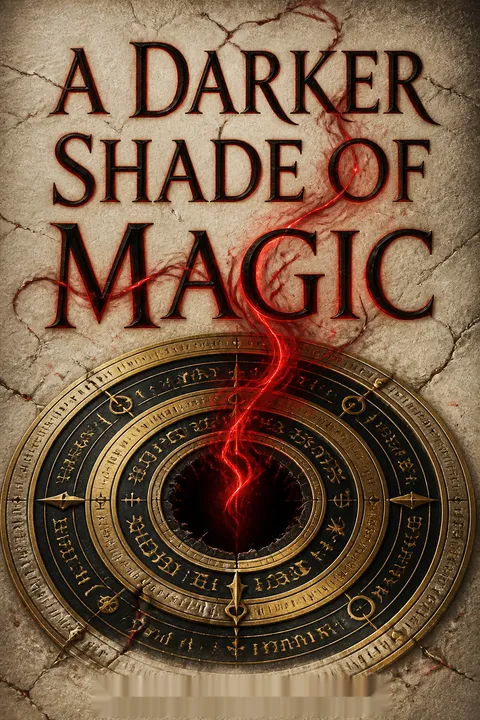


Plot Summary
Kell Between Londons
Kell carries letters between three cities called London, using blood and a coin to open doors between them. His many-sided coat changes to suit each world, but his black Antari eye marks him everywhere as someone apart. In Grey London, he visits the imprisoned, blind King George and secretly replaces the fading magical coin the old king treasures.
The Prince Regent resents Kell’s kindness to George, while Kell warns that Grey London’s old appetite for power once helped destroy Black London. Back home in magical Red London, Prince Rhy challenges Kell’s illicit trades across the sealed borders. Kell cannot explain why he smuggles harmless keepsakes, only that palace life makes him feel owned rather than truly at home.
Kell’s travel is both privilege and confinement. He can cross borders no one else can, yet every crossing serves royal duty, and every court treats his unusual ability as an asset to manage. His trades offer a private claim on choice, though he cannot articulate that motive even to Rhy. The contrast between George’s small, intimate attachment to a coin and the Prince Regent’s suspicion also establishes the book’s moral scale: power matters less than how people use it toward the vulnerable.
The Shadow Thief
In Grey London, nineteen-year-old Lila Bard steals watches and money while disguising herself as a man, saving toward a ship and a life at sea. Her lodging aboard the rotting Sea King is an arrangement with its drunken owner, Powell, who demands more than rent when her night’s take disappoints him.
Lila fights him off with a knife, kills him, then burns the ship to hide what happened. She returns to the Stone’s Throw, where its blunt owner, Barron, takes her in without accepting her treasured silver watch as payment. Lila insists she is only hiding until the smoke clears, but the wanted poster outside has already made her the city’s notorious Shadow Thief.
Lila treats theft as an instrument of self-determination, not merely a way to accumulate money. Powell’s assault forces her to use violence to preserve that freedom, while burning the ship shows how quickly survival can consume the future she is trying to build. Her return to Barron complicates her fierce refusal of dependence: she needs shelter, but his kindness makes her feel indebted. The watch matters because it is one of the few things she chooses to keep, rather than simply take and trade.
The Black Stone
When Kell travels to White London with a royal reply, the starving city’s rulers, twins Astrid and Athos Dane, unsettle him with their casual cruelty. Their Antari servant, Holland, must spill his own blood for their amusement, revealing how thoroughly Athos controls him. Later, a frightened woman gives Kell a blank letter addressed to her last surviving relative and a wrapped payment.
At the address, armed men ambush him; the letter is a decoy, and the payment is a black stone marked with an ancient symbol for magic. When a stolen royal sword disables his power and wounds him, the stone answers his desperate command by freezing one attacker inside dark matter. Kell kills the second and escapes across worlds, bleeding and pursued.
The stone turns an abstract history of Black London into an immediate temptation. Its power responds not to trained spellwork but to desire, promising a shortcut past the limits that ordinarily keep magic balanced. The ambush also binds the artifact to political violence: someone has sent it away because its return to the Dane twins would make their rule still more dangerous. Holland’s enforced bloodletting foreshadows the stone’s cost, while Kell’s ability to wield it makes his curiosity inseparable from risk.
Lila Takes the Stone
In Grey London, Lila picks Kell’s pocket as he stumbles from a magical doorway and mistakes him for a drunk. She takes the stone, then watches it create a black sword when she wills one into being. Her experiments produce a copy of Kell that begins acting independently, forcing the real Kell to destroy it before it can attack her.
He takes the stone back and leaves Lila bound to a wall, but she cuts herself free and keeps the summoned sword. A drunk man later finds it; the weapon enters his body and turns him into a black-eyed host for the same corrupting force. Lila has lost the artifact, but her encounter with Kell has opened a door in her imagination that she cannot close.
Lila recognizes the stone’s appeal as a form of agency: it makes her wishes material without asking permission from anyone. But the hostile copy of Kell demonstrates that creation without judgment can become predation. Her choice to discard the sword suggests she has learned to distrust the sensation of wanting more, even when the object seems useful. The magic’s transfer into an unsuspecting drunk extends the danger beyond its owner, making appetite itself a route by which corruption spreads.
Holland's Bait
Holland finds Lila in a Grey London tavern and uses pain to force her to summon Kell. Kell recognizes the trap but runs toward her anyway, then offers himself in exchange for her release. Holland takes the stone and uses it to chain Kell to the street, draining blood from him while explaining that Athos’s binding mark leaves him no freedom to disobey.
Lila escapes, but returns with an iron bar and knocks Holland down. She retrieves the stone and uses it to break the spell, then binds Holland long enough to help Kell flee. Barron hides the wounded Antari above his tavern, and Lila stays beside him through the night, though she cannot explain why she came back.
The rescue changes the relationship from wary transaction to chosen responsibility. Kell risks himself for Lila before she has earned his trust, and she returns the risk in kind after she has already escaped. Holland’s confession complicates the image of a simple villain: he is dangerous, but his violence is inseparable from coercion. Yet the book does not equate being controlled with being harmless. Lila and Kell must respond to his actions while recognizing the brutal structure that has made obedience his condition.
A Door to Red
After Kell explains that the stone comes from the destroyed Black London, he decides it must be returned there before it can corrupt another city. He needs a token from each intervening world to make the journey, and Lila refuses to surrender the artifact unless she can come too. Kell agrees, partly because he needs help and partly because she has saved him.
At Whitbury Street, Lila holds the stone while Kell opens a passage from Grey London to Red. The crossing works, but the stone deposits her alone in an unfamiliar alley, separated from Kell. She keeps moving toward a festival’s music and crowds, trusting that he will find her again.
Their bargain exposes the difference between Kell’s sense of duty and Lila’s hunger for possibility. He sees a dangerous task that should be contained; she sees a rare chance to escape the life that has narrowed around her. Neither motive is purely noble or purely selfish. The separation during the crossing makes the cost tangible before the adventure can become romanticized: entering a new world does not guarantee safety, companionship, or even arrival at the same destination.
The Black-Eyed Prince
Lila emerges into a city tinted by the glowing river and rushes toward Prince Rhy’s birthday procession, where she glimpses the royal family and the ships gathered along the water. She nearly gets arrested after trying to steal an enchanted charm, but Kell arrives and pays the merchant before the guards can reach her.
He explains that the people bow because he belongs to the royal household, though he does not consider himself a prince or a true member of the family. Lila challenges his self-pity by comparing his protected life with her own hunger and danger. Their uneasy truce resumes as Kell leads her toward his hidden rooms, where he hopes to find a token for White London.
Red London gives Lila the spectacle she craves, but also exposes her outsider status through language, magic, and the assumptions of its market. Kell’s confession that he is treated as a possession reveals a real wound, yet Lila refuses to let that wound erase his advantages. Her rebuke makes him recognize both the security he has discounted and the responsibilities that come with it. Their growing trust depends less on sympathy than on each forcing the other to see what their preferred story leaves out.
The Inn Burns
Kell and Lila reach the Ruby Fields and find Kell’s private rooms burned in a precise magical fire, leaving him without the White London token stored there. In Grey London, Holland has killed Barron and taken Lila’s silver watch, then carries the threat into Red London. The stained watch among the ashes confirms Barron’s death to Lila.
Kell uses the black stone to conceal them from Holland, who senses their presence but cannot see through the veil. They head for the black-market dealer Fletcher, hoping to recover a white rook Kell once lost to him. Lila’s grief hardens into a personal resolve to confront Holland, while Kell’s remaining refuge narrows to a dangerous shop.
The destruction of the inn collapses the safety nets both protagonists have relied upon. Kell loses not only a store of tokens but the private collection that expressed a self outside royal service. Lila loses the one person who offered shelter without demanding that she become someone else. Holland weaponizes their attachments by making the watch a message, turning grief into a lever. The veil gives the pair temporary control, but its cost is already visible in the stone’s growing influence over Kell.
Fletcher's White Rook
At Fletcher’s shop, Kell and Lila search for the white rook while the citywide notice boards accuse Kell of treason and offer a reward for finding him. Kell uses the stone to hide them, but its magic darkens the veins in his arm and makes him reluctant to release it. Lila forces him to let go and takes charge of the artifact.
Fletcher catches them and signals the royal guard; Kell submits to avoid a fight, while Lila remains concealed. A guard murders Fletcher, and Lila finds the rook beside his body. She follows the carriage carrying Kell, taking Fletcher’s useful knuckle-guard knife as well. The pair now have their passage token, but Kell has been delivered into the palace’s custody.
The shop scene turns their unequal relationship into a practical reversal. Kell knows the magic’s history, but Lila notices its immediate effect on his body and acts when he cannot. Fletcher’s betrayal shows how old resentment can become a weapon when public rewards offer a convenient excuse. Lila’s decision to follow Kell rather than flee marks a shift in her definition of freedom: she still refuses to be owned, but she is beginning to choose which people are worth risking herself for.
Rhy's Birthday Masquerade
Lila steals an invitation, borrows a horned mask and fine clothes, and enters Rhy’s birthday ball as a supposed sea captain. She spots the royal family’s unnatural calm and finds Kell restrained in Rhy’s rooms. Astrid Dane has possessed the prince through a charm Holland gave him, and she plans to use his trusted place in the palace to take control from within.
Lila interrupts as Astrid threatens Kell, then falls from the balcony after the queen strikes her with magic. The black stone lets Lila return on a platform of smoke; she shoots Rhy in the leg to stop Astrid and force her to drop the charm. Astrid then drives a knife into Rhy’s chest, leaving Kell to save his dying brother.
The masquerade makes disguise more than a visual motif: Astrid turns the prince’s trusted identity into a weapon, while Lila uses borrowed finery to enter a space designed to exclude her. Her rescue is neither clean nor heroic in a conventional sense; she wounds Rhy to interrupt a greater threat and accepts the danger of the stone to return. Astrid’s strategy exploits the political power of intimacy, showing how a beloved public face can conceal a hostile will.
Kell Shares His Life
Kell and Lila carry Rhy through a hidden passage to the Sanctuary, where the healer Tieren confirms that the prince is dying. Kell binds Rhy’s life to his own with the black stone, allowing Rhy’s heart to beat again but branding both men with matching marks. Kell becomes unable to release the stone, and its dark power begins spreading through him.
Tieren offers refuge and warns Lila that she may have to stop Kell if the corruption takes him. Kell intends to leave her behind, but Lila insists on going to White London, where Astrid and Athos hold the other half of the stone. She brings the white rook, making herself essential to the next crossing.
Kell’s choice is an act of love that also reproduces the possessive logic he resents: he makes Rhy’s survival permanently dependent on his own. The bond transforms private devotion into literal shared consequence, ensuring that future decisions cannot be made for Kell alone. Lila’s insistence on continuing is not simply appetite for adventure; she recognizes the danger the stone poses to Kell and refuses to leave him to face it without help. Tieren’s warning makes care morally difficult rather than comforting.
The Worlds Split
As black magic spreads through Red London, the creature inhabiting stolen bodies reaches toward the palace, and the guards begin searching for Kell. He and Lila try to cross into White London with the rook, but Holland intercepts Kell and tears him back into Red while Lila passes through alone. She lands beside the White River, where armed locals close in; she shoots one and prepares to fight the rest.
Kell faces Holland with the black stone still attached to his hand. The White Antari freezes the street and overwhelms Kell with water, but Kell uses chains from the docks to pin him and drives a metal pole through his body. Holland survives, barely, and Kell carries him through the door to White London.
The failed crossing strips away the illusion that partnership can make danger manageable. Lila’s survival depends on acting without Kell, while Kell must defeat the person who understands the stone’s corruption better than he does. Holland’s defeat is not a simple triumph: Kell recognizes his enemy as another Antari shaped by a different history, and carries him rather than leaving him to be consumed by White London’s hungry streets. Compassion here does not erase violence, but it keeps violence from becoming the only available response.
The White Fortress
Kell arrives with Holland’s failing body and finds Lila surrounded by White Londoners eager to drain her magic. He drives them back, collapses the bridge behind them, and leads her toward the fortress. At the castle, they separate to enter from opposite sides. Lila passes the bound guards because their orders do not require them to stop her, but a young captive named Beloc blocks the door to the throne room.
Athos has forced him to guard it through a binding spell. Beloc explains that disobedience will kill him, then asks Lila to make his death quick. She kills him and uses Kell’s instructions to open the throne-room lock. At the same time, Kell approaches Athos through the main entrance, carrying one half of the stone.
White London’s architecture and magic make coercion visible: guards have been emptied of choice, and Beloc remains conscious enough to understand what obedience will cost him. Lila’s killing of him is not a victory but a constrained act of mercy in a system that has made every option violent. Her ability to move through the guards also reveals a weakness in Athos’s rule: compelled obedience can enforce a narrow instruction, but it cannot create loyalty or judgment.
Two Thrones Fall
Athos traps Kell in chains and attacks with the black stone, but Kell breaks free and counters with shards of the castle floor. Meanwhile, Lila finds Astrid suspended under a possession charm and shoots through the protective spell around her throne by cutting its marks from the floor. Astrid wakes and overwhelms Lila, then takes her appearance to approach Kell.
In the courtyard, Athos creates a black serpent, which turns on him and snaps his neck. Its destruction releases the second stone fragment, and Kell’s piece fuses with it. The false Lila asks Kell to surrender the reunited stone, but a small breach in her performance reveals Astrid. Kell stabs her and turns her body to stone, then shatters it before the spell can be undone.
The twins’ downfall comes through the same instrument they have used to dominate others: magic that acts on bodies and obeys force rather than mutual understanding. Athos discovers that a creation can escape the maker’s intended role; Astrid discovers that intimate knowledge can be imitated but not perfectly performed. Kell’s recognition of the impostor depends on attention to Lila as a person, not merely a useful ally. Yet his revenge is frighteningly absolute, suggesting how easily protection can become punishment when grief and power fuse.
The Last Command
The reunited stone overwhelms Kell, drawing him into a mental struggle with Vitari, the living magic inside it. Astrid had already struck down the real Lila, but Kell’s awareness of her habits lets him recognize the imitation before it can deceive him. The wounded Lila reaches him as Vitari claims his heart and reminds him that Rhy’s life is tied to his.
Kell finds the blood command that can dispel magic and forces himself to speak it despite Vitari’s attempt to silence him. The stone loses its power, and its corruption vanishes from the bodies it had taken across Red London. The surviving fragment is only rock. Kell and Lila then use Holland’s White token to send his dying body and the inert stone into Black London.
The final contest is won through self-command rather than greater force. Vitari offers Kell calm and strength, precisely the states he craves when injured and afraid; resisting it requires him to accept pain, uncertainty, and the possibility of losing Rhy. Lila’s presence matters because she anchors him to particular relationships and choices, not because she can overpower the magic. The resolution also preserves the novel’s ethical distinction between destroying a threat and erasing a person: the stone is neutralized, while Holland is sent away alive.
A Ship of Her Own
Kell opens a door back to Red London, and Lila makes it through after him, though for a moment he believes she has been lost. The guards arrest them, but the king and queen hear Kell’s account and learn that Rhy is alive. Tieren has kept the prince safe; several days later, Kell explains the life-bond to his recovering brother, who admits he accepted Holland’s charm because he feared being a weak king without magic.
Rhy’s guards Parrish and Gen are dead, casualties of the corruption and palace attack. Lila declines Kell’s offer to return her to Grey London, where she has no home to reclaim. She plans to earn her passage and take a ship from Red London’s docks, while Kell gives her a small elemental practice set.
The ending does not restore the old order untouched. Rhy survives, but his recovery is bound to Kell, and the city has lost guards and trust as well as its rulers. His admission about wanting magical strength reframes his mistake as insecurity rather than ambition alone. Lila’s choice to remain is not a sudden conversion into belonging: she still defines herself through movement and self-invention. The practice set offers possibility without guaranteeing what her power will become, leaving her future open by her own decision.
Analysis
A Darker Shade of Magic asks what power becomes when it is separated from responsibility. The three surviving Londons embody different distortions: Grey has largely forgotten magic, Red has learned to live with it, and White tries to force it into submission. Black London represents the extreme consequence of treating magic as pure possibility without human limits. Yet the novel resists a simple equation between magic and evil. The same capacity that can dominate a body can also open a path, heal a wound, or protect someone from attack. The decisive question is not whether power exists, but whether its wielder can remain answerable to other people.
Kell and Lila approach agency from opposite shortages. Kell has extraordinary freedom of movement but feels owned by the family that raised him; Lila has independence of temperament but almost no material security. Each initially mistakes the other’s advantage for ease. Their growing partnership begins when they challenge those assumptions, then deepens through costly acts of trust: Kell returns for Lila, and Lila repeatedly refuses to leave him to the stone. Their intimacy is grounded less in sameness than in recognition of what the other cannot safely admit.
The black stone makes temptation bodily. It relieves Kell’s weakness and offers Lila the direct power to create, but it also alters perception, making dependency feel like calm and control. The stone’s promise resembles the rulers’ belief that domination will solve scarcity: both offer immediate certainty while consuming the agency they claim to strengthen. Kell’s final resistance requires him to accept vulnerability rather than seek a stronger weapon.
The ending preserves consequence. Rhy lives, but only through a permanent bond that limits Kell’s freedom; Red London survives, but loses people and innocence; Lila remains, not because she has found a settled home, but because she chooses another horizon. Her future magic is left untested, making possibility an earned uncertainty rather than a guaranteed reward.
Review Summary
A Darker Shade of Magic received mostly positive reviews, praised for its unique world-building, complex characters, and engaging magic system. Readers appreciated the parallel Londons concept and Schwab's lyrical writing style. Some found the plot slow-paced or characters underdeveloped, but many still enjoyed the overall story. Kell and Lila were fan-favorite characters, with their dynamic relationship and individual growth highlighted. While not universally loved, the book was generally well-received and left readers eager for the sequels.
People Also Read






Characters
Kell
Restless world-crossing AntariKell is a rare blood magician who serves Red London’s royal family as courier and protector. His ability to open doors between worlds makes him indispensable, but it also sharpens his sense that the people who raised him value his power more than his independent self. He collects objects from other Londons and breaks the law to do so, pursuing a freedom he cannot yet name. His bond with Rhy is intimate and fiercely protective, while his wary encounters with Lila force him to see how privilege can hide inside genuine loneliness. Kell’s central struggle is to use power without surrendering his judgment to it.
Delilah Bard
Knife-smart would-be pirateLila is a resourceful Grey London thief who disguises herself as a man, carries more weapons than she needs, and dreams of escaping to the sea. Poverty has taught her to treat dependence as danger, so she values choice even when her choices bring trouble. Her wit and courage are paired with a guardedness that makes kindness feel like debt. Lila recognizes other people’s vulnerabilities quickly, though she hides her own behind bravado and appetite for risk. Kell’s world offers the adventure she has imagined, but her growing loyalty to him and her interest in her own dormant magic complicate the simple idea of escape.
Rhy Maresh
Beloved royal heirRhy is Red London’s charismatic prince and Kell’s closest friend, whom Kell regards as a brother. He is generous, flirtatious, and socially perceptive, comfortable winning affection but less certain of his worth when measured against magical ability. His lack of talent with the elements frustrates him because he equates power with the strength required to rule. Rhy’s warmth is not mere performance: he is capable of empathy and forgiveness, even when his confidence and appetite for pleasure lead him into danger. His relationship with Kell combines teasing intimacy with a deep dependence neither man finds easy to admit.
Holland
Bound White AntariHolland is the other known Antari, a quiet, formidable servant to White London’s rulers. His pale appearance and controlled movements make him difficult to read, while his magic gives him the ability to cross worlds and challenge Kell. A binding brand forces him to obey the Dane twins, shaping his life around commands he did not choose. He is neither simply a monster nor a hidden ally: his actions cause real suffering, but his circumstances reveal how power can reduce a person to an instrument. His connection to Kell rests on shared ability and sharply different experiences of freedom.
Astrid Dane
Possessive White queenAstrid rules White London beside her twin brother, Athos. She is calculating, physically formidable, and deeply suspicious of anyone she cannot control. Her magic includes possession and the ability to turn another person’s identity into a political disguise. Astrid regards people as resources to secure, and her cool patience makes her threats more unnerving than open rage. Her ambition grows from a belief that White London has been abandoned to decay, but her proposed remedy extends domination rather than repairing the harm beneath it.
Athos Dane
White throne's torturerAthos is Astrid’s twin and the violent king of White London. He uses binding spells to control guards and subjects, treating resistance as a defect to be carved away. His pleasure in domination is not an incidental cruelty but the governing principle of his rule. Athos is confident in his ability to command both people and magic, and that confidence makes him underestimate what happens when power is treated as obedient property.
Master Tieren
Healer and magic scholarTieren leads Red London’s Sanctuary and once taught Kell about magic. He combines scholarly caution with practical compassion, treating dangerous power as something that demands responsibility rather than worship. His concern for Kell is personal, but he does not soften the consequences of the young Antari’s choices. Tieren also recognizes that Lila carries an undeveloped capacity for magic, though he cannot decide its shape for her.
Barron
Hard-edged tavernkeeperBarron owns the Stone’s Throw, a tavern that draws unusual people and stranger business. He is blunt, observant, and quietly protective of Lila, even after she once stormed away from his rules. Rather than demand affection or obedience, he offers practical shelter and expects her to respect the people under his roof. His steady presence gives Lila a rare model of care that does not require pretending she is harmless.
King Maxim
Protective Red London kingMaxim rules Red London with Queen Emira and treats Kell as a valued member of the household, while also relying on Kell’s extraordinary abilities. He is protective of his family and conscious of Red London’s responsibility toward its suffering neighbor. His authority is gentler than the Dane twins’ rule, though the events of the story test how much he knows about the risks Kell takes beyond the palace.
Queen Emira
Perceptive royal motherEmira is Rhy’s mother and one of the few people who consistently offers Kell affection without making him prove his usefulness. She is attentive to the emotional states of those around her and often notices when Kell is hiding exhaustion or fear. Her warmth helps make the palace feel like a possible home for him, even as his uncertain place in the royal family remains unresolved.
Fletcher
Black-market spell dealerFletcher runs a pawnshop for rare and illicit magical goods, maintaining a respectable façade for a dangerous trade. His scarred wrists carry the history of punishment for controlling another person’s body, though he has found a way to break the limits placed on his power. He and Kell share an old grievance from a crooked game, leaving their dealings edged with resentment and opportunism.
Beloc
Defiant young captiveBeloc is a young White Londoner whose refusal to bow draws Athos’s attention. His courage persists even after the king binds him to obey. He shows how resistance can survive inside a body forced to serve, and how little protection youth offers under a ruler who treats defiance as a lesson to punish.
Parrish
Rhy's watchful guardParrish serves in Rhy’s private guard and takes his duty seriously, even when palace routines leave him bored. He admires Kell and is more unsettled by Holland than he wants his fellow guard to know. His watchfulness makes him sensitive to small disturbances during the city’s celebrations.
Gen
Rhy's gambling guardGen is a member of Rhy’s private guard and Parrish’s frequent card-playing companion. He is more relaxed than Parrish about palace security and enjoys the prince’s indulgent approach to his guards. His easy camaraderie helps establish the ordinary bonds that the larger political conflict puts at risk.
Calla
Generous market tailorCalla sells masks and clothing near the palace and recognizes Lila from the market. She lends Lila an outfit suited to the masquerade without demanding immediate payment, trusting that debts can be settled in ways other than money. Her generosity gives Lila a rare opportunity to enter a world where she is otherwise unwelcome.
Edward Archibald Tuttle
Hungry magic enthusiastNed is a Grey London believer who longs to possess real magic despite having no ability to wield it. His eagerness to prove himself makes him vulnerable to fantasy and disappointment. Kell’s small demonstration intensifies Ned’s desire for access to the worlds beyond his own.
King George III
Forgotten Grey sovereignThe ailing, blind King George lives under confinement in Windsor, where Kell visits him with letters from another world. He clings to the ritual of receiving a magical coin, a private connection to a history others have chosen to suppress. His vulnerability contrasts with the authority of the Prince Regent who controls his daily life.
Plot Devices
The Four Londons
Worlds divided by magicGrey, Red, and White London are separate versions of one city, each shaped by a different relationship between human life and magic. Black London, the fourth world, was lost after magic overwhelmed its people. The separation explains why Kell’s journeys are rare and politically sensitive, while the contrasting cities let the story test different forms of power, scarcity, and social order.
Antari Blood Doors
A token opens passageAntari use their blood and an object from a destination to open a door between worlds. The object anchors the passage, so losing tokens can leave a traveler stranded or force them to bargain for another. This rule drives Kell’s itinerary, gives the white rook its importance, and makes Lila’s passage with the black stone a dangerous exception.
The Black Stone
Desire becomes dangerous magicThe relic from Black London converts a person’s intention into physical magic, allowing even Lila to create a sword or conceal herself. It can also create hostile forms, spread through living bodies, and strengthen its user while weakening their control. The stone tempts characters with power that appears immediate and limitless, making its effects a central test of restraint.
Kell's Many-Sided Coat
A portable change of identityKell’s enchanted coat has multiple sides suited to different Londons and occasions. It helps him move through foreign settings without attracting needless attention, while its changing appearance reflects his divided position between royal servant, traveler, and private collector. Lila’s curiosity about it also gives the pair a small, recurring point of connection amid larger dangers.
The Soul Seal
Two lives made dependentKell uses the black stone to bind Rhy’s life to his own after the prince is fatally wounded. The matching marks make Rhy’s survival dependent on Kell’s, turning Kell’s personal sacrifice into an ongoing obligation. The bond raises the cost of Kell’s final confrontation with the stone, since his survival now protects someone he loves as well as himself.
FAQ
Synopsis & Basic Details
What is A Darker Shade of Magic about?
- Interdimensional Travel and Intrigue: The story follows Kell, an Antari magician, who can travel between parallel versions of London: Red, Grey, and White. He secretly smuggles items between worlds, a practice that leads to dangerous consequences.
- A Stolen Relic and a Thief: Lila Bard, a skilled thief from Grey London, steals a mysterious black stone from Kell, setting off a chain of events that entangles them in a conflict that spans multiple dimensions.
- A Battle for Power and Balance: The narrative explores the delicate balance of power between these worlds, as Kell and Lila must navigate political intrigue, magical threats, and personal betrayals to prevent a catastrophic collapse.
Why should I read A Darker Shade of Magic?
- Unique World-Building: The concept of parallel Londons, each with its own distinct relationship with magic, offers a fresh and imaginative setting that is both familiar and fantastical.
- Compelling Characters: The story features complex and morally ambiguous characters, such as Kell, Lila, and Holland, whose motivations and relationships drive the plot forward.
- Fast-Paced Plot and High Stakes: The narrative is filled with action, suspense, and high-stakes conflicts, keeping readers engaged and invested in the characters' fates.
What is the background of A Darker Shade of Magic?
- Parallel Worlds: The story is set in a multiverse where different versions of London exist, each with a unique relationship to magic. Red London thrives on magic, Grey London has lost it, and White London is consumed by it.
- Historical and Cultural Influences: The different Londons draw inspiration from various historical and cultural periods, creating a rich and diverse backdrop for the story.
- Magical Systems: The magic system is based on elemental forces and blood magic, with Antari being rare individuals who can manipulate these forces and travel between worlds.
What are the most memorable quotes in A Darker Shade of Magic?
- "I'd rather die on an adventure than live standing still.": This quote encapsulates Lila's desire for freedom and her willingness to take risks, highlighting her adventurous spirit and rejection of a mundane life.
- "The problem with wanting is that it makes us weak.": This quote reflects the themes of power and control, as well as the dangers of desire, and is often used by characters who are driven by ambition.
- "The world is a stage, but the play is badly cast.": This quote captures the cynical and often chaotic nature of the world, as well as the characters' struggles to find their place within it.
What writing style, narrative choices, and literary techniques does Victoria E. Schwab use?
- Third-Person Limited Perspective: The narrative primarily uses a third-person limited perspective, allowing readers to delve into the thoughts and feelings of specific characters, creating a sense of intimacy and investment.
- Vivid Imagery and Sensory Details: Schwab employs rich and evocative language to create a vivid sense of place, immersing readers in the unique atmosphere of each London.
- Fast-Paced and Action-Oriented: The writing style is fast-paced and action-oriented, with frequent shifts in perspective and location, keeping readers engaged and on the edge of their seats.
Hidden Details & Subtle Connections
What are some minor details that add significant meaning?
- The Significance of Colors: The colors assigned to each London (Red, Grey, White) are not just descriptive but also symbolic, reflecting the nature of magic and the state of each world. Red represents life and power, Grey represents the absence of magic, and White represents the corruption and hunger for power.
- The Recurring Motif of Mirrors: Mirrors appear throughout the story, often reflecting the characters' inner conflicts and their perceptions of themselves and the world around them. They also serve as a reminder of the parallel nature of the Londons.
- The Importance of Names: The names of characters, such as "Antari" and "Dane," carry significance, hinting at their origins, powers, and roles in the story. The name "Antari" is a word in the language of Black London, and the name "Dane" is a reference to the twins' ruthless nature.
What are some subtle foreshadowing and callbacks?
- The Description of the Black Stone: The initial description of the black stone hints at its immense power and the danger it poses, foreshadowing the chaos and conflict it will unleash.
- Recurring Phrases and Words: Certain phrases and words, such as "balance" and "power," are repeated throughout the story, emphasizing the central themes and foreshadowing future events.
- Character Habits and Quirks: Minor character habits and quirks, such as Rhy's tendency to end sentences with a period, foreshadow their personalities and future actions.
What are some unexpected character connections?
- Kell and Holland's Shared Heritage: The revelation that Kell and Holland are both Antari, though from different worlds, creates a complex dynamic between them, highlighting their shared abilities and their contrasting paths.
- Lila and Kell's Unlikely Partnership: The initial animosity between Lila and Kell gives way to a complex partnership, revealing their shared desire for freedom and their willingness to challenge authority.
- The Dane Twins' Twisted Bond: The relationship between Astrid and Athos Dane is both powerful and disturbing, highlighting their shared ambition and their willingness to sacrifice anything for power.
Who are the most significant supporting characters?
- Tieren: As Kell's former tutor, Tieren provides guidance and wisdom, representing the more thoughtful and scholarly side of magic. He also serves as a reminder of the history and traditions of the Antari.
- Barron: The owner of the Tiro di Schioppo, Barron is a mysterious figure who seems to know more than he lets on. He provides a safe haven for Kell and Lila, and his presence hints at the existence of a hidden world within Grey London.
- The Royal Family of Red London: The King and Queen of Red London, while not always present, play a crucial role in shaping Kell's life and the political landscape of the story. Their decisions and actions have far-reaching consequences for all the Londons.
Psychological, Emotional, & Relational Analysis
What are some unspoken motivations of the characters?
- Kell's Desire for Belonging: Despite his position in Red London, Kell feels like an outsider, and his smuggling activities are driven by a desire for connection and a sense of purpose.
- Lila's Fear of Confinement: Lila's actions are motivated by a deep-seated fear of being trapped or controlled, and her pursuit of freedom is a way to assert her independence.
- Holland's Yearning for Freedom: Holland's servitude to the Dane twins masks a deep yearning for freedom and a desire to reclaim his own destiny.
What psychological complexities do the characters exhibit?
- Kell's Internal Conflict: Kell struggles with his identity as an Antari and his responsibilities as a royal messenger, torn between his loyalty to Red London and his desire for personal freedom.
- Lila's Contradictory Nature: Lila is both ruthless and compassionate, driven by a desire for self-preservation but also capable of great loyalty and sacrifice.
- Rhy's Insecurity and Yearning: Rhy's charm and charisma mask a deep insecurity about his lack of magical ability and a yearning to prove his worth.
What are the major emotional turning points?
- Kell's Betrayal and Loss: Kell's discovery of the Dane twins' treachery and the loss of his connection to Rhy force him to confront his own limitations and the true nature of his power.
- Lila's Choice to Help Kell: Lila's decision to help Kell, despite her initial desire for self-preservation, marks a turning point in her character development, highlighting her capacity for empathy and loyalty.
- Rhy's Near-Death Experience: Rhy's near-death experience forces him to confront his own mortality and the fragility of his world, leading to a deeper understanding of his responsibilities.
How do relationship dynamics evolve?
- Kell and Rhy's Bond: The bond between Kell and Rhy is tested by betrayal and loss, but ultimately strengthened by their shared experiences and their mutual respect.
- Kell and Lila's Partnership: The relationship between Kell and Lila evolves from animosity to a complex partnership, marked by mutual respect, trust, and a shared sense of purpose.
- The Dane Twins' Twisted Relationship: The relationship between Astrid and Athos Dane is both powerful and disturbing, highlighting their shared ambition and their willingness to sacrifice anything for power.
Interpretation & Debate
Which parts of the story remain ambiguous or open-ended?
- The True Nature of Black London: The exact nature of Black London and the events that led to its destruction remain shrouded in mystery, leaving room for speculation and interpretation.
- The Source of Antari Magic: The source of Antari magic and the reasons for its rarity are never fully explained, adding to the mystique and power of these characters.
- The Future of the Londons: The ending leaves the future of the parallel Londons open-ended, with the potential for further conflict and change.
What are some debatable, controversial scenes or moments in A Darker Shade of Magic?
- Kell's Use of Blood Magic: Kell's use of blood magic, particularly his decision to bind his life to Rhy's, raises questions about the ethics of magic and the consequences of such power.
- Lila's Morality: Lila's actions as a thief and her willingness to use violence raise questions about her morality and the extent to which she is willing to go to achieve her goals.
- The Dane Twins' Motivations: The Dane twins' motivations and the extent of their cruelty are open to interpretation, sparking debate about the nature of power and the corrupting influence of ambition.
A Darker Shade of Magic Ending Explained: How It Ends & What It Means
- The Defeat of the Dane Twins: The defeat of the Dane twins marks a turning point in the story, but it also raises questions about the future of White London and the balance of power between the worlds.
- Kell's Sacrifice and Rhy's Survival: Kell's decision to bind his life to Rhy's is a complex act of selflessness and responsibility, highlighting the themes of sacrifice and the enduring power of love and loyalty.
- Lila's Departure and Uncertain Future: Lila's decision to leave Red London and embark on her own adventure leaves her future open-ended, suggesting that her journey is far from over. The ending emphasizes the themes of freedom and the pursuit of one's own destiny.
About the Author
Other books by V.E. Schwab




Download PDF
Download EPUB
.epub digital book format is ideal for reading ebooks on phones, tablets, and e-readers.








