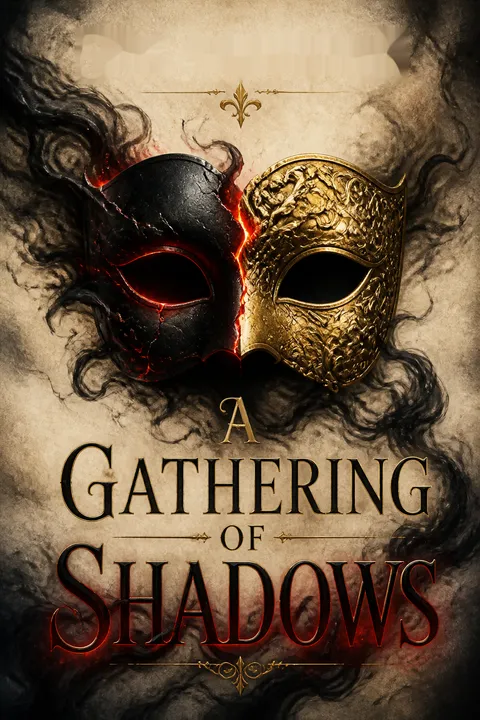


Plot Summary
The Sarows Takes a Ship
Bound in a leaking boat beneath a moonless sky, Lila Bard has only knives, coded flares, and a story she has rehearsed. She signals for pirates, then convinces the Copper Thief’s captain, Baliz Kasnov, that her ship has been stolen and is carrying valuable cargo. While Kasnov pursues the supposed prize, Lila slips free in his locked cabin, cuts her constricting dress into pieces, and uses drugged ale to incapacitate the crew.
Kasnov escapes the dose and tries to burn his own ship, but Lila kills him and extinguishes the flames with magic. The Night Spire arrives beside the captured vessel. Lila steps aboard her captain’s ship with a new prize, having turned a staged test into a real victory.
Lila’s predicament is dangerous, but her method is already familiar: she makes other people mistake her for someone helpless, then uses their assumptions as tools. The crew’s wager turns her into entertainment, yet she refuses the role of spectacle and takes control of the ship itself. Her victory is not simply proof of skill. It shows how thoroughly she has learned to survive by preparing several exits, weapons, and stories at once. Even the rescue is something she engineers. The exhilaration of winning sits beside a quieter question: whether she can belong to a crew without surrendering the independence that once kept her alive.
A Thief Finds Her Ship
Four months earlier, Lila had left Kell in Red London and set out alone, unable to speak Arnesian or sail. She followed the Night Spire’s crew to a tavern, stole a gambler’s purse, then killed the sailor who caught her. Captain Alucard Emery spared her after recognizing that she could replace the thief he had lost, and Lila talked her way into the crew.
She soon learned that Alucard was a royal privateer, not a pirate, and discovered his fluency in the court language. In exchange for keeping her origins secret, he taught her Arnesian and magic. Lila practiced with Kell’s element set, using remembered poems to summon fire, then learned to kindle flame along her knives. Her growing skill makes London, and the tournament, newly tempting.
Lila’s arrival aboard the Night Spire repeats the structure of her life in a new setting: she steals, fights, and insists that she needs no one. Alucard’s offer unsettles that pattern because it makes continued survival depend on cooperation rather than escape. Their bargain gives each a form of control: he protects her secret, while she gains language and access to magic. Lila’s poem-based practice matters because it joins power to memory, especially the remembered rhythm of her mother’s voice. She does not become less guarded as she learns. Instead, she acquires more ways to act while still deciding what parts of herself to reveal.
Brothers Bound by Blood
In Red London, Kell’s return to the palace has not restored the life he knew. After he resurrected Prince Rhy during the Black Night, their lives became physically bound: Kell’s survival now sustains Rhy, and pain passes between them. The city blames Kell for the catastrophe, while King Maxim and Queen Emira keep him under watch.
Rhy hides his grief and fear in drink, and Kell trains harder as strange power stirs in his blood. With the Essen Tasch, an international magic tournament, approaching, Rhy sees a chance to give his brother an outlet. He secretly arranges for Kell to compete under a false name, Kamerov Loste. Kell accepts, despite knowing that any injury he suffers will also reach Rhy.
The life bond converts love into an involuntary bodily obligation. Kell’s sacrifice saved Rhy, but it has also made every ordinary risk a shared decision, and Kell increasingly treats his brother as something breakable. Rhy, meanwhile, experiences survival as a debt he cannot repay and fears that his continued life limits Kell’s. Their secret tournament plan is an attempt to renegotiate that dependence through action rather than argument. The disguise offers Kell a temporary self beyond the royal household’s judgment, while the tournament lets Rhy act as a brother who understands what Kell needs. Their affection is real, but the bond makes even care feel like confinement.
Two Worlds Stir
Carrying royal letters into Grey London, Kell learns that King George III has died and his son, George IV, is already probing him for knowledge of magic. Kell refuses the new king’s request to bring enchanted objects across worlds, then visits the Stone’s Throw, now run as the Five Points by Edward Tuttle, or Ned.
Ned has bought back Kell’s element set and manages to raise a small bead of water, an ability Grey London should no longer possess. Elsewhere, Holland wakes in Black London after Kell’s blow, freed from Athos Dane’s control but near death.
He accepts power from an ancient presence called Osaron, which restores White London while sharing Holland’s body. Holland soon begins seeking an Antari vessel to free himself from their bargain.
These parallel discoveries disturb the apparent order of the worlds. George IV treats magic as an asset to acquire, while Ned approaches it with wonder and a modest, untrained touch. Kell sees the danger in both the king’s appetite and the apparent return of power to Grey London, yet cannot dismiss Ned’s hopeful experiment. Holland’s bargain offers a darker mirror: he wants to save his dying world, but accepts a power whose previous carelessness destroyed another. Each man confronts magic through a different need, ambition, wonder, or desperation. The contrast establishes the book’s central warning: power is not safe merely because its wielder believes the cause is necessary.
The Captain’s Hidden House
At Sasenroche, a hidden black market, Lila touches a forbidden mirror that shows her a frightening image of herself wielding several elements. Alucard explains that the mirror offers not only what a person wants, but a way to pursue it; Lila refuses to look further.
When the Night Spire reaches London, she follows Alucard home and discovers that he belongs to the royal House of Emery. His younger sister, Anisa, welcomes him, but his elder brother Berras greets him with open hostility and recalls the disgrace that drove Alucard away.
Lila recognizes his return as a choice to face a past he usually evades. At the same time, Alucard and Rhy rekindle their intimacy after three years apart, though Kell remains wary of the captain who once hurt his brother.
The mirror makes desire feel dangerous by giving it a practical edge: wanting power could become a plan for acquiring it. Lila’s refusal is notable because curiosity usually draws her toward risk, yet she senses that this object might turn self-knowledge into compulsion. Alucard’s homecoming exposes a different kind of escape. His cultivated ease is not proof that he has no attachments; his sister’s welcome and brother’s anger reveal the family he abandoned and the history he cannot charm away. Rhy’s renewed closeness with him reopens an old emotional injury. For Lila and Kell, Alucard is no longer simply a charismatic captain, but a person whose choices have consequences in both their lives.
A Stolen Tournament Name
Lila wants to compete in the Essen Tasch, but the roster is closed, so she follows Stasion Elsor through the streets and knocks him unconscious with a metal bar. Alucard helps send the real Elsor away on a criminal transport, then agrees to keep Lila’s crime secret in exchange for learning that she comes from another London.
She studies Elsor’s clothes, papers, signature, and face before appearing as him at the royal Banner Night. There she meets the other masked competitors, including Kamerov Loste, unaware that Kell is hidden behind that name.
Master Tieren recognizes her but lets the deception stand. Lila sees Kell beside Rhy and leaves without approaching him. She has gained entry to the Games, but her disguise now puts an innocent man and Alucard’s crew at risk.
Lila’s decision to take Elsor’s place is a familiar act of theft with an unfamiliar moral cost. She is not taking an object but temporarily displacing a person, and Alucard’s warning cannot make the consequences disappear. Her choice also reveals how she understands freedom: not as permission granted by a gatekeeper, but as something seized through nerve and preparation. Yet she conceals herself even from Kell, whose recognition might force her to explain what she has done. The Banner Night gives her a public identity while preserving private secrecy. That contradiction is useful for the tournament, but it also repeats the emotional distance she has maintained from everyone who might claim a place in her life.
The Masks Enter the Arena
Prince Rhy opens the Games by addressing the visiting empires in their own languages and presenting the thirty-six masked competitors. Lila, posing as Stasion Elsor, defeats the towering Veskan Sar Tanak by using fire, misdirection, and an unexpected leap onto the judge’s platform. Kell, as Kamerov, beats the Faroan wind mage Tas-on-Mir with a web of water that he turns to ice behind her.
Their victories draw attention, but neither exposes their identity. Alucard also advances, first defeating the Veskan Otto with earth and clever changes of direction. The tournament’s staged pageantry has become a physical trial, and the competitors’ masks let them fight as public symbols while hiding the people beneath them.
The arena rewards more than elemental strength. Lila wins by recognizing that the competitors expect a game, then exploiting the judge’s platform in a way a real street fight would encourage. Kell succeeds through disciplined feints, but must suppress the wider range of power that defines him. Their masks therefore do two jobs: they protect secrets and shape behavior. Each entrant performs an imagined version of strength for spectators, while privately managing fear, pain, or ambition. Rhy’s multilingual opening also makes the tournament more than royal spectacle; it is an attempt to address the city and its neighbors as participants in one event. The contests test whether performance can coexist with genuine danger.
A Familiar Fight
Alucard defeats Jinnar, whose mastery of wind lets him hover and dart through the arena. Kell narrowly beats reigning champion Kisimyr, and Lila recognizes his fluid movements despite his silver mask.
She then defeats the Faroan Ver-as-Is, combining fire and water and briefly seeming to stretch the moment when his attack nearly traps her. At the evening ball, Kell and Lila finally speak privately. They dance, admit that they missed each other, and kiss, but their reunion breaks when Kell urges her to withdraw from the Games.
He fears that her uncontrolled magic will injure her; Lila refuses to let concern become another person’s command. Their tenderness restores their connection without resolving the conflict over who gets to choose her risks.
Recognition arrives through the body before the face. Lila identifies Kell by movement, the same physical language that made him recognizable in earlier danger, while he initially sees only her assumed identity. Their reunion at the ball brings desire and distrust into the same space. Kell’s concern is sincere, but he expresses it as an order to stop; Lila hears the familiar attempt to manage her life. She, in turn, treats refusal as proof of independence even when the danger is real. The scene’s intimacy does not settle their differences. It makes them harder to evade, because each now knows that the other’s judgment carries emotional weight.
The Crate and the Challenge
After losing to Lila, Ver-as-Is and two accomplices ambush her, bind her, and seal her inside a cargo crate aboard a ship. With her knives removed and magic apparently unavailable, Lila recalls Alucard’s lesson that magic can be sensed without sight. She burns through the ropes, then blasts open the nailed crate with her will.
She finds her captors asleep, kills Ver-as-Is and his companions, and races back for her delayed match. Kell is waiting as Kamerov. Lila attacks with fire and ice, and he realizes who she is only after she has taken the first advantage. She wins by turning his own water against him. Her victory advances her, but the violence and strain leave her exhausted and make her hidden power harder to control.
The crate strips Lila of the tools that usually make her feel safe: weapons, sight, space, and the ability to plan several moves ahead. Her escape depends on using a lesson she once resisted, sensing magic as an embodied capacity rather than a visible object. That success is followed by revenge, not relief. Killing her attackers restores control but costs time and compounds the danger of her next match. Against Kell, she uses the same improvisational intelligence, and the contest becomes a test of their opposing instincts: he wants to protect her, while she insists on meeting him as an equal. Her win proves her capability, not her safety.
The Brother Leaves London
Lila’s next opponent, the Veskan Rul, pins her with an earthen shield and defeats her; she collapses from the strain. Kell reaches her tent and lashes out over her reckless use of magic, while Lila refuses his judgment. Their fight reopens Kell’s suffocation under royal control, and he crosses to Grey London rather than face the argument.
Rhy writes an apology into his own arm, and the pain transfers through their bond to Kell, drawing him back for the final. The three remaining champions are Rul, the Faroan Tos-an-Mir, and Alucard. In the last contest, Alucard outlasts both and wins the crown. Afterward, King Maxim orders Kell arrested for defying him and risking the kingdom.
Kell’s departure is not a clean break but a desperate attempt to create distance from a relationship he cannot otherwise pause. His anger at Lila partly concerns her danger, yet it also exposes his own exhaustion at being held responsible for everyone’s survival. Rhy’s apology reaches him through the bond as pain, turning their shared body into a channel for repair as well as distress. Kell returns, but the king’s arrest shows that familial loyalty cannot erase political control. Alucard’s victory supplies a public resolution to the tournament just as the private conflict deepens. Success in the arena does not restore the people who have been hurt by its surrounding power struggles.
A Messenger Finds Kell
King Maxim eventually releases Kell, but their argument makes clear that the crown still considers his freedom a threat to the empire. Kell refuses to keep sacrificing his life for the family, then encounters Ojka, a scarred fighter from White London who calls herself a messenger.
She says her king needs Kell’s help and blames him for the Danes’ fall. Ojka opens a portal with blood magic and takes him across worlds. There, Kell finds Holland alive and changed, with White London green and bright again.
Holland explains that Osaron, the ancient power behind the black stone, saved him and helped restore the city. He intends to transfer Osaron into Kell, an Antari strong enough to contain it, and offers Kell a choice between accepting the possession and watching Rhy die.
This turning point places rescue and coercion in the same frame. Ojka’s portal gives Kell an escape from the palace, but she carries him into a crisis he did not choose. The restored landscape initially seems to vindicate Holland’s bargain, making the cost less visible than the green growth. Holland’s proposal then reveals the bargain’s central instability: the power that revived a world wants a stronger host, and Kell’s bond with Rhy makes refusal feel like a threat to someone he loves. Kell’s old fear of becoming a vessel for darkness is no longer hypothetical. The conflict asks whether a desperate good outcome can justify taking control of another person.
The Red Coin Turns
Kell refuses Osaron, even when the entity uses Rhy’s life to pressure him. Osaron admits that refusal lets it keep Holland’s body, then takes a red London coin, the key to crossing worlds, and leaves to reach Kell’s home. Back in Red London, Rhy collapses as Kell’s pain travels through their bond, and Lila realizes the injury is happening to Kell elsewhere.
She ignores the danger, cuts her own arm, and presses the shard of Astrid Dane’s statue against a wall, attempting to open a blood-marked passage to White London. The book ends before she learns whether the crossing works, whether she can reach Kell, or whether Osaron has already arrived in Red London.
The ending turns the novel’s separate trajectories into an imminent collision. Kell’s refusal protects his world from an entity that has already destroyed one, but leaves Holland occupied and Osaron free to pursue another route. Lila responds to Kell’s pain with the same instinct that has repeatedly placed her in danger: she acts before certainty is available. Her blood and the broken statue fragment make the portal an improvised wager, not a practiced journey. The abrupt stop preserves the emotional logic of the book rather than resolving it. Lila has chosen connection over retreat, but the consequences of that choice remain beyond the final page.
Analysis
A Gathering of Shadows makes freedom feel less like an abstract ideal than a repeated physical problem: who controls a body, a name, a door, or a decision. Lila survives by turning identity into a tool, but entering the tournament under Elsor’s name forces her independence to impose costs on someone else. Kell’s predicament is more intimate. His life bond with Rhy transforms devotion into involuntary responsibility, while the court’s treatment of him as a strategic resource makes protection indistinguishable from confinement. Their contrasting responses matter: Lila moves toward danger to feel fully alive, while Kell initially tries to contain danger so that no one he loves is hurt.
The Essen Tasch externalizes these private tensions. Competitors use masks to perform strength, yet the armor counts real impacts and the later rounds can injure them. The spectacle is therefore neither pure deception nor pure truth. Rhy understands its diplomatic function and shapes its presentation, but cannot control all that the tournament exposes. His decision to give Kell a hidden identity is an act of love that also risks the stability he has been charged to protect.
The novel’s parallel worlds offer different versions of power and scarcity. Red London treats magic as a shared current, Grey London may be stirring back to life, and White London is being restored through a bargain with Osaron. These are not merely settings with different magical rules. They are competing moral economies: who deserves power, who may wield it, and what may be taken in the name of saving a world. Holland’s choice complicates any easy distinction between renewal and corruption, because the visible return of life depends on an entity that does not understand human limits.
The ending leaves the central question unsettled rather than answered. Kell refuses to become a vessel, Lila risks becoming more than she understands, and Osaron seeks a path into Red London. Their choices affirm that agency matters, but the book does not pretend that choice alone guarantees safety. Freedom begins as an act; living with its consequences is harder.
Review Summary
A Gathering of Shadows received mostly positive reviews, with many praising the character development, world-building, and Schwab's writing style. Readers enjoyed the expansion of the magical universe and the introduction of new characters like Alucard. Some critics found the pacing slow and the plot lacking compared to the first book. The relationship between Kell and Lila was a highlight for many, though their separation throughout much of the book divided opinions. The cliffhanger ending left readers eager for the next installment.
People Also Read



Characters
Delilah Bard
The impossible street thiefLila is a thief from Grey London who has crossed into a world where magic is ordinary and political power is built around it. Her sharp eye, quick hands, and appetite for risk let her adapt quickly, but independence is more than a talent for her: it is protection against dependence, grief, and the possibility of being controlled. She disguises herself as a boy, a sailor, and a tournament competitor, treating identity as something she can shape. Her growing magic complicates that self-reliance because it gives her power she cannot yet fully understand. Lila wants freedom and excitement, but her ties to Alucard, Kell, and the Night Spire make it harder to pretend that caring has no cost.
Kell
A prince in borrowed skinKell is an Antari, a rare magician who can travel between the Londons, and the adopted son of Red London’s royal family. He is loyal, disciplined, and uncomfortable with the reverence or fear his power provokes. After the Black Night, he carries guilt for the destruction and for the life-saving bond that ties him to Rhy. His instinct is to protect others, often by accepting limits he would reject for himself. The silver mask of Kamerov offers a brief chance to act without being treated as a royal asset or a feared symbol. Beneath his restraint lies a restless appetite for danger and experience that he has long tried to smother.
Rhy Maresh
The bound crown princeRhy is Red London’s crown prince, a magnetic host who can read a room and speak several languages, though he has little magical ability. His humor and appetite for pleasure conceal his fear that he lacks the strength his future role demands. His life is bound to Kell’s, a consequence that makes their affection inseparable from guilt, pain, and obligation. Rhy wants to become more than a charming symbol, and the Essen Tasch gives him a public responsibility he can shape himself. He understands that Kell needs room to act, but asking for that freedom also means accepting the possibility that his brother may suffer.
Alucard Emery
The jeweled privateerAlucard captains the Night Spire, a royal privateer crewed by sailors who trust his judgment and enjoy his theatrical manner. He wears elegance as easily as a disguise, shifting from polished captain to companion among his men. His humor and flirtation help him steer conversations, but they also make it difficult for others to know when he is being sincere. Alucard values skill, freedom, and the pleasures of a life chosen for oneself, which is why he recognizes something of Lila in her defiance. His history with Rhy and his estrangement from his family reveal a more vulnerable person beneath the practiced charm.
Holland
The scarred AntariHolland is the Antari of White London, a precise and controlled magician shaped by years of captivity under the Dane rulers. He has learned to distrust comfort and to treat survival as a discipline rather than a gift. His restraint masks an intense concern for his people, whose city has endured scarcity and violence. Holland understands the danger of power without limits, but his desperation to restore White London makes him vulnerable to bargains that promise a cure. He is a foil to Kell: both are Antari, both are treated as instruments of their worlds, yet their ideas of what must be sacrificed differ.
Ojka
White London’s bladeOjka grew up surviving the brutal streets of White London, where magic could be stolen from the weak and trust was dangerous. A skilled fighter with a scarred face and fierce pride, she sees power as proof that she has endured what others could not. Her loyalty to Holland is bound to gratitude, faith, and the hope that his rule can remake the city. She is also alert to the cost of that loyalty, even when she chooses to accept it. Ojka’s sharpness makes her more than a follower: she is a capable agent who wants to be worthy of the role her king gives her.
Osaron
The ancient shadow intelligenceOsaron is an ancient magical presence associated with Black London and the power contained in the black stone. It thinks in vast scales, treating bodies and cities as parts of a larger design. Its promises are persuasive because it can offer what desperate people most want, including restoration, strength, and life. Yet it has little human understanding of limits or fragility. Osaron’s calm certainty makes it more unsettling than a creature driven by ordinary anger: it regards its own desires as natural forces, not choices that require consent.
Tieren Serense
The city’s measured priestTieren is the head priest of Red London’s Sanctuary and a teacher of magical discipline. He has mentored Kell, counseled Rhy, and encouraged Lila to cultivate the power she senses within herself. His calm manner can feel stern, but it comes from understanding how easily magic and conviction can outrun judgment. Tieren is neither a simple authority figure nor an indulgent mentor: he often sees the danger in a plan and still recognizes that his students will choose their own paths. His concern is expressed through practical guidance, medical care, and a refusal to pretend that difficult choices are harmless.
King Maxim
A king guarding stabilityMaxim is the ruler of Red London and father to Rhy. A capable magician and a practiced political leader, he views the empire through the demands of security, diplomacy, and succession. He cares for Kell, but fear for the kingdom makes that care conditional and controlling, especially after the Black Night. Maxim believes sacrifice is part of rule and expects those close to the crown to accept its burdens. His conflict with Kell is sharpened by a genuine strategic concern: other empires see the Antari as a source of Arnesian strength.
Queen Emira
The guarded queenEmira is Rhy’s mother and Queen of Red London. She moves through court with practiced composure, offering warmth carefully rather than freely. The Black Night has altered her relationship with Kell, whose choices helped bring danger to her family and city, even as his actions also saved Rhy. Emira’s reserve reflects grief and fear more than simple coldness. She embodies the painful gap between being grateful to someone and trusting them again.
Edward Tuttle
A Grey London enthusiastNed is a Grey Londoner fascinated by magic and by the possibility that the ordinary world might be stranger than it appears. He runs the Five Points, a tavern built in a place Kell once knew as the Stone’s Throw, and keeps hoping Kell will return. Ned’s enthusiasm can seem naive, but his attention is sincere rather than acquisitive. His small experiment with an element set raises a difficult question about whether magic is truly gone from Grey London.
Calla
The mask-making merchantCalla runs a Red London market stall selling clothing, masks, and accessories. She recognizes Lila’s unusual needs without demanding that the girl explain herself, and her craft helps Lila shape disguises that are both practical and expressive. Calla’s warmth has a quietly maternal quality, though she respects Lila’s independence and does not confuse care with ownership. She also becomes a point of continuity between Lila’s first days in Red London and her return for the tournament.
Hastra
The gentle gardener guardHastra is a young royal guard assigned to protect Kell. Cheerful, earnest, and sometimes too quick to ramble, he approaches his duty as an adventure rather than a burden. He also has a quiet talent for balancing the elements and nurturing plant life, a skill that points toward a future beyond palace security. Hastra’s loyalty is warm rather than fearful, and he sees Kell as a person deserving care, not merely a dangerous Antari to be watched.
Lenos
The watchful second mateLenos is Alucard’s nervous second mate, a quiet sailor who watches Lila with a mixture of fear and curiosity. His belief that magic sometimes chooses people gives him a more spiritual understanding of her unusual abilities than the crew’s rumors do. He worries less about what Lila can do than why she has appeared in their lives. Despite his unease, he offers her a coat when she is cold, showing that caution does not prevent compassion.
Kisimyr Vasrin
The reigning tournament championKisimyr is the celebrated Arnesian magician who has won the previous Essen Tasch. She is direct, confident, and skilled enough to make her reputation feel earned rather than advertised. A fighter and mentor, she carries herself as someone accustomed to being tested and watched. Her presence gives Kell and Lila a standard of ability they cannot dismiss, and her composure makes the tournament’s spectacle feel backed by real expertise.
Jinnar
The levitating wind mageJinnar is an accomplished Arnesian wind magician whose unusual style keeps him almost buoyant, as if gravity has only a partial claim on him. He is quick with jokes and moves through the tournament’s social world with easy confidence. His friendship with Alucard gives the captain a peer who understands both his skill and his showmanship. Jinnar’s single-minded connection to wind demonstrates how one element can become an entire way of living.
Stasion Elsor
The absent tournament entrantStasion Elsor is a quiet magician from outside London who enters the Essen Tasch with a small collection of sketches and personal papers. His reserved manner makes him easy to overlook in a crowded tournament, a quality that becomes important to Lila’s plans. He is a private person, not a public performer, and his absence from the Games leaves a real human cost behind the disguise built around his name.
Ver-as-Is
The sore Faroan competitorVer-as-Is is a Faroan earth magician who competes against Lila in the tournament. Proud and physically agile, he treats defeat as a personal insult rather than an ordinary part of competition. His anger exposes how quickly a public contest can turn into a private grievance, especially when reputation and national pride are involved.
Rul
The Veskan powerhouseRul is a large Veskan competitor whose earth and fire magic complement his forceful style. He takes pride in direct combat and is formidable even against opponents who rely on speed or misdirection. His presence tests whether cleverness can overcome an opponent with both strength and discipline.
Tos-an-Mir
The Faroan finalistTos-an-Mir is one of the renowned Faroan twin magicians selected for the Essen Tasch. Her use of fire and air makes her a dangerous, mobile opponent, and her skill carries the prestige of her empire into the final contest. She is composed under pressure, treating the arena as a place for precise work rather than empty display.
Berras Emery
Alucard’s resentful brotherBerras is Alucard’s elder brother, a member of the Emery household who resents the disruption caused by Alucard’s return. His formal bearing contrasts with Alucard’s theatrical ease, and their exchange suggests years of anger beneath the family’s polished exterior. Berras represents the home Alucard left behind and the obligations he does not easily face.
Anisa Emery
Alucard’s devoted sisterAnisa is Alucard’s younger sister, who greets him with open affection after his long absence. Her enthusiasm reveals the warmth that remains in the Emery family despite its tensions. She is young, observant, and protective of her brother, willing to place herself between him and conflict.
Plot Devices
Antari blood magic
Doors between the LondonsAntari magic lets Kell travel between worlds by marking a surface with his blood and speaking a command. The practice also supports tracking and other powerful spells, making Kell’s body both a tool and a vulnerability. Blood magic supplies a physical mechanism for the story’s crossings, but each use also emphasizes how much access to the worlds depends on a rare person whose freedom is controlled by political powers. The device returns at the ending when Lila attempts to make a door of her own.
The life bond
Pain shared across distanceKell’s act of bringing Rhy back from death binds their lives. Pain and other sensations pass between them, and Kell’s continued survival sustains the prince. The bond shapes their arguments, their risk-taking, and their efforts to protect one another. It can also carry a message: Rhy’s apology, carved into his arm, reaches Kell through the physical connection. The bond turns love into an ongoing bodily fact, complicating every choice either brother makes.
The Essen Tasch
A contest across empiresThe Element Games gather twelve magicians from each of three empires to compete in masked, staged duels. Armor plates register hits, while successive rounds become more demanding and culminate in a final contest for a single champion. The tournament is both entertainment and diplomacy: each empire displays its strength without openly declaring war. Its masks allow Kell and Lila to hide their identities, but its growing danger makes secrecy harder to maintain. Rhy’s elaborate floating arenas turn his political responsibility into a visible achievement.
Masks and assumed names
Identity as tactical coverLila enters the tournament as Stasion Elsor, while Kell competes as Kamerov Loste. Their masks and altered clothing protect them from discovery and let each inhabit a more confident public role. The disguises are not interchangeable: Lila must imitate a real competitor closely enough to avoid suspicion, while Kell’s invented identity conceals an Antari whose presence could affect international politics. Both disguises eventually bring them into direct conflict, demonstrating that concealment can create opportunity while also endangering others.
The red London coin
A key to another worldThe red coin marked with a gold star is associated with travel between Londons. Kell carries coins among his traveling tools, and Holland obtains one as he prepares to leave White London. This small object links the distant worlds to the threat posed by Osaron and gives the ending its urgency: an ancient power can use a portable token to move toward Red London. The coin’s modest size contrasts with the scale of the danger it helps unleash.
FAQ
Synopsis & Basic Details
What is A Gathering of Shadows about?
- Worlds Collide Again: The story follows Lila Bard, a thief with a knack for trouble, as she navigates the complexities of magic and power in a world where different Londons exist.
- Royal Intrigue and Tournaments: In Red London, Prince Rhy and his brother Kell, an Antari magician, grapple with political tensions and the upcoming Essen Tasch, a grand magical tournament.
- Resurrection and Ambition: Meanwhile, in White London, Holland is resurrected by a shadowy entity, Osaron, and seeks to restore his world, setting the stage for a collision of worlds and destinies.
Why should I read A Gathering of Shadows?
- Intricate World-Building: The novel expands on the unique concept of multiple Londons, each with its own distinct culture, magic, and political landscape, creating a rich and immersive reading experience.
- Complex Characters: The story delves into the inner struggles and motivations of its characters, exploring themes of identity, power, and the consequences of choices, making them relatable and compelling.
- High-Stakes Action and Intrigue: With a blend of political maneuvering, magical duels, and personal conflicts, the novel offers a thrilling and suspenseful narrative that keeps readers engaged from beginning to end.
What is the background of A Gathering of Shadows?
- Multiple Londons: The story is set in a world with parallel versions of London, each with its own unique characteristics and magical properties: Grey London (our world), Red London (a vibrant world with magic), and White London (a dying world).
- Political Tensions: The Arnesian Empire, centered in Red London, is a major power, but it faces challenges from neighboring empires like Vesk and Faro, creating a backdrop of political intrigue and potential conflict.
- Magical Abilities: Magic is a central element, with different characters possessing unique abilities and affinities for various elements, shaping the power dynamics and conflicts within the story.
What are the most memorable quotes in A Gathering of Shadows?
- "Mysteries are always more exciting than truths.": This quote, spoken by Lila, encapsulates her adventurous spirit and her preference for the unknown, highlighting her character's core motivation.
- "Magic is tangled, so you must be smooth. Magic is wild, so you must be tame. Magic is chaos, so you must be calm.": This quote, from Master Tieren, reveals the philosophy behind magic in this world, emphasizing the need for control and balance.
- "My life is his life. His life is mine.": This quote, a mantra of the bond between Kell and Rhy, underscores the deep connection and the sacrifices they make for each other, highlighting the central theme of their relationship.
What writing style, narrative choices, and literary techniques does Victoria E. Schwab use?
- Multiple Perspectives: The narrative shifts between the viewpoints of Lila, Kell, Rhy, and Holland, providing a comprehensive understanding of the story's complex plot and character motivations.
- Vivid Imagery and Sensory Details: Schwab uses rich descriptions and sensory details to bring the different Londons to life, immersing the reader in their unique atmospheres and cultures.
- Foreshadowing and Symbolism: The novel employs subtle foreshadowing and recurring symbols to hint at future events and deepen the thematic resonance of the story, creating a layered and engaging reading experience.
Hidden Details & Subtle Connections
What are some minor details that add significant meaning?
- The Sarows Song: The shanty that Lila hums, about a phantom ship, foreshadows her own transformation into a figure of fear and power, and her ability to take over the Copper Thief.
- The Silver Feather Ring: Alucard's ring, a seemingly minor detail, hints at his noble background and his connection to the House of Emery, adding depth to his character and his motivations.
- The Red London Lin: The coin that Kell carries, a reminder of his past, becomes a symbol of his connection to Grey London and his longing for a simpler life, highlighting his internal conflict.
What are some subtle foreshadowing and callbacks?
- Lila's Mask: The mask that Calla gives Lila, initially a disguise, becomes a symbol of her growing power and her transformation into a figure of legend, foreshadowing her role in the tournament.
- The Black Stone: The mention of the black stone, a source of chaos and destruction, foreshadows the return of Holland and the looming threat of Osaron, hinting at the larger conflict to come.
- The Mirror Scene: The scene where Lila sees her reflection shift in the mirror foreshadows her connection to magic and her potential to become something more than a thief, hinting at her destiny.
What are some unexpected character connections?
- Tieren and Alucard: The subtle connection between Tieren and Alucard, both having a deep understanding of magic, hints at a shared history or a common purpose, adding a layer of intrigue to their individual roles.
- Lila and Holland: The parallel between Lila's desire for freedom and Holland's quest for power, both driven by a need to escape their pasts, suggests a deeper connection between their characters, despite their different worlds.
- Kell and the Old King: The bond between Kell and the old king of Grey London, marked by their shared interest in magic and their mutual respect, highlights the importance of mentorship and the search for meaning in a world without magic.
Who are the most significant supporting characters?
- Master Tieren: As the head priest of the London Sanctuary, Tieren serves as a mentor to Kell and a guide to the magical world, offering wisdom and insight into the nature of power and responsibility.
- Hastra: As Kell's guard, Hastra's loyalty and eagerness to learn about magic highlight the importance of faith and the potential for growth, even in the face of danger.
- Calla: As a merchant in Red London, Calla provides Lila with a sense of belonging and a connection to her past, offering her a glimpse of a life beyond thieving and adventure.
Psychological, Emotional, & Relational Analysis
What are some unspoken motivations of the characters?
- Kell's Self-Sacrifice: Kell's unspoken motivation is to protect Rhy at all costs, even if it means sacrificing his own happiness and freedom, highlighting the depth of his love and loyalty.
- Lila's Fear of Connection: Lila's unspoken motivation is her fear of vulnerability and attachment, which drives her to keep people at a distance and to prioritize her own independence, even at the cost of meaningful relationships.
- Rhy's Need for Validation: Rhy's unspoken motivation is his need to prove himself as a worthy leader, which drives his reckless behavior and his desire to be seen as more than just a charming prince.
What psychological complexities do the characters exhibit?
- Kell's Internal Conflict: Kell struggles with the burden of his Antari power and the responsibility of protecting Rhy, leading to a constant internal conflict between his duty and his desire for freedom.
- Lila's Distrust and Independence: Lila's past experiences have shaped her into a fiercely independent and distrustful individual, making it difficult for her to form meaningful connections and to accept help from others.
- Rhy's Restlessness and Self-Destructive Tendencies: Rhy's internal struggle with his identity and his fear of inadequacy lead to a pattern of self-destructive behavior, as he seeks to escape the weight of his responsibilities and the expectations placed upon him.
What are the major emotional turning points?
- Lila's Encounter with the Mirrors: Lila's experience with the mirrors in Sasenroche forces her to confront her own desires and fears, leading to a shift in her understanding of herself and her place in the world.
- Kell's Decision to Compete: Kell's decision to enter the Essen Tasch, despite the risks, marks a turning point in his character arc, as he embraces his power and his desire for freedom, even if it means defying the crown.
- Rhy's Realization of His Bond: Rhy's experience of Kell's pain during the tournament forces him to confront the true nature of their bond and the sacrifices they have made for each other, leading to a deeper understanding of their connection.
How do relationship dynamics evolve?
- Lila and Alucard: Their relationship evolves from a mix of rivalry and mutual respect to a deeper connection, as they navigate the complexities of trust and ambition, and their shared experiences at sea.
- Kell and Rhy: Their relationship is tested by the weight of their bond and the expectations placed upon them, but their love and loyalty for each other remain a constant source of strength and conflict.
- Lila and Kell: Their relationship evolves from a mix of suspicion and attraction to a deeper understanding and connection, as they navigate the complexities of their shared past and their uncertain future.
Interpretation & Debate
Which parts of the story remain ambiguous or open-ended?
- Osaron's True Nature: The true nature and motivations of Osaron remain ambiguous, leaving the reader to question whether it is a force of good or evil, and what its ultimate goals are.
- The Future of the Londons: The future of the different Londons remains uncertain, as the story ends with the threat of Osaron looming and the characters facing new challenges, leaving the reader to wonder what will become of their worlds.
- Lila's Destiny: Lila's ultimate destiny remains open-ended, as she continues to grapple with her identity and her place in the world, leaving the reader to question whether she will ever find true freedom and belonging.
What are some debatable, controversial scenes or moments in A Gathering of Shadows?
- Kell's Decision to Smuggle: Kell's past actions as a smuggler, which ultimately led to the Black Night, raise questions about his morality and his responsibility for the chaos that ensued, sparking debate about the nature of his character.
- Alucard's Treatment of Lila: Alucard's attempts to seduce Lila for information, and his casual disregard for her feelings, raise questions about his character and his true intentions, sparking debate about the nature of their relationship.
- Rhy's Self-Destructive Behavior: Rhy's reckless actions and his willingness to put himself in danger raise questions about his leadership and his ability to make sound decisions, sparking debate about his worthiness to rule.
A Gathering of Shadows Ending Explained: How It Ends & What It Means
- Kell's Departure: Kell's decision to leave Red London, driven by his guilt and his desire for freedom, highlights the limitations of his power and the sacrifices he has made for his brother, leaving his future uncertain.
- Lila's Choice to Compete: Lila's decision to enter the Essen Tasch, despite the risks, underscores her determination to forge her own path and to challenge the expectations placed upon her, setting the stage for a new chapter in her journey.
- Osaron's Looming Threat: The emergence of Osaron as a powerful and manipulative entity sets the stage for a larger conflict, as the characters face the consequences of their choices and the looming threat of a world on the brink of chaos.
About the Author
Other books by V.E. Schwab




Download PDF
Download EPUB
.epub digital book format is ideal for reading ebooks on phones, tablets, and e-readers.








