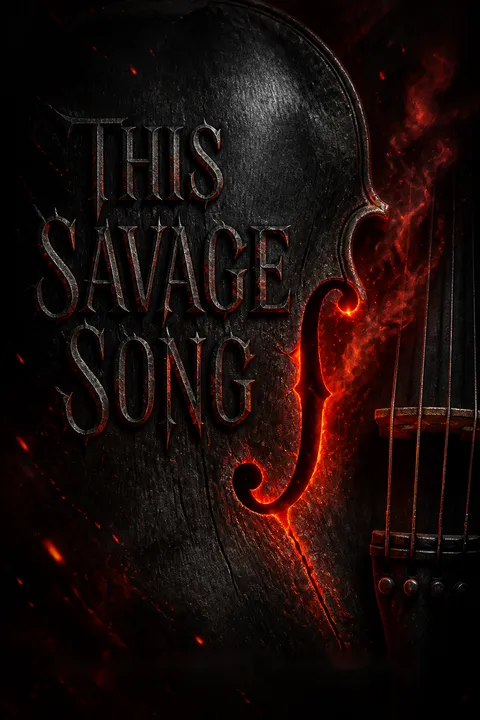


Plot Summary
Prologue
In Verity, violence breeds monsters, and a fortified wall splits V-City between Callum Harker’s North and Henry Flynn’s South. Desperate to return to her father, Kate burns a chapel at her sixth boarding school and is sent home. Across the city, August, a Sunai born from mass death, asks his adoptive Flynn family to let him fight beside their task force.
Instead, Henry approves a covert assignment: August will attend Colton Academy under the name Freddie Gallagher and keep watch on Harker’s daughter. Both teenagers enter the story wanting a place to belong, though each has been taught to mistake danger for proof of strength.
The opening pairs two kinds of confinement. Kate turns arson into a bid for home, while August asks to leave the safety of the Flynn compound and is offered a school assignment instead of a battlefield. Their choices are not yet freedom: Kate still measures herself against Harker’s approval, and August still depends on his family to define what he is allowed to do. The monster-haunted city makes these longings materially dangerous. Each protagonist wants to be recognized as capable, but the adults around them see a liability or a weapon, setting up the conflict between selfhood and assigned purpose.
Freddie Crosses the Seam
August enters Colton as Freddie Gallagher, wearing a forged North City medallion and hiding the black tally marks on his arm. Henry and Emily fear that Harker’s men will discover he is a Sunai, while Leo expects him to follow Kate closely. At the school assembly, August sees Kate Harker rise before a room full of whispers and realizes she is the assignment’s center.
Colin Stevenson takes Freddie under his wing, giving the isolated boy a first taste of ordinary teenage kindness. Kate, meanwhile, clocks the newcomer but keeps her distance. When August leaves the cafeteria overwhelmed by noise and hunger, he finds Kate outside, and their first cautious exchange unsettles the simple roles their families have written for them.
Colton is a stage on which both teenagers are performing identities they did not choose. August’s borrowed name and medal conceal a nature that cannot be made fully human, while Kate uses her famous surname as armor against being sent away again. Colin’s easy welcome offers August a model of connection without tests of strength or usefulness. Kate’s attention is more guarded, but her presence already complicates his assignment: she is not an abstract bargaining chip once she becomes a person he can meet. The school’s apparent safety is thus less a refuge than a pressure chamber for their incompatible disguises.
Kate Claims the Basement
Kate answers rumors about her mother by cornering Charlotte Chapel in a bathroom and threatening her with the blade hidden in her lighter. At home, she finds little comfort: Harker keeps to his sealed office, while his Malchai lieutenant, Sloan, taunts her about her childhood and her place in the family.
Wanting her father to see her as more than a child, Kate follows him to the basement, where he judges a branded Malchai who has defied his rule. She volunteers to execute the prisoner and uses a crowbar to strike beneath his protective chest plate. The room watches her return the weapons with blood on her uniform. Kate has proved she can act ruthlessly, but once alone she shakes beneath music loud enough to hide her fear.
Kate treats violence as a credential because Harker’s world rewards control and punishes visible need. Her threat to Charlotte and her public killing are not identical acts: the first defends her against a story about her mother, while the second seeks admission to her father’s political theater. Yet both make her imitate the very authority she hopes will love her. Her private shaking exposes the cost of that imitation. The scene resists a neat split between cruelty and vulnerability: Kate can choose a brutal action and still be frightened by what it asks her to become.
August Feeds Osinger
August’s first day leaves him feverish: he has barely eaten, and the confessions pulled from nearby passengers crowd his senses. Leo sends him to kill Albert Osinger, a murderer whose shadow marks him as a sinner. When Osinger refuses to face him, August opens his violin case and plays.
The music settles his sickness and draws Osinger downstairs, where the man admits to repeated killings and a willingness to do it again. August takes the glowing life from him, then stands over the corpse grieving the human feeling that feeding briefly gives him. Before he leaves, a black cat emerges from the clutter. August cannot abandon it, so he brings it home, where Ilsa names it Allegro and agrees to care for it.
The killing establishes the moral trap inside August’s purpose. His hunger is not indiscriminate, and Osinger’s guilt gives the act a logic of justice, but feeding still leaves August face to face with a dead body and his own nonhuman need. The brief calm afterward tempts him with the feeling of ordinary life, making the cost more intimate, not less. Allegro’s adoption offers a counterpoint: August responds to a vulnerable creature with care rather than judgment. The cat becomes evidence of a self not exhausted by the role of executioner, even when August cannot yet believe that evidence.
The Camera Finds August
In history class, Kate notices Freddie’s handmade map of Verity and adds a small monster to his drawing, testing whether he sees the city’s violence as clearly as she does. They share a quiet interlude among Colton’s trees, where August admits he has rarely seen a forest and Kate reveals how badly she wanted to return to V-City. Their closeness falters when she asks him to play violin and he refuses.
Kate searches for him online, then checks Harker’s protection ledger and finds no Freddie Gallagher. Later, she photographs him at school. The images show the truth his blurred student ID suggested: his eyes register as black smudges. Kate recognizes that he is a Sunai, but deletes the evidence instead of giving it to her father.
Their connection grows through small acts of recognition, not confession. Kate and August both notice the false comforts around them, and the shared drawing lets them acknowledge that perception without naming what divides them. Yet trust has limits: August will not play, and Kate turns curiosity into surveillance. The blurred photographs make identity a literal problem of representation, as if the camera cannot stabilize a creature caught between human appearance and monster nature. Kate’s choice to delete the proof is a first refusal of inherited loyalty. She does not yet know what she will do with that refusal, only that exposure would damage something she wants to preserve.
Leo Teaches by Force
Henry’s task force suffers a planned ambush, leaving Phillip badly wounded and four officers dead. A captured informant confirms that someone inside sold patrol details to Harker’s side. Leo takes August on a hunt and demonstrates that a Sunai can draw out a sinner’s life through physical pain as well as music.
When a second attacker rushes August, he stabs the man and absorbs his life, then recoils from the violence and the unwanted power flooding him. Meanwhile, Kate studies Harker’s footage of Leo feeding and asks Sloan what he knows about Sunai. Sloan describes Leo and the Sunai who created the Barren, and hints at the danger of the third. Kate now has reason to suspect Freddie is more than a hidden monster.
Leo’s lesson makes moral certainty look like a method of domination. He frames suffering as deserved penance, but the demonstration teaches August less about justice than about how easily righteous language can excuse cruelty. August’s accidental killing is a rupture because he cannot keep the violence at an intellectual distance; the victim’s life enters him along with its emotional residue. Kate’s research follows a parallel route, turning her father’s surveillance archive against the story he tells his citizens. Both teenagers are acquiring knowledge, but each must decide whether knowledge will become another instrument of control.
Colton Becomes a Trap
Kate arranges a ride with Freddie, intending to use her copper-lined restraints to deliver him to Harker, but his apology and honesty make her hesitate. She does not capture him. After school, the subway closes early and she finds Headmaster Brody dead inside the building, his eyes burned out.
Two rogue Malchai seize her outside. August escapes a music room where someone has locked him in, finds another dead student, and reaches Kate as the creatures prepare to kill her and blame a Sunai.
He plays his violin, stunning one attacker long enough for Kate to drive an iron spike into its heart. August restrains the other and absorbs its life. The act saves Kate, but leaves August vomiting black fluid and collapsing as she realizes his identity.
The attack converts private suspicion into shared danger. Kate’s hesitation in the car matters because she has already begun to see Freddie as more than a target, while August’s rescue makes that perception costly and undeniable. The attackers exploit the city’s ready-made prejudice: a Sunai is an easy culprit, and a murdered Harker would make the truce look broken. Their plan depends on people accepting a familiar story before examining evidence. Kate and August survive by acting together, but the feeding leaves him physically compromised and the revelation of his nature forces their fragile connection into a new, adversarial form.
The Rooftop Escape
Kate binds August in a construction site and asks why he saved her. He explains that the Malchai attack was arranged to kill her and make the Flynns appear responsible. She knows he is telling the truth, but keeps an iron spike near his throat while demanding answers.
When men arrive, Kate cuts his restraints and the pair flee across rooftops. August calls the Flynn line, but Leo orders him to abandon Kate and return alone. August refuses to give their location, then hangs up.
They hide in a café as more Malchai enter, escape through the kitchen, and disguise themselves as a couple on the street. With cameras covering most of North City and Harker’s forces searching for them, Kate spots the subway grates as their only route beyond the surveillance net.
The escape is a practical negotiation of trust. Kate releases August because the danger outside the restraints is greater than the danger beside her; August refuses Leo’s command because protecting a person has become more compelling than obeying a strategy. Neither offers uncomplicated faith. Kate keeps a weapon, and August withholds his location from his own family. Their cover as a couple also shows how social expectations can conceal them more effectively than force. The city’s camera network turns movement into exposure, making the underground both a literal refuge and a test of whether their alliance can survive without adult protection.
A Song Holds the Dark
Below the city, Kate and August enter tunnels where Corsai gather in the dark. August uses his violin to drive them back, and Kate sees the music as colored light while it holds her attention and shields them. His song weakens as strings snap one by one, forcing them to run into an abandoned train car before the creatures can reach them.
Kate is bleeding from her earlier wounds, so August finds medical supplies and stitches her at a motel. During the long hours together, she explains the family she wanted and the accident that took her mother. August admits that people near him often confess without meaning to. Kate contacts Harker, who tells her to leave the city. August stays, and Kate does not make him go.
The tunnel scene makes August’s power both protection and coercion: his music saves Kate, but it also draws her mind into its current. The broken strings impose a limit that prevents his gift from becoming an easy solution. In the motel, care changes the balance between them. August treats Kate’s wound with painstaking gentleness, while his involuntary influence complicates the intimacy of her confession. Their closeness is real, but not uncomplicated, because neither can fully control what the other experiences. The scene lets trust develop as a practice of disclosure and restraint rather than as a sudden cure for suspicion.
Ilsa Leaves the Tower
Ilsa, August’s reclusive sister, secretly reaches the motel and warns that Malchai are on their way. She stays behind to delay them while August and Kate flee through the building’s garage. Kate kills a pursuing Malchai with her second iron spike, and the pair steal a car and drive into the Waste. Their escape leaves August increasingly sick from hunger, while Kate’s injuries reopen.
When the car runs out of fuel, a trucker accepts Kate’s silver Harker medallion in exchange for a lift to the fortified Horizon rest stop. There, a television announces that Kate has been abducted by the Flynns. Her father’s public claim turns strangers into potential hunters, and Kate realizes the crisis has become a political story beyond their control.
Ilsa’s choice to leave the compound marks how the danger has crossed the family’s private boundaries. Her warning is useful, but her decision to remain behind repeats the self-sacrificing logic that traps the Sunai in their roles. The Waste removes the protection of either faction, and Kate’s medallion becomes a negotiable object rather than a guarantee. At the Horizon, Harker’s broadcast shows how authority manufactures reality: a false account can mobilize ordinary people faster than the truth can reach them. The pair are now fugitives not only from monsters but from the public interpretation of their actions.
Fugitives at the Horizon
Kate secretly calls Harker, who knows August is with her but refuses to blame Sloan, insisting that the Malchai is loyal. She breaks off the call rather than reveal their location. August spots a violent man carrying the telltale shadow of a sinner, but Kate pulls him away before hunger can send him after the target.
Four truckers confront them outside, hoping to claim the reward for Kate. August lets his influence sharpen their greed into a quarrel, and Kate wounds the woman holding a knife while he knocks the gunman down.
They escape through the opening gate and run into the fields. As dawn comes, August’s fever and hunger begin to ease without a meal, and Kate, clutching the stolen coordinates, leads him toward the house where she once lived.
At the Horizon, the protagonists are tested by opposite forms of appetite. August sees a sinner who could end his hunger, while Kate sees a public bounty turning strangers into a mob. Their escape requires him to use an influence he distrusts, suggesting that restraint does not mean refusing every dangerous capacity. Harker’s certainty about Sloan further isolates Kate, since the father she wants to trust is also the source of the official story. August’s temporary recovery after the flight unsettles his understanding of hunger, but the apparent reprieve is unstable. The promised destination offers Kate a past, not necessarily safety.
The House Beyond Verity
At the abandoned farmhouse, August’s hunger swings into feverish euphoria, then leaves him weak and bleeding from a bullet graze. Kate gets him inside and cools him in the bathtub, refusing to abandon him as his body falters. The familiar rooms restore her memories of the life she shared with her mother outside V-City.
Kate remembers that she had wanted to return to the countryside, that her mother was trying to take her there, and that Sloan stood near the fatal crash. She also recalls the bruise Harker’s ring left on her mother. The recovered past changes her grief into anger at both men. She finds cash, border papers, and a gun, preparing for the confrontation she has avoided.
The farmhouse offers no escape from the present; instead, it makes memory physically unavoidable. Kate had mistaken her mother’s wish to leave for her own, a distortion that helped her accept Harker’s version of family and exile. Recovering the truth restores her agency, but not innocence: she must now act with knowledge of what both Harker and Sloan have done. August’s fever runs beside this recollection, linking their crises without making them identical. Kate protects him while reclaiming a past, and that caretaking gives her a form of strength distinct from the violence she once used to earn Harker’s approval.
The Shot at Home
A man wearing a Flynn cap arrives at the farmhouse and claims Harker sent him, but Kate recognizes Sloan’s brand beneath the disguise. When he reaches for his weapon, she shoots him. The human blood draws August into a fresh hunger crisis, and he orders Kate to run before he loses control. Sloan arrives with another Malchai, knocks Kate unconscious, and sends his accomplice after August.
In the bathroom, the accomplice destroys August’s violin and beats him until he can no longer resist. Sloan’s people chain August in a warehouse and bind Kate in a separate room. The farmhouse, which had restored Kate’s memories and sheltered August, becomes the place where their flight ends and Sloan gains control of both captives.
Kate’s first human killing is not a triumphant act of self-defense; the vivid blood makes its moral and sensory consequences immediate for both protagonists. She must protect herself, yet the death intensifies the danger to August, whose hunger has never been a purely private condition. Sloan exploits that vulnerability by attacking when August is weakened and destroying the violin that channels his power. The farmhouse’s reversal is especially sharp: a place that once held Kate’s safety becomes a scene of violence, while her memories have made the stakes personal. Their capture shows that survival by improvisation has limits when an enemy controls the timing.
Leo's Deal With Sloan
Sloan tortures August and explains that he wants the younger Sunai to go dark, believing that form can be killed. He claims to have cut Ilsa’s throat, using the threat to push August toward collapse. In the adjoining room, Kate works the screws from her handcuff frame with the silver pendant Harker gave her.
Leo appears, kills Sloan, then reveals that he helped place August at Colton and cooperated with Sloan to provoke a war. Leo wants Kate’s location and expects August to kill her once he loses control. Kate reaches the warehouse just as Leo begins playing his flute, which draws her confession and August’s power toward the surface. Leo’s rescue of his brother proves to be another attempt to command him.
The apparent rescue exposes how thoroughly Leo has confused kinship with ownership. He saves August from Sloan only to claim him for a larger campaign, treating his brother’s fear and power as resources. Sloan’s torture attacks August’s most fragile belief, that he can remain himself under hunger and pressure. Kate’s escape uses the object Harker gave her as a tool against the structures he built, a small reversal of inherited authority. Leo’s flute then turns music, usually August’s means of restraint or care, into an instrument of compulsion. The scene makes the central conflict less about which faction rules than about who gets to define another person’s purpose.
August Becomes the Dark
As Leo’s music draws Kate toward him, August’s tally marks fade and his body gives way to a towering Sunai form of smoke, fire, and shadow. Leo expects the transformation to make August obedient, but the dark creature turns its grip on him instead. It takes Leo’s life, leaving his body to crumble into ash, then breaks the metal cuffs that hold Kate.
The power recedes, and August returns to his human shape, no longer visibly marked by the daily tallies that measured his restraint. Kate is alive, but neither can tell how much of August’s old self has survived the transformation. His choice saves her and ends Leo’s plan, while leaving a new question between them: what has August become?
August’s transformation fulfills the threat he has spent the novel resisting, but it does not confirm Leo’s interpretation of him. The crucial choice occurs inside the monstrous form: August directs its power away from Kate and toward the brother who tried to dictate his nature. The act is both liberation and loss, because the tallies that represented hard-won control disappear with the body that carried them. Kate witnesses a being she cannot reduce to either boy or monster. The scene refuses to make moral identity depend on appearance; August’s frightening form protects rather than consumes her, while Leo’s humanlike certainty has become coercive.
Harker's Last Bargain
Kate returns to Harker Hall with August and confronts her father about Sloan’s betrayal. The cracked silver pendant exposes its tracking chip, and Harker admits that he accepted Sloan’s plan to shift blame and thought a crisis might help preserve his control.
Kate shoots Harker in the shoulder and knee, but August stops her from killing him herself. When Harker lunges with a knife, August pins him and reaps his red soul. Kate leaves rather than inherit the city or remain under its protection.
August returns to the Flynn compound, where Henry tells him that Ilsa survived Sloan’s attack but can no longer speak. Her star marks are gone. August holds his sister as she draws new stars on the window, while the family begins reckoning with the deaths and betrayals that have reshaped it.
The final confrontation separates justice from inheritance. Kate has spent much of the story trying to prove that she belongs beside Harker, but learning that he accepted a plan built on her danger makes his recognition worthless. August intervenes not to excuse Harker but to prevent Kate from making a choice that would bind her to his logic of violence. His reaping remains morally complicated, yet it spares Kate that burden. The return to the Flynns offers neither restoration nor a clean family reunion: Ilsa survives, but her silence and missing stars register a lasting cost. Their bonds persist through damage, not by erasing it.
Epilogue
Kate crosses Verity’s border under her mother’s maiden name, then turns toward Prosperity after hearing reports of ritual killings. August returns to the FTF, accepts a steel violin, and prepares to defend a city whose old protection has collapsed.
In the farmhouse beyond the Waste, a new Malchai rises from the bloodstained wall, takes a family photograph, and follows Sloan’s trail to the warehouse. There, she pulls the metal bar from his body. Sloan wakes, and the creature gives her a name: Alice. The threat that began with the Harkers’ broken family has not ended with Harker’s death.
The closing sequence refuses the comfort of a finished victory. Kate’s departure is a choice, but the news from Prosperity draws her toward another violent territory, suggesting that distance from V-City cannot erase her capacity to intervene. August’s new instrument marks a changed relationship to his nature: he is preparing to use his power without pretending it belongs to someone else. The final return of Alice as a Malchai gives the family tragedy a literal afterlife, transforming the dead mother’s name into a new threat. Personal grief and political violence remain entangled, and the ending makes survival an opening rather than a conclusion.
Analysis
This novel builds its central question into the body: if violence creates monsters, can a being made from violence choose what it does next? August’s hunger makes that question more than philosophical. He must feed, and his feeding gives him relief, but every choice risks eroding the self he is trying to protect. The tally marks dramatize restraint as labor rather than purity. Their eventual disappearance does not settle the question; August’s decisive act comes when he directs his monstrous power against Leo rather than Kate.
Kate’s parallel struggle concerns inheritance. Harker teaches her to equate vulnerability with danger, and she initially performs his methods in the hope that he will recognize her as his daughter. Yet the more she learns about her mother, Sloan, and Harker’s politics, the less useful that performance becomes. Her refusal to kill Harker herself is not forgiveness. It is a refusal to let his worldview determine what kind of person she must become.
The city’s geography turns these inner conflicts into public structures. The Seam divides responsibility as well as territory, while Harker’s medallions make safety a purchasable loyalty and the FTF offers a more costly defense rooted in service. Both systems claim to protect people, and both are vulnerable to leaders who treat the population as leverage. The Barren, the attacks, and the rising monsters expose the failure of a peace maintained through fear.
Music complicates the novel’s ideas about agency. August’s song can save Kate from Corsai, but it can also overwhelm her perception; Leo’s flute turns the same kind of power into command. The difference lies not in the instrument but in the purpose and restraint of the person wielding it. The ending does not promise a healed city or a purified August. It offers a narrower, harder possibility: people may inherit violence, grief, and damaged families without being wholly defined by them, but choosing otherwise requires ongoing action.
Review Summary
This Savage Song receives mostly positive reviews, with praise for its unique world-building, complex characters, and lack of romance. Readers appreciate the dark atmosphere, monster mythology, and Schwab's captivating writing style. Some criticize slow pacing and underdeveloped world-building. The main characters, Kate and August, are generally well-received, though opinions vary. Many reviewers express excitement for the sequel and note Schwab's consistent ability to create compelling stories. Overall, the book is considered an engaging and original addition to the YA fantasy genre.
People Also Read



Characters
Kate Harker
The defiant heirKate is Callum Harker’s daughter, raised between years of exile and brief, uneasy returns to V-City. Sharp, observant, and skilled at fighting, she studies her father’s methods because she believes strength is the price of being allowed to stay. Her scars, partial hearing loss, cigarettes, and habit of imagining alternate lives reveal the strain beneath her controlled manner. She distrusts sentiment because she has learned that family affection can coexist with neglect and power. At Colton, August challenges her assumption that everyone can be sorted into allies, enemies, and tools. Kate’s drive is not simply to inherit authority; she wants a home that does not require her to erase the parts of herself that feel fear or grief.
August Flynn
The reluctant SunaiAugust is a Sunai, a human-shaped monster born from mass violence and adopted by Henry and Emily Flynn. He is thoughtful, intensely curious, and uncomfortable with the power his violin gives him. Black tally marks record days since his last loss of control, making self-restraint visible even as he doubts that restraint can make him human. August studies ordinary life through books, music, and observation, but his hunger repeatedly forces him to confront the distance between appearance and nature. He wants to protect people without becoming an instrument of someone else’s justice. His bond with Kate tests that wish, because caring for her means disobeying both his family’s strategy and his own instinct to hide.
Henry Flynn
The wary commanderHenry leads South City’s Flynn Task Force and is August’s adoptive father. A surgeon by training, he approaches people and crises with care, even when the city demands harder choices. The deaths he has endured have made him cautious about war, and his instinct to protect August can become a form of confinement. Henry believes the truce is worth defending because he knows what another territory war would cost ordinary residents. His bond with August rests on genuine affection, though he struggles to explain the danger without making his son feel like a liability. His leadership is defined by trying to preserve lives in a system that repeatedly rewards force.
Callum Harker
The iron-fisted rulerCallum Harker controls North City through a bargain that offers residents protection from monsters in exchange for obedience and payment. He is strategic, composed, and skilled at making power appear inevitable. His daughter Kate wants his recognition, but Harker’s care is inseparable from his need to manage risk and maintain authority. He treats vulnerability as an opening for attack, a belief that shapes the way Kate learns to conceal fear. Harker is not simply a public tyrant to her; he is also the absent father in the stories she grew up hearing. That contradiction gives their relationship its emotional force and makes his approval feel both valuable and dangerous.
Leo Flynn
The righteous enforcerLeo is August’s older Sunai brother and the celebrated public face of the Flynn Task Force. His confidence and calm make him seem almost untouchable, while his black eyes and ability to use many instruments reveal the monster beneath the soldier’s uniform. Leo sees Sunai as agents of judgment and believes hesitation weakens their purpose. He pushes August toward feeding and violence, interpreting compassion as resistance to nature rather than a moral choice. His relationship with Henry is tense because Henry values restraint, while Leo favors decisive force. Leo’s certainty can attract followers, but it leaves little room for doubt, grief, or another person’s autonomy.
Ilsa Flynn
The star-marked sisterIlsa is August’s older sister, a Sunai whose strawberry-blond hair, gentle manner, and scattered attention make her seem delicate. Her skin is marked with stars, and she lives largely within the Flynn compound. Ilsa is tactile and affectionate with August, offering the tenderness Leo withholds. Her mind moves through images and associations rather than the practical sequence others expect, but she can perceive threats that others miss. She carries a profound fear of the destruction her power can cause and of the harm that may follow if the city returns to war. Her presence ties beauty and danger together without making either one a simple reflection of character.
Sloan
Harker's trusted MalchaiSloan is a Malchai, a blood-feeding monster branded with Harker’s mark and kept close as his most trusted lieutenant. His refined clothes and measured manner disguise his speed and predatory strength. He enjoys unsettling Kate, using knowledge of her childhood and family wounds to make her doubt her place in Harker Hall. Unlike the more single-minded monsters, Sloan thinks strategically and understands how fear can be converted into political leverage. His relationship with Kate combines proximity and threat: he has watched her grow up, but offers no warmth, only a claim to know what she is. He embodies the danger of mistaking familiarity for safety.
Emily Flynn
The soldiering motherEmily is Henry’s wife, an FTF soldier, and one of August’s adoptive parents. Practical and physically steady, she helps manage the compound while trying to protect August from the dangers outside it. Her care is warm but firm, especially when she senses him pushing himself toward hunger or violence. She understands that August is not fragile, yet fears what might happen if he is exposed too soon. Emily offers a counterweight to Leo’s hard doctrine and Henry’s political caution, grounding family decisions in the actual bodies that will suffer their consequences.
Paris
The hidden allyParis is a blind North City ally who helps August cross the Seam and reach Colton. She lives in a relatively comfortable apartment and relies on senses other than sight to read the people around her. Her blindness does not make her dependent on August; she notices his missing violin and his discomfort with the city. Paris’s practical kindness gives him a rare point of contact beyond the Flynn compound, while her position in Harker’s territory shows that loyalties in V-City are not neatly divided by the wall.
Colin Stevenson
The open-hearted classmateColin is the first Colton student to welcome Freddie without making him prove himself. Short, sociable, and quick to laugh, he offers directions, lunch companionship, and a possible place in the school’s social life. His ease with others contrasts with August’s effort to imitate ordinary expressions and routines. Colin is not a political strategist or monster hunter; his value lies in the ordinary friendliness that August has been denied.
Allegro
The rescued black catAllegro is a black cat with green eyes, found beside Albert Osinger’s body. August cannot leave him behind, and Ilsa names him and takes him into her care. The cat responds warily to Leo but settles with August and Ilsa, offering the Flynn household a small, living presence that asks for care rather than allegiance.
Harris
The FTF escortHarris is a young Flynn Task Force member who escorts August on night hunts. He is sociable and teasing, treating August as a colleague rather than a secret weapon. His easy manner helps soften the compound’s militarized atmosphere, though his work puts him directly in the path of the violence the FTF tries to contain.
Phillip
The wounded officerPhillip is an FTF officer and Harris’s partner, friendly toward August and protective of him when others use the word monster. A violent ambush leaves him gravely injured, making the cost of the truce’s failure immediate to August. Phillip represents the human task force members who face creatures they cannot match physically.
Charlotte Chapel
The rumor-spreading studentCharlotte is a Colton student who repeats cruel rumors about Kate’s mother and the circumstances of her exile. Her words trigger Kate’s first public act of intimidation at the school, though Charlotte herself is a minor figure in the larger conflict.
Rachel
The calculating classmateRachel approaches Kate under the guise of friendship, then reveals that she sees social alliances as useful leverage. Her attempt to define Kate’s relationship to Harker exposes the school’s own small-scale politics.
Dr. Landry
The school counselorDr. Landry counsels Kate after she injures a self-defense instructor. He notices her tension and offers anxiety medication, interpreting her aggression through the lens of grief and stress rather than simply punishing it.
Albert Osinger
The marked murdererAlbert Osinger is a murderer whose repeated violence leaves the shadow that identifies him as a sinner. August hunts him for the Flynn Task Force and hears him admit that killing has become easier. His case establishes the moral and physical cost of a Sunai feeding.
Alice Harker
Kate's absent motherAlice is Kate’s mother and Harker’s former wife. Kate remembers her as warm, affectionate, and at home in the countryside, a contrast to the cold authority of Harker Hall. The family’s separation and her death shape Kate’s longing for home, though Kate’s memories of the final night are incomplete.
Peter
The unpaid protection clientPeter is a North City resident who falls behind on payments for Harker’s protection. Harker uses him as a public example before the monsters, revealing how the promise of safety depends on obedience and money.
Plot Devices
The Phenomenon
Violence made visibleIn Verity, violent acts can produce monsters. Lesser violence gives rise to Corsai, which hunt in darkness and feed on flesh; murder produces Malchai, which drink blood; mass atrocities produce the rare Sunai, who feed on the life force of sinners. This mechanism makes the city’s political conflict materially self-renewing: violence does not merely kill people, it adds predators to the world. The monster system also gives August’s moral dilemma concrete terms, since he can feed only on those who have harmed others, but the act still risks his own loss of control.
The Seam and the truce
A city divided by fearA fortified, metal-lined barrier divides V-City between Harker’s North and Flynn’s South. The truce keeps their forces from open war, but it is fragile because both leaders command different forms of protection and power. The city’s geography shapes every journey: crossing the Seam requires concealment, North City surveillance constrains movement, and the Waste beyond the capital offers no faction’s protection. The barrier is both infrastructure and political argument, making the cost of renewed violence visible in gates, patrols, and the ruined Barren at the city’s center.
Sunai music and tallies
Power measured in restraintEach Sunai has a distinctive song that can draw a sinner’s soul to the surface and make the target vulnerable. August’s violin is the instrument through which his song works, while Leo can use several instruments and Ilsa’s power is carried by her voice. August’s black tally marks record days since his last loss of control, turning restraint into a visible count. The marks are not a cure for hunger; they register the effort of resisting it. Music can protect, enthrall, or kill, so every performance raises questions about consent as well as power.
Protection medallions
Safety sold as allegianceResidents who pay Harker receive numbered metal medallions that identify them as protected. Iron repels many monsters, but the deeper safeguard is Harker’s authority over the creatures in his territory. The medallions therefore function as both practical defense and a public record of political submission. Kate’s own pendant carries a more personal meaning because her father gives it to her as a sign of belonging, while its hidden technology makes the promise of protection conditional. The device binds family affection, surveillance, and power into one small object.
The Waste
Beyond the rival empiresA broad, dangerous buffer surrounds V-City, separating the capital from smaller settlements and the territory borders. The Waste has few lights, little surveillance, and no reliable protection from either Harker or Flynn. Corsai hunt in its darkness, while scavengers and fortified rest stops create human dangers of their own. Its emptiness gives Kate and August a route beyond the capital’s cameras, but also exposes August’s dependence on nearby sinners and makes ordinary supplies difficult to find. The landscape turns escape into a physical test rather than a simple change of allegiance.
Monsters of Verity Series
About the Author
Other books by Victoria Schwab


Download PDF
Download EPUB
.epub digital book format is ideal for reading ebooks on phones, tablets, and e-readers.








