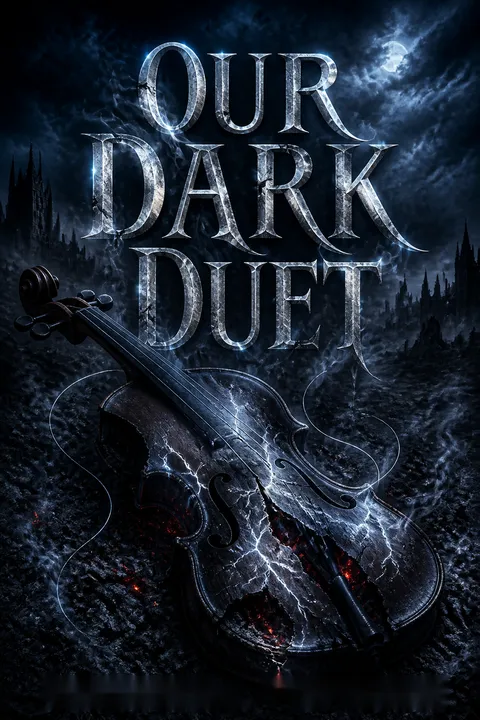


Plot Summary
Prologue
In the abandoned house, a girl steps past a dead man and walks into the evening, carrying the aftermath of violence with her. Elsewhere, in a blood-soaked warehouse, a wounded boy lies beneath a steel bar driven through his back.
The girl finds him and pulls it free. He knows the monster who made him is dead; she knows her own is still alive. The book opens with both survivors moving forward, though neither can leave the past behind.
The Prelude turns the previous catastrophe into a pair of unsettled inheritances. The girl walks away from a body, while the boy rises from one: each is alive, but survival has not restored what violence took. Their different directions establish the novel’s central tension between escape and return. The girl believes a threat remains unfinished; the boy is already marked by what he has done. By presenting them first as figures defined by aftermath, the opening makes their later choices feel less like fresh beginnings than attempts to decide what their damage will mean.
A Hunter in Prosperity
Six months after leaving Verity, Kate Harker hunts monsters in Prosperity, using iron spikes and makeshift armor to kill a creature that feeds on hearts. She lives in Riley Winters's apartment and relies on the Wardens, a group of young hackers who collect evidence the authorities dismiss.
Kate calls herself Kate Gallagher and avoids treating the Wardens as friends, though their messages and Riley's concern have begun to feel like a fragile home. She also searches constantly for news from Verity, but the territory's communications grid has gone silent. When Riley flags a rise in murder-suicides, Kate suspects the city's slow, hidden violence is producing something worse than the Heart Eaters she has been killing.
Kate has built a workable identity out of action: if she can locate a monster and drive iron into its heart, she can give guilt a target. Prosperity offers her a role that Verity never did, but her chosen anonymity is unstable. She keeps her first name, searches for August, and accepts Riley's help while insisting that attachment is a liability. The Wardens matter because they make her skill collaborative, even as she tries to frame the relationship as a transaction. Her loneliness is not an absence of people; it is the labor of keeping every connection at arm's length.
The Shadow Takes Hold
At a restaurant crime scene, Kate follows traces of blood and hears screams from inside. A calm-eyed man has taken kitchen knives and killed diners; beside him, Kate sees a faceless shadow with silver eyes, growing more solid as the violence continues. It turns its attention on her, and she escapes only after Riley's voice breaks through its grip.
Kate wakes later with a splitting headache and, at work, nearly attacks a customer in a sudden rush of murderous calm. A silver shard now cuts across her iris. By looking into it, she enters the creature's memories and sees Verity. Believing she has led the shadow toward the city that shaped her, Kate sends the Wardens what she knows and sets out to stop it.
The creature's first attack makes Kate's familiar competence unreliable: she can still act, but now the impulse to act violently may not be hers alone. The silver mark turns an encounter into an ongoing relationship, and the visions make perception itself a risk. Kate responds with the strategy she trusts most, leaving before anyone can be endangered by her. Yet the choice is not simple flight. She returns because she believes the shadow is headed for Verity, and because the city remains bound to the harm she has survived. Her protective instinct and her self-punishment point in the same direction.
A City Under Sloan
In Verity, August Flynn leads an FTF squad that escorts refugees from North City into the Flynn Compound. During the required screening, his violin exposes the souls of the arrivals; when one mother's soul shines red, August reaps it, leaving her young daughter to watch. The duty deepens his fear that he is becoming a weapon rather than a person.
Henry Flynn, his adoptive father and head of the FTF, argues with a divided council over whether to rescue more Northerners or protect the South. August's sister Ilsa remains unable to speak after Sloan cut her throat. Across the Seam, Sloan rules North City through Malchai and human Fangs, while the FTF holds its ground rather than advancing.
August's screening ritual gives the FTF a method for identifying violence, but not a morally clean way to respond to it. The mother's confession does not make her innocent, yet her child makes the cost of judgment impossible to abstract. August feels the difference between deciding a soul is stained and living with the body left behind. The council's arguments reproduce that same problem at civic scale: protection demands choices about who counts as worth the risk. Henry's insistence on compassion offers August a model, but the institution's reliance on his lethal power keeps threatening to reduce him to the very function he questions.
Rez Falls in the Dark
When an FTF squad disappears inside a blackout zone, August and his partner Rez follow a trail of light batons into the ruined Falstead Building. They find dead soldiers and a wounded survivor, then discover that the scene is a trap: human Fangs attack before August can play his violin. Rez fights free, but one Fang cuts her throat while she tries to reach him.
August kills the attackers and, in rage, reaps the man responsible by crushing his metal collar. The act sickens him, but he returns to the Compound bloodied and lets the soldiers see what he has become. Alice, Sloan's violent lieutenant, taunts him from a rooftop, then escapes when he drives off her Malchai companions.
Rez's death breaks the distance August has maintained between the lives he reaps and the deaths he cannot prevent. His violence against her killer is not simply tactical; it is a choice to make suffering answer suffering, and he recognizes the danger only after the soul is gone. Alice turns that guilt into pressure, using August's attachment to his human team as a weakness she can exploit. His bloody return to the Compound changes how others see him, but also gives him a temporary relief from being misunderstood. The scene marks a shift from performing strength to suspecting that monstrosity might be easier than grief.
Back Across the Seam
Kate crosses the Waste on foot after her stolen car breaks down, then spends a night trapped in an abandoned green-zone house with Rick, a survivor who has dressed himself in stolen Harker medals. When Rick tries to trade her to the Corsai outside, Kate disarms him and seals herself inside until dawn. In North City, Fangs recognize her and try to capture her for Sloan.
She reaches the Seam and breaks into a checkpoint, only to be seized on the South side by Soro, a newly emerged Sunai who reads her as a sinner. Soro kills a pursuing Fang and prepares to reap Kate. August arrives in time to stop them, recognizes her, and orders her taken to the Compound for questioning.
Kate's return strips away the controlled distance she had fashioned in Prosperity. The Waste and the green zone offer no reliable refuge: Rick survives by turning other people into protection, while the Fangs make her family name a liability. Soro's immediate judgment shows how Verity's moral systems can mistake certainty for fairness. August's intervention prevents Kate's death, but it does not restore the easy intimacy of their earlier bond. He receives her as an ally with dangerous information, not as the person he remembers, and she must enter the institution that once represented her father's rule as a suspect.
A Harker in Uniform
Soro interrogates Kate, and August later questions her about the silver shard in her eye. When his demand for the truth triggers a full confession, Kate tells him about the shadow and punches him for forcing her to reveal what she wanted to keep private. Henry allows her to stay under August's supervision.
Kate learns that Sloan returned after Callum's death and controls North City, while Ilsa survived but cannot speak. To escape confinement, Kate persuades Emily Flynn to let her join cadet training. At the Compound, North and South soldiers treat her as Callum Harker's daughter, while Kate studies the training routines, the weapons stores, and the distrust that divides the people she needs to help.
Kate's admission creates a useful but uncomfortable intimacy: August becomes the person who knows what is happening inside her, but he acquires that knowledge by overriding her boundaries. Her punch restores some agency, though it cannot undo the breach. At the Compound, wearing an FTF uniform is another tactical disguise, yet the hostility she encounters is not merely prejudice; her name carries real political history. The soldiers make her confront the fact that belonging cannot be claimed through competence alone. Meanwhile, her concealed connection to the shadow makes every offer of trust ethically complicated, because she does not know what else the creature may see through her.
The Squad Turns Inward
While studying FTF records, Kate sees that the war has remained stalled near the Seam for months, with the council divided over risking a full assault. She also recognizes that a supposedly ordinary depot sits over an old subway entrance. When August's squad approaches it, Kate warns him to enter through the tunnels instead of the front.
The warning saves them from a hidden explosive trap. Meanwhile, a squad of FTF soldiers is found dead after turning their weapons on one another, and a later mission reveals the shadow at the center of another massacre. Kate's visions let August reach the scene, where he stops one infected soldier from killing again and brings him back alive.
Kate's value to the FTF is not that she can replace its soldiers, but that she reads patterns the organization has stopped questioning. Her recognition of the subway entrance exposes both a tactical blind spot and the council's larger habit of treating stalemate as safety. The self-inflicted massacre then makes the threat intimate: the enemy can turn the FTF's own discipline and weapons against it. Saving one infected soldier complicates the Sunai's usual distinction between guilty and innocent. The survivor is both a danger and a person, forcing August to consider whether containment and punishment are the only responses available.
A Song Against Madness
Kate and August keep the infected soldier isolated while the man swings between murderous calm and horror at what he has done. Kate admits that using the silver shard to track the creature costs her more control, and August admits that grief has made him embrace violence because it hurts less than restraint.
They kiss, but Kate's soul flares red beneath her skin, showing that their closeness can expose them both to danger. August later plays his violin softly for the captive, easing his frenzy, but Soro kills the soldier, judging him beyond rescue. The loss leaves August questioning whether music can do more than reveal or reap a soul, and whether he can still choose a gentler use for his power.
Their intimacy does not cure either character; it makes their risks visible. Kate can tell August what she fears because he has also been altered by an encounter with violence, while August's confession gives her a glimpse beneath his soldierly performance. The red light during their kiss turns desire into evidence of the supernatural, making tenderness feel neither safe nor separate from danger. His attempt to soothe the captive becomes a quiet rebellion against the doctrine that a Sunai exists only to punish. Soro's intervention closes that possibility for the soldier, but not for August's understanding of what his music might become.
Gold Becomes a Cage
Sloan learns that a strange shadow has been provoking Fangs and prisoners into killing one another, then studies footage that shows it solidifying as violence spreads. Kate draws the creature toward the FTF Compound by provoking soldiers into a fight near the protective light strip. She holds herself back from killing them, but the resulting bloodshed brings the shadow into view.
Alice drops a cage draped in gold, a metal that burns monsters, and Sloan traps the creature inside. While his engineers map old subway tunnels beneath the Compound, Sloan changes his plan from destroying the fortress to breaking into it. The FTF has identified a predator, but Sloan now intends to use it as a weapon.
The capture is an engineered collision between Kate's strategy and her vulnerability. She offers herself as bait because the creature follows violent potential, but she must resist the same impulses that make her useful to it. Gold reverses its usual symbolic function: a protective material becomes a prison when Sloan controls it. His decision to weaponize the shadow shows that he understands violence as both appetite and instrument. The subway plan compounds the danger by turning the FTF's apparent defensive strength into a concealed weakness. Each side now mistakes containment for control, setting up a confrontation in which both assumptions will fail.
The Compound Goes Dark
Sloan's forces blast the transformers that power the FTF defenses, and Kate escapes her cell during the blackout to join the response. In the tunnels beneath the damaged grid, she sees a Malchai shaped like herself and learns its name is Alice. August pulls her from danger after a collapse drops him into an underground river, where Soro hauls him out.
Kate tells August that Alice's identity is tied to her mother and to the guilt she carries from the house in the Waste. Their forces return to find the Compound crowded with displaced civilians and wounded soldiers. Sloan has not only attacked the power supply; he has sent the FTF a message designed to turn Kate's private history into a public threat.
The power attack makes darkness a strategic weapon rather than a backdrop. It dismantles the FTF's hard-won protections and forces Kate to choose whether to flee or fight beside people who still distrust her. Alice's resemblance changes the conflict from a hunt for an alien creature into a confrontation with Kate's own history. Her revelation to August is an attempt to name the guilt before it can dictate her actions. Yet the creature's connection to her is not merely metaphorical: the visions expose her to real danger. The Compound's civilian casualties widen the stakes beyond personal reckoning, making every private decision part of a collective crisis.
Two Sieges, One Trap
Sloan captures Henry and broadcasts a countdown from what appears to be his penthouse, forcing the FTF to launch an assault on Harker Hall. Kate warns that the invitation is too convenient, but the wounded Henry and the threat of a ticking bomb leave little time for debate. The teams storm the tower, find Henry alive, and discover that the timer is a fake.
A tablet reveals the real target: Sloan has opened the old subway route into the Compound. Alice blocks the elevator and offers the others safe passage if Kate stays behind. As distress calls report attacks at home, Kate accepts the bargain so August, Henry, and the FTF team can return to defend the people in their care.
Sloan's trap succeeds because it exploits the FTF's strongest moral commitments. Henry's capture makes delay feel indefensible, while the false timer turns uncertainty into urgency. Kate sees the pattern but cannot prevent the organization from choosing rescue; she can only recognize what Sloan wants that choice to cost. Her decision to stay is not a retreat into solitary heroism so much as an effort to prevent the trap from taking everyone at once. August's departure repeats an old wound between them, but now the separation is chosen under pressure, with both understanding the stakes.
The Shadows Become Real
At the Compound, Sloan attacks Ilsa while August fights beside her and drives a steel bow through Sloan's heart. Soro's music quiets the infected crowd, but the Chaos Eater grows solid enough to threaten the building. Ilsa transforms and destroys it, then crumbles into ash.
In the penthouse, Kate lets the shadow's violence into herself to fight Alice, then regains control and drives an iron spike through the Malchai's heart. Alice mortally wounds her in return. August finds Kate bleeding; she asks whether the souls he has taken remain with him, and he can only hope they do. As he holds her, the light of her soul passes into him. When he opens his eyes, Kate is gone.
The climax refuses a clean division between victory and loss. August kills Sloan by acting with the violence his brother's voice has urged, but he does so alongside Ilsa rather than alone. Ilsa's final act saves the Compound, yet the cost is irreversible. Kate's victory over Alice depends on briefly becoming what she fears, then recovering enough agency to strike with iron. Her vanishing leaves the central relationship unresolved in the most painful way: August receives no certainty, only a possibility that she remains with him. The scene makes survival less a reward than an ethical burden carried by those left standing.
Epilogue
Three days later, August carries Allegro past the empty room where Ilsa once lived and reads Kate's unsent messages on her tablet. At the Seam, the FTF gathers to burn 298 of its dead, while Henry, weakened but alive, stands with Emily. August counts the marks on his arm and sees Colin among the injured, still determined to join the Night Squad.
The city remains dangerous: Corsai and Malchai still haunt its streets, and the survivors remain divided. When Soro asks how they can judge people whose souls bear both light and stain, August no longer offers a verdict. He takes up his violin and returns to the work ahead.
The Elegy gives grief a public form without pretending that a funeral repairs what has been lost. The FTF burns its dead together, but August's private mourning continues through Ilsa's room, Kate's messages, and the empty spaces they leave. His answer to Soro marks a change in his moral imagination: mixed souls cannot be reduced to a simple verdict, even when judgment once seemed central to his purpose. The remaining monsters prevent the ending from becoming a declaration of safety. Instead, August accepts that rebuilding will require attention to both danger and human ambiguity, carrying hope forward without mistaking it for certainty.
Analysis
Our Dark Duet examines how violence becomes both an event and an inheritance. Monsters emerge from human wrongdoing, but the novel refuses to make guilt a stable category. August can perceive a stained soul, yet perception does not tell him what to do with a remorseful person, a frightened child, or someone whose violence is being manipulated. The FTF faces the same problem collectively: its promise of protection can become exclusion when resources are scarce and old territorial resentments shape who is worth saving.
Kate and August embody opposing responses to this moral pressure. Kate tries to control violence by refusing intimacy and by turning guilt into a hunt. August tries to control it by accepting the role of judge and weapon. Each strategy offers temporary clarity, then exacts a cost. Kate's connection to the Chaos Eater makes the danger literal: anger can be amplified until it feels like conviction. August's grief after Rez's death makes his descent toward brutality feel similarly persuasive. Their relationship matters because each sees the other's self-deception without mistaking insight for rescue.
The novel also challenges the fantasy that goodness means remaining untouched. Kate must risk using the monster's force; August must acknowledge that compassion cannot spare him pain or loss. Their choices do not erase what they have done, and the ending grants no simple restoration. Instead, the Elegy moves from private grief to shared mourning, then leaves August with a city still full of danger and morally mixed people. Its hard-won hope is practical: not purity, not certainty, but a willingness to keep choosing what to protect when every available choice carries harm.
Review Summary
Our Dark Duet received mostly positive reviews, with readers praising Schwab's writing and character development. Many found it darker and more intense than the first book, with a devastating ending that left them emotionally wrecked. Some readers felt the pacing was slow at times, and a few were disappointed with certain plot elements. Overall, fans appreciated the complex themes explored and the satisfying conclusion to the duology, though some wished for more worldbuilding and backstory for new characters and monsters.
People Also Read




Characters
Kate Harker
Relentless monster hunterKate is Callum Harker's daughter, trained from childhood to survive by reading danger and making herself harder than the people around her. She uses aliases and keeps others at a distance, but her actions repeatedly contradict her claim that she needs no one: she hunts threats before they can spread and returns to Verity when she believes it is in danger. Her defining struggle is not whether she is capable of violence, but whether violence is the only identity her past permits. Kate is practical, sharp-tongued, and resourceful, with a strong instinct to protect others that she often disguises as duty.
August Flynn
Sunai turned commanderAugust is a Sunai, a being who can reveal and reap stained human souls through music. Adopted by Henry Flynn, he leads an FTF night squad and tries to serve the people who fear him. He is attentive to human habits, drawn to books and music, and troubled by the gap between his supernatural purpose and his desire to be treated as a person. Grief and responsibility make him susceptible to the idea that caring is a weakness, but his compassion remains visible in the questions he asks, the people he tries to save, and his wish to use power for more than punishment.
Sloan
Ruler of North CitySloan is a Malchai who once served Callum Harker and now commands North City through fear, appetite, and calculated spectacle. He regards people and monsters as pieces in a contest, valuing submission more than loyalty and treating cruelty as proof of authority. His hunger is not limited to feeding; he wants to expand his control and make others act according to his designs. Sloan's polished manners conceal a predator's impatience, especially when Kate's survival frustrates his claim over the city and its inhabitants.
Alice
Sloan's volatile lieutenantAlice is a Malchai who serves Sloan while resisting the limits he places on her. She is quick, curious, and openly bloodthirsty, treating danger as an invitation to test herself and other people. Her appetite for action makes her an effective hunter, but her need for recognition leaves her vulnerable to Sloan's manipulation. Alice enjoys disrupting the plans of those around her and often uses playfulness to disguise how seriously she takes power, rivalry, and possession.
Riley Winters
Kate's steadfast allyRiley is a law student and police intern who gives Kate shelter and helps the Wardens gain access to official information. He believes care means checking in, offering food, and asking difficult questions, even when Kate resists all three. His patience is not passivity; he recognizes that Kate is isolated and keeps trying to make room for her without pretending he can fix her. He also has a boyfriend, Malcolm, and a life beyond the monster hunt.
Henry Flynn
FTF's humane commanderHenry leads the Flynn Task Force and is August's adoptive father. A former surgeon, he approaches leadership as a responsibility to people rather than a claim to power. He argues for compassion even when his council worries about food, manpower, and the risks of rescuing North City refugees. Henry understands that August's nature makes him frightening to humans, yet insists that his capacity to care is part of what makes him a leader. His calm authority is tempered by physical frailty and deep affection for his family.
Emily Flynn
FTF field leaderEmily is Henry's wife and a capable FTF leader who trains recruits and helps direct the task force. She is disciplined, direct, and alert to the risks that Kate's presence creates inside a divided organization. Her protectiveness of Henry does not keep her from making hard decisions for the larger group. Emily's strength is practical rather than theatrical: she manages people, danger, and grief while expecting those around her to carry their share.
Ilsa Flynn
Silent Sunai sisterIlsa is August's sister and one of the Sunai. Once able to sing, she has lost her voice and communicates through gestures, expressions, and occasional writing. She is gentle and imaginative, but her quietness should not be mistaken for helplessness; she notices what others overlook and acts with conviction when words fail. Ilsa's tenderness gives August a form of companionship he cannot easily find elsewhere, while her own complicated nature reminds the FTF that a Sunai is not simply a weapon.
Soro
Unyielding Sunai hunterSoro is a Sunai who emerged after a human bombing in the subway tunnels and joined the Flynn family. They use a flute-knife and approach the Sunai's purpose with certainty, believing stained souls must be eliminated. Their discipline and hunting skill make them valuable to the FTF, but their confidence in moral categories puts them at odds with August's growing doubts. Soro is reserved, observant, and difficult to read, with a will that remains steady even when other people question the cost of their judgments.
Rez
August's recon partnerRez is a veteran FTF sniper and August's second in command. Before joining the task force, she studied law; she now treats fear as something to outlast rather than obey. Her calm in dangerous places steadies August, while her directness prevents him from mistaking concern for weakness. Rez is a capable partner who understands the practical cost of the work and does not demand that August explain every part of his burden.
Harris Fordam
August's battle-hardened captainHarris is an FTF captain who serves on August's squad. He is irreverent, eager for a fight, and fond of jokes that rarely land, but his humor helps keep fear from dominating the group. Harris follows August into dangerous missions and treats command as a shared burden rather than a reason to stand apart. His loyalty is expressed through action, especially when a teammate is in trouble.
Ani
Squad's capable technicianAni is an FTF soldier in August's squad, skilled with technology and comfortable under pressure. She believes in Henry's cause and combines that conviction with a practical willingness to fight. Her exchanges with Harris and Jackson give the squad a sense of ordinary camaraderie amid the city's violence. Ani is observant, decisive, and unafraid to correct the people around her.
Jackson
Reluctant FTF medicJackson crossed from North City and joined the FTF in exchange for safety, later serving as a squad medic. His commitment is complicated by resentment toward people who once ignored the suffering across the Seam. He voices the suspicion that rescue efforts may cost more than the task force can afford, yet he continues to serve beside August. Jackson's bluntness makes visible the political divisions that the FTF's uniforms cannot erase.
Colin Stevenson
Stubborn young cadetColin is a former Colton student who joins the FTF after August helps rescue his family. He is short, friendly, and prone to talking when nervous, but he does not treat August as a monster simply because he knows what August is. Colin's easy humor offers August a glimpse of ordinary companionship, and his determination to join an active squad persists despite the dangers and his lack of height.
Bea
Warden researcherBea is one of the Wardens, a determined researcher who tracks suspicious reports and helps expose attacks that authorities conceal or dismiss. She is curious, outspoken, and eager to turn the group's online investigations into practical help for Kate. Bea's commitment comes from believing that evidence matters, even when institutions would rather preserve the appearance of normal life.
Teo
Warden hackerTeo is a Warden who searches digital records and camera footage for patterns in Prosperity's unexplained violence. Restless and teasing, he often uses humor to keep the group's anxiety at a manageable distance. His technical skill supports Kate's fieldwork, while his wish to join her in person shows that he wants his knowledge to matter beyond a screen.
Liam
Warden's young investigatorLiam is the youngest Warden, a fourteen-year-old investigator whose curiosity and concern for others often exceed his caution. He helps the group sort reports and design protective equipment, bringing earnestness to a team accustomed to dark jokes and alarming evidence. Liam is not a hunter, but his willingness to help makes Kate confront how much her choices affect people who cannot defend themselves.
Malcolm
Riley's caring boyfriendMalcolm is Riley's boyfriend and a medical student who helps assess Kate after she collapses. He is practical and concerned, willing to press Riley to get her proper care even when Kate refuses help.
Rick
Green-zone survivorRick is a jittery man surviving alone in an abandoned house in Verity's green zone. He has collected Harker medals and relies on lights to keep monsters at bay, but prolonged fear has made his judgment dangerous.
Plot Devices
The Chaos Eater
Turns violence contagiousThe Chaos Eater is a shadow-like monster that enters a person's mind and magnifies violent impulses until people attack one another. Its silver eyes appear in Kate's visions, and contact leaves a shard-like mark that lets her glimpse through the creature's perspective. It grows more solid as people commit acts of violence, making massacres both its food and its means of becoming real. Sloan eventually captures it beneath a gold covering and tries to use it against the FTF. Its influence tests whether Kate and August can distinguish their own choices from urges imposed upon them.
August's steel violin
Music reveals and stillsAugust's violin is both a weapon and an expression of the self he wants to preserve. His music brings human souls to the surface so he can identify those stained by violence and reap them. In battle, it can overwhelm monsters and stop human attackers, but August begins to question whether it has to serve only as an instrument of punishment. His experiments with gentler playing suggest that the same supernatural ability might soothe or protect instead of merely judging and killing.
Sunai soul screening
Makes judgment visibleThe FTF uses Sunai to screen refugees and identify people whose violent acts have produced monsters. August's song draws souls to the surface, where white light signals innocence and red indicates guilt. This system gives the task force a way to detect hidden danger, but it makes moral uncertainty immediate: a stained person may be frightened, remorseful, or connected to someone who still needs care. The screening ritual shapes August's work and exposes the cost of treating a visible sign as a complete account of a human life.
The silver shard
Links Kate to the shadowAfter the Chaos Eater enters Kate's mind, a sliver of silver appears in her eye. Looking into reflective surfaces lets her enter visions connected to the creature and follow its movements, but each use brings pain, bleeding, and a greater danger of losing herself to its influence. The shard gives the FTF information they could not obtain by surveillance alone, making Kate their best guide and a person they have reason to fear. It turns knowledge into a physical cost rather than a neutral advantage.
Light and pure metal
Builds fragile safe zonesThe FTF uses ultraviolet-reinforced lights to protect buildings and streets from monsters that thrive in darkness. Copper, iron, and other pure metals can burn or injure particular creatures, so the soldiers incorporate them into armor, weapons, and barricades. These defenses create islands of relative safety, but they depend on power, maintenance, and human coordination. Sloan's attacks on the transformers reveal how quickly a reliable boundary can fail, while Kate's iron spikes show that survival often requires carrying protection into the dark rather than trusting a wall to hold.
Monsters of Verity Series
About the Author
Other books by Victoria Schwab



Download PDF
Download EPUB
.epub digital book format is ideal for reading ebooks on phones, tablets, and e-readers.








