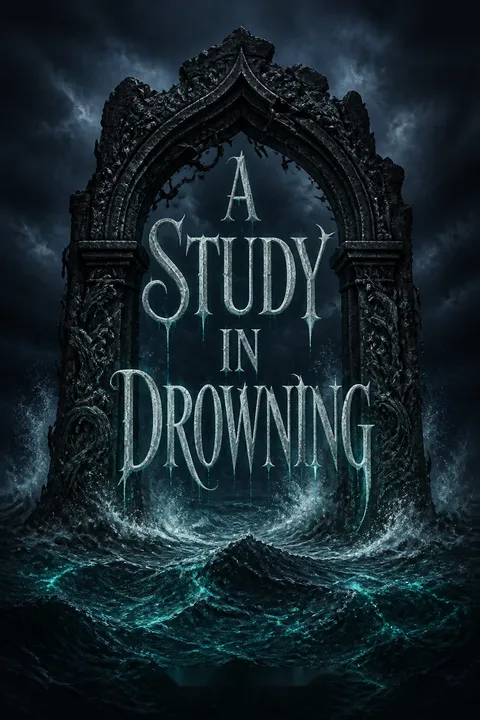


Plot Summary
The Manor on the Notice
At Caer-Isel's architecture college, Effy Sayre is the only woman in a program she chose because the literature college bars women, despite her stronger entrance score and love of Emrys Myrddin's books. Her studio work is faltering, and adviser Master Corbenic has made his office a place of dread by crossing personal boundaries.
A battered notice invites students to design Hiraeth Manor, the late national author's home, offering Effy a chance to join architecture with the stories she treasures. She sketches through the night. At the library, she discovers that an Argantian literature student named P. Héloury has borrowed every book about Myrddin, deepening her sense that even the author she loves is beyond her reach.
Effy's interest in the contest is more than ambition. Architecture is the compromise imposed on a woman denied the discipline she wants, while Myrddin's fiction gives her a private language for experiences she cannot yet explain. The notice offers a rare opening in a university organized to limit her choices. Yet the first obstacle is already gendered: books and knowledge are accessible to a male student, while Effy must fight even to enter the room. Her attraction to the project begins as a bid for authorship of her own life.
A Southbound Escape
Effy's design wins the commission, and the dean grants her six weeks away from school. To secure the required approval, she faces Corbenic, who belittles her ability, invokes the rumors surrounding their encounters, and signs only after making clear that he considers the project beyond her. Effy tears down a class roster defaced with a sexual slur, then leaves Caer-Isel for Saltney.
When she arrives after dark, her promised driver is missing, so she calls her mother, who refuses to send help and tells her to manage alone. The estate's barrister eventually collects her, driving through a flooded cliff road and past a strange, antlered shape. He leaves her at a locked, iron-braced cottage instead of the manor.
The journey south is an escape with no reliable refuge at either end. Corbenic's approval comes with humiliation, while Effy's mother responds to distress as evidence of incompetence rather than a need for care. The contrast helps explain why Effy keeps returning to fairy tales: their dangers may be frightening, but at least they name the danger. The iron on the cottage door suggests that the local world takes those stories seriously, though Effy has not yet learned whether that belief protects her or traps her.
The House Below the Cliffs
The next morning, a literature student sent to wake Effy startles her in bed, then leads her toward the estate. At the cliff edge, the ground gives way beneath her, and Preston Héloury pulls her back before the rocks fall into the sea.
Effy recognizes the name on his notebook: he is the student who borrowed Myrddin's books. Their argument is interrupted by Ianto Myrddin, the author's son, who takes Effy inside Hiraeth. The house is waterlogged, rotten, and crammed with damaged books; its basement stands submerged.
Ianto insists that his father's home cannot be demolished, despite Effy's initial plan to replace it. Faced with a sinking foundation and a host who will not accept her solution, Effy begins to think the commission is impossible.
The cliff's collapse makes the danger physical before anyone can reduce it to folklore or anxiety. Effy's first meeting with Preston joins intellectual rivalry to bodily dependence: he saves her, but neither trust nor gratitude comes easily. Hiraeth then overturns the fantasy embedded in her winning design. The commission is not a blank site but a demand to preserve a failing structure. Ianto's insistence turns architecture into a moral and familial question, while the flooded archive hints that the house's history is literally being lost beneath its floors.
An Unlikely Research Pact
The following day, Effy tries to walk down the cliffs, but rain turns the road to mud and Preston gives her a ride to Saltney. She calls her mother again, hoping to return home, but is refused; an old shepherd leaves her several hollow stones said to expose fairy disguises. At the pub, Effy changes course and returns to Hiraeth.
There she finds Preston's hidden thesis notes: he suspects Myrddin did not write most of his celebrated work. Rather than reveal him to Ianto, she agrees to help investigate. Preston promises to make her his coauthor, giving her a possible route into the literature college. Effy accepts, though the proposed inquiry threatens the very author whose stories have helped her endure.
Effy's decision marks a shift from escape by retreat to escape through action. She cannot go home, and the institution she left remains hostile, so she takes a risk that could alter her place within it. Preston's offer is both practical and ethically complicated: he needs Effy's knowledge and her Llyrian identity, while she needs his access to a field closed to her. Their agreement does not resolve their mistrust. It creates a working alliance in which each must risk being changed by evidence.
The Missing Rearview Mirror
Preston helps Effy inspect the house plans, which suggest a concealed space near Ianto's bedroom. To win Ianto's cooperation, Effy joins him in town and asks for the blueprints. He gives them to her, then grips her hand painfully and drives her back at dangerous speed. With no visible mirrors, Ianto turns to look behind him; Effy sees the Fairy King occupying the driver's seat and reaches for the door.
She jumps from the moving car and scrapes herself bloody. Preston brings her inside, cleans the grit from her knees, and does not demand an explanation. Together they read the plans and identify a narrow unexplained space behind Ianto's bookshelf, giving their investigation a concrete next step.
Effy's leap is not carelessness but a survival response to a threat she cannot safely describe. The scene makes the book's central uncertainty intimate: she sees something impossible, yet her body reacts with a clarity that her social world has repeatedly denied her. Preston's careful treatment offers a different model of contact from Corbenic's coercion. He attends to her injuries without claiming ownership of her story. The blueprints translate fear into a practical clue, allowing Effy to act without first winning anyone's permission to believe her.
The Box Behind the Books
While Ianto is away, Effy and Preston move the bookshelf and find a small hidden room with a locked tin box. Inside are a diary and photographs of a young woman posed nude; one bears a line associated with Angharad. Myrddin's diary describes his friendship with Colin Blackmar, dismisses women's intellect, and records Blackmar bringing him the manuscript of Angharad.
Preston sees evidence that Blackmar may have written it, while Effy recoils from the diary's contempt for women. Ianto returns in the rain with a musket and threatens them for prying. Later, Effy glimpses a white-haired woman passing through a closed door and hears Ianto speaking as if someone unseen has commanded him to bring Effy back.
The archive does not deliver a simple answer; it breaks Effy's admiration into conflicting parts. The diary makes Myrddin's public image suspect, but his private misogyny does not neatly explain the intelligence of Angharad. The photographs turn scholarly evidence into a record of a woman's vulnerability, exposing how easily men's cultural prestige can conceal her cost. Meanwhile, the apparition and Ianto's strange speech destabilize the distinction between documents and supernatural experience. Effy and Preston are no longer investigating only authorship. They are inside a house where the past seems to act upon the present.
A Letter to Colin Blackmar
Preston connects Myrddin's diary to Colin Blackmar, a living poet who employed Myrddin and delivered the manuscript of Angharad. He has already sent Blackmar a stiff academic letter and received it back unopened, so Effy writes a warmer appeal praising his work. Blackmar invites her and Preston to Penrhos.
Before they leave, Effy tells Preston about being named as a changeling child, her mother's abandonment by the river, and her belief that the Fairy King took her finger. Preston cannot confirm the supernatural account, but he takes her fear seriously and condemns the adults who left her in danger. Effy goes south with him carrying both the invitation and the first personal truth she has trusted him to hear.
The letter and the confession are parallel risks. Effy uses performance to open a door with Blackmar, then drops performance with Preston and waits to see whether he will close another door in her face. His response is imperfect, because he cannot share her certainty about the Fairy King, but it is not contemptuous. That distinction matters to someone accustomed to having her perceptions medically managed or socially mocked. Their partnership gains intimacy without requiring identical beliefs, a fragile but consequential form of trust.
Penrhos Keeps Its Secrets
At Blackmar's immaculate estate, the elderly poet welcomes Effy and Preston but becomes evasive whenever they ask about Angharad. In the room assigned to Effy, they find old letters beneath the bed.
Myrddin's notes reveal a secret relationship with Blackmar's eldest daughter, and one letter links a famous line from Angharad to their intimacy. At Blackmar's party, his daughter remains conspicuously absent, while publisher Marlowe dismisses the students and makes an unwelcome advance toward Effy.
Preston takes her hand and leads her into a dance, ending the encounter. They leave with the letters and photographs. During the drive back, Preston explains how his father's brain disease gradually changed him, bringing the two students closer through shared grief.
Penrhos stages respectability as a polished surface over exploitation. The hidden letters restore a young woman's presence to a story that the men around her have managed as business, scandal, or literary property. Marlowe's behavior repeats that pattern in the present, but Preston's intervention gives Effy room to act rather than endure the encounter alone. Their conversation about his father deepens their alliance through grief, not just investigation. The evidence now points toward Angharad's life, yet the people with power still control which parts of that life can be spoken.
The Key Beneath the Storm
Back at Hiraeth, Ianto warns that a major storm will cut off the coast and presses Effy for finished plans. Preston has recovered the photographs, and Effy insists they must search the flooded basement before the storm closes their chance. She steals the key from Ianto's neck while he chains trees against the wind, then swims into the dark archive and hauls out a heavy box marked Angharad.
Preston has described his father's death on the drive back, and during the storm's first night he stays beside Effy in the cottage; their growing trust becomes physical intimacy on terms she chooses. The box remains locked, while the house and the road begin to fail around them.
The descent into the basement turns Effy's recurring image of drowning into a chosen risk. She enters the water not because she is helpless, but because she has judged that the truth is worth retrieving and knows her own capacity to swim. Preston's fear does not make him abandon her; his care also does not overrule her decision. Their intimacy follows the same ethical distinction. Effy chooses closeness after experiences in which men treated her consent as irrelevant, making tenderness an act of agency rather than a cure for trauma.
A King in the Broken Glass
As the storm worsens, Effy and Preston return to the manor for the diary and photographs. Ianto is waiting in the study, furious that they have investigated his father. He binds Preston with chains, drives a stake into the flooded basement wall, and leaves Effy upstairs with orders to finish her plans. Instead, Effy recognizes the Fairy King inside Ianto and understands that he has pursued her since childhood.
When the chandelier crashes, she takes a shard of mirrored glass and makes the King face his own reflection. His glamour collapses, and he disintegrates. The house continues to break apart, however, and Preston remains chained in rising water below. Destroying the supernatural captor has not yet freed the person Effy loves.
Effy's confrontation separates the danger of a myth from the danger of men who exploit it. The Fairy King can be defeated through a rule the story has prepared, but Ianto's violence has already trapped Preston in a material crisis. Effy uses a broken domestic ornament as a mirror, turning the house's decay into the instrument of resistance. The act is not a rejection of imagination; it is a new use of it. Yet the immediate consequence is not safety. The climax refuses to let symbolic victory substitute for physical rescue.
The Widow's True Story
Effy returns to the basement and finds Preston still alive, chained as water rises around him. A pale, white-haired woman joins Effy's efforts and helps pull the stake loose. She leads them through the collapsing house to the iron-braced cottage, where she identifies herself as Angharad Blackmar, Myrddin's widow.
She explains that she wrote the novel, that her father and Greenebough's publisher helped give it to Myrddin, and that Myrddin's fame and marriage were secured at her expense. The Fairy King had used Myrddin and then Ianto as vessels; Angharad had kept him contained with iron and mountain ash. She opens the recovered box, revealing her letters and manuscript materials, while the manor falls.
Angharad's account changes the investigation from a question of literary fraud into a history of coerced authorship. The novel's missing author was not absent through lack of talent but removed through a compact among men who controlled publication, money, and marriage. Her survival also complicates the image of the helpless ghost: she has spent years making small, disciplined choices to resist forces larger than herself. Effy's rescue of Preston and Angharad's rescue of both students create a counter-history in which women preserve one another's testimony.
A Name on the Cover
Effy and Preston copy Angharad's evidence and prepare a thesis arguing for her authorship. Before Dean Fogg and Preston's adviser, Effy refuses to let the university publish the research without her name or treat her as an unqualified outsider. She also demands that Corbenic be dismissed, linking the institution's defense of him to its history of silencing women.
The dean agrees to her terms, including her transfer into literature. Effy returns to Caer-Isel, reunites with Rhia, and begins a life no longer confined to architecture. In the final scene, Preston tells her he heard church bells below Hiraeth's cliffs; Effy never heard them, leaving the supernatural world present but not universally shared.
The ending does not make institutional recognition a substitute for justice. Effy uses the thesis as leverage because the university's prestige depends on evidence it cannot claim without her, and she insists that her own experience belongs in the settlement. Her demand about Corbenic extends the novel's concern from a historical wrong to a present one. The last difference between Preston's hearing and Effy's silence preserves uncertainty without invalidating either character. Their lives can proceed without requiring them to experience the world in precisely the same way.
Analysis
A Study in Drowning makes the act of interpretation a matter of survival. Effy reads fairy tales not because she cannot distinguish fiction from life, but because the adults around her have already imposed stories on her: the unstable girl, the willing student, the pretty object whose discomfort does not count. Her struggle is to reclaim the authority to name what happens to her. The supernatural plot intensifies that struggle without reducing it to a simple test of sanity. Effy's visions may be shaped by fear, yet the novel's world also contains real magic, and Preston's skepticism cannot settle what he has not experienced.
The authorship mystery gives this psychological conflict a public form. Angharad's work is not stolen through a single act but through a structure of men who control money, publication, marriage, and reputation. Myrddin's fame depends on a marketable origin story, while the woman who created the novel is made invisible. The university's exclusion of Effy repeats that history on a smaller scale. Her eventual demand for recognition links academic authorship to bodily autonomy: both require the power to refuse another person's account of one's life.
Water is the novel's most versatile image because it is simultaneously landscape, threat, memory, and time. The Drowning happens gradually, just as harm can accumulate through small violations that outsiders call harmless. Yet water also makes change unavoidable. The novel refuses the comfort of a perfectly repaired past: Hiraeth falls, Ianto cannot be restored, and Effy's fear does not vanish when the Fairy King is defeated. What changes is her relation to those losses. She can accept evidence without surrendering imagination, and love without treating dependence as captivity. The ending preserves uncertainty, but not helplessness. Effy and Angharad have made their accounts visible, and Effy can begin building a future whose foundations are her own.
Review Summary
A Study in Drowning received mixed reviews, with some praising its atmospheric writing, feminist themes, and exploration of misogyny and trauma. Many readers connected with the protagonist Effy and appreciated the gothic setting. However, others found the pacing slow, characters underdeveloped, and romance lacking chemistry. Some criticized the world-building as confusing and the plot predictable. Despite divided opinions, many acknowledged the book's important messages about female empowerment and reclaiming one's voice.
People Also Read







Characters
Effy Sayre
The story-haunted architectEffy is an imaginative first-year architecture student who longs to study literature, a field closed to women at her university. Her devotion to Myrddin's Angharad is personal as well as intellectual: stories give shape to fears that adults have dismissed or misdiagnosed. She is observant, quick to improvise, and often more alert to danger than she trusts herself to be. Her dependence on medication and her tendency to retreat into fantasy complicate her sense of what is real, while her sharp memory and architectural eye let her uncover what others miss. Effy is driven by a wish to make something lasting and to be believed without surrendering her right to interpret her own experience.
Preston Héloury
The skeptical literature studentPreston is an Argantian literature student researching Emrys Myrddin, intellectually rigorous and initially guarded. His commitment to evidence comes from a sincere desire to distinguish truth from inherited legend, though he can mistake detachment for objectivity. As a national outsider in Llyr's most prestigious literary program, he understands exclusion even when he does not always recognize its effects on Effy. He approaches danger through planning and argument, contrasting with her instinctive improvisation. Beneath his formal manner is a careful, compassionate person who tries to offer support without taking control. His relationship with Effy grows through debate, shared research, and the difficult work of respecting experiences he cannot verify.
Angharad Blackmar
The hidden literary voiceAngharad is introduced as the elderly, secluded widow of Emrys Myrddin, a woman whose wishes shape how Effy and Preston are allowed to move through Hiraeth. She is closely connected to the house's private history and to the boundary between what a family preserves and what it conceals. Her long isolation has made her watchful and self-contained, but not indifferent to younger people in danger. Angharad's life is bound up with authorship, memory, and the cost of remaining silent. She represents a person who has had to protect both her physical safety and the meaning of her own work.
Ianto Myrddin
The heir of HiraethIanto is the son of Emrys Myrddin and Effy's host at the decaying family estate. He wants Hiraeth preserved as a tribute to his father, even as its damp, unstable condition makes that wish seem impractical. He can be welcoming and attentive, yet his sudden shifts in manner make him difficult to read. His attachment to family history is mixed with resentment, fear, and a need to hold onto the past. Ianto's insistence that the house remain standing places Effy's professional assignment inside an intimate family conflict, while his attention to her makes the question of safety increasingly urgent.
Master Corbenic
The abusive adviserCorbenic is Effy's architecture adviser, a respected young professor whose authority gives his behavior institutional cover. He alternates flattery with condescension and treats Effy's discomfort as a threat to his own reputation. His position exposes how easily a powerful adult can recast coercion as romance and leave a student to bear the resulting rumors.
Rhia
Effy's candid roommateRhia is Effy's warm, impulsive roommate and closest friend at university. She shares her room and ordinary companionship with Effy, offering humor and concern without pressuring her to explain what she cannot yet say. Her relationship with Maisie gives Effy a nearby example of easy affection, even when Effy fears intruding on it.
Maisie
Rhia's steady partnerMaisie is Rhia's practical, affectionate partner and part of Effy's small circle at university. She tends to respond to difficulty with reasonable reassurance, balancing Rhia's spontaneity. Her quiet welcome helps make the dormitory feel like a community rather than merely a place Effy sleeps.
Colin Blackmar
The celebrated poetBlackmar is an elderly northern poet whose patriotic verse is familiar to Llyrian schoolchildren. His wealth and publishing connections place him within the cultural establishment, and his memories connect him to Myrddin's early career. He enjoys admiration and social attention, but becomes evasive around certain questions. His estate embodies the security and influence that stand in sharp contrast to the isolation of Hiraeth.
Marlowe
Greenebough's editorMarlowe leads Greenebough Books, the publisher associated with Myrddin's success. He is socially careless and accustomed to being indulged, using his position to steer conversations away from inconvenient questions. His presence links literary reputation to the commercial decisions that determine whose work is recognized.
Thomas Wetherell
The estate's barristerWetherell manages legal matters for the Myrddin estate and transports Effy to Hiraeth. Businesslike and guarded, he understands the practical dangers of the coast better than the university visitors do. His warnings suggest that the estate's difficulties extend beyond architectural neglect.
Master Gosse
Preston's literary adviserGosse is Preston's adviser and a prominent Myrddin scholar. He is energetic, ambitious, and more open to intellectual disruption than Dean Fogg, though he still operates within the university's competitive structures. His support gives Preston's research academic legitimacy.
Dean Fogg
The university gatekeeperFogg is the dean who oversees Effy's academic arrangements and the university's public standing. He speaks in the language of precedent and institutional reputation, making him a formidable obstacle to change. His decisions reveal how the university protects its traditions when they benefit those already in power.
Effy's mother
The distant parentEffy's mother is a lonely, often overwhelmed woman who relies on alcohol and has limited patience for her daughter's distress. She provides the emotional history behind Effy's fear of being a burden. Her care is real but inconsistent, leaving Effy to question whether her needs are legitimate.
The shepherd
The keeper of local loreThe old shepherd Effy meets near Saltney warns her about the Fairy King and gives her hollow stones said to expose his disguises. He represents a local knowledge that northern academics dismiss, but that Effy cannot easily ignore.
Plot Devices
Angharad
A story inside the storyMyrddin's famous novel gives Effy a framework for thinking about fear, captivity, desire, and escape. Its heroine faces a dangerous fairy king and relies on wit rather than physical strength, making the book both a comfort and a lens through which Effy interprets events at Hiraeth. The novel also gives Preston a text to analyze as evidence, while its authorship becomes the central mystery. Its meaning changes as Effy learns more about the people and experiences connected to its creation.
Mirrors and hag stones
Tests of perceptionThe hag stones, iron braces, and reflective surfaces draw on the region's fairy lore. Effy receives stones that are supposed to reveal disguised fairies, while mirrors connect the supernatural threat to the problem of seeing clearly. These objects let the story move between folklore and psychological uncertainty: Effy can doubt her own perception, but the physical objects also create practical ways to test what is hidden. Their importance grows as the characters confront the difference between a convincing appearance and a dangerous reality.
The pink pills
A medicalized boundaryEffy's prescribed pills are intended to suppress panic and visions, and she takes them when reality begins to blur. They offer short-term relief but also reinforce the judgment that her perceptions are symptoms rather than possible knowledge. Because Effy has been taught to distrust her own mind, the pills complicate every supernatural encounter without resolving it. Their function is not simply to mark illness; they show how treatment can help a person endure while also leaving the question of what she has seen unanswered.
Hiraeth Manor
A failing architectural puzzleThe manor is Effy's commission, the Myrddin family's home, and a physical record of what its inhabitants cannot leave behind. Its sinking cliffs, flooded basement, concealed room, and damaged structure make the building both a design challenge and an archive. Effy reads its plans differently from Preston, discovering spaces the literary scholar cannot see. The house's decay turns abstract arguments about memory and legacy into material problems: a foundation gives way, papers are submerged, and survival depends on knowing which walls can still hold.
The Myrddin papers
Evidence beneath the legendThe diary, letters, photographs, and locked box give Effy and Preston a trail through competing accounts of Myrddin's life. Each fragment changes the question they are asking, from whether Myrddin could have written the work to who had the power to claim it. The papers are incomplete, damaged, or deliberately hidden, so interpretation depends on comparing details rather than trusting a single document. They turn literary criticism into an investigation of ownership, coercion, and the people excluded from an author's public history.
FAQ
Synopsis & Basic Details
What is A Study in Drowning about?
- Architectural student's literary quest: Effy Sayre, an architecture student, seizes an opportunity to design a manor for a deceased author, Emrys Myrddin, hoping to connect with his literary world.
- Unraveling a complex legacy: The project leads Effy to a decaying estate and a web of secrets surrounding Myrddin's life and work, challenging her perceptions of her idol.
- A battle between truth and myth: Effy's journey becomes a fight against both real and supernatural forces, as she uncovers hidden truths and confronts her own fears.
Why should I read A Study in Drowning?
- Intricate blend of genres: The novel seamlessly combines elements of gothic horror, dark academia, and fantasy, creating a unique and immersive reading experience.
- Exploration of complex themes: It delves into themes of female empowerment, the power of storytelling, and the struggle against oppressive forces, offering thought-provoking insights.
- Compelling characters and relationships: The characters are richly developed, and the relationships between them are complex and emotionally resonant, drawing readers into their world.
What is the background of A Study in Drowning?
- Fictional world with historical echoes: The story is set in a fictional world with clear parallels to real-world conflicts and cultural tensions, particularly between Llyr and Argant, reflecting historical power dynamics.
- Focus on a specific region: The Bottom Hundred, a remote and culturally distinct area, is central to the story, highlighting the impact of historical events like the Drowning on its inhabitants.
- Literary and cultural context: The novel draws heavily on literary traditions and folklore, particularly the concept of the Fair Folk, creating a rich and layered backdrop for the narrative.
What are the most memorable quotes in A Study in Drowning?
- "I refuse mirrors... Look into the tide pools at dusk. Look into the sea.": This quote, attributed to the Fairy King, highlights the theme of self-perception and the deceptive nature of appearances.
- "The only enemy is the sea.": This recurring phrase, from Myrddin's poem, encapsulates the novel's central conflict and the characters' struggle against the forces of nature and fate.
- "I will love you to ruination.": This line, spoken by both the Fairy King and a character in the book, underscores the destructive power of love and desire, and the blurred lines between love and obsession.
What writing style, narrative choices, and literary techniques does Ava Reid use?
- Atmospheric and evocative prose: Reid's writing is rich in sensory details, creating a vivid and immersive reading experience that draws readers into the story's world.
- Shifting perspectives and unreliable narration: The novel employs a shifting point of view, often through Effy's subjective experiences, creating a sense of unease and challenging the reader's perception of reality.
- Interweaving of myth and reality: Reid seamlessly blends elements of folklore and mythology with the real-world struggles of her characters, blurring the lines between the two and enhancing the novel's thematic depth.
Hidden Details & Subtle Connections
What are some minor details that add significant meaning?
- The recurring image of water: Water appears in various forms throughout the novel, from the rain and sea to the dripping ceilings and flooded basement, symbolizing both danger and transformation.
- The use of mirrors and reflections: Mirrors and reflections are used to explore themes of identity and self-perception, often revealing hidden truths or distorted realities.
- The significance of names: The names of characters, such as Euphemia and Angharad, carry symbolic weight, hinting at their roles and destinies within the story.
What are some subtle foreshadowing and callbacks?
- The mention of the second Drowning: The recurring fear of a second Drowning foreshadows the impending storm and the characters' struggle against overwhelming forces.
- The description of the guesthouse: The guesthouse's iron door and the mention of a "girdle of iron" subtly foreshadow Effy's connection to the old magic and her ability to protect herself.
- The recurring phrase "a pretty young girl": This phrase, used by multiple characters, highlights the vulnerability of young women and the dangers they face in the novel's world.
What are some unexpected character connections?
- The shared history of Effy and Angharad: The connection between Effy and Angharad, revealed through the letters and the shared experience of being a woman in a patriarchal world, highlights the cyclical nature of oppression and the power of female solidarity.
- The mirroring of Ianto and the Fairy King: The parallels between Ianto and the Fairy King, both consumed by their desires and their legacies, reveal the destructive nature of unchecked power and obsession.
- The connection between Preston and Myrddin: The shared interest in literature and the pursuit of truth, despite their different backgrounds, creates an unexpected bond between Preston and the deceased author.
Who are the most significant supporting characters?
- Angharad Myrddin: As the true author of "Angharad," she is a pivotal figure whose story challenges the established literary canon and empowers Effy to reclaim her own narrative.
- Colin Blackmar: Myrddin's contemporary, his role as a foil to Myrddin and his connection to Angharad reveal the complex web of relationships and secrets that drive the plot.
- Thomas Wetherell: The Myrddin estate's barrister, his presence adds a layer of mystery and intrigue, hinting at the hidden agendas and power dynamics at play.
Psychological, Emotional, & Relational Analysis
What are some unspoken motivations of the characters?
- Effy's desire for validation: Beyond her love for literature, Effy seeks validation and recognition for her intellectual abilities, which are often dismissed due to her gender.
- Preston's need for truth: Preston's relentless pursuit of truth stems from a deep-seated need to understand his own identity and reconcile his Llyrian and Argantian heritage.
- Ianto's struggle for control: Ianto's actions are driven by a desperate need to control his father's legacy and his own fate, as he grapples with the influence of the Fairy King.
What psychological complexities do the characters exhibit?
- Effy's internal conflict: Effy struggles with self-doubt and a fear of madness, often questioning her own perceptions and the line between reality and imagination.
- Preston's intellectual detachment: Preston's reliance on logic and reason often masks his own emotional vulnerabilities and his struggle to reconcile his personal history with his academic pursuits.
- Ianto's descent into madness: Ianto's character is marked by a growing instability and a descent into madness, as he becomes increasingly consumed by his father's legacy and the influence of the Fairy King.
What are the major emotional turning points?
- Effy's decision to trust Preston: Effy's decision to trust Preston marks a turning point in her journey, as she begins to rely on others and embrace her own strength.
- Effy's confrontation with the Fairy King: Effy's confrontation with the Fairy King is a pivotal moment, as she reclaims her agency and rejects the forces that seek to control her.
- Preston's confession of his father's death: Preston's vulnerability and confession of his father's death reveal his emotional depth and his capacity for empathy, strengthening his bond with Effy.
How do relationship dynamics evolve?
- Effy and Preston's initial animosity: Their relationship evolves from initial animosity to a deep bond based on mutual respect, shared goals, and a growing romantic connection.
- Effy and Ianto's complex dynamic: Effy's relationship with Ianto is marked by a mix of fascination and fear, as she grapples with his charm and his increasingly erratic behavior.
- The influence of the past on present relationships: The past relationships between Myrddin, Blackmar, and Angharad cast a long shadow over the present, influencing the dynamics between Effy, Preston, and Ianto.
Interpretation & Debate
Which parts of the story remain ambiguous or open-ended?
- The nature of the Fairy King: The true nature of the Fairy King remains ambiguous, leaving readers to question whether he is a supernatural entity or a manifestation of human desires and fears.
- The extent of Myrddin's knowledge: The extent to which Myrddin was aware of the true authorship of "Angharad" and his own role in the deception remains open to interpretation.
- The future of Effy and Preston: The novel's ending leaves the future of Effy and Preston open-ended, allowing readers to imagine their lives beyond the confines of the story.
What are some debatable, controversial scenes or moments in A Study in Drowning?
- The nature of Effy's relationship with Master Corbenic: The power dynamics and the nature of their relationship are open to interpretation, raising questions about consent and manipulation.
- The portrayal of the Fairy King: The Fairy King's character is both alluring and terrifying, prompting debate about the nature of evil and the seductive power of darkness.
- The ending's ambiguity: The novel's ending, while hopeful, leaves some questions unanswered, prompting debate about the nature of truth and the possibility of a truly happy ending.
A Study in Drowning Ending Explained: How It Ends & What It Means
- Effy and Preston's escape from Hiraeth: Effy and Preston escape the collapsing Hiraeth Manor, having uncovered the truth about Angharad's authorship and the Fairy King's influence.
- The defeat of the Fairy King: Effy uses a mirror to confront and destroy the Fairy King, symbolizing her triumph over her fears and the oppressive forces that have haunted her.
- A new beginning for Effy: Effy and Preston return to Caer- Isel, ready to challenge the established order and embrace a future where they can both pursue their passions and fight for what they believe in. The ending emphasizes the importance of truth, resilience, and the power of reclaiming one's narrative.
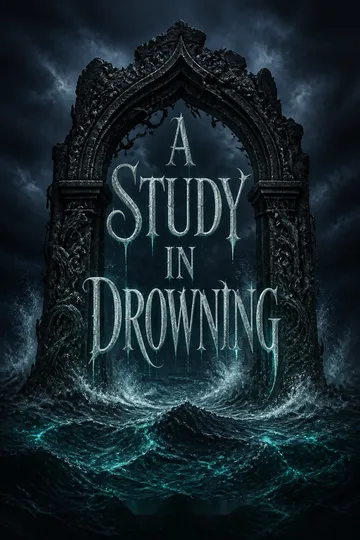
A Study in Drowning Series
About the Author


Download PDF
Download EPUB
.epub digital book format is ideal for reading ebooks on phones, tablets, and e-readers.








