

Plot Summary
The Names in the Times
The Llyrian Times reports that Euphemia Sayre and her Argantian research partner, Preston Héloury, have challenged the official authorship of Angharad, a national literary treasure credited to the recently deceased Emrys Myrddin.
Dean Fogg had promised not to identify them, but the article prints their names. On her first day in the literature college, Effy enters a lecture hall full of students in uniforms she was never told to wear.
Their hostile attention compounds her embarrassment when the class begins reciting poetic meter as numbers, a method she has not learned. She tries to borrow courage from the heroine of Angharad, but the dream world that once sheltered her is gone. Her new academic beginning feels less like admission than exposure.
Effy’s public credibility and private vulnerability collide before she has a chance to establish herself. The university’s broken promise is not merely administrative negligence: it shows how institutions can turn a student’s intellectual work into a spectacle while withholding the protections that authority could provide. Effy measures danger through the imagined refuge of a fictional heroine, but that refuge no longer answers her. The scene therefore begins the novel’s central conflict between stories that help people endure and the real systems that demand they endure alone.
The Dragon Pin
Effy’s adviser, Cedric Gosse, questions Preston about ghosts, fairies, and the Sleepers preserved in the city museum, then gives him a literature-college uniform for Effy and appoints him legate, marked by a golden dragon pin. Preston brings both items to Effy. As she fits the pin to his lapel, her thoughts catch on a line from Laurence Ardor’s poem, spoken in a voice she cannot identify.
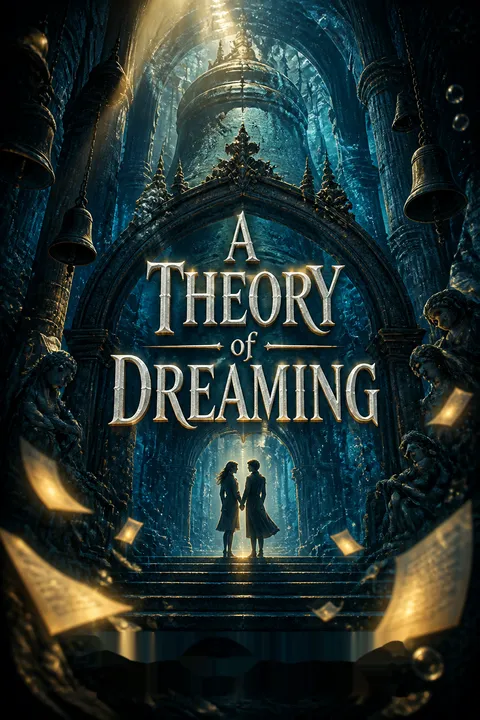
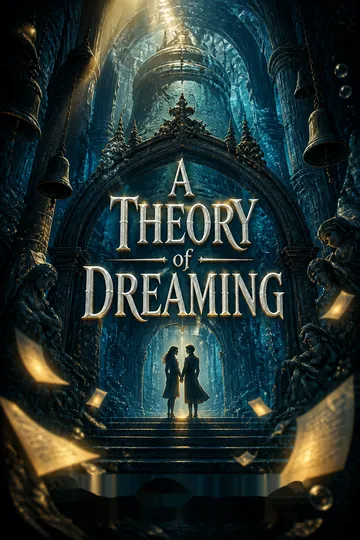
She takes a sleeping tablet and quickly falls asleep. Preston later dreams of a drowned stone palace, its statues and green flames, and hears bells beneath the sea. One statue resembles Effy, and a crack appears across its face before he wakes. His watch has stopped with water inside it, making the dream harder to dismiss.
The pin and the dream establish two forms of authority that will pull Preston in opposite directions. The university’s badge makes him an official representative, yet its unnatural coldness hints that institutional recognition may also bind him. In the palace, his impulse to kneel before Effy’s statue turns love into worship and protection into fear of damage. Effy’s sudden sleep, meanwhile, makes relief look suspiciously like disappearance. The novel’s magic begins not as an escape from emotional life, but as an intensified version of its dangers.
Ink Beneath the Meter
Effy searches Laurence Ardor’s collected poems and learns he lost his sight before composing The Garden in Stone. The poem’s repeated bold capitals now seem less like decorative formalism than a clue to who shaped its words.
Outside the college, reporter Roger Finisterre corners her with questions about her past and warns that other journalists can find her through her public class schedule. Meanwhile, Preston serves as teaching assistant when Gosse fails to appear. Domenic Southey and other students challenge his place in the classroom because he is Argantian.
Preston answers with his academic credentials, but the exchange leaves him shaken. When he reaches Gosse’s ransacked office, he finds the adviser’s marked diary pages gone, evidence that Gosse has begun pursuing the magic described in Angharad.
The characters meet different versions of the same gatekeeping: Effy is reduced to her gender and reputation, while Preston is reduced to his nationality. Their scholarly qualifications cannot neutralize prejudice because the hostility is not really about competence. Effy’s attention to typography opens a method of reading that challenges her instructor’s narrow formalism, and Gosse’s missing diary marks a parallel shift from interpretation toward possession. Each discovery asks who is allowed to define a text, a student, or a nation.
The Palace Answers
Gosse closes the Sleeper Museum and spreads Angharad’s diary beside Myrddin’s coffin, convinced that its accounts describe an actual realm. He persuades Preston to join a ritual, and both men enter the drowned palace in their sleep. Gosse marvels at the place, but Preston alone hears the bells and briefly sees his dead father.
A later attempt in Gosse’s office leaves the professor trapped in darkness while Preston reaches the palace again. This time, the Sleeper Aneurin appears and grants Preston’s deepest wish: his father returns, alive and whole as before the accident that destroyed his memory. Preston embraces him and discovers that the dream can provide not only supernatural evidence, but the reunion he has been unable to bear losing.
The ritual turns Preston’s skepticism into an intimate problem. He does not enter the palace because an argument has persuaded him; he enters because grief has supplied a desire stronger than his rules for distinguishing fact from fantasy. Gosse seeks prestige and access, while Preston seeks his father, so the same magical door exposes their unequal motives. The returned father is emotionally real even if his status remains uncertain. That ambiguity makes the dream compelling and dangerous: it offers comfort in precisely the form that could keep Preston from returning to an imperfect waking life.
Antonia’s Unfinished Pages
After Finisterre’s posters smear Effy as a liar and former lover of Edmund Corbenic, she contacts the reporter and gives him a tip exposing Baron Margetson’s pressure on Dean Fogg to impose a loyalty pledge. Her investigation of Ardor leads to Letters and Annals, the diary of his daughter, Antonia.
The entries begin as a record of bereavement, then reveal that Antonia’s grieving father isolated and sexually coerced her. He later dictated The Garden in Stone to her while blind, and she adjusted his verses into workable form.
Effy recognizes that Antonia’s contribution may be hidden in the poem’s odd formatting. At the same time, Preston’s mother sends him his father’s old Argantian fairy-tale book and engagement ring, giving his own grief a tangible weight.
Antonia’s records unsettle the comfortable idea that literary greatness can be separated from the conditions that produced it. Effy discovers not only an overlooked woman’s labor, but the cost imposed on her by a father whose grief becomes control. The diaries make authorship an ethical question rather than a tidy matter of attribution. Effy’s political tip shows her moving from being a target of the press to using its appetite strategically. Preston’s family keepsake offers a quieter counterpoint: inherited objects can preserve love, but they can also carry grief that has never been spoken through.
The Ball Turns Violent
As the war worsens, the government restricts publications and the university reshapes courses to promote patriotism. Effy retreats from class and relies increasingly on sleeping pills, while Preston attends the Midwinter Ball with her and his unruly roommate, Lancelot Grey, known as Lotto.
When Southey insults Preston’s Argantian heritage and treats Effy as a prize to be claimed, Preston attacks him, striking him repeatedly before the porters pull him away. The university suspends Preston pending a disciplinary hearing.
Effy defends him, but privately believes that loving her has helped bring him to this danger. The assault breaks through Preston’s practiced restraint and leaves him frightened by his own capacity for violence, even as the prejudice that provoked it remains unpunished.
The ball converts the novel’s political antagonism into bodily action. Southey’s polished privilege permits him to provoke and sexualize Effy while expecting Preston to absorb the insult; Preston’s punch is both resistance and a loss of control. The disciplinary system will judge the visible violence more readily than the atmosphere that produced it. For Effy, the incident confirms a destructive belief that intimacy makes her a burden. Their affection is genuine, but each reads the other’s vulnerability as a responsibility they must manage alone.
A Statue Starts to Rot
Preston gives up the dragon pin and throws it into Lake Bala, then withdraws from the university’s public life as the war brings censorship, travel restrictions, and threats of conscription.
Effy stops attending Tinmew’s class and spends her days reading Antonia’s increasingly disturbing entries, taking more pills to avoid waking thoughts. When Gosse brings Preston back to the palace, Effy’s statue is now coated with moss, barnacles, and seaweed, and its eyes are shut.
Preston understands that his fantasy cannot preserve her simply by making her an object of devotion. He steals the museum key from Gosse and goes to Effy’s room, where he finds her barely responsive and physically depleted. Helping her wash and dress forces him to confront what his dreams had let him avoid.
The decaying statue gives visible form to Preston’s mistaken equation of love with protection. He has built a private world where Effy can be revered, but the image is deteriorating while the living woman withdraws beyond his reach. Effy’s increasing sedation serves a similar function: she seeks not comfort within experience but an absence of experience altogether. Both retreat strategies fail for the same reason. They preserve an idealized image while neglecting the person who needs contact, practical care, and room to speak.
Dahut Crosses the Border
At Effy’s kitchen table, Preston compares Aneurin’s story of King Neirin with the Argantian fairy tale he received from his mother. Rhia adds her Southern version, the tragic tale of Dahut, Neirin’s daughter, whose lover is an ordinary boy rather than an Argantian enemy prince.
Effy connects Rhia’s song to a line in The Garden in Stone and reasons that Antonia may have drawn on the Southern tradition. The matching stories weaken Llyr’s claim that its national epic is straightforward history.
Preston concludes that later writers reshaped shared folklore into a story of natural, ancient enmity. He reveals that he has taken Gosse’s museum key and plans to inspect the original Neiriad. Lotto volunteers to accompany him, while Rhia stays with Effy.
The discovery is made collectively, through distinct forms of knowledge: Preston compares texts, Rhia remembers regional folklore, and Effy links a poetic fragment to Antonia’s circumstances. Their collaboration models a better scholarship than Gosse’s private pursuit of power. The shared Dahut story also exposes how national myths convert political choices into inherited destiny. If the same tale survives across a border in altered forms, neither nation can claim exclusive ownership of its moral meaning. The insight does not yet prove a history, but it makes the official version newly questionable.
The Empty Sleeper
Preston and Lotto enter the museum after hours with Gosse’s key. Before reaching the Sleepers, Preston studies the original Neiriad and sees that its opening lacks the later references to Llyr’s greatest king and Argantian enemies. He then approaches Aneurin’s coffin, breaks its glass, and lifts the bard’s death mask. There is no face or skull beneath it, only an empty space beneath the robes.
The discovery confirms that the museum’s sacred body is not what the public has been taught to believe. Alarms force the friends to flee before guards arrive. Yet Preston has gained more than evidence of a fraud: the unchanged manuscript and empty coffin point toward generations of literary revision, not a single author or settled national history.
The empty coffin is a material shock, but the altered manuscript is the more consequential evidence. The first reveals that the institution has staged physical certainty; the second shows how language itself has been revised to make political hostility seem ancient. Preston’s act of breaking the glass is both reckless and symbolically precise: he damages the monument in order to expose its hollow interior. His evidence remains incomplete, however. A false relic does not automatically explain who built the national story or why people need it.
Effy Chooses Oblivion
After the break-in, Effy realizes that her sleeping pills are nearly gone and that she has no local doctor to renew the prescription. Preston calls her mother, who responds with blame and warns that love cannot make him responsible for Effy’s recovery. The call leaves Effy overwhelmed and ashamed. She locks herself in the bathroom and takes the remaining pills.
Preston breaks down the door and finds her unconscious beside the empty bottle. Paramedics carry her to hospital, where Dr. Quinbern places her in a deep, coma-like state and warns that she must recover enough to wake. Preston contacts Angharad, who arrives and stays beside Effy. Her friends wait together, unable to turn their concern into a cure.
Effy’s crisis is not presented as a moral failure or a puzzle for Preston to solve. It follows from accumulated pressures, isolation, and a medication routine that has become a substitute for support. Her mother’s response sharpens Effy’s belief that needing help injures the people who offer it. The hospital changes the stakes from private endurance to urgent dependence, while the friends’ helpless waiting makes care visible as presence rather than mastery. Angharad’s arrival also links Effy’s survival to a community larger than the romantic couple.
The Hearing Changes Course
While Effy remains hospitalized, Preston attends his disciplinary hearing with Lotto’s father, the Earl of Clare, who intervenes when Baron Margetson presses for expulsion. Preston accepts responsibility for attacking Southey, but Gosse arrives with a claim that Preston is indispensable to his new research on dreaming.
The earl offers the university a donation in exchange for clearing Preston’s record, and Dean Fogg relents. Gosse privately demands the museum key and Preston’s continued help entering the palace.
Preston returns to the hospital, tells Angharad that he understands the temptation to live inside dreams, then closes his eyes beside Effy. He enters the palace again, carrying the knowledge that rescuing her requires more than winning his place back at university.
The hearing exposes justice as a contest of leverage: Southey’s family has influence, but the Earl of Clare can answer it with money and status. Preston’s survival at the university does not vindicate the institution; it reveals the compromises required to remain within it. Gosse likewise converts rescue into a transaction, treating Preston as a means to his own ambition. Preston’s hospital visit marks a different choice. He turns toward Effy not to claim control over her recovery, but to face the limits of the dream that has helped him evade loss.
The Palace Breaks Open
In the palace, Preston finds Effy asleep in a glass coffin. His grief cracks its barrier, and she wakes, though the palace is already flooding and her statue is split and overgrown. Gosse appears and urges Preston to stay, offering him the power and belonging he cannot find in the waking world.
Preston refuses the kingdom, the returned image of his father, and the comfort of a dream that can keep no one truly safe. He carries Effy toward the exit as the bells fracture and the palace collapses; Gosse is left to wake on his own. Above, the Sleeper Museum crumbles into Lake Bala. In the hospital, Effy opens her eyes. The dream has ended, but she and Preston are alive in the imperfect world they chose.
The climax refuses the easy fantasy that love can abolish suffering. Preston can wake Effy only by relinquishing the world in which he controls every image, including the version of his father he longs to keep. His choice is not a rejection of imagination, but of imagination used as a sealed substitute for life. The collapsing museum links private dream and public myth: both structures can offer shelter, and both become dangerous when treated as permanent truth. Effy’s waking is therefore not a cure, but a return to the possibility of care.
New Stories, New Ground
After Effy recovers, Preston proposes with his mother’s ring and a silver chain that allows Effy to wear it; she accepts. Angharad publicly identifies herself as the author of Angharad and gives her inheritance to the university to establish a program for women writers, named for Antonia Ardor.
The students’ thesis is set for publication. Meanwhile, the destroyed museum and Llyr’s military losses help force renewed armistice talks, culminating in a peace treaty with Argant.
At a gathering with their friends, Effy admits that happiness need not mean she will never struggle again. She chooses the present company around her without pretending that books, medication, or support will cease to matter. The university’s new program turns private evidence into an institutional commitment.
The resolution replaces one monumental national story with a practical, contested act of remembering. Angharad’s public claim restores authorship, while the endowment gives future scholarship material support rather than relying on praise alone. Peace arrives through military and political consequences, not through a magical reconciliation, and the book leaves its terms grounded in human decisions. Effy’s acceptance of happiness as temporary and real resists both despair and fairy-tale permanence. The ending makes recovery a practice sustained by relationships, institutions, and ongoing work.
Epilogue
Nearly a year later, Preston visits his father’s grave in Argant with Effy, his mother, and his brother, Oliver. Effy stands beside him despite the border that once made this meeting seem impossible. She asks about the words carved beneath his father’s name, and Preston explains that they describe a story continuing by changing rather than disappearing.
As his family talks about spring, lakes, and the countryside, Preston imagines his father as a crowned statue in the palace beneath the sea. He lets the image remain a private act of memory, then turns away from the grave with Effy and goes home.
The epilogue does not restore Preston’s father to life or erase the fact of his death. Instead, it allows memory to change shape without being mistaken for literal return. The family’s presence in Argant also makes the political settlement intimate: the border has become crossable, and Effy is welcomed as family. Preston’s imagined statue preserves a place for his father in the dream palace, but his decision to leave the grave and return home keeps that memory from replacing the living. The final movement is neither escape nor forgetting, but continued life alongside loss.
Analysis
A Theory of Dreaming makes authorship and dreaming parallel problems. Both ask who gets to shape a story, whose account becomes credible, and what happens when a comforting narrative is mistaken for complete truth. Effy’s discovery of Antonia’s diaries complicates the romantic image of the solitary male genius: the celebrated poem may depend on a daughter’s labor, made difficult to see by the same household power that exploited her. The novel does not dismiss formal analysis, but it shows its limits when attention to meter becomes a reason to ignore biography, coercion, or unequal credit.
The national myth surrounding the Sleepers applies the same logic at political scale. Llyr’s epic renders a contested history as an ancient moral fable, turning Argant into an inherited enemy and war into destiny. The alternate Dahut traditions disrupt that apparent inevitability. Their differences reveal how stories are edited to serve those who benefit from a stable national identity. The empty coffin and altered manuscript do not make the past simple; they make certainty harder to manufacture.
Preston’s dream palace embodies the emotional appeal of such certainty. There, he can recover his father and imagine Effy protected from harm. But the palace becomes no more capable of preserving life than the public monuments it resembles. His decisive act is not to stop dreaming forever, but to refuse a dream that demands he abandon the waking person he loves. Effy’s recovery likewise remains unfinished rather than miraculous. She needs medical care, friendship, medication, and the difficult willingness to stay present.
The novel’s answer is therefore neither pure skepticism nor unquestioning belief. Stories can shelter people, preserve silenced experiences, and make collective change imaginable. They can also conceal labor, excuse violence, and turn chosen political interests into supposedly natural truths. The ethical task is to keep reading with imagination while remaining answerable to evidence, other people, and the consequences of belief.
Review Summary
A Theory of Dreaming receives mixed reviews, with many praising Reid's lyrical prose and atmospheric writing. Readers appreciate the continuation of Effy and Preston's story, exploring themes of mental health, prejudice, and nationalism. However, some feel the sequel lacks the magic and cohesion of its predecessor. Critics note a shift in character development and pacing issues. While some found the dream world intriguing, others felt it underdeveloped. Despite divided opinions, fans of the first book generally enjoyed revisiting the characters and world.
People Also Read








Characters
Euphemia Sayre
The disputed author-seekerEffy is a literature student whose research challenges the accepted story of who wrote Angharad. She is observant, imaginative, and quick to recognize emotional meanings that more rigid scholars overlook. Her history of trauma makes her both resourceful and vulnerable: fiction has offered her refuge, but returning to ordinary life leaves her exposed to judgment and loneliness. Effy wants to be recognized for her intelligence without having her identity reduced to scandal, gender, or illness. Her relationship with Preston gives her affection and support, while her close friendship with Rhia offers a distinct kind of loyalty. She is not defined by effortless bravery; she often has to act while frightened and uncertain.
Preston Héloury
The rational dreamerPreston is Effy’s Argantian research partner, a gifted literature student who trusts evidence, structure, and careful argument. His reserve often reads as confidence, but he is deeply anxious about failing people he loves and has difficulty expressing grief. At university he must contend with prejudice that treats his heritage as proof of disloyalty, even when his academic record speaks for itself. His bond with Effy brings tenderness and fear into conflict: he wants to protect her, yet knows that protection can become control. His family memories, especially of his father, reveal the emotional needs hidden beneath his devotion to reason.
Angharad Myrddin
The silenced novelistAngharad is the writer at the center of the authorship controversy and a figure whose long isolation has shaped her relationship with stories and memory. She is perceptive, self-possessed, and difficult to place within ordinary expectations of age or experience. Her connection to Effy and Preston grows from shared attention to the people erased by celebrated literary legacies. Angharad understands the solace fantasy can offer without confusing it with a life fully lived. She carries both the reserve of someone accustomed to silence and the resolve of a person who still has a story to tell.
Cedric Gosse
The ambitious scholarGosse is Preston’s adviser and a prominent literature professor, charismatic in the classroom and erratic in private. His appetite for recognition makes him unusually willing to pursue ideas other academics dismiss, including the possibility that the Sleepers’ myths conceal real magic. He is not simply a skeptic or a believer; he is a scholar whose intellectual curiosity is entangled with vanity and hunger for influence. His attention to Preston can appear generous, but it also carries expectation. Gosse’s role tests whether the pursuit of knowledge remains ethical when discovery promises fame and power.
Rhia Beddoe
The loyal music studentRhia is Effy’s roommate and a music student with warmth, humor, and a practical instinct for helping without demanding explanations. She lends Effy clothes, removes hostile posters, and keeps offering companionship even when Effy withdraws. Rhia is also a musician with a serious interest in the stories behind the songs she writes. Her knowledge of Southern folklore contributes a perspective that neither Effy nor Preston possesses alone. Her ease should not be mistaken for shallowness: she has her own artistic ambitions and navigates pressure from a father who expects her to fit a conventional future.
Lancelot Grey
The wayward aristocratLancelot, usually called Lotto, is Preston’s wealthy roommate and a charming, undisciplined student. His missed classes and romantic escapades frustrate Preston, who often tries to keep him from sabotaging his education. Beneath the jokes, Lotto is sensitive to his father’s disappointment and capable of showing up when a friend is in trouble. His loyalty is less orderly than Preston’s, but no less meaningful. He brings comic energy to tense scenes while also revealing the loneliness that can exist inside privilege.
Maisie
The blunt steadfast friendMaisie is Rhia’s close companion, a tall and direct student who rarely indulges anyone’s excuses. Her bluntness can make her seem severe, but she is attentive when the people around her are in crisis. She helps Rhia support Effy and remains present through the group’s uncertainty. Maisie’s skepticism is useful: she asks what evidence can actually prove rather than letting an exciting theory stand in for proof. Her steadiness balances the more impulsive or dream-driven members of the group.
Domenic Byron Southey
The baron’s hostile heirSouthey is the son of Baron Margetson and a literature student accustomed to having his status recognized. He uses nationalism and class privilege to question Preston’s belonging and to undermine Effy’s credibility. His polished manner can make prejudice sound like reasonable concern, which gives his provocations institutional force. Southey’s confidence depends on the expectation that others will yield to him, especially those with less social power. He serves as a personal antagonist whose conduct reflects the larger climate of wartime exclusion.
Quincy Fogg
The pressured deanDean Fogg leads the University of Llyr and presents himself as a modern administrator, but political pressure exposes how readily he retreats toward conservative rules. He promises Effy and Preston discretion, then permits their names to reach the press. His choices are driven less by personal malice than by concern for the university’s standing, funding, and public order. That caution still has consequences for students who lack his authority. Fogg embodies institutional compromise: he can make meaningful changes, but often only when pressure or advantage makes them safer.
Antonia Ardor
The hidden diaristAntonia is the daughter of the celebrated poet Laurence Ardor. Her diary records the private thoughts of a young woman living within an eminent literary household, where family grief and public reputation do not necessarily align. The plainness and specificity of her writing make her feel present across generations. Antonia’s perspective matters because it preserves experiences that official biographies and literary criticism have little reason to include. She is not simply a historical name in a catalogue; her words invite readers to consider whose labor and suffering survive in the record.
Effy’s mother
The unreliable motherEffy’s mother is emotionally distant and often responds to need with irritation rather than reassurance. Her relationship with Effy helps explain why asking family for help feels dangerous to the younger woman. She is not present in campus life, but her judgments continue to shape Effy’s sense of whether she deserves care. The contrast between her response and the support Effy receives from friends makes family loyalty in this story complicated rather than automatic.
Preston’s mother
The grieving anchorPreston’s mother lives in Argant with his younger brother and shares his history of grief over his father. She remains affectionate toward Preston and tries to stay connected despite wartime restrictions and distance. Sending him his father’s book and ring shows how she preserves family memory through objects, even when direct discussion remains difficult. Her love gives Preston a home beyond the university, while their conversations reveal how grief can bind a family together and keep painful subjects unspoken.
Roger Finisterre
The opportunistic reporterFinisterre reports for the sensational Caer-Isel Post and approaches Effy when her past can be turned into a saleable story. He uses intimidation, public posters, and promises of favorable coverage to draw her into contact. Yet he is also alert to political hypocrisy and willing to publish a damaging tip about the university’s benefactors. His methods make him an uneasy instrument: useful to people seeking exposure, but never a trustworthy ally.
Edmund Corbenic
The disgraced former masterCorbenic is the former master of the architecture college, whose dismissal remains a source of rumor used against Effy. His name gives reporters and students a convenient way to recast her as scandalous rather than scholarly. Although he is largely absent from the present action, the controversy around him shows how easily a woman’s reputation can be used to discredit her work.
The Earl of Clare
Lotto’s demanding fatherLotto’s father is an aristocrat with high expectations for his son and little patience for repeated academic failure. His approval carries great weight with Lotto, who fears being sent home or disowned. Despite his formidable status, the earl can recognize loyalty and offer practical help when another student is treated unfairly. His relationship with Lotto mixes authority, disappointment, and a guarded capacity for care.
Dr. Quinbern
The attentive physicianDr. Quinbern oversees Effy’s hospital care. He treats her as a person rather than a problem to be managed, gives her time to recover, and makes clear that she will not be forced to explain herself before she is ready. His measured kindness offers a brief but important contrast to the judgment Effy expects from authority figures.
Oliver Héloury
Preston’s younger brotherOliver is Preston’s younger brother, living with their mother in Argant while the war threatens to pull even teenagers into military service. He appears chiefly in Preston’s anxious family conversations, where his safety sharpens the cost of the conflict. His presence reminds Preston that the border divides people he loves, not merely two abstract nations.
Plot Devices
Angharad’s diary and letters
Evidence against the canonThe diary and letters attributed to Angharad Myrddin begin the novel’s public authorship dispute. For Effy and Preston, they are documentary evidence that can challenge an official literary legacy. The materials also shift meaning as characters read them: Preston initially worries that their supernatural details will undermine their credibility, while Effy learns to treat intimate testimony as evidence of lived experience. Their circulation links private memory, academic interpretation, and wartime politics. The documents make the question of who wrote a celebrated book inseparable from who was allowed to speak.
The drowned palace
Grief made navigableThe underwater palace is a shared dream realm connected to the Sleepers and the stories surrounding them. Preston first reaches it through Gosse’s ritual, then discovers that desire can draw him back without the professor’s method. Its statues and bells reflect his memories, fears, and longings, especially his grief for his father and his wish to protect Effy. The palace offers emotional consolation but also gives Preston an illusion of control. As its images deteriorate, the dream reveals that fantasy cannot guarantee safety or replace waking relationships.
The Sleepers and the Neiriad
Myth as national machineryLlyr’s preserved literary heroes and the epic attributed to Aneurin give the nation a sacred account of its origins. The Neiriad casts Argant as an ancient enemy, lending the current war the appearance of inherited necessity. Comparing its manuscript with Argantian and Southern versions of the same story exposes how folklore can be edited into political history. The Sleepers’ bodies provide visible proof of the official myth, while the discovery inside Aneurin’s coffin undermines that certainty. Together, the devices show how national identity is maintained through both texts and monuments.
Antonia’s marked poem
A daughter’s hidden authorshipThe unusual capitals and bold type in Laurence Ardor’s The Garden in Stone initially appear to belong to a formalist puzzle. Effy’s research into Ardor’s blindness and Antonia’s diary gives the formatting a different possibility: a trace of the daughter who transcribed and altered his work. The poem therefore becomes a material meeting point between literary technique and concealed labor. Its apparent irregularities lead Effy beyond the classroom’s approved method and help her recognize that an author’s biography can change the ethical meaning of a text.
Dahut’s cross-border tale
A rival history’s mirrorThe story of King Neirin, his daughter Dahut, and her lover appears in Llyrian epic, Argantian fairy tales, and Southern folklore, but each tradition assigns blame and sympathy differently. Rhia’s song supplies a version in which Dahut escapes a tyrannical father rather than betraying a just king. Effy connects that tale to Antonia’s experience and to Ardor’s poem, while Preston sees how later authors could turn shared folklore into a story of national enmity. The device makes comparison itself an act of political resistance.
A Study in Drowning Series
About the Author



Download PDF
Download EPUB
.epub digital book format is ideal for reading ebooks on phones, tablets, and e-readers.








