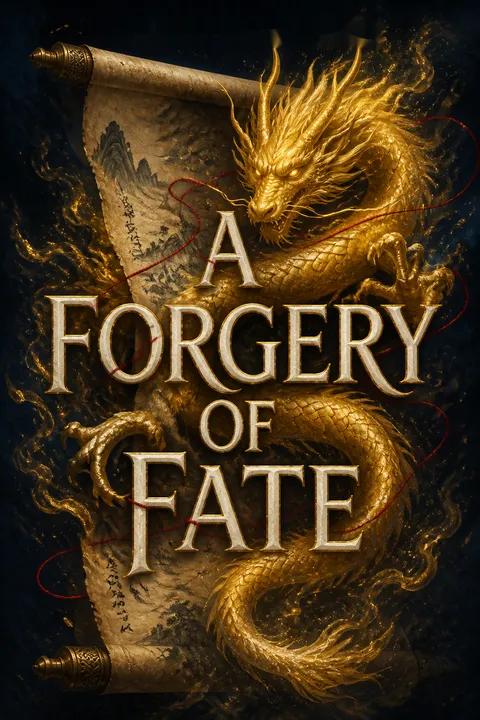


Plot Summary
The Ship That Vanished
As a child, Tru Saigas learns to paint with a brush her father, Arban, gives her, while he fills their home with stories of the sea. Her mother, Weina, reads fortunes for money, but Arban teaches Tru that people must make their own futures. When Tru’s hair turns bright blue, marking her Balardan heritage, the city’s prejudice closes around her.
Arban leaves on a secret voyage, promising to return by winter. Four months later, a letter reports that his ship sank and he was lost at sea. Weina insists he is alive, then gambles away the family home while searching for answers. Tru and her sisters lose their possessions and security, but Tru promises they will stay together and find a way forward.
The opening makes inheritance both intimate and political. Arban gives Tru a brush and a practice of agency, while her blue hair makes ancestry visible in a society that punishes difference. Weina’s fortune telling and gambling emerge from the same need to control uncertainty, but the first becomes a livelihood and the second destroys the family’s shelter. Tru’s promise to her sisters is therefore not abstract optimism. It is a substitute for the stability their parents can no longer provide, and the emotional engine that will shape her later bargains.
Portraits for Survival
Five years later, Tru supports Weina, Falina, and Nomi by forging paintings with Gaari, a shrewd dealer who teaches her to copy the styles of dead artists. Their latest sale earns enough to bring the family close to escaping Gangsun, though Tru still hopes to learn what happened to Arban.
During the sale, an authenticator notices a strange dragon shape hidden in Tru’s river scene. Gaari warns her that the unplanned detail could expose them, then urges her to stop imitating other painters and make original work.
Tru refuses: forgery feeds her family, while her own paintings bring on visions she cannot control. At home, she discovers Weina owes the crime boss Madam Yargui twenty thousand jens. If Tru cannot pay by the next night, Yargui will take Falina.
Tru’s criminal craft is simultaneously a livelihood and a defense against her own gift. Forgery rewards control, repetition, and the ability to hide the maker; prophecy begins precisely when her attention loosens. Gaari recognizes that the dragon in her painting is more than a technical mistake, but Tru cannot afford to treat artistic self-expression as a calling. Her mother’s debt makes the conflict immediate: the family’s survival depends on Tru’s ability to monetize what she can do, even when she does not understand it.
The Dragon in Ink
To raise the money, Tru lets herself paint a magnificent dragon, hoping Gaari can sell it to a wealthy collector. Yargui’s men attack the noodle shop where she meets him, and Tru escapes the prefects pursuing her for forgery. A gust lifts her scroll across Gangsun and drops it inside a walled estate. There she meets its masked owner, the so-called Demon Prince, who recognizes the dragon and realizes Tru has Sight.
When he gives her a ring worth enough to settle Yargui’s demand, Tru recognizes the jewel from a vision. She returns home with the payment, but Puhkan, Yargui’s enforcer, says the debt has risen and takes the ring. Nomi’s improvised firecrackers help the family flee, but Yargui’s men capture all four women.
The chain of accidents has the structure of a fated plot, but Tru responds through deliberate, practical choices: she paints under pressure, pursues the runaway scroll, and negotiates for her family. The ring’s appearance in both vision and reality suggests that foreknowledge can identify an opening without explaining its cost. Her attempt to save Falina also exposes the limits of money and ingenuity when criminal power controls the rules. Nomi’s firecrackers do not win freedom, but her initiative makes the sisters active participants rather than passive hostages.
A Bargain with a Dragon
A living phoenix bursts from Tru’s ring during a tile game Puhkan forces on the family, overturns the men, and helps the sisters escape their burning former home. The ring leads Tru to Elang’s estate, where the masked prince reveals himself as a half-dragon.
His demon servant, Shani, explains that Elang needs a human bride to enter Ai’long, the underwater realm ruled by his grandfather, the Dragon King. Elang offers protection and wealth for Tru’s family in return for a temporary marriage and a painting.
Tru learns that her childhood drawing of a dragon was found in the Dragon King’s palace, evidence that Arban may be captive there. She agrees to go, but bargains for jewels, education for her sisters, and a proper burial for Gaari, whom she believes Puhkan has killed.
The rescue changes Tru’s predicament from a local debt crisis to a choice between immediate family safety and a dangerous search for her father. Her agreement is not romantic surrender: she negotiates concrete protections and treats marriage as a contract with enforceable terms. Elang’s proposal also joins two mysteries, his need for a painter and the possibility that Arban is alive. The bargain’s coercive imbalance remains real, but Tru’s conditions preserve her agency and make the journey a decision she can own.
Wedding Under Rain
The night before the wedding, Weina combs Tru’s hair in a Balardan custom and tells her that her own mother once foresaw heartbreak in her marriage to Arban. Weina chose him anyway. In the morning, Tru and Elang perform a private ceremony, binding their wrists with a magical red thread. Falina and Nomi give Tru hot peppers for the journey, while Nomi warns Elang to bring her sister home.
The wedding procession passes through Gangsun, where Governor Renhai’s prefects greet Tru rather than arrest her, evidence that Elang has already removed that danger. At his garden pond, Elang gives Tru a potion that lets her breathe underwater. As the potion transforms her body, he opens a passage through the water, and the newlyweds plunge into Ai’long.
The wedding is a threshold rather than a fulfillment. Its ritual language binds Tru and Elang before they trust one another, making the red thread an external obligation that contrasts with the feelings they deny. Weina’s memory offers a model of love chosen despite anticipated pain, though Tru does not yet know whether that inheritance is a blessing or warning. The farewells to Falina and Nomi sharpen the cost of her choice: she leaves not because she wants adventure for herself, but because she believes the bargain can return safety and answers to the family.
Yonsar’s Gray Welcome
In Ai’long, Tru grows gills and arrives in Yonsar, Elang’s neglected sea domain, where storms have left ruins and frightened inhabitants. A patrol of sharks and jellyfish challenges the marriage that is supposed to end Elang’s exile. The jellyfish probe Tru’s memories, exposing her grief over Arban, then turn their scrutiny on Elang.
He endures their painful examination rather than let them keep hurting her. The patrol accepts the marriage, and the Dragon King appears as a vast watery projection. He turns his own patrol creatures to stone to demonstrate that he can punish anyone at will. Tru sees the cost of Elang’s return: his home is impoverished, his subjects live under threat, and her husband’s grandfather rules through fear.
Ai’long is introduced not as the radiant refuge of children’s tales but as a damaged political landscape. The marriage test makes intimacy legible to institutions, forcing Tru to perform affection while strangers inspect her private memories. Elang’s decision to redirect the jellyfish toward himself offers the first evidence that his cruelty is not the whole of him. Nazayun’s casual transformation of his own patrol into stone then reframes the conflict: the danger is not simply an exiled prince’s ambition, but a ruler whose unchecked power makes even loyal service disposable.
The Fold’s Hidden Lair
A devastating storm strikes Yonsar, killing turtles and leaving Elang’s household searching for Mailoh, the castle’s trusted steward. Tru’s visions show the Dragon King near a frozen chasm, but Elang orders her to remain inside.
She disobeys, persuading Shani to carry her into the Western Fold. There they find Mailoh unconscious in a cave, her shell cracked, and discover the cave is a monster’s lair. When the creature attacks, Tru and Shani work together: Tru uses her umbrella to obstruct its jaws while Shani consumes its soul, freeing it from Nazayun’s control.
Alone afterward, Tru encounters Nazayun’s projection. He offers to reunite her with Arban if she betrays Elang. Tru refuses, and Nazayun freezes the water around her until Elang pulls her to safety.
Tru’s disobedience is not simple recklessness. She sees in Mailoh’s disappearance the same unresolved absence that shaped her childhood, and refuses to let an uncertain search become an excuse for surrender. The rescue also revises her understanding of Shani: their survival depends on cooperation between a human who improvises and a demon who carries immense power. Nazayun’s offer targets Tru at her deepest vulnerability, but she refuses to trade one captive loved one for another. Her choice establishes loyalty as an action under pressure, not a feeling that can be purchased.
Silk Against the Storm
After Mailoh recovers, Tru learns that Shani once served Nazayun and may be more complicated than Elang admits. Elang takes Tru to Queen Haidi of the merfolk, asking for magic to shield Yonsar. Haidi agrees only after testing whether the couple’s affection is genuine.
Tru kisses Elang to prevent him from making a false declaration, and their unexpectedly mutual response convinces the queen. On returning, they find Nazayun’s sharks attacking the castle. Haidi gives Tru a woven silk ward, and Tru appeals to Ai’long’s waters to carry it over Yonsar.
The ward repels the attackers and repairs the castle. Haidi then explains that Nazayun fears Elang as a possible instrument of the Eight and a Half Immortals, a council prophesied to remove an unworthy god.
The silk ward makes protection a collaborative act: Haidi supplies craft, Tru supplies an appeal grounded in honest concern, and the sea carries their work into place. The kiss begins as a tactic but unsettles the boundary between performance and desire, while the queen’s test shows how public trust depends on more than a legal bond. Haidi’s account also complicates Elang’s rebellion. He is not merely seeking personal restoration; Nazayun’s fear of a prophecy has made the half-dragon’s existence itself a political threat.
The Dealer’s Hidden Face
Back in Yonsar, a clue in Kunkoi’s familiar noodle broth leads Tru to search Elang’s secret storehouse. There she finds every painting she ever sold, including discarded sketches, and realizes the collection belongs to Gaari, the friend she believed Puhkan had killed.
Elang confirms that he used Gaari’s human disguise to train her and keep her near him, after finding her childhood dragon drawing in Nazayun’s palace. Tru feels betrayed by the friendship she thought was real.
Soon she has a vision of Queen Haidi transformed into a monster, prompting Elang to reveal their true weapon: the Scroll of Oblivion, hidden as a black strand in Tru’s wedding thread. Whatever she paints truthfully on it can be erased from existence, but only at its final moment.
The reveal forces Tru to reinterpret memory without erasing its emotional reality. Elang’s mentorship was instrumental and deceptive, yet the paintings he preserved testify to attention that exceeded mere utility. Tru’s anger is therefore not resolved by learning his motive; it deepens because she cannot separate genuine care from strategic concealment. The Scroll turns painting from a livelihood into an ethical instrument. Its demand for truth and a subject’s final moment makes artistic precision inseparable from responsibility, while Tru’s vision of Haidi warns that the coming conflict will endanger allies too.
The Queen’s Betrayal
At the Luminous Hour, Tru and Shani infiltrate Jinsang so Tru can study Nazayun in his true form. Instead, they witness him imprison Queen Haidi and transform her into a monstrous hunter. Haidi attacks Tru, but Elang arrives and drives her back. Nazayun captures Tru, and Shani reveals that she has been serving him; she gives him the Scroll and destroys her opal ring.
Nazayun produces Arban’s wooden model ship, showing that her father has been trapped inside its painted figure for five years. He promises to restore Arban if Tru paints Elang onto the Scroll. Tru agrees to buy time, concealing a deception in her unfinished portrait. Shani, who has betrayed them under threat of death, leaves Tru to face the impossible task.
The betrayal is devastating because it exploits two kinds of dependence: Tru’s longing for Arban and Shani’s fear of Nazayun. Shani’s choice is morally compromised, but the coercive bargain clarifies why survival can look like treachery from outside. Haidi’s transformation demonstrates the political cost of dissent, while Arban’s imprisonment converts an old family mystery into immediate leverage. Tru’s apparent compliance marks a shift from improvising within someone else’s rules to designing a deception of her own, using the exactness demanded by the Scroll against its captor.
A Portrait Inside an Eye
Tru paints Elang on the Scroll but leaves his pupils unfinished, telling Nazayun that the portrait needs a final stroke. The Dragon King restores Arban from the model ship, and Tru reaches her father for a moment before Nazayun freezes him again. Elang asks for one last kiss, giving Tru the chance to touch him and break the Scroll’s enchantment.
She completes the painting, but the image is not Elang himself: it is his reflection inside Nazayun’s eye. When Tru touches the Dragon King’s eye, it vanishes into Oblivion, and Elang remains alive. General Caisan and his soldiers break into the palace, retrieve Arban, and help Tru and Elang escape. Nazayun survives, wounded, while Tru and her father return toward the human world.
The trick depends on Tru’s distinctively artistic intelligence: she understands that likeness can be nested, and that a representation need not show its subject directly. The kiss is both a tactical touch and a moment in which concealed feeling becomes bodily knowledge. Elang’s intervention, restoring Arban before Tru finishes, complicates her victory by forcing her to witness the cost of the bargain. The episode rewards not raw power but attention: the same habit that once made Tru a skilled forger lets her find a technically truthful loophole in a seemingly absolute magical rule.
The Last Dragon Year
Nazayun reaches the mortal coast in human form and sets Gangsun’s harbor alight, threatening the family and city Tru has just regained. Tru has left the Scroll with Caisan, but the general rescues her from the sea and returns it.
Elang, still alive, joins her as Nazayun’s ship and storm gather overhead. Shani turns against the Dragon King, entering his missing eye socket and forcing him back into his dragon form, but the change unleashes more destruction.
When Nazayun’s power falters, Tru rides the Scroll’s painted dragon, reaches him, and uses the Touch of Entrapment. The Scroll draws the Dragon King into Oblivion. His spells lift: Haidi returns to herself, and petrified creatures live again. Yet Elang’s curse remains, and his strength begins to fail.
The final confrontation brings the private and civic stakes together: Nazayun’s violence reaches Gangsun just as Tru has recovered her family. Shani’s reversal does not erase her earlier betrayal; it shows a constrained character choosing, at last, to act against the master who kept her alive through fear. Tru’s victory relies on both the portrait’s prior preparation and the oath Nazayun breaks when he attacks her. Removing a tyrant restores those he transformed, but cannot instantly repair the wounds his rule created, especially the curse that has governed Elang’s life.
The Heart He Refused
On a fishing boat, Tru’s family reunites with Arban, while Elang collapses from the curse that Nazayun’s defeat did not remove. Tru offers him the pearl that appears from her own heart, understanding that Nazayun hid Elang’s missing heart inside the person who would truly love him.
Elang refuses to take it because doing so would kill her. Tru tries to paint a replacement pearl on his chest with the light of her heart, but the sun sets before she can finish. Elang fades into water, leaving only their red wedding thread.
Tru returns home grieving. In the weeks that follow, Shani gives her memories Elang had hidden, and Tru helps human captives released from Ai’long return to their families. The new Dragon King, Seryu, offers her a place in Yonsar, but she remains on land, hoping.
The curse makes love structurally costly rather than simply emotionally difficult: its resolution appears to require one person’s life for the other’s. Elang’s refusal protects Tru but repeats his habit of deciding what she must bear. Tru’s failed painting dramatizes the limit of her gift; imagination cannot guarantee survival simply because she loves its subject. Grief then becomes labor. By guiding freed captives home, Tru turns personal loss into care for others, while refusing to declare hope dead. Her choice to remain on land honors her family without closing the possibility of return.
The Riddle Finds Its Answer
Three years later, Tru and Falina run a successful shop selling embroidered boots with Tru’s dragon designs. Nomi studies at the National Academy, Weina reads fortunes for amusement, and Arban prepares to sail again. At the Lantern Festival, Tru learns that a handsome stranger solved her old riddle about a flower born in darkness. He has left her a waterbell.
She finds him beside a cart of flowers and recognizes Elang, now fully human, though he does not remember her. When Tru gives him the jade butterflies and leaves, he follows with her lantern and calls her by the name she never told him. The red thread, flowers, and shared memories draw his recognition back. They reunite, and Tru insists he must court her anew.
The ending refuses an effortless restoration. Elang returns without his old body or memories, so reunion begins as an act of recognition rather than a reward already secured. The riddle, the waterbell, the butterflies, and the lantern work as material prompts that let feeling survive the loss of explicit knowledge. Tru’s insistence that Elang court her again protects her agency: their bond cannot simply be presumed because of a past vow. The close returns to their shared language of food and art, suggesting that a future can be built from repeated choices, not recovered intact.
Epilogue
Three years after Nazayun’s defeat, Tru has built a livelihood with Falina, Nomi is studying at the National Academy, and Weina and Arban are making plans for a voyage together. At the Lantern Festival, Tru’s old riddle is solved by Elang, who returns in human form but has forgotten their life together.
A waterbell and the jade butterflies stir recognition. He follows her through the crowd, calls her by the name she never gave him, and takes her hand. Tru agrees to begin again, on the condition that he win her over this time.
The epilogue gives the romance a renewal rather than a simple reversal. Elang’s lost memory prevents the past from functioning as an automatic claim on Tru, while the recurring objects of their relationship make recognition possible without turning it into certainty. Tru’s successful business and her sisters’ futures show that her life has continued beyond the crisis, so choosing Elang again does not mean abandoning the family she protected. The final courtship is therefore a more equal beginning: affection must be demonstrated in the present, even when the characters have already shared a history.
Analysis
A Forgery of Fate makes art a negotiation with reality. Tru begins by forging the work of dead masters because imitation is safer than invention: a recognizable style can be sold, while her own painting opens onto visions she cannot manage. The story reverses that hierarchy. Her supposedly lesser skills, especially memory, observation, and deceptive composition, become the only means of resisting a god. The Scroll does not reward inspiration alone. It requires an exact account of the living world, so Tru’s artistry becomes a moral practice of attention.
The novel also distinguishes care from control. Weina’s gambling, Elang’s secrecy, and Nazayun’s rule all arise from a desire to master uncertainty, but their consequences differ according to whom they serve. Weina’s need to recover Arban endangers her daughters; Elang’s protective lies keep Tru alive while denying her informed choice; Nazayun calls domination preservation and turns dissenters into monsters. Tru’s growth lies partly in refusing all three forms of substituted judgment. She bargains, investigates, disobeys, and finally risks herself by choice rather than accepting safety purchased through another person’s sacrifice.
The romantic plot tests whether intimacy can exist after manipulation. Elang first approaches Tru through a fabricated friendship, while Tru approaches the marriage as a transaction. Their relationship becomes meaningful not because the deceit disappears, but because each must confront its cost. Elang’s repeated instinct to decide what Tru can bear is still a form of control, even when motivated by love. Tru’s insistence on choosing for herself gives the ending its ethical shape. When Elang returns without his old memory, their bond cannot rely on past vows alone. It must begin again through recognition, shared objects, and consent in the present.
Finally, the story treats family as a network that can expand. Tru’s fierce loyalty begins with her mother and sisters, then extends to Yonsar’s threatened people and the captives released from Ai’long. Her courage does not make grief vanish or repair every loss. It gives grief useful work. The future she paints is not predetermined; it becomes possible because people repeatedly choose to protect one another.
Review Summary
People Also Read






Characters
Truyan Saigas
The visionary forgerKnown as Tru to her family, she is a portraitist whose perfect memory for faces makes her unusually skilled at forgery. Her blue hair marks her Balardan heritage and exposes her to prejudice in Gangsun. She is practical, sharp-eyed, hungry for food and security, and fiercely protective of her mother and sisters. Her first instinct is to turn every talent into a means of survival, but painting also gives her a way to imagine possibilities that money and social rules cannot provide. Tru’s courage is not fearlessness; she regularly feels afraid and moves anyway, especially when someone she loves is in danger.
Elang
The exiled dragon princeA young half-dragon ruler, Elang is guarded, exacting, and accustomed to treating vulnerability as a danger. His divided appearance makes him an object of scrutiny, while his exile leaves him responsible for a damaged realm and people who depend on him. He values planning, competence, and promises, yet his protective impulses often take the form of withholding information or making decisions for others. His dry humor and private tenderness surface most clearly through practical acts: preparing food, tending a garden, or offering a tool that makes someone’s work easier. He wants to reclaim a home, but struggles to believe he can belong anywhere.
Weina Saigas
The fortune-telling motherWeina reads faces and sells fortunes, combining genuine perceptiveness with theatrical confidence. She loves money because it promises safety and status in a society that limits women’s choices, but her gambling reveals how badly she wants certainty when life refuses to provide it. After Arban disappears, she tries to hold the family together and later falters under grief and debt. Her love for her daughters often comes wrapped in vanity, matchmaking, and blunt advice. Beneath those habits is a woman who has survived heartbreak before and understands that choosing love can be worth the risk, even when she cannot control its outcome.
Arban Saigas
The absent sailor fatherArban is a Balardan trader, carver, and storyteller who values art and adventure more than wealth. He gives Tru her first paintbrush and teaches her that a person must participate in making a future rather than simply wait for a prediction. His humor and affection shape the sisters’ childhood, while his journeys leave the family vulnerable to absence and uncertainty. Arban’s love is expressed through small handmade gifts, favorite foods, and the names he gives his daughters after resilient trees. His influence remains active in Tru’s choices long after he is gone from her everyday life.
Falina Saigas
The protective elder sisterFalina is Tru’s older sister in spirit and her closest partner in keeping the family afloat. She cares about beauty, clothing, and the comforts poverty has denied her, but she is also resourceful, brave, and fiercely protective of Nomi. Her quick wit often turns sibling quarrels into a form of affection. Falina understands the danger of their circumstances and will consider hard choices to keep the family safe, even when she hates them. Her practical skills and emotional steadiness help transform the sisters’ promise to stay together into daily action.
Nomi Saigas
The youngest scholarNomi is a book-loving, mechanically inventive child whose curiosity ranges from dragons and merfolk to chemistry and fireworks. Though younger than her sisters, she is often the first to insist that the family face the truth rather than hide it. Her practical intelligence does not extinguish wonder; she wants both books and impossible creatures, and she treats knowledge as a route toward independence. Nomi’s affection is direct and protective. She joins plans readily, contributes tools and ideas, and believes that a girl’s mind can be as useful as magic or money.
Gaari
The art dealer mentorGaari is an eccentric dealer who recruits Tru after discovering her gift for portraiture. He teaches her the techniques and rules of the forgery trade, finds buyers, and insists that carelessness can endanger both artist and dealer. His guarded manner suggests a past he will not discuss, while his love of noodles and sharp eye for people make him a memorable companion. He gives Tru discipline and a way to support her family, but also challenges her to consider what her own art might become.
Shanizhun
The water demon guideShanizhun, usually called Shani, is an ancient water demon who can change shape and move through an opal ring. She is caustic, clever, proud, and difficult to trust, often treating danger as an opportunity to needle Tru. Her long service to powerful beings has taught her that survival can require compromise, though she retains her own sense of grievance and desire. She protects Tru while resenting the assignment, and her knowledge of dragons makes her an indispensable guide. Shani’s biting humor conceals a creature who knows what it means to be feared before being understood.
Puhkan
Yargui’s gentle assassinPuhkan is the polished enforcer of Madam Yargui, using a courteous manner to disguise his capacity for intimidation and violence. He has known Tru’s family since the loss of their home and understands that threats against her sisters are more effective than threats against Tru herself. His composure makes him dangerous: he can turn a debt into a personal trap while appearing to conduct ordinary business.
Madam Yargui
Gangsun’s crime bossMadam Yargui controls gambling dens and uses debt to claim power over vulnerable families. Her threat to take Falina turns Weina’s private failing into an immediate danger for all four Saigas women. Though she rarely appears directly, her influence shapes Tru’s first desperate bargain.
Mailoh
Yonsar’s steadfast stewardMailoh is a wise, warm-hearted turtle who manages Elang’s household and helps Tru adapt to Ai’long. She values tradition, takes pride in preparation, and believes small acts of care can preserve a community under pressure. Her loyalty to Yonsar is rooted in belonging rather than blind obedience. Mailoh’s gentle optimism gives the castle a domestic center amid its empty halls and repeated storms.
General Caisan
Yonsar’s battle commanderCaisan is Mailoh’s brother and Elang’s stern military commander. He distrusts humans and demons, preferring clear chains of command and tested loyalty. His bluntness can make him seem hostile, but his devotion to Yonsar is sincere, and he measures others by their actions under pressure. He represents a defensive culture shaped by centuries of danger.
Kunkoi
The castle’s noodle chefKunkoi is a lively merman who cooks for Yonsar and refuses to let the kingdom’s hardship erase its pleasures. He is sociable, flirtatious, and generous with food, often using humor to make tense encounters easier. His knowledge of cooking and his connection to the castle’s community provide Tru with a familiar point of contact in an unfamiliar realm.
Queen Haidi
The merfolk rulerQueen Haidi rules Nanhira with composure and a careful sense of political risk. She is sympathetic to those caught between worlds, but she does not confuse compassion with recklessness. Her skill as a weaver embodies the merfolk’s traditions and power. Haidi tests Tru and Elang before offering help, seeking evidence that their bond can withstand the consequences of opposing the Dragon King.
Nazayun
The Dragon KingNazayun is the ancient ruler of Ai’long and the grandfather of Elang. He sees his authority as necessary to preserve the dragon realm, and his fear of losing control has hardened into a belief that every threat must be crushed. He can shape the sea, transform living creatures, and punish dissent on a vast scale. His conviction that he alone knows what is best makes him more dangerous than simple greed would: cruelty becomes, in his mind, a form of stewardship.
Seryu
The reluctant royal heirSeryu is Elang’s cousin, a dragon who would rather avoid court politics than inherit its burdens. His irreverent manner masks affection for Elang and a more generous nature than his royal position suggests. He offers Tru a connection to Ai’long that does not depend on force.
Plot Devices
Tru’s Sight
Painted glimpses of futuresWhen Tru paints from imagination rather than imitation, her brush can produce visions of events that have not yet happened. She cannot summon them reliably at first, and seeing a future does not automatically let her change it. The visions give her clues, such as the ring that comes into her possession and the place where she will encounter Nazayun. Her skill as a portraitist gives the gift a practical use: she can remember faces and details with unusual accuracy. Sight turns art into both evidence and risk, because Tru must decide what to do with knowledge that may be incomplete or painful.
The Scroll of Oblivion
A portrait erases its subjectThe Scroll is concealed in the black strand braided into Tru and Elang’s red wedding thread. A painter can send an object into Oblivion by rendering it truthfully and touching it, but painting a living subject requires capturing the precise final moment before the enchantment takes hold. The Scroll cannot be destroyed, and a subject’s image fades after the enchantment is complete. Its demand for exactness makes Tru’s craft central to the conflict: the weapon is powerful, but it works only through an artist’s observation and judgment.
The Opal Ring
A demon’s mobile refugeElang gives Tru a ring containing Shani, a water demon who can emerge, change shape, and use her magic to protect or guide Tru. The ring first appears as payment for Tru’s debt, then proves connected to her visions and to the watery phoenix that saves her family. Shani’s presence makes the ring both a source of aid and a reminder that protection can carry hidden obligations. The ring also allows the story to place an unpredictable supernatural ally at Tru’s side without making that ally fully trustworthy.
Sangi
A potion that lets humans breatheSangi allows Tru to survive beneath Ai’long’s waters by transforming her body to breathe there. It must be taken regularly, and its bitter taste and physical effects make the underwater journey a continuing bodily risk rather than a simple change of scenery. Elang’s supply depends on sanheia roses, which are vulnerable to storms and sabotage. The potion therefore ties Tru’s survival to the fragile condition of Yonsar and to Elang’s practical care, even when neither character wants to name that care as affection.
The Red Wedding Thread
A bond with hidden termsThe wedding rite ties Tru and Elang’s wrists with a magically strong red thread, making their union visible to the Dragon King’s subjects and helping Tru enter Ai’long. A thin black strand within it conceals the Scroll of Oblivion, turning a symbol of marriage into a political weapon. The thread also carries the emotional tension of the arrangement: it begins as a contractual bond, but later stands for vows, choices, and the possibility of a relationship that must be freely renewed.
About the Author
Other books by Elizabeth Lim



Download PDF
Download EPUB
.epub digital book format is ideal for reading ebooks on phones, tablets, and e-readers.








