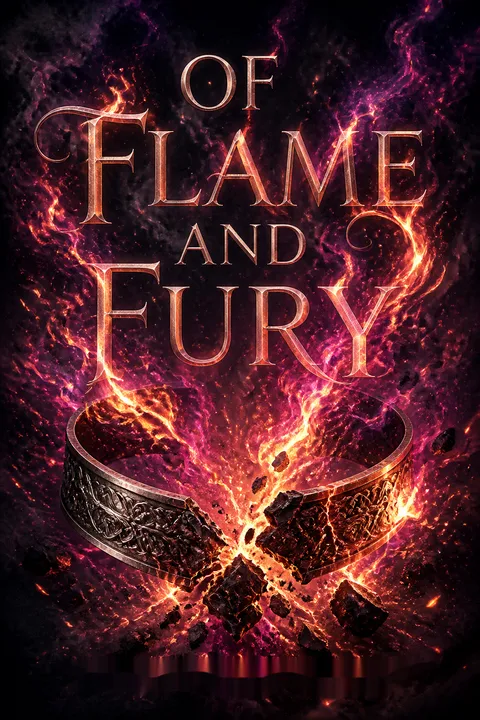


Plot Summary
Oska’s Last Lap
Kel Varra, seventeen-year-old tamer of the Crimson Howlers, needs a prize to keep her failing farm and phoenix, Savita. During a lethal Fieror race, rider Oska follows winger Dira’s strategy until Warren Coupers rockets past the leaders with a dangerous saddle maneuver. Oska tries to copy him before the finish, loses her grip, and falls to her death.
The Howlers finish fourth and earn nothing. Kel finds Savita unharmed, then learns from Dira that Oska is dead. Her grief turns to anger when Coup dismisses responsibility, while technician Rube’s attempt to approach Savita triggers another crisis. Kel steps between them as Savita lunges, and Rube accuses Kel of excusing the phoenix’s behavior.
The opening race makes the story’s central contradiction physical: the Howlers need racing money, yet every victory depends on exposing people and phoenixes to danger. Oska’s death is not simply a consequence of Coup’s recklessness; her attempt to imitate him shows how spectacle travels through a team, even when the stunt is not suited to another rider. Kel’s anger at Coup gives grief a manageable target, while her intervention between Savita and Rube shows the loyalty that also makes her defensive. She can protect Savita from human judgment, but cannot undo the risks of the sport that keeps them alive.
A Phoenix Uncollared
At The Ferret, Rube tells Kel and Dira he is leaving the team for university, leaving them without a technician as well as a rider. Dira has already considered recruiting Coup and his older brother Bekn, a publicity-minded mitigator, but Kel refuses to trust the reckless celebrity.
Before they can settle the argument, a Fume extremist removes a spinel phoenix’s control collar in the street. The freed bird kills its captor and a tamer, then threatens the crowd.
Coup draws bystanders away while Kel uses food and a lullaby taught by her father to approach the frightened phoenix. She replaces its collar, but the creature slashes her arm and Coup knocks her clear of a fatal strike. Reporters film their rescue, making the reluctant pair a public sensation.
The rescue gives Kel and Coup their first shared task, one that rewards complementary skills rather than mutual liking. Kel reads a frightened animal; Coup manages the crowd and accepts danger without his usual performative bravado. Their success depends on treating the phoenix as confused rather than evil, a distinction the surrounding culture rarely makes. Yet cameras immediately turn care into content. Their collaboration is real, but its public meaning is manufactured as romance and spectacle. That mismatch becomes a pressure point: the pair must learn to use attention without letting it dictate their choices or their understanding of each other.
The Farm Goes Dark
Cristo Industries recruiter Romar Harte offers jobs to Kel and Coup alone, separating them from their teammates and promising access to conservation research. Kel refuses to abandon Dira, while Coup refuses to leave Bekn. That night, an electrical fire destroys Kel’s aviary and office, leaving Savita’s home in ruins and Kel convinced her neglect caused the disaster.
Coup and Bekn arrive to help; Coup recalls how Kel’s father once pushed a public aviary to improve its treatment of phoenixes. On a night flight, Kel admits the farm cannot survive without new money. She decides to accept Cristo’s offer only if he hires the whole Howlers crew. Coup agrees to bring Bekn, and Kel calls Romar with her condition. The team leaves Fieror for Vohre.
Kel’s choice is framed as agency under pressure, but the fire narrows her options before she can make it freely. She interprets structural poverty as personal failure, a response that lets her blame herself rather than question who benefits from her desperation. The condition that the whole team must come is therefore more than loyalty: it is her attempt to preserve a social world while entering a powerful employer’s. Coup’s refusal to abandon Bekn mirrors her insistence on Dira, exposing a shared attachment beneath their hostility. The move promises security, but its cost is dependence on an institution Kel already distrusts.
Cristo’s Glittering Maze
On the train to Vohre, Kel and Coup encounter a mother and child dead from Armond’s Blight, the incurable disease that also killed Coup and Bekn’s mother. At Cristo Industries, the Howlers sign confidentiality contracts and discover a private racing track, advanced equipment, and lavish accommodation.
Rahn Xing, their young technician, shows them the compound. Canen Cristo explains that Kel will care for Savita and study other phoenixes, while the company supports conservation and research into the blight.
He also shows Kel The Prism, a diamond chamber designed to contain a phoenix’s destructive rebirth, and offers help rebuilding her farm. During their first practice, Savita’s temperature and flames surge, then quickly return to normal. Kel begins to wonder whether the alarms are a warning or a malfunction.
The compound makes dependence attractive by offering precisely what Kel lacks: safety, expertise, and a future for Savita. Cristo’s support appears to honor her father’s conservation ideals, but the contracts and opaque access rules quietly establish who holds power. The dead mother and child make the blight more than background lore, linking private grief to institutional ambition. Kel’s trust is cautiously negotiated, not surrendered. Savita’s unexplained heat spike introduces a bodily signal that technology cannot settle; the story asks whether care means trusting instruments, authorities, or the animal whose behavior they claim to interpret.
The River Track
For their first Vohre race, the Howlers find a course flooded with murky water, which phoenixes instinctively fear. Kel tests its depth with a tent pole and realizes the race rewards careful navigation, not raw speed.
She and Dira coach Coup to keep Savita focused on their commands rather than the water. Jets erupt beneath the racers, rival phoenixes attack, and Savita is struck and loses feathers, but Coup adapts to her movements while Dira spots hazards.
He eventually turns two leading birds against each other, clearing a path for Savita to take first place. Afterward, Kel discovers she has lost access to Savita’s detailed health readings. Examining the phoenix herself, she finds dark feathers beneath Savita’s wing, a sign that a rebirth may be approaching.
The race reverses the usual hierarchy of control. Kel’s knowledge creates the strategy, Dira reads the field, and Coup succeeds by listening to Savita rather than forcing her into a conventional attack. Their win is genuine teamwork, yet it rests on exploiting a fear the phoenix cannot understand. Kel’s discovery of the dark feathers also exposes the limit of her professional tools: the company can restrict data, but her practiced touch can still detect what it hides. The victory therefore feels double-edged. It secures the Howlers’ place at Cristo’s, while making Savita’s body a source of information that Kel may not be allowed to interpret.
Sprites in the Sky
Before the next race, Kel and Coup visit a conservation park for Bekn’s publicity campaign. Their staged closeness begins to stir real attraction, though Coup retreats into celebrity charm when a fan approaches. In the race, tiny sprites create invisible pockets of violent turbulence.
Coup repeatedly ignores calls to slow down, driving Savita through the dangerous currents until they take first place. A collision near the finish leaves him with severe burns and a broken leg. At the hospital, Bekn admits that Coup risks himself because he feels indebted to the brother who sacrificed university plans after their mother died.
Kel avoids visiting Coup while she and Dira secretly watch Cristo’s researchers muzzle phoenixes, draw blood, and pluck feathers. Later, Kel and Coup find phoenix ash in The Prism, proof that a phoenix died there.
This victory exposes the human cost hidden inside the Howlers’ rising profile. Coup’s daredevil behavior is not merely vanity; it is bound to an unpaid emotional debt, so the very trait that makes him marketable also threatens his life. Kel’s attraction grows beside fear, but she retreats from the hospital because closeness would make another loss harder to survive. Meanwhile, the researchers’ handling of phoenixes turns the pristine facility into a place of concealed violence. The ash in The Prism is decisive because it contradicts Cristo’s assurances with material evidence. Kel’s suspicion is no longer just inherited distrust of corporations; it has a body behind it.
The Forest Takes Its Due
Cristo asks Kel to replace the injured Coup in a race carved through Vohre Forest, arguing that Savita must prove she is safe before the council intervenes. Kel agrees, despite her fear for the phoenix and her own lack of recent racing practice.
In the dense course, Savita fights other racers and the Howlers lose contact as branches, heat, and chaos disrupt their equipment. A fallen-tree blockade traps the competitors, and uncollared wild phoenixes gather around them.
A colossal bird crashes into the clearing, killing riders as fire consumes the track. Kel searches for Savita, then a Fume fighter named Bryna captures her and takes her to a hidden camp. The extremists plan to free racing phoenixes and demand Kel teach them how to communicate with the creatures.
Kel’s decision is coerced by a familiar trap: protecting Savita seems to require performing obedience for the very institution that controls her. The forest race makes that bargain visible by converting habitat into arena and wild animals into obstacles. When uncollared phoenixes appear, Kel’s assumptions about their uncontrollable nature begin to crack, but immediate danger leaves no time to revise her worldview. Bryna’s demand complicates the opposition: the Fume’s concern for phoenixes is genuine, yet their methods include violence and abduction. The scene refuses an easy division between humane insiders and righteous outsiders; both groups claim to speak for beings who have not consented.
Savita Does Not Catch
Bryna tells Kel the Fume sabotaged the race to expose CAPR’s cruelty and asks her to help them understand phoenixes. Kel rejects the demand, knocks Bryna unconscious, and returns to the burning clearing. She finds Savita still collared, but two Fume members stab Kel as she tries to mount. Savita lifts her into the sky, then abandons her during a fight with a larger wild phoenix.
Kel falls and is rescued near the forest’s edge, badly injured. After a week in Cristo’s hospital, she wakes beside Coup and learns that riders died and the media is blaming Savita. Kel cannot remember Estra, a young woman her friends say she has spent time with, or recent postcards from her mother. She is shaken by the gaps but has more immediate fear for Savita.
The fall breaks Kel’s most comforting belief: that years of care guarantee Savita will save her. The phoenix behaves according to her own nature, not the human bond Kel has imagined as a promise of protection. This is painful precisely because it does not make Savita cruel; it reveals the difference between affection and ownership. Kel’s missing memories deepen that instability. She can no longer treat recollection as a dependable record of her relationships, and the public narrative about Savita threatens to define the phoenix through a single disaster. Kel’s urgency remains directed outward, even as her own body and mind begin demanding attention.
Ash Behind Glass
During rehabilitation, Kel watches Coup defend Savita in interviews and grows close to him, though she avoids a direct conversation about her fear and guilt. After leaving the hospital, she sneaks through the compound and finds a hidden laboratory filled with clipped feathers, blood, bones, and phoenix remains.
A diamond cabinet preserves flames above a heap of ashes. Kel realizes Cristo’s team is trying to retain phoenix magic. She runs toward Savita’s aviary, but Cristo’s guards seize her.
In a lecture hall, Cristo explains that he hopes to use phoenix rebirth magic to cure Armond’s Blight. Kel learns he deliberately caused her aviary fire, manipulated the Howlers’ move to Vohre, and engineered dangerous races to hasten Savita’s rebirth and secure a legal excuse to kill her.
The revelation transforms apparent generosity into a system of engineered dependency. Cristo did not simply exploit an opportunity; he manufactured the crisis that made his offer irresistible, turning Kel’s trust in her own responsibility into another instrument of control. His motive is emotionally legible, since he wants to save someone he loves, but that does not soften the violence of his methods. The preserved flames make his ambition tangible: he treats living creatures as containers for a cure. Kel’s failed attempt to escape the laboratory’s implications marks a shift from suspicion to direct knowledge. She can no longer separate her team’s prosperity from the harm funding it.
The Blight Has a Name
Cristo’s guards imprison Kel, and Coup is captured after searching for her. Rahn visits the cell with Dira and Bekn, admitting she knew about Cristo’s plan and helped conceal it. She says Cristo believes Savita’s rebirth can save his daughter, Estra, who is dying of the blight. The friends confront Kel with the memories she has lost and the symptoms she has shown: insomnia, tremors, paranoia, and sudden anger.
Kel recognizes she has Armond’s Blight too. Rahn also shares what she learned from her mother: cases cluster where magical wildlife has been depleted, suggesting the disease may be connected to ecological destruction. The theory offers another path to healing, but Estra may not have time to wait for nature to recover.
The cell turns a biological diagnosis into a conflict over time, evidence, and consent. Kel’s memory loss has not merely hidden facts; it has altered the social reality her friends use to care for her. Rahn’s betrayal is similarly mixed: she withheld truth to serve Cristo, yet her knowledge of the disease’s ecological pattern makes her essential to resisting him. The proposed link between blight and depleted magic reframes illness as more than an individual misfortune, without offering an easy cure. Estra’s urgency gives Cristo’s brutality its strongest emotional rationale, but the narrative insists that urgency cannot erase the moral difference between healing and sacrifice.
The Cell Door Breaks
Kel and her friends decide they must save Savita before Cristo induces her rebirth. They fake Kel’s collapse, drawing guards into the cell, then overpower them. Rahn arrives with a bat and frees the group, explaining that she recorded Kel’s earlier encounter with Bryna and has brought the Fume into the compound.
She now knows Cristo plans to trigger Savita’s rebirth in a vast diamond hall by making her race among other phoenixes. The Howlers and Fume divide tasks: Dira and Rahn free phoenixes from their aviaries to create a diversion, while Kel, Coup, and Bekn head for Savita. The alliance is uneasy, built from shared opposition rather than trust. As alarms and phoenix cries fill the compound, the group approaches the hidden hall.
Rahn’s change of allegiance does not erase her complicity; it makes responsibility active rather than retrospective. She finally acts on the knowledge she once used to justify obedience, and risks herself to give others a chance. The alliance with Bryna is equally pragmatic. Kel need not endorse the Fume’s ideology to accept help against a more immediate abuse of power. The staged collapse echoes Kel’s earlier habit of hiding distress, but now deception becomes a deliberate tool rather than self-protection. Their escape depends on cooperation across old fractures, while the unfolding chaos warns that liberation itself can expose both humans and phoenixes to new danger.
The Diamond Race
Inside the diamond hall, Kel finds Savita and several other phoenixes forced into a controlled race. Rahn steps between the birds and the viewing window, stopping them long enough for Kel to reach Savita. Kel withstands the heat and touches her phoenix without gloves for the first time.
Savita’s new collar is melting as rebirth approaches. Cristo threatens to resume the race, and the phoenixes surge forward, badly burning Rahn. Bekn carries Rahn toward medical help while Kel climbs onto Savita with Coup behind her.
They race around the hall and fire Coup’s sancter at the precise moment that forces the birds to fly straight. The phoenixes smash through the viewing window, opening a path outside. Kel and Coup escape into the night on Savita.
The diamond hall compresses the book’s central conflict into a literal spectacle: phoenixes are made to perform the danger that the institution has created for them. Kel’s ungloved touch is a breakthrough in intimacy, but it does not imply that Savita belongs to her. Rahn’s intervention saves the group while costing her dearly, making moral courage neither clean nor consequence-free. The escape depends on exploiting the same racing conditioning Cristo imposed on the birds. The Howlers cannot simply step outside the system; they must redirect its mechanisms against their captor, accepting that survival in a violent structure may require a tactical use of its own violence.
The Collar Falls
Cristo pursues the fugitives and fires at Kel and Coup. Kel lands Savita, then removes the remains of her collar, choosing the phoenix’s freedom over the control that might have kept her safe. A sancter shot wounds Kel, and Savita vanishes into the sky before returning in a blaze. She kills Cristo, then lowers her heat enough for Kel to touch her and climb onto her back.
Kel is dying from the blight, but she accepts Savita’s offer of a ride rather than wait for a controlled, comfortable end. Coup promises to expose Cristo’s experiments and seek another cure. Kel leaves with Savita as the phoenix rises toward rebirth, carrying her into the dawn. Whether the magic will heal Kel remains uncertain.
The collar’s removal is the story’s decisive ethical act: Kel stops confusing love with the right to direct Savita’s life. She does not free the phoenix because she is certain of being rescued; she does it while accepting that Savita may leave. The ending’s violence is not presented as a cure for violence, since Cristo’s death cannot restore the phoenixes he harmed or settle the blight’s cause. Instead, the possibility of healing shifts from extraction to relationship, and remains uncertain. Kel’s departure is therefore both loss and hope: she gives up the security of possession for a future whose terms Savita, not Kel, will determine.
Epilogue
Five weeks later, Coup visits the rebuilt aviary at the Varra farm, prepared for Savita but empty. Bekn continues telling the public what Cristo did, while the Howlers share evidence that the blight may be linked to the destruction of Salta’s magical life.
Estra has died, and Rahn has only just awakened from her injuries. Coup searches Vohre Forest for Kel and Savita, but finds no trace of them. As he starts back toward the cottage, a vast shadow crosses the grass. He hears a familiar laugh, looks up, and sees Kelyn in the coral dusk.
The epilogue refuses to turn Kel’s flight into a settled rescue. The new aviary is a promise of home, but its emptiness makes that promise painful rather than reassuring. Coup remains caught between grief and belief, while Bekn’s public work turns private catastrophe into political testimony. Estra’s death confirms that exposing Cristo cannot reverse every loss or deliver the cure he sought. The final sight of Kel answers the question of whether she is gone, but not what the phoenix’s rebirth has done to her, or whether she can return. Hope arrives as an image, not a guarantee.
Analysis
Of Flame and Fury asks what care means when the cared-for being is powerful, dangerous, and capable of refusing the relationship. Kel’s expertise makes her attentive to Savita’s needs, but attachment tempts her to treat understanding as a guarantee of reciprocal protection. Savita’s decision not to catch Kel exposes that mistake without making the phoenix a villain. The eventual removal of the collar completes Kel’s movement from protective possession toward respect for an animal’s independent will.
The book also binds private grief to public systems. Kel’s poverty makes racing necessary; racing produces spectacle; spectacle attracts corporate money; and that money permits Cristo to turn living phoenixes into experimental material. His motive, saving Estra, is intimate and comprehensible, but his methods reproduce the same logic of domination that has helped create the crisis. The proposed relationship between the blight and depleted magical populations widens the scale further. Disease is not only an individual tragedy but possibly a consequence of treating the ecosystem as a resource.
The Howlers’ relationships offer a counterweight to that logic. Kel and Dira must learn that loyalty does not mean making choices for one another. Coup’s reckless self-sacrifice is revealed as distorted reciprocity, an attempt to repay Bekn by spending his own life. Rahn’s allegiance shows how gratitude can become a leash when a benefactor controls the opportunities one has been given. Each character must decide whether belonging demands obedience or can survive disagreement.
The ending refuses a simple cure. Cristo’s death cannot undo the harm, Estra’s illness is not reversed, and Kel’s future remains uncertain. Instead, the possibility of renewal is placed in a relationship that does not guarantee safety or ownership. The book’s hopeful gesture is not that love conquers mortality, but that one can choose connection without pretending to command what happens next.
Review Summary
Of Flame and Fury is a fast-paced YA fantasy featuring phoenix racing and a slow-burn romance. Readers praise the unique concept, action-packed plot, and compelling characters. The world-building and high-stakes races keep readers engaged, while the relationship between protagonist Kel and her rival Coup develops naturally. Some criticize the marketing comparisons and wish for more world-building depth. Overall, reviewers find it an entertaining, thrilling read with a fresh take on the genre, eagerly anticipating a potential sequel.
People Also Read





Characters
Kelyn Varra
Phoenix-bound tamerKel is a seventeen-year-old phoenix tamer and the emotional center of the Crimson Howlers. She manages Savita’s care while trying to keep her inherited farm from creditors, a practical burden that makes her participation in dangerous races feel less like ambition than necessity. Her father’s teachings shaped her respect for phoenixes and her suspicion of the institutions that control them, though her dependence on racing complicates those convictions. Kel is guarded with grief, often converting fear into anger and responsibility into self-blame. Her precision with animals contrasts with her difficulty trusting people, especially when affection might expose her to another loss. She is inventive, stubborn, and more willing to question her assumptions when Savita’s wishes become clear.
Warren Coupers
Reckless star riderKnown as Coup, Warren is a celebrated rider whose daring maneuvers attract audiences and unsettle teammates. His confidence is partly performance: he knows how to turn danger into attention, but he also treats risk as a way to prove his worth. He is fiercely devoted to his older brother Bekn, whose sacrifices have become an emotional debt Warren tries to repay through racing. His history around public aviaries gives him more knowledge of phoenixes than his showman image suggests. With Kel, he uses teasing as both combat and cover, while moments of candor reveal grief and a deep fear of losing the people he loves. He is talented, perceptive, and dangerously poor at protecting himself.
Dira
Howlers’ sharp-eyed wingerDira is Kel’s closest friend and the Howlers’ strategist. She reads tracks, opponents, and changing conditions with unusual speed, turning patterns into practical advice for the rider. A Dresvan who left her family to build a life in Cendor, Dira prizes the freedom to choose her own future, which is why Kel’s unilateral decisions can cut so deeply. Her dry humor and competence make her seem imperturbable, but loyalty and unresolved homesickness sit beneath that surface. She wants racing to offer both financial independence and a place she has chosen for herself. Dira is direct about danger, protective of Kel, and capable of loving people without surrendering her fierce sense of self.
Bekn Coupers
The team’s cautious mitigatorBekn is Warren’s older brother and the Howlers’ mitigator, responsible for publicity, sponsorship, and the practical arrangements that keep the team afloat. He is more measured than Coup, but his calm is built around vigilance: after their mother’s death, he set aside his own plans to care for his brother. He tends to manage risk by managing people, sometimes confusing protection with deciding what others can bear. His ambitions extend beyond racing, toward building a media company and a life less shaped by crisis. Beneath his polished planning is a caring, anxious man who wants his team to survive without requiring him to sacrifice himself indefinitely.
Rahn Xing
Inventive team technicianRahn is the Howlers’ young technician, recruited for her skill with racing equipment and her interest in Cendor’s technology. Raised on Ebrait, she moved to Vohre with Canen Cristo’s support, seeking an education and independence her home life did not easily offer. Gratitude makes her loyal to Cristo, while her growing closeness to Dira and the team complicates that loyalty. Rahn designs equipment with a focus on performance and protection, learning to anticipate the human costs of the choices made around her. She is warm, curious, and capable of acting decisively under pressure, but she struggles with the belief that choosing one life may mean betraying another.
Savita
Kel’s fierce carnel phoenixSavita is a rare carnel phoenix, owned and cared for by Kel’s family since she hatched. Fast, intelligent, and volatile, she is not a pet or a tame companion in the human sense. She chooses when to tolerate people, and her trust develops through consistent care, familiar signals, and respect for her boundaries. Kel knows Savita’s habits intimately, yet sometimes mistakes that knowledge for certainty about what the phoenix will do. Savita’s independence is central to Kel’s life and to the story’s questions about care, control, and freedom. Her changing heat and behavior carry consequences for every rider who flies with her.
Canen Cristo
Magnate of phoenix researchCanen Cristo is a powerful technology magnate whose company supplies much of Cendor’s racing equipment and supports research into phoenixes and Armond’s Blight. He presents himself as a philanthropist and conservation-minded employer, and his resources can provide the medical care and facilities young racers lack. His deep personal investment in curing the blight makes him persuasive, especially to people who have watched the disease devastate their families. Cristo is intelligent, strategic, and accustomed to shaping the conditions around others. His belief that a worthy goal can justify extraordinary means places him in direct tension with those who insist that living creatures cannot be reduced to instruments.
Oska
The Howlers’ new riderOska is an Asciran rider who joins the Howlers to prove she can succeed without relying on her family’s wealth. Her bold clothes and forceful confidence conceal the difficulty of adjusting to Cendor’s harsher racing culture. She is still learning to work with Savita and to trust Dira’s strategy, but she brings determination and a fierce desire to belong. Her brief time with the team leaves Kel and Dira with a personal sense of responsibility for the risks their sport demands.
Rube Rohin
The Howlers’ gifted inventorRube is a teenage technician who improves the Howlers’ equipment with inventive fabrics and hardware. He is thoughtful and talented, but uneasy around Savita and not built for the constant danger of CAPR. After receiving a university scholarship, he chooses a future in mechatronics rather than staying with the team. His departure forces Kel and Dira to confront how much their survival depends on members who may need lives beyond racing.
Estra Cristo
A young patient in VohreEstra is a young woman living within Cristo Industries’ orbit, where illness and family care shape the choices of the people around her. She shares an interest in old music and spends time with the Howlers, becoming part of the small community they build in Vohre. Her presence gives private urgency to the compound’s research and its arguments about what can be justified in the name of treatment. Estra is remembered through the details of shared meals, music, and ordinary companionship.
Bryna
Fume organizerBryna is a Fume organizer hiding in Vohre Forest. She believes phoenixes are sacred beings harmed by human control, and she is willing to confront CAPR and the councils directly. Her commitment to that cause does not prevent her from using threats and force, making her both a potential ally and a danger to Kel. Bryna sees Kel as someone whose knowledge could help her people approach phoenixes, but she underestimates the difference between understanding an animal and claiming authority over it.
Madilyn Chambers
Kel’s distant motherMadilyn lives on Ascira and sends Kel postcards describing the island and its visitors. Their contact is affectionate but limited, with no clear invitation for Kel to visit or return. Her distance leaves Kel with a family bond that is present in messages but absent from daily life. She represents a complicated form of abandonment: not a clean break, but a connection that arrives intermittently and asks to be answered.
Leon Varra
Kel’s conservation-minded fatherLeon Varra taught Kel about phoenix behavior and cared deeply about their welfare. He challenged poor conditions in public aviaries and held views that sometimes brought him into conflict with the government and media. His death while helping an injured phoenix left Kel with grief, debts, and an inheritance she struggles to maintain. His lessons remain a guide for her, though she must decide for herself how to honor them in a world where survival often depends on compromise.
Romar Harte
Cristo’s recruiting agentRomar recruits Kel and Coup for Cristo Industries after their televised rescue of an uncollared phoenix. He presents the offer as both employment and conservation work, giving Kel a route out of financial crisis while asking her to leave her team behind.
Plot Devices
Phoenix collars
Containment and controlCollars monitor phoenix vitals and restrict their flight and power, making them essential to public safety in Cendor. They also make captured phoenixes usable in racing and research. Kel accepts the need for collars because she has seen what an uncontrolled phoenix can do, but the devices blur protection into ownership. Their failure and Kel’s eventual decision to remove Savita’s collar force the question of whether safety can be separated from human control.
Phoenix rebirth
A dangerous second lifePhoenixes periodically die in flames and return from their ashes, usually retaining their memories. The process can destroy everything nearby, so Cristo builds a diamond chamber intended to contain it. Savita’s changing feathers and surging heat signal that a rebirth is approaching. The possibility that rebirth magic could heal people gives Cristo a reason to study it, but also fuels the exploitation that drives the central conflict.
Armond’s Blight
Illness and ecological warningArmond’s Blight causes memory loss, tremors, confusion, insomnia, and rapid decline. It affects several characters and has no established cure. Rahn’s knowledge of Ebraitian research suggests that cases may be more common where magical wildlife has been depleted. The disease therefore links personal grief to the condition of Salta’s ecosystems, while leaving uncertainty about how quickly ecological repair could help people who are already ill.
CAPR racing
Spectacle with mortal stakesPhoenix racing is a profitable industry built around dangerous tracks, public wagers, sponsor demands, and media coverage. Teams rely on winnings to survive, but riders and phoenixes can be injured or killed. Each course turns a different feature of Salta’s magic into an obstacle, from water jets to sprite-made turbulence. Racing is both the Howlers’ livelihood and the machinery that makes them vulnerable to exploitation.
Fume ideology
Resistance with its own costsThe Fume opposes the capture and control of Salta’s magical creatures, treating them as beings that humans have no right to domesticate. Its members intervene in public, sabotage races, and seek allies with knowledge of phoenixes. Their critique of exploitation often aligns with Kel’s growing doubts, but their willingness to use violence makes their methods dangerous. The Fume offers opposition to Cristo’s power without providing an uncomplicated alternative.
Download PDF
Download EPUB
.epub digital book format is ideal for reading ebooks on phones, tablets, and e-readers.








