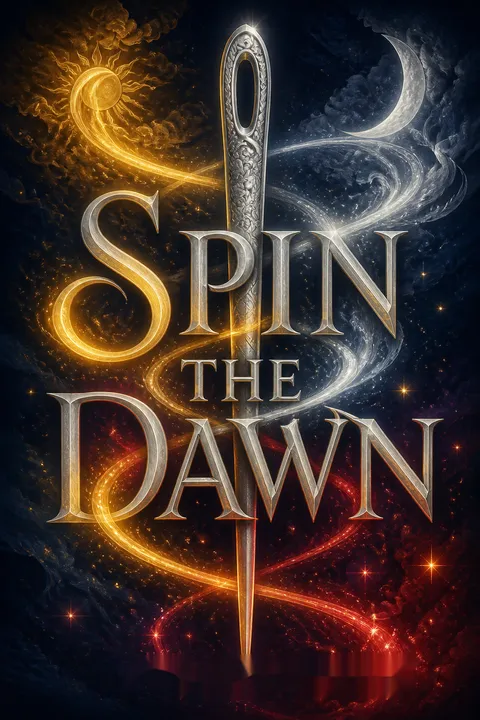


Plot Summary
Prologue
Maia tells her father, Kalsang, and her surviving brother, Keton, about a journey involving impossible gowns, ghosts, a demon, and the emperor’s enchantment. Keton believes her, but her father sees the grief she is trying to hide.
Drums are drawing nearer, and Maia must decide whether to return to the palace. Doing so may cost her family, her face, and her name. She would surrender all of them, she admits, to save the boy she loves.
The frame makes storytelling an act of concealment as well as confession. Maia can recount marvels to her family, yet she withholds the truth most likely to frighten them: her own fate remains unsettled. The approaching drums give the tale a deadline, turning memory into preparation for a choice she has not yet made. Her willingness to lose her name anticipates the novel’s central tension: how much of the self can be sacrificed for love before sacrifice becomes another form of erasure.
The Shop by the Sea
Maia grows up learning to tailor beside her father, Kalsang, while her brothers each imagine lives beyond the shop. After their mother dies, grief weakens Kalsang, and the family moves to Port Kamalan. The Five Winters’ War takes Finlei and Sendo into the army; Finlei is killed, and Sendo dies just before the truce.
Keton later returns unable to walk, while Maia keeps the failing shop alive by sewing for fishermen and soldiers. The baker’s son, Calu, presses her to marry him, offering security in exchange for abandoning her work. Then an imperial official arrives: Emperor Khanujin requires Kalsang at court to compete for the vacant imperial tailor position. Kalsang is too frail to go, and Maia sees a chance to save them.
The war does not simply remove Maia’s brothers; it rearranges the household until she performs the work of several people without gaining their social authority. Sewing becomes both livelihood and a way to preserve family continuity. Calu’s offer exposes the narrow bargain available to women: material safety in exchange for surrendering vocation. The imperial summons converts Maia’s private competence into a public possibility, but only by demanding that she enter a world whose rules deny her the right to compete.
Keton’s Borrowed Name
To answer the summons, Maia cuts her hair, borrows Keton’s clothes, binds her chest, and leaves home disguised as her brother. Kalsang recognizes what she intends but gives her his grandmother’s old scissors before she departs.
At the Summer Palace, Maia discovers that eleven established tailors are competing for the same lifetime post, and that their work will be judged by Lady Sarnai, the shansen’s daughter. The first task is a silk shawl.
When another tailor’s tea ruins Maia’s design, the scissors awaken and restore the fabric, completing intricate embroidery beyond the time she has. Lady Sarnai praises the result but dislikes its yellow ground. Maia survives the round anyway, while the unexplained magic leaves her unsure whether the victory belongs to her.
Maia’s disguise is not a rejection of femininity so much as a practical response to institutional exclusion. The scissors complicate her pride: they help reveal what her hands can make, yet threaten to replace the years of learning that give the work meaning. Her first success is therefore emotionally unstable. The palace rewards an achievement it cannot properly recognize, while Maia herself must decide whether borrowed power diminishes or extends her craft.
Glass Against Silk
Maia refuses to rely on the scissors for the next task, dyeing thread with stolen kitchen spices and building slippers from shattered blue glass. Lady Sarnai keeps her in the competition, though Master Yindi wins again.
The Lord Enchanter, Edan, has already noticed Maia’s inconsistent limp and, in private, identifies her as a girl; he promises not to expose her and urges her to use the enchanted scissors. Maia resists his help, wary of both magic and his teasing. A kitchen maid, Ammi, becomes her first friendly connection at court.
Meanwhile, Emperor Khanujin’s presence fills Maia with a strange, compelling admiration. She learns that Sarnai distrusts magic and treats the trial as a way to frustrate her impending marriage, making Maia’s disguise and the scissors still more dangerous.
This stage turns concealment into a relationship rather than a solitary trick. Edan knows the truth but chooses discretion, giving Maia an ally who can also threaten her autonomy. Her refusal to use magic is partly ethical, partly a defense of earned identity: she wants proof that her skill is hers. Meanwhile, the emperor’s unnaturally persuasive presence hints that power can shape desire as well as events. Ammi’s ordinary kindness offers a counterweight to courtly surveillance.
A Hall in Flames
For the next challenge, the tailors must make Lady Sarnai a jacket from paper. Maia designs a garment joining A’landan and western styles, while Sarnai privately asks her to learn Edan’s secrets. Maia tells Edan about the request rather than betraying him. That night, fire engulfs the work hall. Maia rushes inside to save her own jacket and those belonging to Longhai and Yindi, but the exit is trapped.
She escapes through a window and finds Norbu waiting outside. He pins her down and crushes her hand with an iron press. Edan heals the injury, and Longhai confirms that Norbu’s clothes smelled of smoke. He also suspects Norbu poisoned the former imperial tailor, Master Huan. Longhai withdraws, but Maia stays to face Norbu.
The fire makes the competition’s hidden economy of coercion visible. Norbu does not merely outsew his rivals; he attacks their capacity to work and then uses the confusion to control the story of what happened. Maia’s rescue of other tailors’ garments distinguishes her from the contest’s prevailing logic, even when that generosity costs her. Edan’s healing creates intimacy, but it also exposes the unequal risks Maia faces when she cannot openly defend herself.
The Name Beneath the Binding
At the next judging, Norbu’s elaborate paper gown defeats Maia’s plainer design until she splashes tea over it and reveals that his finery is an illusion. Edan confirms the fraud, but Lady Sarnai still favors Norbu. Norbu then tears open Maia’s tunic and exposes her disguise. Sarnai orders her punished, and the guards lash her before Edan carries her away and treats her wounds.
Emperor Khanujin visits the dungeon, confirms her identity, and acknowledges her rare ability with the scissors. Rather than execute her, he orders Edan to make the court forget she is a girl. Maia must resume Keton’s identity, serve Sarnai, and complete whatever she demands. If Maia fails, the emperor threatens Kalsang and Keton as well.
The exposure collapses the distinction between professional failure and bodily danger: Maia is punished not only for deception but for claiming a role reserved for men. Khanujin’s mercy is not freedom. He converts her talent into leverage over the family she hoped to protect. The court’s collective forgetting will allow Maia to continue, but at the cost of making her identity dependent on a powerful man’s spell. Her success now belongs to a coercive contract.
Three Impossible Gowns
Named imperial tailor under Keton’s identity, Maia learns that Sarnai wants three dresses from a legend: one made with the sun’s laughter, one with the moon’s tears, and one with the stars’ blood.
The gowns must be finished before the red sun and the shansen’s arrival, or the emperor will punish Maia’s family. Edan explains that the materials lie in distant places and agrees to accompany her, despite Khanujin’s reluctance to let him leave.
Maia packs her tools and begins the journey with Edan, first crossing the Spice Road toward the Halakmarat Desert. She is still skeptical that the dresses can be made, but the deadline leaves no room to refuse. The court’s tailoring contest has become a perilous expedition on which political peace depends.
Sarnai’s demand fuses craft with diplomacy: a wedding garment becomes a test of whether postwar peace can survive its own contradictions. Maia has moved from seeking recognition to carrying responsibility for a state she did not help govern. Edan’s decision to travel with her signals a shift from observer to participant, though his restricted freedom foreshadows that companionship itself has a cost. The quest externalizes the novel’s question of what artistry can do when rulers turn it into an instrument.
Sunlight in a Walnut
The road west forces Maia to learn horses, then camels, while she and Edan bargain for supplies. In the Samarand Passage, she wins leather from a merchant at chess, and spots Norbu among Balardan men after hearing that Khanujin has fallen ill.
Deep in the desert, Edan finds a golden wheel spider whose fireproof web can be spun into thread. Maia gathers it with her scissors and knits protective gloves. He then guides her to the abandoned Temple of the Sun, where a mirror concentrates sunlight so fiercely that unprotected skin burns.
Maia follows the bright passages, climbs above the mirror, and cracks open a walnut at noon. The captured light heats the shell. She leaves the temple scorched and exhausted, but with the first material secured.
The desert tests the limits of Maia’s familiar competence. She cannot stitch her way out of heat or thirst; she must accept instruction, prepare tools, and endure bodily vulnerability. Yet the quest still depends on her tailor’s habits of observation and precision. The walnut turns an enormous celestial force into something portable, suggesting that craft does not conquer nature so much as create a careful vessel for what would otherwise destroy its maker.
The Oath and the Mountain
As they approach the Mountains of the Moon, Maia discovers that Edan becomes a hawk at night. He explains that a golden cuff binds him to Emperor Khanujin through an oath; distance weakens his magic and eventually traps him in bird form. In the same region, Vachir leads mercenaries against them. Edan’s magic and a storm help scatter the attackers, but the effort leaves him depleted, and Maia must escape toward Rainmaker’s Peak.
She climbs using enchanted shoes she has made, choosing each foothold through snow and ice. At the summit, she finds a hidden pool beneath the rock and dives into its freezing depths. A current carries her to beams of moonlight, which she ties, cuts, and seals inside a second walnut before reaching the surface.
Edan’s explanation reframes his apparent independence as a carefully managed captivity. His power is real, but its terms are controlled by an object held by another person. Maia’s ascent mirrors this discovery: progress depends on choosing among dangerous options without certainty. Her work with the moonlight succeeds only when she stops forcing her way forward and lets the current carry her, a contrast to the self-reliance that has sustained her since childhood.
A Carpet Toward Lapzur
After Maia and Edan survive the mountain, their guarded partnership becomes openly romantic, though Edan warns that his oath leaves their future uncertain. Maia accepts his courtship and finishes weaving a carpet meant to fly them across Lake Paduan. Edan tells her that the Forgotten Isles hold the final material and that ghosts there can steal memories, while demons may guard the tower.
Their carpet lifts above the lake, but violent winds tear it and throw them onto a dark island. As they enter the ruined city, the dead call Maia by her family’s voices, offering the home she longs for. Edan holds her hand and keeps her walking toward the Thief’s Tower. At its gate, he gives her the final walnut and tells her to collect the falling stars.
The romance arrives not as an escape from danger but as an added stake within it. Maia now has someone to lose, which intensifies rather than softens her agency. Lapzur’s ghosts exploit precisely what has kept her alive: memory, family attachment, and the desire to restore what war removed. Edan’s hand functions as practical support, not a magical solution. Their bond helps Maia resist the temptation, but she must still make the climb alone.
The Star Thief’s Tower
Inside the tower, the island reshapes itself into Maia’s childhood home. She finds her mother and brothers apparently alive, but a familiar brother’s face becomes Bandur, a demon and former enchanter who guards Lapzur. Bandur knows Maia’s grief and offers to free Edan if she returns his amulet.
As the stars fall into the well, Maia refuses the bargain, though the walnut containing them slips from her grasp. Bandur gives her a vial, and she gathers the star-blood before he catches her and marks her with his touch.
Maia drives her enchanted scissors into him, escapes through the ghost-filled tower, and repairs the torn flying carpet. She blinds the pursuing ghosts with the stored sunlight and flees the island, carrying the vial but unaware that Bandur’s mark has followed her.
Bandur’s trap works by making grief feel like evidence. The false family is convincing because it answers a need Maia has never been able to satisfy through effort or skill. Her refusal is therefore not a rejection of love but recognition that love cannot be restored by surrendering another person. The stolen sunlight becomes a defense against nostalgia weaponized as captivity. Yet escape is not the same as safety: the mark preserves the cost of her encounter beyond the island.
Edan’s Price
On the journey back, Bandur’s forces attack Maia and Edan. Maia’s fever from the demon’s mark leaves her weak, while Edan has little magic left. When Bandur appears, he confirms that Maia is marked and demands that Edan replace him as guardian of Lapzur.
Edan accepts, promising to return after ensuring Maia reaches the palace and peace is secured. At a monastery on the way, Maia and Edan keep their distance, though the elderly monk Ci’an recognizes their care for one another.
He tells Maia that the enchanted scissors belong to a legend about the tailor who made Amana’s dresses, linking her family to the goddess’s gift. Maia asks Amana to spare Edan, but receives no answer. She and Edan continue toward the Autumn Palace with the deadline closing in.
Edan’s bargain repeats the structure that has governed his life: another powerful being sets terms, and he offers his freedom to protect someone else. Maia’s anger arises because his sacrifice denies her the right to choose her own risks. Ci’an’s account of the scissors gives her a different inheritance, one rooted in making rather than mastery. The monastery offers no easy divine intervention, but it clarifies that Maia’s craft may carry a sacred history she has not yet understood.
The Dresses Take Shape
At the Autumn Palace, Maia shows Sarnai the unfinished gowns. Sarnai is shaken by their beauty but insists that Maia should never have returned. Maia shuts herself away to complete them, spinning sunlight and weaving moonlight into thread with her scissors. On the night before the red sun, she paints the last gown with the blood of stars.
Exhausted and afraid of losing Edan, Maia puts on the starry dress and goes to the Great Temple. The goddess Amana appears and warns that the dresses hold power too great for the mortal world. She offers Maia a wish, while making clear that it will carry consequences. Maia asks for Edan to be released from Khanujin’s oath, choosing his freedom over a wish for herself or her family.
Maia’s final act of making is also an act of interpretation. She has gathered the materials, but must decide what the finished garments are for and what their power should change. Her request for Edan is generous, yet not uncomplicated: she has no way to know what the wish will cost, and her own desires remain entangled with grief and fear. Amana’s warning resists the fantasy that beautiful work can produce consequence-free miracles.
The Star Dress Opens
At the red-sun presentation, Maia brings all three gowns to Sarnai, but the star dress appears dark and ordinary. Lord Xina calls it an insult, and Khanujin orders Maia to put it on. He then reveals that the imperial tailor is Kalsang’s daughter, not Keton. Maia changes behind a screen and uses her scissors to fasten the dress. Its light floods the chamber, transforming her into a radiant figure.
Khanujin tries to command her, but Maia directs the dress’s power toward Edan. As they clasp hands, the golden cuff on his wrist disintegrates. The court collapses amid the force of the display, and Khanujin publicly recognizes Maia’s success. Edan is free of the emperor’s oath, though neither understands what the wish has done to Maia.
The public revelation reverses the logic of Maia’s disguise. The court sees her as a woman only after her work has made her impossible to dismiss. Yet the spectacle risks replacing one imposed identity with another, as the emperor presents her as goddesslike. Maia’s decisive act is to redirect that attention toward Edan’s freedom. The cuff’s destruction is both concrete political rupture and intimate release, but the cost remains hidden beneath the dazzling image of triumph.
A Freedom with Teeth
Edan realizes Maia has freed him and fears Bandur will now pursue her. Maia tells him that the curse is gone, hiding the truth that Bandur’s mark has transferred to her. Edan leaves the palace to seek a way to protect her, while Maia stays behind to avoid endangering her family.
Bandur appears in her mirror and reveals that the broken oath has begun turning her into a demon. He threatens to erase her memories and identity, then disappears. Maia remembers Edan’s fourth walnut, meant to bring happiness to her family, and takes a carpet home to Port Kamalan.
She visits Kalsang and Keton, but cannot tell them the full danger. The homecoming gives her a brief chance to see them together before she returns toward the palace and the approaching drums.
The apparent resolution divides freedom unevenly. Edan escapes the oath that governed him, while Maia inherits a danger she conceals to spare him and her family. Her lie is an act of protection, but it also isolates her at the moment she most needs help. Returning home briefly restores ordinary attachments without undoing loss. The closing movement refuses a clean victory: Maia has changed the terms of one captivity, yet another is beginning to claim her.
Three Steps Home
At home, Maia finds Kalsang sewing again and Keton struggling to move with a cane. Keton manages three steps, a modest gain that matters more than the impossible recovery Maia once wanted for him. She has brought a walnut containing Edan’s restorative magic, but when she sees her father laugh and her brother stand, she cannot bring herself to put it in their tea.
Instead, she pours its contents into a bamboo plant, choosing their real, hard-won happiness over a spell. Maia leaves them asleep and rides the carpet back toward the palace. In the shop window, her reflection’s eyes seem red, a warning that Bandur’s threat remains. Her family’s reunion is precious, but it is not an ending; Maia returns to face what she has chosen.
Keton’s three steps provide a deliberately human scale of recovery. His progress comes through repeated effort, not a supernatural reversal, allowing Maia to recognize the difference between hope and control. Refusing the walnut means refusing to anesthetize her family’s pain, even when the magic might offer comfort. She accepts imperfect happiness as something worth protecting. The return to the palace then connects domestic care to public danger: Maia cannot preserve one world by pretending the other no longer exists.
Analysis
Spin the Dawn treats craft not as decorative talent but as a form of practical intelligence. Maia reads color, texture, fit, and material with the precision other characters apply to maps or battle plans. That intelligence becomes a way into public life, but it does not magically dissolve the institutions that exclude her. She must disguise herself, accept coercive terms, and repeatedly prove work that male competitors are presumed capable of making.
The novel’s recurring question is whether magic invalidates labor. Maia initially fears the scissors make her victories false, yet the story gradually distinguishes between magic that amplifies trained judgment and magic that substitutes illusion for substance. Norbu’s enchanted paint creates temporary appearances; Maia’s scissors answer the demands of materials she has studied and handled. The difference is ethical as well as technical. Her craft remains hers because she supplies the design, discernment, and courage that the magic cannot provide on its own.
Power is consistently bound to obligation. Khanujin’s authority depends on Edan, whose service is secured by an amulet; Bandur’s existence is shaped by a broken oath; Maia’s wishes carry consequences she cannot fully foresee. These arrangements challenge the fantasy of power as uncomplicated freedom. Even a benevolent intention can become coercive when one person decides what another should sacrifice. Edan’s offer to trade his future for Maia’s safety repeats the very logic that has constrained him, and Maia’s love does not prevent her from objecting to that choice.
The ending refuses a neat restoration. Keton takes only a few steps, Kalsang’s laughter returns, and Maia leaves without using the magic that might ease their pain. Her choice values imperfect, effortful happiness over an enchanted version of recovery. She has gained skill, recognition, and love, yet remains threatened by the cost of her own wish. The novel’s strongest claim is that agency does not mean escaping consequence. It means making a choice with open eyes, then continuing to claim one’s name and craft afterward.
Review Summary
People Also Read



Characters
Maia Tamarin
The defiant imperial tailorMaia is a gifted tailor whose patience with fabric contrasts with her inexperience at deception and danger. The daughter of Kalsang, she has spent years holding her family’s household together while watching men claim opportunities she is equally capable of earning. Her choice to disguise herself as Keton is driven by both necessity and ambition: she wants to feed her family, but she also wants her work judged on its merit. Maia is skeptical of power she cannot understand, yet curious enough to learn its rules. Her observant eye, practical imagination, and fierce loyalty make her more than a prodigy with a needle. She is learning that devotion can demand courage without requiring self-erasure.
Edan
The bound Lord EnchanterEdan serves Emperor Khanujin as an enchanter, masking deep weariness with wit, provocation, and a cultivated air of indifference. He watches the palace’s people closely and is especially intrigued by Maia’s talent and refusal to accept help on easy terms. His magic makes him formidable, but his obligations sharply limit his freedom. Edan reveals himself gradually: a strategist, an attentive protector, and a person carrying losses he rarely discusses. His teasing gives Maia room to challenge him, while his evasions test her trust. Beneath his confidence is a longing to choose his own life, a desire that becomes harder to separate from his growing care for her.
Lady Sarnai
The unwilling royal brideSarnai is the shansen’s daughter, raised to hunt, fight, and expect a measure of independence. Her marriage to Emperor Khanujin is meant to secure peace, but she resents being treated as the instrument of her father’s and the emperor’s agreement. She uses the tailoring trial to test the craftsmen and to exert what little control she has over the process. Her severity can become cruel, especially when she senses weakness, yet it is bound up with grief, distrust, and anger at promises broken by men. Maia’s disguise unsettles her because it exposes how sharply talent and opportunity are divided by gender, even as Sarnai continues to wield the authority available to her.
Emperor Khanujin
The peace-seeking rulerKhanujin is a young emperor trying to reunite a country exhausted by civil war. He values ceremony and imperial authority, but his dependence on the Lord Enchanter complicates his public image and private judgment. He sees Maia’s talent as rare and useful, then binds her future to the survival of his political settlement. His conduct can be gracious or threatening, often within the same encounter. Khanujin’s central motive is stability, though the means he accepts reveal how easily a ruler can confuse preserving the realm with possessing the people who serve it. He is neither simply a heroic sovereign nor a cartoon tyrant; his need for control grows from genuine political vulnerability.
Keton Tamarin
The wounded younger brotherKeton is Maia’s closest sibling in age, known before the war for jokes, pranks, and carelessness. He leaves home to find their brother and returns physically injured and emotionally altered. His relationship with Maia mixes affection with a fear that he has failed the family. He teaches her how to pass as a boy, offering practical advice beneath his worry. Keton’s humor does not erase his vulnerability; it is one of the ways he tries to keep a place for himself in a household reshaped by grief.
Kalsang Tamarin
Maia’s grieving fatherKalsang is a respected tailor whose skill and authority have been damaged by bereavement and illness. He loves Maia’s ability, even when the customs around him make it difficult to recognize her openly as a master. His gift of his grandmother’s scissors and his willingness to let Maia pursue the imperial summons show a tenderness that survives his grief. Kalsang is also a perceptive father: he often understands Maia’s feelings before she is ready to name them.
Liling Tamarin
Maia’s nurturing motherLiling teaches Maia to notice color, light, and the character of materials, helping turn sewing into an art rather than a trade alone. She believes her daughter’s ambition is a gift, and encourages her to imagine a life beyond the family shop. Her warmth shapes Maia’s sense of home and her understanding of craft. Liling’s presence in Maia’s memories remains a source of comfort and longing.
Finlei Tamarin
The bold eldest brotherFinlei is the eldest sibling, daring and restless, with little patience for the family shop. He urges Maia to look beyond the life others have planned for her and teaches her basic fighting skills. His protectiveness is often disguised as teasing, but he sees her potential before she can fully claim it. Finlei represents the adventurous possibility Maia has long postponed.
Sendo Tamarin
The family’s sea poetSendo is Maia’s thoughtful brother, a teller of stories who teaches her to distinguish the many colors hidden in the sea. His imagination gives her a language for beauty and a longing for places beyond the horizon. He dreams of sailing rather than tailoring, and his gentleness makes him a confidant to Maia. His stories help shape the myths she later has to navigate in reality.
Norbu
The ruthless master tailorNorbu is a wealthy, influential tailor whose polished manners conceal a ruthless appetite for advantage. He understands that reputation and access matter as much as the needle, and he uses both to keep himself ahead in the imperial trial. His status makes other competitors cautious around him. Norbu’s confidence depends on controlling what others can prove, which makes Maia’s independent skill a threat to more than his standing.
Wing Longhai
The generous veteran tailorLonghai is an experienced tailor with a reputation for fine robes and an easy warmth that sets him apart from the more hostile competitors. He welcomes Maia when others mock her, shares practical wisdom, and recognizes that craft should invite learning rather than sabotage. His fondness for drink and his reluctance to risk his reputation reveal the limits of his courage, but his kindness gives Maia a rare foothold in the palace.
Ammi
Maia’s kitchen confidanteAmmi is a young palace kitchen maid whose friendliness gives Maia an ordinary human connection amid a competition built on suspicion. She shares scraps of information, helps Maia acquire ingredients, and offers advice about courtly tastes. Ammi’s openness is sometimes flirtatious because she believes Maia is a young man, but her deeper quality is generosity. She sees promise in Maia before the palace formally recognizes it.
Minister Lorsa
The emperor’s exacting officialLorsa manages the imperial tailor trial and enforces the court’s hierarchy with clipped authority. He treats the summons as an order and the competitors as instruments of imperial need. His disdain for Maia’s humble background reflects the palace’s preference for established status, though he follows the emperor’s decisions closely. Lorsa’s presence makes bureaucratic power tangible in the workroom.
Lord Xina
Sarnai’s formidable companionLord Xina is a warrior trusted by the shansen and a constant presence beside Sarnai. His restraint and watchfulness suggest a personal history with her that court gossip cannot fully explain. He represents the northern power behind Sarnai’s arrival, while his conduct reveals how much affection and duty can conflict in a political marriage.
Bandur
The shadowed guardianBandur is an ominous presence connected to Edan’s history and to the dangerous magic of the Forgotten Isles. Patient and perceptive, he understands how personal longing can be turned into leverage. His power is bound to a place and a role, and his history suggests that enchantment can curdle when its obligations are broken. Bandur’s interest in Maia places him at the edge of the story’s conflict between freedom and consequence.
Orksan
The roadwise caravan leaderOrksan travels the Spice Road with his wife, children, and relatives. Practical and hospitable, he offers Maia and Edan food, shelter, and company when they need supplies and rest.
Korin
The caravan’s skilled cookKorin is Orksan’s wife, a capable cook and an observant woman who recognizes Maia’s disguise. She shares sewing knowledge, family stories, and a welcome female companionship on the road.
Ci’an
The monastery’s elderCi’an is a perceptive senior monk who offers Maia and Edan shelter. His experience makes him less fearful of enchantment than the younger monks, and his knowledge of the old traditions helps Maia understand the history of her scissors.
Calu
The persistent baker’s sonCalu is the local baker’s son who assumes Maia should marry him once she reaches marrying age. He offers food and security, but his pressure exposes how easily care can become a demand that a woman abandon her own ambitions.
Plot Devices
The enchanted scissors
Craft becomes magicKalsang gives Maia his grandmother’s scissors before she leaves home. The blades can repair, cut, and embroider beyond ordinary human speed, but their use raises a question Maia cannot avoid: whether magical assistance honors or replaces her trained skill. As the story progresses, the scissors help her create protective tools, gather celestial materials, and finish the legendary dresses. Their connection to the old tale of Amana’s tailor ties Maia’s family craft to the wider magical world.
Keton’s disguise
Access through concealmentBecause the imperial court will not admit a woman to the tailor competition, Maia cuts her hair, binds her chest, and travels under her brother’s name. The disguise opens a door that gendered rules keep closed, but it forces Maia to monitor her voice, posture, body, and relationships. It also makes every encounter dangerous: discovery could cost her life and threaten her family. The identity is both a strategy for claiming work and a continuing pressure on her sense of self.
The three gowns
A quest made of materialsSarnai demands dresses made with the sun’s laughter, the moon’s tears, and the stars’ blood. Each material requires a different physical and emotional trial, taking Maia from the desert temple to the mountain pool and finally to the Forgotten Isles. The garments transform tailoring from a courtly profession into the structure of the adventure. Their completion can affect the political settlement and carries power that no ordinary garment could safely contain.
Edan’s oath and amulet
Power with a priceEdan’s golden cuff marks his binding to the owner of an amulet, Emperor Khanujin. The oath grants him magical power and requires his service, while distance from his master weakens him and forces him into hawk form at night. This device explains Khanujin’s dependence on Edan, the enchanter’s constrained choices, and the dangers of seeking freedom. Its terms make the romance inseparable from questions of consent, service, and what a person may owe another.
Walnuts of light
Celestial power containedEdan uses walnut shells to store sunlight and moonlight, explaining that they can conceal magic as well as hold it. The shells let Maia transport forces too intense for ordinary cloth or glass, and the stored sunlight later becomes a defense against Lapzur’s ghosts. Another walnut carries a restorative mixture intended for Maia’s family. Their different contents make the object a recurring choice between power, comfort, and the consequences of using magic.
The Blood of Stars Series
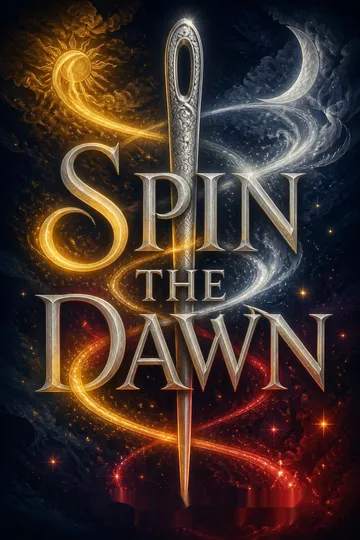

About the Author
Other books by Elizabeth Lim


Download PDF
Download EPUB
.epub digital book format is ideal for reading ebooks on phones, tablets, and e-readers.








