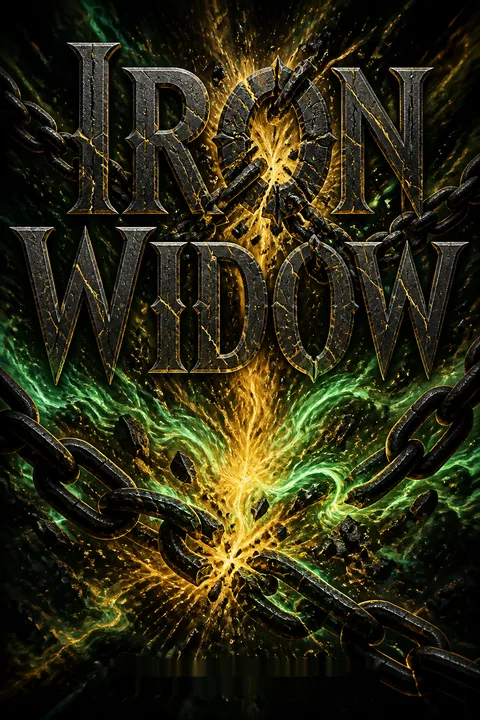


Plot Summary
Prologue
At the Great Wall, pilot Yang Guang commands the Nine-Tailed Fox against a Hundun herd, drawing power from the girl strapped into the Chrysalis with him. He destroys a rare Prince-class enemy and earns the cheers of Huaxia, but the battle drains the concubine-pilot’s mind so completely that her heart will stop when he disconnects.
Yang Guang cannot remember her name. He trusts that her family will be compensated and turns his attention to the next enemy. The prologue establishes the celebrated war hero’s bargain: his victories depend on girls whose deaths are treated as routine.
The opening makes the system’s violence legible before Zetian confronts it. Yang Guang does not need to hate the girl to erase her; he can regard her death as an administrative cost and still imagine himself a protector. His public glory and private indifference are not contradictions but products of the same machinery. The prologue also gives the reader information Zetian does not yet possess, creating dramatic irony around the pilot she intends to approach. Her revenge will be personal, but the book has already shown that the harm extends beyond one cruel man.
Ruyi's Ashes, Yang Guang's Name
Eighteen-year-old Wu Zetian has spent eighty-three days grieving her older sister Ruyi, whose family sent her to serve Prince-Colonel Yang Guang. Ruyi returned only as ashes, and her relatives mourned less for her than for the compensation they had expected. In the mountain forest, Zetian lets her friend Gao Yizhi pluck the heavy brows she has used to make herself less desirable to buyers.
A butterfly with mismatched black-and-white wings prompts them to question the rigid divisions of yin and yang, and Zetian sees in it a life not easily classified or controlled. Then she tells Yizhi that she will enlist under Yang Guang and kill him herself. The sharpened hairpin hidden in her hair is meant to make the plan possible.
The butterfly gives Zetian an image of possibility, but her immediate answer to oppression is still vengeance. That is not a simple contradiction: she has learned that safety and justice are rarely offered to girls like her, so she treats agency as something taken by force. Ruyi’s death has also taught her that family affection can be conditional, tied to money and usefulness. Her plan is therefore both an act of mourning and an attempt to reclaim the power to decide what happens to her body. The hairpin turns an everyday grooming ritual into a concealed instrument of choice.
The Daughter Sent Away
Zetian’s family has bound her feet since childhood, leaving every step painfully unstable, and now expects her enlistment to finance her brother Dalang’s future marriage. Her mother worries more about making her presentable than about the death awaiting her.
On enlistment morning, Yizhi arrives at the family home and offers to marry Zetian and take her to Chang’an. She refuses because a life built under his family’s power would still deny her the justice she wants, and because she will not trade one form of dependence for another.
Before leaving, she kisses him, then boards the army hovercraft. At the Great Wall, testing reveals a spirit pressure of 624, high enough to pilot a Chrysalis if she were male. Instead, she is assigned to Yang Guang’s service as a Consort.
Zetian’s refusal of Yizhi’s offer is not a rejection of love so much as a refusal to let love decide her life for her. She understands that rescue can preserve the structure that made her vulnerable, even when it comes from someone sincere. At the same time, her choice is shaped by a narrow horizon: vengeance is the future she can imagine because it gives her a clear target and a task. The test result sharpens the injustice. The capacity to fight is present in her, yet the institution assigns her body a supporting role and calls its danger an honor.
The Fox Changes Hands
When Yang Guang selects Zetian as his next companion, she reads his charm as a threat and prepares to wait for him to sleep before using her hairpin. A Hundun alarm interrupts them. Yang Guang binds her, seals her mouth, and forces her into the yin seat of the Nine-Tailed Fox. Inside his mind realm, Zetian finds memories of girls he seduced and abused, including evidence that he attacked Ruyi.
When his younger self begs for help, Zetian refuses the comforting illusion, breaks free of his chains, and creates armor and a dagger from her own will. She kills Yang Guang in the mental duel and seizes control of the Fox. In battle, she develops a precise, white-qi weapon, destroys the Hundun herd, and emerges carrying Yang Guang’s corpse.
The battle converts Zetian’s private suspicion into knowledge, but the revelation does not make her choice easy. Yang Guang’s tenderness was part of a repeated method, and the mind realm exposes how intimacy can become camouflage for domination. Zetian survives by refusing the realm’s invitation to comfort its frightened child. That refusal is psychologically costly: she must hold on to the victims’ memories while resisting the impulse to excuse their abuser. Her control of the Fox then gives her a bodily experience unavailable in her human life, a scale and freedom that make the return to her injured feet especially painful.
The Iron Demon Assigned
The army interrogates Zetian, then keeps her alive because her control of the Nine-Tailed Fox may help defend Huaxia. Strategists discover that she remained conscious in Yang Guang’s mind realm and name the possibility of an Iron Widow, a girl able to overpower her male co-pilot.
Rather than give her a unit of her own, they assign her to Li Shimin, the Iron Demon, whose spirit pressure is said to be 10,000 and whose previous female partners have not survived. In the Vermilion Bird, Zetian attacks him inside a burning mind realm of swords and fire. Neither can dominate the other. They remain conscious through the battle, and afterward Li Shimin takes her offered hand. The army records a staggering shared pressure of 18,000.
The army’s response to Zetian’s achievement is containment disguised as opportunity. Her power is valuable, but only if placed beside a man powerful enough to keep it from becoming independent. Li Shimin’s reputation makes him less a partner than a sentence in the eyes of both Zetian and the institution. Their survival unsettles that arrangement without yet replacing it. The handclasp matters because it is their first contact outside violence: neither has won, neither has died, and each must now reckon with the person who stood against them without disappearing.
Yizhi Breaks Into the Cell
After the battle, the army locks Zetian up and presents her to commanders as both a possible weapon and a public danger. She is assigned to share Li Shimin’s cramped quarters, where she learns that he has never had a partner outside battle and that the army keeps him muzzled and chained.
At the cafeteria, pilot Wang Shicong provokes Li Shimin with anti-Rongdi insults and grabs Zetian; Li Shimin beats him and another armored pilot before soldiers subdue him. That night, Xing Tian, Yang Guang’s comrade, sneaks into Zetian’s cell and tries to strangle her.
Yizhi slips into the restricted compound and drives Xing Tian away. He stays with Zetian, confirms that the public has made her a spectacle, and begins pushing the army to let Li Shimin recover from alcohol dependence.
The public’s attention does not protect Zetian; it makes her more exposed. The cafeteria fight briefly lets Li Shimin answer humiliation with force, but it also gives his enemies an excuse to punish him and leaves Zetian vulnerable to retaliation. Yizhi’s return changes the emotional landscape without solving the political one. He offers care, information, and resources, yet his presence also forces Zetian to acknowledge that her decisions affect people who love her. Her survival now depends on alliances as well as defiance, a development she cannot manage simply by becoming harder.
Liquor Becomes a Leash
Yizhi persuades Li Shimin to attempt detox, and the withdrawal nearly kills him. As he convulses and hallucinates, Zetian sees how profoundly the alcohol has damaged his body and mind.
Before he can recover, the Sui-Tang commander An Lushan arrives during another Hundun attack and orders Li Shimin into battle, offering him liquor as bait. Zetian smashes the bottle, and Yizhi, Sima Yi, and Li Shimin’s supporters help the group escape to unused concubine quarters.
The confrontation reveals how the frontier command has been exploiting Li Shimin’s addiction to keep him fighting. Zetian also learns that pilots can be deliberately sent into unwinnable battles, a practice used to sacrifice troublesome or politically inconvenient soldiers to the Hunduns.
An Lushan’s offer turns addiction into a tool of command. Li Shimin’s dependence is real, but the army has learned to exploit it rather than treat it, allowing officials to disguise coercion as the pilot’s own weakness. Zetian’s response is protective without being absolving: she refuses the liquor while continuing to judge the deaths his battles caused. The episode widens her understanding of culpability. Individuals make choices, but institutions can manufacture the conditions in which those choices are most destructive, then use the resulting damage to justify further control.
The Wall Sends Its Message
Zetian seeks support from Dugu Qieluo, Huaxia’s formidable female pilot, but Qieluo mistakes her for a threat to her partner and knocks her down. Ma Xiuying, another Iron Princess, offers practical kindness and reveals how women pilots quietly help one another. Zetian then trains with Li Shimin, discovers she can fly in her Vermilion Bird armor, and begins to build political support through the public’s fascination with her.
Before their qi has fully recovered, An Lushan obtains a decree ordering them to battle. Li Shimin agrees to go rather than let the soldiers muzzle him again, but one soldier shoots Zetian in the back as she tries to escape. The army carries the wounded pair to the Vermilion Bird at gunpoint.
The women Zetian meets refuse to form a simple sisterhood. Qieluo’s suspicion and Xiuying’s compassion reveal different survival strategies, each shaped by its own costs. Zetian’s first flight offers a brief bodily freedom, but the army’s response shows that her new power does not cancel its authority over her. The shot makes the coercion literal: she is not choosing battle when she is injured and transported under guns. Her developing public influence may create leverage, yet it has not protected her from an institution willing to injure the weapon it claims to need.
The Bird Finds Its Shape
Inside the Vermilion Bird, soldiers remain in the cockpit with guns trained on Zetian and Li Shimin. The pair enters battle exhausted and injured, their anger producing another unstable Villainous Form.
Zetian ejects the soldiers, then turns on Xing Tian, who had tried to kill her; she tears the Headless Warrior’s legs away and drains its qi, but stops short of killing the concubine trapped inside. When the strain threatens to consume them, Yizhi reaches the Bird and offers his qi.
Zetian channels it through his hand, joining his Earth and Wood energy to her and Li Shimin’s. Their minds finally synchronize, and the Vermilion Bird becomes a stable Heroic Form. They defeat the Hunduns and salvage valuable husks, but Zetian collapses from her bullet wound.
The stable transformation depends not on romance or obedience, but on a third person’s willing contribution and a moment of restraint. Zetian can overpower the enemy pilot, yet remembers the girl inside the Headless Warrior and refuses to reproduce the very sacrifice she condemns. Yizhi’s qi changes the battle from a contest for control into a collaboration. The resulting form is a practical achievement, but the cost is still bodily: Zetian pays for the institution’s forced deployment with a serious wound. Their success proves possibility, not safety.
Chang'an Buys the Story
During Zetian’s recovery, the army sends her and Li Shimin to Chang’an to negotiate with Gao Qiu, Yizhi’s powerful father and media magnate. Gao Qiu offers to use their fame to influence the Sages and the frontier strategists, provided they become profitable public figures. He brands Zetian a seductive fox spirit and Li Shimin a dangerous romantic hero.
In private, he uses his leverage over Yizhi to force Zetian to strip for a recording, which he keeps as blackmail. Zetian refuses to let the threat make her ashamed, then turns the staged images and public outrage into attention that might keep her alive. The couple’s provocative photographs fuel arguments about whether their power can reclaim the lost Zhou province.
Gao Qiu recognizes that public attention can function as protection, but he also treats intimacy as a marketable resource to be extracted. Zetian’s decision to resist shame is a survival tactic, not consent to the coercion that produced the recording. The manufactured celebrity image is similarly double-edged: it lets her exploit an audience that wants to judge her, while risking the spread of another fantasy about women’s power. The section asks whether a story can be used against the system that sells it, and whether a protagonist can control the meaning of an image once powerful people own its distribution.
The Crown Is Shared
Gao Qiu helps arrange a lavish Match Crowning, and the army finally awards Li Shimin the King of Pilots title it has withheld. He transforms his crown into a many-winged circlet, then gives Zetian its matching half before the cameras and Huaxia’s elite. The ceremony presents them as a destined couple, but neither belongs to the other.
Back in private, Zetian tells Li Shimin that she loves Yizhi and refuses the idea that she must choose only one person. Li Shimin accepts her terms, and she tells him that her affection for him is real too. Their intimacy grows from this honesty rather than from the army’s assumption that physical closeness is a duty of partnership.
The public ceremony borrows the language of ownership, pairing, and destiny, but Zetian and Li Shimin give it a different private meaning. Their bond is not made legitimate by the crown or by the army’s need for a stable pilot pair. It becomes possible because both can name desire without turning it into a claim over the other. Zetian’s love for Yizhi remains part of her life rather than a rival to be erased. That choice challenges not only patriarchal marriage expectations but also the scarcity model through which relationships are often policed.
The Seat Was Rigged
After returning to the Wall, Zetian receives memories from Li Shimin’s former partner Wende and learns the depth of his guilt. She also discovers that An Lushan helped force Li Shimin’s addiction by pouring liquor down his throat in prison. On the night before the counterattack, Zetian, Li Shimin, and Yizhi abduct An Lushan and record his confession under pressure.
He reveals that the yin seat is engineered to dampen girls’ active neural input while allowing their qi to be drained. The system therefore makes girls seem weaker and die more readily, even when they could match or surpass their partners. Zetian and Li Shimin kill An Lushan, keep the recording, and plan to reveal the truth once the battle is won.
This revelation shifts the problem from prejudice to design. The pilot system does not merely reflect a belief that women are weaker; it physically helps produce the outcomes used to defend that belief. Its apparent evidence is circular, maintained by a mechanism hidden from those most harmed by it. Zetian and Li Shimin’s decision to torture An Lushan and kill him is morally disturbing, especially as they prepare to expose institutional violence. The book does not make their retaliation clean. It places the reader inside the dangerous gap between resistance and reproducing the methods of one’s oppressor.
Kunlun Breaks the Partnership
The counterattack advances into Zhou with hundreds of Chrysalises. A nomad asks the army to cure Emperor Qin Zheng, confirming that Huaxia’s legendary ruler may still be alive. In the Kunlun Mountains, a Metal Emperor-class Hundun traps the army in spirit-metal webs and speaks through the pilots’ minds.
Zetian and Li Shimin reach Heroic Form and help destroy it, but the Black Tortoise, piloted by Xiuying and Zhu Yuanzhang, suddenly attacks them. Xiuying tears off the Vermilion Bird’s wing while Zhu Yuanzhang seizes its head.
Li Shimin ejects Zetian from the cockpit and takes sole control, leaving her to catch Yizhi as they fall through the burning valley. The White Tiger reluctantly takes them aboard while the Black Tortoise continues attacking.
The invasion’s danger comes from more than the enemy at the mountain. The army’s alliances remain conditional, and the pilot system has taught even women to protect their own families through obedience to those in power. Xiuying’s betrayal turns Zetian’s earlier compassion into a vulnerability, without making that compassion foolish in itself. The scene also exposes the cost of treating pilots as instruments: commanders have prepared contingencies for abandoning them, and allies can become threats when survival is made scarce. Li Shimin’s choice to eject Zetian is an act of protection that leaves him alone with the machine and its impossible burden.
Zero, Then the Yellow Dragon
Li Shimin’s heart rate falls to zero as he pilots the damaged Vermilion Bird alone; the Black Tortoise crushes its head. Rather than accept his death as the end, Zetian uses qi borrowed from the White Tiger and follows the Zhou nomads into an underground mausoleum. There she finds Qin Zheng alive inside the Yellow Dragon, preserved by Water qi but infected with flowerpox.
Zetian injects him with antiviral medicine, forces him to switch into the yin seat, and takes the yang seat herself. In the mind realm, Li Shimin’s memories help her escape a consuming nightmare before his presence fades. Qin Zheng and Zetian take the Dragon into battle, defeat the Water Emperor, and she exposes the rigged pilot system to the cameras.
Zetian’s decision to enter the yang seat gives material form to the book’s central challenge to gender as destiny. The seats are not natural truths; they are positions in an engineered system, and she makes the forbidden switch to prove it. Yet this victory does not restore what she has lost. Li Shimin’s remembered presence helps her survive, but his death remains a real absence, not a lesson that can make grief useful. The ancient Emperor’s return expands the conflict beyond the Wall and gives Zetian a power capable of changing the state, though it also leaves her dependent on a ruler from a world she barely understands.
Empress Wu Takes Chang'an
After the counterattack succeeds, Zetian confronts Xiuying in the Black Tortoise and destroys the Chrysalis, then flies the Yellow Dragon toward Chang’an. At the Palace of Sages, her family is held as leverage. Her father offers her brother Dalang in place of himself, confirming that the family’s old preference for its son has not changed.
Zetian crushes the palace, killing the people inside, including her family. Gao Qiu then tries to control her with the secret recording and uses frightened girls as a shield. Yizhi kills him with a burst of qi, takes command of his company, and orders its people to submit. Zetian declares herself Empress Wu, but the victory is a violent seizure of power, not a settled new order.
Zetian’s ascent is not a conventional triumph over a single villain. She answers the institutions that treated her as disposable by destroying their center, but the cost includes the people she had recently considered saving. Her father’s choice forces her to see that family ties can remain instruments of control even when she offers material escape. Yizhi’s killing of Gao Qiu completes the collapse of the old patrons, yet it also places wealth and media power in their hands. The ending leaves a moral fracture at the center of victory: Zetian has gained the power to remake the world, but the methods she chooses threaten to repeat its violence.
Epilogue
After returning to the Zhou battlefield, Zetian learns that a mysterious craft has taken pieces of the Vermilion Bird and carried Shimin away. Yizhi contacts her with a more devastating discovery: records recovered from the ruined palace say humanity was brought to this planet, and the Hunduns are its native inhabitants, not alien invaders.
A message from the Heavenly Court threatens Zetian if she reveals the truth or refuses its orders, while offering to restore what she has lost. The attached image shows a living figure resembling Shimin, skeletal and suspended in a medical tank. Zetian’s conquest has not ended the war. It has revealed that the story used to justify it may be false.
The final revelation destabilizes the moral map on which Zetian’s revenge and the counterattack depended. Humanity has built its identity around defending a homeland from invaders, but the evidence reverses that history and gives the Hunduns a voice that can no longer be dismissed as mere battle noise. The Heavenly Court’s offer to restore Shimin makes power personal again: it can exploit grief as efficiently as the army exploited gender. The ending turns victory into a test of whether Zetian will expose another founding lie, even when doing so may cost her the person she most wants returned.
Analysis
Iron Widow turns a familiar heroic structure into a question about who pays for heroism. Chrysalises promise survival against the Hunduns, yet their cockpit design makes girls’ deaths part of the system’s ordinary operation. Zetian’s anger begins with one sister and one pilot, then expands as she learns that the institution manufactures the weakness it claims merely to observe. The revelation about the yin seat gives the book’s gender critique a material mechanism: ideology is not only spoken or believed; it is built into equipment, measurement, and procedure.
The novel also refuses to make resistance morally tidy. Zetian kills, threatens, manipulates publicity, and eventually destroys the political center holding her family. These actions are neither excused by her suffering nor separated from it. The narrative asks what happens when a person denied lawful routes to safety acquires overwhelming force, and whether liberation can be pursued without reproducing domination. Her relationships offer alternatives to ownership: Yizhi’s support and her evolving partnership with Li Shimin depend on negotiation rather than exclusivity or obedience, though their emotional care cannot undo institutional violence.
The final victory remains deliberately unstable. Zetian exposes the army’s deception and takes control of Chang’an, but the epilogue overturns the history behind the war itself. The Hunduns may be defending their native world, while the gods threaten to manipulate Zetian through the possibility of restoring Shimin. Her triumph therefore produces a harder obligation: she must decide whether power means replacing the rulers, or confronting the lies that made their rule possible.
Review Summary
Iron Widow received mixed reviews, with some praising its unique concept, fast-paced action, and feminist themes, while others criticized its writing style, underdeveloped world-building, and lack of nuance. Many readers appreciated the polyamorous relationship and Chinese-inspired setting. The protagonist, Zetian, was polarizing - some found her empowering, while others saw her as inconsistent or problematic. The book's ambitious blend of genres and themes resonated with some readers but fell short for others. Overall, it sparked passionate discussions about feminism, characterization, and storytelling in YA literature.
People Also Read




Characters
Wu Zetian
The defiant Iron WidowA frontier-born young woman with bound feet, a sharp mind, and a refusal to make herself small for other people’s comfort. Zetian begins with a focused need to avenge her sister, but her experiences as a pilot force her to confront how a whole institution turns women’s deaths into ordinary procedure. She distrusts rescue when it threatens to replace one form of control with another, yet gradually learns that accepting help need not mean surrendering agency. Her strength is not moral purity: she can be vindictive, tactical, and frighteningly willing to use power. What distinguishes her is her insistence on choosing what those traits serve.
Li Shimin
The chained Iron DemonHuaxia’s most powerful living pilot, Li Shimin is a Xianbei young man marked by prison, violence, and the official label of family murderer. His fearsome public persona conceals a brilliant student and artist, as well as a person whose guilt has become difficult to separate from addiction and coercion. He knows that girls die in the Vermilion Bird, but knowledge alone has not made him able to stop the system or protect every partner. Around Zetian, he must learn that remorse is not repair and that strength can mean listening, yielding control, and allowing another person to define the terms of closeness.
Gao Yizhi
The steadfast strategistZetian’s childhood friend, Yizhi is the rich, curious son of media magnate Gao Qiu. He gives Zetian access to science and information her village denies her, but his affection can make him overstep, as when he tries to arrange her escape without accepting that she has chosen a different path. He is gentle without being passive, willing to enter dangerous military spaces and challenge powerful men when Zetian is threatened. His loyalty grows into a practical alliance: he brings medical knowledge, money, and qi, while continuing to treat Zetian as a person whose choices are her own.
Ruyi
Zetian's lost sisterZetian’s older sister, whose enlistment and death shape Zetian’s first understanding of the pilot system. Ruyi is remembered through family silences, scattered memories, and the tenderness she shared with her younger sister. Her fate gives Zetian a specific person to mourn, rather than an abstract cause, and her memory continues to challenge Zetian when revenge threatens to become her only purpose.
Yang Guang
The celebrated Prince pilotA popular Prince-class pilot who presents himself as charming and patriotic while treating his concubine-pilots as expendable. His victories help defend Huaxia, and his public image makes him difficult to question. Yang Guang embodies a particular kind of violence: the polished kind that can call itself duty while hiding abuse behind celebrity, compensation, and the language of sacrifice.
Sima Yi
The blunt army coachA senior strategist from Central Command who becomes Zetian and Li Shimin’s coach. Sima Yi is sharp-tongued, impatient with their inability to cooperate, and more committed to their potential than many local commanders are. His military knowledge helps the pair train and survive, but he also repeats assumptions about marriage and gender that Zetian refuses to accept. He represents a flawed ally: capable of opposing a corrupt decision without automatically understanding the people harmed by it.
Zhuge Liang
The cautious chief strategistChief Strategist of the Human Liberation Army, Zhuge Liang is measured where Sima Yi is blunt. He recognizes that Zetian and Li Shimin could alter the balance of the war and tries to preserve their chance to fight. His caution reflects the real stakes of military planning, but his reliance on the Sages’ authority also shows how even sensible leaders can be constrained by a system that values stability over justice.
An Lushan
The frontier commanderThe senior strategist responsible for the Sui-Tang frontier, An Lushan uses the language of public safety to defend coercive decisions. He sees difficult pilots as liabilities and is willing to exploit Li Shimin’s addiction to force him into battle. His authority makes him more than a personal enemy to Zetian: he is a human face for the policies that conceal sacrifice, manipulate fear, and restrict who gets to wield power.
Dugu Qieluo
The formidable Tiger pilotA high-ranking female pilot with unbound feet, a fierce reputation, and a fiercely guarded partnership with Yang Jian. Qieluo refuses to offer Zetian instant solidarity simply because they are both women; her suspicion comes from experience with people who use closeness to threaten what she has built. She is blunt about the danger of appeasing relatives and powerful men. Her independence is formidable, though her own history makes it difficult for her to trust compassion.
Ma Xiuying
The compassionate Iron PrincessAn Iron Princess and yin pilot of the Black Tortoise, Xiuying is a farm girl who never expected to hold high military status. She is warm and observant, offering Zetian help after Qieluo attacks her. As a mother and a pilot, she has learned to navigate a world where family safety can be used to control women. Her kindness is rooted in a practical belief that people sometimes need support before they can change, a belief Zetian both values and questions.
Zhu Yuanzhang
The Black Tortoise pilotXiuying’s partner and the yang pilot of the Black Tortoise, Zhu Yuanzhang is a former warrior monk whose family was lost in a Rongdi raid. His grief feeds deep prejudice against Rongdi people, including those whose histories and tribes differ from the attackers he remembers. He shows how inherited and personal trauma can harden into a belief that makes new violence seem justified.
Yang Jian
Qieluo's steady partnerA Prince-General and the yang pilot of the White Tiger, Yang Jian is known for an unusually stable partnership with Dugu Qieluo. He is calmer in public than his formidable partner and often acts as a counterweight to her suspicion. Their coordination provides Zetian and Li Shimin with a visible example of what trust between pilots can make possible.
Gao Qiu
The media magnateYizhi’s father and the head of a vast media empire, Gao Qiu understands how attention can become influence. He offers Zetian and Li Shimin a route into public life, but treats their reputations and vulnerabilities as material to be managed for profit. His polished manners conceal a transactional view of people, especially women and the servants dependent on him. He is both a potential ally against the army and a reminder that wealth does not make power benevolent.
Qin Zheng
The vanished Emperor pilotThe legendary Emperor-General associated with Huaxia’s unification and the Yellow Dragon Chrysalis. Qin Zheng has been treated as a remote historical figure, remembered through posters, theories, and stories about his extraordinary power. His legend shapes military ambition and public imagination, while the uncertainty surrounding his disappearance leaves a persistent question about how much of Huaxia’s accepted history is actually known.
Xing Tian
Yang Guang's battle comradePilot of the Headless Warrior and a close comrade of Yang Guang, Xing Tian initially appears as part of the army’s heroic order. His loyalty to Yang Guang makes him a threat to Zetian after the Nine-Tailed Fox battle. He is also an example of the camaraderie among male pilots, a bond that the institution protects more readily than the lives of the girls who share their cockpits.
Plot Devices
The yin and yang seats
A rigged partnershipEach Chrysalis cockpit places a girl in the lower yin seat and a boy in the yang seat behind her. The arrangement is presented as a natural expression of gender and as the only way to combine their qi. It becomes the physical structure through which the army controls who pilots, who supplies power, and who is expected to die. The system’s technical bias is concealed until Zetian and Li Shimin force a confession, revealing that the yin seat dampens girls’ active input while drawing on their qi. The arrangement is both literal machinery and a social rule made to look inevitable.
Spirit pressure and qi
Power measured and sharedSpirit pressure measures a person’s capacity to channel qi, the life force that animates the world and powers Chrysalises. Pilots use acupuncture needles in their spines to connect to spirit metal and command a machine from within. Their qi types affect how they transform and fight, while the mind link exposes memories and emotions between partners. The army treats spirit pressure as an objective number, but the story shows how measurements and equipment can reflect institutional bias. The system can enable astonishing cooperation, yet it can also drain one pilot for another’s benefit.
The mind realm
A cockpit's inner battlefieldA pilot link creates a dreamlike landscape shaped by the pilots’ minds. Memories, fears, and emotional defenses can become physical obstacles, and mental dominance affects control of the Chrysalis outside. Zetian’s first mind realm gives her access to evidence about Yang Guang, while her later connection with Li Shimin exposes both his history and her own. These realms turn combat into a psychological contest, but they are not reliable guides to moral truth on their own: a memory can overwhelm, confuse, or tempt a pilot to surrender.
The mismatched butterfly
A crack in fixed categoriesThe butterfly with a yin-marked wing and a yang-marked wing appears during Zetian and Yizhi’s last meeting before enlistment. Its biology gives them a concrete reason to question the belief that sex and gender must fit two fixed categories. The image returns as Zetian examines the pilot system and its assumption that women belong in passive seats. It works less as a prediction than as a small piece of evidence: the world is more varied than the rules imposed upon it, and a visible exception can make a supposed law seem constructed.
The public image
Fame turned into leverageLivestreams, photographs, message boards, and media contracts turn pilots into public figures whose reputations can influence military decisions. Zetian’s killing of Yang Guang makes her notorious, and Gao Qiu teaches her how to use scandal and attention to attract protection and political pressure. The same machinery threatens to reduce her to a seductive character and to spread a distorted version of her partnership with Li Shimin. Celebrity can buy time and access, but it cannot guarantee safety, truthful representation, or control over private images.
FAQ
Synopsis & Basic Details
What is Iron Widow about?
- Revenge fuels a girl: Wu Zetian, a young woman from a patriarchal society, enlists as a concubine-pilot to avenge her sister's death, using her high spirit pressure to challenge the system.
- Unlikely partnership forms: Zetian is paired with the feared Iron Demon, Li Shimin, and they must navigate their mutual distrust and haunted pasts while piloting a powerful Chrysalis.
- Power and societal change: The story explores themes of empowerment, gender roles, and societal transformation as Zetian's actions challenge the status quo and inspire a revolution.
Why should I read Iron Widow?
- Unique blend of genres: It combines elements of mecha, fantasy, and dystopian fiction, offering a fresh and engaging reading experience.
- Complex characters and relationships: The story delves into the psychological complexities of its characters, exploring their motivations, traumas, and evolving relationships.
- Thought-provoking themes: It tackles important social issues such as gender inequality, power dynamics, and the consequences of oppression, prompting readers to question the status quo.
What is the background of Iron Widow?
- Futuristic world inspired by Chinese history: The story is set in a futuristic world with cultural elements drawn from Chinese history, featuring reimagined historical figures in vastly different circumstances.
- Technological advancements: The world is characterized by advanced technology, including Chrysalises (giant war machines) and spirit metal, which are central to the plot.
- Oppressive patriarchal society: The story highlights a society where women are devalued and oppressed, serving as a backdrop for Zetian's rebellion and quest for change.
What are the most memorable quotes in Iron Widow?
- "For eighteen years, my unibrow has saved me from being sold into a painful, terrifying death.": This quote highlights Zetian's initial strategy for survival and her awareness of her societal position.
- "I wouldn't live and suffer for anyone else, but I would die to avenge my sister.": This quote encapsulates Zetian's driving motivation and her willingness to sacrifice herself for revenge.
- "We're all going to die anyway. Don't you wish you could at least go out doing something you've dreamed of doing?": This quote reveals Zetian's desire for agency and purpose, challenging the societal expectations placed upon her.
What writing style, narrative choices, and literary techniques does Xiran Jay Zhao use?
- First-person perspective: The story is told from Zetian's point of view, allowing readers to deeply connect with her thoughts, emotions, and motivations.
- Fast-paced and action-oriented: The narrative is characterized by a quick pace, filled with intense battle scenes and emotional turning points that keep readers engaged.
- Use of foreshadowing and symbolism: Zhao employs subtle foreshadowing and recurring symbols to enhance the story's themes and create a sense of depth and complexity.
Hidden Details & Subtle Connections
What are some minor details that add significant meaning?
- The butterfly with two different wings: This detail foreshadows Zetian's unique nature and her ability to transcend traditional gender roles, symbolizing her dual nature and defiance of categorization.
- The broken bamboo cane: This recurring detail symbolizes Zetian's physical limitations and the societal constraints placed upon her, highlighting her resilience in the face of adversity.
- The names of the Chrysalises: The names of the Chrysalises, such as the Nine-Tailed Fox and the Vermilion Bird, are drawn from Chinese mythology and folklore, adding layers of cultural significance to the story.
What are some subtle foreshadowing and callbacks?
- The mention of the Yellow Dragon: The early mention of The Yellow Dragon and Qin Zheng foreshadows their later importance in the story, hinting at the possibility of a powerful force that could challenge the status quo.
- The description of the concubine-pilot's death: The description of how concubine-pilots die in battle foreshadows Zetian's own struggles with the system and her determination to survive.
- The recurring image of the butterfly chrysalis: This image serves as a callback to the beginning of the story, highlighting Zetian's transformation and her emergence as a powerful force.
What are some unexpected character connections?
- Yizhi's father and the media: The connection between Yizhi's father and the media companies reveals the extent of his family's influence and the power dynamics at play in Huaxia.
- Li Shimin's past and the labor camp: The revelation of Li Shimin's past as a death-row inmate and his experience in a labor camp adds depth to his character and explains his distrust of authority.
- The shared heritage of Li Shimin and Qieluo: The shared Xianbei heritage of Li Shimin and Qieluo creates an unexpected connection between them, highlighting the complex cultural dynamics within Huaxia.
Who are the most significant supporting characters?
- Gao Yizhi: As Zetian's childhood friend, Yizhi provides emotional support and resources, challenging the traditional power dynamics and offering a different perspective on love and loyalty.
- Sima Yi: As a pragmatic strategist, Sima Yi represents the complexities of the military system and the challenges of balancing order with change, often acting as a foil to Zetian's more radical approach.
- Dugu Qieluo: As a powerful female pilot, Qieluo embodies the struggles of women in a patriarchal society, serving as both a rival and a potential ally to Zetian.
Psychological, Emotional, & Relational Analysis
What are some unspoken motivations of the characters?
- Zetian's fear of vulnerability: Zetian's constant need for control and her reluctance to show weakness stem from her fear of being exploited and her desire to protect herself from further pain.
- Shimin's desire for redemption: Shimin's self-destructive behavior and his willingness to sacrifice himself in battle are driven by his deep-seated guilt and his desire to atone for his past actions.
- Yizhi's need to prove himself: Yizhi's unwavering support for Zetian and his willingness to risk everything stem from his desire to prove his worth and his love for her.
What psychological complexities do the characters exhibit?
- Zetian's internal conflict: Zetian struggles with her desire for revenge and her growing sense of responsibility, torn between her personal goals and the needs of her people.
- Shimin's self-loathing and trauma: Shimin's past trauma and his guilt over his family's death lead to self-destructive behavior and a constant struggle with his inner demons.
- Yizhi's internal conflict: Yizhi grapples with his desire to protect Zetian and his awareness of the limitations of his own power, often feeling helpless in the face of her struggles.
What are the major emotional turning points?
- Zetian's decision to enlist: Zetian's decision to enlist as a concubine-pilot marks a turning point in her life, setting her on a path of vengeance and self-discovery.
- The battle in the mind realm: The battle in the mind realm forces Zetian and Shimin to confront their inner demons and form a deeper connection, changing the course of their relationship.
- Shimin's sacrifice: Shimin's decision to pilot the Vermilion Bird alone to save Zetian and Yizhi marks a turning point in his character arc, highlighting his capacity for selflessness and sacrifice.
How do relationship dynamics evolve?
- Zetian and Shimin's initial distrust: Zetian and Shimin's relationship begins with mutual distrust and hostility, but evolves into a complex bond based on shared trauma and mutual respect.
- Zetian and Yizhi's enduring love: Zetian and Yizhi's relationship is characterized by a deep and enduring love, but it is complicated by their different paths and the societal constraints they face.
- The complex dynamic between Zetian, Shimin, and Yizhi: The dynamic between Zetian, Shimin, and Yizhi is a complex interplay of love, loyalty, and shared goals, highlighting the challenges of navigating relationships in a world of power and oppression.
Interpretation & Debate
Which parts of the story remain ambiguous or open-ended?
- The gods' true intentions: The gods' offer to Zetian and their true motivations remain ambiguous, leaving readers to question their role in the world and their relationship with humanity.
- The nature of the Hunduns: The true nature of the Hunduns and their origins remain a mystery, leaving readers to speculate about their motivations and their connection to the planet.
- The future of Huaxia: The ending leaves the future of Huaxia uncertain, with Zetian's rise to power and her plans for change raising questions about the potential for a truly equitable society.
What are some debatable, controversial scenes or moments in Iron Widow?
- Zetian's treatment of Yang Guang: Zetian's decision to use her body to seduce and then kill Yang Guang is a controversial moment, raising questions about the morality of her actions and the nature of revenge.
- The use of concubine-pilots: The use of concubine-pilots as a source of power is a controversial aspect of the story, highlighting the exploitation and dehumanization of women in the pilot system.
- The ending and Zetian's choices: The ending, with Zetian's decision to embrace her power and challenge the gods, is open to interpretation, sparking debate about the nature of heroism and the consequences of ambition.
Iron Widow Ending Explained: How It Ends & What It Means
- Zetian's rise to power: Zetian's decision to take control of The Yellow Dragon and declare herself Empress marks a significant shift in the power dynamics of Huaxia, challenging the established order and setting the stage for a new era.
- The exposure of the pilot system's lies: Zetian's broadcast of the truth about the pilot system's gender bias aims to dismantle the oppressive structures that have long controlled women, inspiring a revolution and a demand for equality.
- The ambiguous future: The ending leaves the future of Huaxia uncertain, with Zetian's choices and the gods' ultimatum raising questions about the nature of power, love, and the potential for a truly equitable society.
Iron Widow Series
About the Author
Other books by Xiran Jay Zhao
Download PDF
Download EPUB
.epub digital book format is ideal for reading ebooks on phones, tablets, and e-readers.








