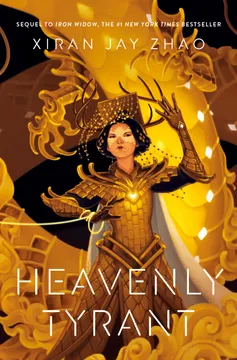


Plot Summary
Prologue
Two centuries before Zetian awakens him, Qin Zheng, Huaxia’s revolutionary emperor, is dying of flowerpox. He buries the Yellow Dragon beneath a mountain and asks his mentor, General Mi Xuan, to freeze him until a cure exists.
Mi channels water through their shared Chrysalis link, and Qin falls into suspended sleep believing she will return. When he wakes, a masked young woman gives him medicine and demands his power. She tells him 221 years have passed. General Mi and the world he knew are gone.
The prologue makes time itself a political wound. Qin does not choose a peaceful retirement; he entrusts his survival to the woman who taught him how to wield power, then wakes in a world that has converted his revolution into legend. His request that Mi return is intimate, but it is also an attempt to preserve control over his future. The thaw reverses that confidence at once: medicine saves his body, while the girl who delivers it forces him to confront the fact that survival has cost him every familiar relationship.
The Gods Set Terms
After helping retake Zhou, Zetian learns from the gods that they can restore what she has lost if she obeys, and destroy it if she exposes their secrets. She flies the Yellow Dragon west to hunt for their court, but Qin Zheng, newly awakened in her mind link, reveals that he once challenged the gods and suspected they needed the war to continue.
He also knows the truth about the Hunduns: they are not the mindless invaders Huaxia teaches its people to fear. Qin urges secrecy, threatening Zetian if she spreads the knowledge. Radio messages then report that Liu Che and Wei Zifu are approaching Chang’an in the Azure Dragon. With Yizhi in danger, Zetian abandons her search and heads back.
The gods’ ultimatum turns private grief into a system of leverage: they offer restoration while making disclosure dangerous. Qin and Zetian share an enemy, but not a method. He treats public belief as a military resource, while she sees truth as the precondition for peace. Their disagreement is not merely idealism against cynicism. Qin fears that revelation will dissolve the only solidarity keeping people alive; Zetian fears that obedience will preserve the machinery that created the war. Her return to Chang’an shows how quickly love and responsibility can redirect a revolutionary impulse.
The Emperor Takes Over
Zetian reaches Mount Zhurong, gathers Qieluo, Yang Jian, and other pilots, then races to Chang’an. The Azure Dragon attacks the ruins of the Palace of Sages, where Liu Che and Wei Zifu refuse her offer to join a new order. Exhausted and losing control of the Yellow Dragon, Zetian begs Qin to intervene.
He divides the giant Chrysalis into a smaller winged fighter, captures the Azure Dragon, and forces the children to surrender. When Zetian confronts him about hiding this ability before she crushed the Palace, Qin admits he wanted to see how far she would go for power. She attacks his spirit form in the mind realm. He tears it apart, and she collapses into a coma.
Qin’s intervention rescues Zetian politically while making her dependence unmistakable. His smaller fighter proves that power is not only a matter of force but also of imagination, and his concealment makes her earlier destruction feel newly irreversible. Zetian’s rage at him is therefore not simple humiliation. She sees that he watched her choose catastrophe without offering a safer alternative. The scene establishes their central danger: each can recognize the other’s capacity, but neither initially trusts that capacity when it is not under their control.
A Prisoner Becomes Empress
Zetian wakes three days later in the Gao estate, now renamed the palace, with a shackle on her wrist and her family dead beneath the Palace of Sages’ ruins. Qin has become emperor, appointed Gao Yizhi his Imperial Secretary, and recast the coup as his own decision. He proposes a political marriage because Zetian publicly named herself empress, then orders surgery to reverse her foot binding and restore her ability to walk.
He promises reforms, including equal pilot-seat calibration, but withholds her wristlet and confines her to recover. Qieluo explains that officials want Zetian executed and that Qin’s defense of her is bound up with his authority. Yizhi has surrendered his family’s fortune to the state to secure his position.
The palace replaces the old cell with a more elegant form of confinement. Qin’s reforms could materially improve Zetian’s life, yet he imposes them without consent, making liberation and domination difficult to separate. His insistence that her position is political also turns her reputation into a shield for his own rule. Meanwhile, Yizhi’s nationalization of his family wealth shows a different survival strategy: he trades inherited power for influence within the new state. Zetian must begin learning that taking the throne is not the same as controlling it.
The Harlot Refuses Silence
Zetian refuses food until Qin returns her armor and lets her into government meetings. During the hunger strike, Liu Che breaks into her room, kills guards, and corners her in the hallway. Qin stops him, breaks one of his fingers, and publicly announces Zetian will be crowned empress. He gives her the Yellow Dragon armor, but she can barely control it.
Training reveals that Qin’s mentor, General Mi, commanded one of several Iron Widows before women pilots were erased from history. At the estate temple, Zetian secretly reunites with Yizhi, who admits his father forced him into the Brotherhood’s criminal network and abused him as a child. He will remain in politics rather than flee, and Zetian leaves without the comfort she hoped for.
The hunger strike is one of Zetian’s first attempts to convert symbolic authority into practical leverage. It works only after violence makes her vulnerability visible to the emperor and his court. The Iron Widows’ erased history gives her a precedent for female command, while Yizhi’s disclosure complicates intimacy with knowledge of the coercion that shaped him. Their parting is not a loss of affection so much as a recognition that they now occupy political roles with incompatible demands. Zetian’s private grief must coexist with the public image Qin is constructing around her.
A Coronation Interrupted
The coronation begins with a staged procession, but the gods interrupt its private preparations by showing Zetian Shimin alive in a fluid-filled tank. The image breaks her composure and triggers her first successful use of Qin’s armor.
At the ceremony, Qin condemns inequality, restores the laborist flag, promises food, housing, education, and women’s rights, then calls for a general strike. As he crowns Zetian, he coughs blood and collapses.
A delayed broadcast hides the collapse from the public, and doctors later identify two infections that leave Qin vulnerable to modern pathogens. Quarantine confines him to a sterile room. Zetian urges him to keep leading through broadcasts and meetings, and Qin agrees to train her through a shared dream link.
The coronation binds three forms of spectacle together: the gods’ coercive image of Shimin, Qin’s revolutionary address, and the concealed medical crisis. Zetian’s power appears first as an involuntary response to grief, not as mastery. Qin’s collapse then exposes the contradiction between a leader presented as invincible and a body that can fail. His quarantine forces both characters to negotiate intimacy through glass and technology. Their dream link becomes at once a training method and a private political space, creating a new dependence even as each tries to preserve independence.
The Strike Takes Shape
In the dream realm, Qin shows Zetian the Heavenly Court as a fast-moving artificial station, and the two begin planning an attack. Meanwhile, Zhuge Liang releases a broadcast claiming Zetian and Sima Yi have deceived Qin. Qin answers with an edited address at the Phoenix Nest stadium. There, Yizhi publicly renounces his Gao family name, takes his mother’s surname, and lets three witnesses punish men accused of exploiting them.
The spectacle rallies the crowd but makes violence part of the new government’s public language. At court, officials argue that Zetian should serve as Qin’s mother of the realm and produce heirs. She instead demands the right to pilot the unused Nine-Tailed Fox, and Qin authorizes a eunuch co-pilot.
The revolution gains force through a deliberate redistribution of visibility. Yizhi exposes the injuries concealed by elite respectability, but his public staging also turns vengeance into a governing tool. Zetian’s choice to pilot the Fox rejects the reproductive role the court offers her, though the compromise still requires the mutilation of male prisoners. The episode makes clear that reversing a hierarchy does not automatically abolish its coercive habits. The crowd’s enthusiasm gives the new order legitimacy, while also tempting its leaders to confuse popular recognition with justice.
The Fox Hears Them
Zetian chooses Di Renjie, a perceptive political prisoner, and Feng Xiaobao as rotating co-pilots for the Nine-Tailed Fox. During her first independent battle on the Han coast, she cannot bring herself to attack the Hunduns on command.
She dives underwater to escape the watching cameras and finds the creatures gathering around her without striking. Their shared emotional presence convinces her they may understand human intent. A Whale Bird arrives to assist, so Zetian returns to the shore and fights beside it, hiding her discovery behind a story of secret tactics.
Qin then expands conscription: girls with high spirit pressure and adults of all genders must serve the war effort. Zetian’s victory has demonstrated female command, but not the voluntary system she hoped to create.
The ocean briefly suspends the war’s familiar script. Away from cameras and strategists, Zetian discovers that the enemy’s emotional life may be more than a reflex, yet the battle resumes as soon as another Chrysalis arrives. Her concealment protects her from Qin’s threat and from a public unprepared for the truth, but it also traps her in complicity. The conscription order shows how a victory for representation can be converted into a demand for more bodies. Equality here is real, but it arrives as equal exposure to danger rather than expanded choice.
The Wall Breaks
As a super-typhoon strikes the southern coast, Hunduns attack beneath the flooded Han watchtower. Zetian and Di Renjie enter the Fox, but the damaged warning system leaves her unprepared. A swarm breaks through the Great Wall while she struggles to hold a Prince-class Hundun away from the breach.
Liang Yuhuan, a newly conscripted Iron Widow, takes the Plum Blossom Deer to plug the opening, allowing Zetian to pursue the Hunduns already inside Huaxia. She finds a child alive beside her dead parents in a ruined village. Yuhuan later tells Zetian that her co-pilot died when she disconnected. The failed defense becomes a political weapon against Zetian and female pilots, while its human cost deepens her doubts about the revolution’s methods.
The battle exposes the gap between symbolic victories and material safety. Zetian has proved that women can pilot, but the state’s urgency has placed inexperienced girls in a system where survival still depends on a co-pilot’s death. The breached wall makes her own failure visible in a way propaganda cannot easily absorb. Her rescue of the child does not undo the deaths or restore trust; it gives her a concrete witness to what military abstraction conceals. The episode forces her to carry both responsibility and grief without pretending they are interchangeable.
Shimin Leaves a Trace
Seeking a way to locate Shimin, Zetian and Yizhi identify the woman who received his donated kidney. Zetian senses a fragment of Shimin’s spirit within her and later visits his former apartment, where his memories reveal both family tenderness and the violence that drove him from home.
She and Yizhi share photographs and grieve together, though their relationship remains constrained by Qin’s surveillance. Zetian then founds the Phoenix Alliance to support women facing poverty, abuse, and exclusion.
Its branches provide supplies, shelters, and protection, while female volunteers organize into the Phoenix Ladies. The Alliance gives Zetian influence outside the palace and a practical legacy beyond battlefield fame, even as she continues training her spiritual sense on Shimin’s trace.
The kidney turns memory into a physical, imperfect form of continuity. Shimin is neither simply gone nor restored; his presence survives through another person’s body, which Zetian chooses to approach without frightening or claiming her. That restraint contrasts with the power politics surrounding her. The Phoenix Alliance similarly translates private suffering into infrastructure: support becomes more than an emblem when it is attached to shelter, supplies, and collective defense. Zetian’s new authority grows through relationships among women, not only through her proximity to Qin or command of a Chrysalis.
A Body Stolen Twice
The gods pressure Qin to produce an heir, and Zetian proposes faking a pregnancy to blunt attacks on her legitimacy. She later discovers that doctors gave her hormone injections and retrieved eggs without her consent, arranging for a surrogate to carry a child conceived with Qin. Yizhi helped organize the procedure, claiming he wanted to spare Zetian the burden of pregnancy.
She confronts him and calls the decision a violation of her body and trust. Yizhi admits he knew she would object. Zetian cannot simply demand that the surrogate end the pregnancy, so she distances herself from Yizhi and turns to Taiping for support. The false public pregnancy remains a political shield, but it now carries a real, unwanted consequence.
The betrayal lands because it repeats the book’s central pattern in intimate form: powerful people decide that they understand a woman’s needs better than she does. Yizhi’s protective motive does not erase the coercion; in fact, it makes the violation harder to categorize as simple cruelty. Zetian recognizes that she might have accepted a difficult compromise if consulted, which makes the secrecy itself decisive. Her inability to control the surrogate’s choices also prevents her from reclaiming agency through retaliation. The episode refuses to treat reproductive outcome as a substitute for consent.
The Alliance Finds Its Voice
After the typhoon, Zetian uses her staged pregnancy to repair her public standing and tours damaged villages with relief supplies. She turns her platform toward women’s needs, founding Alliance branches, distributing contraception and menstrual supplies, and organizing volunteers to protect women from abuse.
When an officer arrives at a branch to retrieve his battered wife and reaches for his gun, Zetian kills him in self-defense; the Alliance responds by building a trained protective network.
In parallel, she and Qin’s intimacy grows through dream training, though their attraction remains entangled with power and distrust. Wan’er and Taiping pass the civil service exams, and Qin appoints Taiping Minister of Finance. Their success gives Zetian allies in government as well as a movement outside it.
Zetian’s public image shifts from dangerous pilot to expectant mother, and she uses that imposed role without accepting its values. The Alliance makes her politics tangible through services and organized protection, especially where the state cannot reliably intervene. Yet the beheading of the abusive officer reveals how quickly protection can become summary punishment. The women around Zetian are not passive beneficiaries; Wan’er and Taiping enter government through competence, while volunteers build collective capacity. Her relationship with Qin offers access and instruction, but the persistent imbalance means intimacy never becomes a guarantee of safety.
The Han Pilots Mutiny
After the authorities arrest Wan’er under the collective punishment system, Zetian confronts Qin and demands changes. Before she can organize a protest, Liu Che, Wei Zifu, and other Han pilots mutiny, seize the Red Cliff Dam, and claim they are restoring Huaxia.
Qin gives Zetian command of the Yellow Dragon, and she takes Di Renjie as co-pilot. She defeats the Azure Dragon and Whale Bird in the air, but the struggle ends with both her co-pilot and Wei Zifu dead in their crashed Chrysalises.
Loyal forces retake the frontier, and Zhuge Liang dies rather than be captured. Zetian’s attempt to post the truth about the Hunduns is intercepted by the gods, who reveal Yizhi secretly faked Qin’s illness with Doctor Hua. Yizhi then attacks Qin with nerve gas and escapes.
The mutiny tests whether Zetian can wield the power she has spent the book trying to acquire. She wins the battle, but the deaths of Di Renjie and Wei Zifu reveal that command does not dissolve the system’s human costs. Her failed disclosure shows that the gods are not merely observing the conflict; they can intervene in its information channels. Yizhi’s deception further unsettles the distinction between ally and adversary. He has protected Qin for reasons neither Zetian nor Qin fully understands, leaving the people closest to the revolution bound together by incomplete knowledge.
Qin Walks Free
Qin wakes after Yizhi’s attack and learns that his supposed lifelong immunity crisis was manufactured under the gods’ orders. He is furious that six months of rule were shaped by a false constraint, while Yizhi, Doctor Hua, and the doctor’s family have fled through the tunnels.
Qin publicly denounces Yizhi and appears in person, ending rumors that he is incapacitated. The government blames Yizhi for the revolution’s harshest policies, then dismantles the Gewei Bu’s abuses and the collective punishment system.
Qin also restores Wan’er and Taiping to public service. Zetian and Qin retain their plan to strike the gods, but the change in their political and personal balance leaves Zetian unsure whether she can trust him with the power they are about to seize.
The revelation strips away the barrier that had both confined Qin and limited his ability to act. What seemed like a medical fact was a political instrument, and the gods shaped the revolution by managing the emperor’s movements. Yizhi’s escape deprives Zetian of an explanation, while the state’s decision to blame him permits a selective retreat from repression without fully accounting for shared responsibility. Qin’s return to public life appears triumphant, but the restored freedom is not neutral: his capacity to command is larger than before, and Zetian’s safety depends increasingly on a relationship she cannot fully trust.
Seven Months to Heaven
With the rebellion suppressed, Zetian and Qin prepare to attack the Heavenly Court before the gods can discover their plan. Taiping calculates the station’s orbit and the launch trajectory; Qin trains Zetian to manipulate spirit metal beyond familiar Chrysalis forms.
Zetian expands the Phoenix Alliance, while Wan’er and Taiping enter the central government and help stabilize supplies. Qin finally abolishes extended punishment and releases prisoners accused only through collective liability.
Yizhi remains a wanted fugitive, and Zetian does not know he has reached the station. The staged pregnancy continues to protect her political position, though she rejects the child as hers. As the strike date approaches, Zetian and Qin agree to leave Huaxia to Qieluo and Yang Jian if they fail to return.
The preparation period turns revolution from a single seizure of power into a question of institutional survival. Zetian invests in networks that can continue without her, while Qin yields some coercive measures when their political costs become undeniable. Their partnership is still strategic, but they now share enough trust to plan for each other’s absence. The false pregnancy and real surrogate child remain unresolved instruments of the gods’ influence. Their decision to launch before the revolution is secure acknowledges an uncomfortable truth: absolute security may be impossible under a system designed to punish any attempt at independence.
The Yellow Dragon Ascends
On the planned night, Taiping drives Zetian and Qin to the Yellow Dragon and gives them her final calculations. They leave their succession instructions with her, then launch diagonally to match the Heavenly Court’s speed.
As the Dragon climbs, gravity and heat overwhelm them; they burn its spirit metal to propel it farther. Zetian follows Shimin’s faint signature through the pain, and the pair finally collide with the enormous ring station. They survive inside a crushed cockpit, sensing thousands of living signatures beyond its walls.
The gods’ domain is not a divine realm but a technologically advanced habitat circling their planet. Qin and Zetian emerge in armor as machines attack, having crossed the boundary that had kept Huaxia’s rulers obedient for generations.
The ascent converts the book’s recurring metaphor of rising into a literal breach of the world’s governing structure. The launch is not a clean triumph: the Yellow Dragon consumes itself, and the pilots nearly dissolve under the physical cost. Zetian’s search for Shimin gives the mission emotional direction, while Taiping’s calculations make it materially possible. Their arrival overturns the distinction between myth and technology without yet making the truth simple. The station is inhabited, and its people are vulnerable enough to fear them. The former subjects have entered the heavens carrying the power their oppressors taught them to worship.
The Gods Are Human
Qin and Zetian fight through drones and mechanical soldiers, then enter a glowing habitat where a family’s photographs and an escaped, oddly colored pet reveal ordinary domestic life. A drone offers them asylum and displays Shimin in a tank; they destroy it instead.
Yizhi arrives in a flying craft and explains that the supposed gods are Melians, citizens of a powerful interplanetary republic who exploit their planet’s spirit metal. He has been living among them, and Helan, a tribute child raised on the station, offers assistance through a political faction opposed to the current government.
Yizhi warns that military transport ships are built from spirit metal and could be piloted. Qin and Zetian follow him, choosing knowledge and leverage over a negotiated retreat.
The revelation demystifies the gods without reducing the harm they caused. Their technology is extraordinary, but their ordinary family photographs expose the moral distance that allowed them to treat Huaxia as a resource. Helan’s appeal to elections and political factions offers a softer route to reform, yet Qin and Zetian distrust promises that leave the extraction system intact. Yizhi’s reappearance is both a practical rescue and a personal injury: he knows the world above, but his earlier betrayals prevent Zetian from treating knowledge as intimacy. The new conflict is no longer mortals against gods, but one society against the institutions profiting from its war.
Shimin Becomes the Enemy
In the station’s central corridor, Qin, Zetian, and Yizhi learn that the Melians profit from selling Hundun husks and that prisoners were transported to the planet as labor and military stock. The Melians send Shimin against them in a mechanical body, using his voice and memories to turn Zetian’s grief into a weapon. He accuses her of abandoning him and attacks with fire blasts.
Zetian recognizes that his cruelty does not match the person she knew, but she cannot stop the fight without risking the others. She severs his arm, then drives a sword through his heart to stop him from destroying their ship. His spirit signature remains faintly present, and a duplicate trace leads her to the shattered Vermilion Bird fragments.
The Melians weaponize intimacy more effectively than their machines: they make Zetian fight a body that carries Shimin’s face, voice, and partial memories. Her recognition that the attacker is not wholly Shimin does not spare her the violence required to stop him. The scene turns rescue into an ethically unstable act, because the person she hopes to save is also an immediate threat. The surviving signature and duplicate trace keep grief from settling into certainty. Zetian leaves the encounter with no resolution, only a fragmentary possibility that the Melians have divided or distorted what remains of him.
A Station for Sale
Zetian finds Shimin’s body among the Vermilion Bird’s scattered remains but cannot restore him. She rejoins Qin and Yizhi, and together they commandeer a spirit-metal transport ship, then seize the much larger Hive Queen by assimilating its hull and killing its pilots through the connection columns.
Helan argues for a new contract with the Melians, promising technology and a better standard of living. Qin and Zetian reject a bargain that would preserve the monopoly, take each other’s hands, and direct the Hive Queen’s fire at the trade station.
The habitat rings break apart. As the station disintegrates, Zetian turns her sword on Qin, who is not dead. She escapes with Yizhi and Helan in a damaged craft, but the attempt to recover Shimin sends them plunging toward the planet.
The station’s destruction is a refusal to substitute improved terms for independence. Helan’s proposal is not empty; it could bring real medical and technical benefits. Zetian and Qin nevertheless see that a kinder contract would leave the Melians with control of the terms and the planet’s labor. Their decision is therefore both liberation and escalation, with consequences they cannot predict. Zetian’s attack on Qin reveals that defeating an external oppressor has not freed her from fear of his power. The failed rescue of Shimin leaves the victory emotionally incomplete and makes their return to the planet a new crisis rather than a homecoming.
The Phoenix Takes Flight
The damaged Stinger Dame loses its connection and ejects its cockpit toward the ocean. Qin reaches the survivors in the Hive Queen, freezes the waves around them, and refuses Zetian’s demand that he kill her.
Before he can act, the Vermilion Bird’s fragments, heated by atmospheric reentry, fuse into a smaller version of the Chrysalis. It rises from the sea and lifts Zetian, Yizhi, and Helan away from Qin. At dawn, the Bird reaches unfamiliar land and forms a winged humanoid from its chest.
Zetian hears a voice from behind its mask recognize her by the intimate name Shimin used. She has not yet learned what happened to him, but the impossible return leaves her alive, separated from Qin, and holding the first clear sign that Shimin may have survived.
The ending refuses both a clean resurrection and a final death. The Bird’s reconstruction suggests that Shimin’s identity may have migrated into the spirit metal, but the voice offers only recognition, not explanation. Zetian’s survival comes through the shared history she and Shimin made together, not through Qin’s command or the Melians’ technology alone. Yet she has also stabbed Qin and left Huaxia’s future exposed to retaliation. The final image gives her a foothold rather than a resolution: she is free of the immediate confrontation, but must now decide what truth, power, and loyalty mean after the old heavens have fallen.
Epilogue
Qin survives, but the sword wound leaves him without a functioning heart. A machine circulates and oxygenates his blood while surgeons search for a transplant. He brings the surviving tribute girls and the captured Melians to Chang’an, announces that the gods were human subjugators, and begins preparing to answer the public.
Still furious at Zetian for stabbing him, he assumes she will return and considers using Wan’er and Taiping to draw her back. His possessiveness hardens into a threat: he intends to find her, even if he must break her legs. The revolution has destroyed the Heavenly Court, but Qin’s belief that he can control Zetian remains intact.
The epilogue refuses to let victory cleanse the relationship at its center. Qin has helped dismantle the system that enslaved Huaxia, yet he responds to Zetian’s escape by imagining coercion as a legitimate way to retrieve her. His wounded body makes him dependent, but his political instincts still convert attachment into leverage. The contrast exposes the limit of liberation defined only by the removal of an external ruler. The station is gone, but its habits of ownership can survive inside the people who fought it. Qin’s survival also leaves the revolutionary future unresolved, since the man who can still command Huaxia has not accepted Zetian’s right to leave.
Analysis
Heavenly Tyrant treats revolution as both necessary and morally hazardous. Zetian’s initial coup is driven by survival and revenge, not a mature program, while Qin brings a coherent political project built from his experience of poverty and class exploitation. Their alliance makes change possible, but it also exposes the dangers of concentrating power in people who believe their ends justify coercion. Qin’s reforms redistribute resources and expand women’s access to education and military command, yet surveillance, executions, collective punishment, and reproductive control reproduce the violence of the order they replace. The narrative does not excuse these measures as the inevitable price of progress. It shows how fear can make them feel efficient, especially when real reactionaries sabotage food and infrastructure.
The gender politics are similarly resistant to easy triumph. Zetian gains authority by becoming an exceptional pilot and empress, but she repeatedly notices that exceptional women cannot represent the choices available to most women. The conscription of girls expands access to command while exposing them to the same deadly system as boys. Her Phoenix Alliance offers a different model: organized support, education, bodily autonomy, and collective defense. Its work does not erase the violence Zetian commits, but it turns power toward resources and relationships rather than symbolism alone.
The revelation that the gods are Melians widens the scale without simplifying the conflict. Divine authority proves to be technological and economic, grounded in a market that profits from the Hundun war. Destroying the station breaks that monopoly but does not guarantee peace, and Zetian’s attack on Qin shows that an external victory cannot settle the intimate question of who has the right to command her. The ending’s unresolved return of Shimin preserves hope without granting closure. Freedom here is not a final condition delivered by a new ruler. It is the ongoing capacity to contest power, tell the truth, and build forms of solidarity that can survive their founders.
Review Summary
Heavenly Tyrant receives polarizing reviews, averaging 3.75/5. Many readers were disappointed by the stark tonal shift from its predecessor, citing heavy-handed political messaging, reduced action, underdeveloped returning characters, and controversial romantic dynamics. Common criticisms include dubious consent in a key relationship, inappropriate sexual content for a YA audience, and excessive political philosophizing. Positive reviews praised the nuanced world-building, Qin Zheng's character complexity, and the bold exploration of revolutionary politics and feminist themes.
Characters
Wu Zetian
Revenge-shaped empressZetian is a village-born pilot whose anger begins in the violence inflicted on her sister and in the foot binding imposed on her own body. She is observant, proud, and quick to act, but her decisions often arrive before she has a plan for their consequences. That impulsiveness gives her the courage to challenge men and institutions that expect her obedience, while also leaving her vulnerable to manipulation by people with more experience in power. Her relationships with Shimin, Yizhi, and Qin are shaped by attraction and genuine attachment, yet she refuses to make love the price of surrender. Zetian’s deepest drive is not simply revenge. She wants the ability to choose her life and to make that choice possible for other women.
Qin Zheng
Revolutionary emperorQin Zheng is the legendary unifier of Huaxia, a working-class child turned emperor whose command of spirit metal makes him an almost unmatched pilot. He believes concentrated power can dismantle the inequalities that ordinary reform preserves, and he thinks in campaigns, institutions, and material resources. His political intelligence is formidable, but so is his need to control the people and information around him. He can recognize how exploitation works while failing to see how easily his own methods reproduce domination. His bond with mentor Mi Xuan shaped his understanding of discipline and loyalty. Zetian attracts him because she resists him, yet he struggles to distinguish respect for her strength from a desire to possess it.
Gao Yizhi
Underworld-born secretaryYizhi is the son of an elite family whose fortune depends on criminal influence, surveillance, and exploitation. Elegant, perceptive, and adept at reading motives, he learned to survive by collecting secrets and concealing his own. His affection for Zetian is real, but so is his conviction that political change may require decisions made without her knowledge. That combination makes him both a source of safety and a danger to her autonomy. Yizhi is drawn to power because he has seen what helplessness permits, yet he wants to redirect the skills he learned in the underworld toward political transformation. His maternal family history and public name connect him to people erased by the household that raised him.
Li Shimin
Zetian’s lost partnerShimin is a brilliant, guarded young man whose life is marked by family violence, prejudice, and repeated confinement. He is a skilled pilot and an attentive partner, often showing care through practical gestures rather than easy declarations. His quietness can look like hostility to people who do not know him, while his loyalty is expressed through the risks he takes for those he loves. Shimin’s relationship with Zetian is built on mutual recognition: each sees the other as more than the role society assigns. He also shares a deep bond with Yizhi, creating a relationship among the three that resists conventional labels. His longing for freedom is inseparable from his tenderness toward others.
Dugu Qieluo
Battle-tested allyQieluo is the strong-willed yīn pilot of the White Tiger and a trusted military ally to Zetian. She is blunt, physically capable, and skeptical of sentiment that could endanger a mission. Her confidence comes partly from surviving a system that values her usefulness while withholding real security. Qieluo can disagree with Zetian without abandoning her, and she helps translate the dangers of military politics into practical terms. Her partnership with Yang Jian gives her a private loyalty beyond rank. As a woman who has already reached power inside the army, she offers Zetian both a model and a warning about the limits of exceptional success.
Shangguan Wan’er
Scholar and organizerWan’er is a palace staffer with a scholar’s education, a keen political mind, and a commitment to labor rights. Her family’s fall from influence did not extinguish her curiosity or her belief that knowledge should be accessible. She teaches Zetian to read political theory and to see the economic arrangements hidden inside ordinary life. Wan’er is cautious around authority, but not timid; she helps organize workers and later supports the Phoenix Alliance. Her friendship with Taiping grows through argument rather than easy agreement. She represents a form of power that does not depend on piloting: literacy, coalition-building, and the ability to explain why a system feels inevitable when it is not.
Gao Taiping
Mathematical strategistTaiping is Yizhi’s sharp-minded sister, a logistics expert accustomed to moving through elite life on her own terms. She dresses across gendered conventions and resists the expectation that marriage should determine her future. Her practical intelligence makes her essential to Zetian’s planning, especially when calculations matter more than force. Taiping initially questions the revolution’s economic assumptions, giving the story an internal critic rather than a simple chorus of support. She is capable of changing her position without losing her skepticism. Her connection with Wan’er turns ideological conflict into personal curiosity, then companionship, showing how political difference can become a basis for intimacy.
Di Renjie
Inmate turned co-pilotDi Renjie is a politically imprisoned young man with unusually high spirit pressure and an exceptional ability to read patterns. His history of protest makes him wary of state authority, including authority exercised in revolutionary language. He agrees to serve as Zetian’s co-pilot only after demanding that she fight for people who cannot speak for themselves. His moral seriousness challenges her tendency to focus first on survival, though he is not naïve about the costs of resistance. Di Renjie’s intelligence is not merely tactical; he notices what officials overlook and asks what their institutions do to the people trapped inside them.
Liang Yuhuan
New Iron WidowYuhuan is a newly conscripted pilot whose remarkable spirit pressure makes her a rare candidate for an independent Chrysalis. She is cheerful, proud, and eager to prove that femininity does not make her weak. Her confidence is not foolishness; she adapts quickly when the battlefield stops resembling training. Yuhuan’s experience forces Zetian to confront the danger of turning young women into symbols before they understand the cost of war. She represents both the possibility of restoring the Iron Widows and the ethical responsibility that comes with recruiting girls into a violent system.
Liu Che
Young Azure Dragon pilotLiu Che is a child pilot whose pride and conviction are shaped by the hierarchical military culture around him. He believes obedience to the old order is a form of righteousness, and he interprets Zetian’s challenge as a threat to Huaxia itself. His courage is real, but it is directed through a narrow worldview that makes violence appear honorable when used against supposed enemies. Liu Che’s partnership with Wei Zifu gives him great power at an age when he has little emotional perspective. He is a reminder that institutions recruit not only bodies but also young people’s ideas of what bravery means.
Wei Zifu
Azure Dragon’s yīn pilotWei Zifu is the young yīn pilot paired with Liu Che in the Azure Dragon. Like other girls trained within Huaxia’s pilot system, she has learned to operate inside rules designed by adults and presented as tradition. Her position gives her considerable military power, but not necessarily the authority to shape the political decisions made around her. Zetian notices her youth and wonders whether she might be reached beyond the loyalties of her partner. Wei Zifu’s role highlights the danger of assuming that a girl’s participation in a violent institution means she freely chose its purposes.
Sima Yi
Imperial counselorSima Yi is a senior strategist who survives the upheaval of the old government and becomes a key intermediary between Qin and the modern state. He is cautious, status-conscious, and skilled at presenting political choices as matters of procedure. His loyalty is divided among the emperor, the governing institutions, and his belief that stability protects ordinary people from chaos. Sima often pushes Zetian toward conventional expectations, especially around marriage and motherhood, even when he considers himself merely practical. His function is not simply opposition: he gives voice to the bureaucratic arguments that make coercive policy sound reasonable.
Zhuge Liang
Rebel strategistZhuge Liang is a respected strategist of the former government and a skilled public communicator. He values continuity and fears that rapid upheaval will ruin the economy and destabilize Huaxia. His warnings resonate because the revolution does produce violence and shortages, even as his defense of the old order obscures its own harms. Zhuge is therefore more persuasive than a simple villain: he can point to real failures while using them to argue against structural change. His rivalry with Sima Yi and his influence among officials give the counterrevolution a recognizable political center.
Helan
Tribute raised aboveHelan is a nonbinary person raised in the interplanetary society above Orichaea after their mother was taken as tribute. They speak Hanyu through a translation device and have access to technology Huaxia cannot yet reproduce. Helan believes political change within Melia can create fairer terms for Zetian’s people, and their assistance is genuine even when it serves a factional purpose. Their assumptions about the benefits of negotiation expose the gap between individual goodwill and institutional power. Helan is both a bridge between societies and evidence that the tribute system has personal histories the Melians prefer to keep abstract.
General Mi Xuan
Qin’s lost mentorMi Xuan was Qin Zheng’s mentor and a commanding female pilot known as a Queen-General. She trained him in spirit metal, guided his development, and remained one of the few people able to speak to him without deference. Her fate reveals how later rulers erased women’s military achievements after Qin disappeared. To Qin, she is a source of discipline and unresolved grief. Her legacy gives Zetian evidence that female command once existed, and that its disappearance was political rather than inevitable.
Feng Xiaobao
Backup co-pilotFeng Xiaobao is a death-row inmate chosen as a second co-pilot for Zetian. He agrees to the arrangement in exchange for release from prison, though the bargain exposes how limited his choices are. His presence allows Zetian to rotate the physical risk of piloting, but it does not remove the system’s coercion. Feng is largely defined by the practical function he serves in a military structure that treats prisoners as available resources.
Kudi Suiye
Wan’er’s motherKudi Suiye is Wan’er’s mother, a Qiang woman who taught her daughter to read and encouraged her intellectual life despite the family’s political disgrace. Her writing and private beliefs place her under scrutiny as the revolution tightens its definition of dissent. She is an important source of Wan’er’s education and a reminder that political conviction can be passed through ordinary acts of care.
Doctor Hua Tuo
Court physicianDoctor Hua Tuo is a medical professor and family acquaintance of the Gaos who treats Qin after his return. He occupies the uneasy position of a physician working under political pressure, where medical knowledge can be bent to serve the powerful. His role connects the body’s real vulnerabilities to the state’s attempts to manage appearances and control risk.
Auntie Wei
Surrogate motherAuntie Wei is a trusted palace staffer and mother of two who is selected to carry a child conceived through the court’s reproductive scheme. She is described as willing and proud, though Zetian is excluded from the decisions that concern her own body and the child’s origins. Her situation complicates the assumption that one woman’s coercion can be repaired by another woman’s consent.
Plot Devices
Chrysalises and spirit metal
Power with a human costChrysalises are giant combat forms made from the spirit metal of Hunduns. Pilots connect through spinal braces and combine their qì, creating formidable machines while exposing both partners to psychic pain and physical risk. The five qì types shape how spirit metal moves, hardens, or attacks, but Qin’s training reveals that pilot assumptions limit what the material can become. The device links warfare to identity: a Chrysalis reflects the pilots’ minds, while its power depends on the bodies placed inside it. Zetian’s learning to reshape armor and command a unit becomes both a military education and a struggle to define herself beyond prescribed roles.
Mind links and dream realms
Training that exposes secretsA spirit-metal connection allows pilots to share a battle link, and, under particular conditions, to enter a dream realm together. Qin uses these spaces to train Zetian in perception, qì, and the construction of Chrysalises. They also expose memories and emotional states that neither character can fully control. The dream realm becomes a private meeting place beyond ordinary surveillance, but not a safe one: Qin can overwhelm Zetian’s senses, and intimacy can blur the distinction between teaching and domination. The device makes psychological access a source of both power and vulnerability.
The Hundun war
A manufactured enemyHuaxia teaches that Hunduns are invading monsters and that Chrysalises defend humanity. The pilots’ emotional contact with them complicates that story, and Qin confirms that the ruling class has long concealed evidence undermining it. The conflict nevertheless structures daily life, military service, gender roles, and the supply of spirit metal. As Zetian’s understanding changes, the war becomes more than a battlefield problem: it is the mechanism by which people are kept divided and resources are extracted. Its truth cannot be revealed safely until the characters understand who profits from the conflict.
Shimin’s spirit signature
A trail through griefPilots can sense the distinctive spiritual presence of another person. Zetian uses that ability to follow traces associated with Shimin, including the spirit pressure carried by a transplanted kidney, the places he knew, and the remnants of his Chrysalis. The signature gives her a way to act on grief rather than merely endure it, but it never guarantees that the person she senses is whole or safe. The repeated distinction between a living presence and a damaged body makes the search both a navigation tool and an ethical uncertainty.
The Heavenly Court
Myth concealing extractionThe Heavenly Court appears in Huaxia’s mythology as the home of gods who demand tribute, including spirit metal and girls. Qin’s old calculations identify it as an artificial orbital station, while the later journey reveals its inhabitants and its role in the interplanetary trade of spirit metal. The device gives the novel a literal destination for political rebellion: the ruling power is physically above the people it controls. The Court’s advanced technology creates both an overwhelming threat and a way to expose the economic interests hidden inside divine authority.
Iron Widow Series
Download PDF
Download EPUB
.epub digital book format is ideal for reading ebooks on phones, tablets, and e-readers.








