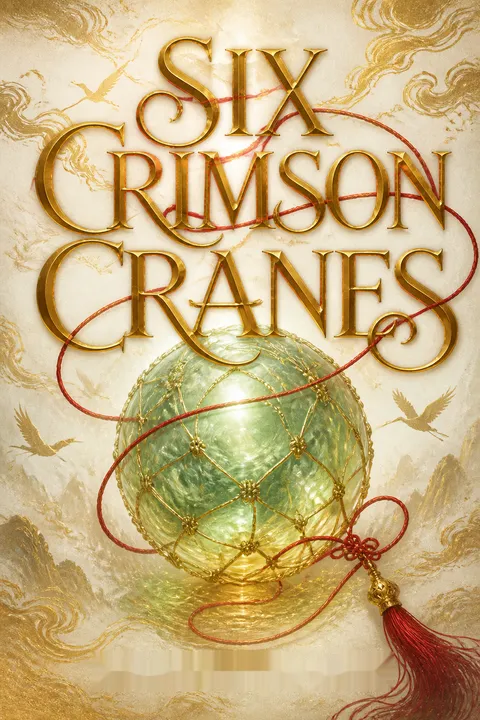


Plot Summary
Kiki Takes Flight
Sixteen-year-old Shiori1 would rather dive into the Sacred Lake than attend her betrothal ceremony. She has secretly brought Kiki, a paper bird her forbidden magic animated, and jumps into the water when Kiki escapes. Her heavy robes drag her under. A small dragon5 appears, takes the bird, and closes his tail around Shiori’s1 neck.
She later wakes alive, with Kiki intact, but cannot explain what happened to her brothers.6 Her father12 punishes her for missing the ceremony by suspending her lessons and ordering her to embroider an apology tapestry. Then her stepmother,2 Raikama,2 tears Kiki apart, leaving Shiori1 grieving and more determined to keep her magic hidden.
Shiori’s first act of rebellion is also an act of attachment: she risks drowning not for escape alone, but to retrieve the companion she made from paper. The contrast between Kiki’s lively flight and the rigid ceremony shows the limits imposed on Shiori as a royal daughter. Raikama’s destruction of the bird turns private grief into a lesson in power: what Shiori creates can be taken from her by someone with greater authority. The dragon’s alarming intervention complicates the idea that forbidden magic is only a threat, though Shiori has no reason yet to trust what she saw.
A Dragon's Bargain
At the Summer Festival, Shiori1 follows a masked food thief and discovers he is Seryu,5 the dragon5 from the lake, visiting in human form. He recognizes her magic and offers to teach her if she returns to their meeting place. Their lessons begin with inspiritation, the art of putting part of oneself into an object.
Shiori1 revives wilted peonies by drawing on a warm memory of cooking with her mother, then learns that emotion shapes magic and can make it dangerous. Seryu5 also reveals that he placed a sliver of his pearl in her heart to keep her alive. Before leaving for the sea, he helps her restore Kiki, who can now speak directly to her.
Seryu gives Shiori a language for an ability she had treated as a spontaneous accident. His teaching links magic to memory and feeling, making her power less like a tool than an expression of her inner life. Restoring Kiki also transforms their bond: the bird is no longer merely an enchanted possession, but a thinking companion who can challenge Shiori’s judgments. Seryu’s pearl introduces a second, more dangerous form of dependence. Shiori welcomes the rescue and the lessons, but does not yet understand what it means to carry a piece of a dragon within her.
The Queen's Hidden Face
After Seryu5 leaves, Shiori1 spies on Raikama2 and follows her through a magical passage beneath the consort’s garden. In a hidden forest, she watches Raikama2 use a pool and Shiori’s1 lost golden sash to conjure images of all seven royal children. Shadow serpents rise, and Raikama’s2 face takes on the features of a scaled creature.
When Shiori1 falls from her hiding place, Raikama2 tries to erase what she witnessed. Shiori1 escapes with a magical ball of thread and tells her brothers6 that their stepmother2 is a demon. Raikama2 arrives before they can act, controls the princes,6 and transforms the six boys into cranes. She places a cursed wooden bowl over Shiori’s1 head and sends her away.
The discovery is real, but Shiori’s immediate interpretation is incomplete. Raikama’s frightening appearance and coercive magic give the princess compelling evidence of danger, while her own fear pushes her to seek help before she can understand the threat. The spell then destroys the family’s usual means of protection: the brothers lose human form, and Shiori loses her voice and identity. The bowl becomes both punishment and barrier, forcing her to navigate danger without the social power her royal name once supplied. Raikama’s actions appear monstrous, but the unexplained precision of the curses leaves a question the story will later reopen.
A Name She Cannot Say
On a northern island, Shiori1 learns the bowl’s rule when six swans die after she calls to the cranes she mistakes for her brothers.6 She cannot speak without endangering them. Kiki survives beside her, but villagers reject the strange, silent girl, and Shiori1 finally tries to steal a fishing boat. Widow Mrs. Dainan23 catches her and forces her to work at the Sparrow Inn.
Shiori1 cooks her mother’s fish soup, earning the fishermen’s respect even as the innkeeper23 mistreats her. When a sentinel3 arrives searching for the missing royal children, Shiori1 finds a fragment of a letter about poison and a plot, but the curse stops her from identifying herself. He gives her money and a dagger before leaving.
The swans make the curse legible through consequence: Shiori’s voice is not merely unavailable, it is dangerous to anyone she loves. Survival demands that she surrender the privileges she once took for granted and learn what her hands can earn. Cooking becomes a form of memory and agency, connecting the isolated girl to her mother while giving the village a reason to keep her. The sentinel’s kindness offers a route home, but the curse blocks the most direct form of recognition. Shiori’s silence therefore operates at once as imposed deprivation and a discipline she must actively maintain.
Six Cranes Return
With the sentinel’s3 coin and dagger, Shiori1 buys a small boat and leaves the island. Kiki asks birds and other animals to watch for six cranes with crimson crowns. On the Baiyun River, Shiori1 finally sees them, but a current sweeps her boat toward a waterfall. Her brothers6 recognize her in time to catch her and carry her to a mountain cave.
At night they regain human form, though the transformation is painful and their time as birds has worn at their memories. They reveal that Raikama’s2 spell makes them cranes by day and that they cannot approach home without being driven away or shot. Their reunion brings relief, but Reiji8 blames Shiori1 for exposing the secret and causing their exile.
The rescue reverses Shiori’s earlier role in the lake: this time the family she sought reaches down for her. Yet reunion does not erase damage. Her brothers’ altered memories and Reiji’s anger show that a shared curse produces different emotional accounts of responsibility. Shiori had imagined finding them as a return to childhood closeness; instead, she meets a family reshaped by months of danger. The cave offers refuge, but not a way home. Their physical ability to change at night gives them hope while emphasizing how little control they have over their own bodies.
The Starstroke Mission
The brothers6 tell Shiori1 that an enchanter named Master Tsring24 believes Raikama’s2 dragon pearl powers the curse. To break it, Shiori1 must weave a starstroke net, made from nettles guarded by the Dragon King on Mount Rayuna. She also learns the final step will require speaking Raikama’s2 true name, risking a brother’s6 life under the bowl’s spell.
With Kiata threatened by a warlord’s ambitions, the siblings cannot delay. Shiori1 climbs the volcanic mountain alone and tears the fiery nettles from the ground with bare hands, storing them in a magical satchel. Seryu5 warns her that the Dragon King will be furious. The mountain erupts, and the Dragon King attacks as the brothers6 carry Shiori1 across the sea.
The mission turns Shiori’s private burden into shared family labor, but her brothers still try to shield her from its cost. Her choice to gather the nettles herself is not uncomplicated heroism: she sees her own pain as more acceptable than theirs and has difficulty imagining another way to protect them. The net’s ingredients unite fate, stars, and demonfire, making the object a literal braid of the forces that have shaped her life. The Dragon King’s attack also shows that magic is not a single moral category. The same supernatural world that offers tools for freedom contains beings who defend their own claims without regard for Shiori’s need.
The Northbound Sentinel
While searching the forest for her stepmother’s2 history, Shiori1 encounters armed men and a dead body. A party led by Hasege17 mistakes her for an enemy spy and captures her, although another sentinel,19 Oriyu,19 argues that she should be released. Takkan’s3 dagger and family emblem offer some protection, but Hasege17 ignores the warning and takes her to Castle Bushian.
Lady Bushian14 questions Shiori,1 recognizes that she cannot speak, and lets her remain through the winter. Her daughter,13 Megari,13 treats the strange girl with immediate curiosity. Zairena,21 a young guest in the fortress, spreads suspicion about Shiori1 and assigns her a freezing cellar among fish barrels instead of a proper servants’ room.
Shiori arrives at Castle Bushian through the very emblem that once seemed incidental: Takkan’s gift now distinguishes her from an alleged spy. Yet protection remains conditional, filtered through other people’s interpretations of her silence and appearance. Lady Bushian’s decision gives her shelter without trust, while Zairena converts uncertainty into social exclusion. Megari’s open welcome offers a different response, one based on curiosity rather than proof. This section places Shiori inside a second household whose loyalties are divided, echoing the palace she lost but giving her new relationships she must learn to navigate.
Soup, Stitch, and Shelter
When assassins attack Castle Bushian during a storm, Takkan3 returns badly wounded. Shiori1 holds pressure on his chest, drives off an attacker with a lantern, and sews his wound closed with a needle and thread from his pack. He survives, but she slips away before Hasege17 can question her. Takkan3 refuses food until Shiori1 secretly replaces the kitchen’s soups with her own fish broth.
Once he eats, he publicly thanks her and makes her his guest, moving her from the cellar into a warm room near Megari.13 He offers her a sketchbook rather than demanding her real name. Shiori1 remains committed to finishing the starstroke net, but the fortress begins to feel less like a temporary refuge.
Shiori’s practical skills, not magic, establish her value in Iro. The wound care and the soup are acts of attention: she notices what Takkan needs and responds without expecting recognition. His gratitude changes her material circumstances, but his refusal to pry matters just as much. He leaves Shiori control over the one thing she cannot safely share, her identity. The warm room creates a fragile counterpoint to the hidden work she continues at night. Her growing attachment to the household complicates the mission she entered it to complete.
Wolves on Rabbit Mountain
As Shiori1 grows closer to Megari13 and Takkan,3 she learns that Takkan3 has searched for the missing princess1 and kept her childhood letters. During an outing to see plum blossoms, a pack of wolves surrounds them. Takkan3 sends Megari13 toward safety, but Shiori1 stays and helps fight. She notices a small wolf wearing a gold cuff and wounds it, forcing the pack to retreat.
Back at the fortress, Takkan3 suspects the wolves are connected to Lord Yuji’s15 enchanter, known as the Wolf.16 The danger unsettles Shiori,1 who has almost laughed freely with Takkan3 and Megari.13 When a small sound escapes her, the bowl’s curse reacts, reminding her that affection cannot make the threat disappear.
The wolf attack makes the war’s supernatural dimension visible without resolving it. Takkan’s attention to the cuff turns observation into evidence, while Shiori’s recognition of the creature’s difference comes from the close, physical risk she accepts. Her choice to stay with Takkan mirrors the loyalty she feels toward her brothers, but it also exposes how little room the curse leaves for ordinary joy. A laugh becomes perilous, so emotional ease is not simply a reward for surviving danger. It is another condition Shiori must learn to negotiate.
Poison in the Kitchen
Sentinel Oriyu19 is found dead with blackened lips, a sign of Four Breaths poison. Shiori1 recognizes the danger and helps Takkan3 identify traces that suggest Oriyu19 inhaled the sleeping poison before receiving a fatal dose. Takkan3 seals the fortress and searches for an assassin.
Hasege17 accuses head chef Chiruan20 after finding poison and gold in his quarters, and a recipe inside Chiruan’s20 lacquer box seems to confirm the charge. Shiori1 cannot defend him. As suspicion closes around the castle, a childhood memory returns: Raikama2 once told Shiori1 she was a snake, and Shiori1 remembers genuinely loving her. The memory unsettles the simple hatred Shiori1 has relied on.
The murder converts the castle from shelter into a place where evidence can be staged and trust can be weaponized. Shiori’s attention to Oriyu’s body makes her useful to Takkan, but her inability to speak leaves her unable to protect Chiruan when the accusation turns toward him. The recovered memory is equally destabilizing. Shiori has treated affection for Raikama as proof of enchantment, yet the remembered warmth resists that explanation. The story begins shifting from a question of who is dangerous to a harder one: what Shiori has forgotten, and why.
The Name Channari
Shiori1 strips the starstroke nettles and spins their fibers on Zairena’s21 wheel, then weaves the resulting threads into a net. Seryu5 reports that the Dragon King demands Raikama’s2 pearl but cannot explain its strange power. Meanwhile, Shiori’s1 brothers6 return during a winter hunt and tell her they have found Raikama’s2 true name in records from the southern islands: Vanna.
Lord Yuji15 has murdered A’landi’s khagan and plans to march on Gindara with the Wolf.16 Shiori1 doubts that her stepmother’s2 motives are as simple as her brothers6 believe, but they are ready to confront her. She leaves Iro with the net, still unable to accept that speaking the name may cost one of her brothers6 his life.
The completed net appears to make the family’s plan actionable, but the name Vanna brings them only to the edge of the truth. It is a piece of evidence gathered through historical records, not yet a full understanding of the woman they intend to confront. The political threat also sharpens the urgency: personal danger and national crisis now converge, making delay costly. Shiori’s hesitation is not indecision for its own sake. She recognizes that the chosen remedy requires a sacrifice she cannot consent to on her brothers’ behalf.
Lanterns Before Leaving
Before leaving Castle Bushian, Shiori1 attends Iro’s Winter Festival with Takkan3 and Megari.13 Takkan3 sings a story of Imurinya, a lonely woman loved for more than her beauty, and shares a lantern with Shiori1 by the river. His account of crossed strands and chosen affection stirs feelings Shiori1 has tried to keep distant.
She leaves before their near-kiss can become a promise. Then Kiki’s wing reveals black Four Breaths residue from Zairena’s21 golden thread. Shiori1 realizes the thread carried poison and that Zairena21 may be tied to Oriyu’s19 death. When Hasege17 leads her back to the fortress, Zairena21 has already switched Shiori’s1 satchel for an illusion and seized the starstroke net.
The festival brings the romance and the investigation into the same orbit. Takkan’s story gives Shiori a way to imagine intimacy as attention to a person’s hidden sorrow, rather than as an alliance arranged by families. She chooses to leave, preserving her mission even as the choice hurts. Kiki’s stained wing then turns a tender, domestic detail into forensic evidence. The transition from lantern light to betrayal is especially sharp: Shiori’s growing trust in Iro is interrupted by the fact that the danger has been inside the household all along.
The Maid's False Face
Zairena21 frames Shiori1 as a sorceress by making a shadow wolf leap from the stolen satchel, then uses a poisoned needle to paralyze her. Hasege17 and Lady Bushian14 agree to have Shiori1 burned. In the dungeon, Zairena21 reveals that she is actually Guiya,22 Shiori’s1 palace maid,22 disguised as Lady Tesuwa’s daughter.
Guiya22 admits that she poisoned Oriyu19 and Megari,13 and that the Wolf16 used the false seer Master Tsring24 to steer Shiori1 toward the starstroke and Raikama’s2 pearl. Shiori1 is a bloodsake, the rare native magic needed to break the seal imprisoning demons. Guiya22 plans to burn her and take her ashes to the Holy Mountains.
The reveal recasts several earlier scenes as deliberate manipulation: poison disguised as medicine, a respectable identity used as camouflage, and the enchanter’s instructions designed to make Shiori do the work of his theft. Yet knowledge does not immediately restore agency. Shiori understands the plot while physically trapped and socially condemned. Her bloodsake identity also changes the scale of the danger: she is not merely a princess caught in a political conspiracy, but the key to a prison holding demons. The scene’s cruelty lies in the distance between comprehension and the ability to act.
The Bowl Breaks
Hasege17 binds Shiori1 to a pyre outside Iro, while Guiya22 displays invented creatures from the satchel as proof of sorcery. The six cranes descend despite Shiori’s1 silent plea for them to flee. Kiki and the paper birds use a spark to burn through the ropes, but Guiya22 throws consecrated ashes onto the wood, creating demonfire.
The fragment of Seryu’s pearl shields Shiori,1 while the starstroke net draws Guiya’s22 attention. Takkan3 arrives and fights Hasege17 as Shiori1 warns him of an arrow aimed from the trees. Her cry breaks the bowl. Shiori1 survives, and her brothers6 remain alive but still cursed. Takkan3 exiles Hasege,17 while Shiori1 takes a horse to pursue Guiya.22
The rescue depends on a network of small acts rather than one triumphant force: Kiki finds the spark, the cranes distract the guards, the pearl wards off fire, and Takkan confronts Hasege. Shiori’s voice returns through a choice made to protect someone else, not through a calculated attempt to lift the curse. The bowl’s destruction therefore changes her relation to speech as well as her appearance. Yet the brothers’ continued transformation keeps the moment from becoming a complete victory. Freedom from one barrier immediately creates the responsibility to pursue the larger threat.
Yuji's Betrayal
Takkan3 joins Shiori1 in pursuit of Guiya,22 who is struck down by Lord Yuji’s15 archers before she can attack them. Yuji’s15 soldiers emerge with the six cranes imprisoned in cages. The Wolf16 appears from Yuji’s15 amulet, takes the starstroke net and Seryu’s pearl fragment, then kills Yuji15 and breaks his oath as an enchanter.
His transformation into a demon unleashes smoke that kills nearby soldiers. Shiori1 and Takkan3 free her brothers6 as they regain human form, but the Wolf16 seizes Shiori1 and carries her toward the Holy Mountains. Takkan3 keeps Seryu’s pearl, while Shiori1 is dragged away, knowing the Wolf16 intends to use her blood to release the imprisoned demons.
Yuji’s death exposes the fragility of political power built on coercion. He thinks he commands the Wolf, but the enchanter treats his master as a temporary instrument and discards him once the opportunity arrives. Shiori’s earlier suspicions about the Wolf’s purpose are confirmed, but confirmation comes at the moment she loses control of the situation. The brothers are freed from their cages, yet Shiori is separated from the family she has spent the story trying to recover. Her choice to give Takkan the pearl fragment preserves a chance for the others even as she faces the mountain alone.
Blood at the Mountain
Inside the Holy Mountains, demons trap Shiori1 in memories of the palace and impersonate her family to make her lose the red thread tied to her wrist. It leads her to the Wolf,16 who explains that her blood can open the seal and help him rule the demons. Shiori1 injures his amulet and escapes into the fissure, but he claws her heel and begins pulling her back.
Raikama2 reaches through the mountain and hauls Shiori1 out. Together they use their magic to close the breach. Shiori1 learns that the bowl hid her from the Wolf16 and restrained her dangerous power. Raikama’s2 pearl had twisted her protective intention into the brothers’6 crane curse, while her own history explains the fear behind her secrecy.
The mountain’s illusions turn memory into an active adversary: familiar voices and rooms tempt Shiori to abandon the thread that leads forward. Her escape requires her to distinguish affection from imitation, a skill she has been developing since the first reunion with her brothers. Raikama’s intervention finally makes the apparent curse intelligible as a failed act of protection, but explanation does not erase harm. The pearl amplified fear until good intentions produced terrible consequences. Their joint sealing of the breach marks the first time Shiori and Raikama act together with a shared understanding of the danger.
A Family's Last Song
Raikama2 tells Shiori1 that her name is Channari, not Vanna; Vanna was her beloved sister, whose pearl gave Raikama2 her face after Vanna died. She also reveals that the kitchen songs Shiori1 remembers as her mother’s were memories she created to comfort the grieving child. Raikama2 asks Shiori1 to remove the pearl and speak her true name to release the brothers.6
Shiori1 does so, ending their crane spell, but the pearl’s removal leaves Raikama2 dying. She asks Shiori1 to return it to its rightful owner. After a private garden ceremony, Shiori1 reunites with her brothers,6 then leaves for the Taijin Sea with the pearl, the net, Kiki, and Seryu.5 Takkan3 and her brothers6 wait for her return.
The resolution refuses to treat truth as a clean cure. Shiori gains the knowledge needed to free her brothers, but it also reveals that her childhood intimacy with Raikama was shaped by an act of magic and grief. The shared song complicates that revelation rather than canceling it: the memories were altered, yet the care within them was real. Shiori’s final departure is therefore neither a return to her old life nor a romantic surrender to Takkan. She honors Raikama’s last request and accepts that love can create obligations beyond the safety of home.
Epilogue
Deep inside the Holy Mountains, the Wolf16 survives as a demon named Bandur.16 He scrapes Shiori’s1 blood across the stone, and the mountain begins to crack. The demons gather as the seal weakens, while Bandur16 prepares to lead them toward the world beyond their prison.
The final image makes Shiori’s victory real but incomplete. She and Raikama close the breach, yet the Wolf’s bloodied claw leaves a trace of the very substance needed to reopen it. Naming him Bandur marks his freedom from the enchanter’s oath, but not the end of his ambition. The book closes by transferring danger from a family curse to a wider political and supernatural threat. Shiori has repaired one bond and accepted a new quest, while the imprisoned demons remain capable of exploiting the cost of her survival.
Analysis
Six Crimson Cranes builds its fantasy around the problem of interpreting care when it arrives through secrecy or control. Shiori’s1 first understanding of Raikama2 is shaped by visible harm: a destroyed friend, six brothers6 transformed, and a bowl that silences her. Those consequences are real, even though the motive behind them is protection. The late revelation does not excuse Raikama;2 instead, it forces the reader to hold intention and impact together. Fear, amplified by the dragon pearl, turns protective impulses into coercion, and Shiori’s1 recovery depends on learning the history behind the injury without pretending the injury never happened.
The book also makes communication physical. Shiori1 loses speech, writes when she can, cooks for strangers, folds birds, and watches what people do when they think she cannot answer. Her silence becomes a discipline that sharpens attention, but it is never presented as an easy substitute for speech. The cursed bowl isolates her and makes every small sound a moral risk. When her voice returns, it is not simply a return to her former self; she speaks with a clearer understanding of what her choices can cost. Family functions as both refuge and unfinished work. The brothers’6 reunion does not instantly restore childhood intimacy, and Shiori’s1 relationship with Takkan3 grows through specific acts of care rather than destiny alone. She saves him, accepts his protection, and still leaves to honor a promise made to Raikama.2 The ending therefore resists the fantasy that love solves every conflict by bringing everyone home. Shiori’s1 family survives, but she must cross into another world to address the consequences of the magic that binds them. Her growth lies not in becoming obedient or invulnerable, but in learning to act with responsibility while preserving the ability to question those she loves.
Review Summary
Six Crimson Cranes received overwhelmingly positive reviews, praised for its beautiful writing, intricate worldbuilding, and compelling characters. Readers loved the Asian-inspired fantasy elements and fairy tale retelling aspects. Many found the protagonist Shiori's character development engaging and appreciated the plot twists. Some noted pacing issues in the middle section but still enjoyed the overall story. The romance subplot and side characters like Kiki the paper crane were highlights for many readers. Most reviewers expressed excitement for the sequel.
People Also Read







Characters
Shiori
Restless royal sorceressThe emperor’s12 only daughter is quick-witted, impulsive, and hungry for a life beyond palace rules and arranged marriage. She loves food, pranks, and her six brothers6, but her teasing confidence often masks loneliness and fear of being left behind as her family grows up. Shiori’s magic first appears through Kiki, the paper bird she brings to life, and forces her to confront a power she does not understand. Her resilience grows through work, silence, and repeated acts of care. She is not fearless; she learns to act while afraid, and to question the stories she tells herself about other people.
Raikama
The enigmatic royal consortThe emperor’s12 consort is striking, private, and difficult for Shiori1 to read. She keeps snakes, avoids speaking about her past, and places great value on discipline and duty. Her quiet manner can feel like rejection, especially to a stepdaughter1 who once sought her affection. Raikama’s guardedness has a history Shiori1 cannot initially see, and her relationship with the palace family is shaped by grief, secrets, and the difficulty of belonging in a country that is not her own.
Takkan
A thoughtful northern heirThe heir to Castle Bushian is Shiori’s1 arranged betrothed, though the two know little about each other at first. Takkan is a sentinel, a skilled fighter, and a quiet keeper of stories and drawings. He tends to notice small details and to show care through practical acts rather than grand declarations. His loyalty to his family and his sense of duty can make him stubborn, but his respect for Shiori’s1 privacy gives their relationship room to develop at her pace.
Kiki
Shiori's paper confidanteShiori’s1 enchanted paper bird is clever, outspoken, and more perceptive than her creator sometimes wishes. Kiki can fly, communicate with animals, and share thoughts with Shiori1 through their magical bond. Her dry humor gives Shiori1 companionship during isolation, while her concern often supplies the caution Shiori1 lacks. Kiki’s loyalty is not sentimental in a simple way; she teases Shiori1 constantly, yet repeatedly risks herself to keep her safe.
Seryu
A capricious young dragonA prince of the Easterly Seas and grandson of the Dragon King, Seryu is vain, playful, and curious about human behavior. He teaches Shiori1 the beginnings of magic and gives her a fragment of his pearl after finding her in danger. His pride often turns conversation into a contest, but his bond with Shiori1 gradually asks him to take human suffering seriously. Seryu is powerful, yet his access to help is constrained by his grandfather’s authority and the rules of dragon society.
Andahai
The burdened crown princeShiori’s1 eldest brother and heir to Kiata, Andahai is stern, responsible, and accustomed to managing the family’s disputes. He often puts duty ahead of comfort, believing that a prince must protect both his siblings1 and the kingdom. His authority can make him seem inflexible, especially when Shiori1 wants to take risks, but his caution comes from a genuine sense of responsibility.
Benkai
The patient military brotherBenkai is Shiori’s1 second-eldest brother, a gentle and steady presence training to command Kiata’s army. He listens before judging and often tries to soften Andahai’s6 strictness. His physical courage is matched by patience, though he can be so protective that Shiori1 feels underestimated. He provides a calm center when the siblings’1 fear and anger threaten to divide them.
Reiji
The sharp-tongued skepticReiji is one of Shiori’s1 older brothers, quick to criticize and slow to trust claims that challenge what he has been taught. His skepticism toward magic reflects Kiata’s fear of it, while his bluntness can wound the people he loves. He is not simply unkind; he struggles to reconcile loyalty to his family with the danger he believes magic represents.
Wandei
The quiet inventorWandei, one of Shiori’s1 twin brothers, is thoughtful, bookish, and drawn to puzzles and practical inventions. He tends to observe before speaking and offers solutions others overlook. His closeness with his twin10 is built on a shared rhythm despite their different temperaments. Wandei’s quietness should not be mistaken for passivity; he is often thinking several steps ahead.
Yotan
The mischievous twinYotan is Wandei’s9 twin and Shiori’s1 favorite partner in jokes, kite-making, and stolen festival snacks. He is sociable and upbeat, often looking for the part of a situation that can still be enjoyed. His humor helps hold the siblings1 together, though it can hide how deeply danger affects him. He and Wandei9 are close despite their constant teasing.
Hasho
Shiori's gentle confidantHasho is the brother Shiori1 trusts most with secrets. Gentle, observant, and patient, he has an unusual ease with animals and an instinct for noticing when someone feels left out. He once shared Shiori’s1 mischief, but princely responsibilities have begun to pull him into a more cautious role. His kindness does not make him naïve; he understands the risks his sister1 faces even when he cannot protect her from all of them.
Emperor Hanriyu
A grieving imperial fatherShiori’s1 father is an emperor who values political alliances and expects his children to fulfill their duties. He is stern when his daughter1 disobeys, yet his affection for her is unmistakable. His grief for his first wife remains part of the palace’s emotional life, and his wish to preserve stability can make him slow to recognize the private costs of decisions made in the name of the realm.
Megari
Takkan's fearless little sisterMegari is Takkan’s3 younger sister, an energetic musician who loves persimmons, stories, and the traditions of Iro. Her curiosity makes her quick to befriend Shiori1, even when other adults treat the silent girl as suspicious. Megari can be impulsive and stubborn, but she is also emotionally generous. She gives Shiori1 a glimpse of the warmth and ordinary family life she has lost.
Lady Bushian
The guarded castle matriarchTakkan3 and Megari’s13 mother runs Castle Bushian with a firm sense of order and family responsibility. She judges unfamiliar people cautiously, particularly when her children may be at risk. Her reserve can feel harsh, but she is not without compassion; she is balancing private grief and fear against the demands of a fortress threatened by war.
Lord Yuji
A powerful Kiatan warlordLord Yuji is a wealthy and influential warlord whose easy humor and generosity make him seem approachable to Shiori1. He is skilled at reading court politics and understands how personal favors can strengthen alliances. His position near the emperor12 gives his choices consequences far beyond his household, and his confidence can obscure the ambitions beneath his polished manners.
The Wolf
A dangerous enchanterKnown by the title the Wolf, this enchanter is a former student of Master Tsring24 and an ally of Lord Yuji15. He is calculating, patient, and adept at using other people’s beliefs to conceal his own intentions. His reputation travels ahead of him, and even characters who have never met him must reckon with the fear his name creates.
Hasege
Takkan's hostile cousinHasege is a sentinel and Takkan’s3 cousin, proud of his status and quick to mistake difference for danger. He relies on force and suspicion where Takkan3 relies on observation. His contempt for Shiori’s1 appearance and silence puts her at risk, while his family connection gives his hostility added weight inside Castle Bushian.
Pao
Takkan's loyal sentinelPao is one of Takkan’s3 sentinels and a dependable presence in the fortress. He follows orders but retains an independent sense of fairness, particularly when Shiori1 is mistreated. His steadiness is practical rather than showy, and his loyalty is tested when the castle’s leaders disagree about who deserves protection.
Oriyu
The observant sentinelOriyu is a sentinel who notices details others miss and speaks up when Shiori1 is treated unjustly. His quiet conduct and careful judgment make him a trusted presence around Takkan3, even when danger turns the fortress against itself.
Chiruan
Iro's exacting head chefChiruan is the head chef at Castle Bushian, protective of his kitchen and proud of the knowledge gathered in his family’s recipes. Gruff and demanding, he judges people by their work more than their reputation. His kitchen becomes one of the few places where Shiori1 can build trust through skill and routine.
Zairena
A polished castle guestZairena is a young guest at Castle Bushian, dressed in mourning white and treated with sympathy by Lady Bushian14. She is socially graceful, devout in appearance, and skilled at making her opinions sound like concern. Her composure contrasts with Megari’s13 directness, and her presence encourages Shiori1 to question what the people around her are choosing to reveal.
Guiya
A palace maidGuiya is a quiet maid in the imperial palace, assigned to help Shiori1 with her clothes and daily routine. She appears dutiful and unremarkable, which allows her to move through palace life without attracting much attention.
Mrs. Dainan
The hard-handed innkeeperMrs. Dainan is a widowed innkeeper who catches Shiori1 trying to steal a boat and forces her to work in exchange for food and shelter. She is sharp-tempered and exploitative, yet also understands the precariousness of running a business alone. Her treatment of Shiori1 is harsh, but the inn becomes the place where Shiori1 develops the practical skills she later needs.
Master Tsring
A famed A'landan seerMaster Tsring is known to Shiori’s1 brothers6 as a respected seer who offers knowledge about curses and magical objects. His teachings give them a plan when they have few other leads, and his reputation carries authority across borders.
Plot Devices
The wooden bowl
Conceals voice and identityRaikama2 places an enchanted bowl over Shiori’s1 head when she sends her away. Shiori1 believes it prevents her from speaking because each sound could kill one of her brothers6, and its strange surface hides her face from others. The bowl also blocks her access to magic and shields her from threats connected to the Wolf16. Its meanings change as Shiori1 learns more about Raikama’s2 intentions. It is both a real restriction and a protective barrier, making an object that feels purely punitive central to the story’s later reappraisal.
Kiki the paper bird
Carries Shiori's bondShiori1 accidentally brings Kiki to life through her magic. The paper bird becomes her closest companion, sharing thoughts with her and speaking to animals Shiori1 cannot understand. Kiki provides humor, practical warnings, and a way for Shiori1 to communicate while silenced. Her continued presence connects Shiori’s1 earliest private use of magic to the choices she makes later. Because Kiki is made from paper and animated by Shiori’s1 power, the bird also makes the boundary between creation and companionship tangible.
Seryu's pearl
Preserves and redirects magicSeryu5 places a fragment of his dragon pearl in Shiori’s1 heart to help her survive drowning. The fragment later offers protection from demonic fire and allows contact between Shiori1 and Seryu5 across distance. It also draws the attention of the Dragon King and becomes a target for the Wolf16. The pearl connects Shiori’s1 personal survival to the larger politics of dragons and enchanters, while demonstrating that magical gifts can create obligations as well as protection.
The starstroke net
Restrains dragon magicStarstroke is a magical plant guarded on Mount Rayuna. Its leaves and thorns burn Shiori1 when she harvests it, but after she strips away its dangerous outer growth, its fibers can be spun and woven. The finished net can subdue the power of a dragon pearl, making it essential to the plan to break Raikama’s2 spell. The Wolf16 secretly manipulates the instructions that lead Shiori1 to create it, hoping to use the net for his own purpose. Its beauty and danger come from the three distinct magics woven into its threads.
The red thread
Guides fate and escapeRed thread is associated with the god Emuri’en and the linking of people’s fates. In Iro, Takkan3 uses strands to explain how promises and love can knot two lives together. Later, a red thread tied to Shiori’s1 wrist guides her through the Holy Mountains’ illusions toward Raikama2. It also becomes part of the family’s farewell offering to help Raikama2 find her way home. The thread shifts from an image of romantic destiny to a concrete guide, connecting choice, memory, and family obligation.
FAQ
Synopsis & Basic Details
What is Six Crimson Cranes about?
- A Cursed Princess's Quest: Six Crimson Cranes follows Princess Shiori'anma, the only daughter of the Emperor of Kiata, who secretly possesses forbidden magic. When her stepmother, Raikama, discovers Shiori's magic, she curses Shiori's six brothers into cranes and banishes Shiori, placing a wooden bowl over her head that prevents her from speaking—for every word she utters, one of her brothers will die.
- Journey of Survival: Stripped of her identity and voice, Shiori is exiled to a remote island. She must navigate a hostile world, learning humility and resilience while seeking a way to break the curse. Her journey leads her to unexpected allies, including a mischievous dragon prince, Seryu, and her spurned betrothed, Takkan, as she uncovers deeper conspiracies threatening her kingdom.
- Unraveling Deception: As Shiori strives to gather the magical components needed to break the curse, she unearths layers of deception surrounding her stepmother's true intentions and the machinations of a powerful, hidden enchanter known as the Wolf. The story is a rich tapestry of East Asian folklore, magic, family bonds, and the profound journey of self-discovery and forgiveness.
Why should I read Six Crimson Cranes?
- Enchanting Fairy Tale Retelling: Elizabeth Lim masterfully reinterprets Hans Christian Andersen's "The Wild Swans" with a vibrant East Asian setting, infusing it with unique magic systems, compelling characters, and intricate political intrigue. Readers seeking a fresh, culturally rich fantasy will find themselves captivated.
- Deep Emotional Resonance: The novel delves into profound themes of family loyalty, sacrifice, and the complexities of forgiveness. Shiori's internal struggle with her curse, her evolving relationships with her brothers and stepmother, and her journey of self-acceptance offer a deeply moving and emotionally satisfying experience.
- Rich World-Building & Magic: Lim crafts a vivid world filled with dragons, demons, enchanted objects, and a nuanced magic system. The sensory details, from the taste of rice cakes to the shimmer of dragon scales, immerse the reader fully into Kiata and its surrounding realms, making the magical elements feel both wondrous and tangible.
What is the background of Six Crimson Cranes?
- East Asian Folklore Influence: The novel is deeply steeped in East Asian mythology and cultural elements, drawing inspiration from Japanese origami (paper cranes), Chinese dragon lore, and various folk tales. This provides a rich, authentic backdrop for the fantasy elements, distinguishing it from typical Western-centric fantasy.
- A World of Suppressed Magic: Kiata is a kingdom where magic is forbidden and believed to be eradicated, sealed away in the Holy Mountains of Fortitude by ancient gods and dragons. This historical context creates a unique tension for Shiori, a rare "bloodsake" born with innate magic, and explains the kingdom's vulnerability to external magical threats.
- Political Instability & War: The narrative unfolds against a backdrop of brewing war between Kiata and the northern states of A'landi, led by the ambitious Lord Yuji. This political unrest, exacerbated by the disappearance of the imperial heirs, adds a layer of urgency and danger, highlighting themes of loyalty, betrayal, and the fragility of peace.
What are the most memorable quotes in Six Crimson Cranes?
- "Find the light that makes your lantern shine. Hold on to it, even when the dark surrounds you. Not even the strongest wind will blow out the flame.": This quote, attributed to Shiori's mother (and later revealed to be Raikama), serves as a guiding mantra for Shiori throughout her darkest trials. It encapsulates the core theme of inner strength, resilience, and the enduring power of hope in the face of despair.
- "Magic has many threads. The same enchantment cast with joy will have an entirely different result when cast with sorrow, or anger—or fear.": Seryu's profound lesson to Shiori about the nature of magic highlights its emotional connection and the responsibility that comes with wielding power. It foreshadows the complexities of Shiori's own magic and Raikama's motivations, emphasizing that intent shapes outcome.
- "I would not have you be alone, Lina, not in your joys or your sorrows. I would wish your strand knotted to mine, always.": Takkan's heartfelt declaration to Shiori, unaware of her true identity, is a powerful expression of unconditional love and loyalty. It beautifully articulates the theme of chosen family and the desire for deep, unbreakable connection, even amidst uncertainty.
What writing style, narrative choices, and literary techniques does Elizabeth Lim use?
- First-Person Intimate Narration: The story is told from Shiori's first-person perspective, allowing readers deep access to her thoughts, emotions, and internal struggles. This choice fosters strong empathy for Shiori's plight and her journey of self-discovery, making her growth feel personal and impactful.
- Sensory-Rich Imagery and Metaphor: Lim's prose is highly descriptive, appealing to all five senses. She uses vivid imagery, particularly in descriptions of food, nature, and magic (e.g., "scales green as the purest jade," "air hummed with impatience," "voice, so low the wooden frame of my bed hummed"). Metaphorical language, such as comparing the curse to a "barb in my hand" or Raikama to a "snake with no venom," enriches the narrative and deepens thematic understanding.
- Fairy Tale Subversion and Pacing: While drawing from classic fairy tales, Lim subverts expectations, particularly with the stepmother's character arc. The pacing balances moments of quiet introspection and character development with bursts of action and suspense, creating a dynamic reading experience that keeps readers engaged through Shiori's harrowing trials and eventual triumphs.
Hidden Details & Subtle Connections
What are some minor details that add significant meaning in Six Crimson Cranes?
- The Walnut Bowl's Properties: Beyond being a curse, the wooden bowl on Shiori's head is revealed by Seryu to have magical properties, specifically to "conceal the object from prying eyes" and "contain the magic." This subtle detail foreshadows its true purpose as a protective shield, not just a punishment, and explains why Shiori's magic is muted and why the Wolf cannot easily detect her.
- Takkan's Observational Nature: Takkan's seemingly minor observations, like Shiori's dimple when she smiles or her habit of hiding food in her sleeves, are crucial. These details, which he recalls from their brief childhood encounter and later notices in "Lina," highlight his quiet attentiveness and genuine interest in Shiori, subtly building their connection long before her identity is revealed.
- Raikama's Scar and "Nameless Queen" Title: Raikama's diagonal scar, initially presented as a mark of beauty and mystery, is later revealed to be a consequence of her past and a physical manifestation of her true, snake-like form. Her preference for being called the "Nameless Queen" hints at her desire to shed her painful past and hide her true identity, mirroring Shiori's own struggle with her cursed anonymity.
What are some subtle foreshadowing and callbacks in Six Crimson Cranes?
- Raikama's Early Warnings about Magic: From the outset, Raikama warns Shiori about the dangers of magic, stating, "You shouldn't be dabbling in magic you can't control. If anyone finds out, you'll be sent away from Kiata for good." While seemingly a threat, this foreshadows Raikama's deeper knowledge of magic's perils and her eventual actions to protect Shiori from the Wolf and the consequences of her bloodline.
- The "Poison as Medicine" Motif: Raikama tells a young Shiori that "Sometimes, but not often, poison is the cure for poison. It's a medicine in disguise." This seemingly throwaway line becomes a profound callback when Shiori realizes Raikama's curse, initially perceived as cruel "poison," was in fact a "medicine" to protect her and her brothers from the Wolf and the dangers of her bloodsake magic.
- Takkan's Kite and Letters: Takkan's childhood gift of a kite with cranes and a mountain, and his subsequent unread letters filled with stories, subtly foreshadow his deep, unrequited affection and his role in Shiori's journey. The kite's imagery of cranes and a two-peaked mountain (Rabbit Mountain) links him directly to Shiori's cursed brothers and her eventual refuge in Iro, highlighting their fated connection.
What are some unexpected character connections in Six Crimson Cranes?
- Guiya as Zairena, the Priestess-Assassin: The seemingly forgettable maid, Guiya, is revealed to be the cunning priestess Zairena, an agent of the Holy Mountains. This unexpected connection highlights the pervasive nature of the threat against Shiori and the depth of the Wolf's manipulation, as Guiya/Zairena works to prevent the "bloodsake" from releasing the demons.
- The Wolf's Identity as Master Tsring: The benevolent "Master Tsring," the enchanter who supposedly helps Shiori's brothers find the starstroke net, is revealed to be the Wolf himself. This shocking twist exposes the extent of his deception and manipulation, turning a seemingly helpful ally into the primary antagonist and demonstrating how easily power can corrupt.
- Raikama's Connection to the Moon Lady Legend: Raikama's true name, Channari ("moon-faced girl"), and her past as a "moon" to her sister Vanna's "sun," subtly link her to the legend of Imurinya, the moon lady. This connection deepens Raikama's character, revealing her as a figure of tragic beauty and sacrifice, much like the goddess of fate herself, and explains her aversion to the Imurinya tale.
Who are the most significant supporting characters in Six Crimson Cranes?
- Pao, the Steadfast Sentinel: Pao, Takkan's loyal sentinel, initially appears as a minor character but becomes a quiet pillar of support. His unwavering belief in Takkan, his willingness to question Hasege, and his subtle acts of kindness towards Shiori (like giving her Megari's paper birds) highlight the theme of loyalty and integrity amidst corruption. He represents the good within the military and the importance of individual conscience.
- Chiruan, the Grumpy Chef: Chiruan, the head chef at Castle Bushian, initially seems gruff and dismissive of Shiori. However, he subtly protects her from Rai and Kenton's bullying and provides her with food, eventually becoming a mentor in the kitchen. His unjust arrest for Oriyu's murder underscores the pervasive nature of the Wolf's plot and the vulnerability of even seemingly insignificant individuals to political machinations.
- Megari, the Innocent Catalyst: Takkan's younger sister, Megari, serves as a beacon of innocence and unwavering friendship for Shiori. Her curiosity, her love for stories, and her genuine affection for "Lina" provide Shiori with much-needed emotional solace. Megari's actions, such as inviting Shiori to her room or insisting Takkan sing, often inadvertently push the plot forward and reveal deeper truths about other characters.
Psychological, Emotional, & Relational Analysis
What are some unspoken motivations of the characters in Six Crimson Cranes?
- Raikama's Protective Instincts: Raikama's primary unspoken motivation is her desperate desire to protect Shiori from the Wolf and the dangers of her "bloodsake" magic. Her harshness, the curse, and her attempts to isolate Shiori are all misguided but ultimately loving acts, driven by her past failure to protect her own sister, Vanna. This complex motivation transforms her from a villain into a tragic hero.
- Takkan's Quiet Devotion: Takkan's unspoken motivation is his deep, unwavering devotion to Shiori, even before he knows her true identity. His persistent search for the missing princess, his kindness to "Lina," and his willingness to risk his life for her stem from a profound sense of duty and a genuine, almost fated, affection that he struggles to articulate but consistently demonstrates through his actions.
- Shiori's Guilt and Self-Blame: Beneath Shiori's initial petulance and later resilience lies a deep-seated guilt over her role in her family's curse. Her relentless pursuit of a cure and her willingness to sacrifice herself are driven by a need for atonement, a motivation she rarely voices but which fuels her every action and decision.
What psychological complexities do the characters exhibit in Six Crimson Cranes?
- Shiori's Identity Crisis: Shiori grapples with a profound psychological complexity as she loses her voice, name, and royal identity. The wooden bowl on her head symbolizes her forced anonymity and isolation, pushing her to redefine herself beyond her princess title. Her journey is a psychological exploration of resilience, adaptation, and the discovery of inner strength when external markers of self are stripped away.
- Raikama's Duality and Trauma: Raikama is a psychologically complex character, embodying the duality of monster and protector. Her cold exterior and seemingly cruel actions are a coping mechanism for deep-seated trauma from her past, particularly the loss of her sister and the burden of the dragon pearl. Her internal conflict between her true, snake-like form and her adopted human beauty reflects her struggle with self-acceptance and the weight of her secrets.
- Takkan's Hidden Depths: Takkan, initially perceived as a "barbarian fool," reveals a surprising psychological depth. His quiet observation, artistic inclinations (sketchbook, stories), and profound empathy contradict his warrior exterior. He represents the complexity of judging others based on superficial impressions and the richness of character that can lie beneath a reserved demeanor.
What are the major emotional turning points in Six Crimson Cranes?
- The Revelation of the Bowl's True Purpose: Shiori's realization that the wooden bowl is not merely a curse but a protective shield from Raikama is a major emotional turning point. It shatters her perception of her stepmother as purely evil, opening the door to understanding, forgiveness, and a re-evaluation of her own past.
- Shiori's Decision to Save Takkan: When Takkan is gravely wounded and Shiori chooses to risk her life and break her silence to save him, it marks a significant emotional shift. This act of selfless love, despite her initial disdain for him, demonstrates her profound growth from a self-absorbed princess to a compassionate and courageous individual, prioritizing another's life over her own safety.
- Raikama's Confession in the Holy Mountains: Raikama's full confession of her past, her true motivations, and her love for Shiori in the Holy Mountains is the emotional climax of their relationship. This raw vulnerability and Shiori's subsequent forgiveness allow for a powerful moment of healing and reconciliation, transforming their dynamic from one of hatred to one of profound familial love.
How do relationship dynamics evolve in Six Crimson Cranes?
- Shiori and Her Brothers: From Mischief to Mutual Sacrifice: Initially, Shiori's relationship with her brothers is characterized by playful teasing and her reliance on them for protection and mischief. The curse transforms this dynamic into one of profound mutual sacrifice and unwavering loyalty. They become her protectors in crane form, and she, in turn, dedicates herself to breaking their curse, culminating in their willingness to die for her to speak Raikama's name.
- Shiori and Raikama: From Hatred to Forgiveness: The most dramatic evolution is between Shiori and Raikama. Starting with Shiori's deep resentment and fear of her stepmother, fueled by the curse, their relationship gradually shifts as Shiori uncovers Raikama's true, protective motivations. This culminates in a powerful act of forgiveness and understanding, revealing a deep, albeit complicated, maternal bond forged through shared suffering and sacrifice.
- Shiori and Takkan: From Spurned Betrothed to Fated Love: Their relationship begins with Shiori's disdain for her arranged marriage and her avoidance of Takkan. Through shared trials, Takkan's quiet loyalty, and his unwavering belief in "Lina," Shiori's perception of him transforms. Their bond deepens into a profound love, built on mutual respect, trust, and a fated connection that transcends initial impressions and societal expectations.
- Shiori and Seryu: From Mentor to Complicated Friendship: Seryu initially acts as Shiori's playful, yet wise, magical mentor. Their relationship evolves into a deep, teasing friendship marked by mutual affection and respect for each other's unique powers. However, their bond is complicated by Seryu's dragon nature, his grandfather's demands, and his subtle jealousy of Takkan, adding layers of tension and unspoken feelings.
Interpretation & Debate
Which parts of the story remain ambiguous or open-ended in Six Crimson Cranes?
- The Future of Magic in Kiata: While Shiori's bloodsake power is revealed and the Wolf is defeated, the long-term implications of magic's return to Kiata remain ambiguous. The gods sealed magic away for a reason, and Shiori's ability to "break those chains" suggests a potential future where magic is no longer suppressed, but whether this will bring peace or further chaos is left open.
- The Dragon King's True Intentions: While Nazayun demands Raikama's pearl, his ultimate intentions beyond reclaiming it are not fully explored. His wrath and the dragons' mercurial nature suggest a complex relationship with the mortal realm, leaving readers to wonder about their future involvement and whether the pearl's return will truly bring stability or new challenges.
- The Long-Term Impact of the Curse on the Brothers: Although the brothers are restored to human form, the psychological and emotional toll of their time as cranes is only briefly touched upon. The narrative leaves open how their experiences will shape their future roles in Kiata and their relationships, particularly the lingering effects of the Wolf's manipulation and the trauma of their transformation.
What are some debatable, controversial scenes or moments in Six Crimson Cranes?
- **Raikama's Initial
Six Crimson Cranes Series

About the Author
Other books by Elizabeth Lim



Download PDF
Download EPUB
.epub digital book format is ideal for reading ebooks on phones, tablets, and e-readers.








