

Plot Summary
Prologue
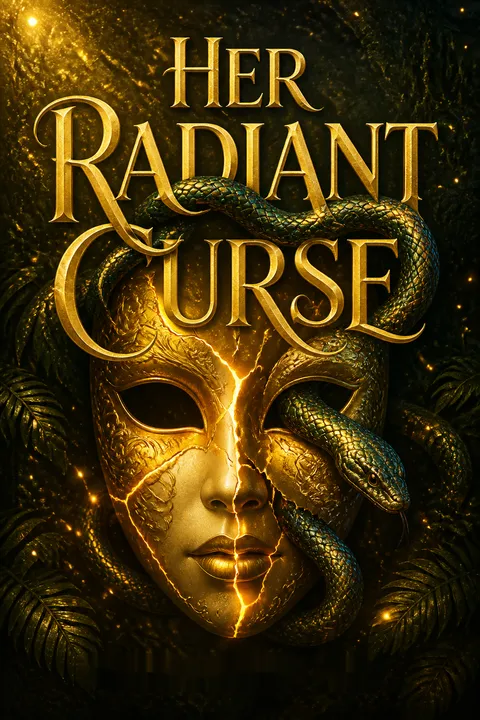
When Vanna is born shining with an inexplicable golden light, their mother is dying from blood loss. Their father, Adah, takes toddler Channi into the jungle as the child he intends to sacrifice to Angma, the witch who can grant wishes. A red serpent, secretly the Serpent King, bites Channi to keep Angma from eating her.
Angma curses Channi’s face and demands that she bring Vanna to her before the girl turns seventeen. Back home, their mother asks Channi to protect her new sister. Channi promises, then wakes the next morning to find their mother dead. The village remembers Vanna’s miraculous birth, but Channi alone remembers what her father actually did.
The opening makes a public legend out of a private act of abandonment. Vanna’s radiance attracts attention, while Channi’s curse becomes the visible record of her father’s choice and Angma’s violence. Channi’s promise to protect her sister begins as a child’s response to grief, but it also binds her to a duty she cannot yet understand. The serpent’s intervention complicates the story’s moral categories: a painful bite preserves Channi, while the human father’s attempt to sacrifice her causes the lasting wound. The gap between the village tale and Channi’s memory establishes how reputation can erase the person who paid its cost.
The Tiger at Sundau
Seventeen years later, Channi lives between Adah’s house, where he makes her hide her scaled face behind a wooden mask, and Sundau’s jungle, where snakes treat her as kin. Her Serpent King poison makes her blood lethal, and she has spent years searching for Angma and the promised helper named Hokzuh.
After a reckless tiger hunt leaves her soaked but alive, Channi returns to find her sister Vanna preparing for a contest in which kings will bid for her marriage. Channi fears both Angma’s promised attack and the cruelty of King Meguh, whose menagerie has already taught her what he does to rare creatures. Adah forbids her from attending. Remembering that Vanna needs her, Channi disobeys and heads for the village.
Channi’s hunting is not merely preparation for a monster fight. It gives her a domain where the face that isolates her among humans becomes camouflage, and where her poisonous blood has practical value. At home, that same body is treated as a family embarrassment. The contrast shows how social rejection shapes her identity without defining her competence. Vanna’s selection repeats the logic of Channi’s childhood sacrifice in a new form: powerful adults discuss what to do with a daughter as though her wishes were secondary. Channi’s decision to go despite Adah’s prohibition marks a shift from keeping her promise privately to defending Vanna in public.
A Sister Put Up For Bid
From a market awning, Channi watches High Priest Dakuok parade Vanna before eleven kings. Vanna tries to ask what the suitors value beyond wealth, but Dakuok redirects the ceremony toward bids. King Meguh offers an enormous sum, then the young Crown Prince Rongyo counters with a promise of marriage and a queenship.
When Meguh demands that warriors settle the contest, he unveils a chained, winged dragon as his champion. Vanna looks to the crowd for help, while her father and the priest allow the challenge to proceed.
Channi breaks cover, declaring her willingness to fight for her sister. The villagers recognize her face and turn on her instead, shouting for her to be restrained. Her attempt to intervene has made her the spectacle, while the dragon waits in its cage.
The ceremony turns Vanna’s beauty into a public resource: Dakuok advertises it, the kings price it, and Adah hopes to profit from it. Vanna’s brief questions reveal a person trying to enter a process designed to exclude her agency. Rongyo offers the possibility of marriage rather than purchase, but the contest’s structure still makes her future a bargaining prize. Channi’s entrance exposes the village’s double standard. The crowd accepts a dragon in a cage as entertainment while treating Channi’s unmasked body as an offense. Their reaction shifts the danger from political coercion to immediate bodily threat.
Channi Faces the Dragon
The mob ropes and beats Channi until she breaks King Meguh’s pot, freeing the vipers inside. They coil around her and drive the attackers back without killing them. Channi refuses to let the snakes execute Meguh, then insists on replacing Rongyo as champion.
Against the dragon’s speed and powerful wings, she fights with a scythe and finally cuts his leg with her small kitchen knife. Dakuok declares her the winner under Rongyo’s first-blood rule. Vanna chooses Rongyo only after securing permission to bring Channi to Tai’yanan.
Though Channi distrusts Dakuok, the priest offers to treat her injuries at the temple and escort her to the port. Channi accepts, expecting to leave Sundau with her sister. Adah agrees to send her clothes, but does not challenge the priest’s plan.
Channi wins by refusing the role the crowd assigns her, yet her victory does not immediately free her from other people’s decisions. She uses the vipers defensively, declining revenge even when it would be easy, then takes up the fight herself. Her refusal to claim Vanna for Rongyo protects the sister’s right to choose, a distinction the bidding ceremony had erased. The apparent resolution leaves Channi vulnerable because she has won a public contest but not gained control over her exit. Her trust in Dakuok is less naïveté than exhaustion: the temple appears to be a safe passage to the life Vanna has offered.
The Temple’s Price
Inside the Temple of Dawn, Dakuok reveals that Adah has agreed to send Channi away as payment to King Meguh. The betrayal lands harder than the priest’s surrounding threats: Channi had believed that, however cruelly her father treated her, he would not sell her.
She fights through Dakuok’s guards and slashes his face with her knife, then escapes through an unwarded window. Meguh waits at the gate with armed men, and the dragon drops through the temple roof to stop her. As Meguh removes her mask and claims her for his collection, Dakuok confirms the bargain.
Meguh then kills the priest himself, but Channi cannot escape before guards bind and gag her. When Meguh orders the dragon to finish her, he calls him Hokzuh, the name the dying Serpent King once told Channi to remember.
The scene converts Channi’s old wound into an immediate betrayal. Adah once carried her into the jungle to save her mother; now he permits another powerful man to take her because Vanna’s departure makes Channi inconvenient. The repeated pattern matters more than the transaction itself: Channi is treated as a means to someone else’s security or profit. Her attack on Dakuok is the first time she answers institutional violence with her own, but it cannot undo the power imbalance. Hokzuh’s name arriving at the instant of capture turns the prophecy from a distant promise into an unsettling possibility, not yet a trustworthy rescue.
Angma Behind the Crown
On Meguh’s ship, Channi finds Hokzuh caged and badly mistreated, but he refuses to help her escape before they reach Shenlani. At the royal banquet, Meguh displays Channi to his court and announces that she will fight in the arena.
Queen Ishirya’s perfume and golden eyes awaken a memory from Channi’s childhood: the queen is Angma, wearing another woman’s body. Angma’s words confirm that she recognizes Channi and still wants Vanna. Channi lunges at her, but the guards beat her down. Hokzuh treats her whip wounds behind his wing, then warns her not to challenge the queen.
Channi recognizes the danger in his caution, but refuses to surrender Vanna. The next morning, Angma visits her cell, reveals how she took Ishirya’s identity, and offers to restore Channi’s human face in exchange for Vanna.
Angma’s disguise reframes power as a performance sustained by the court’s willingness to believe in a benevolent queen. Channi detects what others cannot because the sensory details connect the banquet to the childhood encounter that shaped her body. Angma’s offer is psychologically precise: she names Channi’s longing for her mother’s face and turns that desire into leverage against Vanna. Channi’s refusal is not proof that she has no vanity or grief. It shows that she can recognize a real desire without allowing it to dictate the life of the person she loves. Hokzuh’s care complicates his role as captor, keeping trust unresolved.
A Demon’s Arena Bargain
Meguh sends Channi into Bonemaker’s Arena against an immortal demon and holds Ukar in a basket to force her compliance. Channi discovers that her poisoned blood can stun the creature, so she wounds herself, strikes it with bloodied stones, and bargains for its help.
After faking a victory, she breaks its collar and rides it toward Meguh’s pavilion. Her spear pierces the king’s heart. At the menagerie, Channi frees the imprisoned snakes and finds the guard holding Ukar near a hawk. She kills the guard and rescues her weakened friend.
Hokzuh arrives, no longer under Angma’s golden-eyed control, and carries Channi and Ukar into the sky. Angma’s ship pursues them with cannon fire. Channi boards it, sets its deck alight, and wounds Angma’s human shell, but Hokzuh pulls her away before she can face the transformed tiger.
Channi’s victories here come through bargains, improvisation, and accepting help, not through the fantasy of becoming invulnerable. She offers the arena demon freedom, then uses the opening to kill Meguh, whose cruelty had made Vanna and Channi commodities. Yet the escape exacts a moral cost: Channi kills the captain with her own hands while rescuing Ukar. Her willingness to use lethal force has grown, but the narrative keeps the violence tied to concrete threats rather than treating it as uncomplicated empowerment. Hokzuh’s return saves her from Angma, though his rescue also interrupts Channi’s desire to finish the fight on her own terms.
The Pearl’s Hidden Half
On a remote island, Hokzuh explains that Angma’s strength comes from a piece of his dragon pearl, stolen and fused with her heart. He and Channi agree to work together: he will take her to Vanna, and she will help him reclaim the pearl.
A nightmare brings Angma’s curse back into focus, including the condition that Channi’s face can be restored only if she gives up her sister. At Yappang, the Nine-Eyed Witch Nakri confirms the greater danger. Vanna’s golden light is the other half of Hokzuh’s pearl, and on her seventeenth birthday it will fully awaken.
Angma intends to take it and combine both halves. Nakri warns that the pearl can be a curse as well as a source of power. When Angma’s suiyaks attack the village, Channi and Hokzuh escape by boat.
The revelation makes Vanna’s radiance more than an individual gift: it is a part of Hokzuh, sought by Angma and destined to attract further violence. Channi’s protective promise now faces an impossible structure, because saving Vanna may mean withholding the very thing that could make her powerful enough to survive. The pearl’s agency is crucial. Nakri does not describe it as a neutral tool but as an influence with its own demands, complicating the assumption that good intentions can control magic. Channi’s concealed knowledge begins as protection, but it also seeds the fracture between her and Hokzuh.
Truth Splits the Alliance
As the boat races toward Tai’yanan, Channi and Hokzuh grow close through shared danger and care. He tends her wounds, she repairs his wing, and he challenges her to stop hiding behind her mask. Before they reach the palace, Channi tells him that Vanna carries the pearl’s other half.
Hokzuh realizes that the person he has sought was in front of him at the selection. He refuses Channi’s plea to let Vanna live her life, drops Channi and Ukar on Tai’yanan’s coast, and flies away to claim the pearl. Channi runs toward the city alone.
At the wedding procession, guards attack her until Vanna orders them to stop. Her sister’s power now compels others, and she uses it to suppress Channi’s warnings about Angma. Channi learns that Vanna has also kept her love for Oshli hidden.
The alliance collapses at the point where affection meets an irreconcilable need. Channi tells the truth because she trusts Hokzuh, but he hears the revelation through the logic of loss and possession: his pearl must be whole. The abandonment is therefore both betrayal and a survival strategy, since he chooses distance rather than killing Vanna immediately. Meanwhile, Vanna’s ability to compel people offers protection while narrowing her capacity to hear unwelcome truths. The sisters’ conflict is not lack of love; it is that both mistake control for care. Channi’s silence about Hokzuh’s motive and Vanna’s insistence on proceeding leave each isolated inside her own protective story.
The Princess Becomes a Tiger
On Vanna’s birthday, suiyaks descend on the royal temple. Channi fights them with arrows coated in her blood, saves Adah from one attacker, and discovers that the priestess who shepherded the family inside is Angma in disguise.
As the temple breaks apart, Channi covers Vanna’s glowing heart and tries to keep the witch away. Vanna confronts Angma with the power of her pearl, while Channi, Oshli, and the guards struggle against the suiyaks. Hokzuh rescues the group from the collapsing temple, then flies away with Vanna as the demons close in.
He loses her, and the suiyaks carry her off. Channi finds Hokzuh wounded by a reflecting pool and accuses him of choosing his missing moonstone over Vanna. She pursues a tiger into the garden, only to recognize Vanna inside Angma’s body.
The birthday attack brings the competing meanings of Vanna’s light into public view. It can gather devotion, compel obedience, and repel the suiyaks, but it cannot guarantee safety. Channi’s choice to save Adah despite their history reveals that her ethics are not simply retaliation; she can act from kinship without pretending the past is repaired. The body exchange then turns the familiar rescue plot against her. Channi has trained herself to identify Angma by shape and gaze, but the witch makes appearance unreliable. Her mistaken strike exposes the danger of defending someone through a rigid image of who the enemy must be.
Sisters Through the Storm
Channi and Vanna flee through Tai’yanan’s gardens while Hokzuh and the soldiers hold off the palace guards. Vanna explains that Angma won their contest and exchanged bodies with her. She also reveals the witch’s plan to summon demons from Mount Hanum’anya and spread ash and thunder across the world.
Vanna admits she wanted to escape her wedding, not because she lacked ambition, but because she wanted ownership of her own future. Channi helps her face Oshli, whose love is not dependent on Vanna’s beauty or human form.
Prince Rongyo offers a ship, but Vanna ends their betrothal and chooses Oshli. When the queen objects, the prince still provides passage. Back on Sundau, Channi finds the village wrecked and children hiding in her old kitchen. Their trust shows her that not everyone sees a monster in her.
The body exchange forces the sisters into a form of intimacy that neither can manage through idealized roles. Vanna is no longer the untouchable beauty, and Channi must protect her without confusing her body with Angma’s identity. Vanna’s confession also revises Channi’s understanding of the selection: her sister wanted escape and self-determination, not simply a palace. Oshli’s acceptance of Vanna as a tiger gives that choice a witness beyond family. The children’s welcome matters just as much. Their affection does not erase the village’s violence, but it supplies evidence against Channi’s belief that rejection is universal.
The Crooked Tree’s Battle
Angma draws Channi, Vanna, Oshli, and Hokzuh toward the crooked clove tree where Channi was cursed. Demons under the witch’s control attack them, while Sundau’s snakes form a protective ring around Vanna and Oshli. Channi reaches the clearing and faces Angma wearing Vanna’s human body.
The witch explains that she once wished to cure her sick daughter with Hokzuh’s pearl, then killed the child after the pearl made her ravenous. She offers Channi a substitute family and the face she longs for, but Channi refuses to become Angma’s replacement daughter.
Vanna arrives and counters the witch’s shadows with her light. Ukar distracts Angma, giving Channi a chance to strike. Channi drives her spear into the pearl in Angma’s chest and tears out its dark half, killing the witch and freeing the controlled demons.
Angma’s history does not excuse her, but it makes her offer legible as grief turned into possession. She wants to replace what she lost by claiming Channi, just as she has tried to claim Vanna’s body and heart. Channi refuses not because she is untouched by longing, but because she recognizes that intimacy built on substitution would repeat the violence done to both sisters. The battle also reverses their established roles. Vanna’s light actively resists Angma, while Channi’s poison and Ukar’s intervention create the opening for the decisive strike. Protection becomes collaborative rather than a burden assigned to one sister alone.
The Promise Breaks
Angma’s last wish restores Hokzuh’s stolen moonstone, but its power releases the demon inside him. He tears Vanna’s glowing heart from her chest. Channi uses the true name Khramelan, learned when Hokzuh swore not to harm Vanna, and the pearl’s power binds him in poisonous spindlebeard.
She joins the pearl halves and demands that they return Vanna’s heart, but they refuse to restore her. Vanna dies beside the pond, asking for the water and the old stories she shared with Channi. The pearl then transfers Vanna’s face and light to Channi.
When she wakes, Oshli mistakes her for Vanna until Channi’s silver light and voice reveal the change. Ukar has become the Serpent King. Channi mourns her sister, then uses the pearl to curse Hokzuh into a hidden place where he cannot follow her.
The final loss is not a simple defeat by stronger magic. Hokzuh’s broken oath makes the intimacy Channi trusted into a weapon, and the true name gives her a way to restrain him without pretending the betrayal can be undone. The pearl refuses the clean restoration she demands, establishing that grief cannot be negotiated away by force. Channi’s new face literalizes the cost of her wish to see Vanna again: she receives resemblance, not return. Her curse on Hokzuh answers harm with control, a choice that protects Sundau but leaves her morally and emotionally burdened.
A Scar She Chooses
Adah returns to Sundau and mistakes Channi’s borrowed face for Vanna’s, offering a tenderness he never gave the daughter whose appearance he feared. Channi tells him that Vanna is dead and refuses to leave the island. She visits Vanna’s grave each day, counting the moon orchids she has planted there, while learning to use the pearl’s power.
Unable to bear seeing Vanna’s face as her own, Channi asks her sister’s memory for permission to change it. She cuts her skin with a broken spear and uses her poisonous blood to prevent the pearl from healing the wound. A raised white scar remains across her face. Rather than hide it, Channi accepts it as a mark she chose, unlike the curse imposed on her as a child.
Channi’s father finally offers the tenderness she once wanted, but only because he mistakes her for the daughter he preferred. The scene makes recognition, not affection alone, the measure of intimacy: care that cannot see Channi is another form of erasure. Her scar is a deliberate answer to both imposed faces, the snake scales Angma gave her and Vanna’s beauty inherited through the pearl. Using poison against the pearl turns the weapon that marked her into an instrument of self-definition. The scar does not restore the life she wanted; it makes visible her refusal to let another power decide what her face means.
The Last Selection
When suitors return to Sundau, Adah encourages Channi, still wearing Vanna’s face, to accept a new marriage selection. Channi agrees only on her own terms: a suitor must make her smile. Privately, she plans to leave for Kiata, where magic is suppressed, and asks Prince Rongyo to invite Emperor Hanriyu as a mediator.
She hopes to begin a life that is not organized around the pearl or Vanna’s legend. Ukar, now Serpent King, refuses to leave his snakes, but promises that they will remember her. Channi also allows Oshli to speak Vanna’s name again and receives the message he promised to carry: Vanna wanted her sister to take the time she needed and find a way forward.
The new selection resembles the old one, but Channi changes its terms and its purpose. She is no longer trying to win a place through beauty or wealth; she uses the ritual as a route out of a system that will keep converting her light into a claim on her body. Ukar’s decision to stay emphasizes that love need not mean following someone everywhere. Oshli’s promise offers a form of continued relationship grounded in memory rather than possession. Channi’s planned departure is not a cure for grief. It is a choice to make a future while carrying grief honestly.
Epilogue
A year later, Channi has spent months in Tai’yanan studying and getting to know Emperor Hanriyu, who has returned to Tambu to seek her company. They decide to travel to Kiata together and build a family with his seven children. Before the ship leaves, Channi uses the pearl to make the world forget her and Vanna, though Ukar and the snakes remain untouched.
Oshli retains a troubled sense of the truth. Channi keeps her own name in a private whisper, then adopts the title Her Radiance. As she sails away, she carries a repaired wooden bowl, a reminder of the sister and home she cannot bring back.
The ending refuses to treat a new family as a replacement for Vanna. Channi and Hanriyu choose companionship built around shared bereavement, and she is careful not to promise a romance neither of them feels. Her memory spell is both protection and self-erasure: it frees her from the public legend that has made her and her sister into objects of fascination, but it also removes their history from nearly everyone who knew them. The exceptions matter. Ukar’s memory preserves a bond beyond the spell, while Oshli’s incomplete forgetting shows that love can leave traces no command fully controls. Channi departs with grief intact and agency newly hers.
Analysis
Her Radiant Curse places two sisters inside systems that convert appearance into value. Channi is hidden because her face is considered repellent; Vanna is displayed because her beauty and light attract wealth, marriage offers, and religious authority. Their opposing social positions are not opposites in freedom. Both are treated as bodies others may manage. The marriage selection makes this explicit, but the pattern extends to Angma’s stolen identities, Meguh’s menagerie, and the pearl’s power to alter its bearer.
Channi’s protective love is both the story’s moral center and its principal danger. Her promise to her dying mother gives her purpose, yet it can make Vanna’s safety seem like a problem Channi alone must solve. Vanna’s own wishes consequently remain difficult for Channi to hear, just as Channi’s needs remain difficult for Vanna to recognize. Their conflict does not arise from insufficient affection. It grows from affection expressed through assumptions about what the other can endure. The story’s deepest emotional corrections happen when each sister becomes vulnerable in a way the other cannot dismiss: Vanna admits she wanted self-determination, and Channi discovers that loyalty cannot make loss negotiable.
Magic in this world behaves less like a tool than a moral pressure. Poison can defend and heal, a pearl can grant wishes while twisting them, and promises can bind people beyond their intentions. Power is therefore never simply a solution to weakness. It magnifies the desires and fears already present. Channi’s final transformation does not restore the innocent life she imagines; it forces her to decide what identity she will claim when neither her old face nor her sister’s can define her. The ending offers no uncomplicated repair. Instead, it gives Channi a scar, a chosen journey, and relationships that can survive without pretending grief has vanished.
Review Summary
People Also Read






Characters
Channari, called Channi
Poison-blooded protectorChanni is Vanna’s older sister, cursed with green scales, a flattened face, and yellow, snake-like eyes after Angma mistook her for the child Adah had meant to sacrifice. The Serpent King’s venom makes her blood deadly, while his bite lets her communicate with snakes. She is physically resourceful, a practiced hunter, and more comfortable in the jungle than among people who recoil from her appearance. Her sharp humor often conceals a wish to be loved without fear or pity. Loyalty gives her courage, but it can also make her mistake vigilance for control. Channi’s deepest struggle is not whether she can fight monsters; it is whether she can imagine a life that belongs to her as well as to the people she protects.
Vanna
Radiant younger sisterVanna is Channi’s younger sister, born with golden light shining from her heart and a beauty that draws worship, gifts, and political attention. She loves stories, flowers, music, and the private rituals she shares with Channi, including their mother’s cakes and the birthday moon orchid. Her brightness makes others eager to please her, but it also encourages them to treat her as an emblem rather than a person. Vanna wants to see the world and to shape her own future, even when she disguises uncertainty behind cheerful composure. She cares deeply for Channi and wants to help her, though her efforts can become controlling when fear makes her rely on her light’s power.
Hokzuh
Chained dragon princeHokzuh is a winged, blue-green dragon with mismatched eyes, a scarred body, and a history of captivity in King Meguh’s arena. He is witty, combative, and difficult to read, often using humor to keep others from approaching the pain beneath his bravado. His search for his missing pearl has shaped his choices for years, while his demon heritage makes him fear what he can become without the talisman that restrains it. Channi recognizes in him another person treated as monstrous for what he is. Their connection grows through practical acts of care and mutual recognition, but the goals that bind them also place them in conflict.
Ukar
Channi’s serpent confidantUkar is a freckled green snake, Channi’s closest friend and guide through the jungle’s customs and dangers. He speaks into her thoughts, changes color, and has an irreverent talent for puncturing her certainty at the worst possible moment. Ukar is loyal to Channi and protective of Vanna, but he distrusts dragons because of an ancient betrayal that shaped his people’s history. His wariness is not simple cowardice: he remembers how old stories become political truths and how easily trust can be exploited. His dry humor keeps Channi company in isolation, while his counsel repeatedly challenges her to distinguish courage from recklessness.
Angma
Witch in a tiger’s shadowAngma is a powerful witch who appears as a supernatural tiger and can inhabit human bodies. She is linked to Channi’s curse and has pursued Vanna’s extraordinary light since the sisters were children. Angma can be patient and persuasive, tailoring her promises to the private grief of the person she wants to control. Her history is marked by bereavement and a catastrophic wish, but suffering has not made her safe or benevolent. She treats people as possible substitutes for what she has lost, blurring the boundary between care and possession. Her elegant disguises allow her to move through courts and communities as a trusted figure while hiding a predatory purpose.
Adah
Fearful, mercenary fatherAdah is Channi and Vanna’s father, a man whose grief over his wife’s death hardens into shame and fear of his older daughter’s appearance. He depends on Vanna’s fame and radiance to improve the family’s fortunes, and he repeatedly treats his daughters according to what they can secure for him. His cruelty toward Channi coexists with moments of visible remorse, making him more than a simple villain but not less responsible for his choices. Adah’s need to preserve status and avoid public embarrassment prevents him from offering his daughters the protection they need.
Oshli
Shaman and Vanna’s confidantOshli is the son of Sundau’s High Priest and a young shaman with practical healing knowledge and some protective magic. As a child, he was Channi’s friend before joining in the village’s cruelty toward her. He loves Vanna but does not confuse her public radiance with the person he knows privately. His devotion often appears as quiet labor: bringing food, preserving books, and tending injuries. Oshli’s shame over his past makes him cautious, yet he eventually chooses action over the safety of old assumptions.
Lintang
Distant stepmotherLintang is Adah’s second wife and the stepmother who raises Channi and Vanna after their mother dies. She is more protective than Adah, especially when she steers Channi away from King Meguh, but her care remains limited by her willingness to preserve household peace. Lintang helps Vanna prepare for courtly life and tries to keep the family respectable. Her caution can feel like kindness and abandonment at once, because she rarely challenges the rules that keep Channi hidden.
Crown Prince Rongyo
Young royal suitorRongyo is the teenage heir of Tai’yanan, the only suitor at Vanna’s selection who offers marriage and queenship rather than a concubine’s place. He values kindness and family, though his affection begins under the spell of Vanna’s beauty and he has little experience with the dangers around her. His willingness to act on her behalf is sincere, but he must learn that devotion does not entitle him to her future. Rongyo’s honorable response when Vanna makes her own choice reveals more maturity than his youthful appearance suggests.
Nakri
Nine-Eyed witchNakri is an elderly witch of Yappang who lives among crocodiles and can perceive strands of fate that others cannot. Blunt, watchful, and unsentimental, she knows more about Channi’s connection to Hokzuh and Vanna than she initially reveals. Nakri treats information as a responsibility rather than comfort, warning Channi that the pearl carries its own dangers. Her protection is real but conditional, and she expects people to accept the consequences of their bargains.
Emperor Hanriyu
Widowed Kiatan emperorHanriyu is the widowed emperor of Kiata, a distant kingdom said to lack magic. He comes to Vanna’s selection hoping to find a kind mother for his seven children, but withdraws when he sees that she is not free to choose. He is thoughtful and courteous, carrying grief without demanding that others heal it for him. His interest in Channi develops through patience and friendship rather than her radiance or political value. He represents the possibility of kinship built by mutual care instead of spectacle.
High Priest Dakuok
Architect of the selectionDakuok is Sundau’s High Priest and Oshli’s father. He turns Vanna’s reputation into a political and financial event, presenting her as a divine prize while claiming the proceeds will benefit the temple. His polished public manner conceals opportunism and a readiness to exploit people who lack power. Dakuok understands how ritual can legitimize a transaction, and he uses religious authority to make coercion look like tradition.
King Meguh
Cruel collector-kingMeguh rules Shenlani through wealth, spectacle, and fear. He collects rare animals, maintains an arena, and treats both people and creatures as possessions whose value lies in their entertainment or rarity. His interest in Vanna and Channi is part of the same acquisitive impulse. Meguh’s public generosity helps disguise the violence that sustains his court.
The Serpent King
Channi’s first protectorThe unnamed Serpent King is the red snake who protects young Channi when Adah leaves her in Angma’s clearing. His bite fills her blood with poison that makes her dangerous to the witch, and he gives her the name Hokzuh to remember. His cryptic prophecy shapes Channi’s expectations for years. Though he appears briefly, his sacrifice links Channi to the snakes and the older magic of Sundau.
The Queen of Tai’yanan
Cautious royal motherRongyo’s mother is a practical queen who worries about the cost of her son’s choices and the safety of her kingdom. She distrusts the danger surrounding Vanna and Channi, but she is not indifferent to duty or faith. Her resistance forces Rongyo to defend his decisions, while her eventual aid reflects an ability to revise her judgment when the threat becomes larger than court politics.
Liyen
Brave village childLiyen is one of the children who shelters in Channi’s old kitchen after demons terrorize Puntalo. She recognizes Channi as a protector rather than a monster and leads the other children in trusting her. Her embrace gives Channi a rare experience of welcome from the village’s younger generation.
Plot Devices
The Serpent King’s venom
Weapon and unwanted inheritanceThe Serpent King’s bite gives Channi poison in her blood, visible in the green veins around the childhood wound and lethal to anyone who ingests or touches it. It keeps Angma from consuming her and lets Channi threaten larger opponents, including tigers and suiyaks. The poison also limits intimacy: Channi must fear harming anyone who tends her wounds. Its use changes as she matures. What once made her feel monstrous becomes a defense she can wield deliberately, and finally a means of resisting the pearl’s attempt to dictate her appearance.
Hokzuh’s divided pearl
Power with its own willHokzuh’s pearl is split into dragon and demon halves. One half empowers Angma, while the other rests in Vanna’s radiant heart. It explains Vanna’s supernatural light, Angma’s unnatural longevity, and the danger drawing all three characters together. The pearl can grant wishes, but it interprets desire in its own way rather than behaving like a neutral tool. Its power saves, transforms, and curses, while refusing the restoration Channi most desperately wants. The device makes every apparent solution morally unstable because gaining power can create a new form of captivity.
Promises and true names
Magic that binds choicesIn Sundau’s belief, a promise gives away a piece of the speaker that does not return until the pledge is fulfilled. Channi’s childhood vow to protect Vanna shapes her life, and the demon’s bargain with her in the arena uses the same binding logic. Later, Hokzuh swears on his secret true name not to harm Vanna. When he breaks that oath under the influence of his unleashed demon side, Channi can invoke his name and use the promise as leverage. The device makes personal commitments materially consequential, but it does not guarantee that the person bound will remain unchanged.
Masks, faces, and radiance
Appearance as social powerChanni’s wooden mask hides the face others fear, while Vanna’s unhidden radiance makes strangers worship her and seek to possess her. Their contrasting appearances shape who is believed, protected, displayed, or excluded. Angma’s ability to wear human bodies makes recognition itself dangerous, and the pearl later gives Channi a face that is not her own. Channi’s chosen scar becomes a refusal to treat beauty or normality as the price of acceptance. The recurring device asks whether a face reveals identity or merely teaches other people how to behave toward its bearer.
The Serpent King’s prophecy
A future read in fragmentsThe Serpent King tells Channi that she will need Hokzuh and that one sister must fall for the other to rise. Channi reads the warning as a charge to protect Vanna and expects Hokzuh to become an ally. Nakri later explains that the prophecy is incomplete, leaving Channi to confront the possibility that safety may demand a sacrifice different from the one she imagined. Its function is not to dictate a fixed future but to make characters interpret fragments under pressure. The prophecy establishes the story’s central tension between loyalty, fate, and the dangerous cost of trying to prevent loss.
Six Crimson Cranes Series

About the Author
Other books by Elizabeth Lim



Download PDF
Download EPUB
.epub digital book format is ideal for reading ebooks on phones, tablets, and e-readers.








