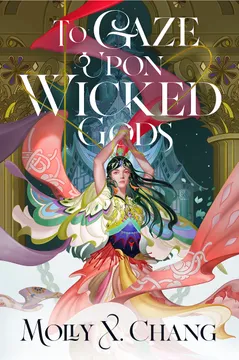


Plot Summary
Opian at the Lotus Tower
In Pangu’s occupied capital, Jing-City, Ruying Yang crosses the guarded Fence to buy opian for Meiya, her twin sister. The drug keeps Meiya alive, but addiction has already taken their father and threatens to take her next. At the Lotus Tower, Ruying meets Baihu, her childhood friend turned opian broker and Roman prince Valentin’s powerful ally.
He offers her another supply, then asks her to use her rare Death magic against a target whose death could shift control of the Empire. Ruying refuses, knowing each use of her Gift costs her life and that killing the young Emperor could endanger her family. She takes the medicine anyway, trapped between her scruples and Meiya’s need.
Ruying’s first dilemma is built from material dependency, not abstract temptation. Baihu controls a substance that keeps Meiya alive, so his political request arrives already backed by coercion. Ruying’s resistance is real, but it cannot free her from the bargain’s structure. Her magic mirrors opian in a more intimate way: both promise power and impose a cost on the body. The opening therefore makes survival morally unstable before Ruying has chosen a side.
Gold in the Alley
Leaving the Lotus Tower with what she hopes is Meiya’s last supply, Ruying notices posters urging people to join the Phantom’s rebellion. At the market, a Roman stranger gives a grieving girl enough gold to bury her mother. Ruying steals the abandoned purse, hoping the money will free her family from Baihu’s control.
The stranger catches up, and his guard Dawson knocks her down and grips her throat. With no other way out, Ruying draws qi from Dawson, leaving him alive but weakened. The Roman watches in fascination instead of ordering his soldiers to shoot. Before they can seize her, Taohua, Ruying’s childhood friend and a military commander, knocks a guard aside and leads her through the streets.
The theft is both a practical act and an accidental introduction to a different kind of power. Ruying takes gold because she wants to replace dependence with choice, but the attempt exposes her magic to the very Roman whose attention will constrain her more severely. Her decision to spare Dawson matters: even under attack, she does not treat the ability to kill as permission to do so. Taohua’s rescue also reintroduces a friendship that has survived distance, though Ruying is already hiding the family crisis that drives her recklessness.
Raid Beneath the Portal
At home, Ruying finds Meiya searching her room for opian and crying over her relapse. The sisters clash over whether safety means escaping Rome’s reach or fighting the occupation; Meiya believes the Phantom can help, while Ruying plans to marry for her family’s protection. Their grandmother leaves the next morning to seek a husband for Ruying.
Three days later, Ruying dreams of Roman soldiers drugging and raiding Jing-City, then wakes to find the invasion underway. Meiya is feverish and too weak to flee, so Ruying hides her beneath a floorboard with the stolen gold. She draws the soldiers away from the house, uses her magic to hinder them, and is finally captured by a poisoned dart.
The raid turns private disagreements into immediate consequences. Ruying’s plan to keep Meiya safe by hiding her works for the moment, but it requires Ruying to leave her sister behind and submit herself to danger. Their opposing ideas of protection are not simply cowardice versus courage: Ruying sees how easily resistance invites retaliation, while Meiya sees submission as a slow surrender. The invasion strips away the illusion that family loyalty can remain separate from political violence.
The Glass Exhibition
Ruying wakes in a Roman prison with metal cuffs that suppress her Gift. She later sees Taohua dragged past her cell, confirming that the raid has taken her friend too. Baihu visits, admits the raid exceeded the tacit arrangement between Rome and the Er-Lang court, and promises help, but he leaves without freeing either woman.
In a glass arena, Romans test captured Xianlings and send those they deem useless through a guarded exit. Ruying is ordered to drain a prisoner’s qi; she does so without killing him, steals the control remote, and runs. A bullet and the cuffs’ electric shocks stop her. Valentin nearly forces opian on her, but Antony claims her as his own project and prevents the injection.
The exhibition makes Rome’s power visible as a system of classification: captured people are tested, valued, and discarded according to usefulness. Ruying’s escape is resourceful, but it also teaches her that her magic can be turned into spectacle and property. Her mercy toward the prisoner preserves a moral distinction she will soon struggle to maintain. Antony’s intervention seems protective, yet he frames it as possession, leaving Ruying alive without making her free.
Antony's Price of Protection
Antony, the Roman prince whose purse Ruying stole, offers to protect her family if she works as his covert killer. He says her targets are people who could provoke a war between Rome and Pangu, and shows her the weapons that make open resistance nearly hopeless. Ruying bargains for Meiya and her grandmother’s safety, and for Taohua’s release.
During a test, Antony asks her to shoot a man in the street; she refuses, so he kills the man himself. He then forces her into a glass cage with a captured Xianling whose multiplication Gift makes him a dangerous opponent. When the man attacks, Ruying drains his qi until he dies. Antony comforts her afterward, but the bargain has already begun to change her.
Antony’s offer converts Ruying’s family love into a mechanism of control, while presenting that control as a partnership. His first test exposes a crucial difference between them: she refuses to kill a stranger on command, but he acts without hesitation. The cage fight then removes the protection of refusal by making Ruying’s own survival depend on lethal force. Her grief afterward shows that compliance has not erased conscience; instead, conscience becomes another burden she must carry while doing what Antony asks.
Forty-Eight Quiet Deaths
Over the next six months, Ruying kills forty-eight people Antony identifies as threats to his effort to prevent war. Some are collaborators, but others are decent men whose resistance to Rome makes them dangerous to his plans.
Antony sends money and a less physically damaging supply of opian to Ruying’s family, yet Ruying watches Meiya and their grandmother from the street rather than risk exposing her work. When Meiya catches her after a killing, she recognizes Ruying’s magic and condemns her for killing their own people.
Ruying explains the bargain but insists Antony’s plan preserves peace. Meiya offers the Phantom’s help; Ruying refuses, fearing retaliation against her family. They part with their bond badly fractured, while Ruying begins coughing blood from magic’s cost.
The body count changes Ruying’s understanding of her own limits. At first, guilt marks each killing as an exception; repetition threatens to make violence feel ordinary. Her concealment of the family’s improved circumstances also isolates her from the people she claims to protect. Meiya’s accusation cuts through the language of strategy because she sees the immediate victims, not the hypothetical war Antony promises to prevent. Ruying’s physical decline makes the bargain’s cost concrete, even as the emotional cost becomes harder for her to admit.
Valentin's Empty Syringe
Valentin tries to inject Ruying with opian, calling her too dangerous to leave uncontrolled. Ruying fights him off until Antony intervenes and warns his brother away. Antony then gives Ruying a badge that lets her cross the Fence and move through Roman territory without having her magic suppressed.
He tells her their next mission is in Sihai: after its Emperor signs a treaty with Rome, she must make his death look natural. Ruying is troubled by the target’s royal status and by Antony’s secrecy, but she agrees to travel. Before they leave, she meets Baihu, who reveals that he works with the Phantom and asks her to help capture Antony, not kill him. Ruying refuses, still believing Antony can prevent a devastating war.
The badge appears to grant Ruying freedom, but it also makes her a more useful instrument inside Roman territory. Valentin’s attempted injection clarifies the danger of being powerful in a regime that treats control as a prerequisite for survival. Baihu’s request creates a direct challenge to Ruying’s trust in Antony, yet she rejects it before she knows the full extent of Roman crimes. Her decision is less a settled conviction than a commitment to the only protection she believes she has.
Baihu's Rebel Request
Baihu tells Ruying that he has been serving the Phantom and asks her to help seize Antony. He argues that the Romans will eventually destroy Pangu, and that waiting for Antony to gain power only gives them more time to prepare. Ruying refuses because she believes Antony’s rule could preserve peace and because her family depends on his protection.
Baihu warns that Roman laboratories are hiding atrocities, but offers no proof that would overcome her loyalty. Ruying leaves without betraying him. Their meeting deepens her uncertainty: Baihu’s defiance resembles Meiya’s, while his warnings threaten the fragile certainty she has built around Antony’s promises.
Baihu’s request reframes his earlier role as more than a cynical broker, but it does not automatically make his proposed violence trustworthy. Ruying must weigh his claim against the tangible security Antony provides her family. The conflict exposes how coercive power narrows political choice: each side offers protection in exchange for loyalty, and neither can promise safety without demanding complicity. Ruying’s refusal preserves her immediate arrangement, but Baihu’s warning becomes a question she cannot fully silence.
The Emperor's Chosen Death
In Sihai’s capital, Donghai, Antony prepares to have Ruying kill the Emperor after he signs a treaty with Rome. The timing would bind the Emperor’s heir to the agreement and secure Roman influence over the ocean realm. Ruying is uneasy, and the Emperor’s courtesy toward Antony deepens her doubts.
That night, she enters the Emperor’s rooms and warns him about the planned assassination, the captured Xianlings, and Rome’s strategy. The Emperor already knows he may be killed. He believes his death can buy Sihai time and secure a peaceful succession, so he asks his son, Feng, to honor the treaty rather than begin a war. Ruying leaves knowing that the Emperor has chosen sacrifice over resistance.
The Emperor’s decision complicates Ruying’s moral calculus because it is neither simple submission nor ignorance. He understands the danger and chooses a sacrifice he believes may protect his people, while his son sees that the treaty could become a chain. Ruying’s warning is a first act against Antony’s plan, though it does not stop the intended outcome. The scene turns political strategy into an intimate family conflict, echoing Ruying’s own attempts to trade her safety for Meiya’s.
Blood on the Canals
During a ceremonial boat tour before the treaty signing, Phantom rebels attack Antony’s party with arrows and magic. Ruying pushes Antony out of danger, and he takes an arrow while shielding her from another strike. The attackers break into the armored pavilion, where fighting leaves Roman and Sihai guards dead.
The Emperor uses water magic to protect Antony, but a rebel’s fire kills him. His son Feng unleashes a devastating surge through Donghai’s canals, sweeping fighters and survivors into the water. Ruying and Antony are carried through the city’s hidden passages and into a river beyond the capital. They both reach the bank alive, but the Emperor is dead and the treaty’s future is uncertain.
The attack collapses the distinctions that the treaty was meant to preserve. The Ghosts intend to force a larger conflict, while the Emperor’s death turns his private sacrifice into a public wound that Feng answers with uncontrolled power. Ruying’s instinct is to protect Antony, despite her growing doubts about him. That choice does not make her loyal to Rome so much as reveal how deeply personal their bond has become. The flood carries them away from the political stage, but not from its consequences.
Antony's Knife in the Forest
Antony drags the wounded Ruying to an abandoned cottage and nurses her through a fever. As they recover, they share stories about Nüwa, Rome’s damaged world, and the fear each carries of becoming monstrous. They kiss, then separate without resolving what their feelings mean. Phantom fighters soon find the cottage and demand Antony.
Ruying pretends to hold him at knife point, planning to let him flee while she delays the rebels. Antony refuses to leave her. When their leader agrees to release Ruying in exchange for Antony, the prince stabs him, then turns the blade on himself rather than be taken. Roman soldiers arrive and carry Antony away for emergency surgery; Ruying survives and returns to the Roman side of Jing-City.
The cottage briefly suspends their political roles, allowing tenderness without removing the conditions that make it dangerous. Antony’s self-inflicted wound is both a refusal to become a hostage and an act that protects Ruying from the immediate threat. Their intimacy therefore deepens alongside their unequal power, not outside it. The scene’s emotional force comes from a paradox: Antony risks his life for her, yet Ruying still has no reliable way to know what his larger choices will cost her people.
Taohua Beneath the Lab
While Antony undergoes surgery, Baihu visits Ruying and takes her through Rome’s underground facilities. She sees Princess Helei confined in a guarded room, then watches scientists strap Taohua into a glass pod and drain her blood until she dies.
Baihu explains that Rome has been harvesting Xianlings for experiments, and that Taohua had been investigating the disappearance of gifted people. He also shows Ruying the signed order for the raid that captured her: Antony authorized it to obtain her rare power.
The revelation destroys Ruying’s belief that Antony’s protection was separate from his ambition. Taohua’s death makes the cost of that belief personal, while the captive princess and other prisoners show that the cruelty extends far beyond one friend.
The laboratory gives visible form to the violence Ruying had kept at a distance by treating each target as a political abstraction. Taohua’s death makes the distinction between protection and exploitation impossible to maintain: Antony’s kindness to Ruying coexists with a system that consumes people like her. The signed raid order also rewrites their first encounter. What Ruying experienced as rescue and recruitment began as a calculated seizure. Her grief is therefore compounded by the discovery that intimacy itself was cultivated inside a coercive arrangement.
Powering Rome with Qi
After waking from surgery, Antony admits that Roman scientists have identified energy-rich cells in Xianlings, which he calls qi-cells. His world is collapsing under pollution and resource exhaustion, and these cells could power Roman cities.
Opian was introduced as a stimulant to strengthen or awaken magic, but it also increased qi-cell production and made its users easier to exploit. Ruying recognizes that her family’s addiction and her people’s deaths have served Rome’s survival.
Antony insists he acted for a greater good and asks her to trust him, but she leaves believing Baihu’s warning. She tells Baihu that she will join the Phantom’s cause. After years of choosing survival through obedience, Ruying decides to risk being called foolish rather than keep helping Rome.
The qi-cell revelation makes colonial extraction literal: the occupied population is not merely taxed or displaced, but treated as an energy source for a failing world. Antony’s motives may include fear for Rome’s future, yet his ethical language cannot disguise the asymmetry of who chooses and who pays. Ruying’s final decision is not a clean recovery of innocence; she has already killed and cannot undo those deaths. It is a refusal to let survival remain the only value that governs her choices.
Analysis
The novel makes survival a political economy. Ruying’s family needs opian, Rome needs qi-cells, and Antony needs Ruying’s magic; each relationship turns a living body into a resource that someone else claims to manage. The resemblance is deliberately uncomfortable. Ruying’s killings and Rome’s experiments are not equivalent in scale or power, but both are defended through calculations about what must be sacrificed. The story asks whether a noble end can remain morally distinct from the means used to reach it when the vulnerable never control the calculation.
Ruying’s choices are shaped by poverty, gender, and accumulated grief. Marriage offers security by placing her under a husband’s authority; rebellion offers dignity at the risk of annihilation; service to Antony buys her family protection at the price of betraying her people. Her hesitation is not a failure to understand politics. It reflects the absence of any choice that leaves her untouched. The recurring contrast between Meiya’s life-giving Gift and Ruying’s death magic sharpens this conflict without making either sister morally simple: Meiya’s resistance can endanger others, while Ruying’s pragmatism can preserve her household by cooperating with violence.
Antony’s tenderness is also part of the novel’s political argument. His compassion is genuine enough to bind Ruying to him, but it does not prevent him from authorizing her capture or concealing the experiments that sustain his world. The story resists the comforting idea that a kind individual can redeem an extractive system merely by intending to govern it better. Taohua’s death makes that contradiction impossible to dismiss. Ruying’s final turn toward the Phantom does not erase her complicity or guarantee victory. It marks the moment she stops treating survival as a reason to obey whoever holds her family’s safety in their hands.
Review Summary
Reviews for To Gaze Upon Wicked Gods are deeply divided. Many praise its complex characters, lush world-building, slow-burn enemies-to-lovers romance, and unflinching exploration of colonization. Fans compare it favorably to The Poppy War and Shatter Me, celebrating its morally grey protagonist Ruying and villain love interest Antony. Critics, however, take strong issue with the romanticization of a colonizer-colonized relationship, citing emotional abuse and manipulation. Additional complaints include sparse world-building, repetitive writing, and historical inaccuracies. The book has sparked significant discourse around representation, authorial intent, and BIPOC storytelling.
People Also Read



Characters
Ruying Yang
Death-touched survivorRuying is a young woman of the fallen Yang clan, raised in occupied Jing-City with her twin sister and grandmother. Her Gift lets her draw qi from living bodies, but using it drains her own life and gives her a dangerous rush of power. Poverty has taught her to calculate risk; family loyalty makes her willing to accept costs she would reject for herself. She is neither naturally merciful nor naturally cruel. She feels the pull of revenge and domination, yet fears becoming the kind of person who treats other lives as tools. Her central struggle is how to protect loved ones without surrendering her judgment to the powerful people promising safety.
Antony Augustus
Prince between worldsAntony is a Roman prince raised from poverty into a ruling family, where usefulness and ruthlessness determine a person’s worth. He governs Rome’s occupied district in Jing-City and presents himself as the brother most committed to preventing a war. His intelligence, cultural curiosity, and capacity for tenderness make him difficult for Ruying to dismiss as a simple enemy. Yet he keeps secrets, demands obedience, and wields power over her family and body. He wants to become strong enough to shape Rome’s future, but his ambition repeatedly tests whether his concern for peace can survive the methods he uses to pursue it.
Meiya Yang
The life-giving twinMeiya is Ruying’s twin and the family member most openly unwilling to accept Roman rule. Her Gift can heal and amplify the powers of others, a contrast to Ruying’s ability to take life’s energy. Meiya’s use of opian grows from her desire to become strong enough to resist Rome and help the Phantom’s rebellion. Having watched their father succumb to addiction, she still believes she can control the drug and use it for a purpose. Her anger at Ruying comes from love as much as political conviction: she fears that her sister’s strategy of accommodation will protect a household while abandoning the people around it.
Er-Lang Baihu
The opian brokerBaihu is Ruying’s childhood friend, an illegitimate royal relative who rose from poverty to become a powerful dealer and political operator. His mother’s addiction and his father’s abandonment left him with a keen understanding of how hunger can make people accept humiliating bargains. He has learned to dress and conduct himself like the Romans whose favor gives him influence. Ruying remembers the loyal boy he once was, while the adult before her argues that survival sometimes requires compromise. His affection for her is tangled with ambition, guilt, and an unyielding belief that Pangu must find a way to resist Rome.
Ma Taohua
Ruying’s warrior friendTaohua is Ruying’s oldest friend, a gifted fighter and one of Er-Lang’s rare female military commanders. Her supernatural strength helps her overcome barriers that men place before women in the army, but she holds herself to punishing standards because she knows any mistake may be used to discredit her. She and Ruying once protected one another from childhood cruelty. Taohua’s military duties, family loyalties, and concern for missing Xianlings pull her into conflicts she cannot openly explain. She offers Ruying care without demanding gratitude, though her sense of duty can make her secrets difficult to share.
Grandmother
The family strategistRuying’s grandmother is a former military strategist whose intelligence helped shape her husband’s success, even though history remembers him more readily than her. She raised Ruying and Meiya after their father’s addiction and death, teaching them practical skills, caution, and self-defense. Age and poverty have narrowed her physical strength, but not her foresight. She believes safety must be planned for before danger arrives, especially for girls living without male protection. Her love is expressed through preparation and sacrifice, though her effort to shield her granddaughters from the truth also leaves problems unspoken.
Valentin Augustus
Rome’s ruthless heirValentin is Antony’s elder brother and the Roman prince most associated with public brutality. As a child, he killed a starving man in Jing-City, leaving Ruying with a lasting image of Roman impunity. He sees power as something to seize and wield without apology, and views people with rare abilities as assets to be controlled. His rivalry with Antony is sharpened by their grandfather’s judgments and by competing claims to Rome’s future. Valentin’s polished charm can conceal how quickly he resorts to threats or violence.
Emperor Yongle
Er-Lang’s young rulerYongle inherited an Empire weakened by Rome’s occupation, a compromised court, and the dwindling of magic. His youth makes him vulnerable to pressure from Roman leaders and his own advisors, who disagree over resistance and submission. Ordinary people see a ruler whose government cannot protect them from Roman abuses, while political players treat his decisions as levers in a wider contest. His uncertain authority reflects the crisis of Er-Lang itself: a throne still standing, but surrounded by forces that increasingly decide what the Emperor may do.
The Phantom
Masked rebel leaderThe Phantom leads a growing resistance against Rome and the Er-Lang order that has failed to stop the occupation. Rumors give him many possible histories, but his public appeal rests on a clear promise: the humiliation of Pangu should end. His followers disrupt Roman supply routes and seek weapons, while his cause draws in people who have lost family, freedom, or faith in the courts. To Ruying, his movement initially looks like a reckless road toward retaliation. Its appeal to Meiya and Baihu shows how strongly the longing for freedom can compete with fear of war.
Sihai Emperor
Keeper of the four oceansThe Emperor of Sihai is a thoughtful ruler whose power is bound to the oceans and the waterways of Donghai. He welcomes Antony with courtesy while remaining alert to the danger Rome poses. His responsibilities extend beyond his dynasty: the rivers and sea support countless forms of life, not only the people who rule them. He weighs resistance against the possibility that war could devastate his realm for generations. His relationship with his son Feng reveals a ruler trying to prepare the next generation for choices he cannot make on their behalf.
Sihai Feng
The ocean heirFeng is the Sihai Emperor’s son and heir, a young man with command of water and fierce pride in his people’s traditions. He distrusts Antony’s scientific certainty and resents the deference Rome receives from Pangu’s rulers. His anger is not merely personal; he sees the treaty as a threat to Sihai’s independence and to the wider continent. At the same time, he must learn what kind of ruler his father expects him to become. His conflict with the Emperor turns political disagreement into a painful struggle over inheritance and duty.
Princess Helei
Er-Lang’s royal hostageHelei is the late Er-Lang Emperor’s only daughter and Yongle’s sister. Her betrothal to the Crown Prince of Lei-Zhen once served as the basis for an alliance between neighboring Empires. Rome’s control over her gives the occupying power leverage in negotiations, placing her personal future inside a larger political bargain. Ruying knows her primarily through rumors and the fear surrounding her fate. Her position illustrates how royal status can offer influence while still leaving a woman’s choices vulnerable to the demands of men and states.
Dawson
Antony’s hard-handed guardDawson is Antony’s guard and a soldier who becomes Ruying’s immediate physical antagonist after she steals Antony’s purse. Ruying’s magic weakens him during their first encounter, leaving him with a lasting grievance. He later enforces the rules attached to her restraints, using the control device to punish her when she disobeys or arrives late. Dawson represents the daily mechanics of Roman domination: the prince may offer protection, but his subordinates make that protection feel like captivity.
The Roman Grandfather
Rome’s hard-eyed rulerThe Roman Emperor is Antony, Valentin, and Cassius’s grandfather, a ruler shaped by wars and scarcity in his own world. He values results and expects his heirs to prove their strength, leaving little room for hesitation or mercy. In Pangu, his decisions determine whether the occupation remains an exploitative peace or becomes open conquest. Antony claims to be restraining him, while Valentin believes more force is necessary. His worldview turns the princes’ rivalry into a contest over the survival and expansion of Rome.
Cassius
The distant Roman princeCassius is the youngest Roman prince, raised close to the Roman Emperor and trained as a military protégé. Unlike Antony and Valentin, he remains in Rome rather than living in Pangu. His position among the possible heirs adds another layer to the competition surrounding the Roman throne.
Azi
The Lotus Tower confidanteAzi works at the Lotus Tower and welcomes Ruying when she comes to buy opian. Her Gift can create trust and comfort, making her useful to Baihu in gathering secrets from powerful clients. Beneath the practiced appearance expected of her, she shows concern for Ruying and tries to soften the strain between the two old friends.
Hushan
Ruying’s lost first friendHushan was a boy from Ruying’s childhood who could manipulate water. During a reckless game near a waterfall, his Gift became part of an accident that revealed Ruying’s power over qi. His death shaped Ruying’s fear of her own magic and left her carrying guilt from an age when she barely understood what she could do.
Ruying and Meiya’s father
A father lost to opianRuying and Meiya’s father inherited the remnants of the Yang family fortune but gambled it away and became dependent on opian. His addiction brought debt, hunger, and violence into the household. He blamed his daughters for their mother’s death and resented that they were not sons, though Ruying remembers that he had once been kind. His history shapes both sisters’ different responses to the drug: Meiya believes she can use it without repeating his fate, while Ruying fears that dependence will destroy what remains of their family.
General Ma
Taohua’s military fatherGeneral Ma is a celebrated Er-Lang commander and Taohua’s father. He rose from poverty through the military and carries the burden of pursuing the Phantom while Rome and the court demand results. His career gives Taohua access to military service, but also places her under constant scrutiny and danger.
Plot Devices
Death’s qi magic
Power with a mortal costRuying can perceive the life energy, or qi, binding souls to their bodies, then draw it into herself or release it toward Death. The power can weaken, incapacitate, or kill, but it is difficult for her to control and each use consumes her own life force. Its exhilarating effect tempts her to use it beyond immediate self-defense. The Gift drives the plot by making Ruying valuable to Roman leaders and dangerous to herself, while forcing her to decide whether her power is a curse, a weapon, or a responsibility.
Opian
A drug disguised as aidRome introduces opian as a substance that can strengthen existing magic or awaken dormant Gifts. It also produces an intense high and can lead to dependence, withdrawal, and death. Meiya’s addiction compels Ruying to seek Baihu’s help, while their father’s history makes the drug a source of family trauma. Later, the drug’s relationship to Roman experimentation reveals that its benefits and harms are entangled. Opian is both a plot engine and a political instrument: it creates dependence while weakening the people Rome occupies.
The Roman control cuffs
Magic under remote controlRoman metal cuffs suppress a Xianling’s magic and can deliver painful electric shocks at the command of a handheld remote. Ruying learns how the device works while imprisoned, steals a remote during her escape, and later lives under the threat of renewed punishment. Antony’s decision to unlock her cuffs grants her unusual access and signals personal trust, but the device remains a reminder that Roman technology can override her bodily autonomy. The cuffs turn political dependence into a physical condition she cannot ignore.
The Veil and the Fence
A border made visibleA portal joins Rome’s technological world to Pangu, while a guarded Fence divides the occupied capital into Roman and Er-Lang districts. The border marks who may travel, where people can live, and which laws apply. Rome’s expansion across the city makes the Fence a moving boundary of occupation, while Ruying’s repeated crossings track her changing loyalties and degree of access. The portal also stands over daily life as a reminder that the invasion is not a temporary military visit but a permanent alteration of the world.
Qi-cells
Life turned into fuelRoman researchers identify energy-rich cells in Xianlings and call them qi-cells. Their stored energy could power Roman cities without the polluting by-products that have damaged Rome’s home world. This discovery gives a hidden economic purpose to the capture and testing of gifted people, and reframes opian as part of a process that stimulates those cells. The device connects the two worlds’ crises: Rome seeks to survive its own environmental collapse by extracting energy from Pangu’s inhabitants. It is a major revelation, so this description reveals a central plot twist.

Download PDF
Download EPUB
.epub digital book format is ideal for reading ebooks on phones, tablets, and e-readers.








