


Plot Summary
Prologue
Before leaving for Ai’long, Shiori writes to Takkan, the young lord she loves but has never answered faithfully. She remembers meeting him as children, when she lost his kite at a festival, and compares herself to something still flying without a place to land.
Raikama, her dead stepmother, left her a dangerous broken pearl and a promise to fulfill. Shiori explains that she is going to the dragon realm and does not know when she will return. The letter makes her departure feel less like an adventure than a wager with her own sense of belonging.
The letter places the story’s central tension inside a small, intimate act: Shiori can make a promise to the dead, yet struggles to answer the living. Her image of the unlanded kite joins romance, family memory, and the problem of home before the fantasy plot begins. It also frames absence as an active choice. Takkan is not merely someone she misses; he is the person to whom she is trying, belatedly, to make herself answerable.
The Pearl Enters Ai’long
Shiori rides into Ai’long with Seryu, prince of the dragons, carrying the cracked pearl Raikama entrusted to her. She intends to return it to its rightful owner, not hand it to King Nazayun. After enchanted jellyfish patrols seize her, Nazayun explains that the pearl could devastate Kiata if it breaks, then demands that she surrender it for destruction.
Shiori refuses. She uses her starstroke net, a weapon capable of exposing a dragon’s heart, to force Nazayun to answer her. He tears it away, reveals that even this magic cannot hurt him, and has his daughter Solzaya remove the pearl fragment that lets Shiori breathe underwater. As Shiori begins to drown, the pearl flares and she loses consciousness.
Shiori’s refusal is not simple defiance: it pits two credible duties against one another. Nazayun offers public safety, while Raikama’s request binds Shiori to a person whose identity remains unknown. The broken pearl makes that conflict material, a dangerous object whose need for repair resembles Shiori’s unresolved grief. Her improvised use of the net shows courage, but its failure also establishes the scale of the power she has entered. Moral conviction does not make her invulnerable.
A Prisoner Meets Gen
Shiori wakes chained in a mirror-lined cell after losing a week in Ai’long, which amounts to months at home. Her paper bird Kiki is with her, and so is Gen, a young enchanter turned to stone from the neck down. He had thrown softened mirror fragments at Shiori to wake her.
Gen explains that Solzaya has been torturing him for information about the dragon who hired him to steal a treasure. Before Shiori can learn more, her borrowed air runs out and a whirlpool tears her, Gen, Kiki, and the pearl away. She reappears before Nazayun, where Seryu presents her with his own heart fragment and invokes a dragon law that obliges his grandfather to protect her.
Gen’s resourcefulness establishes a relationship based on shared captivity rather than instant trust. His jokes are not evidence that he takes his danger lightly; they are how he keeps a self intact while his body becomes stone. The time difference between realms also turns every delay into a sacrifice Shiori cannot afford. Seryu’s intervention saves her, but the heart fragment binds protection to intimacy, making rescue inseparable from the court’s power over her choices.
The Price of Immortality
Nazayun declares that Seryu’s protection will be formalized by binding Shiori as the prince’s companion. Seryu admits the rite would make her immortal but erase her memories and identity. Shiori rejects that future.
At the palace, Seryu’s mother, Solzaya, prepares her for the ceremony while Lady Nahma, an older human companion, quietly explains the cost of the transformation. Through Solzaya’s mirror of truth, Shiori sees her father and brothers waking in Kiata, then watches the demon Bandur emerge from the Holy Mountains.
Nahma reveals that she can read minds and secretly helps Shiori proceed, believing another dragon may lead her to the pearl’s owner. Shiori agrees to continue the preparations, now driven by the danger at home as well as her promise.
The proposed immortality is coercive precisely because it is presented as a gift: Shiori would be protected by surrendering memory, name, and connection to her human life. Nahma offers a counter-model of survival. She has endured the rite without losing every trace of her past, but that knowledge makes her neither free nor untouched. The mirror widens the plot from a private rescue mission to a national crisis, and turns the ceremony into a deadline rather than a destination.
Elang Crashes the Rite
More than a hundred dragons attend the binding, though Shiori had been promised a private ceremony. She and Seryu admit they care for one another, but when he prepares to kiss her, Shiori realizes she wants a life with Takkan. Solzaya forces the immortality elixir toward Shiori; Kiki swallows it instead and falls unconscious.
When Nazayun orders Gen brought forward as punishment, Lord Elang of the Westerly Seas crashes through the ceiling with an army of turtles. Seryu secretly helps Shiori get Gen through a palace whirlpool before returning her to the ceremony. Nazayun announces that dragons may compete for the broken pearl. Elang, whose own pearl is missing, steps forward and takes it.
The ceremony makes the distinction between care and possession painfully visible. Seryu’s feelings may be genuine, but the rite still demands that Shiori surrender the self that could choose him. Her recognition of her love for Takkan is therefore not a rejection of Seryu’s humanity; it is a refusal to let affection replace consent. Kiki’s sacrifice interrupts the ritual, while Elang’s theatrical entrance exposes the court’s appetite for spectacle and turns Shiori’s private crisis into a contest.
The Court Breaks Apart
The broken pearl burns Elang when he presses it to his chest, and Shiori sees that it is killing him rather than repairing him. She tears Nazayun’s starstroke net away and pulls Elang clear. The furious king grows into his full dragon form and destroys the ritual hall. Seryu gets Shiori through a whirlpool, taking a lightning strike from his grandfather as they escape.
Outside the palace, Shiori finds Gen still alive and insists they cannot abandon him or Kiki. Nahma arrives with Kiki and gives Seryu a scale belonging to Elang, which can compel him to honor a favor. With the Dragon King’s search storms closing in, Seryu carries Shiori, Gen, and Kiki west toward Elang’s fortress.
Shiori’s instinct to stop Elang is a refusal to treat another person as expendable, even when his suffering might have advanced her quest. That choice costs her the chance to confront Nazayun on her own terms and forces her into flight. Seryu’s rescue is more complicated: he has deceived her, yet he continues to risk himself for her and the boy. Their relationship now contains both genuine loyalty and damage that cannot be erased by a single act of courage.
Elang Names the Wraith
Elang’s guarded fortress is protected by a wall of battle turtles. He heals Gen with an enchanted cloak and sends him toward the surface, then Shiori learns that Gen was the boy Elang recruited to steal Solzaya’s mirror. Gen explains that his former teacher, the Wolf, wanted a dragon pearl to break an oath and become a demon king.
The Wolf is Bandur, already loose in Kiata. Elang reveals that the Wraith is half demon, and that he knows the Wraith’s true name and location. He will share both if Shiori steals a mirror shard for him. Seryu agrees to help, binding Elang to the bargain through dragon law.
The mirror heist links three ambitions that had seemed separate: Elang’s desire for the mirror, Gen’s hunger for forbidden knowledge, and Bandur’s plan to escape his restraints. Gen’s history shows how curiosity can be exploited by someone with power, especially when a young person is promised access to knowledge. Elang, meanwhile, frames every act as a transaction, but his bargain still creates a narrow opening for Shiori. Trust in this realm is less a feeling than a contract with consequences.
Seven Shards, One Escape
Elang leaves Shiori with a concealment potion, then hands her to Solzaya instead of helping her steal the mirror. Shiori bargains with Solzaya for a chance to win a shard and secure their release, staking the Wraith’s pearl against all seven pieces of the mirror.
She uses her Kiatan magic and memories of home to identify six shards, then Kiki secretly retrieves the last one as time expires. Solzaya honors the wager but sends Shiori toward the surface without protection from Nazayun.
The king catches her before she can cross Ai’long’s border. Seryu returns with turtles and the starstroke net. As Nazayun attacks, Seryu reaches his full dragon form, pins his grandfather, and lets Shiori force him to swear that no dragon will harm her or her family.
The wager turns Shiori’s memories into a practical instrument: home is not merely what she longs for, it is the source that lets her magic distinguish the true mirror pieces. Kiki’s unnoticed final act also overturns the assumption that a small companion is only a source of comfort. Seryu’s transformation marks a change in his standing, but the decisive leverage comes from cooperation. Shiori and Seryu constrain a god by making him answer to the same promise-bound system he has used to control others.
Back Before the Wedding
Shiori reaches shore after six months away and finds A’landan ships waiting off the coast. She learns that Reiji’s political wedding is already underway and rushes into the temple in her dragon-court dress. Her brothers greet her, but the Emperor, Hanriyu, rebukes her for disrupting a state ceremony. Later, he welcomes her privately and admits he feared she was dead.
He confirms that Kiata’s people know she has magic, though he has tried to keep the news contained. Shiori also learns that Takkan has stayed in Gindara, waiting for her. When they reunite in the gardens, she tells him about Ai’long, the pearl, and her need to leave again. Takkan insists he will face the next danger beside her.
Homecoming does not restore the life Shiori left. Reiji’s marriage, Andahai’s changed household, and Hanriyu’s grief reveal that time has continued without her, even as Ai’long made it feel suspended. The father-daughter reunion offers genuine tenderness, but it cannot erase political anxiety or the consequences of Shiori’s absence. Takkan’s decision to stay turns romance into shared responsibility. Their bond is not a refuge from the plot; it is a reason to enter danger together.
Bandur Reaches the Palace
At dinner, Shiori collapses after drinking poisoned wine. Bandur appears through Qinnia, Andahai’s wife, and admits he has been using others’ bodies to watch Shiori. He also claims responsibility for killing nine mountain priestesses. Raikama’s antidote saves Shiori, but the encounter confirms that the demon can reach her inside the palace.
The next morning Shiori sneaks out with Takkan to inspect the breach in the Holy Mountains. They find that it has widened and that villagers are burning forests in fear. Before they can reach the soldiers’ camp, a mob attacks them and Gen, now in Kiata as an apprentice sorcerer. The demons’ roar drives the attackers back, but the incident proves Shiori is feared by people as well as hunted by monsters.
Bandur’s power is social as well as supernatural: he can turn a trusted face into evidence that nobody is secure, then let fear do the work of an army. Qinnia’s possession also complicates Shiori’s guilt, since she must defend herself without treating the person used against her as an enemy. The villagers’ attack shows how quickly uncertainty becomes communal violence. The demons’ intervention does not make Shiori welcome; it only deepens the public suspicion that her presence brings danger.
Lapzur Becomes the Plan
Gen explains that Bandur’s amulet anchors his body inside the mountains; removing it could let Shiori lure him to Lapzur, where the Wraith might contain him. A mirror shard placed in the Tears of Emuri’en reveals the islands and a vision of Bandur killing Takkan there. Shiori hides the vision until her brothers agree to help her travel by air.
She eventually tells Takkan, who refuses to leave her behind. On the morning of their betrothal, Bandur uses another vision of Takkan’s death to frighten Shiori into disrupting the ceremony. She publicly breaks the match to make the court think she is simply acting recklessly, then privately binds herself to Takkan with red thread.
The vision creates a painful ethical trap: Shiori believes that protecting Takkan means withholding the truth and making his decision for him. Her secrecy repeats, in smaller form, the protective concealment that shaped Raikama’s relationship with her. Takkan’s insistence on choosing his own risk challenges that pattern. The public rupture and private vow are not contradictory gestures; one shields their plan from the court, while the other makes their commitment a conscious choice rather than a royal arrangement.
A Family Chooses Flight
Hanriyu agrees to let Shiori leave Gindara under the cover of exile to Iro, though she secretly means to reach the Holy Mountains. Before departure, she learns from the dying priestess Janinha that earlier bloodsakes were sacrificed and their deaths concealed as necessary protection. Janinha curses Kiata to burn if Shiori refuses the mountains.
Meanwhile, Qinnia apologizes for their strained relationship and reveals she is pregnant. Shiori’s brothers, Takkan, and Qinnia help fold a thousand paper birds to carry Shiori’s magic. Gen is sent to search for Bandur’s amulet, but Chief Minister Hawar arrests him. Shiori and Takkan free the injured boy with help from Kiki’s summoned flock, then prepare to leave before Hawar can stop them.
This sequence gathers the book’s competing forms of protection. Hanriyu hides Shiori to preserve her, the priestesses kill bloodsakes in the name of national safety, and Shiori’s family accepts risk rather than decide her fate for her. Qinnia’s pregnancy makes the future newly concrete, while her reconciliation with Shiori expands the family beyond blood and obligation. The thousand paper birds translate that family’s support into a tool, preparing magic to travel through the very community that fears it.
The Amulet Leaves the Mountain
At the breach, Benkai climbs the mountain and finds Bandur’s amulet embedded in a dark patch of rock. Bandur attacks and throws him from the slope, but Benkai survives. Hawar’s soldiers seize Shiori and Benkai before the emperor arrives. Bandur possesses Hanriyu, while Hawar uses the confusion to accuse Shiori of treason. Benkai breaks free and turns soldiers against the minister.
Takkan reaches the breach, pulls out the amulet, and commands Bandur back into it. Shiori uses the Wraith’s pearl to turn her six brothers into cranes again. They lift a kite-like basket built by her family, with Takkan aboard, and fly toward Lapzur. The escape saves them from the soldiers but carries Bandur’s living prison with them.
The amulet raid makes the political and magical threats briefly indistinguishable: Bandur uses Hanriyu’s body, while Hawar uses the emperor’s fear to legitimize his own power. Takkan’s success depends not on superior force but on understanding the amulet’s binding function. Shiori’s choice to transform her brothers repeats a dangerous act from their past, yet now they consent and help build the means of escape. The family’s flight is therefore both a tactical maneuver and a deliberate renewal of trust.
Tambu Remembers Raikama
A storm and demons destroy the flying basket over Tambu, where the brothers remain cranes and Hasho’s wing is badly burned. Serpents lead Shiori and Takkan to Oshli, a shaman who treats Hasho and shelters them in the abandoned home of Raikama’s childhood.
Oshli explains that Raikama was Channari, a masked girl mocked for her snake-like face, and that she had a beloved sister, Vanna. He remembers Channari’s strength, her scar, and the demon who attacked during Vanna’s selection.
At Vanna’s burial place, the Serpent Queen Ujal confirms the crucial truth: Khramelan, the Wraith, killed Vanna after breaking his promise to Channari. Shiori buries Raikama’s ashes beside her sister, then resumes the journey to Lapzur with the pearl and a fuller understanding of the woman she lost.
Tambu replaces the court’s polished stories with memories held by people who lived near Raikama before she became a queen. Oshli’s recollections show how cruelty can be ordinary and communal, not only the work of a single villain. The revelations also complicate Shiori’s inheritance: the pearl is not a neutral object, and returning it means confronting the harm its owner once caused. Burying Raikama beside Vanna gives grief a place in the landscape without pretending that the sisters’ history can be repaired.
The Guardian Rejects Her
As the company crosses the enchanted waters around Lapzur, demons attack the basket and Takkan dives into the sea with Bandur’s amulet. The Wraith’s pearl carries Shiori alone to the ruined island. Ghosts and demons fight through streets that shift around her, while Kiki and the paper birds guide her toward a black tower.
Takkan eventually finds her, and they reach the rooftop together. Shiori offers the pearl to Khramelan, but it flies away instead of returning to him. Khramelan believes Shiori brought Bandur to help the demons seize the island. He refuses to hear her explanation and drops her into the sea. Her brothers and Takkan cannot reach her before the falling satchel vanishes into the storm.
Khramelan’s refusal exposes the danger in treating a promise as proof of good faith. Shiori arrives intending to repair an old wrong, but the island’s history makes her look like another threat. The pearl’s flight deepens the misunderstanding by refusing to behave as a simple token of reunion. Meanwhile, Takkan’s return is not a rescue that restores control; he is weakened by the amulet, and the pair remain inside a world where old injuries determine what each character can believe.
Bandur Claims the Well
Kiki and the cranes catch Shiori before she hits the sea, and she returns to the tower, where Bandur has taken control of Lapzur’s demons. He binds Shiori over the well of the blood of stars and begins drawing out her soul. Her brothers and Takkan return; Takkan’s last arrow strikes Bandur’s amulet and frees Shiori.
The Wraith’s pearl appears, but only after Shiori calls Khramelan by his true name. Its power reaches across the island, restores Khramelan’s strength, and defeats the demons attacking him. Khramelan uses the island’s magic to make Lapzur Bandur’s prison. He then carries Shiori and Takkan away as the tower is sealed, leaving Bandur trapped among the demons he meant to command.
Bandur turns Shiori’s promises against her, treating them as loopholes to exploit rather than obligations to honor. She survives through a different use of language: Khramelan’s true name calls him back, while the pearl’s power is directed toward release rather than possession. The resolution does not make Khramelan innocent or Bandur powerless; it relocates the danger and changes who bears it. Shiori’s moral victory lies in refusing to let the pearl become another instrument for domination.
A Dragon Over Gindara
Khramelan carries Shiori and Takkan back to Kiata, but first flies over villages and the capital, terrifying people who have never seen a dragon. The pearl reunites with him and changes his appearance from a dark, demon-marked creature into a dragon. His magic also restores Shiori’s brothers from crane form, though Hasho’s injured arm remains a black wing.
The crowd shifts from panic to reverence, then resumes blaming Shiori for magic’s return. Shiori understands that stopping Bandur has not answered what Kiata should do with the demons still trapped in the mountains. Rather than accept the old sacrifice system, she decides to face them directly, even though no one can promise they will bargain with her.
Khramelan’s public transformation dramatizes how quickly a community can reinterpret the same power once it looks familiar or sacred. The crowd’s adoration of the dragon and suspicion of Shiori expose a hierarchy of acceptable magic: grandeur earns reverence, while a young woman’s power invites blame. Hasho’s lasting injury prevents the homecoming from becoming a clean restoration. Shiori’s next decision follows from that incompleteness. Defeating one tyrant cannot resolve the inherited system that produced the crisis.
Shiori Bargains with Demons
Janinha’s curse comes true when priestesses and their allies ignite demonfire across Kiata’s forests. Shiori leads her family to the Tears of Emuri’en, but the pool has dried. The cultists beat her and prepare to burn her for her blood. Shiori secretly animates tiny paper birds, which carry her offer to the demons inside the mountains.
When the demons arrive, she gives them her blood and asks them to swear not to harm living beings in Kiata. They accept. Shiori then spends her remaining soul threads animating the birds, which seal the breach behind the departing demons. Kiki is the last to leave her. Takkan finds Shiori as the mountain closes, and uses Raikama’s enchanted red thread to pull her free, but she is barely alive.
Shiori refuses both the priestesses’ demand that she die and the demons’ assumption that her blood belongs to them. Her bargain turns an inherited ritual into a negotiated limit, though it costs her nearly everything. The paper birds are not an effortless miracle: each one is animated through a piece of her soul, making collective survival depend on personal sacrifice. Takkan’s rescue with Raikama’s thread connects the present crisis to the care that once saved Shiori, while leaving the consequences of her choice unresolved.
Half a Year of Life
At the Tears of Emuri’en, Shiori lies dying while Takkan holds her and tells a story from their shared past. Lord Sharima’en, the god of death, comes to claim her. Imurinya, goddess of the moon and fate, intervenes, arguing that Shiori’s bond with Takkan should count.
The gods agree to let her live, but divide her existence: she will spend half the year on the moon and return to earth each winter and spring for as long as Takkan lives. Kiki has become a real bird and waits with Imurinya. Shiori says farewell to her brothers, father, and Takkan, then follows the goddess. The arrangement does not undo her sacrifice, but it gives her a path back to the people she chose.
The ending refuses the familiar reward of a complete return to ordinary life. Shiori survives, but her existence now makes separation cyclical and unavoidable. The gods’ compromise recognizes both her agency and her bonds without pretending either can cancel death. Takkan’s story provides emotional continuity, while the seasonal arrangement makes love a practice of waiting and returning. The final cost is not an abstract immortality; it is time divided between two homes, with every reunion carrying the knowledge of another departure.
Epilogue
Six months later, Shiori descends from the moon to Rabbit Mountain, where Takkan waits with cakes and a warm cloak. She and Kiki have spent the winter apart from him, but the reunion restores their shared humor and tenderness.
Takkan’s younger sister, Megari, gives them a brief moment alone before the family gathers: Shiori’s brothers, her father, and the relatives who have come to welcome her. As night falls, Takkan ties their lanterns together with red thread so neither will lose the other in the dark. Shiori returns to earth only for part of each year, but she returns to a life still being made.
The epilogue turns the divine bargain into domestic time. The moon’s grandeur gives way to mud, food, family, and a lantern carried home, grounding Shiori’s altered life in the ordinary details she once feared losing. Her bond with Takkan is neither a cure for separation nor a promise that the danger has vanished. It is a repeated act of recognition. The thread now signifies not a fate imposed by gods or parents, but a connection both characters continue to choose whenever Shiori comes back.
Analysis
The novel makes belonging a practical question rather than a sentimental conclusion. Shiori moves among Kiata, Ai’long, Tambu, and Lapzur, and each realm tests her through a different claim: the court wants her obedience, the dragons want her transformed, the demons want her blood, and her family wants her safe. She cannot answer all of them by discovering a single true home. Instead, she has to decide which obligations deserve consent and which are merely old systems of control.
Promises organize the plot, but the book distinguishes a promise from a bargain. Nazayun and Bandur use rules to trap others, treating a vow as a loophole to exploit. Shiori’s promises matter because she accepts their costs and revisits them when new knowledge changes what keeping faith requires. Returning the pearl means facing the harm its owner caused; releasing the demons means negotiating limits rather than repeating the priestesses’ cycle of sacrifice. Her moral development lies less in becoming powerful than in learning that responsibility does not mean carrying every danger alone.
The story also examines how communities decide which magic is admirable. Dragons command reverence, while Shiori’s magic makes her suspect; the same public can celebrate a transformed dragon and fear a princess whose power is less familiar. The book does not simply argue that magic is good or that institutions are evil. It asks who gets to wield power, who bears its cost, and whether safety built on silencing a vulnerable group can remain stable. Shiori’s final choice is therefore neither uncomplicated freedom nor a return to the old order. It is an attempt to make coexistence answerable to explicit limits, while accepting that love, family, and home are maintained through repeated acts of care rather than secured once and for all.
Review Summary
The Dragon's Promise received mixed reviews. Many readers found it disappointing compared to its predecessor, citing pacing issues, underdeveloped characters, and a meandering plot. Some praised the world-building and writing style but felt the story lacked focus. The absence of Seryu, a popular character, for much of the book was a common complaint. While some enjoyed the romance and magical elements, others felt the book was unnecessary and could have been condensed. Overall, opinions were divided, with ratings ranging from 2 to 5 stars.
People Also Read








Characters
Shiori
The stubborn bloodsakeShiori is Kiata’s youngest princess, a quick-witted cook whose impulsiveness often outruns her caution. She dislikes being managed and has a habit of concealing fear behind humor, but she is also unusually attentive to people whom others dismiss. Her loyalties pull in several directions: toward her father and brothers, toward Takkan, and toward the promise she made to Raikama. Magic forces her to confront how much of her identity has been shaped by secrecy and by others’ expectations. She is most herself when making something useful, whether soup, a plan, or a small enchanted bird. Her courage is real, but it is strongest when she learns to accept help rather than mistake self-sacrifice for responsibility.
Takkan
The steadfast northern lordTakkan is the heir to a northern prefecture and Shiori’s childhood betrothed. He is patient, observant, and far less interested in courtly status than in the people around him. His quietness can make him seem reserved, but he is capable of decisive action when someone he loves is threatened. Takkan values honesty and tries to offer Shiori a relationship in which she can make her own choices. He understands her through small details, including her moods, habits, and love of food. His steadiness does not mean passivity: he is willing to challenge authority and to enter danger, though his courage can become its own risk.
Seryu
The dragon princeSeryu is the green-scaled prince of Ai’long and Shiori’s friend from her earlier adventures. He is proud, teasing, and accustomed to masking vulnerability with irritation. His curiosity about the human world drew him toward Shiori, but his loyalties to his family and the laws of his realm complicate that affection. Seryu often tries to solve danger by controlling the situation, a habit that can make his protection feel like betrayal. Beneath his vanity is a genuine capacity for tenderness and sacrifice. He wants to be chosen freely, not merely obeyed, though he must learn that a good intention does not make a choice someone else’s to make.
Kiki
The paper bird companionKiki is a small enchanted paper bird animated by Shiori’s magic and linked to her thoughts. Dramatic, blunt, and fond of food, she provides comic relief without being merely a mascot. She notices emotional shifts that Shiori tries to hide and often voices the practical objection Shiori would rather ignore. Their bond is intimate, but Kiki has a personality and fears of her own, including uncertainty about what it means to be a real bird. Her loyalty is expressed through action: spying, carrying messages, finding people, and helping Shiori when a plan is going wrong. She is a companion who can challenge her creator as well as comfort her.
Raikama
The guarded stepmotherRaikama is Shiori’s late stepmother and the former Empress of Kiata. She was a private, formidable woman who kept her history and motives carefully concealed, even from the family she loved. Shiori remembers her as a stern parent whose rules could feel like rejection, but Raikama’s words and objects continue to shape how Shiori understands promises, magic, and protection. Her care was real, though it was often expressed through difficult choices and incomplete explanations. The gap between what Shiori experienced and what Raikama intended gives their relationship its emotional complexity. She remains present in the story through the pearl, the red thread, and the memories Shiori slowly learns to interpret.
Gen
The ambitious young enchanterGen is a clever apprentice sorcerer whose appetite for knowledge repeatedly carries him into danger. He is boastful, restless, and quick to turn a difficult situation into a performance, but his confidence covers a childhood shaped by war and loss. Gen reads widely and has knowledge Shiori’s isolated country lacks, making him a crucial source of information about demons and enchantment. He also resists pity and dislikes being treated as helpless. His ambition is sincere: he wants to become powerful enough to matter. That drive gives him brilliance and makes him vulnerable to people who promise access to forbidden knowledge.
Elang
The isolated western lordElang rules the Westerly Seas and lives apart from the dragon court in a fortress protected by battle turtles. He is guarded, sardonic, and fiercely protective of his independence. His complicated place among dragons and humans has made him suspicious of kindness that carries no price. Elang tends to reduce relationships to favors and obligations, yet his careful attention to bargains shows that he takes promises seriously. He is ambitious about recovering what he has lost, but he also resents being treated as an object of curiosity or pity. His hard exterior makes every small act of generosity difficult to distinguish from strategy.
King Nazayun
The Dragon KingNazayun is the ruler of Ai’long and Seryu’s grandfather. He regards the dragon realm as an extension of his own authority and expects visitors to obey its laws. His concern for the broken pearl is bound up with his desire to control a danger he believes threatens both worlds. He is imposing, strategic, and comfortable using fear to secure compliance. Nazayun’s confidence rests on his exceptional power and his belief that his judgment outranks everyone else’s. He is not simply a distant monarch; his decisions shape the lives of dragons, companions, and mortals who enter his domain.
Lady Solzaya
The sharp-eyed sea ladySolzaya is Seryu’s mother and a powerful figure in Ai’long’s eastern court. She is theatrical, perceptive, and skilled at turning social rituals into tests of obedience. Her mirror shards reflect her interest in controlling what others can see and know. She treats Shiori with condescension, but she also recognizes the unusual strength of Shiori’s soul. Solzaya’s pride and appetite for power make her dangerous, while her attachment to her son complicates her allegiance to Nazayun.
Lady Nahma
The watchful companionNahma is an ancient companion of the dragons and Solzaya’s sister-in-law. Quiet and self-contained, she has survived Ai’long’s rites by learning how to observe without revealing everything she knows. She understands the cost of becoming a companion and recognizes the danger in Shiori’s position. Nahma’s caution is not indifference: she takes risks carefully because she has spent centuries earning the trust that lets her act. Her own uncertain connection to humanity gives her advice a sober weight.
Khramelan
The feared WraithKhramelan is the mysterious guardian of Lapzur, an isolated figure surrounded by ghosts, demons, and a reputation for violence. His history is tied to the broken pearl Shiori carries, though he does not welcome her arrival or trust her motives. He is proud, wounded, and quick to interpret compassion as another attempt to use him. His anger has been sharpened by years of confinement and betrayal. Beneath his fearsome reputation lies a character whose ideas about freedom and obligation challenge Shiori’s assumptions about who deserves rescue.
Bandur
The demon kingBandur is a powerful demon associated with the Holy Mountains and known for possessing human bodies. He is patient, manipulative, and adept at identifying the attachments that make people vulnerable. Rather than rely only on force, he creates situations in which others believe they are choosing freely while he has already shaped their options. Bandur’s ambitions extend beyond personal survival; he wants power over the demons and freedom from the limits imposed on him. His ability to exploit trust makes him especially dangerous to Shiori and to the people she loves.
Emperor Hanriyu
Shiori’s protective fatherHanriyu is the Emperor of Kiata and father to Shiori and her six brothers. He is disciplined by years of rule and deeply affected by the family’s losses. His instinct is to protect his children by restricting what they know and where they can go, a response that often clashes with Shiori’s need to act. He values duty and stability, but his love for his daughter is personal rather than merely dynastic. His grief over his first wife and uncertainty about Raikama’s past make him a man whose authority cannot shield him from sorrow.
Qinnia
The new crown princessQinnia is Andahai’s wife and the crown princess of Kiata. She is composed, considerate, and more attentive to other people’s discomfort than courtly rank requires. Her gentleness does not make her weak; she is capable of acknowledging fear and extending trust even when circumstances are unsettling. Qinnia’s relationship with Shiori begins under strain, but both women have reason to understand what it means to be judged from the outside. She brings warmth and a practical kindness to the imperial family.
Oshli
The Tambun shamanOshli is a shaman in Tambu who speaks Kiatan and tends to people living near the island’s forests. He is direct, reserved, and more comfortable with duty than emotional confession. His memories preserve local histories that official accounts have lost or distorted. Oshli carries enduring affection and regret for the people he once knew, though he rarely makes those feelings explicit. His knowledge of demons reflects a culture that lives alongside magic rather than pretending it has disappeared.
Ujal
The Serpent QueenUjal is a great serpent queen whose kin inhabit the forests of Tambu. She is watchful, proud, and sensitive to magic, and she initially approaches Shiori through the legacy of Raikama rather than through Shiori’s royal title. Ujal offers protection when she recognizes a connection to the woman she calls Channari’s daughter. Her guarded speech reflects a long memory of promises broken and relationships damaged.
Andahai
The eldest princeAndahai is Shiori’s eldest brother and heir to Kiata’s throne. He is responsible, politically alert, and often protective to the point of being overbearing. His marriage to Qinnia adds a new tenderness to his stern public manner. He and his brothers share a close bond with Shiori, though they sometimes mistake guarding her for deciding on her behalf. His sense of duty is shaped by the country’s fragile alliances.
Benkai
The military-minded brotherBenkai is one of Shiori’s older brothers and a skilled commander. Thoughtful and measured, he tends to assess danger through preparation rather than impulse. He trusts Shiori’s courage even when he questions her plans, and he understands the demands of protecting Kiata. His military discipline balances the more playful energy of the royal siblings.
Hasho
The perceptive youngest brotherHasho is Shiori’s youngest brother and one of the people who reads her feelings most accurately. Gentle, sincere, and less inclined to dominate a discussion, he often sees the emotional truth beneath her jokes. He is especially receptive to birds and to the magic that connects them. Hasho’s quiet empathy makes him a steady presence among his more forceful siblings.
Reiji
The sharp-tongued princeReiji is one of Shiori’s older brothers, known for his dry humor and willingness to needle her. He approaches royal duty with a practical sense of what the kingdom needs, even when the answer is personally difficult. His teasing reflects a sibling intimacy that survived years of danger.
Yotan
The playful twinYotan is one of Shiori’s twin brothers. Sociable and mischievous, he uses jokes to loosen tense moments and notices the small absurdities others overlook. Beneath the playfulness is a loyal brother who contributes readily when the family must act together.
Wandei
The observant twinWandei is Yotan’s twin and one of Shiori’s six brothers. He is quieter and more analytical than his sibling, often recognizing a hidden motive or emotional truth before others do. His attentiveness makes him a useful counterweight to the family’s more impulsive members.
Megari
Takkan’s clever sisterMegari is Takkan’s younger sister, a bright and mischievous girl who writes to him and takes an interest in Shiori. Her ideas and affection reach across distance, connecting Takkan’s northern home with Shiori’s life in Kiata. She shares his love of stories while bringing a more playful energy to it.
Janinha
The hardline priestessJaninha is a priestess of the Holy Mountains who believes sacrificing bloodsakes is necessary to protect Kiata. She is severe, disciplined, and convinced that the survival of the nation justifies terrible acts. Her certainty makes her difficult to persuade, even when Shiori confronts her with the human cost of the old practices.
Chief Minister Hawar
The court’s political operatorHawar is a senior minister who uses the kingdom’s fear of magic to strengthen his influence. Courteous in public and calculating in private, he presents coercive choices as reasonable precautions. His distrust of Shiori reflects the court’s wider anxiety about power it cannot control.
Plot Devices
The Wraith’s Pearl
A heart seeking its ownerThe cracked, dark pearl was entrusted to Shiori by Raikama, who asked her to return it to the dragon strong enough to restore it. It contains immense, unstable power and seems to possess a will of its own. The pearl protects Shiori at times, resists her at others, and draws several characters toward it for different reasons. Its condition parallels the damage caused by broken promises, but the story does not treat it as a simple symbol: its choices directly shape battles, travel, and the fate of its owner.
The Starstroke Net
A weapon against dragon heartsShiori weaves the net from several kinds of magic and uses it to expose a dragon’s heart. It offers leverage against beings who otherwise seem untouchable, but its power does not work equally on every dragon. Its presence forces characters to consider whether a tool built to restrain one ruler could become a threat to all dragons. The net therefore serves both as a tactical weapon and as a test of how power can be limited without simply replacing one absolute authority with another.
The Mirror of Truth
A window into hidden pathsSolzaya’s ancient mirror, made from the Seven Tears of Emuri’en, reveals selected parts of the past and present. Its fragments can be hidden among ordinary glass, making perception itself part of the challenge. The mirror helps Shiori witness events in Kiata while trapped in Ai’long and later helps connect the world’s scattered locations. It never grants complete knowledge, however. Its limits preserve uncertainty and prevent information from becoming an effortless substitute for judgment.
Red Thread and Soul Strands
Connection made tangibleRed thread carries the magic of fate and appears in Shiori’s relationships, Raikama’s enchantments, and the practical means of finding a way through danger. Shiori also learns to perceive silver-gold strands as pieces of the soul that can animate paper birds. These two kinds of thread are related but not identical: one binds people and paths, while the other represents the life Shiori can give away. Together, they make care visible, but also insist that connection can carry a cost.
Cranes and Paper Birds
Family carried on wingsShiori’s six brothers have been transformed into cranes before, and their ability to fly becomes essential to crossing dangerous distances. Kiki and Shiori’s paper birds extend that image into magic, companionship, and collective action. The birds carry messages, help hold a flying basket, and become an army when Shiori needs to spread her power. Their flight is never only spectacle: each bird represents a relationship or a piece of effort that makes an otherwise impossible journey survivable.
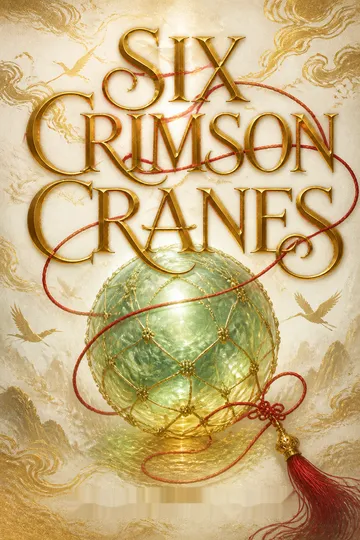
Six Crimson Cranes Series

About the Author
Other books by Elizabeth Lim



Download PDF
Download EPUB
.epub digital book format is ideal for reading ebooks on phones, tablets, and e-readers.








