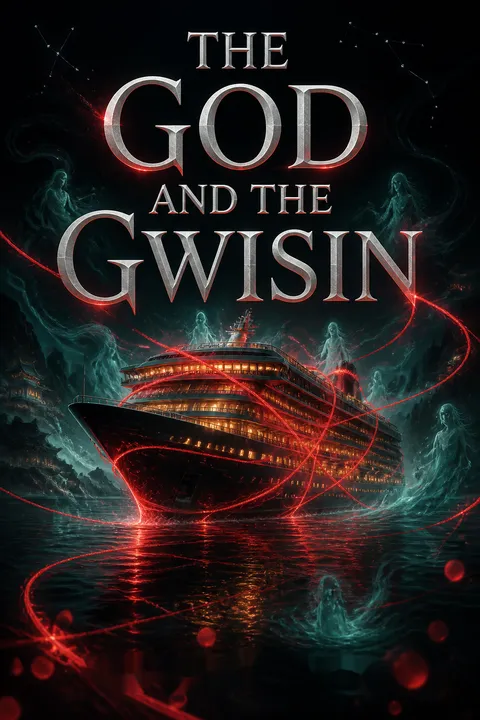


Plot Summary
The Rooftop Thread
At twenty-two, Yoo Kisa is an extraordinary shaman and a doctor in Seoul’s magical maternity ward, but relentless shifts have left her hollow with exhaustion. While operating, she notices a red thread tied to her little finger. That night, alone on the hospital roof, she tries to dismiss it as a hallucination. The thread stretches toward the city, and an abrupt force sends her over the edge.
Kisa falls to her death. Seven years later, she still exists in the underworld with the same face, breathing and feeling as she remembers doing when alive. She has no memory of what happened before this life, only a persistent ache and a question she has never managed to answer: why does the thread still lead somewhere?
Kisa’s fall turns professional exhaustion into a literal loss of control. Her competence has helped her save lives, but it has also become a way to ignore her own limits; even on the roof, she tries to explain away the thread instead of asking what it might mean. The death is first presented through her limited understanding, so the mystery attaches not only to who caused it but to Kisa’s difficulty recognizing her own vulnerability. Her survival as a thinking, feeling ghost complicates the usual boundary between bodily death and personal continuity.
Seokga's Seven-Year Search
In 2025, Seokga, the trickster god, has spent decades searching for Hani, the gumiho he loved and lost in 1992. The Red Thread appeared seven years earlier, on the day Kisa died, but its knots have sent him on fruitless journeys across the world. His therapist, Dr. Jang Heejin, sees that exhaustion has consumed him and persuades the pantheon to force him to take a vacation.
Seokga resists until his brother, Emperor Hwanin, tells him the trip is already arranged. They will board the SRC Flatliner, a luxurious cruise ship that carries the dead along the underworld river before reincarnation. Seokga expects a pointless holiday. He does not know the thread has finally found a straight path toward Kisa.
Seokga’s search is shaped by grief, but also by an inability to imagine that the person he lost could return changed. His years of pursuit give longing the appearance of action, while his refusal to rest narrows his life to one unresolved past. The cruise is imposed as treatment, not chosen as adventure, which places him in a rare position of powerlessness. Its setting also turns reincarnation into a public system with queues, rules, and commercial comforts, making the supernatural afterlife feel less like a final answer than a place where unfinished attachments continue to work.
The Living Stranger
On the Flatliner, Kisa works a punishing turn-around shift as crew, a sentence for karmic debts attributed to a previous life. When the thread tightens around her finger, she realizes someone is approaching and waits in the sick bay with her coworker Kim Hajun. Seokga follows his suddenly straightened thread through the ship and arrives at her door.
Their first look brings Kisa a strange feeling of recognition, but Hajun assumes the stranger is dangerous and hurls a paperweight at his head. Seokga falls, bleeding red blood. Kisa discovers that he is alive, unlike everyone else aboard. He identifies himself as a god, while she recognizes his name from her studies. The impossible meeting becomes an urgent puzzle for them both.
Their reunion begins with a comic act of protection that also exposes the gulf between their worlds: Kisa and Hajun assume everyone aboard is dead, while Seokga arrives expecting a lost beloved and finds a stranger. The paperweight makes his living body unmistakable, turning a fated encounter into a medical emergency Kisa can manage. Her instinct is to investigate what she cannot understand; Seokga’s is to feel the loss of recognition. The same moment offers them different kinds of evidence, one bodily and one emotional, and neither is sufficient to settle what their connection means.
Love as Research
After Kisa treats his injury, she quickly deduces that the thread joins them as soulmates and that she may have shared a past life with him. She has no memories of it, however, and responds by proposing that they document the rare phenomenon together. Over coffee, she compares reincarnation to the Ship of Theseus: whether a person remains the same when their body and memories change.
Seokga hears her curiosity as proof that she views him as a research subject, not as the woman he spent decades seeking. He leaves before his grief shows. Kisa regrets how bluntly she spoke, but she still cannot separate the extraordinary scientific discovery from the feelings she does not know how to name.
The Ship of Theseus question gives Kisa a precise intellectual tool for avoiding an emotionally dangerous conclusion. If identity depends on memory and lived experience, she need not accept another person’s expectations simply because fate links them. Seokga, meanwhile, is vulnerable to the opposite error: he treats continuity of soul as a promise that affection will resume unchanged. Neither interpretation is foolish, but each protects its speaker from a different fear. Their first rupture establishes the central relational problem: Kisa must be allowed to become herself, while Seokga must grieve without making her responsible for restoring Hani.
A Sword Among Flowers
Kisa goes to the greenhouse party hoping to apologize, but finds Seokga confronting Nam Somi, a gumiho who once knew Hani. Resentment from the old crisis rises in him, and he draws his sword on Somi. Kisa steps between them and demands that he consider the crew who will be blamed for the wrecked party.
Seokga drops his weapon when Kisa’s thoughts suddenly reach him through the thread, and she hears his in return. Somi recognizes Kisa’s eyes and calls her Hani, then flees before Kisa can question her. Kisa insists that Seokga repair the damage and protect the workers from punishment. He helps clean the broken glass and crushed flowers, beginning to see that Kisa’s concern is for the people paying the price.
The greenhouse conflict makes the bond more than a romantic symbol: it becomes a channel that exposes impulses Seokga would rather keep private. Kisa’s intervention is ethically specific. She does not claim authority over the old injury between Seokga and Somi; she objects to his using the party’s workers as collateral. That distinction matters because she refuses to inherit a grievance she cannot remember. Seokga’s willingness to clean up is small beside his power, yet it marks the first consequence of Kisa’s moral clarity: she makes him attend to the people his anger has made invisible.
The Emperor's Missing Heart
Later that night, Kisa and Seokga find Hwanin’s body on a stairwell, his heart torn out. Seokga recognizes claw wounds and immediately suspects Somi, but she proves she cannot have done it by showing them her broken, unusable claws.
As they argue over the evidence, Hwanin’s divine soul returns in the form of a baby, leaving Seokga suddenly responsible for his helpless brother. Kisa identifies the reincarnation process and helps feed him with restorative flowers.
Seokga and Kisa agree to investigate without alerting the pantheon, since Hwanin’s son Hwanung may soon take power and distrust Seokga. Death’s ruler, Yeomra, agrees to conceal the murder if they solve it before the cruise ends, and promises Kisa and Hajun a place in the reincarnation queue.
Hwanin’s murder converts a private reunion into an investigation with political stakes, while his return as an infant forces Seokga into an unfamiliar form of care. The brother he once treated as rival and accomplice is now physically dependent on him, a change that briefly unsettles their old hierarchy. Kisa’s medical knowledge remains useful even after death, though she has lost her shamanic powers; she can still explain what the gods cannot. Yeomra’s offer makes freedom transactional, increasing urgency while reminding Kisa that her own future is being negotiated by others.
The Scarlet Fox's Past
As Kisa and Somi follow security officer Shin Korain, Somi reveals what Kisa’s missing past contained. Kisa had been Hani, the Scarlet Fox, a notorious gumiho who worked beside Somi and became her closest friend. During the Dark Days, the demon Eodum manipulated Somi into violence against Hani.
Hani ultimately let Somi escape rather than kill her, then died after using her fox bead to stop Eodum from turning the mortal realm into Gamangnara. Somi had returned later to apologize and found Hani gone. Kisa learns that the woman Seokga mourns was also the person who shaped Somi’s life. She does not inherit Hani’s memories, but she begins to understand why both of them look at her as if the past is standing in the room.
Somi’s account destabilizes Kisa’s belief that her present identity can be cleanly separated from the past. The revelation that she once embodied a feared killer does not make her responsible for every act Hani committed, but it does give her a history she cannot dismiss as irrelevant. Somi’s remorse is similarly complicated: she regrets abandoning Hani, yet her account shows how manipulation and addiction to soul-taking narrowed her choices. Their shared present does not erase the old harm; it gives them a chance to meet without forcing Kisa to perform forgiveness on behalf of someone she cannot remember.
The Wrong Crew
The security footage shows Hwanin arguing on his phone before a flash of heavenly light fills the camera and he disappears. Kisa suspects hidden passages, then follows Korain and greenhouse server Lim Chaeyeon after overhearing them discuss an unseen boss and taking care of someone.
Their snooping in Hwanin’s suite appears damning until Kisa learns they are Godly Gossip informants hunting an intimate story about the emperor’s underwear. Their real target is gossip, not murder.
Meanwhile, Seokga calls Hwanung, whose bitter comments about his father and the throne sound like a confession. The investigators now have a misleading pair of spies, a prince with apparent motive, and no clear route by which Hwanin’s body reached the stairwell. Each clue seems to narrow the case, then opens another gap.
The investigation repeatedly confuses information with explanation. The cameras provide a real event, but their blind spots leave the crucial action unseen; Korain and Chaeyeon behave suspiciously, but their motive is commercial intrusion rather than murder. Hwanung’s resentment sounds persuasive because Seokga and Kisa already expect a political crime. The plot makes their eagerness to solve the case part of the danger: each investigator fits new facts into a narrative before testing what else those facts could mean. Kisa’s caution about incomplete evidence is not mere academic fussiness; it is the safeguard the group keeps neglecting.
A Sauna, A Storm
As the search continues, Kisa helps Seokga care for baby Hwanin and discovers that the red thread carries emotions as well as stray thoughts. Her calm, silver reassurance briefly eases Seokga’s stress. When he grows furious about the false leads, she steers him into the ship’s spa instead of letting him confront Korain and Chaeyeon.
They talk about her dream of seeing Okhwang’s Heavenly Library, and Kisa offers to stay overnight to help with Hwanin. Seokga begins to accept that their connection need not reproduce his history with Hani. Kisa, who has spent years choosing work over intimacy, stops trying to suppress her attraction. They agree to be friends, then share a private swim and a night together, even as the murder remains unsolved.
Care moves their relationship forward more effectively than fate does. Kisa comforts Seokga through an ability neither fully understands, then makes a practical offer grounded in her experience as a doctor. He, in turn, listens to a dream that matters to her rather than treating her only as Hani’s successor. Their intimacy does not resolve the identity question; it makes the question more consequential. Kisa’s decision to participate is a choice made in the present, not an automatic consequence of the thread, while Seokga’s tentative acceptance of friendship marks a shift from possession toward mutuality.
A Second Heart Taken
After the ship’s captain, Lee, is killed on the bridge, his screams and the killers’ instructions blare through the intercom. The voices seem to belong to cruise director Lee Soo-min and Hwanung, and the order to remove the captain’s heart echoes Hwanin’s murder. Seokga and Kisa believe they have found the people behind both attacks. Yeomra captures Soo-min, while Hwanung flees.
Dr. Jang tells Seokga that Hwanung had been Soo-min’s lover and that he killed Hwanin to gain the throne; Seokga accepts the explanation and reports the case solved. Yet the conclusion relies heavily on voices and Jang’s account. The apparent resolution gives Kisa a chance to leave the ship, but the unanswered details still trouble her.
The second murder seems to confirm the first because its method and apparent perpetrators fit the theory already forming around Hwanung. This is a classic confirmation trap, sharpened by the authority of Dr. Jang, whose account supplies motive and emotional context. The ship’s public intercom appears to offer direct evidence, but sound can be imitated, and the story has already established that magical creatures can alter appearances and perceptions. Seokga’s relief at closing the case is psychologically understandable: it promises an end to danger and a path back to power. That relief also makes him vulnerable to a false explanation.
The Fall She Survived
As Kisa and Seokga face the prospect of parting, she finally tells him that she did not jump from the hospital roof: someone pushed her. Seokga’s rage breaks loose as he conjures illusions drawn from Hani’s memories, allowing Kisa to witness the love and danger of their former life. She sees Hani’s humor, her loyalty, and the moment Seokga held her as she died.
Kisa stops measuring herself against Hani and recognizes that Seokga values qualities she still possesses. The two choose each other in the present and spend the night together. Their closeness does not answer who murdered Kisa, but it changes what she is willing to risk by leaving. She no longer wants to treat their attachment as an experiment or a distraction.
Kisa’s disclosure reframes her death from a private failure of judgment into violence done to her, explaining why a hand behind her can trigger panic. Seokga’s illusion is both a gift and a danger: it offers Kisa access to the history that has haunted their relationship, but it also threatens to overwhelm her with a past she did not choose to remember. What changes the balance is not that Kisa becomes Hani again, but that Seokga names what he loves in both lives without demanding sameness. Their intimacy is a meaningful act of consent, though it arrives amid grief and an unresolved murder.
The Therapist's Hidden Plan
After their night together, Seokga takes a call from Hwanung, who swears he did not kill his father and identifies Dr. Jang as the person who sent him toward the bridge. Kisa has already noticed Jang meeting Hwanung and has stolen her journal. In a dream, Hani urges Kisa to reconsider the evidence; on waking, Kisa reads the journal and discovers the long deception.
Jang is a jangsan beom, not the shaman she claimed to be. She pushed Kisa from the roof, killed Hwanin, killed Somi in the past, and has manipulated Seokga for years with power-suppressing medication. Her real aim is to free Mireuk, the imprisoned creator god. Before Kisa can alert everyone, the ship lurches as underworld mermaids break its anchor.
The journal forces Kisa to revise not only her suspect list but her understanding of the relationship that made the investigation possible. Dr. Jang’s therapeutic authority gave her access to Seokga’s grief and to the pantheon’s confidences; care became camouflage for control. Kisa’s dream of Hani functions less as supernatural proof than as a prompt to trust evidence she has repeatedly set aside. The revelation also links the novel’s personal and political crimes: Kisa’s murder, Hwanin’s murder, and Seokga’s manipulation are all parts of a plan aimed at reopening a sealed realm.
Into Bound God's Pass
On the storm-tossed deck, Kisa tells Seokga that Jang engineered the deaths and used false voices to frame Soo-min and Hwanung. Jang transforms into a tiger-like jangsan beom, while mermaids swarm the ship and drive it toward Bound God’s Pass, where Mireuk is imprisoned. Jang takes Seokga over the rail and into the river.
Kisa freezes at the edge, reliving her fall, until Somi takes her hand and jumps with her. The Red Thread becomes solid enough to guide and pull them through the water into Mireuk’s cave. They find Seokga unconscious and Jang preparing to wake him beside his father. Yeomra joins them, but warns Kisa that Mireuk may control Seokga through his longing for approval.
The climax makes Kisa confront the bodily pattern that began the novel: a height, a fall, and the terror of being pushed. This time she does not overcome fear by denying it; Somi’s hand lets her choose the plunge in company. The thread’s transformation from invisible guide to physical rope gives fate a material role, but it cannot make the decision for Kisa. She must act. Somi’s presence also converts their shared history from inherited guilt into solidarity, while Yeomra’s warning identifies the most dangerous vulnerability in the cave: Seokga’s hunger to be loved by his father.
The Trickster's Last Choice
Jang tells Seokga that Mireuk can restore what he has lost and promises the fatherly love he has wanted since childhood. Seokga appears to accept, letting Kisa and Yeomra believe he will remove the shackles. Instead, he uses an illusion to make the broken chains and his own obedience look real; Mireuk remains bound.
Kisa and Somi restrain Jang with the newly solid thread, and Yeomra secures her in death-made shackles. Seokga refuses his father’s offer to reshape the past and turns away from the prison without looking back. His choice rejects both the old coup-making hunger for power and the fantasy that one act of rescue could repair a lifetime of cruelty.
Mireuk’s offer is effective because it addresses Seokga’s deepest wound rather than his political ambition. The trickster’s apparent compliance lets the father believe he has found the son he can manipulate, while Seokga uses deception to protect the boundary he once helped create. This is not a sudden moral conversion; he remains clever, angry, and capable of violence. What changes is the purpose of those capacities. He no longer seeks authority as compensation for rejection, and he refuses to mistake a promise of affection for evidence that his father has changed.
A Home in the Stacks
With the murderer secured and the ship damaged, Kisa can enter the reincarnation queue. Instead, she asks Seokga, now interim heavenly emperor, to bind her to the Heavenly Library, the place she longed to see while alive. This leaves her a ghost, but gives her a home she can leave and return to, rather than another sentence of shipboard labor.
Seokga grants the wish. Before Kisa departs, he arranges for Hajun to remain aboard as a guest with Somi for as long as they choose, and Somi gives Kisa her collection of battered romance novels. Kisa and Seokga reunite in the library, where she begins studying the thread that joined them. They build a life together among the books.
Kisa’s final request revises the binary the book initially gives her: either remain trapped in the afterlife’s labor system or return to life through reincarnation. She chooses neither escape by erasure nor acceptance of punishment. The library makes a third form of existence possible, one organized around knowledge, intimacy, and freedom of movement. Her wish also fulfills the novel’s concern with self-determination: Seokga can grant the binding, but Kisa chooses its terms. Hajun and Somi receive time without being hurried toward reincarnation, extending that same respect for individual pace to the supporting cast.
Epilogue
Seokga and Kisa settle into the Heavenly Library, where she studies the Red Thread and he fetches books from its darker, less orderly stacks. Hwanin, still a flying infant, keeps Seokga occupied.
Their work is interrupted when a cherry blossom drifts through the library and Mago, Seokga’s long-sleeping mother and the rightful empress of Okhwang, appears at their cottage door. She has woken with a copy of Godly Gossip’s tell-all about Seokga and wants an explanation. Her arrival opens a new family question just as Kisa and Seokga have made a home of their own.
The epilogue gives domestic life the texture of an ongoing adventure rather than a static reward. Kisa’s research continues, Seokga’s protectiveness persists, and Hwanin’s powers keep disrupting their routines. Mago’s return brings the unresolved family history directly into the couple’s new home, but the scene is comic rather than ominous: a gossip magazine becomes the instrument of reunion. The ending therefore closes the immediate crisis without pretending that healing means the end of conflict. Seokga’s household is newly chosen, yet it must now make room for a mother, brother, and public reputation he cannot control.
Analysis
The novel’s deepest question is not whether Kisa is Hani, but what ethical claim a past identity can make on a present person. The Ship of Theseus analogy initially seems to settle the matter in favor of discontinuity: Kisa has different memories, habits, and moral intuitions, so she owes Seokga nothing. Yet the story gradually replaces the demand for sameness with a more nuanced account of continuity. Kisa’s care, intellectual appetite, and loyalty resonate with Hani’s qualities without requiring her to inherit Hani’s personality or history as a script. Love becomes trustworthy only when Seokga learns to recognize resemblance without treating it as possession.
The afterlife’s bureaucracy provides a material counterpoint to metaphysical freedom. Kisa’s sentence is based on karmic records she cannot verify, and her labor continues even after death. Yeomra’s promise of a place in the reincarnation queue turns relief into a reward that must be earned. Against this system, Kisa’s final choice is not a return to life at any cost, but the selection of a meaningful home and a life she can shape. Her request demonstrates agency inside a structure that appears designed to deny it.
The murder mystery tests how authority manufactures truth. Jang’s role as therapist grants her intimate access to Seokga, and her professional legitimacy makes her lies persuasive. The crew’s gossip, partial camera footage, and apparently incriminating voices all tempt the investigators into premature certainty. Their failure is not simply poor detective work; it reflects how people trust explanations that fit existing fears. Seokga expects betrayal, Kisa trusts facts that can be neatly categorized, and both must revise their assumptions.
Finally, the book treats care as an active practice rather than a feeling. Kisa tends patients and an infant; Seokga learns to protect without controlling; Somi and Hajun offer one another time rather than demanding immediate recovery. These acts do not erase trauma. They create conditions in which people can choose what comes next.
Review Summary
People Also Read








Characters
Yoo Kisa
Exhausted healer and scholarKisa is a brilliant shamanic doctor whose expertise in magical childbirth is matched by an intense need to understand how things work. She trusts evidence, rules, and preparation, partly because they let her feel in control when life becomes emotionally uncertain. Years of overwork have narrowed her world to duty, and she struggles to distinguish ambition from self-neglect. Her curiosity is generous as well as analytical: she wants knowledge because it can help patients and explain the strange world around her. Kisa is not naturally impulsive, but her loyalty and capacity for care can lead her beyond the safety of her habits.
Seokga
Grieving trickster godSeokga is a powerful trickster deity, former detective, and younger brother of the heavenly emperor. He is sharp-tongued, theatrical, and comfortable using deception, yet beneath his bravado lies an old fear of being unwanted. His father’s favoritism and his complicated history with Hwanin have shaped his appetite for power and his suspicion of kindness. Seokga uses humor and aggression to keep vulnerability at a distance, even with the therapist who has treated him for years. He is also capable of fierce loyalty and tenderness, especially toward people he believes he has failed.
Nam Somi
Unruly fox with regretsSomi is a stylish, sharp-witted gumiho whose confidence can conceal fear and regret. She is accustomed to surviving through bravado, charm, and opportunism, and she tests boundaries even when the consequences are unpleasant. Beneath her polished appearance is a capacity for shame and attachment that she rarely displays easily. Somi is observant, resourceful, and willing to help when someone she cares about is threatened. Her relationships are shaped by a persistent tension between wanting closeness and believing she has already forfeited the right to it.
Kim Hajun
Gentle idol and medicHajun is a former K-pop idol and one of Kisa’s closest friends aboard the Flatliner. Kind, quick to laugh, and eager to protect others, he is learning medical work under Kisa’s guidance. His gentle manner can disguise the lasting effects of an intensely scrutinized public life and a painful relationship with his own body. Hajun is sensitive to the distress of people around him and often offers care in small, practical gestures. He wants to believe that people can recover without being forced to prove that they are already well.
Hwanin
Heavenly emperor and brotherHwanin is the sovereign of Okhwang, father of Hwanung, and older brother to Seokga. His authority is immense, but his family life is marked by affection, disappointment, and competing expectations. He has a composed, regal bearing that contrasts with the more unruly personalities around him. Hwanin believes in order and responsibility, sometimes without recognizing how those values can feel like control to his son or judgment to his brother. His connection to both men places him at the center of the pantheon’s politics and its most intimate family tensions.
Hwanung
Rebellious god of lawsHwanung is Hwanin’s son and the god of laws and kept promises. He resists the solemn role expected of him, favoring modern clothes, risky challenges, and a confrontational style. His resentment toward his father is sharpened by feeling miscast in a position he did not choose. Hwanung can be impulsive and abrasive, especially toward Seokga, but his rebelliousness is not simply a desire for disorder; it reflects a struggle to define himself within a powerful family.
Dr. Jang Heejin
Seokga's deity psychologistDr. Jang is an experienced shaman and deity psychologist who has treated Seokga for decades. Her grandmotherly manner, dry humor, and disciplined patience allow her to challenge a patient who routinely evades questions. She understands that Seokga’s anger often protects grief and insecurity, and she is willing to wait through his silences rather than force an easy answer. Jang’s role in the pantheon’s mental-health system gives her unusual access to divine lives, while her warm presentation can make it difficult for others to tell where professional care ends and private motives begin.
Yeomra
Underworld's corporate rulerYeomra rules Jeoseung and runs its afterlife institutions with the instincts of a business executive. He is stylish, ambitious, and attentive to reputation, treating the underworld as both a realm and an enterprise. His rivalry with Seokga makes their dealings prickly, but practical necessity repeatedly draws them into cooperation. Yeomra prefers bargains and procedures to emotional appeals, though his choices show that he is not indifferent to fairness. He is most comfortable when he can control the terms of a crisis, even when events expose the limits of his oversight.
Samsin Halmoni
Goddess of birth and mothersSamsin Halmoni is the goddess who grants Kisa her healing gifts and presides over childbirth, mothers, and babies. She is outspoken, protective of her domain, and accustomed to being treated with deference by younger gods. Her maternal image can coexist with sharp judgment and a taste for meddling in pantheon affairs. Samsin’s relationship with Kisa reflects the obligations built into divine patronage: a shaman receives extraordinary abilities, but those gifts do not erase the goddess’s own priorities or prejudices.
Mago
Earth goddess and motherMago is the earth goddess, mother to Seokga and Hwanin, and the rightful empress of Okhwang. Her long absence has left an emotional and political vacuum in her sons’ lives. Seokga remembers her as a loving presence, particularly in childhood, though her grief over the family’s upheavals has shaped her distance from the world. Mago represents an older source of care and authority than the institutions currently governing the gods, and her relationship with her sons carries the weight of what their family has lost.
Hani
Legendary gumihoHani is a famed gumiho associated with the Dark Days and with Seokga’s most consequential memories. She is remembered as witty, daring, and fiercely loyal to the people she chooses as her own. Her confidence and appetite for mischief stand in contrast to Kisa’s careful, scholarly nature, though the two share a perceptiveness that reaches beneath appearances. Hani’s legacy affects how others understand the past and how they approach the present, even when memory cannot be restored simply by repeating old stories.
Lee Soo-min
Exacting cruise directorSoo-min directs the Flatliner’s crew with a polished, demanding manner. She is concerned with rules, appearances, and keeping the ship’s operations orderly, and she expects staff to meet her standards even during exhausting turn-around days. Her preference for control makes her difficult to approach, though her professional role also requires her to manage a ship full of dead guests and unpredictable supernatural events.
Shin Korain
Haetae security officerKorain is the Flatliner’s security officer, a haetae who takes his responsibilities seriously despite the ship’s uneven staffing and strange rules. He is alert, direct, and protective of the crew’s authority within their workplace. His clashes with powerful guests reveal the limits he faces when gods decide that ordinary procedure does not apply. Korain’s practical knowledge of the ship makes him a useful presence whenever disorder threatens to spread.
Lim Chaeyeon
Observant greenhouse serverChaeyeon is a young Flatliner crew member who serves at the ship’s greenhouse parties. She is watchful, quick to assess a situation, and more comfortable with private schemes than open confrontation. Her work places her among the staff who bear the consequences when divine guests cause trouble. Chaeyeon’s ambition reflects the afterlife’s hierarchy, where even dead workers seek better assignments and recognition.
Captain Lee
Living underworld captainCaptain Lee is the living human hired to steer Yeomra’s cruise ship through the underworld river. He is mild-mannered, practical, and proud of his nautical experience, though his unusual employment leaves him wary of the supernatural powers around him. His presence demonstrates that the boundary between the living world and Jeoseung can be crossed through more than one kind of bargain.
Mireuk
Imprisoned creator godMireuk is the ancient creator god and father of Seokga and Hwanin. Once a source of immense creative power, he is remembered for a fall into cruelty that altered the worlds and devastated his family. His history remains a living wound for Seokga, who cannot fully separate fear of becoming like his father from the desire to earn his approval. Mireuk’s influence persists through memory, inherited power, and the political consequences of what he created.
Eodum
Demon behind the Dark DaysEodum is an eoduksini, a dangerous demon whose actions shaped the Dark Days of 1992. Its ability to manipulate others and destabilize the boundary between realms makes it a lasting subject of fear in creature communities. The old conflict involving Eodum explains why Seokga and Somi carry such different forms of guilt, and why Hani’s choices remain consequential long after the crisis has passed.
Plot Devices
The Red Thread of Fate
Links separated soulsThe thread binds Seokga and Kisa across lifetimes and acts as a guide when its knots loosen. It can transmit thoughts and emotions between them, making unspoken reactions part of their shared experience. At crucial moments it behaves as if it has a will of its own, and under extreme danger it becomes physically solid. The device thus works on several levels: it is a supernatural compass, a source of unwanted intimacy, and a practical means of survival. Its presence raises the central question of whether fate creates love or merely places two people close enough to choose it.
The SRC Flatliner
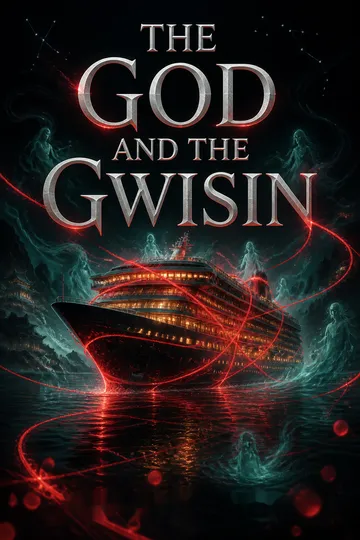
Turns punishment into passageYeomra’s cruise ship carries dead guests down the Seocheongang River before they move toward reincarnation. Its luxury amenities contrast with the crew’s exhausting labor, creating a miniature afterlife organized by status, karma, and employment. Kisa’s assignment aboard the ship makes her a captive of a system she once hoped to study, while Seokga’s forced vacation brings the two leads into the same confined space. The ship’s cameras, decks, staff routines, and river route also turn it into a contained murder-mystery setting. Its destination becomes increasingly important as the case reaches beyond its passengers.
The Ship of Theseus
Tests identity through changeKisa invokes the philosophical question of whether a ship remains the same after all its parts are replaced. She uses it to reason about reincarnation: whether a person without their old memories can still be the same person. Seokga’s attachment to Hani makes him fear that loving Kisa would invalidate what he shared with his former beloved, while Kisa fears being treated as a replacement. The analogy first gives Kisa a rational distance from the bond, then becomes a framework for recognizing continuity without demanding sameness. It allows both characters to honor the past without making it a contract governing the present.
Restoration and Rebirth
Separates soul from bodyIn Jeoseung, the dead retain forms shaped by how they remember themselves, and treatment can restore the appearance of a body damaged by death. Restoration offers psychological relief without reversing death. Gods follow a different rule: when killed or aged beyond their bodies, they return as infants and gradually regain their former selves. Kisa’s medical training helps her understand both processes and care for Hwanin after his transformation. The device makes the body a record of memory rather than a simple measure of life, while keeping reincarnation distinct from recovery or resurrection.
Illusion and Mimicry
Makes evidence unreliableSeokga’s divine illusions can affect sensation as well as sight, while certain creatures can imitate voices and appearances. These abilities create opportunities for deception, misdirect the investigation, and allow apparent evidence to contradict what actually occurred. Illusion also becomes a tool for protection: Seokga uses it to deceive an enemy without surrendering what he means to defend. The same power therefore serves both manipulation and resistance. The mystery depends on the investigators learning that seeing or hearing something is not the same as knowing who caused it.
Fate's Thread Series
Download PDF
Download EPUB
.epub digital book format is ideal for reading ebooks on phones, tablets, and e-readers.








