

Plot Summary
Prologue
Months into the search for Jasalyn, shadow queen Abriella faces rumors, an unstable court, and a birthday that may cost her sister everything. A magical ring makes Jasalyn almost impossible to find: witnesses forget her as soon as she leaves, and Abriella must conceal that the princess is missing.
The ring also connects Jasalyn to Mordeus, the tyrant who may use her body to return. Abriella’s ally Hale Kendrick has lost both Jasalyn and his sister Felicity, and refuses to stop searching. Their only leads are scraps of rumor, a possible cure for the ring, and the hope that both missing women are alive.
The opening makes absence an active force. The ring does not merely hide Jasalyn; it fractures the social record of her existence, leaving Abriella to govern a court that cannot know what its queen knows. Hale’s grief parallels hers, but the two losses are not interchangeable: Abriella must protect a kingdom while concealing its vulnerability, and Hale must keep acting without evidence that his search can succeed. The birthday deadline turns their uncertainty into a political emergency. Private love and public rule share one fragile condition: Jasalyn must be found before Mordeus can convert her disappearance into possession.
Eleven Days Left
Jasalyn comes around in the home of Fherna, an elderly goblin, still wearing the ring that drains her strength and bends others to her will. She had intended to reach Feegus Keep for the legendary Sword of Fire, hoping to use it against Mordeus, whose blood magic has linked their consciousnesses.
Fherna explains that Jasalyn has slept through eight months and has only eleven days before her eighteenth birthday. A spiced drink restores her strength temporarily, but its magic depends on the blood and life of a creature. Jasalyn recoils from the cost, then accepts that she may have to kill one to reach Mordeus before he claims her body.
Jasalyn’s first crisis is not simply a race against time. The ring has converted her wish for power into bodily dependence, making survival require another act of violence. Fherna’s blood remedy forces Jasalyn to confront the moral logic she has used to excuse her killings: she distinguishes victims by whether she considers them deserving, but necessity now asks her to harm an innocent creature. The lost months sharpen that conflict. She believes she is choosing a final act of vengeance, yet the ring has already made time itself something she can no longer control.
A Life Borrowed
Felicity’s imagined life in the Eloran Palace breaks apart when an attack forces her to fight beside a family she cannot quite recognize. She kills Orlen to save Misha, the Wild Fae king, then learns that her memories of palace childhood and romance were planted while she was held captive for eight months.
Her twin, Konner, kept her in a dreamlike stasis; Misha and her brother Hale eventually break in and bring her out. Felicity is left shaken by the blood on her hands and unsure whether Misha came for her or because the group needs her gifts. At the Midnight Palace, Hale and his friends welcome her home and ask her to help find Jasalyn.
Felicity’s rescue does not restore a stable identity. She has to grieve an invented life that felt emotionally real, while also accepting that the person she killed was not an illusion. The episode exposes how memory can be manipulated without making feeling itself false: her attachment to the imagined family reveals what she longs for, even though the events never happened. Her uncertainty about Misha repeats the same problem in waking life. She struggles to tell whether she is valued as a person or as a useful body, a question that will shape both her espionage and her romance.
The Keep’s Death Dogs
At Feegus Keep, Jasalyn uses the ring to move freely through the stronghold, then descends toward the dungeons to find Commander Rieckus and learn where Mordeus hid the sword. Kendrick appears just before death dogs attack. He shields Jasalyn and kills the beasts, but their venom leaves him badly wounded. She stays to summon a healer, takes him to Ironmoore, and stitches his injuries herself.
When he wakes, she accuses him of hiding that he is fae and of making a bargain with Mordeus to keep her alive in captivity. Kendrick explains that he accepted the bargain without knowing Mordeus’s purpose, and that their friend Shae may have helped bring about the wyvern attack that fixed the ring to her finger.
The rescue complicates Jasalyn’s attempt to reduce Kendrick to his betrayal. His actions contradict her fear that he is simply Mordeus’s accomplice, yet they cannot erase the fact that he withheld the truth while she was vulnerable. The scene gives her a painful choice between evidence and trust: she believes he saved her, but she cannot make herself treat that care as proof of safety. Her decision to leave him despite their intimacy protects her from emotional dependence, while also isolating her at precisely the moment when cooperation could matter most.
A Warning in Blood
Natan tells Jasalyn that Mordeus may take over her body when her bargain ends, because their blood magic binds their life forces and the ring strengthens the connection. She begins trying to enter Mordeus’s mind through conscious dreaming, hoping to locate the Sword of Fire. Instead, a blackout carries her to Abriella’s bedroom, where she wakes holding a dagger over her sister.
Jasalyn recognizes that Mordeus may have controlled her while she was unconscious and leaves a warning written in Abriella’s blood: ward against her because Mordeus is using her. Abriella knows about the deaths Jasalyn caused and still refuses to abandon her. Jasalyn returns to the search, now afraid that every lapse in awareness endangers the people she loves.
The revelation changes Jasalyn’s guilt from retrospective to immediate. The deaths she remembers are not only evidence of past harm; her sister’s near-injury shows that the danger is still unfolding through her body. Her warning is both practical and relational. She trusts Abriella enough to ask for protection, but not enough to stay close, because she sees distance as the only care she can offer. The scene also challenges the idea that agency is a single, uninterrupted state. Jasalyn must take responsibility for consequences while admitting that her consciousness may not have controlled every action.
The Princess Returns
Felicity joins Abriella’s search effort and learns that the queen needs the Stone of Disenchantment to weaken the ring’s spell. Since Jasalyn cannot be reliably located, Abriella plans a ball where Felicity will appear in her sister’s form and reassure the court. The stone belongs to Lord Pandian, whose sons are being considered as potential matches for Jasalyn.
Felicity agrees to charm one of them, obtain a hair, and use his shape to enter his family’s manor. Before the plan advances, she confides in Misha that a prophecy once showed Hale dying after he killed Erith. She has avoided the Eloran conflict to protect her brother, but now the threat to Jasalyn gives her another reason to act.
Felicity’s transformation is more than a disguise. She has spent much of her life borrowing appearances, and the mission asks her to use that survival skill in service of a community that once distrusted her. The ball’s performance also places her under competing pressures: Abriella needs a convincing princess, while Felicity fears that her own selfhood will again become secondary to what others require. Her confession to Misha reveals the cost of prophecy in personal terms. She has not been passive; she has been choosing the only form of protection she thought available, even when silence separated her from Hale.
The Pandian Safe
At the ball, Felicity poses as Jasalyn and meets Lord Pandian and his sons, Leon and Ezra. Misha steers her away from an unwanted dance and helps her focus on Ezra, who is eager to meet the princess privately. After Felicity takes a hair from him, she changes into his form and enters the manor to open the safe.
A hidden paralyzing substance leaves her barely able to move, and Leon catches her beside the stone. He stabs her, believing pain will force the shapeshifter out of Ezra’s body. Misha breaks in, disables Leon’s memory of the encounter, and escapes with Felicity and the Stone of Disenchantment. The success comes at a cost: Felicity is injured, and the group must return to the palace quickly.
Felicity’s skill gives her access, but it does not make her invulnerable. The manor’s trap works because she is focused on completing the mission and discounts the warning her own discomfort provides. Leon’s attack turns impersonation into a question of bodily ownership: he assumes that pain can reveal the real person by forcing a false form away. Misha’s intervention saves her, yet his need to use extensive magic exposes a strain he has not explained. The stolen stone therefore advances the central rescue while opening new vulnerabilities in both members of the couple.
The Wolpertinger’s Heart
Jasalyn enters Mordeus’s consciousness and sees the location of the Sword of Fire: a ruined blacksmith’s hut near the Midnight Palace. The sight also exposes his hatred for Abriella, and a blackout takes Jasalyn into her sister’s chamber with a dagger. After leaving a blood warning, she follows Fherna’s instructions into the forest to hunt a wolpertinger, whose fresh blood can counter the ring’s sickness.
The creature seems harmless until it transforms and attacks. Jasalyn kills it, drinks from its heart, and weeps beside its body. The brief strength lets her continue toward the sword, but the act leaves her frightened by how easily desperation can make cruelty feel necessary.
The wolpertinger episode refuses an easy division between innocence and violence. Jasalyn’s intended victim appears harmless, but it can defend itself; her decision is still a deliberate killing, not a clean sacrifice. The scene makes survival morally costly rather than morally cleansing. At the same time, the creature’s blood gives her access to action after months of passivity imposed by the ring. Jasalyn is neither simply a victim nor simply a killer. Her struggle is to acknowledge both facts without letting either define the entirety of who she is.
The Sword in Flame
The ruined hut is guarded by a three-headed, fire-breathing beast. Wounded in the leg, Jasalyn distracts it with bloodied clothing, reaches the cavern, and grabs the Sword of Fire despite its blistering heat. The sword opens a passage to Mordeus’s chamber, where she finds his body still rotting and breathing.
She strikes it with her dagger, but a stranger emerges from the shadows and reveals himself as Erith, patriarch of the Seven and maker of the ring. Jasalyn’s enchantment cannot control him. He sends her toward a comforting childhood illusion, but she resists and uses the sword to escape. Erith takes the weapon from her as she collapses among the burned remains of her childhood home.
Jasalyn reaches the object she believes will end her crisis, only to discover that access is not mastery. The sword burns her, and its portal carries her into a confrontation whose terms she does not understand. Erith’s immunity to her ring overturns the assumption that its power can solve every problem, while his authorship of the ring links her private bargain to the political struggle around Mordeus. The childhood illusion is especially cruel because it offers not wealth or power but the lost safety of family. Jasalyn’s refusal marks a small but consequential shift: she chooses pain and uncertainty over a refuge designed to trap her.
The Ring Comes Free
Abriella and Kendrick find Jasalyn poisoned by the beast’s claws and bring her back to the palace. While Mordeus takes control of her, Jasalyn stabs Abriella; Kendrick helps her regain herself long enough to use the Stone of Disenchantment. The stone loosens the spell fixing the ring to her finger, and Jasalyn removes it, but the ring’s magic remains because Mordeus wears its mate.
Her wounds heal, and Kendrick notices that the burn scars from the Sword of Fire have vanished. Abriella explains that Jasalyn is a phoenix, able to burn and be reborn. Mordeus needs that power to claim her body. Jasalyn also admits that Erith survived her attack and kept the sword.
Removing the ring brings relief, not resolution. Jasalyn can reclaim immediate control of her body, but the linked ring and the blood magic remain, so the larger threat persists. Her injury to Abriella makes the emotional stakes concrete: the sister she has tried to protect is already suffering consequences of the connection. The phoenix revelation reframes the missing scars as evidence of a capacity Jasalyn has never been taught to use. That gift is not a simple advantage. It is the mechanism Mordeus intends to exploit, making the possibility of renewal inseparable from the possibility of being consumed.
The Book Comes Home
Jasalyn refuses to wait safely at the Midnight Palace and travels with Kendrick and his friends to Elora, hoping to find the witch and undo her bargain. At the abandoned cottage where she first received the ring, Natan reveals hidden traces of Echo magic. Jasalyn calls the warded Grimoricon to her, and the book shifts into a cat before becoming a locket.
She and Kendrick also learn that Erith once occupied the cottage. Their journey brings Jasalyn to Crissa, Kendrick’s missing queen, alive and recovering in his mother’s home. Jasalyn steps away when Kendrick kneels to Crissa, believing their destined roles leave no place for her, while Crissa insists their bond need not erase Jasalyn’s feelings.
The recovered Grimoricon makes knowledge tangible, but the book’s shifting forms stress that truth cannot be obtained by force alone. Jasalyn succeeds by recognizing its attachment and inviting it toward her rather than breaking through its wards. Her meeting with Crissa creates a different kind of test. Jasalyn is forced to distinguish love from entitlement: she can feel grief at Kendrick’s duty without treating Crissa as an enemy. Crissa’s response unsettles the fixed future Jasalyn has accepted. The scene opens the possibility that inherited roles can be reconsidered, even as Jasalyn still assumes that her own life will end before such choices matter.
The Twin’s Hidden Family
Felicity enters the Eloran Palace in the form of Sol, one of the Seven, to search its truth-bound Chronicles. Before reaching them, Konner brings her to meet his daughter, Leia, and the child’s mother. Shae, whom Elorans call Seamus, discovers Felicity’s disguise and holds a knife to her throat.
Konner helps her escape, then explains that he kept Felicity in stasis because Erith wants her dead and may also endanger Leia. He believes their father’s unusual immortality began with the sacrifice of a firstborn daughter and can be broken by a female descendant. Felicity accepts that Erith must be stopped, though she still wants to protect Hale from the prophecy that links his death to her killing their father.
Felicity’s encounter with Leia gives her a family connection she cannot reduce to politics. Konner’s motives are compromised by his methods, but his fear for his daughter is genuine, forcing Felicity to hold betrayal and care in the same frame. The suspected sacrifice of an earlier child reveals the logic beneath Erith’s hunger: his power is built on turning kinship into a resource. Felicity’s willingness to act does not mean her fear of the prophecy has vanished. Instead, she begins to make decisions with incomplete knowledge, trusting that protection cannot mean indefinite avoidance.
The Oracle Names Erith
At the oracle’s mountain pool, Jasalyn learns that Erith disguised himself as the witch who made her bargain. He promised Mordeus the Wild Fae throne in exchange for help gaining power, and the oracle sees no offer Erith would value more than that reward. She also shows Jasalyn a future in which Mordeus’s forces overrun the Midnight Palace and Abriella is killed.
Kendrick pulls Jasalyn from the water before she drowns. They hurry back by goblin transport and warn the queen. Jasalyn cannot free herself from the bargain, but she insists on helping prepare the palace. Her earlier wish to face Mordeus alone gives way to a more urgent task: keeping her sister and their allies alive.
The oracle gives Jasalyn information but not a solution. Her vision makes knowledge ethically demanding: once Jasalyn sees the threatened future, she cannot treat her own survival as the only problem. The revelation that Erith was the witch also collapses the distinction between a private transaction and public tyranny. Jasalyn’s bargain has always been part of a larger scheme. Kendrick’s rescue from the pool underscores the value of companionship without making him a substitute for her agency. She returns to the palace not because fear has disappeared, but because fear now points toward people she can still protect.
A Loophole in the Bargain
Felicity realizes that Jasalyn may have misremembered the bargain’s exact terms: she must surrender her current life on her eighteenth birthday. Because Jasalyn is a phoenix, dying in fire and being reborn before then might start a new life beyond the bargain’s reach.
The discovery offers hope, but Pretha warns that the transformation can kill her and Mordeus remains bound to her through blood magic. Jasalyn cannot summon her flame despite hours of practice.
Meanwhile, Erith enters the palace disguised as General Hargova, opens portals for Mordeus’s soldiers, and traps himself with the Grimoricon in Abriella’s office. With the palace under attack and midnight approaching, Jasalyn must attempt the transformation before Mordeus takes control.
The loophole is a legal and bodily problem at once. Jasalyn’s future depends on interpreting the bargain precisely, but interpretation alone cannot save her; she must survive a transformation that may destroy her. Her training failure strips away the comfort of a predictable heroic awakening. The invading army makes the choice public, tying her body to the safety of the court. Erith’s disguise also turns trust into a tactical vulnerability: the palace admits the enemy because his borrowed identity carries authority. Under pressure, every earlier question about who controls a body becomes an immediate question of who can act.
The Palace Under Siege
Mordeus’s fighters pour through portals while silencer magic suppresses the defenders. During a blackout, Jasalyn puts the ring back on and drives a dagger into Kendrick’s chest; he survives, but the wound leaves him near death. Felicity escapes the fighting and finds Erith torturing Konner for Leia’s location.
She kills Shae when he attacks her, then uses an iron blade against Erith, whose bloodline makes him vulnerable to a descendant. Konner dies from his wounds after Felicity reaches him. Outside, Mordeus’s soldiers seize Abriella. As midnight nears, Jasalyn throws the ring into the fire and walks into the flames, choosing a dangerous phoenix rebirth rather than letting Mordeus inherit her body.
The siege makes the protagonists’ private conflicts inseparable from their political ones. Jasalyn’s blackout turns the ring into a weapon against the person she loves, while Felicity’s confrontation with Erith forces her to convert family history into lethal action. Konner’s death prevents the revelation of his motives from becoming a neat reconciliation; care and harm remain entangled to the end. Jasalyn’s decision to burn is therefore not an uncomplicated act of courage. She chooses a risk that may kill her because the alternatives would expose her sister, Kendrick, and the court to a tyrant’s return.
Ash and Rebirth
As Jasalyn burns, Mordeus attacks her mind with the dungeon terrors he once used to break her. He tries to make surrender feel like relief, but she recognizes that the visions of her dead loved ones are meant to weaken her will. Rather than searching for an inner flame, she accepts the darkness she has spent years fearing and turns her power against him.
The fire consumes them both, severing the connection and ending Mordeus. Jasalyn remains in the ashes for three days while the survivors hold the palace. She wakes alive beside Kendrick, who has survived his wound. The phoenix has renewed her life, and the bargain can no longer claim her as Mordeus’s vessel.
Jasalyn wins not by becoming fearless but by refusing to treat fear as proof that she should surrender. Her decisive insight is that her identity includes shadow as well as fire, vulnerability as well as power. She does not escape pain; she stays present through it and chooses what it will serve. This makes the rebirth more than a magical reset. The scars she later keeps matter because they preserve history without allowing history to dictate her worth. Mordeus’s defeat comes when he can no longer define Jasalyn’s suffering as evidence that she wants to disappear.
Two Futures Rewritten
Crissa’s battalion helps defeat the invasion, and the survivors reject a simple restoration of Elora’s old monarchy. Crissa proposes rebuilding the Seven as an equal council, with human leaders alongside fae, while she rules as queen beside the person she loves. Abriella remains queen of the shadow court.
Felicity chooses a life with Misha in the Wild Fae Lands and recommends Hale as a liaison between the realms. Jasalyn, now fae and free of the ring’s bargain, chooses to live in Elora with Kendrick rather than remain at the palace. Their futures are not guaranteed painless, but they are no longer dictated by prophecy, Mordeus, or a throne’s demands.
The political resolution echoes the personal one: survival does not require restoring the exact structure that existed before the crisis. Crissa’s proposal preserves useful institutions while distributing authority more broadly, answering the harm caused by both the corrupt Seven and the flawed monarchy that preceded them. The romantic resolutions likewise depend on choice rather than assigned roles. Felicity and Misha must decide what their bond means beyond political utility, while Jasalyn and Kendrick choose a shared life without demanding that love erase duty. The ending defines hope not as certainty, but as the ability to build arrangements that leave people more room to act.
Analysis
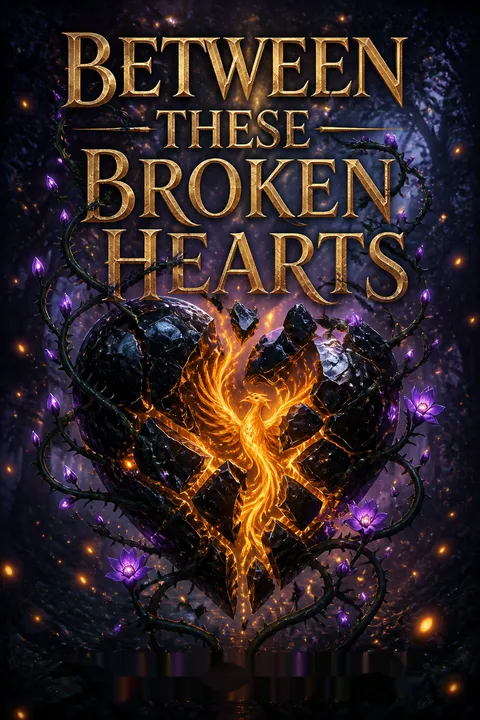
Between These Broken Hearts links political power to intimate forms of coercion. Mordeus’s return depends on a bargain made by a frightened girl, a ring that alters memory, and blood magic that makes Jasalyn’s body a contested territory. The fantasy machinery is specific, but its psychological pressure is recognizable: trauma can distort agency without erasing responsibility, and shame can persuade a survivor that isolation is the only ethical choice. Jasalyn’s movement toward recovery begins when she stops treating pain as proof that she is broken or dangerous beyond repair. She accepts her history, including the parts she regrets, and chooses to remain present through suffering rather than surrender her life to escape it.
Felicity’s arc explores a parallel problem through identity. Her Echo gift lets her borrow beauty, rank, and access, but each successful transformation risks confirming her fear that she is loved only as someone else. Her relationship with Misha becomes meaningful when he recognizes her true form and she learns to ask for honesty rather than settle for usefulness. Both romances challenge assigned roles: Kendrick must weigh the crown against a chosen bond, while Misha must admit the court’s needs do not explain away his feelings.
The political resolution refuses a simple return to an idealized past. Elora’s monarchy was vulnerable to exploitation, while the Seven’s revolution hardened into its own corrupt hierarchy. Crissa’s proposal preserves collective rule but redistributes authority, joining human and fae leadership and making accountability part of the structure. The ending’s hope is therefore not a promise that suffering disappears. Jasalyn sees futures containing grief as well as love and chooses life anyway. The book’s most durable claim is that survival is not a verdict of innocence, and power becomes less destructive when people can choose their relationships, remember their histories, and revise the systems that claim to protect them.
Review Summary
People Also Read



Characters
Jasalyn
The shadow princessJasalyn is Abriella’s younger sister, a princess whose fear and grief have made withdrawal feel safer than intimacy. She is haunted by captivity and by the violence she has committed, yet she wants to protect the people she loves from the consequences of her choices. Her sharpness can mask shame, and her insistence on handling danger alone often confuses self-punishment with responsibility. The story asks her to see herself as more than the frightened girl, the avenger, or the weapon others hope to use. Her capacity for tenderness survives even when she distrusts it, especially in her bonds with Abriella and Kendrick.
Felicity
The borrowed faceFelicity is Hale’s adopted sister and a rare Echo, able to take another person’s appearance and access impressions of their memories. Years of hiding her true form have made her resourceful, but also unsure whether affection directed toward a borrowed face can ever belong to her. She is loyal to her family and wary of prophecy, especially when it threatens Hale. Felicity’s courage is practical rather than showy: she enters hostile spaces, reads the people around her, and acts despite fear. Her central need is to be recognized as herself, not merely valued for the access or usefulness her gift provides.
Hale Kendrick
The Chosen protectorKnown as Kendrick to Jasalyn, Hale is an Eloran fae chosen to protect the future queen and lead a movement against the Seven. He is patient with people in pain and stubborn when he believes someone is worth saving, qualities that make him a source of comfort as well as pressure. His loyalty to Elora can compete with his private desires, and he has sometimes mistaken withholding information for protection. Hale’s relationship with Jasalyn forces him to confront the limits of duty and the cost of decisions made on another person’s behalf.
Abriella
The shadow queenAbriella rules the shadow court and is Jasalyn’s elder sister, bonded to Finnian. She carries political authority with discipline, but her instinct to protect Jasalyn can turn into hovering and concealment. Abriella has built her reign around restoring stability and protecting those weakened by Mordeus’s rule. Her love for her sister is fierce enough to become frightening when danger nears, yet she is learning that support sometimes means allowing Jasalyn to take risks. Abriella embodies the tension between caring for someone and controlling the conditions in which they are allowed to live.
Misha
The Wild Fae kingMisha rules the Wild Fae and possesses formidable magic, including portal-making and mental connection. He is strategic, proud, and accustomed to carrying the security of his court on his own shoulders. Felicity’s deception wounds his trust, but his attraction to her is complicated by the difference between the person he thought he knew and the person she actually is. Misha’s restraint can look like coldness, especially when he is concealing the dangers facing his kingdom. His arc turns on learning that vulnerability is not a failure of kingship and that love cannot be made safe by withholding the truth.
Konner
Felicity’s twinKonner is Felicity’s twin brother, raised in the Eloran Palace and deeply shaped by its rules. He is capable of formidable magic and has learned to survive within a family system where loyalty and power are tightly bound. His relationship with Felicity carries longing and distrust in equal measure. He wants a sisterly bond he never had, but he has made choices for her without her consent, believing he understands what is necessary. Konner’s protectiveness is sincere, yet the story asks whether good intentions can excuse controlling another person’s mind or freedom.
Erith
The Seven’s patriarchErith is the powerful patriarch of the Seven, a political leader whose ambition reaches beyond the authority he already holds. He treats institutions, magic, and personal relationships as instruments for expanding influence. His position lets him present self-interest as order, while the damage caused by his rule falls on people with far less power. Erith is the central source of danger in Felicity’s family history and in the shifting balance between Elora and the fae courts. His hunger is not simply for power itself, but for a world arranged so that no one can deny him more.
Mordeus
The returning tyrantMordeus is the former ruler whose cruelty left Jasalyn with lasting trauma. He uses blood magic, fear, and other people’s loyalties to extend his influence beyond the limits of his own body. His connection to Jasalyn makes their conflict intimate as well as political: he seeks not only a throne but access to her life and power. Mordeus understands that despair can be used as a weapon, and he tries to make surrender seem like the only relief from suffering. He represents the danger of treating another person’s pain as a tool.
Shae, called Seamus in Elora
A dangerous old friendShae grew up among Hale’s circle and once shared their hopes for changing Elora. In the palace he is known as Seamus, and he has learned to navigate its hierarchies with ambition and calculation. His history with Felicity gives him an intimate knowledge of her vulnerabilities, while his connection to the Seven makes him difficult to read. Shae’s presence tests how much trust old friendship deserves when the political stakes change.
Natan
The patient researcherNatan is one of Hale’s closest allies and the group’s principal scholar of magic, history, and practical solutions. His curiosity is disciplined by care: he studies dangerous systems because people he loves are caught inside them. Natan explains the blood magic, investigates the ring, and helps turn scattered clues into plans. He is not a seer, but he often recognizes the logical shape of a problem before the others do.
Remme
The blunt loyalistRemme is Hale’s friend and a committed member of the effort to change Elora. He speaks plainly, challenges evasions, and brings a practical steadiness to a group often driven by fear or urgency. His loyalty is visible in how he protects others without demanding emotional credit. Remme’s family ties in Elora give the revolution a domestic dimension beyond strategy and battle.
Skylar
The fearless thiefSkylar is a skilled thief and fighter, quick to propose a direct solution and quicker to challenge anyone who underestimates her. Her humor and bluntness can hide how deeply she cares about Hale’s group. She often punctures solemnity, but she is also willing to enter dangerous situations without hesitation. Skylar’s loyalty gives her boldness a purpose beyond bravado.
Crissa
The future queenCrissa is the human queen chosen for Elora and a former fellow prisoner of Jasalyn. She survived captivity by using her magic to help Jasalyn endure, and she approaches leadership with a concern for those most easily ignored. Crissa understands that political legitimacy is not enough if ordinary people cannot survive the system it supports. Her perspective presses the rebels to imagine reforms that include the poor and politically disengaged, not only those already able to organize.
Finnian
Abriella’s bonded kingFinnian is Abriella’s bonded partner and king consort. He steadies the queen without diminishing her authority and remains attentive to the people and threats around the palace. His loyalty to Abriella is both personal and political, making him a quiet source of stability when the court is strained.
Pretha
The phoenix scholarPretha is Misha’s sister and an experienced magic wielder who studies the phoenix gift and its risks. She is precise about what is known and unwilling to promise safety where none can be guaranteed. Her relationship with Misha and Amira gives her a personal understanding of how duty can obscure love, while her work with Jasalyn makes her an important guide to power that cannot be mastered without pain.
Fherna
The goblin healerFherna is an elderly goblin who understands the ring’s effects and offers Jasalyn a way to resist its draining magic. She is abrasive, observant, and unwilling to flatter a princess simply because of her title. Fherna’s help comes with hard truths rather than easy reassurance, and her bluntness forces Jasalyn to look directly at the cost of survival.
Gommid
The grumbling guideGommid is a goblin who transports Jasalyn when she calls on him, usually in exchange for an unusual payment. He is practical and wary of his people becoming entangled in conflicts they cannot control. His grumbling does not erase his dependability; he gives Jasalyn access to places she could not reach in time on her own.
Squird
The young goblin helperSquird is a young goblin asked to look after Felicity after her first goblin companion is gone. He is literal, curious, and more openly affectionate than older goblins. Their card games give Felicity a rare space to speak honestly, while his practical knowledge helps expose a flaw in Jasalyn’s bargain.
Karmyn
The palace seerKarmyn is an elderly seer whose visions are difficult to interpret and whose honesty has often made her vulnerable to powerful rulers. She carries obligations to her family alongside the weight of what she foresees. Karmyn’s warnings are not instructions so much as fragments that force others to decide how they will act.
Sol
A reform-minded memberSol belongs to the Seven and has spent years pushing for change within Elora’s ruling structure. She is also the mother of Konner’s daughter and a grandmother, roles that make political danger immediately personal. Sol is wary of outsiders, but she understands that lasting reform may require cooperation rather than simply replacing one authority with another.
Tulle
Leia’s protective motherTulle is Konner’s partner and Leia’s mother. She is affectionate with her child and alert to the dangers surrounding the family. Her insistence on keeping Leia protected reflects the private cost of Erith’s political reach.
Leia
The hidden childLeia is Konner and Tulle’s young daughter. Her ordinary needs and bright affection make the danger surrounding her feel immediate rather than abstract. She represents the future that the adults are trying to protect.
Amira
Misha’s former queenAmira is Misha’s former wife and the previous queen of the Wild Fae. She has stepped away from that role and shares a deep bond with Pretha. Her history helps reveal how court magic and royal duty can place pressure on relationships.
Orlen
Konner’s silencer allyOrlen is a silencer who works alongside Konner and can suppress magic in his vicinity. Felicity encounters him during her escape from captivity. His presence demonstrates how a rare gift can alter the balance of power in a confrontation.
Georgie
Kendrick’s devoted motherGeorgie is Kendrick’s mother, living in a modest Eloran farmhouse. She welcomes her son and his companions with tenderness and practical care. Her home offers Jasalyn a glimpse of the ordinary family life Kendrick grew up with.
Plot Devices
The Enchanting Lady’s ring
Power with a hidden priceThe ring gives Jasalyn a commanding enchantment and a lethal kiss, but it drains her strength, clouds others’ memories of her, and binds her more tightly to Mordeus. Jasalyn acquired it through a bargain that costs her life on her eighteenth birthday. The ring is paired with one Mordeus wears, so removing Jasalyn’s does not erase its magic. Its effects drive the search for the Stone of Disenchantment and turn Jasalyn’s desire for control into a mechanism for controlling her. The description reveals major plot mechanics.
The Stone of Disenchantment
A break in the spellThe stone can loosen the enchantment holding Jasalyn’s ring in place, but it cannot by itself sever the blood magic tying her to Mordeus. Abriella’s team needs Felicity’s Echo gift to reach Lord Pandian’s safe, where the stone is kept. Jasalyn ultimately has to use it herself, because the magic is bound to her life. The stone provides a crucial first release while making clear that no single artifact can undo every consequence of Mordeus’s plan. Its full use and limitations are plot revelations.
Blood magic and the phoenix
A shared life forceMordeus’s blood rituals bind his consciousness and life force to Jasalyn, while the ring amplifies his access to her. Jasalyn’s phoenix gift gives the connection its intended prize: the possibility of taking her body and renewing his existence. The scars left by the rituals register the continuing bond, and her recurring blackouts show how it can intrude on her actions. The phoenix’s rebirth can also renew Jasalyn’s life beyond the bargain, but only if she survives the burning transformation and resists Mordeus within it. This device contains major revelations.
Echo transformations
Identity as accessAn Echo can take another person’s form and receive impressions of that person’s memories. Felicity uses the gift to impersonate Jasalyn at court and Ezra at the Pandian manor, then later adopts Sol’s form to enter the Eloran Palace. The gift makes infiltration possible but also intensifies Felicity’s fear that others value the face she wears more than the person beneath it. Echo magic is not limited to Felicity: Erith uses it to conceal his identity and move through spaces where he would otherwise be recognized. Its use exposes how appearance can serve power as well as survival.
The Grimoricon
A shifting source of truthThe Grimoricon is an enchanted book sought by Erith and Mordeus, and it changes form rather than remaining an ordinary object. Abriella once traded it as part of the events that led Jasalyn to the ring, so recovering it matters both politically and personally. Jasalyn can call it through its wards because of her lineage and an existing bond with the book. Once recovered, it gives Abriella and her allies a resource for investigating the magic behind the coming crisis. Its shifting forms and connection to the bargain are significant plot details.
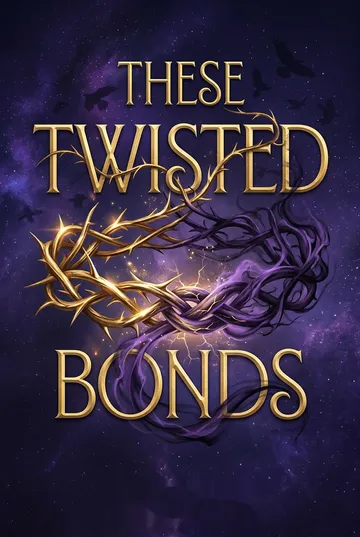
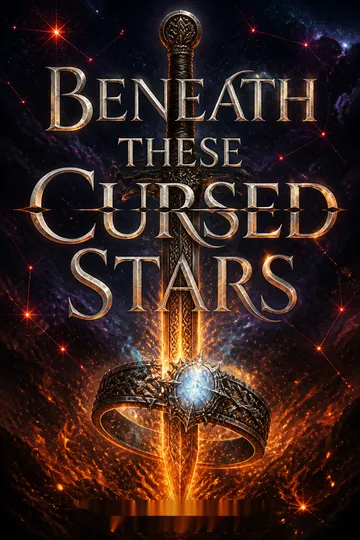
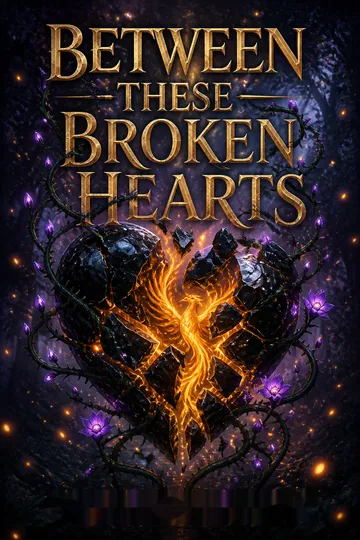
These Hollow Vows Series

About the Author


Download PDF
Download EPUB
.epub digital book format is ideal for reading ebooks on phones, tablets, and e-readers.








