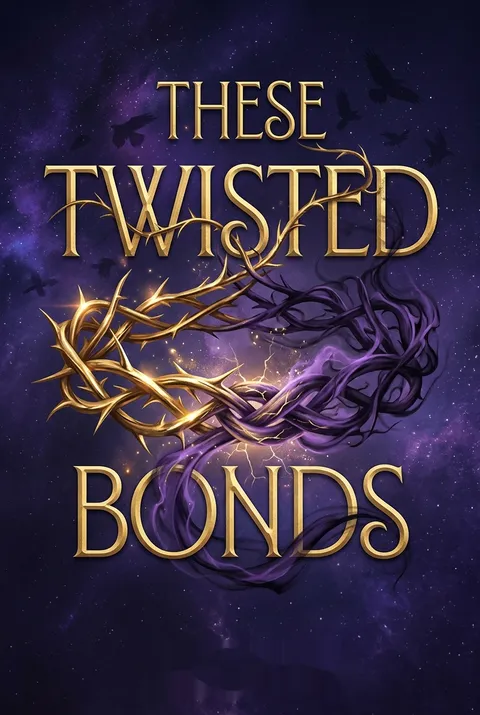


Plot Summary
The Run from Sebastian
After Sebastian’s betrayal, Abriella flees the Golden Palace in a sleeping gown, taking a horse and knives rather than risk being dragged back to the prince she loves. At an inn, she overhears an orc describe Unseelie children held in the golden queen’s camps and injected with magic-suppressing poison.
Their imprisonment recalls Abriella’s own childhood under an exploitative contract, so she decides that her heartbreak can wait. Lark, a young seer, visits her dream and shows her sleeping children, warning that they need Abriella to come home. At dawn, Abriella follows the orc to a camp where guards are hunting children. She floods the clearing with shadow to stop them, but an injection empties her magic and leaves her captive.
Abriella’s first act after betrayal is not revenge on Sebastian but intervention on behalf of children who have no power to refuse their captors. Her decision grows from biography: she recognizes the machinery of coercion because she has lived inside it. Yet the rescue also exposes the limits of moral intention without training or allies. She can overwhelm the guards, but her new strength is still unfamiliar, and the same system she confronts can disable her. The opening therefore makes compassion both her defining capacity and a tactical vulnerability.
A Shadow Without Memory
Abriella wakes shackled beside the orcs who captured her, unable to summon magic. By morning, the guards lie dead, cut apart with her own dagger, though she cannot remember killing them. She escapes barefoot and collapses in a stable, where the Wild Fae king Misha finds her with a goblin guide. Misha explains that the queen’s troops are closing in and brings Abriella to his mountain home, Castle Craige.
There he reveals that her exhaustion comes from the Potion of Life and the power she spent during her escape. Sebastian’s soul bond suddenly transmits a burst of pain, confirming he has been injured. Abriella learns the bond cannot simply be undone, and that she must learn to shield herself from it.
The unexplained deaths introduce Abriella’s shadow self before she can claim it as part of her identity. Her body has acted while her conscious self was incapacitated, making power feel less like a possession than an uncertain stranger. Misha offers safety, but not uncomplicated trust: he is a king with political interests, and his mind-reading ability unsettles her. Meanwhile, the bond makes Sebastian’s pain intimate even when she wants distance. Abriella’s central problem becomes one of agency on two fronts: controlling her own power and deciding what emotional access another person is entitled to keep.
The Throne Rejects Sebastian
Misha lets Abriella look through his hawk familiar into the Unseelie throne room, where Finn and his allies are preparing to abandon the palace before Sebastian arrives. Seer Lark warns that the throne will not accept him without Abriella’s power. When Sebastian reaches the room and sits on the Throne of Shadows, it hurls him away and shakes the palace.
Finn explains that the crown and its magic have separated: Sebastian wears the crown, but Abriella retained its power when the Potion of Life tied that magic to her immortal body. Misha confirms the danger. The divided authority leaves neither Sebastian nor Finn able to rule, while the Unseelie court fractures and Queen Arya’s influence grows.
The throne’s rejection changes Abriella from a discarded political instrument into the indispensable center of the crisis. That shift is not a simple elevation: she has no desire to rule, and yet the court’s survival now depends on the power attached to her life. The scene also clarifies how magical legitimacy is material and relational, not merely hereditary. Sebastian possesses the visible emblem but lacks its animating force; Abriella carries the force without a recognized place in the hierarchy. Their separation makes the political disorder an external version of the damaged trust between them.
Refuge Beyond the Mountain
At the Wild Fae settlement, Abriella sees Unseelie refugees living in homes rather than cages and watches Queen Amira comfort children who have learned to fear adults. Nurse Leta shows them a ward of children trapped in an unnatural sleep. Misha explains that Queen Arya has sent Unseelie children into the Goblin Mountains to mine fire gems, whose magic sustains her power and fuels potions, including the toxin used against the prisoners.
Abriella also discovers that she can sense the refugees’ grief and homesickness through the power she carries. She offers to help in the settlement’s school, then chooses to join Misha and Amira’s efforts against Arya. Her private grief for Jas remains, but it no longer outweighs the children’s need.
The settlement provides Abriella with evidence rather than reassurance. Its ordinary structures, school, infirmary, and market expose the camp’s cruelty by contrast: safety is not abstract, it is a set of conditions people can build and maintain. Her ability to feel the refugees’ emotions expands the meaning of her inherited power. It is not only a weapon or claim to sovereignty but a form of involuntary attention to those most likely to be ignored. That gift is burdensome, yet it draws her beyond self-protection and into a political commitment she chooses for herself.
A Bargain for the Children
Abriella uses a goblin’s hair-price to reach Sebastian at the Unseelie palace. He welcomes her with relief, but she refuses reconciliation and asks him to prove himself by dismantling Queen Arya’s camps. Sebastian admits he had confronted his mother after learning she had sent children into the mines, but accepted her promise that it happened only once.
Abriella tells him that the abuse continues. He agrees to send teams, though he wants her to stay out of danger. Before leaving, she cuts a lock of his hair to pay the goblin for her return to Castle Craige. Misha teaches her to shield herself from Sebastian’s emotions, giving her the first practical control over a bond she did not freely enter.
The meeting converts intimacy into accountability. Abriella does not accept Sebastian’s love as proof that he is safe; she asks for action that costs him politically and exposes his mother’s rule. His admission reveals a familiar moral failure: he wanted to believe a powerful parent’s promise because the alternative demanded confrontation. Her demand gives him a path to act, but it does not restore trust. Learning to shield the bond matters for the same reason. Emotional connection can comfort, but without choice it can also reproduce the very loss of autonomy Abriella is trying to escape.
The Court Begins to Sleep
Finn returns to Castle Craige with Pretha, Kane, Jalek, and his other allies as Queen Arya’s forces move toward the Goblin Mountains. At a strategy meeting, they learn Sebastian has begun freeing prisoners, but the court remains divided among his supporters, Finn’s followers, and those loyal to Mordeus’s old order.
During a visit to the settlement, Finn recognizes the sleeping children’s condition as the Long Sleep, a sign he witnessed years earlier when the Unseelie court began to die.
He says the vacant throne has upset the balance between the courts, leaving the children at increasing risk. Finn decides to seek guidance from the High Priestess and Queen Mab in the Underworld. Abriella insists on joining him, despite the danger and her unresolved feelings for both princes.
The Long Sleep makes political vacancy bodily and intimate. A court can debate legitimacy in councils, but its future is measured in children who may never wake. Finn’s recognition is shaped by memory of a previous collapse, and the urgency also punctures the temporary satisfaction of keeping Sebastian from the throne. Abriella’s insistence on joining the mission marks a change from flight to chosen participation. She is still wary of being used, but she has begun to distinguish manipulation from the possibility of shared responsibility. Her consent remains central even when the stakes are enormous.
Fire Over the Capital
Before the journey to the High Priestess can begin, Queen Arya’s fire fae attack the Unseelie capital. Abriella is in the infirmary when the building catches fire, and she refuses to leave the sleeping children behind. She wraps them in protective shadow and carries them out in repeated trips while Misha and the settlement’s healers help evacuate them.
Her power finally gives out as she pushes the last children through a wall of shadow. A black-clad attacker injects her with the same magic-suppressing toxin and kidnappers carry her into the mountains. Sebastian reaches her before Queen Arya’s party can take her away, but the Sluagh nearly kill her during the rescue. Sebastian brings her to Finn, whose presence helps her recover.
The fire turns Abriella’s ethic into a physical ordeal. She understands the danger and still returns for each child, but the scene refuses to equate courage with invulnerability: her power fails, and she is captured. The repeated choice to go back resembles her childhood habit of spending herself to protect Jas, yet now the impulse serves people beyond her family. That expansion is morally meaningful and also perilous. The people around her must learn that protecting Abriella is not a reason to silence her agency, while Abriella must learn that self-sacrifice can jeopardize the very work she wants to do.
A Borrowed Betrothal
After Abriella recovers, Finn takes her toward the mountain village of Staraelia, where he plans to approach the High Priestess during the Lunastal festival. To keep his people from questioning Abriella’s power, he presents her as his betrothed.
The ruse unsettles her, especially when Finn’s old friend Juliana welcomes him with the ease of shared history. During the festival, Abriella learns Finn once intended to marry the human Isabel, but the curse killed Isabel when their bond was completed.
Finn also carries guilt for refusing his father’s appeal to help oppose Mordeus before the court fell. As the villagers honor their prince and his supposed future queen, Abriella sees how much Finn’s life is rooted in this community, and how much she wants to belong beside him.
The false betrothal is both political camouflage and a rehearsal for intimacy. It protects Abriella by giving others a familiar explanation for her power, but it also places her inside a social role she has not chosen, echoing the coercive bonds she distrusts. Finn’s history with Isabel complicates her attraction: his past is not a simple romance but a record of grief, duty, and mistakes. Staraelia matters because it gives those histories a communal setting. Abriella is not only navigating two princes; she is testing whether a home can be offered without demanding that she surrender herself.
The Shadow Steps Free
At night in Staraelia, Abriella’s shadow self leaves her sleeping body and sneaks into Juliana’s room, where it cuts a lock of the woman’s hair for future payment to a goblin. Finn wakes to find the shadow version of Abriella beside him, then discovers the sheared hair and knife when she returns to her body.
He recognizes the act from old stories about Queen Mab’s ability to send her shadow self beyond a powerless body. Abriella is disturbed that part of her can act without conscious control, but the incident gives a shape to the unexplained deaths of the orc guards after her capture. She begins to understand that her power includes more than the shadows she deliberately commands.
The shadow self externalizes impulses Abriella has learned to disavow: jealousy, anger, and appetite. Its small, almost mischievous theft is unsettling precisely because it is not a battlefield act. The episode blurs the border between dream and action, asking whether a person is defined only by intentions they can articulate. Finn responds with curiosity rather than condemnation, offering a relational space in which Abriella can examine the frightening part of herself. The discovery prepares her later survival, but its deeper function is psychological: integration, not suppression, will be necessary for her to use power deliberately.
Mab Names Her Heir
At the temple, High Priestess Magnola insults Abriella and refuses Finn’s request to open a portal to the Underworld. Her oath to Queen Mab turns against her, and a force speaking through her reveals a portal beneath the Mother Willow.
It names Abriella a child of Mab and Finn her tethered match, a magical partner able to lend her strength. The others recognize Abriella as the lost heir to the Throne of Shadows. She and Finn reach the portal by mixing their blood.
In the Underworld, Queen Mab confirms that Abriella descends from Queen Reé, whose line was hidden in the human realm. Mab explains that Abriella’s power awakened early because Sebastian’s potion transformed her, and says the court can be saved only by restoring balance and defeating Arya.
The revelation changes the meaning of Abriella’s past without erasing its pain. Her childhood hardship was real, but her human identity concealed a lineage others had assumed extinct. Mab’s explanation also resists the comforting idea that heritage alone makes a ruler: the succession gives Abriella access to the throne, while her choices must still establish what kind of ruler she will be. The tether offers power but not emotional certainty. It is a divine connection, yet it does not decide whether Abriella’s love for Finn is authentic. Fate supplies conditions; character remains responsible for what follows.
The Underworld’s Price
Mab tells Abriella that Arya has grown too powerful for the Unseelie court to survive without a new balance. One option is for Sebastian to surrender his immortal life so Abriella can inherit the crown and power, then kill Arya.
Another is for Abriella and Sebastian to bind their lives permanently in the River of Ice, allowing their combined courts to share the throne. Mab warns that Abriella must also accept her shadow self. As they flee the Underworld, the portal disappears and rising water traps Finn.
Abriella refuses to leave him, frees him from shifting rocks, and follows a white-eyed monster through a submerged cavern to another way out. On the far side, she and Finn give in to their love, though the choice about Sebastian remains unresolved.
Mab’s alternatives turn political repair into a question of whose life may be spent and who gets to choose. Abriella rejects the assumption that love requires one person to die for another, even as her refusal to abandon Finn puts her own life at risk. The monster’s pursuit transforms Lark’s cryptic warning into a survival route, linking prophecy to endurance rather than passive fate. Intimacy with Finn follows their escape, but it does not magically simplify the political problem. The scene’s emotional relief is real, while its consequences remain unsettled. Love becomes a source of courage, not a substitute for negotiation.
Juliana’s Secret Allegiance
Back in the living world, Abriella and Finn return to the Midnight Palace and explain that Mab offered no painless solution. Misha’s allies discover that Juliana helped the High Priestess send the Barghest after Abriella and lured her toward the Sluagh.
Juliana insists she acted to secure Finn’s rule, not to aid Arya, and Misha finds her account broadly credible. Abriella nevertheless orders her held until the danger passes. She then tells Sebastian the court must be restored by binding their lives in the River of Ice.
Sebastian agrees, though he demands that Finn leave the palace and Abriella’s life. Finn accepts the separation rather than make her choice harder. The next morning, Abriella, Sebastian, Kane, and Riaan set out for the river.
Juliana’s motives show how loyalty can become a justification for violence when a person treats one political outcome as more important than another’s agency. She believes she is serving Finn, but her actions repeatedly endanger Abriella. Abriella’s response is therefore neither easy forgiveness nor simple condemnation; she separates understanding a motive from granting trust. The agreement with Sebastian is another form of sacrifice, but this time she knows the terms and names the cost. Finn’s departure sharpens the emotional price of the plan. Duty is not a clean resolution when those asked to serve it lose the relationships they value.
Arya Takes the Heirs
On the way to the River of Ice, armed attackers ambush the travelers. Poisoned arrows disable Abriella and Sebastian, and Queen Arya’s forces take them to a mountain fortress. Riaan is there too, having delivered them to his queen.
Arya reveals that she has always known Sebastian found Abriella and that she had planned for Abriella to die so the crown’s power would pass to him. She now intends to keep both prisoners alive, drain the Unseelie court’s remaining strength, and use Abriella’s blood to reunite the territories and claim their fire gems.
Arya brings in Jas as a hostage, while Sebastian’s weakened protests fail to stop her. Riaan injects Sebastian again, then leaves the siblings and prince confined in iron sarcophagi that continually deliver poison.
Arya’s plan exposes the difference between unity and domination. She speaks of joining the lands, but only after weakening one court and taking the resources beneath its mountains. Her political vision depends on preserving bodies as instruments: Abriella’s blood, Sebastian’s royal claim, and Jas’s vulnerability all become leverage. Riaan’s betrayal makes that logic personal, turning trusted service into complicity with a regime. Abriella’s powerlessness in the tomb repeats the experience of captivity that shaped her childhood, but this time the threat reaches the person she most wants to protect. The scene forces her to reckon with what ordinary courage cannot accomplish.
The Shadow Strikes Back
Locked in an iron sarcophagus and weakened by repeated poison, Abriella finally accepts the anger and bitterness she has spent years burying. She uses the last thread of her own magic to draw strength from Finn through their tether, then sends her shadow self through the iron to disable the poison pumps.
The shadow slips past Arya’s guards and kills the queen with her own dagger, then frees Sebastian. Abriella reaches the battlement and cuts Jas loose, but Riaan attacks and threatens to throw her sister from the roof unless Sebastian gives him the Seelie crown.
Sebastian arrives and kills Riaan before he can carry out the threat. Abriella and Jas collapse together, wounded and exhausted. With Arya dead, the power of the golden court passes to Sebastian.
Abriella’s victory depends on accepting a self she had treated as morally disqualifying. Her shadow is not simply a darker weapon; it contains anger that can act when her gentler, self-sacrificing identity has been exhausted. Yet she directs that force toward Arya and then returns to Jas, showing that integration does not mean surrendering judgment. Riaan’s final demand reproduces Arya’s logic of possession, while Sebastian’s intervention breaks the chain of coercion. The rescue remains costly: Abriella cannot protect everyone from injury, but she can now act without pretending that only tenderness is worthy of power.
A Crown Given Freely
After ten days missing, Abriella wakes in the mountain cottage with Finn beside her. The children are beginning to wake, and Jas is recovering slowly. At the River of Ice, Sebastian reveals that the green pendant he gave Abriella is a bloodstone, a rare substance capable of stripping away faerie magic and immortality.
He kept it hidden from Arya and offers its power to Abriella. Rather than force her into a permanent bond or demand another sacrifice, Sebastian makes himself mortal and transfers the Unseelie crown’s power to her.
Their bond ends with his immortality. Abriella forgives him for his deception, recognizing that he has finally surrendered what he wanted for the good of others. Finn stays beside her as she prepares to take the throne.
Sebastian’s final act repairs something without pretending to erase what came before. He relinquishes the very immortality and power he once pursued through deception, turning sacrifice from a demand placed on Abriella into a choice he makes himself. The bloodstone also reinterprets the pendant: what seemed like a reminder of manipulation becomes the means by which he gives up control. Abriella’s forgiveness is not a restoration of romance or a denial of harm. It is recognition that a person can become accountable through action. The ending’s ethical distinction is between love that claims someone and love that accepts loss.
The Throne Finds Abriella
At the Midnight Palace, Abriella reunites with Jas before approaching the Throne of Shadows. Lark, now awake, recognizes that her earlier visions have come to pass. Finn helps Abriella onto the throne, where her power settles into place and the court’s magic returns. The Unseelie celebrate, while Sebastian prepares to build an alliance with the Seelie court as its newly mortal ruler.
Abriella chooses Finn as the partner at her side, but they do not rush into another bond. She has survived a bond entered for protection and now treats commitment as something that must be freely chosen. With Jas home and the court restored, Abriella begins a future in which ruling means serving those who once had no voice.
The throne’s acceptance completes the external succession plot, but Abriella’s more important victory is that she approaches it by choice. Earlier, titles and bonds were imposed on her as solutions devised by others. Here, she accepts authority because it gives her a means to protect people, not because power proves her worth. Jas’s presence anchors that decision in personal history, while Lark’s return closes the prophetic thread without making prophecy the source of Abriella’s character. The court’s restoration is a beginning rather than a cure for prejudice. Political repair will require the same sustained attention that brought Abriella to the throne.
Epilogue
Six months later, Jas is healthier and living in Faerie, though she still approaches its inhabitants cautiously. She has made Abriella a black leather gown cut to allow movement, a small sign that her sister understands the queen’s need to run as well as rule. Abriella and Finn prepare to bond, this time by mutual choice and with the intention of sharing power.
Before the ceremony, they slip away beneath the stars and speak privately about their love. Abriella’s wishes are no longer for escape or mere survival. She hopes for peace across the courts and for everyone in the realm to know the kind of love she and Finn have chosen.
The epilogue brings Abriella back to the stars that once offered comfort when she was powerless, but her relationship to them has changed. She is no longer wishing from the margins for a life to begin; she is choosing a bond from a position of authority and consent. Jas’s recovery matters because it restores the intimate relationship Abriella feared losing when she became fae, while the garment she makes embodies both care and the protagonist’s refusal to be made immobile by ceremony. The hope for peace is deliberately aspirational. The courts remain divided, but Abriella’s private happiness now supports rather than replaces her public responsibility.
Analysis
These Twisted Bonds makes political authority inseparable from bodily autonomy. Abriella’s life is repeatedly treated as a resource by people who claim to love her, protect her, or need her for the good of a court. Sebastian’s deception is emotionally intimate because the bond makes his feelings physically present, but the novel does not equate intensity with ethical legitimacy. Misha’s shelter, Finn’s restraint, and Sebastian’s eventual sacrifice are distinguished by what each asks Abriella to choose, not by how passionately each male feels.
The court’s material crises sharpen that distinction. Children are imprisoned, drugged, and sent into mines to sustain a queen’s power; their suffering is not incidental scenery but the measurable cost of political imbalance. The Long Sleep converts institutional failure into a threatened future. Abriella’s empathy lets her feel the refugees’ grief, yet the story resists making empathy sufficient. She must also learn strategy, conserve her magic, accept help, and confront the anger she has treated as a moral defect.
The shadow self gives this inner conflict a literal form. Abriella’s kindness has helped her survive, but compulsory selflessness can reproduce the logic of those who decide that her needs matter less than everyone else’s. Accepting anger does not make her cruel; it gives her access to action when care alone cannot stop violence. Her eventual rule is therefore grounded not in bloodline alone but in the capacity to see how systems distribute harm.
The romance resolves through a distinction between possession and mutual recognition. Sebastian’s final relinquishment cannot erase his earlier betrayal, but it demonstrates a changed relationship to power. Finn’s love likewise matters because it is offered without requiring Abriella to become his. The novel’s hope is not that love abolishes political conflict. It is that people can choose forms of loyalty that do not demand another person’s disappearance.
Review Summary
These Twisted Bonds received mixed reviews, with some praising its addictive quality, romance, and world-building, while others criticized its predictability and similarity to other fantasy novels. Many readers enjoyed the character development, particularly of Finn and Misha. However, some found the pacing slow and the ending rushed. The love triangle and Brie's character arc were divisive elements. Overall, the book was seen as an improvement over its predecessor, offering an entertaining if not groundbreaking YA fantasy experience.
People Also Read


Characters
Abriella
Reluctant shadow heirAbriella is a resourceful young woman shaped by poverty, grief, and years spent protecting her younger sister, Jas. Her instinct is to notice who has been denied choice, then act even when she is frightened or unprepared. That compassion is not softness without anger: she is wary, sharp-tongued, and capable of resentment, especially when people mistake care for permission to control her. Her transformation into a faerie intensifies both her power and her isolation, forcing her to ask whether survival is worth the loss of her human home. She wants agency more than status, and her development depends on learning that anger, desire, and ambition can belong to her without undoing her capacity for love.
Finn
Burdened shadow princeFinn is a guarded prince whose loyalty to the Unseelie people is deeper than his hunger for the throne. He is disciplined, politically perceptive, and often dryly teasing, but beneath that composure sits guilt over choices that helped leave his court vulnerable. His history with Isabel has taught him that love and duty can collide with devastating consequences, making him wary of asking anyone to share his burdens. With Abriella, he alternates between tenderness and restraint, respecting her independence even when he wants closeness. His central tension is whether service requires him to erase his own desires or whether he can protect his people while still accepting a life beyond duty.
Sebastian
Divided-court princeSebastian, also known by the royal name Ronan, is a prince raised to believe that he can unite the Seelie and Unseelie courts. His charm and devotion to Abriella are real, but so is his willingness to withhold the truth when he believes the political outcome justifies it. He has inherited his mother’s ambition and his father’s desire for peace, and the conflict between those legacies makes him difficult to judge as either villain or romantic ideal. Sebastian wants to protect people and become a great ruler, yet he often assumes he knows which sacrifices others should make. His relationship with Abriella forces him to confront the difference between loving someone and respecting her choices.
Jas
Abriella’s younger sisterJas is Abriella’s younger sister and the person whose safety has shaped nearly every major decision in Abriella’s life. She is creative, warm, and drawn to stories and beautiful fabrics, qualities that contrast with the hard vigilance Abriella developed while keeping them both alive. Jas’s gentleness is not a lack of strength; it is a way of remaining open after hardship. Her bond with Abriella is loving but not uncomplicated, since Abriella’s protectiveness can make it difficult to distinguish care from control. Jas represents the human home Abriella fears losing, as well as the possibility that tenderness can survive without being mistaken for weakness.
Misha
Wild Fae kingMisha rules the Wild Fae and offers Abriella shelter when she has nowhere else to turn. Clever, candid, and often flirtatious, he reads minds and makes political calculations with the ease of someone accustomed to managing competing courts. His motives are not selfless: the survival of the Unseelie court affects the safety of his own people. Still, Misha’s practical care for refugees gives Abriella a way to judge him beyond his assurances. He is a political ally who can be both genuinely kind and strategically self-interested.
Amira
Empathic Wild Fae queenAmira is Misha’s wife and queen of the Wild Fae, a perceptive empath whose authority is expressed through patient attention. She visits the refugee settlements and offers frightened children comfort without demanding that they recover on her schedule. Her gentle manner does not make her politically passive; she understands the dangers of concentrating refugees and helps build safer systems for them. Amira treats Abriella with respect while recognizing the grief beneath her defenses. Her closeness to Pretha gives their personal history a quiet emotional weight.
Pretha
Grieving royal allyPretha is Finn’s sister-in-law, a Wild Fae woman who has endured political displacement and the loss of her husband, Vexius. She is direct, emotionally intelligent, and fiercely protective of the people she loves. Her history with Amira is tender and unresolved, revealing the costs of choosing duty and propriety over a relationship she wanted. Pretha often helps Abriella interpret the emotional stakes others avoid naming, but she also expects her to make hard choices. Her grief does not erase her capacity for humor, loyalty, or leadership.
Lark
Young court seerLark is Pretha’s young daughter, a seer whose dreams arrive in fragments rather than tidy explanations. Her visions warn Abriella about the children and the dangers ahead, though their meaning often becomes clear only after events unfold. Lark is curious and affectionate, but her unusual gift carries a cost that makes adults protective of her. She bridges the Wild Fae and Unseelie worlds through her family and her prophetic role. Her childlike certainty can bring comfort, yet it also places heavy emotional weight on those who rely on her foresight.
Kane
Finn’s fierce protectorKane is a horned faerie and one of Finn’s most loyal companions. His blunt humor and threatening appearance conceal a dependable soldier who is quick to defend the people he considers his own. Kane distrusts political compromises, especially those involving Sebastian, but his skepticism comes from a hard-earned sense of how power is abused. He teases Abriella, then risks himself to keep her safe. His loyalty is practical rather than flattering: he helps because he believes the court’s survival matters.
Jalek
Unseelie strategistJalek is a former Seelie guard who has aligned himself with Finn and the Unseelie cause. He is pragmatic, severe, and suspicious of Sebastian’s claims, preferring evidence over promises. His experience as a prisoner has made him attentive to the costs of political decisions, though his bluntness can wound those around him. Jalek respects courage but does not confuse it with wisdom. He represents the hard strategic voice in a group often pulled between affection and necessity.
Riaan
Sebastian’s sentinelRiaan is Sebastian’s trusted sentinel, a skilled fighter with intimate knowledge of the Golden Military. He is disciplined and protective, and his long service places him close to Sebastian’s private and political struggles. Riaan understands military tactics and can be an important guide through dangerous territory. His relationship with Sebastian is built on years of shared duty, so their trust carries considerable weight among the allies. He is not easily read by Abriella’s companions, who must decide how much confidence to place in his loyalties.
Juliana
Lady of StaraeliaJuliana governs Staraelia, a rural territory where female leadership is customary. She grew up alongside Finn and shares the memories and expectations of his homeland. Confident, politically astute, and accustomed to being valued as a suitable partner, she can be warm in public and sharp when her position feels threatened. Her feelings for Finn complicate her reception of Abriella, whose arrival disrupts the future Juliana once expected. She represents the way personal affection and political ambition can become difficult to separate.
Queen Arya
Power-hungry golden queenArya rules the Seelie court and is Sebastian’s mother. She is brilliant, disciplined, and consumed by the need to secure power for herself and her kingdom. Her public language of protection conceals a willingness to exploit those least able to resist, especially Unseelie children. Betrayal by Oberon helped shape her resentment, but her pain has hardened into a political worldview that treats domination as security. Arya is dangerous not because she is irrational, but because she can make cruelty sound like a necessary plan.
Mab
Maker of the shadow throneMab is the ancient queen associated with the creation of the Court of the Moon and its magical throne. Her reputation has been refracted through centuries of rivalry, leaving the living with fragments of her history and competing stories about her choices. She is protective of her court and uncompromising about the consequences of political imbalance. Mab’s perspective is shaped by immense grief as well as formidable intelligence. She treats love as a source of both devotion and danger, refusing to pretend that good intentions prevent harm.
Tynan
Quiet Wild Fae allyTynan is Pretha’s cousin and a Wild Fae ally who supports Finn’s efforts. Quiet and observant, he contributes practical magic and steadiness during travel and conflict. His family roots in Castle Craige connect him to the Wild Fae court even as his friendship with Finn draws him into Unseelie affairs.
Vexius
Pretha’s lost husbandVexius was Pretha’s husband and Lark’s father. His love of community and life in Staraelia remains part of the place’s emotional memory. Though absent from the present action, his loss continues to shape Pretha’s grief and her sense of home.
Mordeus
Dispossessed Unseelie rulerMordeus ruled the Unseelie court through coercive laws and the support of those who benefited from his order. His reign forced many families from their homes and left the court deeply divided. His legacy gives Finn’s political struggle its history and explains why many Unseelie distrust any new claimant.
Leta
Refugee settlement healerLeta runs the infirmary at one of Misha and Amira’s refugee settlements. She cares for wounded and displaced Unseelie, including children whose illnesses defy ordinary treatment. Her practical compassion gives Abriella a direct view of what refuge requires.
Plot Devices
The Crown, Power, and Throne
Legitimacy split in threeUnseelie rule depends on a magical relationship among the crown, the crown’s power, and the Throne of Shadows. Abriella carries the power, while Sebastian possesses the crown, so the throne rejects him when he tries to claim it. Finn has royal standing and popular support but lacks both objects. This division makes the political crisis concrete: neither brother can rule, and the court’s failing balance harms its people. The device also links private choices to public consequences, since Sebastian’s potion saved Abriella’s life but fixed the power to her immortal body. Restoring legitimate rule requires deciding who may hold authority and what each person must surrender.
The Soul Bond
Love without easy escapeAbriella and Sebastian’s bond creates a lifelong awareness of each other’s emotions and, at times, a sense of the other’s presence. It offers comfort but also makes separation painful and leaves Abriella vulnerable to emotional influence. Misha teaches her to build a mental shield, allowing her to choose how much of Sebastian’s feelings she receives. The bond is not the same as the tether that links Abriella to Finn, and the distinction matters: one is an intimate connection formed through a ceremony, the other a one-way magical channel between a queen and her protector. The bond becomes a test of whether love can coexist with consent after it was entered under deception.
The Tether
Power shared one wayThe tether connects Abriella’s magic to Finn’s, allowing her to draw on his strength when her own power is strained. Unlike a soul bond, it does not make the pair continuously aware of each other’s emotions or location. When Abriella uses too much magic, Finn can weaken, which makes the connection both a resource and a danger. The tether helps explain the unusual affinity between them and becomes crucial when Abriella is trapped in an iron sarcophagus with her own magic suppressed. It also raises a political question: a queen’s authority may depend on a powerful partner, but that support should not be mistaken for ownership or romantic obligation.
Fire Gems and Bloodstones
Magic made materialFire gems amplify magical ability and provide ingredients for powerful potions and toxins. Queen Arya’s need for them drives her exploitation of Unseelie children, who are sent into dangerous mines beneath the Goblin Mountains because they can sense the gems. Bloodstones are rarer and can strip away faerie magic and immortality. Sebastian’s green pendant is secretly one, a fact that gives it a second meaning beyond its role as a reminder of their bond. Together, the stones turn abstract political greed into a material economy: magic has a cost, rulers seek to accumulate it, and vulnerable bodies are made to pay.
Abriella’s Shadow Self
Buried anger becomes agencyAbriella’s shadow self can separate from her body and act independently, even when her ordinary magic is suppressed. At first she experiences it through missing memories and disturbing signs, including the dead guards after her capture and the lock of Juliana’s hair taken during sleep. Queen Mab’s guidance helps Abriella recognize that the shadow embodies anger and desires she has spent years suppressing. When Arya imprisons her in an iron sarcophagus, Abriella draws on Finn’s tether and deliberately uses the shadow to escape. The device turns an internal conflict into a plot mechanism while insisting that power requires self-knowledge rather than moral self-erasure.
FAQ
Synopsis & Basic Details
What is These Twisted Bonds about?
- A Fae Queen's Ascent: These Twisted Bonds follows Abriella, a former human now fae, as she navigates a treacherous world of magic, betrayal, and ancient prophecies. After being transformed and bound to Prince Sebastian, she discovers her unique power is the key to uniting a fractured fae kingdom and confronting the tyrannical Seelie Queen Arya.
- Love, Loyalty, and Sacrifice: The narrative delves into complex relationships, particularly Abriella's soul-bond with Sebastian and her burgeoning connection with Prince Finn. It explores themes of duty versus desire, as characters are forced to make profound sacrifices for their people, their loved ones, and their own survival amidst escalating political intrigue and the threat of war.
- Embracing Inner Duality: At its core, the story is Abriella's journey of self-discovery, as she grapples with her newfound powers, her hidden lineage, and the darker aspects of her own nature. She must learn to accept both her light and shadow to become the queen her dying court desperately needs, ultimately challenging preconceived notions of good and evil in the fae realms.
Why should I read These Twisted Bonds?
- Rich World-Building & Lore: Dive into a meticulously crafted fae world brimming with ancient history, diverse courts (Seelie, Unseelie, Wild Fae), and a complex magic system, including unique concepts like "tethering" and "bloodstones" that add layers of depth beyond typical fantasy.
- Deep Emotional Resonance: Experience a story that doesn't shy away from the raw, messy emotions of betrayal, grief, and conflicted love. The magical bonds and sacrifice amplify character feelings, drawing readers into Abriella's internal struggles and making her journey of healing and self-acceptance profoundly impactful.
- Intriguing Moral Ambiguity: The novel challenges black-and-white morality, presenting characters like Sebastian and Finn with noble intentions despite their manipulative actions, and forcing Abriella to embrace her own "darker" side for the greater good, sparking thought-provoking discussions on what truly constitutes heroism.
What is the background of These Twisted Bonds?
- Ancient Fae History & Division: The world is shaped by a millennia-old conflict between the Seelie (Golden Court) and Unseelie (Shadow Court), stemming from a legendary betrayal involving Queen Gloriana, her two lovers (Deaglan and Finnigan), and the powerful priestess Mab. This history explains the deep-seated prejudice and the very creation of the two opposing courts, with the Unseelie drawing power from the night and the Seelie from the sun.
- Magical Economy & Resources: The conflict is fueled by the scarcity of "fire gems" found beneath the Goblin Mountains, which amplify magic. Queen Arya's ruthless exploitation of Unseelie children in these mines for these gems is a central driver of the plot, highlighting the brutal realities of power and resource control in Faerie.
- Prophecy and Lineage: The narrative is underpinned by ancient prophecies, particularly one concerning a "queen who appears as a stranger" who will "balance sun and shadow and end the war." Abriella's unexpected lineage to Queen Mab and her unique magical abilities are revealed to be the fulfillment of this prophecy, tying her personal destiny directly to the fate of the entire fae realm.
What are the most memorable quotes in These Twisted Bonds?
- "Magia é vida. Você precisa conservá-lo. É autopreservação.": This quote, spoken by Finn, encapsulates a core tenet of fae magic and survival, highlighting the intimate connection between life force and magical power, and foreshadowing the sacrifices characters must make. It defines the stakes of Abriella's reckless power usage.
- "Eu não sou nenhuma princesa. Você é minha rainha.": Finn's declaration to Abriella in the final chapters is a powerful moment of recognition and acceptance. It strips away her self-doubt and external labels, affirming her true identity and destiny as the rightful ruler of the Shadow Court, solidifying their bond.
- "Eu te amo, Finn. Eu dobro meus quadris e o encontro entre minhas pernas, lentamente levando-o para mim.": This quote, from a pivotal intimate scene, showcases Abriella's agency and emotional vulnerability. It's a raw expression of her deepest desires and love, contrasting with her earlier forced bond and highlighting her journey of embracing her true feelings and power.
What writing style, narrative choices, and literary techniques does Lexi Ryan use?
- First-Person Perspective & Emotional Immersion: The story is told from Abriella's first-person point of view, immersing readers directly into her thoughts, fears, and emotional turmoil. This narrative choice is amplified by her empathic bond, allowing readers to viscerally experience the emotional states of other characters, particularly Sebastian and Finn.
- Sensory-Rich Prose & Vivid Imagery: Ryan employs descriptive language that appeals to multiple senses, from the "sweet pain" of the bond to the "velvet black" of Abriella's shadows and the "smell of leather and fresh pine" of Finn. This creates a lush, immersive world that feels tangible and alive, enhancing the fantasy elements.
- Symbolism & Foreshadowing: The author frequently uses symbolic elements, such as the "ampulheta" (hourglass) representing the balance of power between courts, or the recurring motif of stars and night as sources of power and comfort for Abriella. Subtle foreshadowing, often through Lark's cryptic prophecies or Abriella's own uncontrolled shadow manifestations, builds suspense and hints at future revelations.
Hidden Details & Subtle Connections
What are some minor details that add significant meaning?
- The Stable Boy's Fear: In Chapter 1, the stable boy's immediate fear of Abriella and her "wave of darkness" after her transformation subtly foreshadows the inherent power and potential danger of her new fae nature, even to those who should be allies. It highlights the immediate shift in how she is perceived, from human to something formidable.
- Juliana's Hair & Abriella's Shadow: Abriella's subconscious act of cutting Juliana's hair in Chapter 17, believing it to be a dream, is a subtle but crucial detail. It's the first concrete manifestation of her "shadow" ability acting independently, foreshadowing its later, more violent and purposeful unleashing against Arya in Chapter 30, revealing a darker, vengeful aspect of her power.
- Finn's Unexplained Illness: Early in the book (Chapter 5), Finn exhibits unexplained weakness and illness, even after the curse is broken. This seemingly minor detail is later revealed (Chapter 15, 24) to be a direct consequence of his "tethered" bond with Abriella, as her uncontrolled use of power drains him, subtly linking their fates long before the full nature of their connection is understood.
What are some subtle foreshadowing and callbacks?
- Lark's Enigmatic Prophecies: Lark's early dream visits, like telling Abriella she would "lose everything" (Chapter 5) or warning her about the "white-eyed monster" (Chapter 24), are initially cryptic but serve as direct foreshadowing for Abriella's personal losses and the specific dangers she faces in the Underworld. These callbacks reinforce the theme of destiny.
- The "Fire Gem" Misconception: Sebastian gives Abriella an "emerald" that he calls a "sacred fire gem" (Chapter 3), implying it's for her protection. This is a subtle misdirection, as it's later revealed in Chapter 31 to be a "bloodstone"—a rare artifact capable of reversing fae transformation—foreshadowing Sebastian's ultimate sacrifice and the true nature of his gift.
- Oberon's "Seduction" of Arya: The historical detail that Oberon "seduced" Arya as a means to "destroy the Seelie kingdom from the inside" (Chapter 19) subtly mirrors Sebastian's own manipulation of Abriella. This callback highlights a recurring pattern of political manipulation through romantic entanglement within the fae royal lines, adding depth to the cycle of betrayal.
What are some unexpected character connections?
- Abriella's Direct Lineage to Queen Mab: The most unexpected connection is Abriella's revelation as a direct descendant of Queen Mab (Chapter 22), the legendary founder of the Unseelie court. This recontextualizes her entire journey, explaining her innate power and why the throne accepts her, shifting her from an accidental pawn to a prophesied queen.
- Finn as Abriella's "Tethered" Partner: The discovery that Finn is Abriella's "tethered" partner (Chapter 22) is a profound and unexpected magical connection. Unlike Sebastian's soul-bond, this ancient Unseelie magic allows Abriella to draw power from Finn, explaining their amplified abilities when together and adding a layer of fated intimacy to their relationship.
- Juliana's Misguided Loyalty to Finn: Juliana's deep, unrequited love for Finn (Chapter 17) leads her to unexpected and harmful actions, including conspiring with her mother, the High Priestess, to send the Barghest after Abriella (Chapter 28). Her motivation, though misguided, was to secure Finn's place on the throne, revealing a complex and tragic loyalty.
Who are the most significant supporting characters?
- Misha, the Wild Fae King: Beyond providing refuge, Misha serves as Abriella's primary mentor in understanding fae politics and her own powers. His empathic abilities and blunt honesty (Chapter 3, 9) offer crucial insights into others' motivations and help Abriella learn to shield her mind, making him indispensable for her growth.
- Pretha, Finn's Steadfast Ally: Pretha is not just a loyal friend but a mirror to Abriella's own struggles with love and loss. Her personal history with Amira and Vexius (Chapter 17) provides a nuanced perspective on fae relationships and sacrifices, offering Abriella a confidante who truly understands her conflicted heart.
- Kane, the Loyal Skeptic: Kane, Finn's horned companion, provides comic relief but also a grounded, often cynical, perspective. His unwavering loyalty to Finn, even when questioning his decisions (Chapter 10, 13), highlights the deep bonds within Finn's inner circle and serves as a foil to Abriella's initial naivete.
Psychological, Emotional, & Relational Analysis
What are some unspoken motivations of the characters?
- Abriella's Desire for Belonging: Beyond saving her sister or the court, Abriella's deepest unspoken motivation is a profound longing for belonging and a place to call "home." Her past as an orphan and her constant feeling of being an outsider drive her choices, even when she claims to act purely out of duty (Chapter 21, 31).
- Sebastian's Need for Validation: While Sebastian claims to want the crown for the good of the kingdom, a significant unspoken motivation is his desperate need for his mother's approval and validation. His actions, including his initial betrayal of Abriella, are heavily influenced by Arya's expectations and his desire to prove himself worthy of his birthright (Chapter 29).
- Finn's Self-Punishment: Finn's reluctance to fully embrace his destiny as king, and his willingness to sacrifice his own happiness, stems from a deep-seated guilt over his past failures, particularly his perceived inaction during Mordeus's rise and Isabel's death (Chapter 17, 21). This unspoken self-punishment drives many of his seemingly selfless decisions.
What psychological complexities do the characters exhibit?
- Abriella's Shadow Self & Self-Acceptance: Abriella grapples with the psychological complexity of her "shadow" self—the parts of her that are "bitter, hardened, and brittle" (Chapter 30). Her journey involves accepting these darker aspects, realizing they are a source of power and not just a flaw, which is crucial for her to become a complete and effective queen.
- Sebastian's Traumatic Loyalty: Sebastian exhibits the psychological complexity of a child deeply scarred by a manipulative parent. Despite Arya's cruelty and betrayal, he struggles to fully break free from his loyalty to her, even after she tortures him and reveals her true intentions (Chapter 29). This internal conflict highlights the lasting impact of familial abuse.
- Finn's Burden of Prophecy & Love: Finn carries the psychological burden of a prophesied leader who has experienced profound loss and personal failure. His love for Abriella is complicated by his duty and his fear of repeating past mistakes (Chapter 22). He struggles with the idea of personal happiness conflicting with the needs of his people, showcasing the heavy weight of leadership.
What are the major emotional turning points?
- Abriella's Decision to Save the Children: The moment Abriella overhears the orc discussing the "impure" Unseelie children being drugged and imprisoned (Chapter 3) is a major emotional turning point. It shifts her focus from her personal heartbreak and survival to a selfless mission, igniting her fierce protective instincts and setting her on a path of active resistance.
- Sebastian's Sacrifice at the River of Ice: Sebastian's decision to sacrifice his immortality and transfer the Seelie crown's power to Abriella (Chapter 31) is a pivotal emotional turning point for his character. It represents his ultimate redemption, a selfless act of love and duty that frees Abriella and allows her to fully embrace her destiny, transforming him from a flawed prince to a mortal hero.
- Abriella Embracing Her Shadow: Trapped and near death, Abriella's conscious decision to "accept the darkness" and unleash her shadow self to kill Arya (Chapter 30) is a profound emotional turning point. It signifies her full acceptance of her complex identity, moving beyond the "adoring, dedicated, caring, and obedient Abriella" to embrace her "wicked, malevolent" side, unlocking her true power.
How do relationship dynamics evolve?
- Abriella & Sebastian: From Bonded Love to Sacrificial Friendship: Their relationship begins with passionate love and a forced soul-bond, quickly devolving into
These Hollow Vows Series

About the Author


Download PDF
Download EPUB
.epub digital book format is ideal for reading ebooks on phones, tablets, and e-readers.








