

Plot Summary
A Prince Across Water
After the escape from Quu Harbor, Mikail learns from Fallador and Gambria that he was switched at birth with the supposed prince of Gaya. He is the surviving Miat heir, hidden among commoners so his family line could endure Yusanian rule. With the Water Scepter in his hands and Aeri carrying the Golden Ring and Sands of Time, Mikail proposes taking Jeul and freeing the colony.
Gambria warns that two centuries of occupation have changed the island, and many Gayans may identify as Yusanian. Mikail refuses to believe the people have forgotten their homeland. Royo, still wounded by Aeri’s hidden relic, watches a group already burdened by grief, secrecy, and a new struggle over whether liberation can be won without an army.
Mikail’s claim to Gaya gives his grief a political direction, but inheritance is not the same as belonging. His certainty that the people will remember their country protects him from confronting how thoroughly occupation has reshaped daily life. Gambria’s skepticism is not simple disloyalty; she understands that memory can be worn down by schooling, safety, and generations born under a different flag. The disagreement also establishes the group’s central danger: each person treats secrecy as protection, while others experience it as betrayal. Their new campaign begins before they have rebuilt trust, making the proposed liberation fragile from its first step.
Berm Turns Hostile
While Sora and Royo search Berm for inconspicuous clothes, Sora spots Gambria speaking with Yusanian guards and fears she has sold them out. The warning comes too late. Soldiers seize Aeri in her room, but Mikail bursts in with the Flaming Sword and kills the attackers before they can carry her away.
The innkeeper is brought in and admits he reported strangers to the garrison because local residents are required to do so. Mikail kills him, and the group escapes after another guard challenges them. Their flight is not proof that Gambria betrayed them, but it exposes how easily ordinary civic rules can become tools of occupation. The six leave Berm for Cetil, carrying fresh suspicion along with the relics.
The arrest begins with a mundane act of surveillance rather than a grand conspiracy. Berm’s innkeeper does not need to know the fugitives’ identities; a system that demands reports turns ordinary suspicion into state power. The episode also complicates the group’s reflex to identify a single traitor. Sora reads Gambria’s conversation as betrayal, while the actual report came from someone obeying local custom. Mikail’s swift killings keep Aeri free, but they also close off information and leave the survivors to guess at motives. Survival repeatedly rewards speed, yet speed makes careful judgment harder.
The Burned Safe Haven
Mikail leads the group to the orchard home where he was raised by Ailor, the Yusanian soldier who rescued him after the slaughter of Gaya’s royal family. They find the house burned, Ailor missing, and his donkey killed. A red traitor mark on the threshold convinces Mikail that the palace guard took his father, possibly to Idle Prison.
While he grieves, he tells Sora what he has learned about Daysum: her sister is dead, and he knew before he told her. Sora condemns him for choosing on her behalf, then leaves. Aeri briefly freezes without awareness, evidence that using two relics is taking a new toll. In Cetil, a crier reports King Joon dead and a new king on Yusan’s throne.
The burned house collapses Mikail’s private refuge and his political cause into one loss. Ailor had offered him a life beyond the massacre, but the mark on the ruins shows that even loyalty to Yusan could not protect him from its rulers. Mikail’s delayed disclosure to Sora repeats the book’s defining injury: a protector decides that another person cannot bear the truth. Sora’s anger is therefore not only grief for Daysum, but a refusal to surrender agency again. Aeri’s blackout adds a bodily cost to the group’s growing power, showing that every attempt to control events may take control away from its wielder.
Hana Leaves the Dark
In a parallel journey, Tiyung escapes Idle Prison with Hana, a former poison maiden who once loved Sora and has hidden her survival. He fears the dark caves leading back to Yusan, but Hana makes him face them rather than flee toward the war in Khitan. As they travel, she challenges his belief that Sora was simply caught when she fled Gain; she argues Sora stopped because leaving Daysum would have repeated Hana’s own abandonment of her brother.
Tiyung begins to recognize that his wish to save Sora may be tangled with his need to atone for his family’s crimes. In the towns, they hear that Seok has seized Yusan’s throne, and on the coast they spot a vast Weian fleet accompanied by Yusanian and Khitanese ships.
Hana’s return is first framed through Tiyung’s need to understand Sora, not through a reunion with her. That perspective forces him to see that love does not grant him authority over another person’s motives. His recognition of atonement is equally unsettled: reparative action can be sincere while still centering the remorseful person. Hana, meanwhile, has survived by becoming someone who can keep moving, but her survival has left her convinced that closeness carries a cost. Their journey makes the political crisis tangible in the emptied shops and approaching fleet, while placing two damaged people on a road where neither can afford an easy story about themselves.
Rune Names His Price
Mikail takes the group by scepter to Rahway, where Count Rune confirms that Seok has occupied the Yusanian throne and offers to help remove him. His support comes with a demand: Aeri should marry him, giving his claim to the throne royal legitimacy.
Aeri stays noncommittal rather than reject him outright, knowing the group needs soldiers and money. At the villa, Sora recognizes Misha, Rune’s new courtesan, as Sun-ye, another survivor of Seok’s poison school.
Sun-ye is there to kill Rune in exchange for her sister’s freedom, but Sora conceals her identity and negotiates a temporary alliance. Their meeting exposes how Seok continues to control women through the threatened sale of their siblings, even when those women appear to have escaped him.
Rune treats marriage as a political instrument and assumes Aeri’s body can serve as the seal on his claim. Aeri’s evasiveness is not consent; it is tactical delay in a room where refusal could cost her allies their only army. Sun-ye’s assignment mirrors that coercion in a darker form. Her attempt to kill Rune is presented as a bargain made under pressure, not a free choice between good and evil. Sora’s decision to protect her identity shows that solidarity can arise among people who never trusted one another, but it remains conditional. Their alliance depends on recognizing the same machinery of ownership.
The Villa Has Teeth
Two palace assassins enter Aeri and Sora’s room at night. Aeri uses the Golden Ring to turn their hearts to gold, but the strain leaves her frozen and disoriented. Royo, who had kept his distance, carries her to safety and finally hears why she hid the Sands of Time: she feared her father would torture him to learn its power. He begins to forgive her without pretending the secrecy caused no hurt.
Mikail finds a letter Gambria sent to Queen Quilimar, revealing that she disclosed the relics and their location. He lets Gambria leave for Khitan rather than kill her, though Fallador defends her. Sun-ye warns Sora that Rune intends to keep the group captive and that Seok’s agents may soon arrive. The four flee Rahway with help from Misha.
The attack changes the emotional terms between Aeri and Royo. He learns that her silence was meant to shield him, yet he still has to decide whether care can coexist with injury. Their reconciliation is not a return to innocence; it is an informed choice to remain close. Mikail’s response to Gambria reveals a different weakness. He can identify her betrayal but cannot separate judgment from their shared history, so he gives her an escape that leaves trust unresolved. Sun-ye’s warning then turns the villa’s luxury into a form of confinement. Each apparent protector may also be bargaining for access, making chosen loyalty more valuable and more difficult to verify.
The Temple Beneath Ash
After leaving Rahway, the group travels to Gaya’s burned sacred woods to find the Temple of Knowledge. Royo’s green key helps lead them to the hidden sanctuary beneath the hollowed tree. There, keeper Braya recognizes Mikail as Adoros Miat and confirms that the royal family survived through him.
The records reveal that Yusan once had queens, but King Theum erased them from history after fearing his sister’s popularity. They also describe the Dragon Lord’s relics, though no text explains what happens when all five are joined.
A wanted poster reaches the temple, accusing the fugitives of killing Tiyung and offering a vast reward. One priest denounces them, but Braya removes him and still lets them study. She tells Mikail that Jeul’s occupying army has been called away.
The temple makes historical erasure physical: records survive, but only because someone hid them where the occupiers believed nothing remained. The discovery of past queens gives Aeri’s possible rule a precedent, while exposing how power can manufacture the absence of alternatives. Yet the archive cannot provide a safe instruction manual for the relics. Knowledge is preserved unevenly, and myth cannot cancel bodily risk. Braya’s choice to protect the fugitives also rejects a false neutrality. If one side is trying to destroy knowledge, keeping the doors open to everyone is not impartiality; it is a deliberate defense of the conditions that allow truth to survive.
Mikail Reclaims Jeul
Mikail leads the others through the temple tunnels to Jeul, where he confronts Governor Yong at the Fountain of Life. He announces his Miat identity, then uses the Water Scepter to draw the water from the governor and his guards, killing them in front of the city. He sends water high above Jeul and lets it fall as snow, turning a demonstration of power into a public claim to Gaya.
Local rebels gather, and former palace guards pledge themselves to him. Tiyung and Hana arrive in the city and find the group through Mikail’s spectacle. Tiyung explains his escape from Idle and Ailor’s sacrifice. Sora is overwhelmed to see both him and Hana alive, but her joy is tangled with anger at the years Hana let her mourn alone.
Mikail’s return gives a colonized people a visible symbol of continuity, but his first act of liberation is another mass killing. The snow is politically precise: it makes the miracle legible to the crowd, yet it also binds his authority to supernatural force. Tiyung and Hana’s arrival restores people the others had already grieved, without undoing the losses that remain. Sora’s anger at Hana matters because survival does not erase abandonment. The reunion refuses a tidy emotional reset. Love can persist through betrayal, but it does not require the injured person to feel grateful or ready to forgive.
Poison in Rose Palace
After Mikail takes Rose Palace, servants poison food intended for him. Hana identifies the toxin, and Mikail kills the women responsible, warning the remaining household that treason will bring death. The attempt shows how little his royal claim protects him from enemies inside his own home.
Sora and Tiyung try to reconnect, but Sora cannot yet move beyond Daysum’s death or her fury at the years Hana concealed her survival. Mikail, meanwhile, sends Hana away because her service to Rune and possible ties to Yusan make her impossible for him to trust.
With the Weian fleet approaching, he decides to seek the Flaming Sword from King Joon. Fallador returns carrying Rune’s offer of military support, but the alliance would leave Gaya paying tribute to Yusan.
Rose Palace is both homecoming and immediate threat. Mikail gains a throne but inherits the problem that authority cannot produce trust on command. His response to the poisoned meal establishes a dangerous pattern: he treats fear as a substitute for loyalty, even while his own past shows how coercion reproduces resistance. Hana’s departure is another attempt to control risk by controlling proximity. Sora’s refusal to resume intimacy on demand complicates that impulse. The political alliance with Rune offers protection at the price of a new dependency, so Gaya’s independence risks becoming a change of master rather than a change in the structure of rule.
The Crownless King Falls
Mikail plans a night assault on the Weian fleet to kill Joon and take the Flaming Sword and Immortal Crown. Aeri senses the relics across the dark water and guides their small party to the king’s ship, which is hidden away from the fleet’s front line. The cabin is a trap. Crossbowmen kill rebel leader Fremo and several fighters, while Calier turns against Mikail.
Hana, who had seemed to be holding an alarm rope, instead seizes the crown and creates the opening Mikail needs. He beheads Joon with the Flaming Sword. Aeri turns the attackers’ hearts to gold, killing the guards and Calier, but Hana is fatally stabbed before she can escape. The crown saves Aeri when the relic toll freezes her, and the sword and scepter bond to Mikail.
The raid’s apparent success is built on the very vulnerabilities the group has been trying to outrun: incomplete intelligence, divided loyalties, and the assumption that a small team can control a royal ship. Aeri’s sensitivity to the relics solves the problem of locating Joon, but it cannot prevent the ambush. Hana’s final choice makes loyalty visible through action rather than a claim of innocence, though recognition comes too late to save her. The crown’s power rescues Aeri while deepening her entanglement with the relics. Victory arrives as a pile of bodies, not as proof that the group has mastered the forces they wield.
The Relics Turn Against Mikail
The survivors escape Joon’s burning ship, but Aeri remains unconscious after the crown revives her. Back at Rose Palace, they discover Sora and Tiyung have been seized by Seok’s guards, who leave a red plume behind.
Seok brings his captives to Qali, where Tiyung attacks a guard who throws Sora to the floor, then refuses to abandon her when Seok orders her imprisoned. On Gaya, Mikail accepts Rune’s terms and prepares to defend the island.
When the Weian fleet arrives, his bonded sword and scepter let him ignite ships, but the water relic now turns against him: he coughs up water and collapses. Aeri realizes the combined relics are drowning him. With the landing forces slaughtering Gayan and Yusanian defenders, Mikail asks her to kill him so she can take all five relics.
The relics’ combined power does not simply enlarge Mikail’s capacity; it reverses the relationship between wielder and element. His new command over fire comes with water inside his lungs, making the magic an intimate form of violence. At the same time, Seok’s capture of Sora and Tiyung exposes the cost of leaving loved ones behind as supposedly safer hostages. Mikail’s request that Aeri kill him is framed as sacrifice for the people, but it also repeats the rulers’ habit of treating individual bodies as expendable instruments. Aeri must decide whether saving lives requires accepting that logic or finding another way.
A Death Reversed
Aeri refuses to let Mikail’s death be the only route to combining the relics. Royo remembers that he once stopped Aeri’s heart by drowning her and brought her back, so he proposes doing the same to Mikail. The group lowers Mikail’s face into a bowl until his heart stops. On the Road of Souls, Mikail finds Euyn, whose presence confirms that the dead can linger when bound to a relic.
Euyn refuses to let Mikail stay with him and urges him back toward the living. Royo revives Mikail, freeing the sword and scepter from his body. This rescue gives Aeri a chance to wield the full set, but it cannot spare the soldiers dying below or remove the choice she must make about what to do with the power.
Royo’s practical knowledge interrupts the fatal binary Mikail and Aeri have accepted. His intervention does not erase death’s reality; it uses a narrow interval between bodily shutdown and irreversible loss. Mikail’s meeting with Euyn offers emotional closure without pretending grief is cured. Euyn’s insistence that Mikail return reframes love as a reason to continue living rather than a reason to follow the dead. The scene also gives Royo a role beyond protection and strength. His attention to what happened to Aeri becomes lifesaving knowledge, showing that the group’s survival depends on shared experience rather than one ruler’s command.
Aeri Becomes the Dragon Lord
Once Mikail is free of the relics, Aeri takes them and rises toward the Dragon Lord. She asks the god to save everyone, including the enemies on the battlefield, and to destroy the relics so rulers cannot keep warring for them. The Dragon Lord brings her to the ships, where she compels soldiers to surrender and burns those who refuse.
A samroc carries Seok from his ship and drops him behind Gayan lines. Aeri frees Sora, crowns her as Yusan’s queen, and disappears as the Dragon Lord’s power consumes her. On Gaya, she returns briefly as a fading presence to say goodbye to Royo. The war is stopped, but the victory leaves him unable to touch the woman he loves.
Aeri’s final use of power rejects the logic that has governed every previous ruler. She does not distinguish between deserving and undeserving enemies when she asks for the war to end, and she chooses to destroy the source of the contest rather than claim permanent command over it. Yet her victory is not costless or uncomplicated. By selecting Sora, she places political responsibility in the hands of someone who had wanted escape, not sovereignty. Her brief return to Royo preserves intimacy while denying restoration. The ending makes sacrifice emotionally legible without treating it as a clean solution: peace begins, but the people who made it possible must still live with absence.
The Queen Chooses Mercy
A week later, Sora enters Idle Prison to confront Seok before her coronation. She brings a whip, a knife, and poison, intending to make him suffer for the girls he exploited and the lives he destroyed. But the instruments recall what happened to Daysum, and Sora understands that hurting Seok cannot restore her sister or Hana.
She leaves him chained in the cell and orders the passage sealed, choosing containment over revenge. Later, she takes the Yusanian throne in a plain cotton dress rather than the ceremonial gown prepared for her. Tiyung is honored beside her, the former indentures are free, and the new rule promises to dismantle the systems Seok used. Sora’s coronation begins a political future built around what she refuses to repeat.
Sora’s decision is not forgiveness. She leaves Seok alive in torment, but refuses to make torture the final act that defines her sovereignty. The distinction matters: choosing not to imitate a perpetrator is not the same as excusing him or offering him comfort. Her plain dress likewise rejects the idea that authority must be performed through inherited spectacle. By becoming queen in her own clothes, she carries her history into the role rather than disguising it. The ending does not suggest that personal virtue alone can repair a kingdom; it sets a direction for dismantling indenture and inherited power, while acknowledging that the work begins in a damaged world.
Epilogue
Two years later, Royo lives at the Temple of Knowledge, hauling scrolls and helping pilgrims reach its archive. Queen Sora’s reign has brought peace and prosperity, while Mikail rules an independent Gaya and replaces its laoli fields with farms.
A golden statue of Aeri draws visitors who leave roses and pray for her. Royo refuses to mistake the statue for the woman he loved. He studies a book about a possible passage to the Ten Hells, convinced that somewhere there is a way to bring her back. His new life is quieter, but it is not an acceptance of finality.
The epilogue grants the political world a measure of repair while refusing emotional closure. Sora’s reforms and Mikail’s recovery of Gaya make Aeri’s sacrifice consequential, but Royo cannot translate public remembrance into private consolation. His work in the temple turns grief into research, a search for a door where the story has offered none. That hope may be devotion or refusal, and the book leaves the distinction unresolved. Royo’s choice to keep looking also echoes the series’ larger tension between accepting limits and resisting them. The relics are gone, but love continues to demand action beyond the point where power has ended.
Analysis
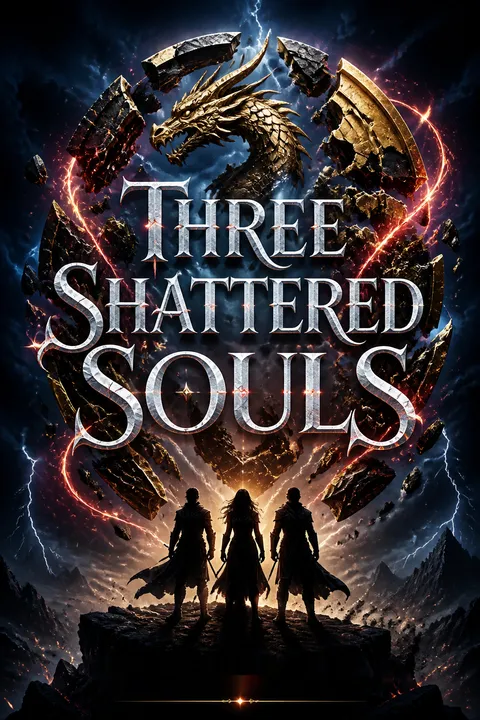
Three Shattered Souls treats power less as an abstract temptation than as a bodily transaction. Aeri loses time, Mikail is eventually drowned by the water he commands, and the rulers who seek the relics imagine that a body can absorb unlimited force in the service of a political ideal. The story repeatedly counters that fantasy with people who are treated as usable material: poison maidens, indentured siblings, colonized Gayans, and soldiers sent into battles planned by kings. The costs of rule are not distributed evenly, and those who make strategic decisions often expect someone else to pay them.
The novel’s central relational conflict is the difference between care and control. Aeri withholds the Sands to protect Royo; Mikail hides Daysum’s death from Sora for what he believes are tactical reasons; Hana conceals her survival because contact could expose her. These choices arise from affection, fear, and self-preservation, yet their consequences are still real. The narrative refuses to make good intentions a universal pardon. Trust must be rebuilt through action, and the injured person retains the right to decide whether a relationship can continue.
Political liberation is similarly resistant to simple answers. Mikail can reclaim Jeul through spectacular force, but a liberated homeland still needs institutions, food, history, and a ruler who will not reproduce its old cruelties. Sora’s refusal to torture Seok marks a boundary, not a complete political solution. Aeri’s destruction of the relics is the most radical response to the cycle: rather than preserve a tool that could make one virtuous ruler absolute, she removes the instrument from everyone. Yet the epilogue leaves grief unresolved. Royo’s search for Aeri shows that a world can become more just without making loss acceptable. The book’s hard-won hope lies not in restoring what was taken, but in choosing what kind of future the survivors will build with what remains.
Review Summary
People Also Read







Characters
Aeri
The relic-bearing princessAeri is King Joon’s daughter, a practiced thief whose instincts for concealment and escape become as important as her royal birth. She resists being treated as a political asset, even when others need her claim to the throne or the power attached to her relics. Her feelings for Royo are real, but she has learned to hide dangerous truths when she believes honesty could expose someone she loves. Aeri can be playful, impulsive, and startlingly perceptive; her humor often arrives when a room is most frightened. Beneath it is a fierce willingness to accept personal cost for other people’s survival. Her struggle is not simply whether to rule, but how to act without becoming another person who decides that power excuses using others.
Mikail
The grieving spymasterMikail is a Yusanian spymaster who discovers that he is the surviving heir of Gaya’s Miat royal family. He is disciplined, observant, and skilled at turning incomplete information into plans, traits that make him a natural leader and a dangerous strategist. Loss has taught him to hide pain behind composure, while his love for Euyn and loyalty to the people of Gaya give that restraint its emotional cost. Mikail believes secrecy and sacrifice can protect others, but repeatedly underestimates how those choices damage trust. His deepest conflict lies between the liberator he wants to be and the avenger who is tempted to answer atrocity with more of the same. He longs for home, though he is not always sure what home means.
Royo
The watchful strongmanRoyo is a physically imposing fighter from Yusan who has built his life around protecting the people he loves. His bluntness and practical instincts can make him seem less thoughtful than he is; in fact, he notices patterns others overlook and asks the questions that puncture grand political plans. Betrayal has made him wary of trusting Aeri, but his affection survives the hurt and forces him to decide what forgiveness can mean without denying pain. Royo’s experience with loss has left him vulnerable to despair, yet he keeps choosing responsibility, especially when someone else is in danger. He is most comfortable with a blade in hand, but his defining strength is his capacity to care without turning that care into possession.
Sora
The poison-trained survivorSora is a poison maiden shaped by years of coercion, trained to read danger in rooms where women are treated as property. She is precise, composed, and capable of violence, but her discipline is not emotional coldness. Her tenderness toward Aeri, her sister Daysum, and the people she protects survives beneath a practiced reserve. Sora distrusts secrets because powerful people have repeatedly used them to control her choices, and she is alert to the difference between protection and paternalism. She longs for safety and a life beyond revenge, yet finds it difficult to imagine wanting anything once her family has been taken from her. Her resilience is not invulnerability; it is the habit of continuing while carrying grief she cannot yet absorb.
Tiyung
The conflicted heirTiyung is Count Seok’s son, raised close to privilege but increasingly aware of the suffering his family’s power creates. He is compassionate and reflective, though early in life he mistakes inaction for helplessness and love for the right to decide what others can bear. His imprisonment strips away the comfort of noble status and forces him to face both his father’s brutality and his own complicity. He wants to make amends, especially to Sora, but must learn that atonement cannot be demanded as a reward. Tiyung’s gentleness is not weakness; it becomes a form of resistance to a political culture that treats cruelty as competence. His hope for a better Yusan is tested by the fact that he still loves people tied to its worst abuses.
Hana
The vanished poison maidenHana is Sora’s former companion from poison school, a survivor who has remade herself under the spy name Zahara. She is sharp, self-contained, and willing to make morally costly bargains when she believes they are the only way to stay alive or help someone she loves. Her greatest fear is not simply being captured again, but being forced to depend on a world that has already failed her. Hana understands Sora’s capacity for loyalty, yet doubts that Sora could accept the choices she made to survive. Her affection is deep but entangled with guilt and the belief that she has forfeited the right to be loved.
Euyn
The banished crown princeEuyn is Yusan’s banished crown prince and one of the original conspirators against King Joon. Clever, suspicious, and often theatrical, he treats contingency plans as a form of affection and rarely assumes that anyone’s motives are simple. His complicated bond with Mikail joins political partnership to intimate love, making him both a source of comfort and a reminder of secrets kept too long. Euyn carries the wound of exile and uncertainty about his own place in the royal family, but he remains capable of fierce loyalty. His presence in the story shapes how Mikail understands grief, trust, and the possibility that love can outlast a person’s body.
King Joon
The calculating rulerJoon is the God King of Yusan, a ruler who treats family, military power, and ancient relics as pieces in a long political design. His authority rests on the belief that control is safer than trust and that other people’s lives can be spent to preserve the realm as he defines it. He is capable of presenting calculated cruelty as necessity, which makes him difficult to oppose through ordinary persuasion. His relationship with Aeri is marked by the tension between paternal claim and political use. Joon’s ambitions are not limited to keeping his throne; he seeks power that could reach beyond the borders of Yusan.
Count Seok
The indenture-making usurperSeok is a southern count whose rise to power is built on coercion, political calculation, and control over other people’s families. He turns poverty and debt into instruments for acquiring children, then forces girls into poison training and makes their siblings leverage against them. As Tiyung’s father, he embodies the conflict between familial attachment and moral responsibility. Seok can be charming when it serves him, but he understands affection chiefly as a weakness to exploit. His drive for the Yusanian throne grows from a conviction that power belongs to whoever can seize and hold it, regardless of the human cost.
Ailor
Mikail’s adoptive fatherAilor is a decorated Yusanian soldier who rescues Mikail after the slaughter of Gaya’s royal family and raises him as his own son. He gives Mikail a home, stories, and a model of care that does not depend on bloodline. Ailor’s past service to Yusan makes his compassion an act of defiance against the orders he was given. He is remembered through the orchard, his kindness to animals, and the emotional foundation he built for Mikail. His life demonstrates that a person can belong to a political system and still refuse its most brutal demands.
Fallador
The false Gayan princeFallador is a polished survivor who has spent years living under the identity of Gaya’s exiled prince. He is personable, perceptive, and skilled at making people feel understood, but his history of concealment makes sincerity hard to distinguish from strategy. His attachment to Mikail is shaped by shared history and by the guilt of having withheld the truth about their identities. Fallador wants influence and security in a world that has repeatedly stripped them away, which can make his political choices look like betrayal even when he believes he is helping. He is also emotionally vulnerable, particularly where love and loyalty pull him in opposite directions.
Gambria
The divided Gayan allyGambria helped Fallador survive the destruction of Gaya and became his closest companion. Fierce, practical, and unwilling to trust grand claims about a homeland that has changed beyond recognition, she evaluates political promises by their likely cost. Her loyalties are complicated by her love for Queen Quilimar and her painful history with Mikail. Gambria is not easily persuaded by appeals to blood or national identity; she has seen how those ideas are used to demand sacrifice. Her guarded manner can look like coldness, but it protects a person who has already given much of herself to people whose love may not be returned.
Count Rune
The opportunistic western countRune is a powerful western nobleman whose refinement conceals a taste for cruelty and political advantage. He offers alliances with the same ease that he negotiates marriages, troops, and future access to the throne. His interest in Aeri is inseparable from her royal status and the legitimacy she could lend him. Rune is intelligent enough to understand that power shifts quickly, so he waits for a useful opening rather than committing himself early. He is not a dependable friend, but his resources can matter to people with few alternatives. His courteous manner makes his self-interest more dangerous, not less.
Sun-ye
The poisoner seeking freedomSun-ye is one of the few surviving women trained alongside Sora as a poison maiden. More guarded and less openly empathetic than Sora, she has learned to treat vulnerability as a liability. Her loyalty to her twin sister Rayna drives choices that can place her in danger and bind her to men she despises. Sun-ye is frank about the compromises required to survive, including her reliance on laoli and her work as a courtesan. Though she and Sora have never shared uncomplicated friendship, the two recognize the particular burdens imposed on women whose families are held as collateral.
Daysum
Sora’s beloved sisterDaysum is Sora’s younger sister and the person for whom Sora has endured years of danger. Their bond gives Sora a reason to survive, but it also exposes how Seok uses family love to control the girls in his power. Daysum is remembered as a source of warmth and shared childhood, not merely as someone to be rescued. Her importance lies in the life Sora hopes to build with her, a future of ordinary safety that becomes inseparable from Sora’s struggle against Yusan’s systems of indenture.
Queen Quilimar
The Khitanese queenQuilimar rules Khitan and is Joon and Euyn’s sister. She is politically formidable, accustomed to weighing personal bonds against the survival of her realm. Her complicated relationship with Gambria places private love inside the machinery of diplomacy and war. Quilimar’s decisions can be read as both strategic and deeply personal, a reminder that queenship does not free a woman from the expectations placed on rulers. She moves through the story as a powerful figure whose survival and alliances shape the conflict between the realms.
Braya
Keeper of Gaya’s historyBraya is the keeper of Gaya’s hidden Temple of Knowledge. Calm and direct, she believes preserving knowledge requires more than recording facts; it also requires protecting the people and places that make truthful records possible. She guides the fugitives through the archive without surrendering its principles to their political needs. Braya’s authority comes from service to the temple rather than a throne, and she reminds Mikail that legitimacy must be earned from the people he hopes to lead.
Fremo
The veteran Gayan rebelFremo is an older rebel who has organized resistance in Gaya for decades without being caught. He helps Mikail recognize the local support that survived beneath occupation and brings civilians to defend Jeul. His practical courage makes him an important early ally.
Teo
The loyal Gayan guardTeo is a former palace guard who pledges himself to Mikail and remains close to him through the fight for Gaya. His loyalty is tested by his brother’s choices, leaving him to separate kinship from political duty.
Calier
Teo’s uncertain brotherCalier is Teo’s younger brother, a Gayan guard whose apparent allegiance makes the group trust him near Mikail. His divided loyalties reflect how easily old political bargains survive inside a liberation movement.
Nayo
Hana’s protective brotherNayo is Hana’s brother and one of the family members whose safety shapes her choices. His vulnerability to Seok’s system of coercion is part of the history Hana carries into her relationship with Sora and Tiyung.
Rayna
Sun-ye’s twin sisterRayna is Sun-ye’s twin and the person whose freedom anchors Sun-ye’s bargain with Seok. Her position shows how the threat against one sibling can be used to direct the life of another.
Plot Devices
The Dragon Lord relics
Power with a bodily priceFive relics carry the Dragon Lord’s etherum: the Golden Ring, Sands of Time, Water Scepter, Flaming Sword, and Immortal Crown. Each grants extraordinary power, but use extracts a physical cost from the bearer. Aeri’s relics can stop time and turn hearts to gold; Mikail’s scepter manipulates water, and the sword commands fire. When relics are joined, their powers intensify and their bearers suffer new effects. The rulers’ pursuit of the artifacts drives the political conflict, while the toll makes power inseparable from bodily vulnerability. The final choice to destroy them challenges the assumption that the answer to tyranny is simply placing greater power in better hands.
The Temple of Knowledge
Memory hidden beneath ruinThe temples preserve records that rulers have erased or altered, but each is concealed in a place the political world considers inaccessible. Royo’s green key helps the group find Gaya’s temple beneath the burned sacred woods. Its records reveal a history of queens in Yusan and offer partial accounts of the relics, though not enough to predict the cost of combining them. The temple turns research into an adventure and gives the characters evidence against official histories. Its keepers also embody a moral question: whether knowledge can remain neutral when one power is actively trying to destroy it.
Indenture certificates
Family held as leverageSeok uses indenture records to bind girls to his household and threaten the siblings they love. The certificates turn private affection into political leverage, forcing the poison maidens to kill for him or risk their families being sold. They explain why Sora’s mission to save Daysum and Sun-ye’s bargain for Rayna shape decisions long after the women escape his immediate control. The papers also create a material trace of a system that powerful people would prefer to deny. Destroying or recovering one certificate can change a family’s legal status, but it cannot undo the years of coercion that made it necessary.
The Road of Souls
Love at death’s thresholdThe Road of Souls is the passage the dead travel toward judgment and the Ten Hells. It gives the novel a spiritual geography for grief, but its rules are not entirely fixed: a soul connected to a god relic may linger, and Royo’s knowledge of how Aeri returned makes a dangerous rescue possible for Mikail. The road is not a convenient resurrection device. It offers only a brief, uncertain interval in which a living person may be called back. Mikail’s encounter with Euyn lets the dead beloved urge the survivor toward life, transforming the afterlife from an endpoint into a difficult choice about whether to return.
Eagle post and spies
News as a weaponCoded letters, messenger houses, informants, and planted rumors connect territories that cannot safely communicate face to face. These networks reveal the Weian fleet, the bounty on the fugitives, and the movements of allies, but they also make every message vulnerable to interception or manipulation. Mikail’s training has taught him to treat information as something to be shaped, while Hana, Gambria, and Fallador each use secrecy for different reasons. The device repeatedly destabilizes trust: a report may be accurate but incomplete, or true in content and dangerous in consequence. Political knowledge travels quickly, but never without a cost.
The Broken Blades Series


About the Author

Download PDF
Download EPUB
.epub digital book format is ideal for reading ebooks on phones, tablets, and e-readers.








