

Key Takeaways
Check the judgment before believing a headline about what the law allowed
A story can be legally false. The book calls distorted accounts of legal cases “Fake Law”: stories that alter or omit facts until a court decision appears to prove a political point. The supposed immigrant kept in Britain because he owned a cat is one example. The cat was incidental, and the decision turned on the Home Office’s handling of his application, not a human-rights loophole.
Finding the law is hard. At the time of publication, about 2 percent of laws on the official legislation website were marked as having outstanding updates. The free case-law charity BAILII had published fewer than half the judgments available through a commercial provider. Even accurate legal material can be difficult to locate and interpret, leaving room for confident misinformation.
What's striking is that misinformation thrives not only because readers are careless, but because legal knowledge is costly to acquire. This is an information-asymmetry problem: insiders can frame a case before the public can inspect the record. A useful habit is to ask what the judgment actually decided, which facts were established, and whether the headline distinguishes law from political opinion. Still, expertise is not a guarantee of neutrality. Legal professionals, too, have institutional interests, so scrutiny should test the evidence rather than simply replace a newspaper's confidence with a lawyer's.
Use force to stop an immediate threat, not to punish an intruder
The law already permits defence. In England and Wales, self-defence can justify force, even lethal force, when a person genuinely believes force is necessary and uses force that is reasonable in the circumstances as they believe them to be. The prosecution must disprove the defence beyond reasonable doubt. A person under sudden attack is not expected to calculate force with perfect precision.
The facts matter. Tony Martin was not convicted simply for defending his home. Evidence suggested that he had prepared an unlicensed shotgun, shot the burglars at close range, and previously threatened to shoot intruders. Munir Hussain’s conviction concerned a violent pursuit after the burglary had ended and danger had passed. Political promises to permit more force did not meaningfully change the basic legal test.
The distinction between protection and retaliation is easy to lose when a story invites readers to identify with a frightened householder. The law's attention to what someone honestly believed recognizes the limits of human judgment in emergencies, while the reasonableness requirement guards against turning fear into a licence for vengeance. This is a useful example of law balancing two risks rather than choosing a perfect outcome. The same rule protects people who are mistakenly seen as threats, including children or neighbours who enter property for innocent reasons.
Judge a child’s treatment by the child’s interests, not parental authority alone
Children have independent rights. When parents and doctors disagree about a child’s treatment, the family court applies the welfare principle, meaning the child’s best interests are its paramount consideration. The court hears medical evidence and the parents’ views, and appoints a guardian to represent the child’s interests. Parental love matters, but it cannot settle every dispute when a child cannot decide for themselves.
The cases were not budget cuts. Charlie Gard’s proposed nucleoside therapy had not been tested on patients with his condition, and experts considered meaningful benefit vanishingly unlikely after irreversible brain damage. In Alfie Evans’ case, the proposed move abroad offered continued life support, not a treatment expected to improve his condition. The courts assessed likely benefit and suffering, not whether the NHS could afford care.
A child's best interests are not a simple medical measurement. They involve evidence, uncertainty, values, and judgments about suffering, dignity, and possible benefit. Independent review can prevent a child’s needs from disappearing inside a conflict between adults, but judges cannot make uncertainty vanish. The strongest version of the book's argument is therefore not that courts are infallible, but that disputed decisions need a forum able to hear competing evidence and explain its reasoning. Public sympathy for parents is humane; it becomes dangerous when outsiders use it to circulate false treatment claims or intimidate clinicians.
Ask what an award repairs before calling it a windfall
Compensation follows proven fault. A typical negligence claim requires a duty of care, a breach of that duty, and an injury caused by the breach. Damages aim to restore the injured person, as far as money can, to the position they would otherwise have occupied. They can include pain and reduced quality of life, lost earnings, future care, and treatment costs.
Headlines erase the human costs. A reported multimillion-pound award for a brain-injured child may largely fund decades of residential care and support, rather than provide a personal fortune. The familiar story of the motor-home driver who sued after setting cruise control and walking away was an urban myth. The book also notes that about 96 percent of civil claims settle or end without trial, which can leave the public without a clear account of the evidence or calculation.
A large number is emotionally vivid but analytically thin. Breaking an award into lost income, care needs, and non-financial harm makes the scale more intelligible, though it cannot make compensation equivalent to restored health. The deeper question is who should bear the cost of preventable injury: the injured person, the public, or the party responsible, often through insurance. Fraud deserves scrutiny, but anecdotes about fraud do not establish an epidemic. Reliable data and transparent explanations are more useful than treating every claimant as either a hero or a schemer.
Rights at work mean little if workers cannot afford to enforce them
Employment law counters unequal power. A worker who depends on wages cannot walk away from a bad employer as easily as a customer can switch suppliers. Employment protections set minimum standards and create routes to challenge discrimination, unfair dismissal, or unpaid wages.
Fees blocked ordinary claims. In 2013, the government introduced employment tribunal fees of up to £1,200. A worker seeking only £70 for missed antenatal appointments faced a £390 fee. Claims fell by about 70 percent. In 2017, the Supreme Court ruled the scheme unlawful because it effectively prevented access to justice. The decline in cases was not proof that workplace disputes had disappeared; it showed that many people could no longer afford to bring them.
This is a clear case of confusing fewer complaints with fewer harms. The distinction appears throughout public policy: when the cost of reporting or enforcement rises, official counts can fall even while underlying problems remain. Fees can be justified in some systems, but their design must account for users' means and the value of the claims they seek to pursue. The tribunal example also shows why accessible procedures benefit responsible employers. If lawful standards cannot be enforced, businesses that ignore them may gain an unfair advantage over those that comply.
Defend human-rights protections because they restrain the state for everyone
Rights are limits on public power. The European Convention on Human Rights is separate from the European Union. The Human Rights Act brought many Convention claims into UK courts, allowing people to challenge public authorities at home. Some rights are absolute, while others, such as privacy and family life, must be balanced against public interests.
The protections can matter in ordinary lives. Police failures to investigate complaints from two women attacked by taxi driver John Worboys allowed him to continue offending. The women later used human-rights law to obtain a remedy, because ordinary negligence law did not offer one against the police. By contrast, the often-repeated story that an immigrant stayed in Britain because of a pet cat misrepresented the case and the role the cat played.
Rights work like constraints in a constitution: they matter most when public power is being exercised against someone with little leverage. Their value is easy to miss when the claimant is unpopular, but the same legal standards can protect a victim confronting a public agency. The book is strongest when it separates the existence of a right from the outcome of a particular case. Human-rights law is not an automatic victory for claimants, and difficult judgments deserve criticism. The criticism is more useful when it addresses the actual legal balance rather than an invented headline version.
Treat legal aid as access to law, not cash for clients
Representation makes rights usable. Legal aid funds legal advice and representation for people who meet financial and case-merit tests. The money is paid to lawyers, not handed to the person receiving help. It matters because laws and court procedures are difficult to navigate, especially for someone facing a powerful employer, a landlord, or the state.
Cuts left people without help. The Legal Aid, Sentencing and Punishment of Offenders Act 2012, known as LASPO, removed many civil cases from coverage. Civil legal-aid use fell by 82 percent over eight years. The book describes victims of domestic abuse, children facing immigration proceedings, and disabled people challenging benefit decisions who were denied assistance. Legal advice deserts also grew as providers closed or withdrew from areas of law.
A legal right without the practical ability to assert it resembles a locked exit: present in theory, unavailable in a crisis. Legal aid also produces public benefits that are easy to miss, including clearer disputes, fairer hearings, and decisions that can establish rules for others. That does not make every legal-aid claim meritorious or every funding model efficient. It does mean that spending should be assessed against the cost of unresolved disputes and unlawful decisions, not only against a headline budget total. Comparing legal-aid budgets across countries is especially misleading when their justice systems allocate costs differently.
A not-guilty verdict does not prove that a complainant lied
The state carries the burden. In a criminal case, the prosecution must prove guilt beyond reasonable doubt. The accused does not have to prove innocence, because the state has far greater investigative power and a conviction can take away liberty and permanently damage a person's life.
Acquittal has a narrow meaning. It means the court was not sure of guilt, not that the defendant was proved innocent or that a complainant fabricated an allegation. In a case against broadcaster Neil Fox, magistrates acquitted him but said they believed the complainants; they could not be sure that the alleged events amounted to the charged offences. That distinction can be painful for complainants, but erasing it invites public punishment based on allegations rather than findings.
The criminal standard is an epistemic rule as much as a procedural one: it specifies how certain the state must be before coercing a person. It knowingly tolerates some guilty people escaping conviction to reduce the risk of punishing the innocent. That choice can leave victims without the public recognition a conviction may bring, and the system should not minimize that loss. But a lower standard would not solve weak investigations or unreliable evidence. Better evidence-gathering and support for complainants address those failures without making accusation itself a substitute for proof.
Do not let public anger decide who deserves due process
Equal rules protect unpopular people too. The rule of law requires public authorities and private citizens alike to be governed by published laws. In the James Bulger case, the Home Secretary increased the minimum terms for the child offenders after a tabloid campaign, despite judicial recommendations for shorter terms. The House of Lords later ruled that political pressure had improperly influenced sentencing.
Due process is not endorsement. The book also examines pressure to bypass legal protections for people such as banker Fred Goodwin, accused businessman Philip Green, and Shamima Begum, who joined ISIS as a teenager. Their conduct or reputations do not answer the legal question. A fair process determines what the law permits and what evidence supports action, rather than letting popularity decide who receives its protection.
The test of a legal principle is whether it survives contact with a person the audience dislikes. Due process does not require sympathy, absolution, or immunity from consequences. It requires that consequences follow the law and evidence rather than a politician's need to satisfy a news cycle. Public anger can identify real failures and demand reform; it becomes a poor substitute for adjudication when it decides an individual case in advance. Equal treatment is not emotionally satisfying in every instance, but selective exceptions can be expanded by the same authorities that first deploy them against others.
Judicial independence protects democracy from unlawful executive shortcuts
Courts enforce legal boundaries. In the 2016 Miller case, judges did not stop Brexit. They ruled that the government needed an Act of Parliament before notifying the EU of withdrawal, because leaving would affect rights incorporated into domestic law. In 2019, the Supreme Court ruled that suspending Parliament for five weeks without a good reason was unlawful, because it prevented Parliament from carrying out its constitutional work.
Judges are not beyond criticism. The book argues that decisions should be challenged through reasoned scrutiny and appeals, not personal attacks or threats. It also calls for stronger public legal education, more accessible judgments and legislation, and independent leadership capable of defending the rule of law when political messaging distorts a case.
Democratic choice and judicial review are not opposites. Elections choose lawmakers and governments; courts determine whether public officials have acted within the law those lawmakers made. This division is especially important when the executive controls much of the information and machinery of government. Judges should remain open to criticism, and legal institutions should explain their reasoning in language citizens can inspect. The book's proposed public education agenda addresses a real vulnerability: when legal processes are opaque, political actors can portray a check on power as an attack on voters.
Analysis
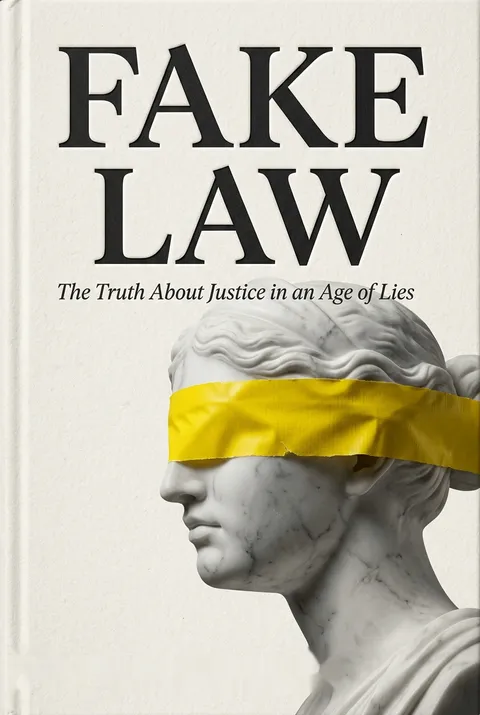
Fake Law is a polemical guide to English and Welsh justice, organized around familiar public controversies rather than abstract legal doctrine. Its method is consistent: begin with a dramatic claim, reconstruct the underlying legal process, then show how omitted facts change the story. The central argument is that misinformation does more than confuse. It can make people welcome restrictions on rights, legal aid, compensation, and judicial independence because the consequences appear to fall only on strangers.
The book's strongest contribution is its insistence on distinctions that headlines flatten: reasonable defence versus revenge, parental wishes versus a child's welfare, compensation versus profit, accusation versus proof, political popularity versus lawful authority. These distinctions give readers practical questions to apply to new stories. Who made the decision? What did the court actually find? What does the remedy pay for? What evidence was tested? Which institution benefits from the version being circulated?
Its case studies also reveal that misinformation is not just a problem of false statements. Selection can mislead without outright fabrication: a rare outcome can be presented as typical, a gross award can conceal future care costs, and an administrative total can be relabeled as money paid to a defendant. The adaptation of legal ideas into simple villain stories is politically useful because it converts complicated institutional questions into emotional verdicts.
The argument deserves one qualification. Demonstrating that a headline is false does not establish that the underlying institution is sound, nor that every disputed judgment is correct. A reader should resist both tabloid certainty and professional self-protection. Lawyers and courts can fail, and public frustration may identify genuine systemic problems even when its evidence is poor. The book's most durable standard is therefore not trust the system, but insist that criticism be specific, fact-based, and attentive to consequences. Legal literacy is not a defence of the status quo. It is what makes meaningful reform possible.
Review Summary
Fake Law is highly praised for exposing misconceptions about the legal system in the UK. Readers appreciate its clear explanations of complex legal concepts and high-profile cases. The book challenges media misrepresentations and political interference in the justice system. Many reviewers recommend it as essential reading for understanding modern Britain's legal landscape. While some found certain chapters less engaging, most commend the author's wit and ability to make legal topics accessible. The book is seen as an important contribution to public legal education.
People Also Read




Glossary
Fake Law
Distorted legal reportingThe book's term for accounts that distort, omit, or reframe legal cases so that the public receives a misleading impression of what the law says or why a court reached its decision. Such stories may serve commercial aims, political agendas, or both, and can make genuine legal problems harder to see.
welfare principle
Child welfare takes priorityThe principle applied by courts deciding questions about a child's upbringing: the child's welfare is the court's paramount consideration. It can require a decision different from what a parent, hospital, or other party wants. Courts consider the child's needs, wishes when ascertainable, risks of harm, and the likely effects of the options.
reasonable force
Force justified by circumstancesIn self-defence law, force is assessed in light of the circumstances as the defendant honestly believed them to be. The response must be reasonable in those circumstances. A person acting in a sudden emergency is allowed a margin for imperfect judgment, but the law does not permit violence used simply for revenge.
Human Rights Act 1998
Domestic route to rights claimsThe Act allows people in the United Kingdom to bring many claims based on European Convention rights before domestic courts, rather than needing to begin in Strasbourg. It requires public authorities to act consistently with those rights and directs courts to interpret legislation compatibly where possible. It does not give courts general power to strike down Acts of Parliament.
LASPO
2012 legal-aid reformsThe Legal Aid, Sentencing and Punishment of Offenders Act 2012 substantially reduced the range of civil cases eligible for legal aid and tightened eligibility rules. The book links the reforms to steep declines in publicly funded advice and representation, including in family, housing, welfare, and immigration matters.
burden and standard of proof
Who proves guilt, and howIn criminal proceedings, the prosecution bears the burden of proving the charge. The standard is proof beyond reasonable doubt, commonly explained to juries as requiring them to be sure of guilt. The defendant is not required to prove innocence. An acquittal means the prosecution did not meet that standard, not necessarily that the defendant was proved innocent.
rule of law
Power governed by lawA constitutional principle that people and public authorities are subject to publicly made laws and can rely on those laws being applied through courts. It includes access to justice and equal treatment under the law. The book stresses that the principle is weakened when governments make exceptions for unpopular individuals or disregard judicial limits.
parliamentary sovereignty
Parliament makes the lawThe constitutional principle that Parliament can make or repeal laws, while the executive and courts cannot overrule Acts of Parliament. Courts interpret and apply legislation and can determine whether government actions are lawful. Their scrutiny of executive conduct is therefore distinct from replacing Parliament's legislative decisions.
FAQ
What's Fake Law about?
- Explores Legal Misconceptions: Fake Law by The Secret Barrister examines common myths and misconceptions about the legal system in England and Wales, aiming to clarify and debunk these false beliefs.
- Focus on Real Cases: The book uses real-life cases to illustrate how media narratives often misrepresent legal principles, highlighting the gap between public perception and the actual workings of the legal system.
- Advocates for Legal Education: It calls for better public understanding of legal rights and the justice system, empowering readers to engage more critically with legal issues.
Why should I read Fake Law?
- Informed Perspective: The book provides a well-researched perspective on the legal system, countering sensationalist media portrayals and equipping readers to discern fact from fiction.
- Engaging and Accessible: Written in an engaging style, it makes complex legal concepts accessible to a general audience, combining humor with serious analysis.
- Empowerment Through Knowledge: Understanding the law is crucial for navigating everyday life, and this book empowers readers to recognize their rights and the realities of the justice system.
What are the key takeaways of Fake Law?
- Myths vs. Reality: The book emphasizes the distinction between legal myths and actual law, highlighting that many popular narratives are exaggerated or false.
- Importance of Legal Education: It stresses the need for legal education in schools and society, arguing that a better understanding of the law can lead to more informed public discourse.
- Critique of the Justice System: While critiquing the legal system, it calls for reforms that address real issues without succumbing to sensationalism.
What are the best quotes from Fake Law and what do they mean?
- “The law, whatever it does, does not work for you.”: This quote critiques the legal system, highlighting the disconnect between public perception and legal practice.
- “Gavels are not, and have never been, used by judges in English and Welsh courts.”: A humorous debunking of a common myth about courtroom procedures, emphasizing the importance of understanding the legal system.
- “The law belongs to all of us.”: This quote advocates for greater public engagement with legal issues and the importance of understanding one’s rights.
How does Fake Law critique the media's portrayal of the legal system?
- Sensationalism: The book critiques the media for sensationalizing legal cases, often distorting facts to create more compelling narratives, leading to public misconceptions.
- Selective Reporting: It points out that the media often focuses on extreme cases, skewing public perception and fueling outrage.
- Impact on Public Understanding: By misrepresenting legal issues, the media contributes to a lack of understanding among the public, calling for more responsible reporting.
What does Fake Law say about self-defense laws?
- Right to Self-Defense: The book explains that individuals have a legal right to defend themselves and their property, as long as the force used is reasonable.
- Burden of Proof: In self-defense cases, the prosecution must prove that the defendant did not act in self-defense, meaning reasonable doubt often leads to acquittal.
- Case Examples: Real-life cases, such as Tony Martin's, illustrate how the law operates, showing that circumstances are crucial in determining outcomes.
How does Fake Law address the issue of compensation culture?
- Exaggerated Claims: The book argues that the narrative of a compensation culture is often exaggerated, with most claims arising from genuine injuries.
- Impact on Legal Aid: It discusses how this perception has led to cuts in legal aid, creating barriers for vulnerable individuals seeking justice.
- Statistical Context: By citing statistics showing a decline in personal injury claims, the book counters the narrative of rising frivolous claims.
What is the significance of LASPO in Fake Law?
- Legal Aid Reduction: LASPO significantly reduced the scope of legal aid, making it harder for individuals to access legal representation.
- Impact on Vulnerable Populations: The cuts have left many vulnerable individuals without means to challenge injustices, leading to broader societal impacts.
- Constitutional Vandalism: The author describes these changes as a serious threat to justice and equality, calling them “gross constitutional vandalism.”
How does Fake Law suggest improving public understanding of the law?
- Legal Education: The book advocates for legal education in schools to better inform young people about their rights and the justice system.
- Accessible Information: It emphasizes the need for clear, accessible information about legal rights and processes, suggesting simplification of legal language.
- Engagement with Legal Professionals: Encouraging dialogue between legal professionals and the public can help bridge the gap in understanding.
What role does the Human Rights Act play in the legal system, according to Fake Law?
- Protection of Rights: The Human Rights Act is portrayed as crucial for protecting individual rights against state abuse, ensuring access to justice.
- Misunderstandings Addressed: The book clarifies that the Act is designed to uphold the rights of all individuals, not just criminals.
- Case Examples: It uses case studies to show how the Act has secured justice for individuals wronged by the state, highlighting its importance.
How does Fake Law address the concept of judicial independence?
- Judicial Independence Defined: The book emphasizes that judges must operate independently from political pressures to ensure fair justice.
- Threats to Independence: It discusses how political rhetoric and media campaigns have sought to undermine the judiciary.
- Importance of Separation of Powers: The text reinforces the necessity of maintaining a clear separation between legislative, executive, and judicial branches.
What are the misconceptions about the criminal justice system discussed in Fake Law?
- Victim vs. Criminal Dichotomy: The book critiques the oversimplified narrative that pits victims against criminals, distorting justice understanding.
- Media Sensationalism: It highlights how sensationalist media coverage creates misconceptions about crime prevalence and justice system effectiveness.
- Misunderstanding of Legal Processes: Many readers may not grasp legal complexities, such as the burden of proof and presumption of innocence, often misrepresented in public discourse.
About the Author
Download PDF
Download EPUB
.epub digital book format is ideal for reading ebooks on phones, tablets, and e-readers.








