

Key Takeaways
Treat space as geography: orbits, routes, and resources now shape power.
Space has usable terrain. Astropolitics is the study of how space’s geography shapes political and military power. The geography is practical: launch sites near the equator save fuel, orbital paths carry satellites, radiation belts create hazards, and the Moon may hold resources. Like sea routes on Earth, some paths and positions matter more than others, though space is vastly larger and harder to police.
Earth already depends on orbit. Satellites support navigation, communications, weather forecasts, and military operations. The book estimates that losing satellite services could cost the UK about £1 billion a day. A distant orbital disruption can therefore affect a delivery driver, a bank, or a military command center on Earth. Space is no longer separate from everyday life or geopolitics.
The geographic lens is powerful because it shifts attention from spectacular rockets to the less visible infrastructure that makes modern life work. It also highlights a limit of the analogy: oceans have coastlines, while orbital routes are dynamic and difficult to fence off. Control in space may depend less on occupying territory than on maintaining networks, timing, and access. That distinction matters because treating orbit as a map of fixed possessions could make political claims seem more settled than they are.
Trace astronomy’s history to see how better observations can overturn political common sense.
The sky began as a story. Ancient societies used celestial patterns to explain creation, mark seasons, and guide farming. Babylonian astronomers recorded planetary movements and used mathematics to predict where planets would appear. Greek thinkers extended this work: Eratosthenes estimated Earth’s circumference from shadows measured in two Egyptian cities, coming remarkably close to the accepted figure.
Observation can unsettle power. For centuries, the dominant model placed Earth at the center of the universe. Copernicus proposed that Earth moved around the Sun; Galileo’s telescope observations strengthened that case, bringing him into conflict with the Church. The argument was not only about astronomy. A universe without Earth at its center challenged a social order that treated human authority as cosmically fixed.
This history makes scientific change feel less like a parade of isolated geniuses and more like an institutional struggle over who gets to define reality. Measurement matters, but so do the tools, records, and communities that make evidence persuasive. The same pattern appears whenever new data disrupts established expertise. Still, the story should not be reduced to science defeating religion: political authority, theology, and scientific practice were entangled, and the book itself notes that Bruno’s fate involved more than his cosmology.
Remember that the road to orbit was built through military competition.
War accelerated rocketry. The basic challenge of reaching orbit is carrying enough fuel to accelerate a vehicle while also carrying that fuel. The theoretical work of Konstantin Tsiolkovsky helped explain how rockets could solve the problem. In practice, the Second World War and Cold War drove rapid development. German V-2 technology, built under the Nazi regime and using forced labor, became part of the knowledge base both superpowers sought after the war.
Sputnik changed the stakes. In 1957 the Soviet Union placed the first artificial satellite in orbit. Americans understood that the rocket capable of launching it could also deliver a nuclear weapon across continents. The Space Race produced extraordinary science, but it was also a contest in military reach and political prestige. Exploration and strategic advantage grew from the same launch systems.
The dual-use history complicates any clean division between peaceful exploration and military activity. The same capabilities can support weather science, communications, or weapons delivery, while public narratives emphasize the more inspiring uses. This is a familiar feature of technological innovation: civilian benefits can emerge from defense investment, but that lineage also carries ethical costs. Von Braun’s career makes the bargain especially visible. Acknowledging those origins does not erase the scientific achievements; it clarifies the political choices behind them.
Protect satellites and orbital space as critical infrastructure, not distant hardware.
Small failures can travel far. Thousands of satellites support navigation, communications, weather monitoring, and military coordination. Their importance grows as economies connect services to precise timing and location data. Space weather can disrupt those systems too. In 1989, a solar storm helped trigger a power failure across Quebec, while satellites also experienced problems.
Debris compounds the danger. The Kessler Syndrome describes a possible chain reaction in which collisions create debris, which causes more collisions and still more debris. The 2007 destruction of a Chinese weather satellite produced tens of thousands of trackable fragments, and a 2009 collision between inactive Russian and active American satellites added thousands more. Even a small object can be dangerous at orbital speeds. More launches without reliable disposal and collision-prevention practices increase shared risk.
This is an infrastructure problem with the logic of climate risk: individual actors gain from using the system, while costs of degradation spread across everyone. The comparison is not exact, since orbital debris has identifiable objects and trajectories, but prevention still requires coordination among states and commercial operators. The hard question is how to share tracking data without revealing military secrets. A system designed only around national security could protect a few powerful users while leaving the broader orbital environment less safe.
See the Moon as a supply base and launchpad, not just a destination.
Lunar value is practical. The Moon may contain rare earth metals and other materials used in modern technology. Ice in permanently shadowed craters could provide water, oxygen, and hydrogen, including fuel for rockets. Because the Moon’s gravity is weaker than Earth’s, launching from there may require less fuel. These advantages make lunar infrastructure potentially useful for journeys farther into the solar system.
Promises remain uncertain. The book also discusses helium-3, a possible fuel for nuclear fusion. Estimates suggest large deposits may exist, but fusion technology and economical lunar mining are not yet established. A lunar base would require power, shelter, radiation protection, and reliable transport before extracting resources at scale. The strategic attraction is clear; the timetable and commercial case are much less certain.
The Moon’s strategic importance comes from its combination of location and possible resources, not simply from symbolic prestige. That resembles the history of ports and transit hubs, where infrastructure can matter as much as the commodity passing through. But resource estimates should not be mistaken for usable reserves. Mining costs, processing energy, equipment failure, and transport could overwhelm theoretical value. The strongest near-term case may be learning how to operate beyond Earth, rather than assuming lunar wealth will quickly pay for itself.
Write space rules with every major power, before operating norms harden into law.
Existing rules leave gaps. The 1967 Outer Space Treaty bars countries from claiming celestial territory, but does not clearly resolve how mining, commercial ownership, or exclusion zones should work. It prohibits weapons of mass destruction in space, but says little about conventional weapons. It also lacks an enforcement system.
New agreements divide opinion. The US-led Artemis Accords propose guidelines for lunar activity, including safety zones intended to prevent harmful interference. Critics worry that such zones could become practical territorial claims, especially if early arrivals define boundaries others must respect. China and Russia are outside the Accords and promote a separate lunar research project. Unlike an agreed global treaty, a club of signatories may establish norms without securing acceptance from all the actors whose conduct matters.
The legal problem is not merely that old rules are outdated. It is that early practice can shape expectations before broad consent exists. International maritime law offers a useful comparison: repeated practice and widely accepted agreements can create durable rules, but contested interpretations persist. Safety zones may be necessary to prevent accidents around fragile equipment, yet their scope and duration need transparent limits. Otherwise, a measure framed as coordination can become a mechanism for incumbents to reserve the best sites.
Expect rival space blocs, while smaller nations bargain for room to participate.
Three powers set much of the pace. The United States, China, and Russia have the greatest independent space capabilities, but their relationships are changing. China is expanding its launch, satellite, lunar, and human-spaceflight programs. Russia, once a leading partner, faces sanctions, funding constraints, and a growing dependence on China. The United States is pursuing the Artemis program and strengthening its military space capabilities.
Others seek leverage. Europe, India, Japan, Australia, and the UAE are developing capabilities or joining partnerships. Many countries cannot launch independently, so they cooperate in groups or rely on larger powers for access. China’s regional partnerships and the US-led Artemis Accords both offer routes into space, while also building influence. A country’s choice of partners can affect its access to data, technology, and future missions.
The bloc pattern shows that space participation is also a question of diplomatic agency. Shared launches and scientific missions can give smaller states useful access, but dependence may bring constraints on data, standards, or strategic alignment. The comparison with terrestrial alliances is helpful, though the memberships are less fixed: a state can cooperate with one power on science and another on commercial launches. That flexibility could create practical bridges, but it does not remove the risk that technical standards become instruments of political competition.
Treat private space companies as political actors with infrastructure power.
Companies now shape access. SpaceX lowered launch costs with reusable rockets and built Starlink, a large satellite internet network. During Russia’s invasion of Ukraine, Starlink terminals helped restore connectivity after local infrastructure failed. The service also supported Ukrainian military communications, raising a difficult question: when a commercial system helps one side in a conflict, does it become a legitimate target?
Ownership raises governance questions. Private firms are also pursuing lunar contracts, space tourism, and manufacturing in orbit. Their activities can create practical precedents before international law catches up. A company may be registered in one country, build equipment in another, launch from a third, and operate far from any national territory. Governments remain responsible for many activities conducted under their authority, but enforcement and jurisdiction become harder as commercial operations spread.
Starlink illustrates a shift from companies supplying equipment to companies controlling services on which governments and populations depend. That gives firms a kind of infrastructural power, even when they have no formal sovereignty. The arrangement can be nimble and lifesaving, but private decisions about service access can have public consequences. Democratic oversight and transparent rules matter especially when a company’s technical choices affect a war. The challenge is to regulate responsibility without freezing the innovation that makes new services valuable.
Keep attacks on satellites from becoming triggers for nuclear miscalculation.
Space conflict can begin on Earth. Satellites help military forces communicate, navigate, observe opponents, and detect missile launches. Anti-satellite weapons can destroy or disable them through missiles, lasers, jamming, cyberattacks, or close-proximity maneuvers. Some destructive tests have scattered debris into busy orbits. Other methods, such as jamming or spoofing signals, may disrupt a satellite without creating a debris cloud.
The escalation risk is severe. A country that suddenly loses access to an early-warning satellite may not know whether the disruption is a limited attack or preparation for a nuclear strike. That uncertainty can create pressure to respond quickly. The book’s hypothetical crises show how actions presented as proportional can be interpreted as escalation. Deterrence may discourage a full-scale attack, but it does not prevent limited interference or guarantee that leaders interpret it correctly.
The danger is a classic problem of signaling under uncertainty. In ordinary crises, leaders can often inspect events directly or use established communication channels; in space, a sensor going dark may itself be the only available warning. This makes redundancy and direct crisis communication as important as weapons limits. Deterrence can stabilize relations when capabilities and intentions are legible, but hidden systems and ambiguous effects weaken that logic. A satellite attack may be physically contained while its interpretation is not.
Combine robotic exploration with human missions, and plan for the hazards of settlement.
The Moon is the nearer test. A sustained presence would require extracting water, producing oxygen, generating power, and protecting people from radiation and extreme temperatures. Lunar soil may help produce oxygen, while caves could offer more stable temperatures and shielding. These are engineering possibilities, not solved problems.
Mars raises the stakes. A crewed journey could take months each way, with long exposure to weightlessness and radiation. Space travel can weaken bones, muscles, and the heart; Mars offers only about 38 percent of Earth’s gravity. Robotic probes are cheaper and avoid human fatalities, but people can adapt, repair equipment, and make judgments in ways machines may not. The book’s case for exploration is therefore both practical and cultural, while acknowledging that ambitious schedules and settlement visions remain speculative.
The disagreement over humans versus robots is not simply courage against caution. It concerns which risks are worth taking, what forms of knowledge matter, and who pays for them. Robots excel at repeatable measurement and can operate without life-support systems; humans offer flexible judgment but require costly protection and return plans. A defensible program can use machines to scout and prepare, then send people only when their presence adds clear value. This approach treats exploration as a portfolio of capabilities rather than a contest between species.
Analysis
The book’s central move is to make space legible as geography. That reframing brings familiar questions of access, chokepoints, resources, and power into orbit, while showing that Earth’s political systems already depend on infrastructure above it. The strongest sections follow this logic from the Cold War rocket race to present-day satellite networks and prospective lunar bases. The history supplies a useful warning: technologies marketed as exploration tools can also serve military competition, and their civilian benefits do not erase their strategic origins.
The framework is most persuasive when applied to networks and interdependence. A satellite is not valuable only because of its position; it is valuable because people, institutions, and machines rely on its signals. Disabling one asset can create consequences far from the point of attack. The same is true of debris, which behaves less like a border dispute than a cumulative pollution problem. These features make conventional territorial metaphors useful but incomplete. Space is not empty land waiting to be claimed, and control of an orbit is not equivalent to sovereignty over a region on Earth.
The book also makes the legal lag visible. Treaties written for a small number of state actors struggle to govern commercial operators, dual-use systems, and contested safety practices. Yet resource competition is sometimes described ahead of evidence: deposits do not equal economically recoverable supplies, and speculative fusion benefits should not be confused with near-term energy options. This distinction matters because expectations themselves can drive political behavior.
Ultimately, the key choice is institutional. Competition is likely, but its form is not predetermined. Transparent traffic management, debris rules, shared scientific data, and credible crisis communication could preserve access without requiring states to trust one another completely. The book’s warning is not that conflict in space is inevitable. It is that dependence on space is already real, while the rules remain too weak to manage it safely.
Review Summary
The Future of Geography receives mostly positive reviews for its accessible exploration of space geopolitics. Readers appreciate Marshall's analysis of current trends and future possibilities in space exploration, colonization, and conflict. Some find the historical sections informative, while others feel they're overly long. The book's speculation on space warfare and resource exploitation intrigues many readers. Critics note a lack of focus compared to Marshall's previous works and question the author's expertise in this complex field. Overall, readers find it thought-provoking despite some flaws.
People Also Read





Glossary
Astropolitics
Politics shaped by space geographyThe study of how the physical geography of outer space shapes political and military choices. It considers launch locations, orbital routes, radiation hazards, strategic positions, and possible resources. The term extends the logic of geopolitics, which examines how geography influences power on Earth, to the space environment.
cislunar space
Earth to Moon regionThe region between Earth and the Moon, including routes and orbital positions used to travel between them. It matters because satellites, spacecraft, and potential stations may operate there, while travel through it connects Earth orbit to lunar activity. The Moon is about 385,000 kilometres from Earth.
Lagrange points
Balanced gravitational positionsLocations in a system of two orbiting bodies where their gravitational effects can help a smaller object maintain a position with relatively little fuel. Space agencies use or consider these positions for telescopes and other spacecraft. Earth and the Sun, and Earth and the Moon, each have five such points.
Outer Space Treaty
Foundational space agreementThe 1967 international treaty that establishes basic principles for space activity. It says outer space and celestial bodies cannot be claimed as national territory, calls for exploration to benefit all countries, and prohibits placing weapons of mass destruction in space. It does not clearly settle modern questions about commercial extraction, conventional weapons, or enforcement.
Artemis Accords
US-led lunar guidelinesA set of non-binding principles launched by the United States in 2020 for civil space exploration, including activity on the Moon. They address cooperation, scientific data, assistance, and the coordination of operations through safety zones. The Accords have attracted many signatories but are not accepted by all major space powers, including China and Russia.
Kessler Syndrome
Runaway orbital collisionsA proposed chain reaction in which collisions between objects in orbit produce debris, and that debris causes further collisions. If the amount of debris becomes high enough, the resulting environment could damage satellites and make some orbital activity difficult or unsafe. The concept was set out by NASA scientist Donald Kessler in 1978.
kinetic kill vehicle
Impact-based satellite interceptorA vehicle designed to destroy a target by colliding with it at high speed rather than detonating an explosive warhead. Hitting a satellite requires extremely precise tracking and guidance because both the target and interceptor move rapidly. The resulting fragments can remain in orbit and threaten other spacecraft.
Mutual Assured Reliance
Shared gains discourage conflictA strategy proposed by astropolitics scholar Everett Dolman. Instead of relying only on threats of retaliation, it would give states a stake in the benefits of space activity, including resources and technologies that could support a more sustainable future. The premise is that shared gains may encourage cooperation, even among rivals, though benefits would not necessarily be distributed equally.
Kármán line
Common space boundaryA boundary set at about 100 kilometres above sea level and used by the Fédération Aéronautique Internationale to define the beginning of space. NASA uses a lower boundary of about 80 kilometres. The difference illustrates that the boundary between airspace and outer space has no universally agreed legal definition.
FAQ
What's The Future of Geography about?
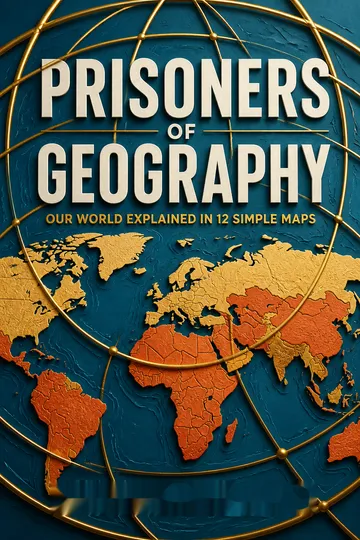
- Exploration of Space and Politics: The book explores the intersection of space exploration with geopolitical dynamics, highlighting how earthly conflicts may extend into space.
- Astropolitics Defined: Tim Marshall introduces "astropolitics," focusing on the political and military implications of human activities in space.
- Historical Context: It provides a historical overview of space exploration, from ancient interpretations of the cosmos to the modern Space Race, shaping current and future endeavors.
Why should I read The Future of Geography by Tim Marshall?
- Insightful Analysis: The book offers a deep analysis of how geography, space, and politics intersect, impacting global power dynamics.
- Urgent Call to Action: It serves as a wake-up call about the implications of space exploration on Earth, warning against repeating historical conflicts.
- Engaging Writing Style: Marshall's narrative style makes complex topics accessible and enjoyable, weaving historical anecdotes with contemporary issues.
What are the key takeaways of The Future of Geography?
- Space as a New Frontier: Space is not just scientific but a geopolitical battleground, with nations positioning for resources and strategic locations.
- Need for New Regulations: There's an urgent need for international laws governing space activities, as current treaties are outdated.
- Role of Major Powers: The book highlights the roles of major spacefaring nations like China, the USA, and Russia, crucial for predicting future conflicts and collaborations.
What are the best quotes from The Future of Geography and what do they mean?
- “If space is our future...”: Warns of the dangers of unchecked competition in space, potentially leading to exploitative behaviors.
- “We explored the world...”: Reflects the urgency of exploring space as Earth's resources dwindle, emphasizing survival and advancement.
- “Astropolitics is a word...”: Captures the transformative impact of the book, highlighting the relevance of astropolitics in contemporary discussions.
What is astropolitics as defined in The Future of Geography?
- Political Dynamics in Space: Astropolitics involves the political and military implications of human activities in space.
- Geography's Role: It draws parallels between traditional geopolitics and astropolitics, emphasizing geography's influence on power dynamics in space.
- Future Implications: Without cooperation, astropolitics could lead to conflicts similar to those on Earth, stressing the need for governance.
How does The Future of Geography relate to current events in space exploration?
- Geopolitical Tensions: Discusses how tensions, especially between the USA and China, influence space exploration efforts.
- Commercial Space Race: Highlights the rise of private companies like SpaceX, changing the landscape of space travel and governance.
- International Cooperation: Advocates for cooperation to prevent conflicts and ensure shared benefits, addressing global challenges.
How does Tim Marshall view the future of space exploration?
- Cautious Optimism: While competition is inevitable, there are opportunities for collaboration benefiting humanity.
- Need for Governance: Emphasizes the urgent need for a legal framework to govern space activities, preventing conflict and exploitation.
- Technological Advancements: Acknowledges rapid advancements making space exploration accessible, but warns of the need for ethical considerations.
How does The Future of Geography address the role of private companies in space exploration?
- Commercial Space Age: Discusses the rise of companies like SpaceX, transforming space exploration by making it more accessible.
- Innovation and Competition: Highlights how competition among firms drives innovation, reducing costs for launching missions.
- Partnerships with Governments: Notes increasing collaboration between private companies and government agencies, reshaping space exploration.
How does the book discuss the geopolitical rivalry between the USA and China in space?
- Competition for Dominance: Outlines the growing competition for leadership in space exploration, with heavy investments by both nations.
- Military Implications: Discusses how space technology advancements are tied to military capabilities, raising conflict concerns.
- Strategic Partnerships: Highlights the importance of alliances to counter rival powers, suggesting collaboration for peace in space.
What challenges does humanity face in establishing a presence on the Moon and Mars according to The Future of Geography?
- Environmental Conditions: Details harsh conditions like extreme temperatures and radiation, posing challenges for habitation.
- Resource Management: Discusses the need for sustainable management of resources like water and oxygen for long-term presence.
- Technological Development: Emphasizes developing technologies for life support, habitat construction, and transportation.
What are the implications of space exploration for Earth, according to The Future of Geography?
- Resource Scarcity: Exploration driven by Earth's dwindling resources, making space exploitation more pressing.
- Geopolitical Tensions: Warns that competition for space resources could exacerbate existing tensions, stressing governance.
- Technological Advancements: Space exploration can drive advancements benefiting Earth, with applications in various fields.
How does The Future of Geography suggest we prepare for the future of space?
- Establishing International Laws: Advocates for comprehensive laws governing space activities to prevent conflicts and ensure equity.
- Promoting Cooperation: Emphasizes prioritizing cooperation over competition, addressing common challenges and sharing benefits.
- Investing in Research and Development: Suggests investment in research to advance understanding and prepare for cosmic challenges.
Politics of Place Series
About the Author
Other books by Tim Marshall


Download PDF
Download EPUB
.epub digital book format is ideal for reading ebooks on phones, tablets, and e-readers.








