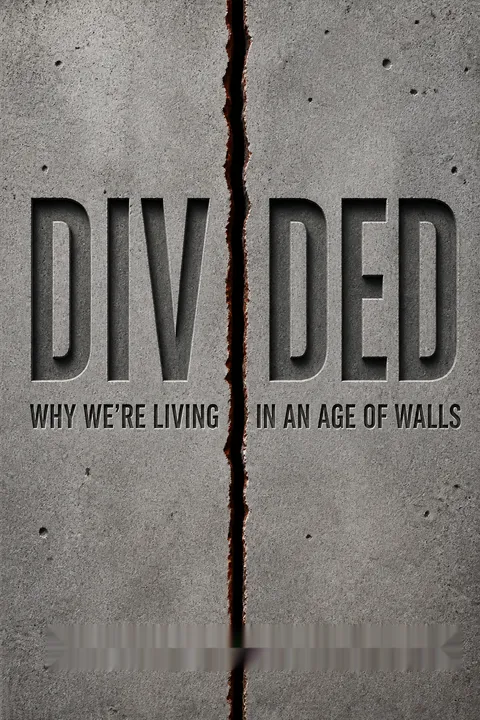


Key Takeaways
Read every wall as both a barrier and a political message
Walls show the divide. Marshall uses walls broadly: not only concrete and wire, but also the social and political boundaries that separate groups. In 2018, at least 65 countries had built border barriers, and about half of the barriers built since the Second World War had gone up since 2000. The rush reflects fears about migration, terrorism, economic insecurity, and cultural change, not simply engineering needs.
Division predates borders. The book traces the impulse to group with familiar people and defend resources back to early settled farming. Physical barriers then gave shape to mental distinctions between insiders and outsiders. Yet a wall’s meaning depends on who stands on which side: one person’s protection is another’s exclusion. The structure is evidence of a division, not an explanation of how it began.
What's striking is how a barrier can work as both infrastructure and political communication. Social identity research helps explain why: people often feel stronger loyalty to a group when its boundaries seem threatened. But symbols can also distort policy debate by making visible action look like an effective solution. The book is strongest when it asks what each wall represents; its global survey also cautions against treating every barrier as equivalent. A defensive structure in an active conflict does not carry the same costs or motives as a fence aimed at poor migrants.
Centralize information to hold China together, and risk choking innovation
The centre fears fragmentation. China’s leadership faces sharp gaps between coastal cities and rural regions, rich and poor, and Han Chinese and minority populations. In Xinjiang and Tibet, cultural and religious identities resist state control. Within the Han majority, urban workers can earn about three times as much as rural workers, while a 2015 study found the wealthiest 1 percent of households owned a third of the country’s wealth.
Control has a cost. The hukou system ties access to public services to a person’s registered home, leaving many rural migrants without equivalent health care or schooling in the cities where they work. The government also restricts online communication to limit organized opposition. This has helped the state manage dissent, but censorship and data controls constrain the exchange of ideas that advanced technology and innovation depend on.
China’s predicament resembles a classic control problem: central authorities can reduce uncertainty by restricting communication, but the same restrictions weaken the feedback needed to spot policy failures. In organizational theory, systems that suppress bad news often appear stable until they are surprised by problems they have made difficult to report. The comparison should not erase China’s particular history or the real security concerns in its border regions. It does, however, clarify the tradeoff: stability achieved by preventing coordination can also make the state less adaptive.
A wall can signal control without fixing the causes of migration
The symbol can outlast the plan. Donald Trump’s proposed US-Mexico wall became a powerful emblem of who belonged in America, despite practical obstacles including private property, difficult terrain, treaty obligations, and a projected cost of tens of billions of dollars. Earlier US administrations had already built hundreds of miles of barriers. These slowed some crossings but did not seal the border; officials described the barrier as a way to make crossings easier to detect, not to prevent them altogether.
Incentives cross barriers. People continue to risk crossing because jobs are available in the United States, including with employers who knowingly use unauthorized labor. Drugs and guns also move through legal checkpoints, where bribery can be more efficient than a desert route. The book argues that economic opportunity in Mexico could reduce migration more effectively than concrete alone.
This case illustrates the difference between policy output and policy outcome. A structure can be built, photographed, and credited to a leader, while the underlying incentives remain untouched. Political scientists call this symbolic politics: an action communicates resolve even when its measurable effect is limited. Yet dismissing the wall as mere theater would miss voters’ concerns about border control and national identity. A serious test is whether a barrier reduces harm at acceptable cost, while policy also addresses labor demand, legal pathways, and regional economic conditions.
Separate immediate security gains from permanent territorial consequences
Protection has a price. Israel’s barrier around the West Bank is about 440 miles long, but only 3 percent consists of the imposing concrete sections most often shown in photographs. Israel says the barrier helped reduce suicide bombings and attacks: hundreds of Israelis were killed in the three years before construction began, compared with just over 60 in the three years after the first phase was completed. Critics dispute how much of the decline the barrier caused.
Routes shape the future. Palestinians argue that parts of the barrier extend into their territory and may establish facts that complicate a future state. About 400,000 Jewish settlers live in the West Bank, while roads and settlement growth already fragment Palestinian areas. The barrier therefore has two roles: reducing immediate risks, according to Israel, and affecting future borders, according to its critics.
The dispute demonstrates why security and legitimacy cannot be collapsed into a single score. A measure may reduce attacks while also imposing movement costs and altering the practical map on which negotiations occur. Security studies describe a related dilemma: one side’s defensive measure can appear to the other as a lasting territorial threat. The book appropriately presents competing accounts, though statistics alone cannot isolate the barrier’s causal effect from changes in tactics or political strategy. Temporary protection needs transparent limits if it is not to become permanent political geography.
When states fracture, sectarian identity can replace citizenship
Old divisions gain force. The Sunni-Shia split began as a dispute over leadership after Muhammad’s death in 632. For centuries, the two traditions coexisted in many places; modern conflict has intensified as governments and regional powers mobilize the distinction. Saudi Arabia and Iran compete for influence, supporting opposing forces in conflicts including Yemen and Syria. In Iraq, the fall of Saddam Hussein shifted power away from a Sunni-led government and helped fuel violent competition.
Weak institutions deepen the divide. A 2014 estimate cited in the book found that the Arab world, with about 5 percent of the global population, experienced 45 percent of terrorist attacks, 68 percent of conflict-related deaths, and hosted 58 percent of refugees. The report identifies limited freedoms, weak access to knowledge, and low participation by women as major constraints. Sectarian identity becomes especially powerful when people distrust the state and lack other dependable sources of belonging or protection.
The key analytical move is to treat sectarian identity as politically activated, rather than as an automatic cause of violence. Group labels become more consequential when states distribute power and security unevenly, and when regional rivals have incentives to amplify them. This fits a broader finding in conflict research: institutions can turn social differences into political fault lines, or help keep them negotiable. Still, religious identity is not a complete explanation. Economic interests, authoritarian rule, foreign intervention, and local histories also shape who fights, for what, and under whose banner.
Climate pressure will overwhelm borders that offer no lawful refuge
Migration has multiple causes. India’s fence along most of its 2,500-mile border with Bangladesh aims to deter unauthorized crossings and smuggling. Yet people cross to escape poverty, persecution, and disasters, as well as because the border cut through communities that had moved freely for generations. In 2011, fifteen-year-old Felani Khatun became caught in the barbed wire while attempting to cross and was shot by an Indian border guard. Her death exposed the human cost of a policy focused on deterrence.
The pressure could grow. Bangladesh is densely populated and vulnerable to flooding and rising seas. The book cites projections that a three-foot sea-level rise could submerge a fifth of the country within about 80 years. India lacks a comprehensive system for distinguishing refugees from other migrants, while Bangladesh and Myanmar have failed to provide safe, reliable routes for displaced people, including the Rohingya. Fencing cannot substitute for rules that recognize and manage asylum.
Climate displacement is not simply a future border-management problem. It tests whether legal systems can distinguish people fleeing immediate danger from those moving for economic reasons, even when the motives overlap. Disaster research also shows that many displaced people first move within their own country, so international migration is not an inevitable result of every climate shock. The book’s warning is strongest when read as a call for preparedness, not prediction: workable asylum procedures, regional agreements, and investment in resilience can reduce both suffering and political panic.
Measure equality in lived access, not statutes alone
Custom can enforce invisible walls. India’s caste hierarchy organizes inherited status and occupation, and remains powerful even though law prohibits caste discrimination. The book describes four broad categories divided into thousands of castes and many more sub-castes. Dalits, once called Untouchables, are placed outside the traditional hierarchy and are disproportionately assigned stigmatized work, including cleaning sewers and handling dead animals. In some rural areas, they still face barriers to public wells and temples.
Formal rights do not guarantee change. Dalits who use the courts to claim land or other rights can face violence, while conviction rates for crimes against them remain low. The book cites a 29 percent rise in recorded crimes against lower-caste people over two years, alongside continued underrepresentation in senior positions. Urbanization and education may weaken caste boundaries, but they do not automatically remove the customs and unequal institutions that reproduce them.
This is a useful distinction between de jure equality, what law formally permits, and de facto equality, what people can safely do in daily life. Similar gaps appear in employment, housing, and health care wherever informal norms evade legal reform. Education can widen opportunity, but it can also credential people without dismantling networks that allocate status and work. The book’s evidence encourages a more demanding measure of progress: not merely whether discrimination is illegal, but whether people can claim rights without retaliation and access the same institutions in practice.
Colonial borders cannot create shared nations by decree
Lines ignored existing communities. European powers drew many African borders with little regard for the peoples already living there. The continent contains thousands of ethnic groups, and communities such as the Bakongo were divided among several new states. After independence, leaders largely kept colonial borders to avoid endless territorial wars, but many governments failed to build inclusive political institutions. In some countries, one group dominated others, feeding separatist movements and, at times, civil war.
New walls can divide within states. In cities, gated developments separate wealthier residents from poorer neighbours, often providing private roads and security. The book notes that such compounds can weaken shared public spaces and shift people’s loyalties from a wider civic community toward a protected social class. Tribal identity can provide belonging and mutual support, but when governments distribute jobs or resources through favoritism, it can also reinforce corruption and exclusion.
The chapter avoids a tempting but misleading answer: that ethnic diversity itself explains instability. Political institutions determine whether diversity becomes representation, bargaining, or exclusion. Research on state formation likewise suggests that legitimacy grows when people can influence common rules and see public goods distributed fairly. Colonial borders matter because they shaped the starting conditions, not because they make later outcomes inevitable. The gated-community example extends the same logic inside cities: private security may protect individual households while making collective investment and public trust harder to sustain.
A fallen wall can survive as inequality, memory, and distrust
Reunification did not erase separation. The Berlin Wall stopped East Germans from leaving, and its fall in 1989 brought families and cities together. But political unification did not instantly erase the economic and cultural differences created by decades apart. More than a quarter-century later, eastern Germany remained poorer, had higher unemployment, and had few people from the former East in the country’s political and business elite.
New divisions test old unions. Across Europe, migration and economic shocks revived national borders and nationalist politics despite the European Union’s promise of free movement. In the United Kingdom, Brexit exposed divides between regions and between people with mobile, cosmopolitan lives and those whose identity is rooted locally. In Northern Ireland, physical peace walls remain alongside separate schools and neighbourhoods, showing how a ceasefire can coexist with social separation.
The Berlin story shows that institutions can change faster than habits, wealth, and status. Reunification is not a simple act of joining two territories; it redistributes power and asks people to revise their sense of who belongs. Political integration faces the same challenge when economic gains and losses are unevenly shared. The concept of a common identity may inspire cooperation, but it cannot replace credible representation or material inclusion. A useful measure of unity is therefore whether people experience common institutions as theirs, not merely whether borders have been opened.
Invest in prosperity and integration before the next barrier hardens
Walls manage symptoms. In conflict zones, barriers can reduce attacks and provide temporary protection. But where migration is driven by poverty, persecution, or climate stress, a fence mostly changes the route and raises the danger of travel. Marshall rejects the idea that simply opening every border is an easy answer; sudden mass movement could strain receiving countries and weaken the places people leave.
Build alternatives as well. The book calls for more foreign aid and a large international development effort focused on infrastructure, trade, education, health, and climate change. It also argues that migration needs to be managed at sustainable levels, with newcomers able to participate in host societies and respect their laws and shared civic principles. Hosts, in turn, must make genuine participation possible. Without economic investment and integration, walls offer only partial relief while distrust grows.
This proposal treats migration as a system shaped by opportunity, safety, and political capacity, rather than as a problem solved at the border. Development can reduce forced movement, but it should not be sold as a way to keep all migration away: people also move for work, family, and aspiration. Integration, meanwhile, requires more than newcomers adapting; public services and local institutions must be able to absorb change fairly. The practical task is to combine humane admission rules, credible enforcement, and long-term investment, instead of asking any single wall to do all three.
Analysis
The book’s central insight is that walls are political instruments whose effects extend beyond the line they mark. A barrier may deter an attack, slow a crossing, or reassure a fearful public. At the same time, it can harden an identity boundary, redirect movement into more dangerous routes, or make a temporary security measure appear to settle a territorial dispute. The wall is therefore both an object and a diagnosis: it reveals what a state believes it must protect, and which people it has difficulty including.
The comparative structure makes that claim vivid. China’s digital controls, India’s caste hierarchy, Northern Ireland’s peace walls, and the proposed US-Mexico barrier are not interchangeable, but each shows how separation can manage immediate pressures while reproducing deeper ones. The range also prevents a simplistic moral rule that walls are always useless or always unjust. In active conflict, a barrier may save lives. Yet effectiveness cannot be judged by physical crossings alone. It also depends on who bears the costs, whether violence falls, and whether the measure obstructs a political settlement.
The book’s strongest explanatory pattern links identity to institutions. People turn toward group belonging when state protection, economic opportunity, or political representation feels unreliable. Leaders can exploit those divisions, while weak institutions leave them unresolved. This framework travels well across regions, but geography and identity are not destiny. The account sometimes compresses complicated histories into a readable narrative, and its broad comparisons can make distinct causes look more alike than they are. Religious conflict, migration, colonial borders, and inequality require separate evidence, not one universal explanation.
The durable lesson is not simply to build fewer walls. It is to make the conditions that generate them less acute: credible security, fair access to public goods, political inclusion, and lawful ways to move. Physical barriers may buy time, but only institutions that earn trust can make separation less necessary.
Review Summary
Divided receives mixed reviews, with an overall rating of 4.01. Positive reviews praise its accessibility and insightful analysis of geopolitics, while critics find it shallow and outdated. Many readers appreciate Marshall's storytelling skills and the book's ability to provoke thought on complex global issues. Some note its bias towards Western perspectives. The book covers various regions and their border conflicts, exploring themes of nationalism, immigration, and cultural divisions. Despite its flaws, many readers find it an engaging introduction to contemporary geopolitical challenges.
People Also Read

Glossary
hukou system
Residence-based registrationChina’s household registration system records a person’s home status and classifies it in ways that affect access to public services. A rural registrant who moves to a city for work may not qualify for the same local health care, schooling, or social benefits as a locally registered resident. The system therefore makes migration possible for work while limiting full civic inclusion.
Great Firewall
China’s internet restrictionsA common name for the Chinese government’s system of internet filtering and control. It blocks access to many foreign websites and restricts online information and communication that authorities consider politically threatening. The book also describes internal monitoring and regulation of Chinese platforms, which are used to limit the growth of networks capable of organizing opposition.
Three Deficits
Arab development constraintsA framework in the 2002 Arab Human Development Report identifying three obstacles to development across Arab countries: limited freedoms and access to knowledge, weak use of communications to spread knowledge, and low participation by women in work and politics. The book uses the framework to explain why gains in education or income alone have not overcome wider institutional and social constraints.
Wall Disease
Psychological effects of confinementA term used after the Berlin Wall was built to describe psychological and behavioral problems associated with living under enforced separation. The suggested effects included depression, alcoholism, and other mental distress. The book presents the term as a historical interpretation of the strain experienced by some East Germans, not as a medical diagnosis that explains every instance of illness.
Iron Wall
Deterrence before negotiationZe’ev Jabotinsky’s strategic idea that a Jewish state in Palestine would first need to establish overwhelming military strength before its Arab opponents would accept that it could not be destroyed. Once resistance to the state’s existence became futile, he argued, negotiation and coexistence could become possible. The book connects this argument to Israeli views of security barriers.
Anywheres and Somewheres
Mobile and rooted identitiesA distinction discussed through David Goodhart’s account of British society. Anywheres tend to have mobile lives, portable careers, and identities less tied to a single place. Somewheres tend to be more rooted in their locality, region, or nation. The categories describe different experiences of change and belonging, not fixed or mutually exclusive personality types.
FAQ
What's Divided: Why We're Living in an Age of Walls about?
- Exploration of Divisions: The book examines the increasing number of physical and psychological walls worldwide, reflecting deeper societal divisions.
- Historical Context: It contrasts historical events, like the fall of the Berlin Wall, with contemporary trends of nationalism and isolationism.
- Case Studies: Tim Marshall uses examples from regions such as China, the USA, Israel and Palestine, and Europe to illustrate identity and division complexities.
Why should I read Divided: Why We're Living in an Age of Walls?
- Understanding Modern Issues: The book provides insights into global issues like migration, nationalism, and identity politics, relevant for those interested in international relations.
- Engaging Narrative: Tim Marshall combines historical analysis with personal anecdotes, making the content both informative and engaging.
- Broader Perspective: It encourages critical thinking about division implications and the future of global cooperation in today's interconnected world.
What are the key takeaways of Divided: Why We're Living in an Age of Walls?
- Rise of Walls: Despite globalization, the world is witnessing a resurgence of both physical and metaphorical walls as nations respond to perceived threats.
- Identity and Division: Identity—national, ethnic, or religious—plays a crucial role in shaping divisions and conflicts.
- Historical Patterns: Understanding past events is vital for addressing present challenges, as many current trends have historical roots.
What are the best quotes from Divided: Why We're Living in an Age of Walls and what do they mean?
- “Tear down this wall”: Symbolizes hope for unity and openness, contrasting with today's fortress mentality.
- “The age of walls was upon us”: Captures the central theme of barriers becoming a defining feature of modern geopolitics.
- “We must divide in order to unite”: Reflects the paradoxical approach of governments that believe creating divisions can lead to greater internal cohesion.
How does Divided: Why We're Living in an Age of Walls address the concept of nationalism?
- Nationalism's Dual Nature: It can foster unity within a country but also lead to exclusion and conflict with others.
- Case Studies: Examples from countries like the UK and the USA show how rising nationalism often reacts to globalization and demographic changes.
- Policy Impact: Nationalism influences government policies, particularly regarding immigration and border security, shaping the political landscape.
What role do physical walls play in Divided: Why We're Living in an Age of Walls?
- Symbol of Division: Physical walls, like the US-Mexico border wall, symbolize societal divisions.
- Security vs. Freedom: The book explores the tension between security desires and implications for personal freedoms and human rights.
- Global Trend: Wall construction is a global phenomenon, reflecting widespread fears and anxieties.
How does Divided: Why We're Living in an Age of Walls relate to the concept of identity?
- Identity as Division Source: Identity often leads to conflict and division as groups compete for resources and recognition.
- Psychological Barriers: Psychological walls can be as significant as physical ones, influencing perceptions and interactions.
- Cultural Narratives: Cultural narratives shape identities and can lead to exclusionary practices.
How does Divided: Why We're Living in an Age of Walls address the issue of migration?
- Migration Crisis: Discusses the current migration crisis, particularly in Europe, and the walls erected in response to refugees.
- US-Mexico Border: Examines the political and social implications of the proposed wall, highlighting the fears driving this initiative.
- Historical Context: Places contemporary migration within a historical framework, showing evolving patterns and recurring fears.
How does Divided: Why We're Living in an Age of Walls address the future of global cooperation?
- Challenges to Cooperation: Rising nationalism and division pose challenges to global cooperation, potentially hindering collective action on global issues.
- Need for Dialogue: Advocates for dialogue and understanding as essential tools for overcoming divisions and fostering cooperation.
- Hope for Unity: Despite a bleak outlook, awareness of these issues can lead to efforts aimed at building bridges rather than walls.
What insights does Divided: Why We're Living in an Age of Walls offer about the Middle East?
- Complexity of Conflicts: Delves into the intricate web of conflicts, emphasizing historical grievances and identity politics.
- Role of Religion: Discusses religious divisions, particularly between Sunni and Shia Muslims, impacting regional stability.
- Barriers to Peace: Highlights physical and psychological barriers complicating peace efforts, especially in the Israeli-Palestinian conflict.
How does Divided: Why We're Living in an Age of Walls illustrate the impact of colonialism on modern divisions?
- Colonial Legacy: Discusses how colonial powers drew arbitrary borders, leading to lasting divisions in regions like Africa and the Middle East.
- Post-Colonial Tensions: Examines how colonialism's legacy influences contemporary conflicts and national identities.
- Need for Reconciliation: Addressing historical injustices is essential for fostering reconciliation and understanding in divided societies.
What solutions does Divided: Why We're Living in an Age of Walls propose for overcoming divisions?
- Building Bridges: Advocates for dialogue and understanding as essential tools for overcoming divisions.
- Policy Changes: Suggests governments focus on inclusive policies addressing root causes of migration and conflict.
- Community Engagement: Encourages local communities to engage and share stories to foster understanding and reduce prejudice.
Politics of Place Series
About the Author
Other books by Tim Marshall

Download PDF
Download EPUB
.epub digital book format is ideal for reading ebooks on phones, tablets, and e-readers.








