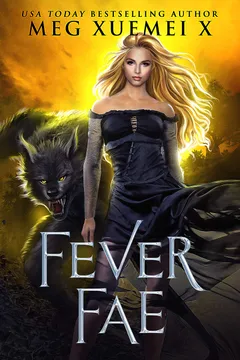


Plot Summary
Breakfast Turns Nightmarish
Three days after her parents17 disappear, Evelina Greene1 leaves college and returns home to care for six younger siblings. Before school, she tries to feed them, keep them moving, and hide how frightened she is about money and their missing parents.17 Her six-year-old sister, Fawn,5 warns that monsters are coming.
A towering, red-eyed creature appears inside the locked house and calls Evelina1 a dark princess. She shields the children, then blasts the creature through a window with a burst of shadow fire she has never used before. Outside, the wounded beast vanishes into smoke. Two enormous, beautiful strangers approach: silver-haired Rowan3 and red-haired Baron,2 who argue in the creature’s strange language.
The attack transforms ordinary caregiving into a test of physical and moral responsibility. Evelina does not wait to understand the creature or protect herself first; she steps between it and the children because their dependence leaves her no other choice. Her new power emerges from that same protective impulse, tying magic to action rather than mastery. Fawn’s warning, the creature’s title for Evelina, and the strangers’ shared language with the monster make the danger feel connected to a hidden history, not a random intrusion. The scene begins with a family crisis and immediately enlarges its scale.
Kings on the Lawn
Rowan3 identifies himself as Winter King,3 while Baron2 claims the Summer throne.2 Evelina1 learns they are Fae, like the creature, and hears that they suspect the Night King4 sent it. Baron2 tries to compel her into sexual submission; she pretends to comply, then blinds him with bathroom refresher and kicks him. When he charges, Rowan3 intervenes and threatens war if Baron2 harms her.
The brothers decide Evelina1 may be a dark Fae and debate whether she should be killed, while she hides that she understands their language. Their argument gives way to a startling reaction to her scent: both kings become intensely drawn to her and call her their fated mate. Evelina1 refuses their claims and sends them away, unwilling to mistake desire for trust.
Evelina’s resistance is not simply bravado. She has learned that charm, status, and supernatural force can all be used to override consent, so she answers each with tactical misdirection and bodily action. The scene also establishes the kings’ contradiction: they can protect her from one another while treating her as a prize. Their attraction does not erase their earlier willingness to harm her. By withholding her understanding of their language, Evelina gains a small but crucial advantage in a world where she lacks information. Her insistence on boundaries becomes the first form of agency available to her.
A Family Built on Secrets
After the kings leave, Evelina1 orders the children inside and tries to restore the morning’s routine. Safiya6 reveals she once overheard their parents17 discuss moving because the family was safer while Evelina1 was away at college.
The revelation recasts years of uprooting as protection rather than parental indifference, and leaves Evelina1 wondering what danger her parents17 concealed. She fortifies the house with weapons and improvised wards, senses that someone has searched it, and decides that fleeing without a plan would endanger the children.
Richie,16 her college boyfriend, calls from a party; Evelina1 realizes their separate lives no longer fit and ends the relationship. Desperate to support the household, she remembers a hidden supernatural club rumored to pay well and decides to seek work there.
This section gives Evelina’s family history a second meaning. What she had experienced as instability and unfairness may have been an unseen defense, and her anger at her parents now shares space with regret for not asking more questions. Safiya’s disclosure also complicates the family bond: resentment among siblings is real, yet the crisis forces Evelina to turn private fear into shared discipline. Ending things with Richie is another relinquishment of her former life, made less romantic than practical. She chooses responsibility without yet knowing whether the secrecy surrounding her family has protected them or trapped them.
The Club Behind Glamour
Evelina1 finds Claws, Fangs, and Fiends, a club concealed from ordinary passersby, and bluffs her way past its horned bouncer.12 When a monstrous patron threatens her, she uses pepper spray and a dagger, proving she will not accept the club’s assumption that a human is easy prey. Indira,11 the tattooed bartender, takes an interest in her, and the club’s feared owner, Rydstrom,4 summons her upstairs.
He offers a high-paying bartending job with benefits for her siblings, but makes a private striptease part of the test. Evelina1 negotiates limits, then dances on her own terms. When Adele,13 a Fae emissary, appears and warns Rydstrom4 not to expose Evelina1 to the Dawn Queen,14 he has her escorted out and hires her.
The club is a threshold in both the literal and social sense: it reveals a supernatural population that the human world is magically trained not to notice. Evelina enters for economic survival, not adventure, and that motive keeps the scene grounded even as its rules become extreme. She negotiates what she can, but the job’s conditions expose the imbalance between her urgent need and Rydstrom’s power. Her performance turns a test imposed on her into a display of skill and control, without making the situation fully equal. Adele’s warning signals that Evelina matters to court politics before Evelina understands why.
A Haven Draws Blood
On her first shift, Evelina1 steps in when a vampire traps a frightened human woman, and the club’s bear-shifter bouncer, K,12 removes the attacker for violating its consent rules. Soon a Dawn Court commander, Devyn,15 leads armed Fae into the club with a half-Fae girl imprisoned in a magical sphere. He demands that Rydstrom4 kill her as a supposed dark Fae.
Rydstrom4 refuses to let the court dictate terms inside his establishment. He slaughters Devyn’s15 company, leaves one soldier alive to carry the warning back, and frees the girl. The club returns to business as if violence were routine. Evelina1 recognizes that Rydstrom’s4 brutal authority can also shelter the vulnerable, though she remains wary of the ruler who commands it.
This fight distinguishes Rydstrom’s refuge from a conventional sanctuary. Its protection depends not on universal law but on the Night King’s personal jurisdiction, which makes safety both real and precarious. Evelina’s intervention with the vampire gives her an immediate point of connection to the club’s consent rules, while Rydstrom’s choice to defend the half-Fae tests whether his authority serves more than himself. His violence is not softened by its protective aim; the same power can rescue or annihilate. Evelina’s respect grows from witnessing his refusal to sacrifice an innocent for court convenience, not from being dazzled by his status.
Ten Million in Gold
After work, Evelina1 drives toward home and is ambushed by a bear shifter, a wolf shifter, and a mage. With her van wrecked, she escapes into the woods, kills the bear with her father’s17 magically infused dagger, and blinds one attacker with pepper spray. Rowan3 freezes the mage, while Baron,2 in lion form, kills another hunter; together they stop the last assailant.
The surviving hunter’s words reveal a ten-million-gold bounty on Evelina,1 though its source is magically sealed. Rowan3 and Baron2 admit they had watched the attack unfold so she could prove herself, a choice that enrages her. They offer guards for her siblings and help finding her parents.17 Evelina1 accepts their protection for the children, not their claim over her.
The ambush makes Evelina’s training costly rather than merely impressive. She survives through skills inherited from her father, but her first killing leaves her shaken, and the kings’ delayed intervention turns protection into a question of trust. Their explanation that they wanted her to prove herself treats danger as an assessment, while she experiences it as a near-fatal threat. The bounty raises the stakes beyond mistaken identity and gives the Fae a practical reason to remain close. Evelina’s conditional acceptance of their help shows a developing survival ethic: she can take assistance without surrendering the right to judge those who provide it.
Fawn Speaks Twice
Rowan3 and Baron2 take Evelina1 and the children home in guarded vehicles. They explain that her parents17 may have crossed the Veil, the barrier between the mortal and immortal realms, and that Evelina1 may be glamoured and awaiting a magical Turning at twenty-two.
At home, the kings help prepare dinner, briefly joining the household instead of merely watching it. Later, Evelina1 privately asks Fawn5 how she predicts danger. Fawn’s5 eyes turn white as an ancient voice identifies itself as a bone witch sharing the child’s body.
It warns that Evelina1 will change, that one of the kings will betray her, another will break her heart, and another will sacrifice. It also warns that she must survive the Wild Hunt. Fawn5 returns to herself exhausted, and Evelina1 promises not to press her for answers.
Fawn’s revelation places a child’s vulnerability inside a larger supernatural system of prophecy, but Evelina responds first as a sister. She stops questioning when the experience overwhelms Fawn, choosing care over the tempting certainty that more answers might provide. That restraint contrasts with the kings’ habit of treating Evelina’s future as a matter to be managed. The prophecy offers no usable map; it gives her threats without identities or timing, intensifying uncertainty rather than resolving it. Meanwhile, the kings’ participation in dinner briefly turns courtship into domestic labor, a form of closeness that matters to Evelina because it resembles the family life she is trying to hold together.
The Night King’s Kiss
At the club, Indira11 explains that pureblood Fae have been killing supposed dark Fae and that the place shelters those threatened by the hunt. She also shares rumors of a lost Fae princess nearing her twenty-second birthday. Rydstrom4 calls Evelina1 to his office after learning about the attack.
He recognizes the creature from her home as a Demonca from Hell, not one of his Nightlings, and promises protection. As he explains that he killed Rowan3 and Baron’s2 father after the man attacked his sister, Evelina1 understands the old feud more clearly.
Their conversation turns into a powerful kiss, but a Silver Circle mage interrupts with news that Demonca and dark Fae are killing across the region. Rydstrom4 rushes away, leaving Evelina1 with fresh danger and unresolved questions about her own power.
The kiss occurs after Evelina sees Rydstrom as more than a feared employer: his explanation connects his violence to a specific defense of family, a motive she recognizes. Still, attraction does not resolve the ethical distance between them. Rydstrom knows far more about the supernatural conflict and acts on information she lacks, while she remains responsible for the children he has investigated. The Demonca correction is especially consequential because it dismantles the kings’ first account of her attack and points beyond Fae politics toward Hell. The princess rumor and her approaching birthday echo the Turning, making her age feel like a countdown.
The Vortex Opens the Veil
That night, Rydstrom4 reaches Evelina1 through a shared fantasy realm and leaves his scent on her. Rowan3 and Baron2 detect it the next morning and confront her, furious that Rydstrom4 has crossed a boundary they had tried to enforce between themselves.
Evelina1 drives to the club to confront him, but the three kings’ argument becomes a magical duel. Their opposing forces form a growing vortex that threatens the building and everyone inside, including Indira.11 Evelina1 rushes into its center rather than let the kings destroy one another.
Thorned vines erupt from her body, seize the combined magic, and pull the fighters out of the club. They land beside the Veil, a portal that Evelina1 opens without understanding how. The sudden appearance of the immortal realm confirms that her power can alter the boundary between worlds.
The kings’ possessiveness becomes physically dangerous when private jealousy threatens the people Evelina considers her responsibility. Her decision to enter the vortex is a desperate intervention, but it also marks a shift from resisting the supernatural world to acting upon it. The vines differ from the shadow fire she used earlier, suggesting that her power is broader and less understood than she assumed. The Veil responds to her before she can explain or control the connection. This is not a triumphant discovery: she has saved the club from immediate destruction, but her improvised solution has moved the conflict to a boundary whose consequences she does not yet know.
Demons Cross the Veil
The Veil opens onto a changing landscape, then darkens as demons pour through, including the Demonca that attacked Evelina’s1 family. She flees at first, then turns back, returns to the battle, and fights beside the three kings. Her shadow fire finally answers her, merging with the Veil’s flames until the portal closes and cuts off reinforcements.
Thorned vines restrain and kill the demons already through. The strongest, an archdemon, withstands her defenses and identifies her as an Inferno Princess, then orders his forces to take her alive. The kings combine their magic to destroy the attackers, but the archdemon escapes as smoke. Evelina1 has stopped an invasion, yet the demon’s words and escape make clear that she is still a target.
Evelina’s return to the battlefield matters as much as her power. She first runs from an overwhelming threat, then recognizes that escape would leave the kings, the human realm, and her family exposed. Her choice is not fearless; it is a correction made while fear remains active. The closing of the Veil offers a concrete victory, but the archdemon’s title for her changes its meaning. Her magic is now connected to a lineage and a political purpose she never chose. The scene resolves the immediate danger while opening a larger one: the demon knows who she is, and its escape preserves an enemy able to act on that knowledge.
The Lost Dawn Heir
After the battle, the kings explain that the Veil last stood open during an ancient war and that Evelina1 may be the prophesied queen meant to unite the four courts. Rydstrom4 says the Dawn Queen’s14 curse on him has broken, while Rowan3 and Baron2 acknowledge that they have also resisted her influence. At a warded Night Court refuge, all three kings formally pledge themselves to Evelina1 and propose.
She refuses to accept marriage before even dating them, then sees her changed reflection: pointed ears, luminous features, and a beauty no human glamour can conceal. The spells hiding her nature have failed. The kings identify her as the missing heir to the Dawn Court and its true queen. Her parents17 remain missing, and her future is only beginning.
The ending gives Evelina an identity that appears to explain the attacks, the prophecy, and the kings’ fixation, but it does not resolve her central practical problem: she still has a family to protect and parents to find. Her refusal of the proposals preserves the distinction between being powerful and consenting to be claimed. The transformation also threatens the ordinary life she has fought to maintain, particularly her ability to live among her siblings without frightening them. By naming her queen, the kings turn a personal revelation into a political expectation. The book closes on a threshold, with Evelina newly visible to the world that has been pursuing her.
Analysis
Fever Fae begins with a concrete crisis of care: Evelina1 must feed and protect six children after their parents17 vanish. That responsibility gives the fantasy plot its emotional measure. The supernatural kings may be beautiful, powerful, and eager to claim her, but their importance is tested by whether they can respect her obligations and boundaries. Evelina’s1 bluntness is a defense against being made passive, yet the story also shows its limits. She cannot solve the bounty, the missing-parent mystery, or the Veil alone, and accepting help does not mean yielding control.
The novel repeatedly makes protection morally ambiguous. Rowan3 and Baron2 guard Evelina1 while deciding she must prove herself; Rydstrom4 shelters a half-Fae girl but governs through lethal force. The hunters claim to defend Fae order while killing people on suspicion. In this world, authority can save lives and create danger through the same act. Evelina’s1 judgment develops as she learns to distinguish a useful alliance from a trustworthy person, without pretending that attraction makes the distinction easy.
Family is the story’s counterweight to royal destiny. Evelina’s1 siblings need meals, school, and reassurance, not a queen. Fawn’s5 strange warnings and Evelina’s1 emerging abilities threaten to pull her into a role much larger than the one she chose, while the book keeps returning her attention to the children at home. The ending makes that tension explicit: her identity as the Dawn heir explains why she is hunted, but it does not resolve her parents’17 disappearance or decide what she owes the courts. Evelina1 closes the Veil through an instinct to protect others, then refuses the kings’ immediate proposals. Her power expands faster than her consent, leaving the next conflict not only about demons and kingdoms, but about who gets to define the life she will lead.
Review Summary
Reviews for Fever Fae are mixed, averaging 3.9/5 stars. Positive readers praise its humor, action, and entertaining characters, particularly the three Fae kings and protagonist Evie. Many enjoyed the fast-paced supernatural world-building and found it addictive. Critics, however, cite immature writing, awkward dialogue, plot holes, and an unlikeable heroine who reacts unrealistically to supernatural events. Several reviewers compared the writing to Wattpad-style teen fiction. Common complaints include overly sexual content introduced too quickly, underdeveloped sibling relationships, and pacing issues.
People Also Read




Characters
Evelina Greene
Reluctant family commanderEvelina is a college student whose plans collapse when her parents17 vanish and she becomes responsible for six younger siblings. She is practical under pressure, irreverent toward authority, and trained in hunting and combat by her father17. Her first instinct is often to meet danger with a joke or a weapon, but beneath that bravado she is frightened of failing the children who depend on her. She values independence because she has learned to rely on herself, yet she can accept help when their safety requires it. Her defining tension is between protecting her family through control and allowing other people to stand beside her without surrendering her judgment.
Baron
Possessive Summer KingBaron rules the Summer Court and first approaches Evelina1 as a threat to be judged and a mortal to be commanded. Proud, flirtatious, and quick to violence, he expects beauty and rank to secure obedience. Evelina’s1 refusal unsettles him because she treats his authority as something he must earn rather than assume. His rivalry with Rowan3 is older than their interest in her, and his impulsive choices often turn protection into another form of pressure. Baron is capable of warmth and loyalty, especially toward the young, but his instinct to claim what he wants makes genuine care difficult to distinguish from possession.
Rowan
Guarded Winter KingRowan is the Winter King, a controlled and formidable Fae who initially positions himself as Evelina’s1 protector against Baron2. His reserve conceals grief and a persistent fear of failing someone he loves. He values restraint more than Baron2 does, yet he still assumes that protection gives him a place in Evelina’s1 decisions. Their half-brother rivalry shapes his conduct, as does his deep suspicion of the other courts. Evelina’s1 sharpness attracts him because it resists the deference he is accustomed to receiving. His central struggle is to care for her without turning care into another claim of ownership.
Rydstrom
Night Court rulerRydstrom is the feared owner of Claws, Fangs, and Fiends and the ruler of the Night Court. His authority is absolute within the club, where he enforces rules that protect vulnerable supernatural patrons. He is secretive, dangerous, and accustomed to making decisions without explaining himself. Evelina’s1 directness disrupts his control, while his history of defending his sister gives her a reason to see the grief beneath his menace. He offers safety, employment, and help, but his power can blur the line between care and intrusion. His relationship with Evelina1 tests whether a ruler who can command everyone else can respect one person’s refusal.
Fawn
Perceptive youngest sisterFawn is Evelina’s1 six-year-old adopted sister, gentle and unusually perceptive. She remains emotionally close to Evelina1 and often brings tenderness to a household dominated by stress, chores, and sibling quarrels. Her warnings about danger unsettle Evelina1 because they arrive with a certainty that seems beyond a child’s experience. Fawn is also sensitive to the fear around her, even when the adults and older children try to hide it. Evelina’s1 protectiveness toward her is especially strong, but Fawn is not simply a helpless dependent; her presence repeatedly draws attention to knowledge the family has not yet learned to understand.
Safiya
Resentful teenage sisterSafiya is Evelina’s1 fifteen-year-old sister, sharp-tongued, image-conscious, and resentful of the attention Evelina1 received from their parents17. Her anger often makes her difficult to manage, but it also preserves memories and observations that Evelina1 missed while focused on herself. Safiya’s disclosure about their parents’17 discussion of moving forces Evelina1 to reinterpret the family’s nomadic life. She wants to be treated as an individual rather than a subordinate in Evelina’s1 new household command structure. Their conflict is fueled by grief as much as personality, and Safiya’s resistance keeps the family’s emotional fractures visible.
Emmett
Responsible older brotherEmmett, sixteen, is one of Evelina’s1 closest helpers among the children. He can be sarcastic and independent, but he assists with meals, the van, and organizing the household. He notices when Evelina1 is overwhelmed and tries to reduce the burden she has taken on, even when she insists on managing everything herself. His steadiness helps turn her improvised military-style household into a workable family effort.
Asuka
Quiet twin brotherAsuka is one of Evelina’s1 younger twin brothers. He is quieter and less confrontational than some of his siblings, and he often relies on his twin, Nox9. His gentle requests and reluctance to add to Evelina’s1 workload reveal how carefully the children watch her strain. He wants ordinary comforts and security, even as the family’s life becomes increasingly strange.
Nox
Sociable twin brotherNox is Asuka’s8 twin and the more sociable of the two. The brothers tend to take care of each other, forming a small unit within the larger sibling group. Nox participates in the family’s new routines and helps Evelina1 keep the household moving. His closeness with Asuka8 offers a model of mutual support that Evelina1 is trying to encourage among all six children.
Cassidy
Negotiating young brotherCassidy is Evelina’s1 eight-year-old brother, energetic, demanding, and eager to negotiate for rewards. His appetite for authority and adventure shows in his wish to become Evelina’s1 lieutenant and learn to fight monsters. Though he can be self-serving, he also has a useful talent for finding things and wants recognition for it. Evelina’s1 attempts to discipline him reveal that she is learning how to lead siblings who are frightened, not merely disobedient.
Indira
Sharp-tongued bartenderIndira is a tattooed demifae bartender at Claws, Fangs, and Fiends. Blunt and observant, she understands the club’s customs and the dangers of being a vulnerable outsider. She helps Evelina1 navigate the supernatural workplace while warning her not to mistake the kings’ attraction for compassion. Indira’s loyalty to the club’s refuge for threatened half-bloods gives her a moral center beneath her rough humor. She respects Evelina’s1 nerve but is willing to criticize her when bravado threatens to become recklessness.
K
Bear-shifter bouncerK is the club’s imposing bouncer, a bear shifter who enforces its rules and removes patrons who violate them. He distrusts Evelina’s1 disruptive style and rarely hides his annoyance, but he is not indiscriminate in his authority. His intervention against an abusive vampire makes clear that the club’s rules have practical force. K serves as Evelina’s1 first guide to the difference between ordinary human expectations and supernatural power.
Adele
Dawn Court emissaryAdele is a Fae emissary who appears to Rydstrom4 in a magically projected form. She knows enough about Evelina’s1 significance to warn Rydstrom4 against exposing her to the Dawn Queen14, but she offers little explanation. Her brief intervention introduces the courtly danger surrounding Evelina1 before Evelina1 understands its source.
Brigantia
Powerful Dawn QueenBrigantia rules the Dawn Court and is treated by other Fae as a formidable political force. Evelina1 hears rumors that the queen seeks influence over the kings and directs the campaign against supposed dark Fae. Her motives remain difficult to separate from court propaganda, making her a distant but consequential presence.
Devyn
Dawn Court commanderDevyn is an armed commander serving the Dawn Court. He enters Rydstrom’s4 club with a captive half-Fae girl and demands that the Night King4 enforce the court’s campaign against dark Fae. His confidence rests on royal authority, but he underestimates the Night King’s4 jurisdiction and resolve.
Richie
College boyfriendRichie is Evelina’s1 boyfriend from college, a charming young man whose carefree party life stands in contrast to her new responsibilities. He offers a brief connection to the future she has left behind, but their distance and different priorities make the relationship untenable. Evelina1 ends it rather than maintain a promise she can no longer keep.
Evelina’s parents
Missing, protective parentsEvelina’s parents are absent throughout the crisis, leaving her to raise their six younger children and search for clues. They trained Evelina1 in combat, moved the family frequently, and prepared practical safeguards around the home. Their secrecy frustrates her, but their past choices suggest they were trying to protect the children from a danger they never fully explained.
Plot Devices
Glamour and the Sight
Hides the supernatural worldGlamour conceals supernatural beings and places from ordinary human perception. Evelina1 can see through it, which lets her recognize Fae features, notice the hidden club, and understand that the people her siblings perceive do not look as monstrous to them as they do to her. The Sight is first mistaken for an unusual human ability, then becomes evidence that Evelina’s1 identity and perception have been deliberately obscured. This device makes concealment part of daily life: the supernatural world is not elsewhere but rendered invisible in familiar streets, while Evelina’s1 ability to see it isolates her from her family’s understanding.
The Veil
Separates mortal and Fae realmsThe Veil is a magical barrier between the mortal world and Elfame, the immortal realm. Rowan3 and Baron2 suggest Evelina’s parents17 may have crossed it, while Rydstrom4 later explains the danger of demons reaching Earth through it. Evelina’s1 vine magic transports the kings to its location, and her connection opens it. Once demons pour through, she must combine her shadow fire with its flames to close the passage. The Veil links the missing-parent mystery to the supernatural conflict and turns Evelina’s1 untrained power into a world-level threat. Its opening is not a safe journey but a breach that nearly permits a demonic invasion.
The Turning
Marks a coming transformationThe Turning is the transition through which a Fae reaches adulthood and awakens natural power, usually around age twenty-two. Rowan3 tells Evelina1 that spells may be suppressing her nature until she reaches that threshold. Indira’s11 account of a missing princess nearing the same age makes the timing feel ominous, while Evelina’s1 power begins surfacing before the ritual. The Turning functions as a deadline and an explanation for why the kings, courts, and hunters are focused on her. It also frames transformation as dangerous rather than automatic: a failed rite can bring madness or death, so her hidden heritage carries both promise and risk.
The Dark Fae Hunt
Makes accusation a death sentenceThe four Fae courts have agreed to hunt dark Fae, hybrids created from demon and Fae blood. Pureblood Fae can accuse someone of being dark Fae and kill them, leaving half-bloods and suspected rogues vulnerable to political convenience. The hunt explains the Demonca’s attack, Devyn’s15 demand for the half-Fae prisoner, and the club’s role as a refuge beyond the courts’ direct jurisdiction. It also gives Evelina1 a reason to fear being misidentified, since both the creature and the kings initially treat her as a possible dark princess. The supposed agreement meant to protect Elfame instead licenses suspicion and violence.
Shadow Fire and Vines
Turns protection into powerEvelina’s1 magic first erupts as shadow fire when she stands between the Demonca and her siblings. Later, black thorned vines appear when she forces the kings’ duel away from the club, and those vines restrain demons during the battle at the Veil. The distinct manifestations show that her abilities exceed what she understands or has been taught. Shadow fire also helps close the Veil, linking her protective instinct to the world’s survival. The magic is both a defense and a danger: Evelina1 cannot yet reliably summon it, and its brutality can leave her unsure where her own intention ends and the power’s force begins.
About the Author




Download PDF
Download EPUB
.epub digital book format is ideal for reading ebooks on phones, tablets, and e-readers.








