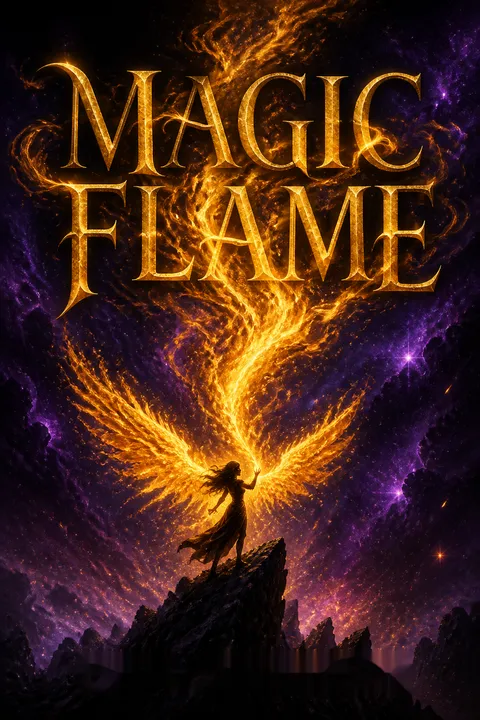


Plot Summary
Valley of the Void
In the Void, Marigold and her four demigod mates face the monsters moments after surviving a battle with Ares, the God of War, and Lucifer. The Void has stripped away their supernatural powers, and Héctor, now mortal after giving up his immortality to save Zak, cannot keep pace with the others. When the beasts overtake him, he stays behind to fight while Zak knocks Marigold unconscious and carries her away.
She wakes into rage and grief, fights beside her mates, then discovers that a command can briefly freeze the horde. The survivors escape the valley and reach a warded cave, but the monsters surround it. Marigold believes Héctor has been torn apart, and her grief leaves her unable to comfort the three mates beside her.
The opening turns survival into a test of what Marigold can bear to lose. Héctor’s sacrifice is not a triumphant gesture: because he is mortal, the others must leave him, and Zak’s decision to incapacitate Marigold protects her while violating her wish to stay. Her grief then exposes the cost of treating protection as a command rather than a negotiation. The cave offers only temporary shelter, so neither love nor strength can make the crisis disappear. Marigold’s brief control over the horde hints that the Void recognizes her, but at this point power arrives as instinct, not mastery.
Héctor Returns Mortal
As Marigold sinks into grief inside the cave, Héctor walks through the monster ranks and returns carrying roasted meat and water. The beasts ignore him because his sacrifice has left him mortal, a fact that explains both his survival and his new vulnerability. Paxton, Axel, and Zak welcome him back, and the reunion restores Marigold’s will to live.
They also piece together that Héctor spent his immortality to bring Zak back from death, not to save Marigold as they first assumed. With the horde still outside and the cave roof under attack, Héctor scouts the valley and finds a route to cliffs and waterfalls. He proposes covering themselves in monster skins to mask their scent, then jumping into the river beyond the cliffs.
Héctor’s return reverses the apparent loss without erasing its cost. The explanation of his sacrifice reframes the mates’ bond as reciprocal: he chose Zak’s life, and Marigold’s despair had made the others confront how much each of them mattered to her. His mortality now changes practical decisions, not just his identity; food, water, cold, and physical limits must be taken seriously. The escape plan also depends on imitation rather than force. In a realm that cancels their familiar powers, survival begins with accepting bodily vulnerability and adapting to the rules that remain.
Beast Skins, Broken Current
The group wears the hides of dead beasts and moves through the horde, with Héctor leading and Axel guarding against Ares and Lucifer. The disguise works until the monsters detect them near the cliffs.
When Axel, Héctor, and Angel are swallowed by the rushing attack, Marigold’s fear unlocks a new kind of magic: she enters the horde’s shared consciousness, discovers its creatures recognize her as their princess, and orders them to retreat. Before she can use that authority to save her companions, Ares kicks away her sword and drags her over the cliff.
Lucifer follows, while Zak and Paxton leap after them. Marigold is swept into rapids and a whirlpool. Héctor finds her underwater and hauls her to shore, where Zak joins them, but Axel and Paxton are missing.
Marigold’s authority emerges in the precise moment when ordinary strength fails. Her connection to the monsters is not gentle understanding: she forces obedience by matching their violence and threatening their collective mind. That makes the power useful but morally unsettled. Ares’s intervention then interrupts her first successful command and turns the group’s escape into another separation. The water strips away any illusion that her love can keep everyone physically together. Héctor’s rescue, despite his mortal limits, makes intimacy a source of practical courage, while the absence of Axel and Paxton leaves the victory incomplete.
Waterfall to Ivory Tower
Marigold, Héctor, and Zak search the riverbank while Angel tracks the missing mates. The cliffs and rapids abruptly give way to a manicured lawn, a luminous tree, and an ivory tower surrounded by guards. The change confirms that the Void contains distinct magical territories, not one consistent landscape.
At the gate, the guards recognize Marigold as Princess Belle Marigold Celeste, and the attendants report that Axel and Paxton are inside. Marigold rushes up the tower, but its shifting spaces separate her from Héctor and Zak as well.
She reaches an observatory displaying distant worlds and finds Lilith, her mother, waiting. Lilith confirms that all four mates are nearby, while Marigold’s first concern remains finding them and understanding why her mother has brought her here.
The sudden change of scenery makes disorientation structural: the Void does not merely contain danger, it rearranges the conditions under which characters can act. The tower’s welcome is also a recognition Marigold has never received in person. Its titles identify her through lineage, while her own priorities remain relational and immediate. She is not seeking a throne or an abstract homecoming; she wants her scattered mates safe. The separation inside a supposedly welcoming place keeps that need in tension with the promise of family, preparing Marigold to question whether belonging can be offered without control.
Mother's Dangerous Test
Lilith uses the tower’s viewing rooms to show Marigold scenes of her mates surrounded by naked nymphs and succubi. The women claim Paxton has slept with them, but he wakes confused and rejects them; Axel escapes his own room, and Héctor refuses both the nymphs and Lilith’s offer to restore his immortality in exchange for sex.
Marigold realizes the scenes are a test of the men’s loyalty, though the deception still wounds her. When Lilith’s magic keeps her from reaching Héctor, Marigold claims her Void birthright and bursts through the barrier with blue wings.
She reunites with all four mates and confronts her mother for manipulating them. Lilith explains that she wanted to ensure Marigold’s partners were worthy, then admits that only Marigold’s father may know how to restore Héctor’s lost immortality.
Lilith’s test treats fidelity as something to be observed under pressure, but its method inflicts the very insecurity it claims to guard against. Marigold’s fear is not simply jealousy; she has already experienced separation, betrayal, and the possibility that each bond could fail independently. The mates’ refusals matter, yet the deeper turning point is Marigold’s refusal to remain a spectator in her own relationship. Her wings appear when she claims agency over a space that has kept her powerless. Maternal care and manipulation occupy the same gesture here, making trust a conflict the family must address rather than a virtue Lilith can certify.
Earth Burns Beyond the Glass
Lilith tells Marigold that she is the child of an archangel and a Titan, born with the potential to remake worlds, and that the Void recognizes her as its princess. Through the tower’s windows, Marigold sees Earth descending into war after the demigods’ absence: commanders seize territory while her friends fight on dangerous front lines.
She wants to return immediately, but the Living Flame cannot be completed inside Lilith’s realm without binding her there. The original Olympian gods are due to arrive, and Lilith advises Marigold to reach the Field of Forever and use their portal to escape.
To restore Héctor, she must visit her father, Hyperion, in the Eternal Prison. Lilith sends the group off in a lavish beast-drawn carriage, while Angel chooses to remain with her.
The tower converts family revelation into an urgent political problem. Marigold’s heritage explains why the Void responds to her, but the same power threatens to make the realm her permanent home. The glass wall’s view of Earth prevents her from treating the Void as a private adventure: her absence has consequences for friends and for the balance of power. Lilith’s counsel is affectionate yet strategic, and Marigold must act on it without surrendering her own priorities. Angel’s choice to stay underscores that love does not always mean accompanying someone; loyalty can also take the form of guarding what the departing person leaves behind.
Tartarus Opens the Silver Dome
Lilith’s carriage deposits the group outside the Eternal Prison, where the guards’ route leaves them exposed. The warden, Tartarus, draws them inside and leads them to the silver dome holding the Titans.
Marigold can touch the warded bars without suffering the burns that injure her mates, confirming her unusual relation to the Void. She meets Hyperion, her imprisoned father, who recognizes her and warns that staying too long will let the realm anchor her. Marigold asks how to restore Héctor’s immortality.
Hyperion secretly impresses an answer into her memory, but before he can explain further, Tartarus brings Ares and the original gods, Zeus, Poseidon, and Hades, to the prison. The gods arrive armed, turning the family reunion into a tribunal.
Hyperion’s prison visit is a meeting shaped by absence: he and Marigold share affection, but neither can pretend that years of separation have left no mark. His warning repeats Lilith’s concern about the Void, yet his priority is his daughter’s freedom rather than keeping her close. The bars make lineage physically legible, since Marigold can touch what burns the others. Tartarus, meanwhile, controls access and information, showing how institutions can convert knowledge into leverage. The gods’ arrival ends the fragile privacy of the reunion and forces Marigold’s family history into public judgment.
Four Marigolds Defy Olympus
Zeus, Poseidon, and Hades condemn Marigold’s birth as unlawful and try to force her to abandon three of her mates. Hades offers to release the others if she leaves Héctor behind, while Ares urges her to discard Axel. Marigold refuses to rank the men she loves. She remembers that Hades tied his promise to the idea of dividing one woman among four partners, and uses her Void power to create three copies of herself, giving each mate a partner.
The gods reject their own bargain and attack. Marigold and her mates fight back, but Tartarus obeys Zeus and drops them into the black dome, the prison’s neglected pit. Hyperion’s final cryptic instruction reaches Marigold as she falls, leaving her with the clue to unlock the Flame.
The trial disguises coercion as choice. The gods ask Marigold to prove her love by sacrificing one relationship, turning intimacy into a hierarchy they can control. Her answer is not a compromise between their terms; she changes the terms by making plurality literal. The copies express her refusal to accept a scarcity model of love, but their brief existence also shows how costly it is to challenge the gods’ categories. Tartarus’s compliance demonstrates that institutional neutrality collapses when power issues a direct command. The fall into the pit converts a public spectacle into a claustrophobic test of endurance.
Paxton Lights the Flame
The black dome holds only bones and dust; its former prisoners have died, and Marigold’s magic cannot break the cell locks. Héctor uses blood runes on his door while the others search for another way out. Hyperion’s encoded message resolves in Marigold’s mind as an instruction to activate the Living Flame. She realizes that completing her interrupted mating with Paxton is necessary.
With the prison bars separating them, Paxton joins with her despite the burns, and their bond completes the ritual. The Living Flame awakens, combining Marigold’s Void power, the energy of Hell, and the power shared through her mates. She breaks the cells’ magic and reaches her companions, no longer waiting for someone else to rescue her.
The intimacy here is both emotional resolution and a mechanism of survival, making the scene deliberately difficult to separate into romance and plot. Paxton’s previous frustration has been prolonged by interruptions, but the prison makes their union imperfect and painful rather than idealized. The Flame does not arise from desire alone: the bond connects sources of power that have been divided by the Void and by the characters’ earlier conflicts. Marigold’s transformation also shifts her from protected center to active rescuer. The relationship becomes consequential not because love magically erases danger, but because the characters choose connection despite its cost.
Septum's Spark Restores Héctor
Once the cells are broken, Marigold recalls Hyperion’s instructions for restoring Héctor. The ancient entity Septum had divided a fragment of its essence among the four demigods before their arrival in the Void. Marigold gathers that fragment from each mate, adds a portion of her own essence, and shapes them with the Living Flame.
The magic enters Héctor, who is thrown from the platform before returning with his death power and immortality restored. The others regain their demigod abilities as well. Marigold then drives her Flame into the prison wall, opening a breach. Her mates form a protective ring around her as they emerge, where Zeus, Poseidon, Hades, Ares, Tartarus, guards, and Titans are waiting outside.
Héctor’s restoration depends on a collective act rather than a single savior’s gift. Septum’s scattered essence, the mates’ willing contributions, and Marigold’s ability to combine them turn separate histories into a shared resource. This is a contrast to the gods’ model of power, which concentrates authority and treats descendants as possessions. The recovery is not free of risk: Héctor’s violent transformation briefly makes Marigold fear she has lost him again. Only after that danger passes can the group confront the prison army. The reunion therefore restores capacity, but it does not resolve the political conflict that their freedom has provoked.
Monsters Turn on Olympus
The gods attack again, backed by prison guards and Titans. Hyperion leads a band of Titans to Marigold’s side, while Héctor and Axel engage Ares. Lilith arrives with her warriors and Angel, and Héctor drives his sword into Ares as Lilith beheads him.
Marigold reaches the beasts imprisoned in Tartarus’s red dome, frees them, and commands them to attack the forces arrayed against her. As the monsters overwhelm the guards and Titans, she unleashes the Living Flame against the three original gods.
She chooses not to destroy them, instead stripping their power and sending them into the silver dome with the other prisoners. Marigold seals the dome with her Flame, installs Hyperion as warden with Tartarus as his secretary, and leaves the monsters free.
The climax tests whether Marigold’s immense power will reproduce the violence it was meant to defeat. She can destroy the gods, but chooses confinement because mercy need not mean releasing dangerous rulers back into the world. Her decision answers the opening’s helplessness before the monster horde: she now commands those creatures rather than fleeing them. Yet she does not simply dominate them; she first frees them from Tartarus’s experiments. Lilith’s arrival and Ares’s death settle a personal conflict, while the prison’s reorganization addresses the political threat. Marigold’s rule becomes credible through limits: power is paired with restraint, delegation, and protection.
Earth, Home, and Unfinished War
At the Field of Forever, Marigold opens a portal to Earth and leaves a thread of her Flame in the Void, promising to return so the realm will let her go. Her parents stay behind, and she, Héctor, Zak, Axel, and Paxton arrive at the Academy to find their soldiers waiting.
The demigods restore order as rival generals submit, then negotiate with Loki, the new King of Hell, to end the Great Merge. Marigold reunites with her friends and learns that powerful visitors have already asked after her.
Lucifer remains missing, and Lilith fears he is plotting against her tower. At Héctor’s forest home, Marigold uses her power to divide herself again, giving each mate a chance to share her attention. The story closes with the five of them together, though the threat beyond Earth remains unsettled.
The ending restores domestic life without pretending that the larger world has become safe. Marigold’s bargain with the Void preserves a connection to her origin while allowing her to choose Earth and her mates as home. Her return also carries civic responsibility: the demigods must repair the power vacuum their absence created, and Loki’s negotiations replace conquest with a fragile political process. Friends, lovers, and rulers occupy the same future, but not every danger is resolved. Lucifer’s disappearance keeps the story open-ended. Marigold’s final use of her dividing power turns a once-defensive answer to coercion into an intimate, chosen expression of how she wants to live.
Analysis
Magic Flame turns a romantic ensemble into a practical answer to a universe organized around solitary authority. Marigold’s four relationships are not merely competing attachments: each mate brings a distinct history of rejection, duty, or insecurity, and each becomes part of the mechanism by which the group survives. The Void repeatedly removes familiar power, forcing them to negotiate care through concrete acts: carrying the grieving Marigold, finding food, sharing essence, and trusting one another under threat.
The novel’s central political conflict mirrors its intimate one. The Olympian gods enforce a single, hierarchical model of legitimacy, then use bargains and threats to make Marigold choose which bonds deserve to survive. Her refusal is not simply romantic defiance. It rejects the premise that authority can define the shape of a family. Her power to create multiple selves makes that refusal spectacular, but the more consequential choice comes later, when she could destroy the gods and instead imprisons them. The novel distinguishes domination from responsibility through the use of power, not through its possession.
Marigold’s identity is also a conflict between inheritance and chosen life. Her parents offer a cosmic destiny and a home in the Void, but she chooses Earth, her friends, and the mates who have built a life with her. The choice is not a rejection of her origins: she leaves a thread of Flame behind and promises to return. This arrangement allows belonging to be plural rather than exclusive. The ending is therefore less a final escape than a negotiated balance between roots and freedom, private love and public responsibility, immense capacity and deliberate restraint.
Review Summary
Magic Flame concludes an action-packed series with mixed reviews. Many readers praise the epic battles, character development, and satisfying ending. However, some criticize excessive sexual content, inconsistent dialogue, and underdeveloped relationships. The book follows Marigold and her mates as they navigate the Void, face powerful enemies, and unlock her full potential as the Living Flame. While some found the plot engaging and unpredictable, others felt it lacked depth and coherence. Overall, fans of the series generally enjoyed the finale, but it may not appeal to all readers.
People Also Read


Characters
Marigold
Reluctant cosmic heirMarigold is a sharp-tongued young woman whose life has crossed mortal, demigod, demonic, and celestial worlds. She meets danger with improvisation, stubborn humor, and a strong instinct to protect the people she loves. Her confidence is real, but it coexists with insecurity, especially when she fears losing a mate or disappointing the people who expect greatness from her. She is more comfortable acting than accepting authority, and her loyalty can make her reckless. Across the story, her growing command of her power forces her to consider not only what she can do, but what she owes to others and what kind of life she wants.
Héctor
Death-bound protectorHéctor is a seasoned warrior with a commanding manner and a fierce devotion to Marigold. He has lived through profound isolation, which makes his bond with her feel less like conquest than the hard-won discovery of companionship. He tends to take charge, especially when he thinks she is in danger, and his protectiveness can shade into control. Beneath his severity is a practical tenderness: he plans routes, finds food, and notices the needs others overlook. He also understands sacrifice too readily, sometimes valuing his own survival less than the safety of his chosen family.
Zak
Measured sky strategistZak, the Demigod of Sky, is composed, perceptive, and accustomed to carrying responsibility without asking for recognition. His upbringing in a harsh divine household taught him emotional restraint and the habit of being useful before being vulnerable. With Marigold, he shows a quieter tenderness than his more volatile companions, though his instinct to protect can still override her wishes. He often mediates disputes and thinks several moves ahead, especially when danger presses the group. Zak’s steadiness should not be mistaken for emotional distance; his central struggle is learning to make his needs and loyalties visible.
Paxton
Possessive sea demigodPaxton is the Demigod of Sea, watchful, proud, and intensely focused on Marigold. Suspicion is his first defense, particularly when trust has been strained, but beneath it lies a capacity for devotion that he struggles to express without possessiveness. He can be impatient and confrontational, yet he is also attuned to physical danger and resourceful when his elemental abilities are unavailable. The uncertainty surrounding his unfinished bond with Marigold sharpens his desire for commitment. Paxton wants to be chosen completely, but must also learn that love is not secured by claiming someone; it is sustained through mutual trust.
Axel
Rebellious war heirAxel is the Demigod of War, quick-tempered, competitive, and more emotionally exposed than he would like to admit. He often covers vulnerability with jokes, bravado, or a challenge, especially when he feels slighted. His relationship with Marigold begins in a position of authority, but his loyalty gradually becomes more important to him than control. He is also deeply affected by the expectations attached to his divine family. Axel’s capacity for fierce affection is unmistakable, though it can come entangled with jealousy and the wish to be first. He is at his best when he directs his aggression toward protecting rather than possessing.
Lilith
Exiled archangel motherLilith is Marigold’s ancient, powerful mother, an archangel who leads with theatrical confidence and a dangerous sense of humor. She values freedom because her own struggle for it shaped her life, and she wants her daughter to have choices she herself did not. Yet she can mistake manipulation for protection, arranging tests and temptations rather than trusting Marigold’s judgment. Her affection is sincere, but it does not make her gentle or consistently wise. Lilith’s independence and immense authority place her at a distance from ordinary domestic expectations, while her private concern for Marigold reveals the vulnerability beneath her regal control.
Hyperion
Imprisoned Titan fatherHyperion is Marigold’s father and a former Titan king held in the Eternal Prison. He carries the pride and bluntness of his people, but his concern for his daughter is not possessive. He wants her to remain free, even when their reunion offers him the chance to ask her to stay. His thinking can wander toward grand declarations and ceremonial concerns, yet he is observant, resourceful, and capable of preserving old knowledge under confinement. Hyperion’s relationship with Marigold is marked by missed years, affection, and the desire to give her what he could not provide while she was growing up.
Ares
Vindictive war godAres is the God of War and Axel’s father, a proud and vindictive figure who treats relationships as contests for dominance. He resents rejection and interprets defiance as personal insult, which makes him dangerous even when stripped of his supernatural abilities. His cruelty toward Axel exposes the gap between the paternal authority he claims and the care he refuses to give. Ares relies on intimidation, status, and manipulation, but his arrogance makes him underestimate people he considers inferior. His presence turns family history into a battlefield, particularly for Axel.
Lucifer
Absent devil antagonistLucifer is a powerful devil whose calculating intelligence is matched by self-interest and a talent for deception. He can recognize when cooperation is necessary, but his alliances remain conditional and he rarely gives others reason to trust him. His history with Lilith and his actions toward Marigold have left deep personal and political damage. Lucifer’s pride is bound to his power and reputation, making the Void’s limitations especially humiliating. Even when he is physically absent, others must account for his capacity to scheme and for the uncertainty surrounding his loyalties.
Tartarus
Volatile prison wardenTartarus is both the primordial force associated with the prison and its sardonic warden. He enjoys being the center of attention, talks freely, and uses his command of the facility to make others feel powerless. His loyalty is pragmatic rather than principled; he watches for which side has the advantage before deciding how to act. Beneath his vanity is the boredom of someone who has guarded prisoners for eons. Tartarus’s authority depends on the prison’s old wards and his hammer, so his identity is inseparable from the institution he manages.
Angel
Two-headed hellhoundAngel is Marigold’s two-headed hellhound, a fierce tracker and loyal companion. His intimidating appearance is matched by an instinct for when to guard, follow, or keep clear of a fight he cannot win. He is closely responsive to the people Marigold trusts, especially Héctor, whose former authority over the Underworld commands his respect. Angel’s affection is physical and direct, expressed through eager greetings and the occasional careless splash. He functions as both protector and family member, reminding Marigold that loyalty extends beyond human or divine forms.
Loki
Reluctant Hell kingLoki is the new King of Hell, a quick-witted and sometimes irreverent figure with a complicated history with Marigold. His charm can make him seem unserious, but he carries the scars of a brutal relationship with Lucifer and understands the cost of power passed down through families. He has protected Marigold when she was most vulnerable, creating a bond that unsettles her demigod mates without making him their simple enemy. As ruler, Loki must balance his personal instincts with the obligations of leadership, even when he would rather avoid a prolonged political fight.
Zeus
Tyrannical sky kingZeus is the King of the Gods and Zak’s father. He treats law as an extension of his own authority and expects descendants to obey rather than question him. His power and confidence make him formidable, but they also narrow his ability to recognize others as independent people. He sees Zak through the hierarchy of Olympus instead of as a son with his own loyalties. Zeus’s judgment of Marigold reflects fear of what he cannot control as much as any concern for cosmic order.
Poseidon
Contemptuous sea kingPoseidon is the God of Sea and Paxton’s father, a proud ruler who is emotionally distant from the son he abandoned. He regards family through usefulness and status, and his dismissive treatment of Paxton reveals how little divine rank guarantees parental care. Poseidon’s control of water makes him a natural threat in the Void, but his deeper danger lies in the assumption that power entitles him to dictate how others live. He is quick to condemn Marigold and the bonds she forms outside his rules.
Hades
Calculating death kingHades is the God of Death and Héctor’s father, an imposing ruler who regards lineage and divine law as binding claims over his descendants. His first response to Héctor’s choices is disappointment, not curiosity about what led him to make them. Hades is strategic where Zeus is openly commanding, preferring bargains that make others perform the sacrifice he wants. His interest in Marigold’s power complicates his stated concern with order, revealing how readily principle can bend toward acquisition.
Cronus
Captive Titan patriarchCronus is the imprisoned former king of the Titans and Hyperion’s rival. He clings to old claims of authority and uses grand, archaic rhetoric to frame his grievances as justice. His loyalty to his own status makes him willing to align with the gods who defeated and imprisoned his people. Cronus embodies the persistence of hierarchy even among the defeated.
Septum
Ancient magic keeperSeptum is an ancient entity associated with magic and time, whose connection to Marigold and her mates reaches back to the Academy. His knowledge belongs to a primordial layer of the worlds, beyond the familiar powers of gods and demigods. Though absent for much of the story, the trace of his essence remains consequential to the group’s survival.
Nat
Academy friendNat is one of Marigold’s close friends from the Academy. She stands among the people Marigold worries about when the demigods’ absence leaves Earth unstable, and her return to Marigold’s life represents the ordinary friendships Marigold still wants to preserve.
Yelena
Loyal Academy friendYelena is one of Marigold’s early Academy friends and a steady source of support. She recognizes the devotion between Marigold and the demigods, and helps reconnect Marigold to friendships beyond her supernatural romance.
Circe
Former witch wardCirce is a witch and one of Marigold’s former wards. Her ambition and competitive streak shape how she measures herself against Marigold, even after their lives diverge. She represents the complicated affection of friendships in which admiration and envy can coexist.
Jasper
Wolf shifter friendJasper is a wolf shifter and one of Marigold’s former wards. He has found a pack and a place of his own, demonstrating that the people Marigold once protected can continue growing beyond her immediate care.
Marie
Former bodyguardMarie is Marigold’s former bodyguard and a familiar presence from the Academy. Her practical loyalty and dry humor make her part of the grounded human-scale community Marigold hopes to return to.
Plot Devices
The Void's nullifying power
Removes familiar advantagesThe Void suppresses the supernatural powers of visitors, leaving demigods, gods, and demons to depend on weapons, bodily endurance, and whatever native magic they can reach. This rule explains why Axel cannot teleport, Paxton cannot summon water, and Ares and Lucifer must run from the monster horde. It also changes the importance of Héctor’s mortality, which makes the beasts ignore him but leaves him physically vulnerable. The Void’s different regions have different rules, so characters cannot assume that surviving one landscape prepares them for the next.
The Living Flame
Turns intimacy into cosmic powerThe Living Flame is a latent force within Marigold that can overcome the Void’s magical restrictions and, at full strength, threaten the gods and worlds. Its activation depends on completing Marigold’s mating bond with Paxton, whose ritual had been interrupted before the story began. Once awakened, it breaks prison wards, restores access to her powers, and enables her to command creatures of the Void. Its scale makes it both a survival tool and a moral danger: Marigold must decide how much destruction to unleash and what limits to place on her own authority.
The Void's hive mind
Makes monsters answer MarigoldThe monsters in the valley share a collective consciousness that Marigold can enter under extreme stress. She first uses it to halt their attack and learns that they recognize her as their princess. Later she reaches the creatures held in Tartarus’s red dome and frees them, turning the prison’s experimental subjects against their captors. The device links her personal identity to the realm’s creatures while complicating her role as their ruler: she can command them, but must also recognize their hunger, fear, and history of confinement.
Tartarus's prison wards
Makes escape costlyThe Eternal Prison’s ancient wards respond to Tartarus’s hammer and make the cells dangerous to touch. The bars burn prisoners who try to force them, while Marigold can touch them safely only before she herself is confined. Héctor’s knowledge of blood runes helps him open his cell, but it does not free the group. The prison’s rules create the conditions for Marigold’s Flame to become necessary. Once her power changes the warding system, Tartarus’s hammer loses its central role and the prison’s old structure can be remade.
Septum's divided essence
Rebuilds Héctor's powerBefore the story, Septum divided a trace of primordial essence among Marigold’s four demigod mates. Hyperion’s encoded instruction allows Marigold to recognize what the fragments are for: restoring Héctor’s lost immortality requires each mate, and Marigold herself, to contribute essence. The ritual makes their shared bond materially useful without reducing it to a simple power transfer. Each participant must give willingly, and the Living Flame combines their contributions into a new source of Héctor’s death power. The device pays off Septum’s earlier connection to the group and Hyperion’s cryptic warning.
Half-Blood Academy Series


About the Author




Download PDF
Download EPUB
.epub digital book format is ideal for reading ebooks on phones, tablets, and e-readers.








