

Key Takeaways
Win the invasion only after deciding what peace must look like
An unfinished victory. In 1991, the United States encouraged Iraqis to rise against Saddam Hussein, then stood aside as his forces crushed the rebellions. Around 20,000 Shiites died, and Kurdish families fled into the mountains. U.S. forces also allowed Iraqi helicopters to fly, despite their use against civilians, while much of Saddam’s elite Republican Guard escaped intact. The result was victory in Kuwait, but distrust in Iraq that would complicate the next American intervention.
The missing destination. Ricks argues that the 2003 disaster was not inevitable. It grew from treating the invasion as a finish line rather than the start of a political and security problem. Removing a ruler is a military task. Replacing a government, maintaining order, and earning cooperation are different tasks, with different requirements.
What's striking is how an action can achieve its immediate military aim and still damage the political conditions needed for future success. In international relations, credibility is built through repeated signals: inviting people to rebel and then abandoning them teaches a lesson that later promises may not overcome. The episode also shows why humanitarian language creates expectations, even when leaders intend only to encourage change. Yet the lesson is not that intervention must always continue until every crisis is solved. It is that leaders should weigh the obligations their promises create before making them.
Treat uncertainty as a warning to investigate, not permission to invade
Containment and doubt. During the 1990s, no-fly zones, sanctions, and periodic air strikes constrained Iraq’s military. The 1998 Desert Fox bombing campaign further damaged its weapons programs. Later interviews with Iraqi weapons officials suggested that those programs had largely withered, but U.S. intelligence had lost reliable sources inside Iraq. That information gap should have increased caution. Instead, after 9/11, uncertain claims about weapons and terrorism were presented with growing confidence.
Consensus by distortion. The 2002 National Intelligence Estimate overstated or unsupported several key judgments, according to a later Senate review. Congress authorized war, though few members read the full assessment. Media stories amplified questionable claims from defectors and exile leader Ahmed Chalabi. Secretary of State Colin Powell then brought those claims to the United Nations as solid evidence. The central failure was not simply being wrong. It was turning doubt into apparent certainty.
Intelligence is not a pile of facts that becomes reliable through repetition. It is a process of testing sources, preserving uncertainty, and distinguishing observation from inference. Once senior officials speak with certainty, subordinates may assume they have seen evidence unavailable to others, while journalists and legislators cite one another as confirmation. This creates an echo that can look like consensus. The case also invites a fair distinction: uncertainty about a hostile state’s future intentions can justify vigilance, but it cannot make unsupported claims about present weapons true.
Plan for occupation with the same rigor as the invasion
Two incompatible forecasts. Before the war, the administration emphasized worst-case claims about Iraqi weapons while assuming the postwar transition would be easy. Some officials expected U.S. troops to leave quickly. Army Chief of Staff Eric Shinseki warned that occupation could require several hundred thousand soldiers; analyst Michael O’Hanlon estimated 150,000 for years. The invasion force was about 145,000, including U.S. and allied troops.
Warnings left unused. Army War College experts urged planners to preserve the Iraqi army, avoid sweeping political purges, and prepare for security and reconstruction. These concerns did not shape an executable plan. “Phase IV” was the military term for the post-combat period, but planning for it was fragmented, assumption-heavy, and treated as someone else’s responsibility. When Baghdad fell, commanders lacked clear orders for restoring security, services, or government.
This is a classic failure of scenario planning: decision-makers scrutinized the danger of inaction while treating the costs of action as predictable and small. Good planning does not require forecasting every event. It requires testing whether a policy survives plausible bad outcomes, especially when the costs are asymmetric. An occupation can be harmed by too many troops as well as too few, and Iraq’s political landscape made simple troop-count formulas inadequate. But that uncertainty strengthens the case for serious planning, not for pretending that the hard part will resolve itself.
Do not turn a defeated army into an insurgent recruiting pool
Institutions dismantled. After arriving in Baghdad, occupation chief L. Paul Bremer issued a broad de-Baathification order, removing many members of Saddam’s ruling party from public jobs. He then dissolved the Iraqi armed forces and other security institutions, affecting hundreds of thousands of people. These moves went beyond the more limited plans discussed before the invasion and weakened institutions that could have helped maintain order.
Grievance becomes manpower. Former soldiers and officials lost income, status, and a route back into public life. Many were armed, experienced, and angry. The policy did not make every dismissed Iraqi an insurgent, but it gave insurgent leaders a large pool from which to recruit. Meanwhile, looting went largely unchecked, and efforts to remake the economy disrupted livelihoods. To many Iraqis, liberation began to look like humiliation and disorder.
The distinction between removing an abusive regime and excluding everyone connected to it is central. Collective punishment can feel morally decisive, but it also destroys administrative capacity and makes political reintegration harder. Transitional justice works best when it separates individual responsibility from broad group identity. The alternative is not impunity: former officials can be investigated and removed where evidence warrants it. Ricks’s account makes the practical stakes plain. A purge can satisfy the desire for a clean break while making the new order less governable.
In counterinsurgency, every operation changes the political battlefield
The population is central. Counterinsurgency is a campaign against an armed movement that depends, to varying degrees, on local support, concealment, and recruitment. It is not simply a hunt for enemy fighters. In 2003, many U.S. units relied on intrusive raids, mass detentions, and heavy firepower. In one review, military officials estimated that 85 to 90 percent of detainees at Abu Ghraib had no intelligence value.
Tactical force, strategic cost. Night searches, damaged homes, and arrests in front of families could humiliate people and create reasons to resist. Some Iraqis fired at U.S. forces partly to restore family or tribal honor, a motive American troops often did not recognize. Force was sometimes necessary, and insurgents deliberately provoked it. But treating whole neighborhoods as hostile made it easier for insurgents to recruit and harder for civilians to trust those claiming to protect them.
The useful insight is that military action has two audiences: the armed opponent and everyone watching. That resembles a feedback system. A raid may produce information or remove a fighter, while also changing what neighbors believe about the occupying force. Those effects can point in opposite directions. This does not mean restraint is always safer; insurgents can exploit hesitation and hide among civilians. The harder task is discrimination: using enough force to protect people and contain threats, while avoiding actions that punish a wider population for the acts of a few.
Give one leader authority over civilian and military strategy
Divided responsibility. The Coalition Provisional Authority, led by Bremer, and the military command, led by Lt. Gen. Ricardo Sanchez, operated with unclear authority and often conflicting priorities. Both ultimately reported to Defense Secretary Donald Rumsfeld, thousands of miles away. Sanchez’s headquarters was far smaller than planners had estimated it needed to be, and it never issued a clear, integrated campaign plan for reconstruction and security.
Confusion reaches the prison. Abu Ghraib showed the human cost of this fragmentation. The prison was overcrowded, under-guarded, and used for intelligence work without adequate preparation or supervision. By late 2003, it held thousands of detainees, many swept up in broad operations. Abuse was committed by individuals, but the conditions that enabled it included unclear rules, poor training, weak oversight, and leaders who failed to respond to warnings.
Unity of command means one authority can align people and resources toward a shared objective. In a complex operation, that does not require every decision to be centralized. It requires clear ownership, reliable coordination, and a way to resolve disagreements before they reach the field. Abu Ghraib illustrates how ambiguity can become a moral hazard: tasks fall between agencies, each assumes another is responsible, and oversight weakens. At the same time, organizational failure cannot erase individual responsibility. Effective accountability must examine both the person who commits abuse and the system that made it easier.
Build security through local trust, not head counts alone
An alternative in practice. In Ar Rutbah, Special Forces officer Jim Gavrilis entered a town where U.S. troops had faced resistance. Rather than rely only on raids, he worked with local police and leaders, appointed an interim mayor, used sheikhs to help address looting, and helped merchants restore food supplies. He treated local institutions as tools for order, not obstacles to replacing them.
Mosul’s local solutions. General David Petraeus used a similar approach with the 101st Airborne in Mosul. His staff helped government workers get paid, worked with local leaders, and favored targeted searches over indiscriminate sweeps. The division asked whether an operation would create more enemies than it removed. These approaches required local knowledge, interpreters, consistent presence, and room for Iraqi leaders to act. They were not a quick formula, but they showed a more politically informed way to use force.
These examples connect security to legitimacy. People are more likely to share information and cooperate when they can see that local institutions still matter and that their dignity is respected. This is not merely public relations. It changes access to knowledge, which changes the quality of security decisions. Yet local partnership is not automatically benign: established leaders may protect their own interests, and some may be complicit in violence. Trust must be paired with verification, clear limits on force, and attention to who is represented or excluded.
A dramatic assault can hand insurgents the political victory
Fallujah’s first battle. In April 2004, after four American contractors were killed and their bodies displayed, Marines were ordered into Fallujah on a rushed timetable. The attack was not the measured operation the commanders had prepared. After fierce fighting and 39 U.S. deaths, a ceasefire halted the assault. The city was then handed to a Fallujah Brigade that included former Iraqi soldiers who had fought against the Americans. Insurgents gained control of the city.
A wider crisis. At the same time, followers of Shiite cleric Moqtada al-Sadr rose against coalition forces. An Iraqi army battalion refused to fight fellow Iraqis, while police and security units collapsed or deserted in several areas. Some coalition partners, including Spain, withdrew. The insurgency had turned the U.S. presence into a political test: could the coalition protect its partners, control events, and sustain allies when fighting intensified?
The episode distinguishes tactical intensity from strategic control. A force can dominate a firefight yet lose the political contest if its actions appear improvised, punitive, or unsustainable. But Fallujah also cautions against the opposite simplification: the later, carefully prepared assault did remove an insurgent sanctuary, though at great cost and destruction. The meaningful comparison is not force versus restraint in the abstract. It is whether force is linked to a credible political plan, adequate preparation, and a stable arrangement for what follows.
Judge progress by durable Iraqi security, not American battlefield wins
Learning came late. By 2005, U.S. commanders were teaching counterinsurgency more seriously, and the 3rd Armored Cavalry Regiment’s campaign in Tall Afar showed the value of preparation, local partnership, and maintaining security after clearing insurgents. Yet the regiment would leave, raising doubts about whether its gains would last. Nationally, insurgent attacks rose to 34,131 in 2005, up from 26,496 the year before, despite elections and changes in U.S. tactics.
The deeper measure. The book’s warning is that battlefield victories cannot substitute for a functioning political order. Success depends on whether Iraqi forces can protect communities, whether civilians choose cooperation over neutrality or resistance, and whether the government can provide basic security. The United States entered expecting a short intervention. By 2006, it faced a costly, open-ended commitment, a damaged reputation, and risks of civil and regional conflict.
The shift from counting territory to judging durable security is a shift from outputs to outcomes. Captured fighters, trained recruits, and completed projects are visible, but they matter only if they produce safety and cooperation that persist after foreign units leave. Tall Afar also reveals the problem of institutional memory: a successful local method can disappear with a unit rotation unless successors inherit relationships, authority, and resources. The book’s bleak forecasts are possibilities, not certainties. Its strongest case is narrower: early institutional errors made a long, fragile commitment much more likely.
Analysis
Ricks presents the Iraq intervention as a chain of preventable failures, not one spectacular blunder. The sequence matters. The 1991 ending weakened Iraqi trust; the containment years left an intelligence gap; after 9/11, officials converted uncertain evidence into a confident case for war; and the invasion plan treated regime removal as if it were a complete political objective. Occupation decisions then weakened institutions, generated grievances, and made the insurgency easier to recruit for. The result is a narrative of compounding errors, in which each stage narrows the options available at the next.
The book’s most important analytic distinction is between tactical success and strategic success. American forces could defeat Iraqi formations, seize Baghdad, and later win particular battles. Those achievements did not ensure a legitimate government or public safety. The distinction resembles a problem in organizational learning: success on a measurable task can conceal failure in the larger system. Leaders rewarded for speed, captured targets, or optimistic reports may miss slower signals such as public distrust, unreliable local forces, or worsening security.
Ricks is especially persuasive when he shows how policy choices became operational realities. Dissolving the army was not merely a political gesture; it removed a potential source of order and created a pool of angry, unemployed men. Detaining people indiscriminately was not merely a tactical shortcut; it strained prisons, weakened intelligence, and damaged relationships. Such connections make the book more than a retrospective indictment of individuals. It is a study of how institutions translate assumptions into consequences.
The account also benefits from its counterexamples. Gavrilis, Petraeus, and McMaster show that the U.S. military could adapt when leaders treated local knowledge and civilian cooperation as operational necessities. Their success complicates any claim that failure was inevitable. Still, the examples are not proof that population-centered tactics alone could resolve Iraq’s political conflicts. Their achievements depended on staffing, continuity, and favorable local conditions that could not simply be replicated nationwide. The book’s central caution is therefore structural: ambition without a credible plan, honest feedback, and adequate authority turns military power into an unreliable instrument of political change.
Review Summary
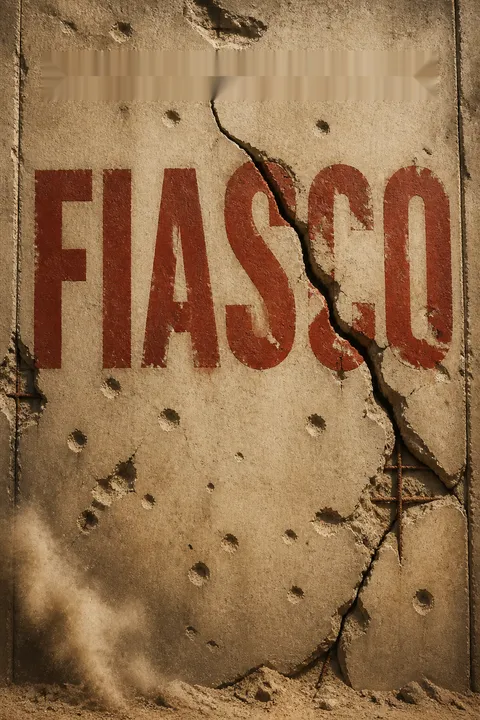
Fiasco is widely praised as a definitive account of the Iraq War's early years. Ricks provides a scathing critique of the Bush administration's decision-making and military strategy, detailing the lack of planning and mismanagement that led to a protracted insurgency. The book is commended for its thorough research, accessible writing, and balanced perspective. Readers appreciate Ricks' insights into military operations and the consequences of poor leadership. While some find the level of detail overwhelming, most consider it an essential read for understanding the complexities of the Iraq conflict.
Glossary
Phase IV
Post-combat occupation phaseThe military term for operations after major combat, including security, stabilization, reconstruction, and the transition to a new political authority. In Iraq, many offices discussed Phase IV, but their work did not become a unified, executable plan. The invasion was carefully prepared; the occupation was built on optimistic assumptions and divided responsibility.
de-Baathification
Removal of Baath Party membersThe Coalition Provisional Authority’s policy of removing senior members of Saddam Hussein’s Baath Party from public employment and political life. The policy aimed to prevent the old regime from returning, but its broad application removed many experienced administrators and professionals. It also excluded large numbers of people from work and public life, deepening resentment.
counterinsurgency
Campaign to defeat an insurgencyA political and military campaign against an armed movement seeking to challenge or remove an established authority. In Ricks’s account, effective counterinsurgency depends on public security, local cooperation, and separating insurgents from the population, not simply killing or capturing fighters. Military action remains necessary, but its political effects are part of its effectiveness.
unity of command
One accountable operational authorityThe principle that one clearly identified leader directs an operation toward a shared objective. It does not require every decision to come from the top. It requires clear responsibility and coordination so civilian and military actions reinforce one another. In Iraq, unclear relationships between the occupation authority and military command made coordination and accountability difficult.
center of gravity
Source of an opponent’s strengthA military term for the source of an opponent’s ability to continue resisting. It may be a force, institution, or source of political support. Ricks contrasts plans focused on destroying Iraqi military targets with the strategic importance of Iraqi public cooperation. In an insurgency, the population’s willingness to support or tolerate the insurgents can be decisive.
clear and hold
Remove insurgents, keep securityAn approach that first removes insurgent control from an area and then maintains an ongoing security presence there. The purpose is to prevent insurgents from returning after the attacking force leaves. Ricks describes this as a significant change from operations that cleared a place temporarily but did not provide enough troops or local forces to secure it afterward.
FAQ
What's Fiasco: The American Military Adventure in Iraq about?
- Focus on Iraq War: The book examines the U.S. invasion of Iraq in 2003, detailing the planning, execution, and aftermath of the military operation.
- Critique of Leadership: It critiques the decisions made by military and civilian leaders, highlighting the disconnect between their expectations and the realities on the ground.
- Systemic Failures: Ricks discusses systemic failures within the U.S. government, including flawed intelligence and inadequate planning for the post-invasion phase.
Why should I read Fiasco: The American Military Adventure in Iraq?
- In-depth Analysis: Ricks provides a thorough analysis of the Iraq War, making it essential for anyone interested in military history, foreign policy, or contemporary politics.
- Lessons Learned: The book serves as a cautionary tale about the consequences of military adventurism and the importance of sound planning and intelligence.
- Engaging Narrative: Ricks writes in a compelling style that combines storytelling with factual reporting, making the book both informative and engaging.
What are the key takeaways of Fiasco: The American Military Adventure in Iraq?
- Flawed Decision-Making: The book illustrates how the Bush administration's decision to invade Iraq was based on flawed assumptions and a lack of comprehensive planning.
- Impact of Intelligence Failures: Ricks highlights the failures of the intelligence community in accurately assessing Iraq's capabilities and intentions.
- Consequences of Occupation: The aftermath of the invasion is portrayed as chaotic, with significant challenges in establishing security and governance in Iraq.
What are the best quotes from Fiasco: The American Military Adventure in Iraq and what do they mean?
- "The U.S. government went to war in Iraq with scant solid international support and on the basis of incorrect information.": This quote encapsulates the central thesis of the book, highlighting the lack of legitimacy and justification for the invasion.
- "It was made possible only through the intellectual acrobatics of simultaneously 'worst-casing' the threat presented by Iraq while 'best-casing' the subsequent cost and difficulty of occupying the country.": Ricks critiques the contradictory thinking that led to the war.
- "The heroes tend to be anonymous and relatively powerless—the front-line American soldier doing his best in a difficult situation.": This quote underscores the human cost of the war and the sacrifices made by soldiers.
What systemic failures does Ricks identify in Fiasco: The American Military Adventure in Iraq?
- National Security Bureaucracy: Ricks points to significant lapses within the national security apparatus, including a weak National Security Council.
- Congressional Oversight: The book criticizes Congress for its lack of oversight and failure to challenge the administration's narrative leading up to the war.
- Media's Role: Ricks discusses how the media failed to provide critical perspectives on the war, often amplifying the administration's claims without sufficient investigation.
How does Ricks describe the occupation of Iraq in Fiasco: The American Military Adventure in Iraq?
- Chaotic Environment: Ricks portrays the occupation as chaotic, with U.S. forces struggling to maintain order and security in a country rife with sectarian tensions.
- Failure to Secure Infrastructure: The book highlights the failure to secure key infrastructure, leading to widespread looting and a breakdown of essential services.
- Long-term Consequences: Ricks argues that the mishandling of the occupation set the stage for the insurgency and ongoing violence in Iraq.
What role did intelligence play in the decision to invade Iraq according to Fiasco: The American Military Adventure in Iraq?
- Misleading Assessments: Ricks emphasizes that the intelligence community provided misleading assessments regarding Iraq's weapons of mass destruction and its ties to terrorism.
- Failure to Challenge Assumptions: The book discusses how intelligence analysts failed to challenge the prevailing assumptions about Iraq.
- Impact on Military Planning: The reliance on faulty intelligence affected military planning and execution, contributing to the challenges faced during the occupation.
How does Ricks assess the leadership of the Bush administration during the Iraq War in Fiasco: The American Military Adventure in Iraq?
- Incompetence and Arrogance: Ricks critiques the leadership of President Bush and key figures like Rumsfeld and Wolfowitz, describing their approach as marked by incompetence and arrogance.
- Failure to Listen: The book highlights a pattern of ignoring dissenting voices within the military and intelligence communities.
- Long-term Implications: Ricks argues that the leadership's decisions have had lasting consequences for U.S. foreign policy and the stability of the Middle East.
What lessons does Ricks suggest can be learned from the Iraq War in Fiasco: The American Military Adventure in Iraq?
- Importance of Planning: Ricks stresses the need for comprehensive planning and realistic assessments in military operations.
- Critical Thinking in Leadership: The book advocates for leaders to engage in critical thinking and to consider multiple perspectives before making significant decisions.
- Understanding Local Dynamics: Ricks emphasizes the importance of understanding the local political and cultural dynamics in conflict zones.
How did the U.S. military's approach to the Iraq War differ from previous conflicts according to Fiasco: The American Military Adventure in Iraq?
- Focus on Speed: Ricks notes that the military's approach in Iraq emphasized speed and technological superiority, similar to the strategies used in previous conflicts like the Gulf War.
- Lack of Counterinsurgency Planning: Unlike previous conflicts, the Iraq War plan lacked a coherent approach to dealing with the aftermath of regime change.
- Underestimation of Local Resistance: The military underestimated the level of resistance it would face from Iraqi forces and civilians.
What does Fiasco: The American Military Adventure in Iraq say about the planning failures in Iraq?
- Lack of Phase IV Planning: Ricks points out that the U.S. military did not adequately plan for the post-war reconstruction and stabilization of Iraq.
- Underestimation of Insurgency: The book discusses how military leaders underestimated the resilience and organization of the insurgency.
- Failure to Adapt: Ricks emphasizes that the military's rigid adherence to conventional warfare tactics hindered its ability to effectively combat the insurgency.
How does Fiasco: The American Military Adventure in Iraq address the cultural aspects of the Iraq War?
- Cultural Sensitivity: The book highlights the importance of cultural understanding in military operations, noting that U.S. forces often failed to respect local customs and traditions.
- Building Relationships: Ricks argues that establishing trust and rapport with the Iraqi people is crucial for successful counterinsurgency efforts.
- Consequences of Ignorance: The narrative illustrates how a lack of cultural awareness led to actions that alienated the local population and fueled the insurgency.
About the Author
Other books by Thomas E. Ricks
Download PDF
Download EPUB
.epub digital book format is ideal for reading ebooks on phones, tablets, and e-readers.








