

Key Takeaways
Treat nonviolence as active resistance, not permission for evil
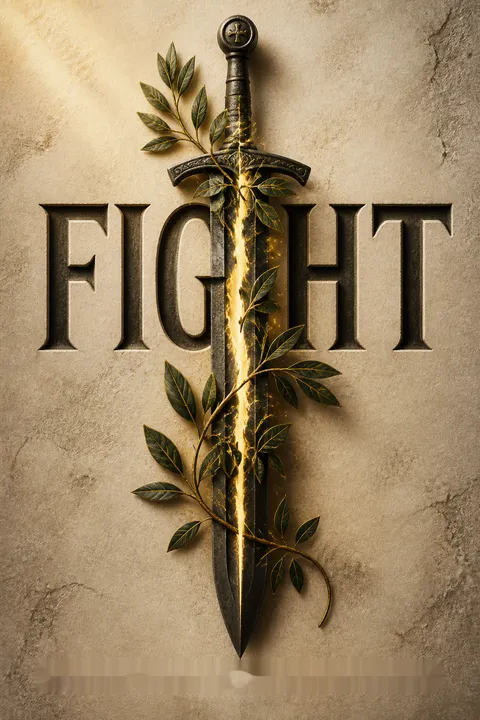
Turn weapons toward life. In Mozambique, a civil war killed more than a million people, many of them children. After peace arrived, an estimated seven million hidden weapons still threatened to reignite the conflict. A program called Tools for Arms exchanged guns for farming equipment, then had some weapons forged into public sculptures of peace. The image captures the book’s central claim: Christian nonviolence is active resistance to evil without using physical violence, grounded in the life and teaching of Jesus.
Peace needs visible work. The author describes his own reluctant shift from celebrating military force to believing that Christians should not kill. He argues that followers of Jesus can confront injustice through service, generosity, prayer, and courageous public witness, rather than passively accepting harm.
What's striking is that the Mozambique story makes peace tangible: weapons are not merely surrendered, they are converted into tools and symbols with a different public purpose. That resembles restorative approaches to conflict, which seek not only to stop harm but to rebuild relationships and institutions. Yet symbolic transformation cannot by itself protect vulnerable people or settle disputes over power. The story is strongest as a picture of a larger task: disarmament must be joined to practical security, justice, and reconciliation.
Read biblical violence as a story moving toward shalom
Start with the intended world. The Hebrew word shalom means more than the absence of fighting. It includes wholeness, safety, and flourishing. In Genesis, creation begins in harmony; Cain’s murder of Abel marks a rupture, but God protects Cain from revenge rather than answering killing with killing. Other stories praise people who surrender advantages to avoid conflict, such as Isaac yielding contested wells to preserve peace.
Law can be accommodation. Sprinkle describes a redemptive movement: rules for ancient Israel sometimes met its culture where it was while limiting harm and pointing toward a fuller moral ideal. He uses laws concerning slavery, polygamy, and divorce to illustrate the distinction between what a society is permitted to practice and what God ultimately intends. In this reading, nonviolence is not an idea imported into the Bible from outside; it is part of its developing vision of peace.
This reading gives the Bible a narrative shape rather than treating it as a flat list of timeless permissions. It also resembles legal reform, where new safeguards can reduce harm without immediately dissolving an entire social system. The challenge is that describing a law as an accommodation can sound like explaining away the suffering it permitted. A careful reader should ask both what a rule restrained in its historical setting and whose pain remained built into that arrangement.
Do not turn Israel's exceptional wars into a modern playbook
Israel was meant to be different. Sprinkle contrasts Israel’s warfare with the standing armies and military pride of surrounding kingdoms. Israel had no prescribed professional army, was told not to accumulate the horses and chariots of its neighbors, and was instructed to offer peace before attacking many cities. Several biblical battles emphasize God’s intervention over Israel’s military strength. The author calls the opposite impulse militarism: treating military power as a country’s security and a tool for advancing its interests.
The conquest remains difficult. Sprinkle argues that Joshua’s campaign was a one-time judgment tied to Israel’s particular land, not a model for later nations. He notes that conquest accounts sometimes claim total victory while other passages say Canaanites remained, a pattern he reads as ancient war hyperbole. He suggests that some commands may describe forced removal rather than the killing of every person, while acknowledging that questions about women and children remain morally serious and textually contested.
The distinction between a narrative about ancient Israel and a permission slip for modern states is ethically important. It blocks an easy route from sacred text to national self-authorization. The argument about hyperbole also draws attention to how ancient victory language could exaggerate outcomes. Still, the book’s interpretation of the conquest depends on debated readings, and it cannot make the hardest passages painless. Its most durable contribution may be the refusal to use them casually as a warrant for present-day violence.
Jesus defines God's kingdom by refusing the world's violence
A different kind of king. Jesus preached in a society shaped by Roman rule and memories of Jewish revolts that had tried to win freedom by force. Against that background, his statement that his kingdom was not of this world does not mean it was merely spiritual. Sprinkle reads it as a rejection of worldly methods of rule, especially violence: Jesus says that a kingdom like other empires would have fought to prevent his arrest.
The Sermon sets the pattern. In Matthew 5 to 7, Jesus extends the prohibition of murder to the anger and contempt that feed it. He tells followers not to use violence against evil, then gives examples involving assault, lawsuits, forced labor, and requests for money. The point is not that injustice is harmless. It is that God’s community is to answer it without copying the coercive habits of the empires around it.
The political force of this interpretation lies in refusing to equate Christian allegiance with a bid for state power. A community that serves enemies and relinquishes retaliation can expose the cost hidden inside an empire’s promised order. At the same time, an ethic addressed to disciples does not automatically resolve how public institutions should protect people from violence. The distinction between personal conduct and political policy deserves sustained attention, rather than being dismissed as either irrelevant or an easy escape.
Love enemies through concrete resistance, not sentimental passivity
Refusal can be forceful. Jesus’ instruction not to resist evil is paired with actions that challenge an aggressor’s control: accepting humiliation without returning it, giving beyond what a lawsuit demands, and carrying a Roman soldier’s pack farther than required. Sprinkle treats these as active disruptions, not approval of oppression. He also distinguishes violence from every use of physical force: restraining an attacker, for example, need not be intended to injure or kill.
Love reaches the hardest cases. The book recounts Emily Klotz, who survived kidnapping and rape, reported her attacker, and later chose to forgive and pray for him. Her forgiveness did not erase the crime or prevent his imprisonment. The story illustrates the author’s claim that Christians can oppose wrongdoing, seek protection and accountability, and still refuse vengeance. He argues that faithfulness to Jesus, not guaranteed success, is the measure of this response.
This account resists a common false choice: either retaliate or accept abuse without acting. Research on civil resistance likewise highlights how organized nonviolent action can withdraw cooperation, impose public costs, and sometimes shift support away from abusive power. Those strategies are different from one person facing an assailant, however. Stories of forgiveness can inspire, but they should never become a demand placed on victims or a substitute for safety, justice, and the victim’s own timing.
Put allegiance to Christ above the flag's claim on you
Citizenship shapes identity. The church at Philippi lived in a city proud of its Roman citizenship and military veterans. Paul’s call to live as citizens worthy of the gospel redirects that civic pride toward allegiance to Jesus. Sprinkle argues that Christians may honor their country, pray for leaders, and work for their community’s good, but should not treat national loyalty as their highest belonging. Christians have a kinship with believers across enemy borders that a passport cannot cancel.
Romans 13 is not a blank check. Sprinkle reads Paul’s instruction to submit to governing authorities as a call against revolt, not a command to obey every government order or join its use of force. He understands the sword in that passage primarily as state authority to punish wrongdoing within its jurisdiction, not an endorsement of foreign wars. God may work through governments without approving all their actions.
The argument identifies a subtle danger in the language of national belonging: it can make distant casualties feel less morally real than familiar ones. Social identity research helps explain how group loyalty narrows sympathy, especially during conflict. But civic attachment can also motivate public service and solidarity across difference. The practical test is not whether patriotism exists, but whether it remains accountable to moral standards that apply equally to allies, adversaries, and one’s own country.
Read Revelation's victory as the Lamb's suffering, not slaughter
The victor bears wounds. Revelation is often read as portraying Jesus as a warrior who kills his enemies. Sprinkle argues that its central image overturns that expectation: John hears of a conquering lion, then sees a slaughtered lamb. Jesus conquers through his death, and the book repeatedly presents faithful Christians as overcoming by refusing to worship empire, bearing witness, and sometimes dying for that witness.
Judgment is not the church’s assignment. In Sprinkle’s reading, Revelation’s sword from Jesus’ mouth represents judgment spoken, not a weapon for Christians to wield. The book condemns empires that promise peace through bloodshed, while calling the church to endure rather than imitate them. This suffering-shaped life is what the book calls cruciform suffering: hardship patterned on Jesus’ path to the cross and held within hope of resurrection and divine justice.
Apocalyptic imagery can unsettle the assumption that visible power is the same as moral victory. The Lamb’s wounds make the cost of empire visible and deny Christians an easy identification with the victorious side of history. The interpretation is not uncontested, particularly where Revelation depicts divine judgment. Its ethical distinction is still clear: the book’s promise that God judges evil does not give the church permission to enact that judgment through violence.
Let the early church unsettle Christian assumptions about killing
A pre-Constantinian witness. Sprinkle surveys Christian writers from before AD 313, when the Roman Empire ended its persecution of Christians. He finds broad agreement among the writers who address killing: Christians should not take human life, including in war. Tertullian, Origen, and Lactantius connect this position to Jesus’ commands to love enemies and refuse retaliation. The early church order known as the Apostolic Tradition also says soldiers who become Christians should refuse orders to kill.
Practice was not uniform. Christians did serve in the Roman military, and surviving accounts do not always tell us what they did or believed about killing. The historical record therefore cannot establish that every Christian shared the writers’ position. Still, Sprinkle argues, the range of early voices makes it harder to dismiss Christian nonviolence as a modern invention. Their example invites readers to test familiar assumptions against a church that lived with persecution rather than national power.
Historical precedent is most useful here not as a vote that settles theology, but as evidence that Christian identity and military service were once understood differently. It expands the reader’s sense of what faithful practice can look like. The evidence also has limits: texts preserve the views of writers more readily than the habits of ordinary believers. The book acknowledges that gap, making its historical case stronger when it presents the early church as a serious witness, not a unanimous census.
Reject the false choice between killing an attacker and doing nothing
Real danger has more than two options. Faced with an attacker at the door, Sprinkle asks whether the threat is fully understood, whether intervention might help, and whether a violent response could worsen the danger. He considers verbal negotiation, calling for help, prayer, and physical restraint that does not aim to injure or kill. His preferred response is nonlethal, though he admits that protecting an innocent person and loving an enemy can create a painful moral conflict.
The exception stays troubling. The author discusses the possibility that killing might be the lesser of two evils if it is the only way to save innocent lives, but he remains uncertain that this best reflects Jesus’ teaching. He also notes historical cases where nonviolent action helped resist dictators, including efforts that protected Jews under Nazi rule. Neither that record nor the example of failed attempts to kill Hitler proves that one tactic always works.
The practical value of the discussion is its insistence on escaping a staged binary before making an irreversible choice. Decision-making under threat is cognitively distorted by fear, so rehearsed alternatives and clear duties can matter. Yet the author’s appeal to prayer and nonlethal action can be hard to operationalize in seconds. A serious ethic needs preparation, community support, and attention to victims’ safety, not only a standard for the person under attack.
Treat just war rules as restraints, not proof that war is good
A framework for limiting harm. Just war theory is a tradition for judging when force might be permitted and how it should be limited. Its familiar tests include legitimate authority, a just cause, right intention, a reasonable prospect of success, last resort, proportionate force, and protection of noncombatants. Sprinkle notes that its advocates often regard war itself as evil and see these standards as attempts to reduce its damage, not certify it as morally good.
Rules cannot remove ambiguity. A nation may describe its own cause as defensive while an opponent tells a competing story. It is also difficult to know whether peaceful options are truly exhausted, and civilian harm remains a recurring problem. Sprinkle sees common ground between just war and nonviolence in their shared suspicion of force, while arguing that the New Testament gives Christians a more demanding personal ethic of enemy-love than the framework itself supplies.
The framework’s strongest contribution is procedural: it forces decision-makers to explain authority, purpose, alternatives, and foreseeable harm before force is used. Those questions can create friction against impulsive war-making. Its weakness is that each criterion depends on judgments made by interested parties, often with unequal access to information. The nonviolent position presses a further question that procedure cannot settle: even if a war meets its tests, what does participating in it do to the moral identity of a Christian?
Analysis
Fight is a theological argument told as a journey from ordinary attraction to military power toward suspicion of violence. Its structure matters: Sprinkle does not begin with the emergency question of whether to kill an intruder. He first builds a biblical narrative, moving from creation’s peace through Israel’s exceptional history to Jesus, the church, and Revelation. That sequence challenges readers to interpret difficult cases within a larger account of what God’s people are for.
The book’s most distinctive move is to separate resistance from retaliation. Nonviolence is not presented as retreat from conflict, but as a refusal to reproduce the enemy’s means while pursuing protection, justice, and reconciliation. The Mozambique weapons project, the Roman imperial setting of Jesus’ kingdom, and Revelation’s wounded Lamb make that idea concrete across different scales, from national recovery to personal conduct.
The argument is strongest when it exposes how easily Christians identify national security with divine purposes. It is less conclusive where contested biblical texts or imminent threats require a single practical answer. Sprinkle acknowledges uncertainty about conquest passages, self-defense, and the possible lesser-of-two-evils argument, but his interpretation still depends on particular readings of scripture. Readers who reject those readings may not be persuaded by the ethical conclusion.
The book also distinguishes the church’s obligations from a secular government’s responsibilities, though that boundary is difficult to maintain in practice when Christians serve as police officers, soldiers, or public officials. Rather than pretending those dilemmas vanish, the book asks whether they are examined through Jesus’ example or excused by national loyalty. Its enduring challenge is not a simple prediction that nonviolence always succeeds. It is the claim that Christian faithfulness must be measured by resemblance to the crucified Jesus, even when the outcome cannot be controlled.
Review Summary
Fight presents a compelling case for Christian nonviolence, drawing from both Old and New Testaments. Sprinkle challenges readers to reconsider their views on violence, war, and self-defense through a biblical lens. While some reviewers found his arguments persuasive and thought-provoking, others felt he underplayed Old Testament violence. The book tackles difficult questions and scenarios, offering a nuanced perspective on nonviolence. Many readers appreciated Sprinkle's humble approach and thorough research, even if they didn't fully agree with his conclusions.
People Also Read





Glossary
shalom
wholeness and peaceA Hebrew concept broader than the absence of conflict. In the book, shalom includes harmony, safety, completeness, abundance, and healthy relationships among people and creation. It names the peaceful order presented as creation’s original condition and the future toward which the biblical story moves.
redemptive movement
ethical change through historySprinkle’s way of describing a trajectory in which biblical law sometimes accommodates a particular society while limiting harm and pointing beyond its practices. The idea is used to connect the Old Testament’s context-specific permissions with a developing moral vision that the author sees expressed more fully in Jesus.
militarism
faith in military powerThe belief that a country should maintain strong military capacity and be ready to use it to protect or advance national interests. Sprinkle distinguishes militarism from the people who serve in the military. His criticism focuses on treating military strength as a source of ultimate security or as the necessary means of bringing peace.
cruciform suffering
suffering patterned on JesusA way of understanding hardship through the cross and resurrection of Jesus. In the book, it means enduring injustice without retaliation, continuing to do good, and trusting that God will judge fairly. Suffering is not praised as harm for its own sake; it is treated as potentially faithful witness within Christian hope.
violence
intended nonconsensual injuryFor this book’s discussion, violence is a physical act intended to injure or destroy another person by overriding that person’s consent. The definition makes intent important: physical force used to restrain someone is not automatically violence, while an act meant to cause injury may count even if it fails.
just war theory
criteria for judging warA diverse ethical tradition that evaluates the grounds for going to war and the conduct of war. Common criteria include legitimate authority, just cause, right intention, reasonable chance of success, last resort, proportionate force, and immunity for noncombatants. Sprinkle presents it as a framework intended to limit war’s harms, not as a doctrine that makes war good.
conflicting absolutism
choosing between clashing dutiesAn ethical approach considered in the book for cases where two moral obligations appear to conflict. For example, a person might believe both that killing is wrong and that protecting an innocent person is required. The approach asks whether violating one duty could be justified as the lesser evil in order to fulfill the other.
FAQ
What's Fight: A Christian Case for Non-Violence about?
- Exploration of Non-Violence: The book presents a Christian perspective on non-violence, challenging traditional views that justify violence in God's name.
- Biblical Analysis: It examines both the Old and New Testaments, highlighting how scripture advocates for a peace-centered approach to conflict.
- Cultural Context: The book critiques how militarism has infiltrated modern Christianity, using historical contexts like Israel's conquests and the early church's response to violence.
Why should I read Fight: A Christian Case for Non-Violence?
- Timely Discussion: In a world filled with violence, the book offers a fresh perspective on how Christians can respond differently.
- Biblical Foundation: It provides a thorough examination of scripture, encouraging readers to rethink their views on violence and warfare.
- Practical Application: The book challenges readers to embody Jesus's teachings in their daily lives, promoting peace and reconciliation.
What are the key takeaways of Fight: A Christian Case for Non-Violence?
- Nonviolence as a Christian Ethic: Nonviolence is presented as a calling for Christians, emphasizing love and forgiveness even towards enemies.
- Historical Context Matters: Understanding the historical and cultural context of biblical texts is crucial for interpreting their meaning.
- God's Kingdom is Nonviolent: The vision of God's kingdom is one of peace and reconciliation, and Christians are called to reflect this in their actions.
What are the best quotes from Fight: A Christian Case for Non-Violence and what do they mean?
- "The cure to bad theology is not 'no theology'—but good theology.": This emphasizes the importance of correct scriptural interpretation to avoid justifying violence.
- "It is possible to combat violence without mirroring it.": This encapsulates the book's core argument for standing against evil without resorting to violence.
- "We can fight evil without being evil.": It challenges the notion that violence is necessary to achieve justice, advocating for nonviolent opposition to wrongdoing.
How does Fight: A Christian Case for Non-Violence address the Old Testament's violent passages?
- Contextual Understanding: Violent passages are examined within their historical and cultural context, showing a progression toward God's ideal of peace.
- God's Judgment vs. Human Violence: The book differentiates between divine judgment and human violence, emphasizing God's ultimate desire for peace.
- Incremental Steps Toward Peace: Old Testament laws and narratives are seen as steps toward a nonviolent ideal, culminating in Jesus's teachings.
What is the significance of the title Fight: A Christian Case for Non-Violence?
- Contradictory Nature: The title suggests a paradox, advocating for nonviolence while using the term "fight," challenging readers to reconsider conflict.
- Call to Action: It serves as a call for Christians to engage in the fight against evil through nonviolent means.
- Reframing Conflict: The book reframes conflict, suggesting true fighting involves standing up for justice and peace without violence.
How does Fight: A Christian Case for Non-Violence relate to Just War Theory?
- Appendix Discussion: The book includes an appendix explaining Just War Theory, contrasting it with the author's advocacy for nonviolence.
- Critique of Militarism: It critiques the application of Just War Theory within American militarism, arguing it contradicts Jesus's teachings.
- Nonviolence as the Ideal: While Just War Theory offers a perspective on warfare, the book suggests nonviolence should be the guiding principle for Christians.
What are the objections to nonviolence that Fight: A Christian Case for Non-Violence addresses?
- Historical Examples: The book examines scenarios like Hitler's regime, arguing they don't justify a blanket endorsement of violence.
- Self-Defense and Protection: It addresses questions about self-defense, suggesting nonviolence doesn't equate to passivity.
- Complexity of Evil: The book acknowledges the complexity of evil but maintains that Christians should trust in God's justice over violence.
How does Fight: A Christian Case for Non-Violence propose Christians should respond to violence?
- Active Nonviolence: Christians are encouraged to engage in loving their enemies and seeking peace through practical actions.
- Community Engagement: The importance of community in fostering a nonviolent ethos is emphasized, supporting each other in living out these principles.
- Prayer and Forgiveness: Prayer and forgiveness are highlighted as essential tools for counteracting the cycle of violence.
What is the role of the church in promoting nonviolence according to Fight: A Christian Case for Non-Violence?
- Witness to the World: The church is called to embody nonviolence and love, promoting peace and reconciliation in society.
- Teaching and Discipleship: Nonviolence should be a core aspect of discipleship, equipping members to practice it in daily life.
- Advocacy for Justice: The church should advocate for justice and stand against systemic evils without resorting to violence.
How does Fight: A Christian Case for Non-Violence address the concept of just war?
- Critique of Just War Theory: The book argues that just war theory doesn't align with Jesus's teachings of non-violence and love for enemies.
- Historical Context: It discusses how early church leaders developed just war theory, diverging from Jesus's non-violent ethos.
- Moral Implications: Even just wars often lead to more violence and suffering, contradicting the gospel's message.
How does Fight: A Christian Case for Non-Violence handle the question of self-defense?
- Non-Violent Resistance: Christians are encouraged not to resort to lethal force, even in self-defense, as it contradicts Jesus's teachings.
- Real-World Considerations: The book acknowledges real-life complexities but emphasizes faithfulness to Christ in responses to threats.
- Alternative Responses: Non-lethal means of resistance, like negotiation or physical restraint, are suggested as more aligned with Christian values.
Download PDF
Download EPUB
.epub digital book format is ideal for reading ebooks on phones, tablets, and e-readers.








