

Key Takeaways
A single live test exposed what years of managed access concealed
The debate changed the evidence. On June 27, 2024, Joe Biden’s halting performance against Donald Trump turned private Democratic unease into something voters could see. Biden misstated whether American troops had died during his presidency, lost his train of thought, and made an incoherent claim about Medicare. His pale appearance and weak delivery made the moment more damaging than any single verbal mistake: voters were judging whether he looked capable of serving another term.
The warnings were older. Aides and lawmakers had seen episodes of confusion, pauses, and physical difficulty for years, while the White House limited Biden’s exposure and defended his fitness. A cold and exhausting travel schedule likely worsened his debate performance, but the book argues that they cannot explain away the longer pattern or the sudden public shock.
The debate functioned as a stress test, not a medical examination. A leader’s public performance cannot establish a diagnosis, and fatigue can sharply distort anyone’s abilities. But high office depends partly on the ability to communicate reliably under pressure, so the performance carried political meaning regardless of its cause. The deeper failure was not that observers had imperfect evidence. It was that the people with the best access had not built a credible way to share evidence, acknowledge uncertainty, or prepare the party for what voters might see.
When leaders punish bad news, loyalty becomes an information failure
The inner circle narrowed. Biden’s family and senior aides controlled much of his schedule and access, while lawmakers and campaign staff often had to rely on secondhand accounts of his condition. Reports of sharp days coexisted with troubling moments, but the public message emphasized that he was fully capable. That gap allowed supporters to dismiss concerns and critics to suspect a cover-up.
The response deepened distrust. After the debate, Biden’s team promoted a reassuring account of a slow start and a stronger finish, even as donors and allies saw a crisis. Some campaign information was tightly controlled, and top officials initially resisted candid questions. The problem was not simply that people disagreed. It was that the operation had little room for dissenting information to change its course.
This is a classic organizational risk: a team can become loyal to its internal story rather than responsive to new evidence. In medicine, aviation, and intelligence work, the ability to report anomalies without punishment is essential because small warnings can precede large failures. Political campaigns face the same problem, though loyalty and message discipline are genuine assets. The challenge is to keep them from becoming filters that block reality. Confidence is useful only when it remains revisable.
A campaign cannot out-message a candidate who disappears from view
Visibility became the test. Biden returned to the trail after the debate and delivered an energetic rally in Raleigh, North Carolina. For a moment, the speech reassured allies. But his team then kept him largely out of public view while he considered his future. A planned letter to lawmakers and a phone appearance on a favored news program did not answer the central question: could he handle the demands of the presidency and campaign?
Every appearance carried risk. Biden’s later interview with George Stephanopoulos included more stumbles and renewed doubts. His team faced a real dilemma: exposure could produce another damaging moment, but scarcity looked like avoidance. The longer he stayed away from unscripted scrutiny, the harder it became for voters and party leaders to accept assurances from aides.
This is a credibility problem, not merely a communications problem. When claims about a person’s readiness conflict with visible evidence, repeating the claims can make the messenger less trustworthy. More exposure is not always wise, especially when a candidate is unwell, but carefully chosen appearances can test a recovery and give audiences better evidence than slogans do. The strategic question should be what information voters need, not how to make an uncomfortable story vanish.
Party rules mattered as much as the fight over Biden’s successor
The nomination was an institutional contest. Biden had won the great majority of pledged Democratic delegates, so calls for him to withdraw raised a practical question: who would replace him, and by what process? Some leaders favored an open contest, while others feared that a rushed fight would fracture the party. Nancy Pelosi’s public questions about Biden’s fitness helped intensify pressure, but no one could simply remove him from the nomination.
Harris moved before rivals did. Once Biden withdrew on July 21 and endorsed Vice President Kamala Harris, she and her allies rapidly contacted delegates, party leaders, governors, and donors. The endorsement, her place on the existing ticket, and the campaign’s funds gave her major advantages. Delegates quickly consolidated behind her, reducing the chance of a contested convention.
The episode exposed the tension between procedural legitimacy and practical coordination. A rapid succession can prevent factional warfare, but it gives less time for voters and party members to compare candidates. An open contest might have offered broader deliberation while risking a convention fight with little time before the election. Neither path is automatically democratic in every meaningful sense. The key question is whether party rules are clear and credible before a crisis, rather than improvised by whichever faction controls the machinery.
Trump’s survival gave his campaign an image no script could manufacture
The shooting reshaped the story. On July 13, a gunman fired at Trump during a rally in Butler, Pennsylvania, killing attendee Corey Comperatore and injuring others. Trump was struck in the ear. As Secret Service agents moved him from the stage, he raised a fist toward the crowd. The image quickly became a symbol of defiance for supporters and a fresh source of attention for the campaign.
The operation stayed focused. Trump’s advisers avoided trying to pull coverage back toward his debate performance while Democrats wrestled with Biden’s future. Trump then chose JD Vance as his running mate, a younger politician who shared his political outlook and could represent a future for the movement. The shooting did not settle the election, but it strengthened Trump’s public image at a critical moment.
Political meaning often crystallizes in images faster than in policy arguments. The fist became a compact story of danger survived, while the death and injury at the rally underscored the human cost behind that story. A campaign can use such a moment, but it cannot control its moral weight or guarantee that it changes votes. The book’s account also highlights a less theatrical advantage: when one side avoids needless counter-messaging, the other side’s internal crisis remains the dominant story.
A late replacement inherits the old campaign and its liabilities
Harris inherited a running machine. She had only about 107 days before Election Day. She kept Biden campaign manager Jennifer O’Malley Dillon and much of the existing team, a choice that preserved operational continuity but created friction with Harris’s own advisers. The campaign looked newly energized to the public, yet staff inside it disagreed over authority, messaging, and whose people would shape decisions.
A new face needed a new case. Harris did not develop a clear distinction from Biden. She praised the administration’s record, and when asked what she would have done differently, she could not name a specific example. Trump’s campaign used that answer to tie her to Biden. Her loyalty to him and the inherited staff made it harder to present herself as a fresh alternative.
Continuity is a rational response to a deadline: replacing an entire campaign can destroy knowledge, relationships, and momentum. Yet continuity also carries old assumptions into new circumstances. The leadership challenge is to preserve operational competence while reopening strategic questions that the previous candidate’s team had settled. Harris’s dilemma was especially sharp because distancing herself risked appearing disloyal, while staying close made change harder to believe. A candidate’s biography can create novelty, but it cannot substitute indefinitely for a distinct governing rationale.
Trump’s kitchen-table message beat Democrats’ democracy-first argument
Voters felt prices directly. Trump repeatedly centered inflation, immigration, and economic security. Democrats emphasized the threat they believed he posed to democracy, an argument that energized many supporters but did not match every voter’s most immediate concern. Harris struggled to explain how her economic approach would differ from Biden’s. Her proposal to curb grocery price-gouging attracted attention, but also let opponents portray her as economically extreme.
The contrast was practical. Trump’s campaign used mail, digital outreach, and local events to reach voters it considered persuadable, including younger men and some Black and Hispanic voters. Harris’s team did not always translate its policy plans into messages that spoke to those voters’ concerns. Trump’s emphasis on familiar, tangible problems gave voters a simpler basis for comparison than the Democrats’ broader warnings about democratic institutions.
A campaign can be right about a profound institutional danger and still lose if it fails to connect that danger to daily life. Economic perceptions are especially resistant to abstract reassurance because people encounter prices repeatedly, even when national indicators tell a more favorable story. But the contrast should not be reduced to a choice between material concerns and democratic norms: institutions shape economic security too. The strategic failure was one of translation. A warning about democracy needs a clear account of what it means for people’s lives.
Do not confuse campaign confidence with evidence of voter support
The forecasts diverged from the returns. On Election Night, Harris’s team had expected a close contest and believed momentum favored her. Its final projection showed Trump ahead in several battleground states, but the team still saw a plausible path to victory. As votes came in, Trump performed better than expected across Georgia, North Carolina, and Pennsylvania. Harris’s advisers then concluded that she had no route to winning Pennsylvania and the presidency.
The outcome was broader than one state. Trump won all seven major battlegrounds and the national popular vote. He improved his support among Latino and Asian American voters, made smaller gains among Black voters, and strengthened his position with women and suburban voters. The result shows why rally energy, favorable late polls, and internal confidence cannot stand in for verified turnout and accurate models.
Campaign data is a decision aid, not a verdict. Polling can miss voters, turnout models can encode mistaken assumptions, and a lively rally reveals the enthusiasm of people who chose to attend, not the electorate as a whole. The Harris campaign’s confidence appears especially costly because it shaped expectations for the candidate and her allies. Trump’s operation also faced uncertainty, but its attention to voter targeting and early ballots offered a different kind of evidence. Good analysis treats projections as probabilities and keeps updating when returns arrive.
Analysis
Fight is a political narrative about a failure of judgment that became a contest over who controlled the Democratic succession. The debate is the hinge, but not the sole cause. It made Biden’s diminished public performance undeniable to many people who had encountered warning signs indirectly or dismissed them as partisan attacks. The book’s most revealing pattern is the lag between evidence and action: aides restricted access, party elites avoided public dissent, and Biden interpreted criticism through a long history of surviving it. The result was not only a candidate crisis, but a crisis of organizational trust. The second half shifts from Biden’s departure to Harris’s rapid ascent and defeat. Her delegate operation demonstrated tactical skill, yet winning control of the nomination was not the same task as persuading a national electorate. The campaign inherited personnel, financial infrastructure, and an incumbent record, but did not turn those assets into a distinct explanation of what Harris would do. Trump’s durable advantage was not simply better discipline. His campaign repeatedly attached its case to felt concerns, especially prices and immigration, while Democrats relied heavily on a democracy argument that did not displace those concerns for enough voters.
The narrative is compelling because it places decision-makers inside rooms where uncertainty, ego, loyalty, and incentives collide. It also requires caution. Many accounts come from anonymous participants with reputations and rivalries at stake, and access to private conversations cannot make every attributed motive verifiable. The election cannot be reduced to Biden’s age, Harris’s messaging, or Trump’s strategy alone. The book is strongest as a study of how political organizations respond to disconfirming evidence, and how delay can narrow the options until a party makes a consequential choice under pressure.
Review Summary
Fight received mixed reviews, with an average rating of 4.19 out of 5. Readers praised its compelling narrative and insider details of the 2024 election, particularly the Biden-Harris transition and Trump's campaign strategy. Some found it balanced and insightful, while others criticized it for being gossipy or biased. Many appreciated the behind-the-scenes look at political maneuvering but felt it lacked new information for those who closely followed the election. The book's quick publication and focus on drama rather than policy analysis were points of contention for some readers.
Glossary
Blue Wall
Democratic-leaning Rust Belt statesA political label for Pennsylvania, Michigan, and Wisconsin, states that had generally voted Democratic in presidential elections before Donald Trump’s 2016 victory disrupted that pattern. In the 2024 campaign, these states were central to the Democratic path to 270 Electoral College votes. Their close margins made small changes in turnout or voter preference consequential.
Kamalot
Harris’s close advisory groupThe informal name used for a group of Kamala Harris’s trusted advisers who met to prepare her for a possible vice presidential debate and developed arguments against Donald Trump. As Biden’s candidacy collapsed and Harris became the nominee, the group’s work helped form part of her campaign message. It operated alongside, and sometimes in tension with, the larger Biden campaign organization.
banking the vote
Securing ballots before Election DayA campaign practice of encouraging supporters to vote early, then removing those voters from the pool that still needs turnout persuasion. Donald Trump had criticized early voting after his 2020 defeat, but Susie Wiles argued that early ballots could reduce later campaign costs. His campaign gradually promoted early voting as a practical way to secure votes in advance.
persuasion universe
Voters targeted for conversionThe group of voters a campaign identifies as plausible targets for changing their candidate preference. Campaigns use data, including voting histories and survey responses, to estimate which voters are persuadable and likely to vote. In 2024, Harris’s campaign widened its target range to include some voters who were unlikely to support her, a decision that caused concern among state-level staff.
No daylight
Maintain visible political alignmentA political instruction to avoid public differences between a president and vice president, especially when both are associated with the same administration. Biden used the idea to urge Harris to defend their shared record. For Harris, that loyalty complicated her effort to present herself as a new candidate with a distinct argument for the presidency.
FAQ
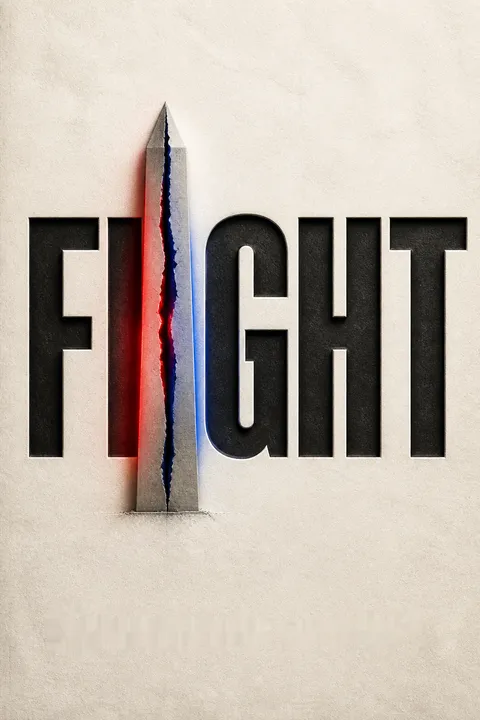
1. What is Fight: Inside the Wildest Battle for the White House by Jonathan Allen and Amie Parnes about?
- Comprehensive 2024 election account: The book provides an in-depth, behind-the-scenes narrative of the 2024 U.S. presidential election, focusing on the dramatic contest between Joe Biden, Kamala Harris, and Donald Trump.
- Internal party dynamics: It explores the internal struggles within the Democratic Party, including Biden’s decline, Harris’s rise, and the power struggles among party leaders and operatives.
- Broader political context: The authors situate the election within larger trends, such as shifting voter demographics, policy debates, and the impact of major events like the Gaza war and inflation.
2. Why should I read Fight: Inside the Wildest Battle for the White House by Jonathan Allen and Amie Parnes?
- Unprecedented access and detail: The authors interviewed over 150 sources, offering rare, candid insights into both Democratic and Republican campaign operations.
- Insight into political strategy: Readers gain a granular understanding of how high-stakes decisions, messaging, and campaign management shaped the election outcome.
- Human and emotional dimension: The book delves into the personal struggles, loyalties, and conflicts that influenced the candidates and their teams, making the political drama relatable and compelling.
3. What are the key takeaways from Fight: Inside the Wildest Battle for the White House by Jonathan Allen and Amie Parnes?
- Fragility of political leadership: The book highlights how personal health, public perception, and internal party loyalty can dramatically alter political trajectories.
- Party loyalty vs. pragmatism: Democratic leaders faced tough choices between supporting Biden and prioritizing electoral victory, leading to unprecedented internal strife.
- Impact on American democracy: The 2024 election is portrayed as a battle for the “soul of America,” with lasting consequences for governance and democratic norms.
4. How does Fight: Inside the Wildest Battle for the White House portray the internal dynamics and conflicts within the Democratic Party?
- Biden’s decline and party anxiety: The book details growing concerns among Democratic leaders about Biden’s health and debate performance, leading to private discussions about replacing him.
- Power struggles and succession: It reveals the complex interplay between Biden loyalists, Harris’s team, and influential figures like Pelosi and Obama as the party navigated a potential transition.
- Public vs. private stances: While many leaders publicly supported Biden, there was a significant private push for change to preserve the party’s chances in the election.
5. What were the main factors leading to Joe Biden’s debate struggles and eventual withdrawal, according to Fight: Inside the Wildest Battle for the White House?
- Physical and mental decline: Biden’s age, health issues, and cognitive lapses were evident during the debate, causing widespread concern.
- Limited preparation: Illness and fatigue led to minimal debate practice, with only one mock session that exposed his struggles.
- Internal party alarm: Key figures like Nancy Pelosi and Jim Clyburn expressed deep concern, and the debate was described as a “natural disaster” for Biden’s campaign.
6. How did Kamala Harris become the Democratic nominee in 2024, as described in Fight: Inside the Wildest Battle for the White House?
- Biden’s withdrawal: Mounting pressure after Biden’s poor debate performance and health concerns led to his eventual exit from the race.
- Consolidation of support: Harris quickly gained endorsements from key party leaders, donors, and governors, as the party sought to avoid a divisive primary.
- Campaign surge: Harris experienced a rapid rise in fundraising and polling, benefiting from a “honeymoon” period and energized progressive voters.
7. What internal conflicts and leadership challenges did Kamala Harris face in her 2024 campaign, according to Fight: Inside the Wildest Battle for the White House?
- Tensions between campaign teams: The merger of Biden’s aides with Harris’s loyalists led to friction and mistrust, with Harris’s team feeling sidelined.
- Leadership style clashes: Campaign manager Jennifer O’Malley Dillon’s top-down approach alienated some Harris confidants, exacerbating internal strife.
- Impact on messaging: The internal drama made it difficult for Harris to establish a clear, compelling narrative and respond effectively to attacks.
8. How did Donald Trump’s campaign respond to the Democratic turmoil and Kamala Harris’s rise, as detailed in Fight: Inside the Wildest Battle for the White House?
- Initial confidence: Trump’s team viewed Harris as a weaker candidate and planned to tie her to Biden’s unpopular record.
- Strategic messaging: The campaign focused on portraying Harris as “weak, failed, dangerously liberal,” using targeted ads and media appearances.
- Adaptation to Harris’s momentum: As Harris surged, Trump’s team increased rallies and outreach, especially to young Black and Hispanic men, and capitalized on early voting.
9. What role did debates and media strategy play in the 2024 election campaigns, according to Fight: Inside the Wildest Battle for the White House?
- Harris’s debate preparation: Harris invested heavily in debate prep, adopting a prosecutorial style that helped her succeed in the September debate.
- Trump’s debate approach: Trump was less disciplined, often going off-script and energizing his base with personal attacks.
- Media exposure differences: Harris’s campaign was cautious and limited media appearances, while Trump embraced high-profile rallies and controversial media events.
10. How did voter demographics and early voting shape the outcome of the 2024 election in Fight: Inside the Wildest Battle for the White House?
- Shifts in key demographics: Trump improved his share among Latino, Asian American, and Black male voters, narrowing traditional Democratic advantages.
- Early voting strategy: Trump’s campaign overcame his skepticism and encouraged early voting, boosting turnout in key swing states.
- Geographic patterns: Trump gained ground in rural and suburban areas, while Harris struggled to mobilize metropolitan voters, contributing to Trump’s victories in battleground states.
11. What were the main reasons for Kamala Harris’s loss in the 2024 presidential election, according to Fight: Inside the Wildest Battle for the White House?
- Lack of clear narrative: Harris struggled to articulate a compelling vision beyond being Biden’s successor, failing to present a distinct policy agenda.
- Effective Trump attacks: Trump’s campaign successfully portrayed Harris as a radical liberal, and her team’s reluctance to rebut negative ads allowed damaging perceptions to persist.
- Internal and strategic missteps: Infighting, cautious leadership, and overreliance on flawed data analytics limited the campaign’s ability to expand its coalition.
12. What are the most notable quotes from Fight: Inside the Wildest Battle for the White House by Jonathan Allen and Amie Parnes, and what do they signify?
- “Democrats just committed collective suicide.” This quote reflects the despair and sense of self-inflicted damage within the party after Biden’s poor debate performance.
- “Is this an episode or a condition?” Nancy Pelosi’s question highlights deep uncertainty about Biden’s cognitive fitness and viability as a candidate.
- “Fight! Fight! Fight!” Trump’s rallying cry after surviving an assassination attempt symbolizes his combative style and campaign narrative of resilience.
- “No daylight, kid.” Biden’s demand for Harris to maintain unity underscores the tension between party loyalty and the need for Harris to establish her own identity.
Download PDF
Download EPUB
.epub digital book format is ideal for reading ebooks on phones, tablets, and e-readers.








