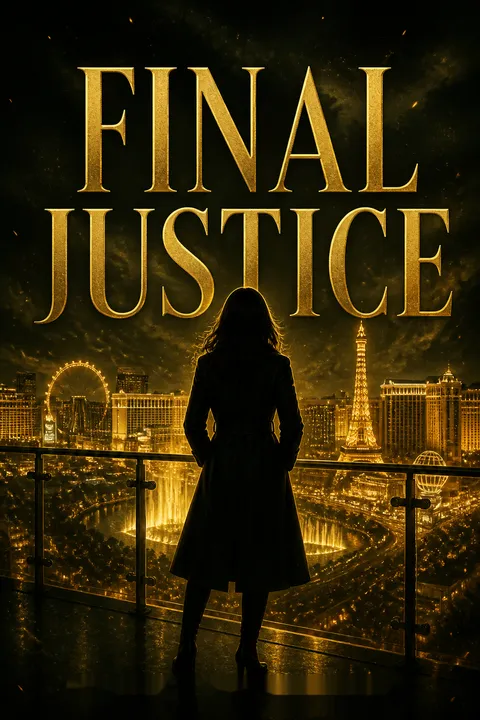


Plot Summary
The Editor and the Ex
At the Washington Post, editor Maggie Spritzer is tired of her new, orderly job and the empty house waiting for her. Her former lover, reporter Ted Robinson, comes back to share a warning: FBI director nominee Bert Navarro may lose Senate confirmation because he refuses to disown his friendships with prosecutor Jack Emery and martial-arts instructor Harry Wong.
Maggie and Ted fall back into the intimacy they once had, but their reunion becomes more consequential when Ted admits he suspects Maggie belongs to the Sisterhood, the vigilante network.
He says he will keep her secret and will not interfere. Maggie takes the news to Jack, who summons Harry and Judge Nellie Easter. The deadline is Friday, and the friends must act before politics costs Navarro his chance.
Maggie's promotion has given her authority but taken away the urgency that once made her feel alive. Ted's return brings back more than desire: it tests whether intimacy can survive the secrecy that helped end their relationship. His willingness to know about the Sisterhood without demanding control is a practical change, not merely a romantic gesture. The political threat immediately entwines private loyalty with public office. Navarro is being asked to trade old friendships for advancement, while Maggie and her allies confront the same question in reverse: what risks are they willing to take to protect one another?
Ninjas at the White House
Jack and Harry devise a public spectacle that will make Navarro look loyal to outgoing FBI director Elias Cummings while appearing to distance him from the two men. Harry's martial-arts students descend on the White House in black costumes and smoke, knocking Cummings and Navarro down before vanishing from the scene.
Navarro is left bruised, but the cameras catch him protecting Cummings. Maggie gives the strange attack the Post's front page, and reporter Joe Espinosa backs her coverage with interviews that make the story impossible for Washington to ignore.
The stunt's absurdity buys the friends a useful diversion, though the FBI's investigation of supposed human remains creates a fresh loose end. The group now has political momentum, but its members are also attracting attention.
The attack works because it manipulates the difference between what happened and what the public can confidently say happened. Harry's team stages a performance for cameras, and Maggie's front page turns that performance into political evidence. Navarro's loyalty becomes visible precisely because the supposed attackers are linked to the friends he refused to abandon. The operation also exposes a characteristic risk in the Sisterhood's methods: a theatrical lie can protect a person, yet its spectacle invites further scrutiny. Maggie's return to instinctive reporting is therefore both professional renewal and operational danger.
Annie's Unexpected Family
At the Sisterhood's mountain home, Annie receives the adoption papers she has arranged for the women and their allies, formalizing a family she has built through care rather than blood. Lizzie Fox joins by webcam from Las Vegas, while Navarro is absent because his confirmation remains politically sensitive.
The celebration gives way to business: an old acquaintance of Annie and fellow Sister Myra Rutledge, Beatrice Preston, has asked for help locating her estranged daughter, Marble Rose Barnes, who is reportedly in jail.
Charles Martin explains that the arrest cannot be found in police records and that Beatrice believes her daughter began winning heavily at casinos after a serious head injury. The women agree to investigate. Meanwhile, Jack and Harry use Nellie and Cummings's supposed Las Vegas wedding as cover to get the outgoing director out of Washington.
Annie's legal adoption papers make the group's chosen kinship concrete, but they do not erase its members' other loyalties or histories. The scene places emotional belonging beside operational duty: the women can celebrate becoming a family, then immediately redirect their attention toward someone whose family bond has failed. The case begins in uncertainty rather than proof. Beatrice's account may describe a genuine vulnerability, a misunderstanding, or an attempt to shape the Sisterhood's curiosity. The wedding ruse likewise turns intimacy into cover, setting up the novel's repeated tension between public appearances and private motives.
Beatrice's Impossible Claim
In Las Vegas, Lizzie and Ted meet Beatrice Preston, a wealthy widow who admits she has kept her distance from Marble Rose since childhood. Beatrice says women in her family sometimes perceive events just before they happen, and she believes Marble Rose inherited the ability after a mugging left her with a serious head injury.
Her account also describes casino harassment, a missing lawyer, and an arrest the authorities deny occurred. Lizzie refuses to accept the story without speaking to the daughter herself.
Beatrice gives her the lead she can: Marble Rose was last reported at a Clark County jail. Ted, meanwhile, starts gathering information from local reporters, while Lizzie leaves the Babylon casino and arranges discreet lodging through Rena Gold, a former ally in Las Vegas.
Beatrice's claimed perception is less a supernatural explanation than an attempt to make sense of a relationship she has deliberately damaged. She describes distance as protection, but the practical result is that she knows little about her daughter's life and must rely on others to reach her. Lizzie's restraint matters: she neither mocks the claim nor allows it to substitute for evidence. Ted's reporting and Rena's help establish two different forms of access, public and clandestine. The casino city itself seems to watch every encounter, turning the search for a missing woman into a test of how much privacy anyone can still claim.
Jane Doe Is Marble Rose
At the county jail, the desk sergeant denies holding anyone named Marble Rose Barnes, then offers to show Lizzie a Jane Doe arrested six days earlier. Marble Rose identifies herself, says police ignored her requests for counsel, and insists she is safer in custody than outside.
She rejects Beatrice's involvement but chooses to hire Lizzie herself. Marble Rose also reveals that she once sent two hundred dollars to help defend the Sisterhood, giving Lizzie a personal reason to honor her request.
Lizzie confronts the jail staff over the missing identity and absent charges, then threatens legal action and media scrutiny. The authorities release Marble Rose after the casino and Gaming Commission intervene. Her immediate freedom is secured, but the account of her treatment points toward a larger and more powerful adversary.
Marble Rose's first act of agency is not accepting rescue; it is choosing who may represent her. The Jane Doe label makes her effectively disappear inside the system, while her refusal to cooperate with her mother preserves the boundary she has tried to maintain for years. Her earlier donation to the Sisterhood complicates the encounter: she is not simply a passive beneficiary but someone who has already acted on her principles. Lizzie's legal pressure succeeds in freeing her, yet the client's fear that jail is safer than the street warns that formal release will not resolve the danger.
A Billion-Dollar Retainer
Lizzie's investigation draws the Nevada Gaming Commission into the case. Its president, Peter Udal, explains that casinos have lost roughly a billion dollars through a suspected operation, while Marble Rose's improbable jackpots distracted attention from the real losses.
The Babylon's security chief, Hank Owens, and his four-man inner ring become the main suspects. Udal offers the Sisterhood a billion dollars to dismantle the operation, with no killing, and accepts Lizzie's demands that Marble Rose receive compensation, back pay, and a clean employment record.
She must leave Nevada, however, and be barred from its casinos. The team plans to exploit the Babylon's charitable softball gala and a martial-arts exhibition as cover. Jack and Harry travel to Las Vegas, while Cummings and Nellie arrive under their wedding pretext.
The billion-dollar offer exposes the odd moral economy of Las Vegas: institutions that profit from gambling will pay an enormous sum to restore the system when its losses threaten them. Marble Rose's winnings are not the crime, but they make a useful decoy for people who want to conceal theirs. Lizzie converts that distinction into enforceable terms for her client, insisting that the casinos repair harms they helped create. At the same time, the Sisterhood accepts a commission from powerful regulators, complicating its identity as an outsider correcting institutional failure. Its leverage depends on remaining independent even while paid by the establishment.
The Desert Safehouse
The Sisterhood arrives in Las Vegas disguised as patients on a British Red Cross flight and is taken to an abandoned nursing home in the desert. Rena Gold has arranged the hideout and warned Lizzie about Little Fish, a wealthy Shoshone poker player with a feud against the Babylon.
When Fish visits the building, Annie answers his brusque warning about rattlesnakes with equal defiance, then admits her name after he recognizes her through Rena. Fish offers useful knowledge and hints that the Babylon may soon be for sale. Later, when his men follow the women, the Sisters overpower the group before learning that Fish meant to protect them, not betray them. Rena confirms his story, and the women let their uneasy ally go.
The desert encounter establishes that the Sisterhood's disguises do not make them invulnerable. They arrive armed with a plan but mistake an ally for a threat, and their physical competence nearly turns caution into needless violence. Annie's combative manner also functions as courtship: she tests Fish by refusing the role of a frightened visitor. His offer of information and a possible business opening links personal attraction to the larger struggle over the Babylon. The episode's comedy does not cancel the danger; it shows how trust must be negotiated even among people who oppose the same powerful men.
A Jackpot, Then Goodbye
After Lizzie negotiates with Udal, Marble Rose returns to the Babylon to settle her claim and play once more. She puts twenty dollars into a slot machine, loses part of it, then wins a modest jackpot of about seven thousand dollars. The result is a sharp contrast with the millions she had previously won and with the casinos' vast losses.
In a meeting with Babylon owner Homer Winters, Lizzie secures the agreed payments and restitution. Marble Rose accepts the money, plans to leave for New York, and tells Lizzie she has spoken with Beatrice; they intend to meet during the holidays, though she needs time first. Her choice separates her from the Nevada conflict without forcing reconciliation on a schedule set by her mother.
The small jackpot gives Marble Rose a final, self-directed encounter with the machines that have defined her public reputation. She does not need another spectacular win to prove anything, and the modest amount lets her leave without turning luck into identity. Restitution offers material repair, but it cannot supply the years of mothering she missed. Her plan to meet Beatrice later is neither forgiveness nor permanent rejection. It is a boundary with room for change, a more psychologically credible outcome than the instant healing the adults around her might prefer.
The Casino Floor Erupts
As the Sisterhood moves through the Babylon in disguises, security chief Owens recognizes that the women are not ordinary elderly gamblers. One of his men, Stu Franklin, quietly warns Isabelle that the surveillance team has identified them and tells her to create a scene so her companions can escape.
Isabelle strikes him, the Sisters rush toward the exits, and Harry's martial-arts team turns the casino floor into a loud, public distraction. Slot machines topple, customers gather, and the security staff lose control of the room. The women get away, while Jack and Harry accept arrest rather than let the commotion expose the larger operation. Franklin disappears from the casino, having chosen not to remain part of Owens's crew.
The casino's surveillance system is powerful because it turns ordinary details into identifiers: the Sisters' failure to wear sweaters gives them away. Yet the system cannot control what happens when its own employee chooses to interrupt it. Franklin's warning is a small act of dissent with large consequences, while Harry's spectacle redirects the guards' attention from the women to the chaos they cannot ignore. The scene also distinguishes escape from victory. Jack and Harry knowingly absorb the immediate legal risk so the operation can continue, and the Sisters leave with the evidence that the casino's apparently seamless control has cracks.
The Mortuary Reckoning
The Sisters lure Owens and the remaining members of his inner ring to a mortuary, where Jack and Harry have arranged a trap among the caskets and embalming equipment. The women overpower the four men without killing them, bind them in place, and demand the location of the stolen money. Three security men blame Owens and disclose that he kept the operation's records and funds offshore; they also confirm Franklin walked away.
Faced with the prospect of being embalmed, Owens gives up the safe combination and computer password. Nikki transfers the money from his accounts, along with the others' funds, to the Gaming Commission. Jack arranges for Cummings and newly confirmed FBI director Navarro to handle the authorities and cleanup.
The mortuary makes the threat of death theatrical rather than literal. The Sisters use the setting and the equipment to frighten the men into disclosure, but they stop short of killing them, preserving the distinction between coercive vigilante justice and revenge. The inner ring's collapse is also a collapse of hierarchy: once Owens can no longer protect his subordinates, they testify against him. Nikki's rapid transfers turn confession into consequence, while the handoff to Navarro and Cummings reconnects the extralegal operation to public accountability.
A Ring Before Takeoff
As the Sisterhood prepares to leave Las Vegas, Ted recognizes that Lizzie's feelings for Cosmo Cricket have become more than sparring between opposing lawyers. He pushes her to stop using professional swagger as a shield, and she finally tells Cricket she wants a plain gold wedding band.
Cricket races to the airport with the white rhinestone boots Ted found for Annie, turning the Sisters' running joke into a parting gift. Before departing, Lizzie also secures money from the casinos and Homer Winters for Martine Connor's failing presidential campaign.
The group's work has restored the casinos' stolen funds and helped Marble Rose begin a separate life; now Lizzie leaves with a personal commitment and a political obligation still waiting to be resolved.
Lizzie's choice does not come from being conquered by Cricket's charm; it follows her recognition that competence can become a refuge from emotional risk. Ted, whose own reunion with Maggie began the novel, can see the pattern and names the cost of hiding behind it. The wedding band makes commitment concrete, while Annie's boots turn a comic desire into a gift from the group's improvised family. Lizzie's fundraising for Connor carries the story back toward public consequence: private tenderness and political work coexist rather than cancel one another.
Epilogue
Back on the mountain, the women learn that Martine Connor has won the presidential election after a last surge of campaign money helped her reach voters. Nellie confirms that she and Elias did marry in Las Vegas, with an Elvis impersonator officiating, and the Sisterhood's members proudly wear their long-awaited rhinestone boots.
An unexpected landing by Air Force One brings President-elect Connor to the mountain. She thanks the women for their help and assures them she will honor their agreement. The helicopter lifts away, leaving the Sisterhood with a new president, a promise to enforce, and a reason to celebrate.
The election makes the novel's political plot legible as more than a diversion from the casino case: money and media have shifted public power, and Connor's victory is tied to the Sisterhood's willingness to intervene. Her landing on the mountain offers recognition from the highest office, but the women immediately preserve their leverage by reminding her that an agreement remains binding. The scene refuses to confuse access with trust. Meanwhile, Nellie's Elvis wedding and the boots provide comic, intimate counterweights to the scale of national politics. The ending lets public victory and private pleasure share the same table.
Analysis
Final Justice treats institutional power as a performance that can be manipulated, but never safely ignored. The FBI nomination, the White House spectacle, the casino's charitable publicity, and the surveillance network all depend on appearances being accepted as truth. Maggie's newspaper can turn a staged event into political evidence; Lizzie can turn a legal threat into compensation; the Sisters can turn disguises and spectacle into access. Yet every performance creates exposure. The group succeeds not because it controls every variable, but because its members notice when a plan has failed and adapt together.
The novel's opposing models of loyalty are particularly concrete. Navarro risks his career rather than disown Jack and Harry. Stu breaks from Owens when he sees what the security operation has become. Marble Rose refuses to let Beatrice define what protection means, then chooses a cautious path toward contact on her own terms. These choices distinguish care from possession. Beatrice's wealth cannot make her daughter feel loved, and a casino's settlement cannot restore the time Marble Rose lost. Repair begins only when the harmed person retains the power to choose.
The Sisterhood's chosen family supplies the emotional counterweight to these failed institutions. Annie's adoption papers formalize bonds already sustained through work, humor, and mutual rescue. The mortuary climax makes the group's ethics visible: it uses fear to extract the truth, but stops short of killing, then transfers the stolen money and the captured men into public channels. That choice does not settle whether vigilantism is legitimate. Instead, it asks whether justice can remain accountable when the official systems have been compromised.
Romance and comedy keep that question human-sized. Maggie and Ted rebuild trust through changed behavior, while Lizzie must risk being emotionally known rather than merely admired. Annie's boots, Nellie's Elvis wedding, and the women's banter are not pauses from the plot. They show what the group is protecting: not only money or reputation, but the possibility of affection, belonging, and ordinary delight after danger.
Review Summary
Final Justice receives mixed reviews, with an overall rating of 4.32 out of 5. Many readers enjoy the continuation of the Sisterhood series, praising the character development and exciting plot. However, some criticize the unrealistic elements and lack of romance. Fans appreciate the Las Vegas setting and new character introductions, while others find the story disjointed or confusing. Despite some complaints about the ending and repetitive elements, many readers find it an entertaining addition to the series, eagerly anticipating the next installment.
Characters
Maggie Spritzer
Editor turned operativeMaggie is the Washington Post's new editor in chief and a former field reporter whose instincts still outrun her new desk-bound routine. She wants the authority to shape a paper without losing the urgency that first drew her to journalism. Her history with Ted Robinson makes trust personal as well as professional, and her membership in the Sisterhood requires her to balance public reporting with secrecy. Maggie is quick, funny, and decisive under pressure, but she does not mistake confidence for certainty. She wants a life that includes both meaningful work and companionship, even when each demands openness she has learned to ration.
Lizzie Fox
Lawyer with a master planLizzie is a formidable attorney and one of the Sisterhood's chief legal strategists. She prizes preparation, control, and the ability to read people quickly, using polished style as both pleasure and armor. In a negotiation she can turn a client's vulnerability into leverage without losing sight of the person behind the case. Her confidence is real, but it can conceal uncertainty about intimacy and the possibility of being known outside her professional role. Lizzie's ties to the Sisterhood give her a chosen family, while her work repeatedly places her between institutions that claim authority and people those institutions have failed.
Marble Rose Barnes
Teacher under suspicionMarble Rose is a gifted public-school teacher and scholar with a strong need to define herself apart from her wealthy, distant mother. She values learning, service, and independence more than inherited privilege, and she treats unwanted attention as a threat to her hard-won privacy. A severe assault and its aftermath complicate how others interpret her behavior, especially her surprising success at casino slot machines. Marble Rose is wary without being passive: she chooses her own lawyer, protects her boundaries, and decides how much contact she can bear with Beatrice. Her story asks whether material security can repair emotional neglect, and her choices resist easy answers.
Annie de Silva
The group's generous heartAnnie is one of the Sisterhood's founders, an affectionate and exuberant woman whose warmth can turn a gathering into a family occasion. She misses the children she once raised and wants to give that nurturing impulse somewhere to live. Beneath her cheerfulness is a practical courage: Annie joins dangerous operations, speaks plainly to powerful men, and refuses to let age or status decide what she can do. She can be sentimental about small pleasures, from childhood food to rhinestone boots, but that sentiment is not frivolous. It is how she protects tenderness in a life organized around risk.
Ted Robinson
Reporter and returning loverTed is an experienced Washington reporter whose instincts and curiosity make him valuable on the ground. His earlier relationship with Maggie broke under secrecy and his fixation on the Sisterhood, leaving him with a chance to reconsider what loyalty should mean. He has become more disciplined, takes his work seriously, and is willing to keep a confidence without demanding entry into every part of Maggie's life. His humor often masks an observant nature; he notices what others miss, including emotional hesitations. Ted wants to be trusted again, but increasingly understands that trust is earned through restraint as much as through action.
Jack Emery
The Sisterhood's legal allyJack is a Washington prosecutor, close friend to Harry Wong, and longtime ally of the Sisterhood. He is quick with a joke and comfortable improvising, but his loyalty can make him accept risks before he has fully considered the consequences. His romantic connection to Nikki gives him a personal stake in the group's safety, while his friendship with Bert Navarro complicates the professional boundaries around the FBI. Jack's bravado often covers genuine anxiety, especially when the women he trusts are angry with him.
Harry Wong
Martial-arts tacticianHarry runs a martial-arts dojo and trains a network of students whose skill can become a practical resource for the Sisterhood. He is disciplined, physically formidable, and easily irritated by Jack's teasing, though their friendship is sturdy enough to survive rough exchanges. Harry's humor is dry and his judgment cautious; he worries about the cost of plans that Jack tends to sell with confidence. His relationship with Yoko is affectionate, even as her strength and the group's solidarity keep him aware that he is not the only protector in the room.
Charles Martin
The mission strategistCharles is the Sisterhood's retired intelligence professional and steady organizer. He gathers information, coordinates logistics, and tries to ensure that the women know what they are facing before they move. His care often appears through preparation: transport, safe locations, briefings, and a meal waiting after dangerous work. Charles respects the Sisters' competence but can overestimate how much detail they want before acting. His partnership with Myra is affectionate and collaborative, and his institutional knowledge allows the group to take risks without mistaking improvisation for a plan.
Myra Rutledge
The group's calm anchorMyra is Annie's lifelong friend and one of the Sisterhood's most composed members. She offers practical judgment, emotional steadiness, and a habit of noticing what people need before they ask. Her pearls and measured manner suggest formality, but she is not timid; when danger arrives, she acts beside the others. Myra's existing bond with Nikki gives her a maternal role within the larger chosen family, while her partnership with Charles provides another source of trust. She tends to temper Annie's enthusiasm without extinguishing it.
Nikki Quinn
A sister with sharp instinctsNikki is a central member of the Sisterhood, adopted by Myra when she was young and deeply attached to the family she has built with the other women. Her relationship with Jack is loving but does not diminish her independence or her role in the group's decisions. Nikki is alert to shifts in danger and quick to organize people when a plan changes. Her warmth coexists with a hard practical streak, especially when the team needs someone to take charge, negotiate boundaries, or turn information into action.
Kathryn Lucas
The group's fierce enforcerKathryn is a former truck driver, a direct and physically capable member of the Sisterhood, and a woman who dislikes being managed by others. She is loyal to the group and especially protective of the people she loves, sometimes letting emotion sharpen into stubbornness. Her relationship with Bert Navarro is important to her, though she understands that his public responsibilities can make private closeness dangerous. Kathryn's German shepherd, Murphy, often responds to her tension before she admits it herself.
Yoko Akio
A precise martial artistYoko is a skilled martial artist whose small frame conceals speed, discipline, and formidable strength. She is devoted to Harry but does not rely on him for protection; she is fully capable of protecting herself and the people beside her. Yoko's composure can give way to playful humor, especially when the group is under pressure. She treats loyalty as an active practice, stepping in quickly when someone is threatened and expecting others to do the same.
Alexis Thorne
The disguise specialistAlexis contributes technical knowledge and creative thinking to the Sisterhood's operations. She is comfortable developing practical solutions when a plan depends on disguises, equipment, or quick adaptation. Her manner is less forceful than Kathryn's, but she is not a bystander when danger arrives. Alexis values competence and cooperation, and her calm attention to details helps the group function as a team.
Isabelle Flanders
The observant teammateIsabelle is an observant member of the Sisterhood who has experienced unusual perceptions following a car accident. That history makes her alert to the uncertain boundary between intuition and evidence, though she knows such experiences can be unsettling. She is loyal, practical, and capable of acting decisively when the group needs a distraction or escape. Isabelle is also thoughtful about other people's motives, often looking for the human reasoning beneath apparently strange behavior.
Bert Navarro
The embattled FBI nomineeBert is a senior FBI official whose friendship with Jack and Harry becomes politically consequential. He is ambitious but not willing to erase important relationships simply to improve his career prospects. Bert takes his work seriously and is conscious of the risks of being associated with the Sisterhood. His position forces him to consider whether he can serve within the FBI while retaining private loyalties that the institution might condemn.
Beatrice Preston
A mother seeking helpBeatrice is a wealthy widow and Marble Rose's mother, a woman shaped by fear of an unusual ability she believes runs through her family. She has tried to protect her daughter by keeping her at a distance, but protection and abandonment have become difficult to distinguish. Beatrice is polished and forceful, yet her worry exposes how little control her wealth can buy over a relationship she neglected. She wants help for Marble Rose while struggling to accept that her daughter must choose the terms of any reconciliation.
Homer Winters
The Babylon's aging ownerHomer owns the Babylon casino and has stepped back from daily management to spend time with his family. He is interested in the casino's reputation, its charitable work, and the legacy it leaves behind. Homer can seem genial and distracted, but he understands that ownership carries responsibility when people in his business cause harm. His affection for his grandchildren and his support for community causes complicate the assumption that everyone in gambling is driven by profit alone.
Cosmo Cricket
The regulator's imposing lawyerCosmo Cricket is the Nevada Gaming Commission's powerful attorney, a conspicuous presence who is accustomed to making others take him seriously. He is a car enthusiast and an experienced legal opponent, not merely a physical threat. Lizzie's confidence unsettles his routines, and their professional sparring carries a warmth neither initially names. Cosmo's appetite for expensive cars sits alongside a capacity for humor and admiration.
Hank Owens
Babylon security chiefOwens is the Babylon's long-serving head of security, an ex-military professional who values discipline, surveillance, and control. He expects his inner team to follow orders and dislikes uncertainty, especially when outside authorities question how the casino is run. His loyalty is directed toward the operation he manages, and he sees public scrutiny as a threat to its stability. Owens's belief that close monitoring can prevent disorder shapes the atmosphere around the Babylon.
Stu Franklin
A security man with doubtsStu is a member of the Babylon's inner security team, a quiet and self-contained man who keeps his private life separate from work. He has enough judgment to notice when obedience begins to carry a personal cost. Stu's reserved manner makes his motives difficult for colleagues to read, and his independence distinguishes him from men who depend on the group for direction.
Little Fish
The desert's guarded allyLittle Fish is a wealthy Shoshone poker player who lives outside Las Vegas and keeps his property heavily protected. His feud with the casino world gives him knowledge the Sisterhood may need, though his brusque manner makes trust difficult at first. He is wary of outsiders but has a generous streak toward people he considers vulnerable. His teasing exchanges with Annie reveal a playful side beneath his military habits and desert solitude.
Nellie Easter
The judge with a planNellie is a retired judge and a trusted friend of the Sisterhood. She brings legal precision and a lively appetite for unconventional solutions, even when a plan requires her to play a role in public. Her long friendship with Elias Cummings rests on affection and mutual respect. Nellie is comfortable making jokes about her own romantic prospects while taking the group's political and legal risks seriously.
Elias Cummings
The outgoing FBI directorElias is the outgoing FBI director and a mentor to Bert Navarro. He understands the political machinery surrounding his office and is willing to maneuver within it to protect a capable successor. His relationship with Nellie is warm and long-standing, while his dealings with the Sisterhood reveal a pragmatic tolerance for methods he cannot officially endorse. Elias is proud, wry, and aware that leaving power means deciding what kind of legacy to carry with him.
Rena Gold
The Vegas connectionRena is a former showgirl and a resourceful Las Vegas contact who has helped the Sisterhood before. She understands the city's informal networks and knows that safety often depends on choosing the right allies. Rena is generous with her resources, but her concern for people in danger can lead her to intervene without permission. Her loyalty is personal, grounded in debts and gratitude rather than institutional duty.
Plot Devices
The White House ninja spectacle
A public false trailJack and Harry use a staged ninja attack to produce a public image of Bert Navarro defending FBI director Elias Cummings. Maggie's newspaper coverage amplifies the intended impression, while the supposed human remains and their theft create a second layer of absurd evidence. The scheme turns media spectacle into political leverage, buying time for Navarro's nomination. It also demonstrates the danger of the Sisterhood's preferred methods: a diversion can work and still attract investigators.
Beatrice's family visions
A motive wrapped in mysteryBeatrice believes women in her family perceive events shortly before they happen, and she suspects Marble Rose's head injury intensified the ability. The story leaves room for uncertainty: Beatrice's belief helps explain her distance from her daughter, but it does not prove why Marble Rose wins at casinos. The claim draws Lizzie toward the case and influences how the women interpret apparently impossible luck, while the investigation ultimately depends on testimony, records, and observable harm.
Casino eyes everywhere
Surveillance as a weaponThe Babylon's cameras, undercover employees, and security network make privacy nearly impossible on the casino floor. The Sisters must account for surveillance in their meetings, disguises, movements, and escape plans. Small details, including their failure to dress like ordinary older gamblers, can reveal their identities. The same system that helps the casino monitor customers becomes vulnerable when an insider gives a warning and Harry's martial-arts team creates a distraction too large to contain.
Charity as cover
A respectable public screenThe Babylon's charitable softball gala and martial-arts exhibition provide legitimate public events amid the casino investigation. They offer plausible reasons for crowds, visitors, and the arrival of Harry's team, while the casino's large donations improve its public image. The events also complicate the operation: benevolent publicity can coexist with abusive security practices, and the Sisters use that contradiction to move through a city that closely watches unfamiliar activity.
Disguises and staged exits
Identity as tactical coverThe Sisters travel as patients on a Red Cross flight, hide in an abandoned nursing home, and later pose as ordinary gamblers. Their disguises are supported by vehicle changes and coordinated behavior, not just costumes. The tactic buys access but is imperfect: casino staff notice a mismatch in their clothing and begin closing in. Their escape depends on improvisation, an insider's intervention, and the public disruption created by the martial-arts team.
Sisterhood Series




















About the Author
Other books by Fern Michaels



Download PDF
Download EPUB
.epub digital book format is ideal for reading ebooks on phones, tablets, and e-readers.








