

Plot Summary
Prologue
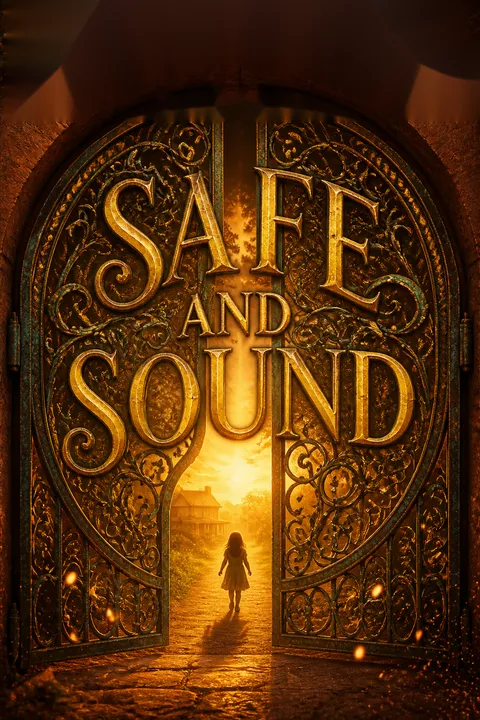
The Circle is a gated Virginia enclave designed by architect Isabelle Flanders Tookus: six mansions surround a central garden, with the Eleanor Lymen Americus Institute for exceptionally gifted children just beyond its boundary.
Its founder, Eleanor Lymen, has the wealth to make the place seem permanent and the discretion to keep its history obscure. The immaculate campus is strangely unused, and several of the mansions stand empty. Thirteen years after the Circle was built, the public has stopped asking questions. Eleanor and her two closest friends have not.
The Circle is both a refuge and a controlled environment. Its retina scanner, manicured grounds, and unoccupied houses make protection look like beauty, while the empty campus hints that order can conceal emotional absence. The prologue also establishes the story’s central contrast: Eleanor can build a secure world for gifted children, but wealth and architecture cannot guarantee a child’s safety or belonging. By keeping the enclave’s secrets from public view, she turns the Circle into a private moral landscape, where family decisions carry consequences the outside world cannot see.
A Friend at the Park
Architect Isabelle Flanders Tookus has spent months sharing lunch with Ben Ryan, a thin, guarded boy who rides his bicycle through the park. At their first proper lunch together, he reveals that he is eight, already a college freshman at the gifted-child Institute, and has almost no friends.
His mother is dead, his stepfather Connor Ryan controls his life, and his beloved grandmother Eleanor Lymen has vanished with her two closest friends. Ben explains that Connor blocked visits after winning custody and that he has been sneaking into the Circle to look for Eleanor.
Isabelle recognizes the enclave she designed and realizes the empty houses may conceal more than an ordinary absence. She promises to help, then enters Eleanor’s house to search for evidence.
Ben’s intelligence does not cancel his dependence; it sharpens his awareness of how little power a child has. He can explain the custody dispute, yet still needs an adult to help locate the person who made him feel secure. Isabelle’s response matters because she does not treat his precocity as proof that he can manage alone. Their lunch creates a relationship across an unusual age gap, but its emotional logic is simple: Ben asks to be taken seriously, and Isabelle answers by acting. The Circle, once her proud architectural achievement, becomes a place she must investigate rather than admire.
The Bear Holds Answers
Isabelle finds Eleanor’s house emptied of food and unplugged appliances, with no obvious sign of a forced departure. A concealed safe remains locked, and the mail offers no personal clues.
She brings the problem to Maggie Spritzer, her journalist friend and fellow Sisterhood member; together they discover that Eleanor’s public record tells almost nothing. The women gather at Pinewood, their rural base, and agree to investigate for Ben. That night Isabelle leads them back into the Circle.
After a thorough search yields nothing, Myra notices that the stuffed panda in Ben’s old room has a hidden compartment. Inside are credit cards, cash, legal papers, deeds, a diary, and Eleanor’s will. The bear, a comfort object Ben was forced to leave behind, has become the one place Eleanor could trust him to find.
The hidden papers turn a sentimental object into an improvised channel between a grandmother and a child separated by law. Eleanor’s choice of the bear acknowledges Ben’s memory and intelligence, but it also exposes the limits of indirect care: she left evidence, yet he had to endure months of uncertainty before finding it. The Sisterhood’s coordinated search contrasts with the isolation of the Ryan household. Their method depends on trust, shared attention, and the willingness to reconsider an ordinary object. What the women uncover is not simply wealth. It is a record of a family’s competing claims over a child and the resources attached to him.
Ben Runs for Safety
Before the Sisterhood can interpret Eleanor’s papers, Ben makes his own discovery. He returns to the Circle, finds a letter and money hidden in the panda, and learns that Eleanor left to correct a grave mistake while arranging for people to watch over him.
He takes documents and a few credit cards, then returns them to the bear for safekeeping. At home, Natalie leaves after a violent argument with Connor, but soon comes back. Ben searches the study and finds overdue bills, proof that Connor receives twelve thousand dollars monthly for his care, and evidence that the money has been squandered.
Hiding in the laundry room, he overhears Natalie propose killing him for the insurance and inheritance. That night he disables the door alarm, buys a burner phone, and slips into Rita’s empty house.
Ben’s flight is a child’s practical answer to adults who have made his safety conditional on money. His calculations are exact, but the emotional cost is visible in the care he takes to leave no trace and in his need to hide among the empty houses of his former home. The letter gives him reassurance without resolving the danger, so he acts on what he hears rather than waiting for rescue. His genius functions less as a superpower than as a survival tool: it lets him identify risk, plan an exit, and still remain a frightened eight-year-old who needs someone to come for him.
The Circle Becomes Refuge
At dawn Ben calls Isabelle, who is unreachable at first, then contacts her office and asks for help. Isabelle and Nikki Quinn learn that he is in Rita’s house, the third home completed in the Circle. They reach him through the basement, where he has broken a window to get inside and cannot climb back out alone.
Isabelle and Nikki haul him through the opening and take him to Pinewood, escaping the Institute’s view by altering the numbers on Isabelle’s license plate. Ben arrives soaked, frightened, and carrying a backpack of clothes and papers.
Isabelle gives him a watch, a safety phone, and a whistle. Over dinner with the Sisterhood, he explains the threat, his life with the Ryans, and Eleanor’s letter. Annie suspects Eleanor is searching for Ben’s biological father.
Rescue here is deliberately physical and reciprocal. Ben has already engineered his escape, but his body cannot clear the cellar window without adult hands reaching down. Isabelle’s gifts answer specific vulnerabilities: he needs to know the time, contact help, and attract attention. The Sisterhood’s warm meal and informal welcome offer a different model of adult authority from the Institute’s sterile discipline and the Ryans’ neglect. Yet the women do not mistake comfort for resolution. Annie listens for what the letter implies and reframes Eleanor’s disappearance as an unfinished act of repair, shifting the search from locating a missing woman to uncovering a hidden father.
The Father in Mississippi
Eleanor, Rita, and Irene are in Mississippi following Jonathan Philbran, a traveling doctor who brings mobile clinics to poor rural communities. The Sisters learn from Eleanor’s lawyer that she checks in regularly and has transferred her fortune to protect Ben’s inheritance.
When Eleanor hears that Ben has run away, Isabelle assures her he is safe and urges her to finish the search. Avery Snowden’s background report identifies Jonathan as a wealthy, Harvard-trained doctor who once used the name Jonathan Holland.
Eleanor had paid him a million dollars to leave her daughter Diana, convinced he was unworthy; he never cashed the check. Jonathan had been preparing to leave because Diana’s profound cognitive difficulties made a lasting partnership impossible. He never learned she was pregnant. Eleanor reaches his clinic and tells him he has a son.
Eleanor’s pursuit is driven by belated accountability. She cannot undo the decision that separated Jonathan from Diana, but she can stop that decision from defining Ben’s future. Her past certainty about class, character, and what her daughter needed proves disastrously unreliable. Jonathan’s story complicates the simple rescue fantasy: he loved Diana, yet had recognized a reality Eleanor could not face. The revelation therefore does not assign one villain and one innocent. It shows how denial, even when framed as protection, can erase another person’s knowledge and choice. Finding Jonathan is a first act of repair, not an automatic restoration of family.
A Son He Never Knew
Jonathan is stunned when Eleanor shows him a photograph of Ben and explains the child’s parentage. He remembers Diana’s confusion and the grief that followed their separation, but he had never known she was pregnant or that she later died.
Eleanor admits she sent him away because she wanted Ben for herself and misjudged him. Jonathan accepts that apology and promises not to deny Eleanor access to her grandson. He cannot abandon his patients immediately, so he arranges to return after winding down his clinic and making sure local care is covered.
Meanwhile, the Sisterhood confirms that Connor and Natalie have searched the Circle, found none of Eleanor’s protected assets, and still have not reported Ben missing. The women begin watching the Ryans and devise a way to draw them out without exposing Ben.
Jonathan’s response gives the story a model of responsibility distinct from possession. He does not claim that biology entitles him to immediate authority over Ben; he first attends to patients who depend on him and agrees that Eleanor’s relationship with the boy matters. Eleanor, in turn, has to accept that remorse cannot dictate the pace of forgiveness. The two menacing adults at home remain the immediate threat, so the Sisterhood’s attention shifts from discovery to strategy. This section places care in practical acts: keeping a clinic open, protecting a child’s location, and resisting the temptation to make a new family bond answer every old injury at once.
A Sale That Never Was
The Sisterhood investigates from several directions. Nikki and Alexis obtain Connor’s and Natalie’s phone numbers from their takeout restaurants; Maggie prepares a newspaper feature that promises a hotel stay and a Nordstrom gift certificate.
Myra and Annie pose as agents for a wealthy sheik and offer five million dollars for the Ryan house. The offer exposes the couple’s greed, but Maggie’s courthouse search reveals a snag: the house belongs to Ben, not Connor or Natalie. When Myra raises the ownership issue, Natalie abruptly withdraws from the supposed sale and cancels the interview.
Eleanor and her friends return to find the Circle houses ransacked, then travel to Pinewood. The Ryans have also searched the enclave without finding Ben. Their false story about his illness begins to attract scrutiny from the Institute.
The false sale works because the Ryans reveal themselves through what they want, not through a confession. Natalie’s sudden retreat when legal ownership becomes relevant shows that she understands the risk even as she continues to treat Ben as an asset. The Sisters’ counterstrategy is theatrical, but its purpose is diagnostic: it tests the couple’s greed, impatience, and capacity to lie. Meanwhile, Eleanor’s return confronts her with the physical violence done to the Circle, a place she had once controlled so carefully. The plot’s pressure comes from converging forms of accountability: property records, institutional oversight, and the child’s own testimony.
The Ryans Face Judgment
Myra and Annie return to the Ryan house with a fake contract, and the other Sisters follow through the back entrance. Natalie and Connor are trapped with the evidence of their neglect: Ben’s unpaid necessities, the money spent on Natalie’s appearance, and the recording in which she discussed killing him.
Connor admits he adopted Ben for access to money and agrees to cooperate; he insists he never physically harmed the child. The Sisters debate whether to punish him and vote six to one to send him away through Pearl’s covert network.
They treat Natalie more harshly. After recovering Diana’s pearls, which Jonathan had given her, they bind Natalie, confront her with Ben’s deprivation, and burn her feet with a torch before arranging her removal. The violence is their vigilante answer to her plan, not a court verdict.
The confrontation turns the Sisterhood’s protective identity into a moral test. They correctly expose a system in which a child’s monthly support became an adult’s spending money, and they distinguish Connor’s neglect from Natalie’s explicit intent to kill. But their chosen punishment crosses from rescue into extrajudicial violence. The scene asks readers to feel the force of their anger while noticing how vengeance can reproduce domination: Natalie is restrained, silenced, and physically injured by people who claim the authority to decide what she deserves. Connor’s departure is less a declaration of innocence than a consequence of the group’s divided judgment and his willingness to relinquish control.
Grandmother Comes Home
With the Ryans removed from the immediate picture, Isabelle brings Eleanor, Rita, and Irene to Pinewood. Ben is playing in the barn and runs across the grounds to throw himself into Eleanor’s arms. She asks whether he will stay with her, and he accepts the reunion without resentment.
He continues his college work and prepares for final exams while the women give him the ordinary pleasures he has missed: animals, play, warm meals, and new clothes.
Eleanor still has to explain what she has done to Jonathan, and the Sisters keep the recovered pearls safe for their rightful owner. Ben’s security is no longer dependent on the Ryan household, but his future remains open. His grandmother’s return restores a bond; it does not decide what a new father and son will become.
The reunion resolves the question that began the story: Eleanor has not abandoned Ben, and Ben can again experience her affection in person. His immediate embrace suggests that the letter preserved trust, even when its delayed discovery left him lonely. Yet the narrative resists treating reunion as a complete cure. Ben must still choose how to relate to a father he has never met, and Eleanor must face the consequences of having kept that father away. The farm’s unstructured play matters because it restores dimensions of childhood that neither exceptional intelligence nor legal custody could supply. Safety now includes room to grow, not merely protection from harm.
Epilogue
Jonathan arrives at Eleanor’s home and meets Ben, who recognizes their resemblance before he understands the relationship. Eleanor explains that she drove Jonathan away and hid the pregnancy; Jonathan adds that he was already preparing to leave because Diana could not sustain their relationship. Ben asks for time, then considers joining Jonathan at his Montana ranch for a year of ordinary childhood.
He graduates from college after Thanksgiving and thanks Isabelle, his grandmother, and his father. Jonathan gives him two golden retriever puppies named Jam and Jelly. As the family leaves for Montana, Ben and Isabelle part with the affection of a child who has found both a home and a lasting friend.
The ending refuses to make kinship an instant cure. Ben does not call Jonathan his father simply because the adults have explained the biology; he asks for time and reserves the right to decide what the title means. Jonathan’s willingness to earn that relationship gives Ben agency that earlier custody proceedings denied him. The graduation marks a genuine achievement, but the puppies and planned year in Montana redirect attention from credentials toward play, attachment, and ordinary development. Isabelle’s farewell also matters: she is not replaced by the newly found family. Ben’s belonging expands rather than transfers, allowing chosen care and biological connection to coexist.
Analysis
Safe and Sound places a child’s extraordinary competence beside his ordinary dependence. Ben can finish school years ahead of schedule, research adults online, and disable a home alarm, yet none of those capacities can supply dinner, affection, or protection from people who control his legal home. The novel repeatedly exposes the mistake of treating intelligence as maturity. Ben’s achievement is not that he can function without adults; it is that he keeps seeking trustworthy ones.
Family is presented as both biology and practice. Eleanor’s love for Ben is real, but it has been entangled with secrecy and a wish to control the people around him. Jonathan’s biological connection does not automatically make him a father; he offers time, care, and the possibility of learning the role. Isabelle and the Sisterhood demonstrate another form of kinship, built through attention, food, safety, and collective action. Ben’s eventual future can include all of these bonds without reducing them to a contest over ownership.
The story’s legal conflict makes property and custody dangerously interchangeable. Connor and Natalie regard Ben’s support and inheritance as resources, while the court’s formal recognition of a stable household fails to account for the care actually provided inside it. The Institute’s role is similarly ambiguous: it recognizes Ben’s gifts but offers a controlled academic environment that cannot replace childhood companionship. By contrast, Pinewood lets him play with dogs, explore a barn, and be welcomed without having to prove his intelligence.
The Sisterhood’s intervention offers emotional satisfaction but complicates the book’s justice. The women expose neglect, recover evidence, and remove Ben from danger, yet their punishment of Natalie is violent and unaccountable. Their actions reveal both the appeal and peril of private justice when institutions have failed a child. The ending’s most hopeful choice is therefore not vengeance but restraint: Ben asks for time before accepting Jonathan as his father. For once, adults allow his decision to remain his own.
Review Summary
Characters
Ben Ryan
The watchful child geniusBen is an eight-year-old college student whose extraordinary intelligence coexists with the needs and vulnerabilities of a child. His careful speech, intense memory, and habit of planning reveal a boy who has learned to observe adults before trusting them. He longs for friendship and the steadiness of his grandmother, but he also wants to be treated as a person rather than a prodigy or a source of money. His curiosity ranges from weather patterns to food and practical mechanics. Ben’s humor and kindness persist even when he is isolated, and his central need is not more achievement but reliable affection and room to choose his own future.
Isabelle Flanders Tookus
The architect who noticesIsabelle designed the Circle and the Institute, and she returns to the place through her friendship with Ben. An architect by training, she notices how spaces can protect or isolate the people inside them. She and her husband, Abner, grew up without stable families, which helps explain why she responds to Ben’s loneliness with fierce tenderness. Isabelle is not a conventional investigator, but she knows the enclave, trusts her friends, and acts when a child asks for help. Her emotional openness makes her a safe adult for Ben, while her attachment to the Circle complicates her relationship with the structures she once believed she had perfected.
Eleanor Lymen
The guarded grandmotherEleanor founded the Circle and the gifted-child Institute with inherited wealth and a strong desire to shape the world around her daughter, Diana. She is loyal to her closest friends and deeply devoted to her grandson, yet her protectiveness can become control when she believes she knows what is best. Eleanor has a private, disciplined manner and keeps her life away from public scrutiny. Her history with Diana leaves her carrying guilt she has long avoided. At her best, she can recognize that an error belongs to her and take costly action to repair it; she must also learn that remorse does not give her the right to determine how others respond.
Jonathan Philbran
The traveling doctorJonathan is a physician who takes mobile clinics to rural and underserved communities, bringing medical care, supplies, and practical help. He is educated and wealthy, but he has chosen work that requires travel and direct contact with people in need. His medical training gives him a clear-eyed view of difficult realities, though it does not make grief easier to bear. Jonathan values service over status and tries to meet obligations before turning toward personal plans. His story is shaped by love, loss, and the effort to act responsibly when a new responsibility appears without warning.
Natalie Ryan
The calculating stepmotherNatalie is Connor’s second wife, a status-conscious woman who measures security through money, purchases, and appearances. She has little patience for the daily work of caring for a child and resents any expense that does not serve her own comfort. Her volatile arguments with Connor expose how transactional their marriage is. Natalie is alert to opportunities and threats, but her calculations are narrowed by greed and contempt for Ben. She sees family roles as arrangements that should deliver material reward, a view that makes her incapable of recognizing the emotional obligations those roles carry.
Connor Ryan
The compromised stepfatherConnor adopted Ben after marrying Diana and later became Natalie’s husband. A glassblower and potter, he is more comfortable with craft than with parenting, and he tends to avoid conflict until it becomes impossible to ignore. His financial dependence on Ben’s support exposes both greed and weakness. Connor can be passive where Ben needs care and forceful when defending himself against Natalie, making him morally compromised rather than simply one-dimensional. He understands the difference between neglect and direct violence, but his failure to protect Ben has helped create the danger surrounding the child.
Diana Lymen
The absent daughterDiana was Eleanor’s gifted daughter and Ben’s mother. She lived largely in her own mental world, struggled to care for a child, and resisted her mother’s plans for her future. Her relationship with Jonathan was marked by genuine closeness as well as serious cognitive difficulties. Diana’s needs were often interpreted by the people around her through denial, shame, or control, leaving her with little power over how others arranged her life.
Maggie Spritzer
The investigative reporterMaggie is a journalist and one of Isabelle’s closest friends in the Sisterhood. She combines curiosity with a lively, practical instinct for getting people to reveal what they want. Her reporting skills help the group investigate Eleanor’s disappearance and create a public-facing pretext to manipulate the Ryans. Maggie’s humor and appetite for life temper her seriousness, but she takes Ben’s vulnerability personally and brings persistence to the group’s work.
Nikki Quinn
The lawyer with resolveNikki is a lawyer and a decisive member of the Sisterhood. She is used to examining responsibility, evidence, and legal consequences, and she can turn quickly from practical planning to direct confrontation. Her relationship with her adoptive mother, Myra, gives her a strong sense of chosen family. Nikki’s commitment to protecting vulnerable people is sincere, though her confidence in the group’s authority can put her at odds with more restrained ideas of justice.
Myra
The steady organizerMyra is the warm, capable host of Pinewood and an emotional anchor for the Sisterhood. She keeps the group’s shared life running through meals, routines, and a calm ability to give others room to act. Her adoptive daughter Nikki is central to her understanding of family as a bond built through care rather than blood. Myra’s gentleness is not passivity; she can plan decisively when someone is in danger. She values consensus, which becomes especially important when the Sisters disagree about how to respond to the Ryans.
Annie de Silva
The wealthy tacticianAnnie is a wealthy, socially confident member of the Sisterhood who is equally at ease grilling dinner and planning an elaborate deception. She notices implications others miss and often translates scattered clues into a workable theory. Annie’s sharp wit can make her seem playful, but her anger at cruelty is intense. Her resources and social fluency help the group act quickly, while her confidence in their mission raises questions about how far a private band of protectors should go.
Alexis
The practical rescuerAlexis is a lawyer and a resourceful Sisterhood member who handles practical details, from caring for Ben to preparing medical supplies. She has a nurturing streak and understands the importance of giving a child uncomplicated pleasures. Her professional knowledge does not erase her loyalty to the group, but it gives her a useful perspective on the difference between formal authority and actual care.
Yoko Wong
The candid protectorYoko is a Sisterhood member and a mother who evaluates situations with a child’s everyday needs in mind. Her visit to the Institute makes her alert to how an environment can privilege achievement while neglecting ordinary social development. She is direct, protective, and unafraid to challenge someone she considers threatening. Her empathy for Ben comes from recognizing that intellectual advancement cannot substitute for play, friendship, or attentive caregiving.
Kathryn Lucas
The blunt enforcerKathryn is a sharp-tongued, action-oriented Sisterhood member who approaches obstacles as problems to be solved. She is willing to confront powerful people and has little patience for evasive behavior. Her directness can strengthen a group under pressure, though it can also push its response toward force. Kathryn’s loyalty to the Sisterhood is grounded in a shared history of protecting people who have been failed by ordinary systems.
Rita Dolan
Ben’s devoted godmotherRita is one of Eleanor’s lifelong friends and a godmother to Ben. She has helped care for him and understands the affectionate routines that made the Circle feel like home. Her background as a nurse informs her practical concern for people in distress. Rita is frank with Eleanor but remains loyal, offering support without pretending that past mistakes can simply be erased.
Irene
Eleanor’s loyal friendIrene is Eleanor’s closest friend and, like Rita, one of Ben’s godmothers. She supports Eleanor through the difficult search for Jonathan and helps keep her focused on repairing harm rather than dwelling only on guilt. Irene’s steadiness comes from long familiarity: she can challenge Eleanor plainly because their friendship has endured years of shared responsibility.
Abner Tookus
Isabelle’s devoted husbandAbner is Isabelle’s husband, a skilled computer hacker who has built a secure home inside a converted pickle factory. He is away with the men during much of the story, but his partnership gives Isabelle a dependable personal refuge. Their shared experience of unstable childhoods underlies the care they offer each other.
Peter Olsen Senior
Eleanor’s trusted lawyerPeter Senior is Eleanor’s longtime attorney and a source of information about her plans. Though recovering from serious hip complications, he remains committed to the people he has represented and cares deeply about Ben’s welfare.
Peter Olsen Junior
The lawyer’s helpful sonPeter Junior is a federal prosecutor and the son of Eleanor’s attorney. He helps Isabelle and Nikki understand the family’s legal history and makes clear that he shares his father’s concern for Ben.
Dr. Evan Phillips
The Institute administratorDr. Phillips runs the Eleanor Lymen Americus Institute and takes responsibility for its students’ welfare. His guarded manner and rigid procedures reflect the Institute’s highly controlled environment.
Avery Snowden
The discreet investigatorAvery Snowden is an investigator who can uncover records and personal histories that ordinary searches miss. His research gives the Sisterhood a starting point for locating people and testing the stories they have been told.
Pearl
The underground facilitatorPearl is a former Supreme Court justice with a covert network that helps abused women and children reach safety. Her contacts offer the Sisterhood a way to move people beyond the reach of those who might pursue them.
Plot Devices
The Circle
A refuge built around secretsIsabelle’s gated enclave gives Eleanor privacy and a place to raise gifted children, but its secure entrances and empty houses also make it a hiding place. The Circle links the novel’s opening image of controlled safety to Ben’s search for his grandmother and his later escape from the Ryan home. Its architecture helps the Sisterhood move unseen, while the Institute’s view over the houses creates the risk that their movements will be noticed. The setting therefore changes function as the plot develops: it is a design, a family home, a search site, and an imperfect refuge.
Freddie the panda
A child’s hidden archiveThe stuffed panda Ben left behind contains Eleanor’s letter, financial and legal records, cash, and cards. It is believable as a hiding place because it belonged to Ben and once held his pajamas, while its emotional meaning makes it more than a simple container. Eleanor trusts that her grandson will remember it, but Ben finds the cache only after returning to the Circle a second time. The bear carries the plot from missing-person mystery into evidence of Eleanor’s intentions and Ben’s inheritance, and it gives him a private connection to his grandmother while she is absent.
The Sisterhood network
Collective rescue and retributionThe Sisterhood’s shared skills let its members investigate, plan, and act faster than any one person could. Journalists, lawyers, parents, and experienced strategists each contribute a different kind of knowledge, from checking property records to arranging a safe extraction. Their meetings at Pinewood provide an alternative community for Ben, while their covert methods allow them to challenge people who have exploited him. The group’s role is deliberately double-edged: its members protect the vulnerable, but they also decide privately what punishment is deserved, bringing the ethics of vigilante justice into the story.
The hidden letter
A delayed promise of careEleanor’s letter tells Ben that she left for reasons connected to a serious mistake and believed he would be watched over. Because Ben initially searches the house while overwhelmed by grief, he misses the message and spends months believing that she may have abandoned him. Its eventual discovery steadies him enough to trust that she intends to return, while its vague explanation points the Sisterhood toward the search for his biological father. The letter gives emotional reassurance but cannot substitute for presence, making its delay as important as its contents.
The safety phone and whistle
A child’s lifelineIsabelle gives Ben a simple emergency phone with a rapid-help button, programs it with trusted contacts, and adds a whistle that can attract attention. The gifts answer the specific problem that Ben has no dependable adult in his home and no personal way to call for help. He first relies on a burner phone to contact Isabelle, then carries her phone once the Sisters rescue him. The objects make protection tangible without making Ben passive: he still plans his own escape, assesses danger, and chooses when to seek assistance.
Sisterhood Series
























About the Author
Other books by Fern Michaels



Download PDF
Download EPUB
.epub digital book format is ideal for reading ebooks on phones, tablets, and e-readers.








