Key Takeaways
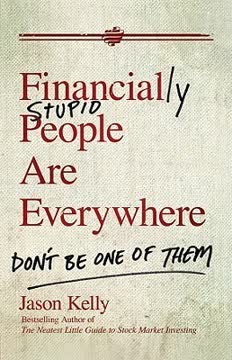
1. Financially Stupid People (FSPs) are America's Most Toxic Asset
Financially stupid people are America's most toxic asset.
Unmasking the crisis. The 2007-2009 economic crisis, often blamed on unscrupulous banks and "toxic assets," had a deeper, more uncomfortable root cause: financially stupid people (FSPs). While banks certainly played a role in offering bad loans, the crisis could not have materialized without millions of individuals willingly signing up for mortgages and credit they couldn't afford. These FSPs, not the financial instruments themselves, were the true "prickly green weeds" at the root of the problem.
Consumer culture's grip. America's consumer culture, fueled by relentless advertising and easy credit, fostered an environment of excess and instant gratification. This led many to live beyond their means, accumulating mountains of debt to fund lifestyles of "modern-day castles, designer clothes, opulent vehicles, and bling-bling jewelry." When the debt inevitably collapsed, these "downtrodden" individuals, who had voluntarily entered into crippling financial agreements, then sought taxpayer bailouts, demonstrating a profound lack of personal responsibility.
The money-trap society. FSPs often fail to recognize the pervasive "money-trap society" designed to extract their wealth. Corporations, in league with "bought-off politicians," craft a debt-based culture that encourages buying trifles with debt, leading to "indentured servitude." The author argues that while companies try to trick people, the truly smart individuals can exploit the system (e.g., using credit cards for interest-free loans) while the "morons" fall into the debt hole.
2. The First Rule of Finance: Spend Less Than You Earn
The day you commit to spending less than 80 percent of your income is the day you start getting rich.
The foundational principle. The First Rule of Finance is deceptively simple yet profoundly powerful: spend no more than 80 percent of your take-home pay. This means if you earn $1,000, you spend $800, saving the remaining $200. This fundamental discipline ensures you avoid financial trouble and automatically begin building wealth, regardless of your income level. It's a concept so basic, even a child can grasp it.
Beyond keeping up. Many people fall into debt trying to "keep up with the Joneses," flaunting financed cars, designer clothes, and big-screen TVs. The irony, as the author points out, is that "the Joneses, nine times out of ten, are financially stupid" and deeply in debt themselves. Trying to impress broke people by going broke is a fool's errand. Instead, smart people impress other smart people by owning their possessions outright and managing their money wisely.
Save first, then buy. The path to true wealth and satisfaction involves saving for desired purchases rather than financing them immediately. This approach offers several benefits:
- Interest generation: Saved money earns interest for you, not for banks.
- Better deals: Newer, better models are often available for the same price by the time you save.
- True ownership: You own items free and clear, in their pristine state.
- No buyer's remorse: Purchases are carefully planned, avoiding impulsive regrets.
This discipline transforms buying into a joyful, anticipated event rather than a debt-fueled regret.
3. Beware the Three Cs: Credit, Cars, and Castles
The serial killers of financial lives are credit, cars, and castles.
The debt trifecta. The "Three Cs"—credit cards, cars, and castles (homes)—are identified as the primary culprits behind most personal debt disasters. These areas represent the most common and often most expensive financial traps that ensnare financially stupid people, leading to crippling interest payments and long-term servitude. Mastering these three areas is crucial for achieving financial freedom.
Credit card cunning. Credit card debt is among the most expensive on Earth, with banks profiting immensely from interest payments and late fees. The industry thrives because "the majority of people use their cards improperly," carrying balances month after month. Smart individuals, however, can turn the tables by using no-fee credit cards for interest-free loans and rewards, always paying the balance in full. The simple rule is: Never carry a balance; if you can't, cut them up and use a debit card.
Car depreciation trap. Automobiles are liabilities, not assets, depreciating the moment they're driven off the lot. Financing new cars at "obscene prices" is a common mistake. The author advocates for a simple rule: Don't finance cars. Instead, save cash and buy used vehicles that are two or three years old, letting "nitwits like Boy Genius in L.A." absorb the steepest depreciation. This approach saves thousands in interest, insurance, and taxes, allowing you to own a "still very cool vehicle at a fraction of its sticker price."
Castle conundrums. While homeownership is often touted as the "American dream," renting can be a smarter financial choice for many, offering freedom and fewer maintenance headaches. If buying, avoid "modern-day castles" and aim for a modest home. The critical rules for home buying are:
- 20% down payment: Avoids private mortgage insurance (PMI) and demonstrates responsibility.
- Mortgage payment below 40% of take-home pay: Ensures affordability and financial stability.
Ignoring these rules, as seen with "subprime loans" and "no-doc" mortgages, leads to financial disaster, turning a potential asset into a crushing liability.
4. The Financial System is Rigged Against You
Government and big business love that because it keeps all the suckers at jobs they hate to service the debt they amassed to buy things they don't need.
Debt as control. The American economy is fundamentally structured around "unnecessary consumption financed by debt," a system that benefits government and big business by keeping citizens perpetually indebted. This debt acts as a powerful control mechanism, forcing people to remain in "jobs they hate" to service their obligations. Financially free individuals, unburdened by debt, have the luxury of choosing work they enjoy or creating their own opportunities, a freedom that runs counter to the system's design.
The Federal Reserve's role. The Federal Reserve, described as "not federal and has no reserves," plays a crucial role in this rigged system. Created by big bankers, it possesses the power to "inflate the money supply," making money cheap and encouraging liberal lending. This "elastic currency" erodes the value of savings, pushing people towards borrowing and spending to keep up with rising prices. As Congressman Ron Paul noted, the dollar's purchasing power has plummeted since the Fed's inception, effectively "stealing $0.95 of every dollar" from citizens.
A systemic cancer. The cycle of easy money, rising prices, and increasing debt has become a "systemic cancer" in America. Elizabeth Warren, a Harvard professor and chair of the Congressional Oversight Panel for TARP, highlighted that middle-class incomes have shrunk for a generation, while core expenses like housing and health care have soared due to inflation. Families responded by "stopped saving and started going into debt," leading to immense vulnerability. This "terrible cultural distortion" prioritizes short-term consumption over long-term planning, benefiting the financial elite at the expense of the average citizen.
5. Government of Corporations, By Corporations, For Corporations
The cause for which so many died nobly to advance—government of the people, by the people, for the people—has perished from the earth.
A carcass of a nation. The author contends that Abraham Lincoln's vision of "government of the people, by the people, for the people" has been replaced by a "carcass of the nation," a "government of the corporations, by the corporations, for the corporations." This shift is evident in the cozy relationship between government and banks, where financial fraud is often enabled rather than punished. William K. Black, a regulator during the S&L crisis, exposed how bank CEOs deliberately made bad loans for personal gain, while government "got rid of regulation."
Lobbyists' pervasive influence. Washington is a hub of cronyism and corruption, where lobbyists representing special interest groups wield immense power. These groups spend billions annually to shape policies that favor their "narrow agendas," often at the public's expense. Examples include:
- Health care: Lobbyists ensure high costs and profits for insurance and pharmaceutical companies, blocking affordable public options.
- Oil dependency: The oil industry maintains reliance on fossil fuels, despite environmental concerns and alternative technologies.
- Military spending: Defense contractors secure massive budgets for weapons systems, regardless of actual threats or necessity.
This influence means that "decisions are made by dollars, not discussions," with corporations consistently getting what they want because "corporations pay."
The illusion of choice. Politicians, regardless of party, are often "puppets" controlled by these powerful corporate interests. The author highlights how presidents, despite campaign promises, often maintain policies consistent with their predecessors because they are "trapped in realities not of their own making." The revolving door between Wall Street and government positions (e.g., Goldman Sachs executives becoming Treasury secretaries) further solidifies this control. Voters are merely "deciding between a kettle and a pot," as the "real gang in charge" owns both.
6. Your "Low-Battery Birth": Only One-Third of Your Income is Truly Yours
Only about one third of your lifetime income is controlled by you.
A rigged starting line. From the moment of birth, individuals operate on a "low financial battery," with special interests having already claimed approximately two-thirds of their lifetime income. This extreme disadvantage means that even a few common financial mistakes can be catastrophic, leaving little room for recovery. Understanding this inherent financial handicap is crucial for effective money management.
The two-thirds drain. The majority of your income is siphoned off before it ever truly reaches your control:
- Taxes (first third): A significant portion of income is lost to taxes, much of which is "gobbled up by corporate special interests." This includes funds for bank bailouts, corporate subsidies, and wars that primarily benefit defense contractors, rather than providing essential services to citizens.
- Unprovided needs (second third): Because taxes are misdirected, individuals must then spend another large portion of their income on needs that government fails to provide. This includes expensive private health insurance, car insurance, and higher education, all of which are subject to inflated prices due to corporate influence.
The precious one-third. After these two massive drains, only the bottom one-third of your lifetime income remains under your direct control. This small margin necessitates extremely careful management. The author argues that American society has devolved into the "worst combination: high taxes with few benefits," where government spending primarily profits corporations while citizens are left to fend for themselves, often through expensive private services.
7. Financial Freedom is About Management, Not Wealth
Financial freedom has nothing to do with net worth. It has everything to do with money management, no matter what amount of money we're talking about.
Beyond the Forbes 400. Financial freedom is not an exclusive club for the super-rich; it's a state of being attainable by anyone through diligent money management. A person earning $20,000 a month who spends $25,000 is not free, but one earning $4,000 who spends $3,200 (80% of income) is. It's the discipline of living within your means that liberates you from undesirable jobs and locations, paving the way to a life of choice and purpose.
The power of choice. Living on a "pile of cash" offers profound advantages over living "under a pile of debt." Individuals with financial freedom are not beholden to external forces:
- They are not tied to jobs they hate, free to pursue work they enjoy or create their own.
- They are immune to fluctuating interest rates and unexpected financial shocks.
- They can take vacations and pursue dreams without financial constraints.
This freedom stems from years of consistently saving a portion of their income, building a solid financial foundation that provides peace of mind and endless opportunities.
Character over possessions. True pride and accomplishment come from the journey of disciplined saving and smart financial decisions, not from the mere acquisition of material goods. The author shares his own story of paying off student debt and saving aggressively, eventually leaving a corporate job to start his own company, all debt-free. This journey builds "pride and confidence, I dare say, even manhood," demonstrating that "accomplishments are character," and that the ability to pay cash for a dream car is far more impressive than simply financing it.
8. Prioritize Basics Over Investing for Guaranteed Success
It's impossible to overstate how much more important they are than any investment idea to your financial well-being.
Guaranteed returns. While many people obsess over complex investment strategies, the author stresses that mastering the First Rule of Finance and controlling the Three Cs offers far greater, guaranteed returns. For example, the stock market might yield an average of 10% annually, but keeping your credit card balance at zero guarantees an 11-18% return by avoiding interest. These fundamental practices provide a solid foundation that no investment can match.
The power of simplicity. Financial success doesn't require intricate knowledge of market trends or speculative trading. The guarantees offered by the basics include:
- Growing savings: The First Rule ensures your wealth increases monthly.
- Zero interest/fees: Paying credit cards in full eliminates costly charges.
- No car debt: Paying cash avoids interest and encourages reasonable purchases.
- Housing security: A 20% down payment and affordable mortgage prevent homelessness and build equity.
These simple, risk-free actions provide a level of financial ease and security that no politician, banker, or investment advisor can guarantee.
Investing is secondary. Investing should only be considered after the basics are firmly in place. The author, an investor himself, cautions against reversing this order, likening it to "skydiving school and spending all your time studying how to land without ever learning to pull the ripcord." Without proper money management, even investment gains can quickly disappear. Focus on building a "wonderfully liberating absence of debt" first, and then explore investing from a position of strength and control.
9. Real-Life Examples Prove Financial Freedom is Attainable
When you want to make a change in your life, take a risk, or simply take advantage of an opportunity, debt is an anchor that weighs you down and limits your options.
Defying the debt culture. Numerous individuals, from professors to computer programmers, have successfully navigated America's debt-based society by adhering to sound financial principles. Jack Chism's car-buying history revealed how financing cost him $10,000 more than sticker prices, money that could have been saved. Tom Hohmeier's "car fund" ensures he always buys vehicles with cash, accumulating over $30,000 every decade. These examples highlight that consistent, disciplined choices lead to tangible financial gains.
Smart strategies in action. Real-life stories illustrate practical ways to achieve freedom:
- Credit card mastery: Bud Garofalo exploited credit card offers, depositing cash advances at interest and paying off balances before incurring fees, earning thousands. Darin Grant's family channels all spending through a rewards card, earning hundreds in checks annually, always paying in full.
- Strategic homeownership: Andrew Crawford bought a "fixer-upper" he could afford, sold it for triple the price, and then bought a larger home with a low-interest mortgage, keeping payments at 20% of his income. Darin Grant's family strategically bought foreclosed homes, paid down mortgages aggressively, and turned one into a rental property.
- Lifestyle choices: Sarp Yeletaysi, a Turkish immigrant, avoids "stupid commercials," drives a pre-owned car, and saves consistently, rejecting America's consumerism. Andrew Crawford bikes to work, saving money and earning employer incentives.
The path to peace of mind. Aaron Sweyne, a former bank employee who sold debt, and his wife Sue, transformed their finances by cutting expenses, trading down cars, and focusing on paying off debt to launch Sue's floral business. Their story exemplifies how "debt is an anchor that weighs you down and limits your options," while freedom allows for pursuing passions. These individuals demonstrate that by embracing the First Rule and controlling the Three Cs, one can build a "warmly lit house filled with laughter" in a world of financial despondency.
Last updated: