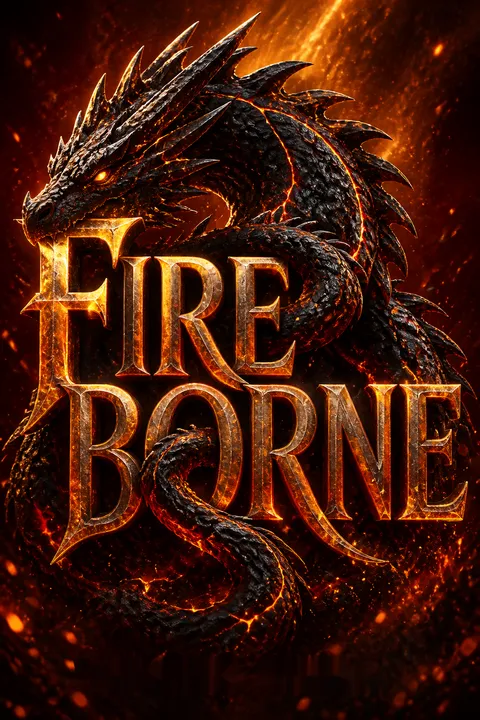


Plot Summary
Prologue
During the revolution’s final assault on the palace, Atreus finds dragonlord Leon Stormscourge forced to watch his family’s destruction. Atreus stops the soldiers tormenting Leon’s young son, Leo, and orders a guard to take the bloodied child away.
Leon asks whether the new order can justify what has been done. Atreus says it can, then kills him. Years later, the First Protector remembers the father and believes the boy was cared for. He has forgotten that the child survived.
The opening makes the revolution’s founding contradiction personal before its institutions appear. Atreus can recognize cruelty in the soldiers around him and still accept the larger slaughter as necessary; his certainty is moral conviction and political insulation at once. Leon’s question places the novel’s central test inside the victory itself: whether a promised just future can redeem violence committed in its name. The final memory gap matters. Atreus remembers the exception he made, but not the child whose life gives that exception consequence.
Laurels and Burn Marks
Nine years after the revolution, Guardian riders Lee and Annie enter the public tournament that will select Callipolis’s senior dragonriders. Lee defeats Crissa with precise flying, while Annie, despite a ministry warning against a prominent role, refuses to yield her match to Darius. Their friend Duck loses to Power, who prolongs the contest with deliberately painful burns until Duck collapses.
Annie’s childhood memories of dragonfire surge back, but she chooses to fly rather than withdraw. She defeats Darius with a steep, near-vertical attack and enters the Fourth Order beside Lee, Cor, and Power. The victory brings her village friends into the stands and earns her the first public recognition she has ever allowed herself to want.
The tournament turns meritocracy into a visible contest, but its rules do not erase the old order’s habits. Power uses legal scoring to torment Duck, while the ministry tries to manage Annie’s ambition before she can display it. Her decision to compete therefore carries more weight than a win: she rejects the assumption that serving the state means making herself small. Lee’s effortless precision and Annie’s hard-won resolve also establish the contrast that will complicate their partnership, since both are gifted but have learned to understand power differently.
The Orphanage Knife
As children at Albans orphanage, Lee first approaches Annie while older children are beating her. A kitchen knife makes them retreat, and his protection becomes the beginning of a quiet friendship.
Lee is living inside memories of his murdered family and the belief that dragonlords were born to rule; Annie is an orphan from the highlands who learned to read alone and cannot ignore cruelty. Their bond fractures when she tells him that a dragonlord’s dragon killed her family during a famine.
Lee defends his father’s rule, then withdraws, but later finds Annie crying and comforts her instead of leaving for New Pythos as they had planned. At the Choosing ceremony, Annie is selected by Aela and Lee by Pallor, binding their childhood friendship to dragons.
Their first alliance is practical before it is sentimental: Lee’s knife deters bullies, and Annie’s literacy gives him access to news and plans. The rupture over her family exposes how inherited stories defend a child’s sense of safety. Lee cannot yet accept that his father’s authority and Annie’s suffering belong to the same world. Choosing makes their bond more intimate, not simpler. They enter a new institution together while carrying incompatible memories of what dragons mean: for Lee, lost inheritance; for Annie, the instrument of her family’s destruction.
A Fleet Beyond Fog
During a storm patrol, Lee spots a formation of dragons beyond Callipolis’s fleet and recognizes it as a New Pythian force. The sight triggers an uncontrolled emotional spillover with Pallor, exposing his longing before he can disguise it. Annie takes charge of the retreat and later protects Lee during the report to Atreus and General Holmes, saying he ordered the squadron back.
At the Lyceum, former court tutor Tyndale recognizes Lee as Leo, a presumed-dead dragonlord’s son, and offers contact with the exiles. Lee refuses to defect, but the returned message from New Pythos warns that the rightful rulers intend to come home. The threat turns the Firstrider contest from an honor into preparation for war.
The sighting makes Lee’s private grief militarily relevant. His spillover is not proof of treason, but it reveals how little distance remains between his chosen identity and the family he lost. Annie’s cover gives him room to decide, while increasing the risk she bears for him. Tyndale treats ancestry as a ready-made political allegiance; Lee resists that shortcut, though the Pythian message keeps his past active. The contest’s meaning shifts accordingly: a title once imagined as personal restoration now determines who may command a fleet in war.
Midsummer's Returned Kin
Lee receives a hidden invitation and meets Julia, his cousin, in a Cheapside tavern on Midsummer night. She survived the palace massacre with her brother, escaped to New Pythos, and now rides dragons there.
Their reunion restores the intimacy of childhood, but Julia is also the Pythian fleet’s Firstrider and wants Lee to help reclaim Callipolis. He refuses, though he cannot dismiss his longing for family. Annie spends the holiday with Duck’s welcoming household, where his sister’s low metals-test result exposes the limits of the new system.
Duck’s tenderness leaves Annie uncertain about their closeness, while Lee, unable to join her, accepts a separate invitation from Crissa. The competing attachments deepen the distance between the childhood friends.
Midsummer gives Lee what political argument cannot: the bodily comfort of kin who remember him before the revolution. That comfort is precisely what makes Julia’s cause persuasive, even as her military role makes it dangerous. Meanwhile Annie’s visit to the Sutters offers a possible home, but her hesitation around Duck suggests that safety and desire are not identical. The holiday briefly lets both protagonists imagine belonging outside duty. Their separate choices do not sever their bond, but they reveal how each is beginning to seek comfort elsewhere.
A Serf Beats Power
In the semifinal, Lee defeats Cor and advances toward the Firstrider title. Annie then faces Power, who has already injured Duck and expects to dominate her. She uses a strategy designed to make his stormscourge exhaust its supply of ash, despite suffering two full-heat burns. When Power’s attacks sputter, he retreats into cloud cover, where tournament referees cannot see him break the rules.
His dragon tackles Aela and claws both rider and dragon. Annie answers with her bootknife, damages Eater’s wing, and forces Power to yield. Her win makes her Lee’s opponent in the final, but leaves her badly wounded. Her squadron carries her to a tavern celebration, where lowborn citizens acclaim her as proof that a former serf can lead.
Annie’s victory depends on endurance and tactical patience, not on becoming like Power. Yet the moment the official rules disappear from view, he turns sport into a real assault, revealing how easily institutional fairness can be abandoned by someone accustomed to impunity. Annie’s response is neither passive endurance nor blind retaliation: she uses the tools available and makes him concede. Public celebration gives her a kind of recognition the ministry withheld, although it also risks turning her into a symbol before she has decided what leadership should mean.
Holbin Rejects Its Rider
The Ministry of Propaganda assigns Annie a morale visit to Holbin Hill, her childhood village, after first sending her to observe Lee in Cheapside. There, a frightened child cries near Aela, and Lee comforts her with the practiced gentleness of someone who remembers being an orphan.
A woman’s old-fashioned deference to Lee makes Annie suspect that his past is not what it seems. At Holbin, Annie gives a carefully rehearsed speech about the revolution and the coming war, identifying herself as a farmer’s daughter and the survivor of dragonfire.
The villagers refuse to approach. One woman spits on her and invokes Annie’s dead father. Annie keeps Aela calm and answers with courtesy, but returns to the Palace shaken and unable to take comfort in official praise.
The visit exposes a difference between representation and repair. Annie can stand before Holbin as a successful rider, but the villagers remember the dragon regime through their own losses, not through her new uniform. Her composure protects them from another display of dragon power, while making her absorb their anger alone. The Cheapside child, by contrast, allows Annie to witness Lee’s compassion at close range and deepens her suspicion about his origins. Public service advances both characters, but it also makes private histories harder to hide.
The Ball Before Fire
At the Lycean Ball, Lee and Annie lead the opening dance, and its movements revive Lee’s memories of his family while giving Annie a rare moment of ease beside him. A conversation nearby praises Lee as a future leader but dismisses a former serf as unqualified, so Annie pulls her hand from his. Duck dances with her, while Lee later kisses Crissa on the Palace wall.
Before dawn, alarm bells interrupt both moments. Lee, Cor, and Crissa race to the armory, and Annie arrives with Duck; Lee orders Annie to defend the city rather than join the response force. She hears the decision as another dismissal, then agrees to train with Power. The fleet flies north as the city prepares for an attack.
The ball stages the characters inside elite rituals that promise inclusion while preserving social ranking. Dance lets Lee and Annie briefly translate grief into shared movement, but the overheard insult restores the hierarchy and breaks their contact. Their separate intimacies with Duck and Crissa are not simple romantic detours; they are attempts to find ease outside a relationship carrying too much history. When Lee assigns Annie to defend the city, his protective instinct repeats the pattern she is trying to escape: others deciding what danger she can bear.
Starved Rock Burns
The fleet reaches Starved Rock to find the small island burning after New Pythian dragons have struck and departed. Lee stops Duck from entering a collapsing building, while Crissa’s skyfish ferry survivors from the shore. Seven of the island’s twenty-six residents are dead. A rescued boy reports that Julia delivered a warning: the attack was only a taste, more dragons would soon be sparked, and Callipolis had until Palace Day to surrender.
The message names Lee as an intended audience, making his private contact with Julia more dangerous. Atreus refuses to answer the ultimatum and expects Callipolis’s dragons to spark in time. The Guardian corps returns to the capital with a new threat and no clear way to prevent the next strike.
Starved Rock converts abstract war into an irreversible count of civilians. The Pythians deliberately leave survivors to carry the threat, making terror itself part of their military strategy. Lee’s rescue of Duck and refusal to enter a collapsing building show that command requires accepting limits, even when someone can still be heard inside. Julia’s message personalizes the violence for Lee, but it also raises a political question: whether his kin are trying to bring him home or using his attachments to weaken Callipolis.
The Fleet Finds Fire
In the final tournament, Lee and Annie meet above the arena, each drawing on years of shared training to anticipate the other’s moves. Annie’s spillover with Aela sharpens her attacks, and she lands two penalties on Lee. As Lee retreats into cloud to recover, Pallor convulses and releases his first sparked dragonfire. The blast engulfs Annie and Aela.
Lee reaches them, cuts across the gap between dragons, opens Annie’s coolant valves, and calms Aela until she too sparks. Annie survives, but Lee is declared Firstrider because his dragon’s fire ended the match. He asks for a rematch and is refused. At her bedside, Annie tells him she had finally learned to want the title for herself, even as she accepts the role of Alterna.
The tournament’s climax refuses to reward skill with a clean outcome. Annie earns a genuine advantage, but a biological change beyond either rider’s control decides the match and nearly kills her. Lee’s rescue matters more than his victory, yet it cannot erase the cost of the result. Annie’s grief is not simply jealousy: she has discovered an ambition that belongs to her, independent of Lee, and must mourn its loss. Their bond survives because Lee acknowledges that she deserved the chance, rather than asking her to celebrate his title.
Palace Day's True Record
As Palace Day approaches, Atreus gives the Fourth Order a prohibited account of the massacre and asks them to confront the facts behind the celebrated revolution. Lee learns that Atreus knowingly allowed the palace to be overrun, accepting deaths he considered necessary to end the dragonlords’ rule.
Annie reads the same account before the parade and recognizes Lee among the children listed as dead: he is Leo, Leon Stormscourge’s son. She has suspected his lineage for years, but the record confirms it.
During the public procession, Lee leads the fleet past cheering crowds and the square where his father’s dragon was executed. Annie sees that he holds himself rigidly through the celebration, while she struggles to separate popular justice from revenge.
The account does not overturn the revolution’s real achievements, but it strips away the clean story used to authorize them. Atreus admits that he accepted civilian deaths as a political risk, while the parade transforms that risk into patriotic spectacle. Annie’s discovery reframes Lee’s poise as survival rather than inherited ease. She also recognizes that the crowd’s anger can be cruel even when directed at a genuinely oppressive system. The chapter makes memory an ethical obligation: leaders must know what their founding story leaves out.
Harvest by Flame
After the parade, New Pythian dragons attack Callipolis’s trade fleet across the Medean, killing hundreds and destroying much of the season’s textile exports. The loss threatens winter food supplies, so Atreus orders compulsory harvest collections and assigns dragonriders to enforce them.
Annie and Rock lead the first visit. When a village hides food, Annie orders Aela to burn a farmer for three seconds, then has soldiers extinguish the flames and treat his injuries. The village yields the hidden stores.
Lee performs similar collections the next day and recognizes his father’s methods in his own actions. Later, the council considers unequal rationing by class metal, protecting the elite while Iron workers face the greatest danger of starvation. Lee and Annie challenge the policy but do not stop it.
Emergency makes the revolution reproduce the coercive machinery it was founded to abolish. Annie and Lee use brief, controlled burns and promise redistribution, yet the villagers experience the same essential fact: dragons make refusal dangerous. The ration council extends that violence through arithmetic, translating class hierarchy into predicted survival. Lee and Annie can identify the injustice and still accept the logic that protects farmers, soldiers, and rulers first. Their discomfort is important, but it does not absolve them. The test is no longer whether they recognize past evil, but what they permit in its name.
A Name at Holbin
After Julia sends another invitation, Lee asks Annie to take him to the ruins of her family’s home. She explains how famine killed her mother and baby brother, how her father resisted the dragonlords’ harvest demands, and how Leon Stormscourge ordered her family burned while forcing her to watch.
Lee admits that he is Leo, Leon’s son, and that he has met Julia while refusing to join her cause. On their return, Power and Darius seize them in the dragon caves, using Annie as leverage while accusing Lee of treason. Annie summons Aela, disarms the attackers, and takes Lee to Atreus. Lee confesses his lineage and contacts. Atreus detains him; Annie is named acting fleet commander.
The visit to Holbin replaces political abstraction with embodied testimony. Annie makes Lee stand where his father stood and shows him what inherited authority looked like from the ground. His confession is not a bid to erase guilt, but a choice to let the person most harmed by his family know the truth. Power and Darius then turn suspicion into assault, exposing how easily anti-dragonlord rhetoric can become personal vengeance. Annie’s intervention protects Lee without pretending his past is irrelevant, and her promotion places her inside the power she has long been denied.
The Order to Kill
While Lee waits in the stockade, Atreus decides that refusing the Pythians is not enough to prove his loyalty. He orders Lee to meet Julia and return with proof that he has killed her. Before Lee leaves, Annie visits him through the bars and promises to stop him if he changes sides. Their farewell becomes a confession of love, but neither treats affection as permission to abandon responsibility.
Annie gathers witnesses from the corps and government, bringing Dora Mithrides to the Keep so Atreus cannot quietly dispose of Lee. She accepts that Lee may carry out the order, while preparing the fleet to judge what his return means. The assignment turns kinship into a test designed by the revolution itself.
Atreus’s demand exposes the limits of a regime that claims worth can replace bloodline. He asks Lee to prove civic loyalty by killing the person who embodies his surviving family, making obedience indistinguishable from self-destruction. Annie’s promise is equally severe: she loves Lee but will not let love become an excuse for treason. By arranging witnesses, she contests the secrecy of sovereign power rather than simply opposing Atreus. Her strategy makes the impending duel accountable to the community that Lee is being asked to defend.
The Riversource Duel
Lee meets Julia alone at the Riversource, where she gives him one final chance to return to New Pythos. They walk around the spring and remember the childhood they shared, but cannot agree on what Callipolis should become. Julia believes their blood gives them a rightful claim to rule; Lee argues that the dragonlords’ violence cannot be repeated under a restored banner.
They mount their dragons and fight. Julia strikes first, and Lee struggles to answer with lethal fire. When she loses her balance, he takes the opening and kills her. Pallor mourns through the broken bond as Lee returns to the Keep, carrying Julia’s body and the proof Atreus demanded. He has chosen Callipolis, but the choice leaves him grieving rather than triumphant.
The duel is a political decision made at bodily cost. Julia is neither a faceless enemy nor an innocent alternative: she understands her family’s history but still believes inherited rule can be redeemed by their generation. Lee rejects the idea that affection or shared suffering can settle that disagreement. His hesitation before firing prevents the killing from becoming a simple spectacle of loyalty. The grieving dragon makes visible what the state’s proof of allegiance cannot show: Lee has not escaped his past by defeating it.
A Laurel Reassigned
At Pytho’s Keep, Lee names himself as Leon’s son, renounces his Stormscourge identity, and offers Julia’s death as proof that he has fought for Callipolis. Atreus accepts him back as a Guardian, stripping away his family name and restoring his wristband. Lee then refuses to remain Firstrider, arguing that Annie has proved his equal and should command the fleet.
She accepts the laurel and names him her Alternus. Later, Lee grieves in the infirmary while Annie ensures the return of Julia’s body to New Pythos. The revolution has not become just, and the war is not over, but Lee and Annie choose to keep challenging their leaders from within the institution they helped build.
Lee’s renunciation is both submission and refusal. He accepts the state’s judgment, but declines the command that would let his inherited ambition masquerade as merit. By transferring authority to Annie, he makes her capability politically consequential rather than merely symbolic. Atreus’s acceptance leaves unresolved whether the regime can tolerate the very rival it has just admitted into its ranks. The ending therefore offers no clean reconciliation: it places Annie and Lee inside a flawed system with more power, more responsibility, and a clearer understanding of the damage power can do.
Epilogue
The final scene returns to the revolution’s assault on the palace. Atreus had quietly ordered a guard to take Leo into the hallway and kill him. The soldier disobeys, tends the child’s wounds, and carries him to an orphanage under the name Lee.
He later keeps the act secret, but remembers it as the choice that defined his life. The child Atreus forgot was not saved by the new regime’s mercy. He was saved by one ordinary person who refused to treat a frightened boy as an enemy.
The revelation revises the prologue without erasing it. Atreus did intervene against the soldiers’ immediate cruelty, but his private order shows that he could still value political certainty over a child’s life. Lee’s existence rests instead on a guard’s unsanctioned act of recognition. The novel’s final moral authority therefore shifts away from leaders and founding narratives toward a small refusal to obey. That choice echoes Annie and Lee’s later resistance: institutions may authorize harm, but individual responsibility remains possible inside them.
Analysis
Fireborne asks whether a revolution can create just government without inheriting the habits of the regime it destroys. Callipolis has made consequential improvements: commoners ride dragons, schools reach neglected districts, and public authority is no longer formally confined to hereditary families. Yet its merit system sorts people into rigid classes, its ministries shape what citizens are allowed to know, and its emergency policies revive the coercion once carried out by dragonlords. The question is not whether the new regime is identical to the old one. It is whether its leaders can notice when necessity becomes a convenient name for domination.
Lee and Annie embody different forms of inheritance. Lee has inherited the perpetrators’ name without choosing their crimes; Annie has inherited the victims’ trauma without being able to escape the institutions that once harmed her. Their friendship refuses easy moral accounting. Annie can love Lee without absolving his family, and Lee can choose Callipolis without pretending its justice is complete. Their loyalty becomes meaningful precisely because each is willing to oppose the other when conscience demands it.
The novel also distrusts moral certainty that avoids personal cost. Atreus’s calculations, the Pythians’ restoration project, and the Guardians’ harvest collections all claim necessity. Each can point to real suffering, yet each risks turning people into instruments. The strongest acts of resistance are therefore not pure victories but accountable choices: Annie refusing to diminish herself, Lee confessing what could condemn him, and ordinary characters naming the harm their side has done. The ending leaves reform unfinished. Its hope lies not in a perfect ruler, but in relationships strong enough to keep power answerable.
Review Summary
Fireborne received mixed reviews, with some praising its complex political themes, morally grey characters, and slow-burn romance. Many appreciated the nuanced exploration of post-revolution society and the dragon-riding elements. Critics found the pacing slow and felt the dragons were underutilized. Some readers loved the character development and world-building, while others found it lacking. Overall, the book was praised for its mature themes and political commentary, but divided readers on its execution and engagement level.
People Also Read





Characters
Lee
The guarded aceA talented Guardian and aurelian rider, Lee presents himself as composed, capable, and nearly impossible to surprise. He wants the Firstrider title with an intensity rooted in a childhood defined by loss, though he rarely explains what that ambition means to him. Years of study and service have made him a persuasive speaker and an attentive mentor, especially to younger or less confident riders. He is more comfortable controlling his feelings than sharing them, which makes his connection with Pallor both powerful and frightening. His friendship with Annie is his oldest source of trust, but its history also makes every disagreement between them unusually consequential.
Antigone sur Aela
The highland contenderKnown as Annie, she is a former highland serf, a gifted aurelian rider, and Lee’s closest childhood friend. On the ground she often makes herself quiet and unobtrusive; in the air, she is bold, precise, and instinctive. Her childhood trauma gives her a fierce sensitivity to the cost of dragonfire, but it does not make her timid. Annie wants to serve Callipolis and gradually learns that obedience is not the only form of service. She values loyalty, plain dealing, and the people who offer care without demanding polish in return. Her struggle is not to become fearless, but to claim authority without confusing confidence with cruelty.
Atreus Athanatos
The revolutionary stewardThe First Protector led the revolution and built Callipolis’s Guardian program, universal education, and metals-based system of advancement. An austere scholar with a talent for political persuasion, he believes the old regime’s inherited power made corruption inevitable. He has genuine regard for the Guardians and trains them to think about the consequences of rule, yet he can treat lives as costs in a larger calculation. His personal restraint should not be mistaken for softness: he has made decisions that he knows will haunt him and does not necessarily regret them. Atreus is both the architect of a more open society and a warning that good intentions do not prevent power from reproducing itself.
Julia
The exiled rivalA skilled dragonrider from New Pythos, Julia carries the fierce confidence of a childhood in which she imagined herself commanding the skies. She shares a deep history with Lee and approaches him with genuine affection, but her political purpose is inseparable from her ambition to restore her family’s claim. Julia is neither merely a schemer nor simply a nostalgic figure: she can remember the past tenderly while accepting violence as a route to power. Her certainty about inherited rule gives Lee a personal, emotionally difficult version of the question facing Callipolis.
Power sur Eater
The patrician provocateurPower is a stormscourge rider whose athletic skill and sharp instincts are matched by a habit of humiliating people he considers weaker. He uses insults and deliberate pain to provoke emotional spillover, both in tournaments and in training. His contempt for Annie and Duck is partly social performance, but his own history makes his fixation on birth and status more complicated than he admits. Power can recognize ability in others even while behaving cruelly toward them. His combination of tactical intelligence, resentment, and buried insecurity makes him dangerous, but not politically simple.
Dorian Sutter
The loyal homebodyUsually called Duck, he is Cor’s younger brother and one of Annie’s oldest friends. Warm, humorous, and generous with his family’s welcome, he gives Annie a glimpse of the home life she lost. His good nature does not make him a weak rider, though emotional spillover can disrupt his control in the air. Duck is often more willing than Lee or Annie to name pain and offer comfort directly. His affection for Annie is evident, but he respects her uncertainty and keeps their friendship safe even when he hopes it might become something more.
Crissa
The bright tacticianA confident skyfish rider and squadron leader, Crissa brings humor and social ease to a corps often governed by fear and rivalry. She is skilled at encouraging others, though her public confidence conceals moments of private anxiety. Crissa supports Annie’s development without treating her as a project, and she is one of the few people who can challenge Lee without being intimidated by him. Her affection for Lee grows amid their shared work, while her friendship with Cor and the other Guardians gives her a strong sense of responsibility. She represents a kind of leadership built through attention rather than display.
Cor sur Maurana
The wary squadron leaderA stormscourge rider and squadron leader, Cor is Duck’s older brother and a close friend to Lee and Crissa. He is protective, quick to challenge bullying, and often more emotionally transparent than Lee. Cor can fly brilliantly, but anxiety sometimes unsettles his connection with his dragon. His loyalty to his family makes the political treatment of his sister especially painful, and he is willing to confront friends when their choices threaten people he loves. Cor’s skepticism toward the new order comes not from nostalgia for the old regime but from noticing when its promises fail those closest to him.
Wes Goran
The old-order drillmasterGoran trains the Guardians and retains the reflexes of the patrician world that the revolution displaced. He tolerates bullying longer than he should and repeatedly underestimates Annie, especially when she is away from a dragon. His authority comes from experience and rank, but his bias makes him a poor judge of merit. Goran is not the story’s central antagonist; he is a daily reminder that institutions can change their slogans faster than the people who administer them change their instincts.
Richard Tyndale
The classical tutorA scholar of Dragontongue poetry and a former tutor to the old ruling families, Tyndale teaches the Guardians to read the Aurelian Cycle closely. His affection for the old culture gives him a deep knowledge of its literature, but it also colors his judgment of the new regime. He is emotionally entangled with the past and tends to mistake cultural loss for proof that political restoration would be just. Tyndale’s classes give Lee and Annie a language for examining power, while his own choices demonstrate that scholarship does not guarantee moral clarity.
Miranda Hane
The propaganda ministerThe Minister of Propaganda oversees public messaging, morale visits, and the Guardians’ introduction to elite society. Hane is disciplined and politically alert, but she is capable of recognizing when policy has treated Annie unfairly. She often works through scripts and public appearances, yet she does not reduce every problem to presentation. Her support gives Annie an opening to practice leadership, while her ministry’s broader work shows how easily persuasion can shade into censorship and selective truth.
Amon Holmes
The hard-nosed generalHolmes is Atreus’s Minister of Defense and a veteran of the revolution. He values readiness, speed, and decisive action, especially as the Pythian threat grows. His military realism often brings him into tension with Atreus’s preference for diplomacy, though both men accept difficult choices in the name of Callipolis. Holmes recognizes capability when he sees it, including Annie’s, but his focus on operational success can leave little room for the emotional cost borne by the people carrying out his orders.
Richard Rock
The highland veteranUsually called Rock, he is a large, good-humored highland rider who is valued for his steadiness and practical knowledge. He helps Annie lead the first harvest collections because he understands the countryside and remembers the old system’s methods. Rock’s strength does not shield him from moral injury; he is shaken by the violence the new regime asks him to repeat. His willingness to admit that fear and disgust matter makes him an important counterweight to leaders who prefer to speak in numbers.
Dora Mithrides
The influential patronA wealthy Janiculum figure and supporter of the revolution, Mithrides moves comfortably among Callipolis’s elite and speaks bluntly about military policy. She is alert to the political value of ancestry, even when the new regime claims to have left bloodline behind. Her interest in the Guardians gives Annie a rare route into elite influence, but Mithrides’s support is pragmatic rather than sentimental. She watches for candidates who might alter the balance of power.
Plot Devices
The Metals Test
Ranks the new societyThe metals test assigns citizens to Iron, Bronze, Silver, or Gold according to assessed aptitude, ostensibly replacing inherited social rank with demonstrated ability. It determines education, work, political access, and eventually who receives adequate food during the crisis. Its promise of mobility is real for some characters, but the system also treats test results as objective measures of human worth. Ana Sutter’s Iron placement and the ration council’s class-based survival calculations reveal how a supposedly meritocratic tool can preserve hierarchy under a new name.
Dragon Bonds and Sparkfire
Make feeling militaryA rider and dragon share a mental and emotional connection that can deepen into spillover, allowing emotion to sharpen instinct or overwhelm control. Young dragons initially breathe hot ash, which permits tournament scoring without lethal fire. Sparkfire marks a dragon’s maturation into a weapon capable of burning through armor and leveling settlements. The bond makes each rider’s private state operationally consequential: fear can disorient a pair, while trust can steady them. The first sparks transform a sporting rivalry into a matter of life and death.
The Firstrider Tournament
Turn merit into commandThe tournament ranks the Guardian corps and selects a Firstrider and Alternus to lead the aerial fleet. Its public matches give commoners a visible chance to rise, but the title also makes the winners candidates for future political leadership. Annie and Lee’s progress tests their abilities under public scrutiny, while Power’s rule-breaking and the final match’s unpredictable outcome expose the gap between formal rules and actual power. The tournament is both an athletic contest and a political audition, with consequences far beyond the arena.
The Aurelian Cycle
Make history contestedThe ancient poem supplies Callipolis with cultural memory, political metaphors, and a shared language for discussing the rise and fall of dragonlords. Lee grew up hearing it, while Annie learns to interpret its form and meaning in class. Its depiction of the old families can be read as celebration or warning, so officials fear that readers will draw conclusions contrary to the state’s preferred account. The decision to restrict and then purge the poem turns literary censorship into an immediate test of whether a revolution can tolerate stories that complicate its authority.
Letters from New Pythos
Bring exile into reachMessages passed through Tyndale and neutral channels connect Lee to the exiles without requiring him to cross the sea. Each letter offers family, political restoration, or a final opportunity to choose sides. Their private tone makes them more dangerous than public propaganda because they address Lee’s grief as well as his ambitions. The messages also create evidence that can be interpreted as treason, forcing Annie to decide whether she should report Lee and making his eventual confession a choice he must make himself.
FAQ
0. Synopsis & Basic Details
What is Fireborne about?
- A Post-Revolutionary Society: Fireborne is set in Callipolis, a city-state forged from a bloody revolution that overthrew a dragonlord aristocracy. The new regime, led by the First Protector, aims to build a meritocratic society where commoners can rise to power, including becoming dragonriders.
- Orphans' Ascent to Power: The story follows Lee and Annie, two orphans from vastly different backgrounds—Lee, secretly the son of a deposed dragonlord, and Annie, a former serf whose family was killed by dragonfire. They rise through the ranks of the Guardian program, training to become elite dragonriders in the new fleet.
- Loyalty, Identity, and War: As a foreign dragon fleet from New Pythos (a haven for surviving dragonlords) threatens Callipolis, Lee and Annie are forced to confront their hidden pasts, evolving loyalties, and the moral ambiguities of their revolutionary government, all while competing for the prestigious title of Firstrider.
Why should I read Fireborne?
- Intricate Political Intrigue: Fireborne offers a deep dive into the complexities of a post-revolutionary society, exploring how ideals clash with pragmatism, and how propaganda and censorship shape public perception. Readers will appreciate the nuanced portrayal of a government striving for justice while grappling with its violent origins.
- Compelling Dual Perspectives: The narrative alternates between Lee and Annie, providing rich psychological depth to their individual struggles with identity, trauma, and ambition. Their intertwined destinies and evolving relationship, marked by both deep affection and profound conflict, form the emotional core of the story.
- Dynamic Dragon Combat & World-Building: Beyond the political drama, the novel features thrilling aerial dragon combat sequences, vividly described. The world of Callipolis is meticulously crafted, from its class-metal system to its unique dragon breeds and the lingering echoes of its ancient history, offering a fresh take on classic fantasy tropes.
What is the background of Fireborne?
- Revolutionary Overthrow: Callipolis underwent a violent revolution, the "Red Month," ten years prior, which saw the common people, led by the First Protector, overthrow the ruling "Three Families" of dragonlords. This event fundamentally reshaped society, replacing inherited power with a merit-based system.
- Meritocratic Class System: The new regime established a "metals test" to determine social class (Gold, Silver, Bronze, Iron) based on aptitude, replacing the old birthright system of commoner, patrician, and dragonborn. This system, while ostensibly fair, still perpetuates subtle inequalities and biases.
- Geopolitical Tensions: Callipolis exists in a world with other nations like Damos (democratic, dragonless) and the declining Bassilean Empire. The primary external threat comes from New Pythos, an island rumored to harbor surviving dragonlords and their dragons, who seek to reclaim Callipolis.
What are the most memorable quotes in Fireborne?
- "Your vision. Do you think it will ever be worth this, Atreus?": This poignant question from Leon Stormscourge to the First Protector in the prologue encapsulates the central moral dilemma of the revolution: whether the cost of violence can ever be justified by the vision of a new, just society. It foreshadows the ongoing ethical struggles within the new regime.
- "You only deserve this mantle as long as you can be more reasonable and more virtuous than what came before.": Spoken by Atreus to the Fourth Order, this quote defines the core principle of the new regime's leadership. It highlights the constant pressure on the Guardians to prove their worth and avoid the hubris and corruption that led to the downfall of the dragonlords, a theme central to Lee's internal conflict.
- "I am Lee, of no father and no house.": Lee's powerful declaration during the final confrontation on Pytho's Keep signifies his ultimate renunciation of his dragonlord heritage and his complete allegiance to Callipolis. This moment is a profound statement of chosen identity over inherited lineage, a pivotal thematic resolution for his character.
What writing style, narrative choices, and literary techniques does Rosaria Munda use?
- Dual First-Person Perspective: Munda employs a dual first-person point of view, alternating chapters between Lee and Annie. This narrative choice provides intimate access to their contrasting internal struggles, motivations, and emotional states, deepening reader empathy and highlighting the subjective nature of truth and memory.
- Subtle Foreshadowing and Symbolism: The author masterfully weaves in subtle hints and symbolic elements, such as the recurring motif of "fireborne" (referring to dragons and those touched by their fire), the specific characteristics of dragon breeds mirroring their riders' traits, and environmental descriptions reflecting character psychology (e.g., the "gray-white nothingness of stratus clouds" reflecting Annie's dazed state).
- Classical Allusions and Moral Ambiguity: Munda draws inspiration from classical texts like Virgil's Aeneid and Plato's Republic, infusing the narrative with themes of destiny, duty, and the ideal state. Her prose often carries a formal, almost poetic cadence, particularly when referencing the Aurelian Cycle, which contrasts with the brutal realities of the world, creating a rich tapestry of moral ambiguity and philosophical depth.
1. Hidden Details & Subtle Connections
What are some minor details that add significant meaning?
- Goran's Lingering Bias: The drillmaster Goran's "Dragontongue accent that he thickens when he wants to intimidate lowborn riders" subtly reveals the persistence of old-regime prejudices within the new meritocracy. This detail underscores how deeply ingrained classism remains, even among those serving the revolution, and highlights the systemic challenges Annie faces beyond her personal abilities.
- The Lyceum Club's Atmosphere: The description of the Lyceum Club, with its "arguing students, aging professors filling the room with pipe smoke," and the prevalence of Dragontongue, subtly portrays it as a bastion of old-world privilege and intellectual snobbery. This seemingly minor setting detail emphasizes the continued social stratification and the subtle ways the "Gold" class maintains its elite status, even under a revolutionary government.
- The Soldier's Disobedience: The prologue's "murmured order" from the First Protector to a guard, followed by the guard's "hesitated" reaction before carrying Lee away, is a crucial, almost hidden detail. The epilogue reveals this soldier disobeyed an order to kill Lee, making his survival an act of quiet defiance against the revolution's ruthlessness, adding a layer of moral complexity to Atreus's character and Lee's origin.
What are some subtle foreshadowing and callbacks?
- Annie's "Thinking from Knees": Annie's father's philosophy, "You can think from your knees just as well as from your feet," subtly foreshadows her journey from internalized subservience to defiant leadership. Her initial hunched posture and reluctance for public roles contrast sharply with her later decision to "think from my feet" and assert her authority, culminating in her taking the Firstrider mantle.
- Lee's Unspoken Trauma: The repeated mentions of Lee's "silence" and "haggard" appearance around Palace Day, coupled with his nightmares and aversion to the celebrations, subtly foreshadow the horrific truth of his family's death. This consistent emotional toll, even before the full revelation, hints at the deep-seated trauma he carries, making his later confession more impactful.
- The Aurelian Cycle's Prophecy: The repeated references to the Aurelian Cycle and its eventual banning subtly foreshadow the cyclical nature of power and conflict in Callipolis. Lines like "And as with gods the world quaked, to see them fireborne" not only describe dragon sparking but also hint at the return of dragonlord power, blurring the lines between ancient prophecy and present-day events.
What are some unexpected character connections?
- Power's Hidden Cheapside Roots: The revelation at the Lycean Ball that Power is adopted and originally from Cheapside, not a patrician family, is an unexpected twist. This connection recontextualizes his long-standing animosity towards commoners and his obsession with status, revealing a deep-seated insecurity and a desire to distance himself from his humble origins, making his character more complex than a simple bully.
- Tyndale's Love for Penelope: Professor Tyndale's confession of his past love for Lee's older sister, Penelope, creates an unexpected personal connection between him and Lee's lost family. This detail humanizes Tyndale beyond his role as a Pythian sympathizer and explains his initial recognition of "Leo," adding a layer of tragic romance to the revolution's aftermath.
- Atreus's Personal Sacrifice: Atreus's revelation that he was chief advisor to Arcturus Aurelian, whose family he then allowed to be massacred, highlights a deeply personal sacrifice for his revolutionary ideals. This connection reveals Atreus's ruthless pragmatism and his willingness to prioritize the "good of his people over the pull of his emotions," mirroring the difficult choices Lee and Annie must eventually make.
Who are the most significant supporting characters?
- Crissa, the Steadfast Confidante: Crissa, as a squadron leader and Lee's brief romantic interest, plays a crucial role in providing emotional support and practical guidance to both protagonists. Her "no-nonsense" attitude and ability to "laugh things off" mask her own vulnerabilities (like hyperventilating), making her a relatable figure who helps Annie with public speaking and offers Lee a fleeting escape from his burdens.
- Duck, the Unwavering Moral Compass: Duck, Cor's younger brother and Annie's closest friend, serves as a consistent source of warmth and moral clarity. His unwavering loyalty to Annie, his simple kindness, and his distress over the injustices of the metals test and collections (especially regarding his sister Ana) highlight the human cost of the regime's pragmatism, often acting as a foil to Lee's more detached reasoning.
- Miranda Hane, the Pragmatic Propagandist: As Minister of Propaganda, Miranda Hane is more than just a bureaucratic figure; she is a complex woman who genuinely believes in the revolution's ideals but is willing to employ manipulative tactics to achieve them. Her nuanced interactions with Annie, from subtle warnings to genuine encouragement, reveal the difficult balance between public perception and political reality, and her role in shaping the narrative of the new Callipolis.
2. Psychological, Emotional, & Relational Analysis
What are some unspoken motivations of the characters?
- Lee's Atonement for Heritage: Beyond simply wanting to be Firstrider, Lee is driven by an unspoken desire for atonement for his family's past actions. His meticulous adherence to the new regime's ideals and his willingness to endure personal pain (like Palace Day celebrations) are subtle attempts to prove his worthiness and distance himself from the dragonlords' legacy, even before he fully acknowledges his identity.
- Annie's Defiance of Underestimation: Annie's ambition to make Firstrider is deeply rooted in a desire to defy the constant underestimation she faces due to her serf background and gender. Her quiet determination to master public speaking and her fierce refusal to "throw the match" against Darius are driven by a burning need to prove her capabilities to herself and to those who doubt her, particularly the Ministry of Propaganda and Goran.
- Atreus's Fear of Regression: Atreus's ruthless pragmatism, especially evident in the collections and rationing, is implicitly motivated by a profound fear of Callipolis regressing to the old regime's injustices or collapsing entirely. His willingness to make "hard decisions" and bear the "terrible burden" of leadership stems from a deep-seated conviction that any sacrifice is justified to secure the future of his revolution.
What psychological complexities do the characters exhibit?
- Lee's Dissociation from Trauma: Lee exhibits complex trauma responses, particularly dissociation, evident in his "sleepwalking" through the orphanage and his later difficulty connecting with his past. His ability to "push them away" and "forget them" (his family) is a coping mechanism that allows him to function, but also leaves him emotionally distant and prone to sudden, overwhelming surges of grief when confronted with his past.
- Annie's Internalized Oppression: Annie struggles with internalized oppression, manifesting as a "hunching" posture, discomfort in public roles, and a tendency to defer. Despite her exceptional skill, she initially believes she is "bad at" public roles and questions her own ambition, reflecting the deep impact of years of being treated as inferior, even after the revolution.
- Power's Insecurity and Projection: Power's constant taunting and assertion of superiority, particularly towards Annie and other commoners, is a complex manifestation of his own insecurity about his adopted status and hidden Cheapside origins. He projects his fear of being "less than" onto others, using cruelty as a defense mechanism to maintain a facade of patrician privilege.
What are the major emotional turning points?
- Annie's Decision to Fight Power: The moment Annie decides, "Like hell am I throwing this match," after witnessing Duck's brutalization by Power and recalling the ministry's memo, is a major emotional turning point. It marks her shift from passive obedience to fierce defiance, fueled by a newfound anger and determination to assert her worth against systemic prejudice.
- Lee's Breakdown After Holbin: Lee's visceral reaction to Annie's account of her family's death in Holbin, culminating in his physical sickness and the realization of his father's cruelty, is a critical emotional turning point. This moment shatters his idealized memory of his father and forces him to confront the true horror of the old regime's actions, deepening his commitment to Callipolis.
- Lee and Annie's Confession in the Cell: Their raw, honest conversation in Lee's cell, where they confess their deepest fears, vulnerabilities, and the truths of their pasts, is a profound emotional turning point for their relationship. It solidifies their bond on a new level of mutual understanding and trust, moving beyond their childhood codependency to a partnership forged in shared trauma and unwavering loyalty.
How do relationship dynamics evolve?
- Lee and Annie's Codependency to Partnership: Their relationship evolves from a childhood codependency (Lee protecting Annie, Annie grounding Lee) to a complex partnership. Initially, Lee's protective instincts sometimes undermine Annie's agency (e.g., ordering her to cover the city). However, through shared trauma and mutual revelations, their dynamic shifts to one of equal support and trust, culminating in Annie's leadership and Lee's loyal support as Alternus.
- The Guardians' Found Family: The core group of Lee, Annie, Cor, Crissa, and Duck forms a "found family" within the austere Cloister. Their relationships provide crucial emotional anchors and practical support, contrasting with their individual isolation. This dynamic is tested by external pressures (Pythian threat, collections) and internal conflicts (Lee's secret, Power's antagonism), but ultimately strengthens their bonds of loyalty and camaraderie.
- Lee's Shifting Romantic Entanglements: Lee's brief, almost accidental romantic entanglement with Crissa, driven by a desire for comfort and escape from his internal turmoil, highlights his emotional vulnerability. This contrasts with the deeper, more complex, and ultimately more significant emotional connection he shares with Annie, which is rooted in shared history, trauma, and mutual understanding, rather than fleeting physical intimacy.
4. Interpretation & Debate
Which parts of the story remain ambiguous or open-ended?
- The Long-Term Stability of Callipolis: While the ending sees Annie as Firstrider and the fleet sparked, the long-term stability of Callipolis remains ambiguous. The class-based rationing system, the lingering resentment among the lower classes, and the continued threat from New Pythos suggest that the "new era of greatness" is far from secure, leaving the reader to ponder whether the cycle of conflict and injustice will truly be broken.
- The True Nature of Atreus's Regime: The novel leaves the ultimate judgment of Atreus's regime open to interpretation. While it champions meritocracy and universal education, its use of propaganda, censorship (banning the Aurelian Cycle), and brutal "collections" (akin to old-regime tactics) presents a morally ambiguous picture. Readers are left to debate whether Atreus is a benevolent leader making necessary sacrifices or a tyrant in the making.
- The Future of Lee and Annie's Relationship: The final scene confirms their professional partnership and deep personal bond, but the romantic aspect of their relationship remains open-ended. Their kiss
The Aurelian Cycle Series


About the Author

Download PDF
Download EPUB
.epub digital book format is ideal for reading ebooks on phones, tablets, and e-readers.








