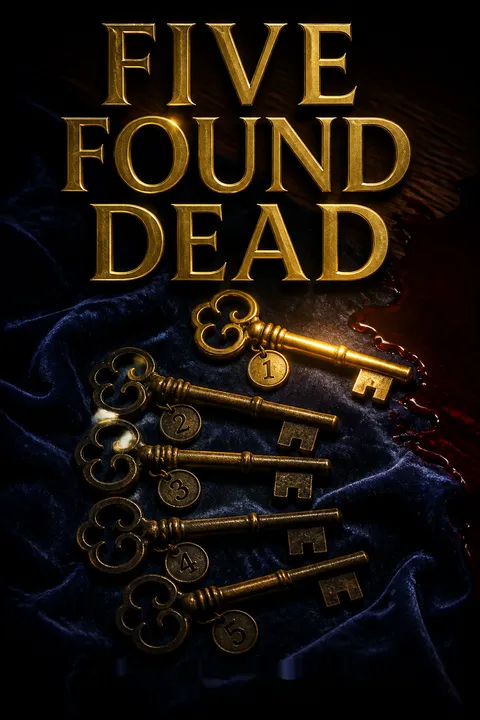


Plot Summary
A Second Beginning
Meredith Penvale, a lawyer who has put her career aside to care for her twin brother, Joe, boards the Orient Express with him in Paris. Joe has survived cancer treatment, but he has stopped writing, and Meredith hopes the trip will return him to his work as well as celebrate his recovery.
Their old closeness is tested by the illness they have just endured: she watches over him, while he hides how much the diagnosis still frightens him.
They meet their steward, Maxim, and the courteous French passenger Napoleon Duplantier, and are joined by Felix Shannon and Benjamin Herder, young Australian podcasters who once interviewed Joe. A call to their mother ends with her claiming a new illness, a familiar family absurdity that Joe turns into material for a novel.
The journey begins as a recovery ritual, but the twins arrive carrying different definitions of what recovery should mean. Meredith equates Joe's return to writing with proof that life is moving forward; Joe is less certain that talent will survive the experience that nearly ended his life. Her care is loving, yet it also risks making his future an extension of her vigilance. His joking about their mother offers a glimpse of his defense: humor lets him handle fear without pretending it never existed. The train promises inspiration, but it also exposes the question Meredith has postponed: what does she want when Joe no longer needs her constant attention?
Suspects Over Champagne
At dinner, Joe and Meredith meet Abigay Williams, a Jamaican-born detective inspector on holiday, and learn that Duplantier is a retired French policeman. The two elderly sisters, Clarice and Penelope Mayfield, and Irish couple Siobhan and Noel Ferguson add further color to the crowded passenger list.
Their joking guesses about who might be a murderer make the train feel like a mystery assembled for their amusement. In the bar, Joe befriends the widowed Duchess of Kinross, Elle Baird, while Meredith finds herself drawn to Duplantier's quiet manner.
She admits she no longer knows whether she wants to return to law. Back in their cabin, Joe begins writing a novel set aboard the train, where old detective stories haunt a new one. He fears illness once made his writing possible; Meredith tells him his skill does not depend on dying.
The dinner party converts strangers into potential characters before it converts them into suspects. Their playful casting of one another is a form of control: by turning danger into a story, they can enjoy the train's theatrical atmosphere without confronting its real vulnerabilities. Joe's manuscript makes that instinct explicit, treating inherited fiction as part of the present rather than as harmless decoration. Meredith's conversation with Duplantier, meanwhile, opens a quieter mystery about her identity. She has been defined by professional ambition and by caring for Joe; the trip gives her a first chance to imagine herself outside both roles.
The Bloody Neighbor
The next morning, Clarice and Penelope explain that their Lower Slaughter civic society hired them to recover money stolen by their former lodger, Gregory Harrington. They believe he is traveling on the train under another name and intend to confront him themselves.
The sisters also report that passengers in the rear carriages have tested positive for a dangerous new COVID strain and are being quarantined. Meredith objects to confining sick people, but the train continues toward Venice.
When Maxim opens the cabin beside the Penvales' and finds it splashed with blood, there is no occupant, only a red duffel bag and the wreckage of a violent struggle. The passenger was registered as Gregory Blackwell. Joe realizes the locked cabin is now a crime scene, and the missing man may be either victim or killer.
The sisters' apparently quaint pursuit gives the bloodshed a motive before it gives it a victim. Their story is plausible enough to guide suspicion, but their certainty about a man they have not recently seen is already a warning that the facts may be less stable than the performance. The quarantine adds a second kind of danger, one that is invisible and collective rather than confined to a bloody room. Meredith responds to both crises through responsibility, wanting sick passengers treated humanely; Joe responds through narrative pattern, seeing the locked cabin as a puzzle. Their instincts will complement one another, but neither is sufficient alone.
A Bodyless Crime Scene
Joe and Meredith cannot explain how anyone left Blackwell's cabin through its small window or latched door, and the passenger himself is nowhere to be found. Duplantier admits he knew Blackwell under another identity, Cheval, and had boarded because a police informant said the fugitive would be on the train.
He is retired and cannot arrest him, but his professional interest makes him an uneasy ally. Duplantier and the Penvales later inspect the cabin and find no body beneath the lower bunk.
The Duchess invites them to her suite, where American police consultant Bob Whitman appears. He reports that a steward assigned to guard the crime scene has been found stabbed in a restroom. The missing man has become a possible fugitive, and the first apparent witness has joined the list of victims.
The absent body turns the room into a machine for producing incompatible explanations. If Blackwell is dead, someone concealed him; if he escaped, the blood may be staged; if he is the killer, the cabin could belong to his victim. Duplantier's connection to Cheval supplies a useful lead while also making the retired policeman himself harder to read. The steward's murder shifts the danger from a single suspicious compartment to the whole train. In this setting, professional knowledge is not reassuring: every investigator may know more than they disclose, and every attempt to secure evidence creates another opportunity for violence.
A Jury of Passengers
Train manager Verner Fleischmann gathers passengers with investigative backgrounds and those connected to Blackwell, including the Penvales, Duplantier, Abigay, Whitman, Elle, and the Mayfields. Their introductions reveal a crowded assortment of law-enforcement experience, private investigation, and unexplained expertise.
The sisters insist Blackwell was their lodger, though neither has seen him recently; their descriptions of his appearance conflict. Joe and Meredith confirm that they saw a bearded man enter the neighboring cabin, but cannot verify his identity.
Fleischmann says the Orient Express must return to Paris because European borders have closed over the outbreak. The group agrees to help preserve the scene and consider what happened before French authorities take over. Meredith, a corporate lawyer rather than a criminal specialist, is asked to oversee evidence handling.
The improvised task force resembles the orderly detective gathering its members expect from fiction, but its authority is only borrowed from a stressed manager. Their credentials create an illusion of reliability even as personal interests, gaps in memory, and jurisdictional confusion weaken it. Meredith's appointment is telling: she is not chosen because she knows forensic procedure, but because everyone wants a neutral witness to make their actions feel legitimate. The group is thus both an investigative tool and a social performance. Each member needs the others to believe that reason remains in charge, even though no one can guarantee that the person leading the inquiry is innocent.
The Train Turns Back
While the investigators debate the evidence, Joe goes to find Maxim, who was sent to retrieve the passengers' passports from a safe. He discovers the steward dead in the kitchen carriage, stabbed in the neck, and tries to revive him before returning to the others.
Joe's bloody hands make him a suspect until he explains what happened and washes them under observation. The passengers learn that the passports are gone, too, suggesting the killer needed to erase or control identities. Outside, armed Italian soldiers block the train and force it to turn back toward Paris.
The quarantined passengers remain aboard, while the investigators conclude that the killer has no easy way to escape. They move their working headquarters to the bar and continue despite the train manager's growing fear for both staff and passengers.
Maxim's death gives the luxury train a human cost that its polished rituals had concealed. Joe's attempt to help him is morally immediate but evidentially ambiguous, and the investigators' suspicion shows how quickly compassion can be recast as guilt. The stolen passports extend the murderer's power beyond the bodies: without documents, the passengers are harder to identify and the authorities' eventual handover becomes less straightforward. Meanwhile, the military reversal makes the train both refuge and prison. The group chooses to keep investigating not because it has formal authority, but because the state's response has been to seal the train rather than enter it.
Clues Beneath the Blood
The investigators inspect Blackwell's cabin in pairs. They find no fingerprints in the blood, though the absence could mean the killer wore gloves. Clarice and Penelope notice that the red duffel bag seen at the initial discovery has disappeared, and that the lamp on the table has been moved after the room was found.
Asked to describe their former lodger, the sisters produce sharply different accounts, so Meredith draws two distinct faces. Their contradictions make the claim that Blackwell was Harrington less secure.
Joe and Meredith interview the podcasters, then visit chef Galichet to learn that Blackwell shared dinner with Paula Atkinson. Paula recalls his clumsiness, carefully arranged hair, and talk of a new start. The evidence suggests disguise, but does not yet reveal who is wearing it.
The investigation progresses through absences: missing prints, a vanished bag, and a person no witness can describe consistently. Each gap invites a story, but the novel resists letting any single explanation become fact too soon. Meredith's drawings turn memory into visible evidence, exposing how two confident witnesses can produce incompatible certainties. Paula's account adds an important bodily detail, clumsiness, while her impression of disguise hints that Blackwell's appearance was constructed. The scene also complicates the detective's usual faith in observation. On the Orient Express, people are not merely overlooked; they can alter the conditions under which they are seen.
Quarantine Breaks Open
As the train remains sealed, passengers in the quarantined carriages resist their confinement and several stewards are exposed while trying to contain them. The disturbance spills into the corridors, where frightened passengers begin to gather.
Meredith tells them that a breach may have increased the risk of contagion and urges them back into their cabins; the warning restores order long enough for Fleischmann to respond. The investigators debate abandoning the sick carriages to protect everyone else, but Fleischmann refuses to leave anyone behind.
He permits the group to continue its murder inquiry while he manages the outbreak and the train. Meredith and Joe identify Blackwell's dinner companion, and the group begins building a timeline, now facing the possibility that the disease crisis is being used to obscure the killer's movements.
The quarantine tests whether a community can cooperate when its members cannot verify the danger for themselves. Meredith's intervention works because she uses the same uncertainty that fuels panic, but directs it toward caution rather than flight. Her lawyerly instinct becomes practical leadership, not through command but by framing a credible consequence. The proposed abandonment of the sick carriages exposes the moral cost of treating passengers as a risk calculation. Fleischmann's refusal establishes a boundary the investigators cannot cross without changing what they are trying to protect. The virus and the murders now compete for attention, creating the conditions for a deliberate distraction.
A Body at Sixteen
Before the group can interview Paula formally, Felix and Ben confess that they have been using stolen steward uniforms and a key to search investigators' cabins. Joe confiscates the key and sends them back, but the boys remain convinced they can solve the case themselves.
Paula tells the Penvales that Blackwell dropped glasses and cutlery at dinner, seemed unusually vain, and spoke of starting over. When Joe and Meredith return, private investigator Buster Sartori accuses them of interfering with the inquiry and storms away.
Later, he is found stabbed outside the Penvales' cabin. The repeated attacks make the neighboring carriage feel like the center of a trap. During dinner, Joe also learns that Lesley Bocquet, a woman he has been avoiding, is aboard, but he refuses to explain their connection.
The podcasters' trespass mirrors the investigators' own amateur intrusion, but their youth and enthusiasm make the danger harder to recognize. They believe genre knowledge can substitute for judgment; Joe knows better, yet has himself encouraged their curiosity. Sartori's death follows a different form of overconfidence: he turns suspicion into accusation and leaves the group's protection. His murder also narrows the emotional distance between the case and the Penvales, since the body is found at their door. Joe's evasiveness about Lesley adds a private mystery to the public one, suggesting that his instinct to flee difficult information is not limited to crime scenes.
Gunfire at the Border
At the French border, floodlights and gunfire wake the train, and angry passengers confront Joe and Duplantier in the corridor. Siobhan and Noel Ferguson help break up the assault, then Siobhan swaps phones with Meredith so she can search her travel photographs for the bearded passenger.
As they return toward the bar, Joe connects the missing fingerprints and Blackwell's clumsiness to the effects of chemotherapy he experienced himself. Meredith remembers Frank, the bald, accident-prone barman with painted nails, and realizes he may be Blackwell in disguise.
They arrange to take drinks to an empty carriage and question him privately. Their theory is a dangerous leap, but the possibility that a cancer patient staged the bloody cabin gives Joe's own illness a new, unsettling relevance.
The border scene collapses the passengers' theatrical composure. They have been treating themselves as a civilized audience to a mystery, but fear turns that audience into a mob. Noel's intervention and Siobhan's practical phone exchange restore the possibility of trust through concrete acts rather than credentials. Joe's medical memory becomes investigative knowledge: the body he once experienced as a site of frightening side effects now supplies a way to interpret another person's disguise. This is a genuine reversal for him, but it is not triumphal. His illness has left him alert to vulnerability, and that insight may expose him and Meredith to a man they do not yet understand.
The Man Underneath
When Meredith asks whether he boarded as Gregory Blackwell, Frank panics and bolts from the carriage. Joe tackles him outside under the border guards' lights and drags him back inside.
Without his false mustache or accent, Frank admits he is Hugh Booby, a fraudster who collected blood from his own body, smeared it around cabin 16G, and hid beneath the bunk until he could escape as a steward. He says the COVID tests were switched to produce false positives, giving him a diversion while his pursuers believed he was dead.
Frank denies killing anyone and blames Duplantier and other people he cheated, including the Duchess, Ajeet Singh's sister, and Noel's clients. Meredith does not trust him, but leaves Joe guarding him while she goes to inform Fleischmann.
Frank's confession changes the meaning of the original crime scene without making him innocent. His staged blood and hidden body reveal a sophisticated performance designed to exploit both the train's mythology and its passengers' recent fear of contagion. Yet he frames deceit as reinvention, treating illness as a reason others should release him from accountability. Meredith's sympathy is real, but she recognizes that compassion can be manipulated. Joe's refusal to equate cancer with absolution is an important counterweight: survival may explain a person's desperation, but it cannot erase the harm he has done. Their decision to hold Frank rather than immediately trust or condemn him is morally unstable and necessary.
The Sisters Unmasked
On her way to find Fleischmann, Meredith discovers Felix and Ben dead in the Mayfields' cabin and sees Duplantier holding a pistol. She flees, but Clarice and Penelope lure her into a restroom, strike her, and try to stab her.
Duplantier intervenes; the sisters then seize Joe, and Clarice holds him at gunpoint until he disarms her and is stabbed in the thigh. Lesley arrives as a doctor and reveals she is Joe's oncologist, whom he had invited aboard, not a stalker bringing bad news.
In the final inquiry, Duplantier produces the sisters' passports, exposing their false ages, and Frank explains that they stole his duffel and killed the first steward. Clarice admits Penelope killed Sartori. The sisters are exposed as responsible for five murders and taken into custody.
The Mayfields' performance of harmless age is the case's sharpest indictment of the assumptions that shape perception. Their apparent frailty has been treated as proof of innocence, while their contradictory descriptions of Harrington were dismissed as ordinary forgetfulness. Meredith's attack makes the danger bodily and immediate, and her rescue depends on the very policeman she had just suspected. Joe's wound and Lesley's arrival bring separate forms of care into the crisis: his sister's protective vigilance and the oncologist's professional commitment. The sisters' arrest does not restore the passengers lost to their violence, but it exposes how a familiar social role can become a weapon when others mistake performance for character.
Paris After the Dead
The train reaches Gare de l'Est, where authorities take the survivors, the prisoners, and the five dead men from the Orient Express. Tests confirm that Frank's supposed outbreak was fabricated. Frank is handed to the police; Clarice and Penelope are separated, with Penelope taken by ambulance.
Joe sleeps beside the opening pages of his novel, and Meredith recognizes that his writing has returned without the need for impending death. She also confronts him about avoiding Lesley, only to learn that he mistook her arrival for evidence his cancer had returned.
Meredith's anger gives way to relief, though she refuses to excuse his fear-driven silence. She plans to visit Paris galleries and pursue sculpture while Joe writes. Duplantier invites her to dinner, and the twins agree to remain in Paris as the investigation continues.
The ending refuses to let survival cancel grief. The five bodies on the platform make the cost of Frank's scheme and the Mayfields' violence visible, while Joe's manuscript offers only a beginning, not a cure for loss. Meredith's future is no longer organized solely around protecting her brother: she can stay near him by choice while pursuing sculpture on her own terms. Joe's mistake about Lesley reveals how illness has trained him to treat medical contact as a forecast of death, even after good news. Their reconciliation is therefore not a return to the old arrangement. It is a more honest version of closeness, one in which fear can be named without being allowed to dictate both their lives.
Epilogue
The final chapter presents a recorded episode of Death of the Reader, uploaded as a memorial to Felix Shannon and Benjamin Herder. In the recording, the podcasters describe the Orient Express, their growing fascination with the mystery, and their decision to investigate the Bar Council by searching cabins.
Their confident theories about Duplantier and Hugh Booby reveal how badly they misunderstood the danger, even as they expose details that matter to the case. The episode ends as they set out to continue their investigation, preserving their curiosity and bravado in the moment before they are killed.
The posthumous recording gives the podcasters the final narrative voice, but not the final authority. Their account preserves their irreverence and genre fluency while exposing the gap between interpreting a mystery and surviving one. They repeatedly mistake literary patterns for reliable evidence, yet their recordings also leave clues that the older investigators overlook. This tension makes the episode more than a memorial: it is an archive of youthful confidence, flawed inference, and genuine courage. Their voices outlast their bodies, but the recording cannot protect them or correct their errors. It can only let their friends and listeners remember how they approached the story.
Analysis
The novel uses the Orient Express as more than a picturesque murder setting. Its literary reputation gives the passengers a script: they expect a gathering of suspects, an observant detective, and a final explanation delivered in civilized surroundings. That script is comforting until actual violence breaks it. Joe's reflections on fictional ghosts sharpen the book's central tension: inherited stories can help people recognize patterns, but they can also make them mistake performance for truth. The passengers repeatedly interpret one another through familiar roles, from the harmless elderly sisters to the glamorous duchess and the theatrical private eye. Those assumptions are not neutral. They determine who receives scrutiny and who is protected by social expectations.
The counterfeit outbreak turns that question of interpretation outward. Frank exploits public fear, but the passengers' responses are also shaped by a shared memory of real illness. The quarantine makes the train a miniature political community, where decisions about safety, mobility, and abandonment must be made without reliable information. Fleischmann's refusal to leave the sick behind offers an ethical standard against the group's impulse to reduce people to risks. Meredith's intervention shows that persuasion can be a form of care, while Joe's deduction makes his medical experience useful without converting suffering into a superpower.
At the emotional center, the twins must renegotiate love after illness. Meredith's caretaking has been necessary, but it has also delayed her own ambitions; Joe wants her freedom even as he remains frightened of losing his renewed life. Their conflict over Lesley reveals how easily fear disguises itself as protection. The ending does not resolve grief by declaring the journey worthwhile. It leaves five deaths visible, then allows the siblings to imagine different futures beside one another. Recovery, here, means neither forgetting nor returning to the past. It means carrying what happened without letting it decide every next step.
Review Summary
Five Found Dead is a modern, Christie-inspired murder mystery set on the Orient Express, receiving mostly positive reviews averaging 3.37 stars. Readers praise its atmospheric setting, eccentric characters, and entertaining plot, though many note its implausibility and chaotic pacing. The book draws clear parallels to Murder on the Orient Express, featuring a Poirot-like French detective and Christie-esque character types. A COVID subplot divides opinion, with some finding it clever and others off-putting. Most readers recommend it for mystery lovers willing to suspend disbelief and enjoy a fun, tongue-in-cheek ride.
People Also Read









Characters
Meredith Penvale
The sister seeking herselfMeredith is an Australian lawyer and Joe's twin, but she has spent much of the recent past measuring her days by his health. She is observant, practical, and protective, with a strong instinct for fairness that extends from the sick passengers to people she suspects of wrongdoing. Her habit of managing crises can look like selflessness, though it also delays the question of what she wants apart from being useful. The train gives her a chance to test her own judgment, first as a witness and later as an investigator. She is drawn to visual art and sculpture, interests that make her future larger than her former legal career or her role as Joe's caretaker.
Joe Penvale
The novelist back from illnessJoe is Meredith's twin brother, an Australian novelist whose debut brought sudden fame. He combines rural directness, comic irreverence, and a restless appetite for stories, noticing people as potential characters even when he is trying to relax. Cancer treatment has altered his body and unsettled his faith in his own creativity. He dislikes being treated as fragile, yet his jokes and evasions sometimes conceal fear rather than overcome it. His bond with Meredith is affectionate and candid, sharpened by years of sibling teasing and a recent period in which she put her own life on hold. He wants her to reclaim that life, even as he still relies on her judgment.
Napoleon Duplantier
The retired French policemanDuplantier is a young-looking former gendarme traveling alone with a walking stick and the manners of an old-world gentleman. His measured speech and dry humor make him an easy companion for the Penvales, while his experience gives him an instinctive feel for criminal behavior. Retirement has not severed his connection to police work; he remains alert to people and details others miss. He is protective without being sentimental and prefers careful observation to public display. Meredith is intrigued by his reserve, while Joe respects his knowledge but remains wary of what a trained investigator may choose not to share.
Frank
The quick-handed barmanFrank works behind the Orient Express bar, where his theatrical service, elaborate mustache, and painted nails make him memorable to the Penvales. He is socially nimble and good at making strangers feel they have been noticed, but his conspicuous clumsiness complicates that polished charm. He presents himself as an easygoing member of the crew, and his eagerness to entertain helps him blend into the train's routines. The passengers encounter him first as part of the service staff, a position that lets him hear their talk and move among them with unusual ease.
Clarice Mayfield
The formidable elder sisterClarice travels with her sister Penelope and presents herself as a genteel, sometimes frail woman from the English village of Lower Slaughter. She is proud of their local civic life, protective of her sister, and quick to correct anyone who underestimates them. Her sharpness is initially disguised by old-fashioned manners and an interest in village gossip. Clarice expects other people to accept the authority of age and respectability, and she is skilled at turning social expectations to her advantage. Her relationship with Penelope is intimate and long-standing, shaped by loyalty, shared schemes, and the familiar tensions of an elder sibling who believes she must manage the pair.
Penelope Mayfield
The sharp-eyed younger sisterPenelope is Clarice's younger sister, a poetry enthusiast with a lively interest in local affairs and other people's weaknesses. She appears less forceful than Clarice, but her quick wit and readiness to challenge a conversation give her a will of her own. The sisters describe their shared history in a way that makes them seem inseparable, though Penelope does not always accept Clarice's version of events. Her pride in Lower Slaughter and its civic life gives her a sense of obligation beyond herself. She is alert to how outsiders perceive her and her sister, and she responds sharply when their competence is questioned.
Abigay Williams
The detective on holidayAbigay is a Jamaican-born detective inspector now living in Newcastle, Australia. After more than two decades in the police, she has taken a trip she feels she has earned, approaching the train with practical humor rather than reverence. She reads people quickly, asks direct questions, and is comfortable challenging those who mistake confidence for competence. Her warmth does not blunt her professional instincts; she can offer comfort one moment and demand a precise account the next. Abigay values service and clear thinking, but she also knows that a holiday cannot make her stop noticing danger.
Elle Baird
The resourceful duchessElle is the widowed Duchess of Kinross, a glamorous Scottish traveler who takes the Orient Express each year on her way to a yoga retreat in Venice. She shifts easily between a broad Scots manner and polished aristocratic poise, using humor, confidence, and physical ease to guide a room. Her interest in yoga is sincere, though she is not above using it to defuse tension or gently tease a friend. Elle is socially perceptive and generous with her space, especially when other passengers feel vulnerable. She has a history beyond her title, and she dislikes being reduced to either a decorative noblewoman or a convenient suspect.
Bob Whitman
The Chicago police consultantWhitman is a veteran Chicago police officer and FBI consultant traveling in a Grand Suite. He is brusque, watchful, and accustomed to taking charge, qualities that can read as suspicion when everyone aboard is already frightened. His friendship with Elle is close enough to provoke speculation, but he does not explain their arrangements to strangers. He values procedure and direct evidence, yet can become impatient with people who challenge his authority. Beneath the hard manner is a protective streak, particularly toward Elle and those he believes are in danger.
Felix Shannon
The restless mystery podcasterFelix, known as Flex, is one half of the Australian podcast Death of the Reader and a university student devoted to crime fiction. He is curious, politically idealistic, and quick to turn a new setting into a subject for investigation. The Orient Express fascinates him not only as a luxury train but as a place shaped by stories about class and privilege. His enthusiasm can outrun his judgment, especially when he sees an opportunity to collect material firsthand. Felix's partnership with Benjamin is built on shared scholarship, banter, and a willingness to treat the world as a mystery worth exploring.
Benjamin Herder
The eager podcast partnerBenjamin, called Herds, co-hosts Death of the Reader with Felix Shannon. He is sociable and excitable, with a deep knowledge of detective fiction and a tendency to see the world through the patterns of books he loves. Ben enjoys performance, from mock horror to an enthusiastic interview, and helps turn the podcast into a shared adventure. His friendship with Felix is affectionate and collaborative: each encourages the other, even when their ideas become reckless. Ben is drawn to the possibility of being part of a real mystery, and his excitement makes it difficult for him to recognize when curiosity has become risk.
Buster Sartori
The self-appointed investigatorSartori is a Los Angeles private investigator who dresses for the part and readily promotes his professional credentials. He wants to lead the inquiry, partly because he believes his experience and Italian heritage make him suited to the case. His confidence often slides into bluster, and he takes disagreement personally. Beneath his theatrical manner is a man carrying a recent divorce and the disappointment of a trip he had planned as a romantic gesture. Sartori is eager to be recognized as a capable detective, but his need to control how others see him makes collaboration difficult.
Siobhan Ferguson
The travel writer with a cameraSiobhan is an Irish travel writer and popular photographer whose attention is drawn to the train's visual details. She documents meals, interiors, and passing moments with the discipline of someone who knows that a journey is also a story told afterward. Her warmth makes the Penvales feel welcome, and she is practical enough to offer her photographs when they may help the investigation. Siobhan is less interested in crime than her husband Noel, but she understands his motives and can temper his eagerness. She balances observation with compassion, refusing to treat other passengers as merely picturesque subjects.
Noel Ferguson
The train-loving husbandNoel is Siobhan's Irish husband, a finance professional and enthusiastic train traveler. He is proud of his wife's writing but prefers to stay outside her photographs. His calm, understated manner conceals physical confidence and practical ability, which become useful when passengers turn on one another. Noel is less interested in attention than in supporting Siobhan and following through on a personal grievance. He likes the Orient Express for its machinery and history, but the journey tests whether his wish for justice can coexist with his wife's desire for an uncomplicated holiday.
Lesley Bocquet
Joe's oncologist and doctorLesley is an oncologist on the train and one of the medical professionals connected to Joe's treatment. She is direct, capable, and accustomed to working with patients whose fears shape how they interpret every medical encounter. Her manner is professional without being cold; she can tend an injury while addressing the person beneath it. Joe's history with her is important to him, though he does not explain it clearly to Meredith at first. Lesley understands that care sometimes means allowing a patient to reclaim ordinary life rather than making illness the center of every conversation.
Maxim
The attentive train stewardMaxim is the Penvales' steward, a multilingual professional who takes pride in making passengers comfortable. He handles luggage, passports, meals, and cabin arrangements with unshowy efficiency. His kindness is personal rather than mechanical: he notices what guests need and tries to reassure them even when the train's circumstances become frightening. Maxim's idea of service is grounded in loyalty to his colleagues as well as to the passengers. The Penvales quickly come to trust him, and his presence helps make the Orient Express feel like a community rather than a moving hotel.
Verner Fleischmann
The train's burdened managerFleischmann manages the Orient Express with formal courtesy and a deep concern for passenger comfort. He knows the train's routines and history, but an emergency forces him to improvise beyond the usual obligations of his role. He must balance the privacy and safety of passengers with the demands of an investigation and a quarantine. His instinct is to keep the train functioning without pretending that everything is normal. As pressure mounts, he remains attentive to staff as well as guests, a leader who understands that service has human limits.
Paula Atkinson
The dinner witnessPaula is a solo traveler staying in the Paris Suite. She is talkative, curious, and fond of a drink, and she turns an unexpected visit into a lively account of the stranger who shared her dinner table. Paula notices mannerisms and appearance, though her conclusions are colored by her own ideas about vanity and romance. Her willingness to speak gives the Penvales useful firsthand information. She is not a trained investigator, but her memory of small social details proves more revealing than the formal observations of some professionals.
Aled Rees
The terrorism specialistRees is a reserved Welsh passenger with experience in domestic and international terrorism. He speaks economically and tends to assess events in terms of security and likely public reaction. His calm manner can make him seem detached, but he is alert to how confinement and uncertainty may turn into panic. He does not claim police jurisdiction and is often more cautious than the group's louder investigators. Rees's expertise becomes especially relevant when the train's connection to the outside world appears compromised.
Ajeet Singh
The Scotland Yard investigatorSingh is a Scotland Yard investigator whose work includes fraud cases. He is composed, methodical, and attentive to jurisdiction, preferring a measured question to a dramatic theory. His background gives him a direct interest in the passenger whose identity is uncertain, but he does not initially reveal every personal connection. Singh's restraint helps counter the group's more theatrical impulses. He is willing to cooperate across professional boundaries when the train's unusual circumstances make ordinary procedure impossible.
Plot Devices
The Orient Express
A moving locked roomThe train concentrates strangers, secrets, and danger within a narrow route across national borders. Its celebrated luxury encourages passengers to behave as if they have entered a detective story, while its compartment doors, service corridors, kitchens, and restrooms create practical places to hide or move unseen. Once the Italian and French authorities prevent the train from stopping normally, the setting becomes a prison as well as a stage. The familiar literary history shapes how Joe, the podcasters, and the other passengers interpret events, sometimes helping them notice patterns and sometimes leading them to mistake fiction for evidence.
The Bloody Empty Cabin
A bodyless locked-room puzzleThe blood-splattered cabin beside the Penvales' room supplies the novel's central mystery: the door was latched, the window is too small for an easy escape, and the passenger is missing. The red duffel disappears after the scene is discovered, while the room yields no useful fingerprints. Each clue supports more than one explanation, allowing the investigators to mistake a staged death for a murder and to debate whether Blackwell was victim or killer. The cabin's design makes the puzzle physical, but its real function is to show how a convincing story can be built from incomplete evidence.
The False Outbreak
A manufactured public panicPositive tests for a dangerous COVID strain cause the rear carriages to be quarantined and prompt Italy to close its border to the train. The resulting fear restricts movement, absorbs the manager's attention, and turns passengers against one another. Because the pandemic remains a recent collective trauma, the rumor feels immediately credible, even before anyone can verify it. The quarantine is not simply an obstacle to the murder inquiry; it is a way to exploit people's memory of real danger. It also forces the characters to decide how much risk they owe to strangers who have been shut away from them.
Chemotherapy Fingerprints
A medical clue exposes disguiseJoe remembers that his own chemotherapy temporarily erased his fingerprints, damaged his nails, and made objects slip from his hands. Those effects give him a concrete explanation for the empty fingerprint search, Blackwell's clumsiness at dinner, and the barman's painted nails. The clue is unusually intimate: knowledge drawn from Joe's frightening treatment becomes a tool for reading another person's body. It also keeps the inference uncertain until Meredith connects it to Frank's appearance and behavior. The device makes illness materially important to the plot without treating it as mystical insight or as an automatic excuse for wrongdoing.
The Podcasters' Recording
A posthumous counter-narrativeFelix and Ben record their observations of the train and their own investigation, including theories about the Bar Council and the people they search. Their recordings show how deeply crime fiction shapes their expectations, but they also preserve details and suspicions the central group may not have heard. Presented in the final chapter as a memorial episode, the audio lets the young men narrate their own choices after their deaths. It is both evidence of their reckless confidence and a record of their genuine curiosity. Their voices complicate the novel's interest in who gets to tell a mystery and who pays for pursuing it.
Download PDF
Download EPUB
.epub digital book format is ideal for reading ebooks on phones, tablets, and e-readers.








