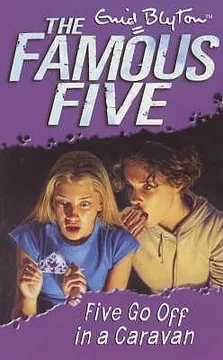


Plot Summary
Circus Roadside Idea
At the start of summer, Julian, his brother Dick, his sister Anne, their cousin George, and George’s dog Timmy cannot agree on a holiday. A circus procession rolls past their garden, carrying animals and brightly painted caravans. Nobby, a circus boy travelling with his bad-tempered Uncle Dan, explains that the performers will rest beside a lake in the hills.
George seizes on the idea of hiring caravans and travelling there themselves. Their mother agrees to ask their father, who approves the trip on condition that they take two caravans and send a postcard each day. Julian is put in charge, but George insists Timmy is a guardian too. The holiday now has a destination, a plan, and a promise of independence.
The circus turns a vague wish for freedom into a practical possibility: the children see a way to travel without adults, but their independence still depends on borrowed equipment and parental trust. Their different ideas of responsibility appear immediately. Julian accepts command, George resists being managed, and Anne imagines the domestic work that will make the adventure possible. Nobby’s brief appearance also places another kind of childhood beside theirs, one shaped by travel and adult authority rather than school and family security.
Two Caravans, Two Horses
Two modern caravans arrive, one red and one green, complete with bunks, cooking gear, and water tanks. The children inspect every cupboard before borrowing Trotter, a black horse, to accompany their own pony, Dobby. Julian and Dick take the green caravan; George and Anne take the red one, with Timmy settling into his chosen corner.
They set off toward the hills, following Julian’s map and stopping at farms for permission to camp and buy food. Anne takes charge of meals, learning as she goes, while the others care for the horses. On their first night, a sudden thump against the girls’ caravan frightens them. The culprit is Dobby, wandering over to investigate, and the children settle back into the simple pleasures of their journey.
Caravanning makes competence visible in small tasks. Julian’s map-reading, Anne’s cooking, and the children’s care of the horses turn parental confidence into lived responsibility. The first scare ends harmlessly, giving the trip a gentle rhythm before the real danger arrives. Domestic routines are not a pause in the adventure: cooking, washing, and choosing a campsite create the secure base from which the children can take risks. Timmy’s presence reinforces that safety here is built through attention and companionship, not locks alone.
Nobby at the Circus
After several days on the road, the children reach Merran Lake, swim in its clear water, and spot smoke from the circus camp. Nobby recognizes them and introduces Pongo, a mischievous chimpanzee who shakes hands with George and tries to pick Julian’s pocket.
Timmy gradually accepts him, and the children meet Nobby’s performing dogs, Barker and Growler. The welcome turns sour when Lou, the circus acrobat, kicks at Timmy and orders the visitors away. George stands up for her dog, and Nobby warns them that Lou and Tiger Dan can be dangerous.
That night, the two men appear beside the caravans and threaten the children. Timmy tears Lou’s trouser leg, forcing both men to retreat, but their hostility makes the circus camp feel less like a curiosity and more like a threat.
The first meeting gives the children a vivid contrast between Nobby’s warmth and the men who control him. Pongo’s playful boundary-crossing is treated as funny, while Lou’s kick at Timmy exposes how quickly adult power can become coercive. George’s fierce response is not merely bravado: Timmy is the relationship in which she feels most securely understood. The nighttime confrontation changes the trip’s emotional register. The children have chosen to approach the circus, but they now have to decide how to remain curious without ignoring danger.
The Hollow Above Merran
The children leave the camp for the hills and find a sheltered hollow above the lake, after a friendly farmer and his wife offer food and a place for the horses. Later, they meet Nobby swimming with Barker and Growler. He admits that Tiger Dan is not really his uncle: after Nobby’s parents died, Dan took responsibility for him and the money they left, then kept him under his control.
Nobby has never attended school and hopes to work with horses someday. His bruises show that Dan has punished him for befriending the children. When they encounter Dan and Lou on the hillside, the men abruptly pretend to welcome the friendship and invite the children back to camp. Julian distrusts the change, so the group stays in its own hollow.
Nobby’s account reframes the circus boy from an entertaining guide into a child with limited choices. His horse-handling skill and lively confidence coexist with educational deprivation and fear of punishment. The children’s comfortable holiday depends on adult permission and supplies, while Nobby’s life is governed by an adult who has made himself his guardian. Julian’s suspicion of Dan’s sudden friendliness shows his growing willingness to judge conduct rather than manners. Their decision to stay put protects their independence, but also keeps them close to the mystery.
A Poisoned Supper
Nobby signals that the children may visit the circus, and he leads them through a day among the animals. They play cricket with Old Lady the elephant, watch the performing dogs, and see Nobby ride difficult horses with startling skill.
Pongo’s antics briefly release Lucilla’s monkeys, who return to their keeper when she calls them. The outing reveals both the circus’s pleasures and its rough edges: Nobby’s affection for the animals stands out amid the camp’s disorder. When the children return to their caravans, they find Barker eating raw meat.
The dog soon collapses, and Nobby realizes it is poisoned. Timmy had refused to touch it. The children suspect Lou and Tiger Dan meant the bait for Timmy, making clear that their earlier threats have become an attempt to harm him.
The cheerful animal tour deepens the children’s attachment to the circus community, especially Nobby, whose practical knowledge gives him dignity beyond his lack of schooling. Lucilla’s return of the monkeys offers a counterpoint to Dan’s control: her bond with them is based on familiarity and care. The poisoned meat destroys the day’s ease. Because Barker eats what Timmy refuses, the danger becomes concrete and morally urgent. The children now understand that their presence, and their refusal to obey the men, may put animals and people around them at risk.
Nobby's Rescue, Hidden Hole
The next morning, Nobby and Pongo wave red cloths from a boat, warning the children away from the camp. Julian has the others pretend to go into town, then slips back to hide on a caravan roof. Lou and Tiger Dan arrive and struggle beneath the van, apparently trying to reach something hidden there.
Nobby comes up the hill and finds them; when they accuse him of spying and threaten him, Pongo attacks, giving Julian time to join him. After the men flee, the children pull away the caravan and uncover boards concealed under heather.
Beneath them lies a shaft into the hillside. Julian and Nobby briefly descend, but Julian’s torch fails in the darkness, forcing them back. The hidden entrance explains why the men wanted the hollow cleared, though not yet what lies below.
The red signal makes Nobby an active partner in the children’s investigation, even while his position at the camp remains precarious. Julian’s rooftop hiding place is a practical risk: he waits alone, without Timmy, because the group needs evidence more than reassurance. Pongo’s intervention reverses the usual hierarchy between human and animal. He protects Nobby when the adults who claim authority over the boy are attacking him. The concealed shaft turns suspicion into a physical puzzle, but the failing torch also makes clear that discovery without preparation can become another danger.
Gold Beneath the Heather
The following day, Lou and Tiger Dan come searching for Nobby and Pongo, but Pongo drives them off before they can reach the caravans. After obtaining stronger torches, the children return to the shaft with Nobby and Timmy; Pongo stays tied to a caravan wheel because he is frightened of the darkness.
Beyond a vast cave with glittering walls, they find a rocky shelf packed with gold plate, jewellery, silver, and valuable china. Julian recognizes that the circus men have been hiding stolen goods underground.
They explore farther, following an old watercourse, and return to find the entrance blocked by boards and a caravan. Lou and Dan have trapped them inside. Pongo, struck unconscious outside, cannot answer their calls. With their way out sealed, the children must find another route through the caves.
The treasure discovery gives the men’s earlier evasions a coherent motive: the hollow is valuable because it conceals evidence and goods. The children’s curiosity has paid off, but their choice to explore beyond the cache costs them their exit. Pongo’s absence sharpens the danger because Nobby’s closest companion is outside and injured, while the group inside has limited light and supplies. The cave’s beauty does not make it safe; the glittering walls and the stolen objects occupy the same space, making wonder and criminal concealment inseparable.
A River Without Exit
The children try following the underground stream toward daylight, but the current grows too deep and strong, so they turn back. Pongo eventually finds his way into the caves, injured but alive; the note Dick ties around his neck does not reach anyone outside.
Lou enters with a gun while Tiger Dan carries sacks for the stolen goods. Pongo attacks Dan, and Dick uses the confusion to slip away through the entrance passage. Outside, Dick replaces the boards and weighs them down with stones, trapping the criminals below, then races to the Mackie farm to telephone the police.
Meanwhile, Lou forces the remaining children toward the cache. Julian and George resist, and a struggle in the dark begins when George knocks Lou’s torch away. The children still face armed men until help arrives.
The failed stream escape forces the children to confront the limits of courage: daylight is visible, but reaching it would risk being swept away. Pongo’s return restores hope without solving the problem, since he cannot carry the written message to safety. Dick’s decision to block the entrance reverses the trap: he risks leaving his friends underground so the thieves cannot escape with the treasure. This is not a flawless plan, but a time-buying act of judgment. The darkness then redistributes power, making Lou’s weapon dangerous while also allowing Timmy and Pongo to attack unseen.
Police Through the Stream
Lou fires blindly in the dark, but the bullet misses Timmy. The dog knocks Lou down, while Pongo drives Tiger Dan away from the others. Police officers emerge from the water passage with Dick, who reached the Mackies and called for help.
They arrest Lou and Dan, then follow Julian through the caves to recover the remaining valuables. Outside, the children learn that the men have been wanted for burglaries for years and planned to take their haul abroad.
The police confirm that the cavern system offered a hidden, dry storage place, and that the circus men repeatedly used it to evade searches. The children are safe, and the stolen goods are recovered. The case is solved not by force alone, but by their combined observation, courage, and quick decisions.
The rescue gathers the story’s separate forms of competence into one outcome. Timmy and Pongo can physically interrupt violence, while Dick’s knowledge of the farm telephone brings lawful help; Julian’s observations identify the route and the cache. The police do not erase the children’s agency, but give it a public consequence the children could not achieve alone. The criminals’ plan depended on keeping movement, secrecy, and intimidation under their control. Once the children expose the hiding place and summon witnesses, those advantages collapse.
Nobby Finds His Stable
The morning after the rescue, the Mackies bring food, and the Inspector explains that Tiger Dan and Lou had planned to sell the stolen goods abroad. A telegram from Julian’s father orders the children home, ending their stay sooner than expected.
Julian learns that Farmer Mackie needs help with his horses and asks him to consider Nobby, who has long wanted to work with them. The farmer offers Nobby a trial and a place to live. Nobby returns from camp with his belongings, Barker, and Growler; Barker has survived after Lucilla treated him.
Before the caravans leave, the children spend one last day swimming and sharing meals with Nobby. They say goodbye to Pongo, who must remain with the circus, then wave to Nobby and the Mackies as they set off home.
The resolution answers the trip’s opening wish for a holiday with something more consequential: Nobby gains a credible chance to shape his own working life. Julian’s offer of help grows naturally from what he has learned about Nobby’s skill and ambitions. The ending does not pretend that every bond can continue; Pongo belongs to the circus, while Nobby moves toward the farm. Their farewells acknowledge that friendship can matter without keeping everyone together. The caravans return the children to their family, but the journey has widened their sense of what responsibility can mean.
Analysis
The book builds its adventure out of a conflict between chosen independence and imposed dependence. The children gain room to govern themselves through the caravans, but that freedom is possible because their parents trust Julian and because the farmers supply food and safe ground. Nobby lives inside a different arrangement: he is skilled, funny, and deeply competent with animals, yet Tiger Dan’s authority restricts his education, movement, and relationships. The children’s friendship gives Nobby a place to be treated as an equal, though it cannot immediately remove his vulnerability.
Animals are not decorative signs of country life. Timmy’s refusal of poisoned meat, Pongo’s loyalty to Nobby, and Lucilla’s ability to gather the escaped monkeys make attention and attachment consequential. The animals perceive, choose, and act in ways that change the human plot. Their bonds also offer alternatives to the coercive relationships represented by Dan and Lou. Pongo protects Nobby where the supposed guardian harms him, while Timmy’s trust in George gives her a stable source of companionship.
The hidden cave turns the children’s curiosity into a test of judgment. They find the truth by observing details the criminals try to conceal, but discovery alone is not enough: Julian’s investigation, Dick’s improvised escape, George’s courage, Anne’s persistence, and the dogs’ intervention each matter at a different point. The resolution therefore avoids making bravery a single heroic trait. It presents successful action as collective, practical, and dependent on noticing what others miss. Nobby’s chance to work with horses gives the ending a social dimension: the children do not simply solve a crime, they help create a credible alternative for a boy whose abilities have been used without giving him much choice.
Review Summary
Five Go Off in a Caravan is well-loved for its adventurous charm and nostalgic appeal, earning an average of 4 stars. Readers enjoy the idyllic caravan setting, the circus backdrop, and memorable characters like Nobby and Pongo the chimpanzee. Many appreciate it as a light, exciting read for all ages, though some note dated elements and implausible parental absence. A few reviewers flag content warnings for child and animal abuse, while others humorously highlight the children's extraordinary independence and Blyton's trademark obsession with food.
Characters
Julian
The responsible eldestJulian is the eldest of the four children and takes charge of planning, maps, money, and safety. He wants the others to trust his judgment, and he often measures himself against that responsibility. His politeness helps him win cooperation from farmers, while his willingness to investigate can draw the group into danger. Julian does not confuse leadership with being fearless: he doubts his decisions, worries about the others, and revises his plans when circumstances change. His relationship with Dick is companionable but competitive, and he tries to protect Anne without dismissing her resolve. He represents practical authority learned through action rather than simply granted by age.
Dick
The quick-thinking brotherDick is Julian’s younger brother, quick with jokes and often eager for excitement. He balances Julian’s caution with curiosity, sometimes pressing for investigation before the danger is fully clear. Beneath his teasing manner, Dick notices how people behave and can improvise when a plan fails. He cares for Anne and George without treating them as incapable, and his friendship with Nobby develops through shared humor and respect. Dick’s confidence is social as well as physical: he can challenge an intimidating adult and still think practically about what the group needs next.
George
Timmy's fierce protectorGeorge, whose given name is Georgina, is Julian and Dick’s cousin and insists on being called George. Independent, blunt, and uncomfortable when others insist on treating her as delicate, she wants to be judged by what she can do. Her bond with Timmy is especially strong; she understands his behavior and expects him to protect those she loves. George’s courage can become impulsive, particularly when someone threatens the dog or her friends, but it is rooted in loyalty rather than a need to dominate. She argues with Julian when she thinks caution is turning into surrender, yet she is capable of adapting when the group’s safety requires it.
Anne
The capable youngestAnne is the youngest of the four and often notices the comforts and needs that the older children overlook. She takes pride in cooking, keeping the caravans orderly, and making guests feel welcome. Her practical care is not passive: it gives the group food, routine, and a sense of home while they travel. Anne is more easily frightened than George or the boys, and she openly admits that she would prefer a peaceful holiday. Yet when danger arrives, she refuses to be excluded from the group. Her tenderness toward animals and Nobby helps the children see vulnerable people as companions rather than curiosities.
Timmy
The loyal watchdogTimmy is George’s large, intelligent dog and a trusted companion to all four children. He guards the caravans, reads danger through sound and scent, and responds closely to George’s signals. His strength makes him a formidable protector, but the story also shows his patience and sociability as he befriends Trotter, Barker, Growler, and eventually Pongo. Timmy cannot interpret every human scheme, yet his alertness repeatedly gives the children time to act. George’s fierce attachment to him reflects their mutual trust: she relies on his instincts, and he looks to her for direction.
Nobby
The circus boy with horsesNobby is a circus boy who performs cartwheels, manages dogs, and handles horses with unusual skill. His humor and easy affection make him a natural companion for the children, though he is wary of adults who have power over him. Orphaned young and raised under Tiger Dan’s control, he has had little schooling and limited freedom. He is especially devoted to Pongo and his dogs, and his fascination with horses points toward the kind of life he hopes to build. Nobby’s lively manner should not obscure his vulnerability; he has learned to survive by reading moods, hiding fear, and finding brief spaces in which to choose for himself.
Pongo
The mischievous chimpanzeePongo is a performing chimpanzee who lives among the circus animals and is especially attached to Nobby. Curious, playful, and fond of stealing objects, he can turn an ordinary visit into comic disorder. He also forms unexpected friendships with the children and their animals. Pongo’s physical strength and close attention to Nobby give him a protective role, though he acts by instinct rather than by the children’s plans. The story presents him as a social being with clear attachments, not merely an attraction in a show. His behavior repeatedly reminds the children that intelligence and loyalty can appear in forms they do not initially understand.
Tiger Dan
The volatile clownTiger Dan is the circus’s chief clown and Nobby’s supposed uncle, known for his temper outside the ring. He controls Nobby through fear and resents the children’s friendship with the boy. His public role as a performer contrasts with his private severity, making it difficult for the children to reconcile the clown’s work with the man they meet. Dan is forceful and suspicious, and he expects others to obey before they understand his reasons. His relationship with Lou depends on shared secrecy and a mutual interest in keeping outsiders away.
Lou
The hostile acrobatLou is a skilled circus acrobat whose physical agility makes him difficult to read and easy to underestimate. He meets the children with contempt, threatens Timmy, and tries to drive the visitors away. His skill gives him confidence in climbing and moving through spaces others cannot reach, while his hostility suggests that he is guarding more than the circus’s privacy. Lou works closely with Tiger Dan, though he often supplies the sharper and more calculating edge of their partnership.
Mrs Mackie
The generous farm hostMrs Mackie runs the farm household with humor, generosity, and firm expectations. She sells the children fresh food, offers them small gifts, and welcomes their good manners without demanding repayment for every kindness. Her warmth contrasts with the circus men’s intimidation and gives the children a dependable place to seek supplies and help. She also understands the farm’s practical needs, which makes her important when Julian looks for a suitable opportunity for Nobby.
Farmer Mackie
The practical horsemanFarmer Mackie offers the children a safe campsite, food, and guidance about the hills. He is direct but kind, and he judges people by their manners and willingness to work. His farm represents a different kind of authority from Tiger Dan’s: it is grounded in shared labor and practical trust. His need for help with horses makes him a possible source of opportunity for a boy with Nobby’s abilities.
Lucilla
The monkeys' keeperLucilla is the circus’s elderly keeper of the monkeys, sharp-tongued with people but deeply attentive to her animals. When they escape, she gathers them through familiarity and steady care. Nobby also trusts her knowledge of animals. Her guarded manner and singular devotion make her an outsider within the circus community, yet the monkeys respond to her as to someone who has earned their confidence.
Larry
The elephant's handlerLarry works with Old Lady the elephant and treats the children kindly during their visit to the circus camp. He represents the more approachable adults among the performers and is someone Nobby trusts.
Rossy
The horse trainerRossy trains the circus horses and recognizes Nobby’s talent in the saddle. His approval gives Nobby a glimpse of the skilled horse work he longs to do, even though it does not change Nobby’s circumstances.
Mr Gorgio
The circus managerMr Gorgio heads the circus company and has authority over its performers and animals. He remains mostly offstage, but his standing helps explain the hierarchy that shapes Nobby’s daily life.
The children's parents
The distant permission-giversJulian, Dick, and Anne’s parents allow the children to travel independently, while setting limits such as taking two caravans and sending daily postcards. They trust Julian to take responsibility but remain concerned for the children’s safety. George’s parents are not present on this holiday, which helps make the children’s chosen trip possible.
Dobby and Trotter
The caravan horsesDobby and Trotter pull the two caravans through the countryside. Patient and sociable, they become part of the travelling group and give the children practical work as well as companionship.
Barker and Growler
Nobby's performing dogsBarker and Growler are Nobby’s trained terriers and constant companions. Their obedience and affection show how carefully Nobby understands animals. Their friendship with Timmy helps connect the children to Nobby’s world, while Barker’s illness makes the danger to the group immediate.
The Inspector
The investigating officerThe Inspector leads the police response to the hidden goods and questions the children after their rescue. He supplies official context for the men’s crimes and recognizes the children’s role in exposing them.
Plot Devices
The Two Caravans
Freedom on wheelsThe borrowed caravans make the children’s independent holiday possible and provide its everyday structure: bunks, food stores, cooking equipment, and a place to shelter. Because the children travel slowly behind Dobby and Trotter, their route brings them into contact with farms, the lake, and the circus. Later, parking a caravan over the concealed shaft accidentally blocks the criminals’ access to their stash and explains their attempts to move the children. The caravans are both the means of escape from adult routines and the accidental obstacle that exposes the mystery.
Timmy's Guarding
Instinct before evidenceTimmy’s hearing, scent, and loyalty repeatedly alert the children to danger before they understand it. He detects the men outside the caravans, refuses poisoned meat, and protects the group when threats become physical. His guarding also forces the children to think about whether to bring him along or leave him behind, creating moments when their safety depends on their judgment rather than his strength alone. Timmy does not solve the mystery, but his instincts give the children time to notice, decide, and act.
Nobby's Boat Signal
A warning from afarNobby and the children establish a simple visual code using cloth waved from his boat on Merran Lake. A large signal first lets them know when it is safe to visit the camp; later, red cloth warns them of danger. The code lets Nobby communicate without approaching the men who control him, while the field-glasses make the signal legible from the children’s hillside camp. It turns the lake from scenery into a communication route and allows the children to act on Nobby’s warning.
The Hidden Caverns
A secret beneath campThe concealed shaft, old caves, and underground stream give the story its mystery and its final physical ordeal. A carpet of heather and wooden boards hide the entrance, while the cave network provides the criminals with a dry, remote place to store stolen valuables. Once the children discover the cache, the same passages that reveal the crime also trap them. The stream appears to offer escape, then proves too dangerous to follow. Its connection to daylight later provides a route for help to reach the prisoners.
About the Author
Other books by Enid Blyton



Download PDF
Download EPUB
.epub digital book format is ideal for reading ebooks on phones, tablets, and e-readers.








