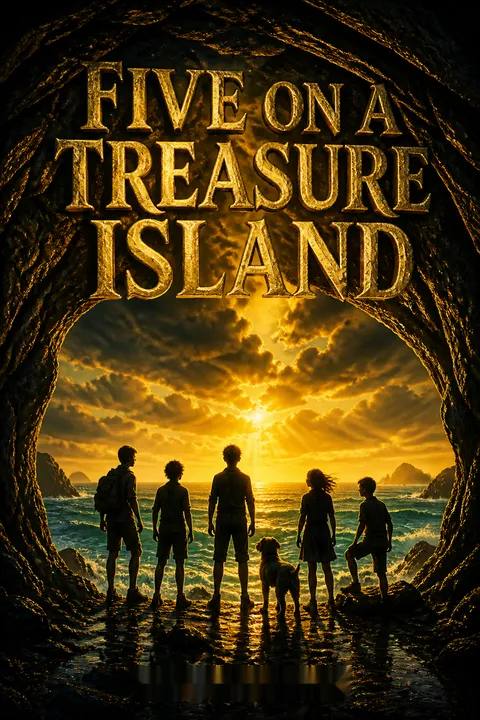


Plot Summary
George Guards Her Island
When the children’s usual seaside holiday is unavailable, their parents send Julian, Dick, and Anne to stay with Aunt Fanny and Uncle Quentin at Kirrin Cottage. Their cousin George avoids welcoming them and insists on the name she has chosen for herself. On the beach, she reveals that the island offshore is hers, then confides that she secretly keeps Timothy, a dog her parents made her give up.
George expects to remain apart, but Julian offers to share treats in exchange for sharing her dog and island. The cousins accept her terms and keep Timothy’s secret. With the promise of a boat trip, a wreck to explore, and a friendship newly begun, George lets the others into her solitary world.
George’s fierce independence is both a declaration of identity and a defense against repeated rejection. Her refusal of a shared ice cream is not simple stubbornness: she fears accepting generosity without being able to repay it. Julian’s proposal works because it recognizes what she values and offers mutual exchange rather than pity. The island and Timothy first appear as private refuges, but the cousins’ welcome begins to make companionship feel less like an invasion. George’s guardedness softens through concrete acts of trust, not through a lecture about getting along.
The Wreck Rises
George rows the cousins around Kirrin Island, where they glimpse the old wreck lying beneath the clear water. The next day, she takes them ashore with Timothy and shows them the ruined castle, its rabbits, and its sheltered cove. Though she had once kept the island entirely to herself, she enjoys guiding her cousins through it.
A storm catches them while they explore. They shelter in a roofed room, make a fire from fallen jackdaw sticks, and pull their boat high above the tide. From the castle wall, Julian spots a vessel being battered against the rocks. As the weather clears, the children recognize it as the ancient ship they had just seen underwater, lifted from the seabed by the storm.
The island changes from George’s protected possession into a place made vivid by shared discovery. That shift matters when the storm transforms the familiar underwater wreck into an immediate, tangible mystery. The children’s shelter and improvised fire show them acting together under pressure, while George’s foresight in securing the boat gives her knowledge practical weight. Adventure here is not just a reward for curiosity: the same sea that makes exploration possible can suddenly make the children vulnerable. The rising wreck joins their private play to a history they do not yet understand.
A Box Beneath the Sea
At dawn, the four cousins return to the wreck before the fishing boats can crowd around it. They climb aboard and search its flooded, seaweed-strewn rooms, finding no gold in the hold. In the captain’s cabin, however, Julian spots a locked cupboard. George forces it open and finds a water-tight wooden box bearing the initials of her ancestor, Henry John Kirrin.
Back at the cottage, Uncle Quentin takes the box after learning the children recovered it, but Julian later retrieves it while his uncle sleeps. Inside are old papers and a map marked with the word for gold bars. The map depicts Kirrin Castle and its hidden dungeons. The children trace it, then return the original before anyone notices it is gone.
The empty hold redirects the children’s hopes from a simple treasure hunt toward interpretation. The box links George’s family history to the physical landscape she knows, and the map turns familiar ruins into a coded puzzle. The children’s secrecy is partly protective, partly possessive: they want to preserve the discovery as their own adventure, even as they risk taking information from Uncle Quentin. Julian’s careful copying of the map becomes crucial because their private knowledge is about to collide with adult decisions and commercial interest.
The Island Put Up For Sale
Newspapers publicize the wreck, drawing sightseers to Kirrin Island. George is furious that strangers are landing on her private refuge, but the greater threat comes when Uncle Quentin sells the box, map, and diary to an antiques buyer. The same man then offers to purchase the island and rebuild its castle as a hotel. Quentin accepts in principle, explaining that the family needs money.
George feels betrayed because her mother had promised that the island would one day be hers. Julian suspects the buyer has read the map and wants the gold hidden beneath the castle, not a hotel. With the sale due to be completed within a week, the cousins decide to reach the island and search before the buyer can claim it.
The sale makes the children’s mystery an ethical contest over ownership. George understands the promise of the island as a bond, while her parents treat it as an asset they can no longer afford to keep. Their positions arise from different experiences of scarcity, but the adults’ financial pressure does not erase George’s sense of betrayal. Julian’s suspicion reframes the buyer’s offer as a race against someone using the same evidence. The children now risk acting without adult permission because official authority has already failed to protect what they believe is theirs.
The Castle Opens Below
The cousins load food, blankets, ropes, tools, and Julian’s traced map into George’s boat, then set up camp on the island. They clear weeds from the castle room but find no movable stone, so they search the courtyard for the well marked on the plan.
Timothy chases a rabbit beneath a gorse bush and falls through the concealed opening. While the children rescue him from a ledge inside the deep well, they uncover the shaft and locate an iron-ringed stone nearby. Pulling it aside reveals steps descending into the castle’s underground chambers.
Using the map and torches, they navigate the echoing passages and break through a wooden door. Inside, they find the hidden gold bars. Before they can celebrate, the men who intend to steal them arrive and trap Julian and George below.
The discovery depends on the group’s distinct strengths: George knows the island, Julian reads the map, Anne notices the iron ring, and Timothy’s disobedience exposes the well. The treasure is therefore not uncovered by a single heroic insight but by attention distributed across the group. Yet finding it does not settle who owns it. The men’s arrival turns the children’s successful investigation into a physical danger, exposing the limits of their independence when adults bring weapons and force into the same space.
Georgina Becomes a Warning
The men threaten George with a revolver and use the danger to Timothy to force her to write a message summoning Dick and Anne. George signs it with the name she never uses, hoping her cousins will recognize the warning. Timothy carries it to Dick and Anne, who are waiting on the rocks. Dick notices the unusual signature and checks the cove, where he finds the men’s motorboat.
He hides with Anne in the well as the men search for them. Once they leave, Dick realizes the shaft connects to the dungeons. He climbs down a rope, squeezes past a fallen slab, and follows Julian’s chalk marks through the passages. At the bolted treasure-room door, he frees Julian and George.
George’s signature turns a mark of personal identity into a covert signal. The warning works because Dick knows the cost George attaches to that name; attention to her character becomes practical intelligence. Anne’s presence matters too: she stays with Dick and helps him think through the well as a possible route, rather than dismissing the danger. The rescue reverses the group’s earlier pattern, in which George’s knowledge and Julian’s leadership usually guide the others. Now Dick risks the descent, showing that courage in this adventure moves between children rather than belonging to one fixed leader.
George Breaks Their Escape
The rescued cousins climb out through the well, only to find the men have taken their oars. Julian proposes using the dungeon door to imprison the thieves when they return with a larger fishing boat. Dick hides below while Julian, George, and Anne wait near the courtyard. The plan falters: the men force the door open before Dick can bolt it, and he escapes through the well as they pursue him.
With the criminals emerging from the castle, the children rush to the cove. George discovers their oars inside the motorboat, then uses an axe to damage its machinery. She and the others row away before the men can stop them. Their escape leaves the thieves stranded on the island, at least temporarily.
The children’s plan is resourceful but not flawless, and the failed trap keeps their escape from feeling effortless. Dick survives because the well, first revealed through Timothy’s accident, remains a route the criminals do not know. George’s decisive attack on the motorboat turns her intimate knowledge of the island into a tactical advantage. The action also marks a change in how she uses ownership: rather than merely defending the island as private territory, she acts to protect her companions and prevent the treasure from being carried away.
Kirrin Island Stays Theirs
The children reach the mainland and tell Aunt Fanny and Uncle Quentin what happened. Quentin initially doubts their account, but Anne’s distress and the others’ details persuade him to call the police and his lawyer.
The criminals have already been taken away by boat from the fishing smack, but the police secure the dungeon and confirm that the gold belongs to the Kirrin family. The sale of the island is halted, and Quentin’s financial fears ease. George’s parents agree that she can keep Timothy, who had helped the cousins through the adventure.
She also decides she would consider boarding school if she can take him. Before the children sleep, George promises to share the island with Julian, Dick, and Anne, transforming her private refuge into their common place.
The resolution repairs several kinds of broken trust at once. Quentin must listen to children he had previously frightened, and the recovered treasure eases the financial strain that had shaped his temper without making his earlier dismissal harmless. George’s choice to share the island gives her a new relationship to possession: belonging no longer requires exclusion. Timothy’s acceptance and the possibility of school make companionship sustainable beyond the holiday. The final promise does not erase the conflicts that produced the adventure; it shows the children carrying its lessons into the ordinary future.
Analysis
The adventure makes ownership tangible. George’s island is at once a family inheritance, a child’s private refuge, and a piece of land valuable enough to attract adults who barely regard her feelings. The story does not treat these claims as interchangeable: her parents face financial strain, while George experiences the threatened sale as the withdrawal of a promise. The discovery of the gold complicates the conflict by making the island’s material value undeniable, but it is the children’s cooperation, not wealth, that changes their relationships.
Each child contributes a different kind of competence. Julian organizes, Dick reads behavior and acts decisively, Anne observes and repairs, and George supplies local knowledge. Timothy’s impulsive digging, meanwhile, turns an apparent nuisance into the route to the castle’s secrets. The group succeeds because no single person can solve the mystery alone. Their failures matter too: the first attempt to trap the criminals collapses, so escape depends on adaptation rather than perfect planning.
George’s arc is the emotional center. At the start, sharing feels like surrender because solitude has allowed her to protect what she loves. Her cousins do not win her over by correcting her; they earn trust through reciprocity, loyalty, and shared risk. By the ending, she can imagine giving others a place in what she once guarded absolutely. The treasure eases the family’s immediate pressure, but the more durable prize is a widened sense of belonging, one that includes friends, family, and the dog who has been George’s closest companion.
Review Summary
Five on a Treasure Island receives mostly positive reviews, with readers praising its nostalgic appeal and engaging adventure story. Many appreciate the vivid descriptions, charming characters, and the sense of freedom portrayed in the book. Some note the dated aspects, including gender stereotypes, but overall find it a delightful read. Adults revisiting the book often enjoy the nostalgia and find it still captivating. The book is frequently cited as sparking a love for reading in childhood, with many readers expressing a desire to continue the series.
Characters
George
Island-owning outsiderGeorge is Aunt Fanny and Uncle Quentin’s only child, a capable sailor and swimmer who insists on being called by the name she has chosen. She dislikes being treated according to expectations she rejects, and her bluntness often turns hurt into defiance. Her private island and secret dog, Timothy, offer forms of companionship and control she can manage on her own. George values truth and loyalty, but finds sharing difficult because she has grown up isolated. Her sharp temper coexists with practical courage and deep attachment to those she trusts.
Julian
Steady older cousinJulian is the eldest of the three visiting cousins and often organizes the group’s plans. He is confident without relying only on authority: he wins George’s trust by proposing an exchange that respects her pride, then helps the children interpret the map and prepare for their search. His sense of responsibility can make him protective, but he listens to others’ observations and changes course when new evidence appears. Julian represents practical leadership built on cooperation rather than command.
Dick
Quick-thinking younger brotherDick is Julian’s younger brother, energetic and adventurous, with a talent for noticing what others might overlook. He contributes ideas, follows through under pressure, and is willing to take physical risks when the group needs help. His attention to George’s habits allows him to read meaning in a small clue that might otherwise seem trivial. Dick’s bravery is not the absence of fear; it is his ability to turn observation into action.
Anne
Gentle, observant cousinAnne is the youngest cousin, sensitive to danger and often uneasy in unfamiliar situations. Her gentleness can make her appear less adventurous than the others, but she notices details, cares for companions, and tries to repair hurt when she causes it. She helps George feel accepted without demanding that she change her personality. Anne’s quiet attentiveness gives the group both emotional steadiness and practical insight.
Timothy
Loyal island dogTimothy is George’s large, unruly mongrel, loved for his loyalty rather than any polished appearance or training. His devotion makes him a source of comfort for George, who has had to keep him away from her parents. He joins the children’s adventures with exuberance, sometimes causing trouble through his instinct to chase rabbits. His actions repeatedly affect what the children discover and how they respond to danger.
Aunt Fanny
Warm family mediatorAunt Fanny welcomes Julian, Dick, and Anne into her home and tries to make their visit easier for her often difficult daughter. She is affectionate and perceptive, though she sometimes misunderstands why George resists family outings. Her warmth makes Kirrin Cottage a hospitable base, and she offers the children a more approachable adult presence than Uncle Quentin.
Uncle Quentin
Brilliant, strained fatherUncle Quentin is a serious scientist and writer whose financial worries and concentration on work contribute to his impatience with children. He is protective of his work and quick to assert authority, especially with George. His strained household gives George much of the solitude she resists and the freedom she fiercely defends.
Alf
Helpful fisher-boyAlf is a local fisher-boy who helps George care for Timothy when she cannot keep the dog at home. His practical assistance allows her to maintain her bond with Timothy, despite the secrecy surrounding it.
The island buyer and his accomplices
Treasure-seeking criminalsThe buyer and the men working with him use the wreck’s history and the map to pursue the hidden gold. They treat the island as a means to an end, first disguising their interest as a hotel venture and later using threats and confinement to remove the children from their way.
Plot Devices
Henry John Kirrin’s map
Turns history into cluesFound in the tin-lined box from the wreck, the old map depicts Kirrin Castle and marks the hidden dungeons and the place associated with gold bars. Julian traces it before returning the original, giving the children a copy to guide their search. The same evidence attracts the island buyer, making the map both a practical key and the source of the danger that follows.
The raised wreck
Releases a buried pastA sudden storm lifts the ancient ship from its underwater resting place and leaves it on the rocks beside Kirrin Island. The change lets the children search the ship’s interior, where they find the box that connects the wreck to George’s family and the castle. Its appearance also attracts public attention and brings the treasure hunters closer.
The castle well
Hidden route through dangerA concealed well in the castle courtyard is uncovered when Timothy digs beneath a gorse bush. Its shaft connects the courtyard to the underground chambers. The children use it first to locate their route into the dungeons, then as a hiding place and escape route when the criminals imprison them.
Timothy’s loyalty
Companion becomes catalystGeorge’s determination to keep Timothy, even when she must arrange for someone else to shelter him, reveals how deeply she depends on his companionship. The dog joins the children’s explorations, accidentally exposes the well while chasing a rabbit, and carries George’s warning to Dick and Anne. His presence ties the mystery to George’s need for trust and belonging.
FAQ
Synopsis & Basic Details
What is Five on a Treasure Island about?
- Summer Holiday Adventure: Julian, Dick, and Anne are sent to Kirrin Bay for their summer holidays, where they meet their fiercely independent cousin, Georgina (George), and her loyal dog, Timothy. George introduces them to her private Kirrin Island, home to a ruined castle and a legendary shipwreck said to contain lost gold.
- Discovery and Intrigue: A fierce storm unearths the ancient wreck, leading the children to discover a hidden map pointing to "ingots" in the castle's dungeons. This discovery ignites a thrilling treasure hunt, but also attracts greedy adults who seek to buy the island and claim the gold for themselves.
- Courage and Friendship: The children must use their wits, bravery, and newfound camaraderie to outsmart the villains, protect their secret, and ultimately secure the treasure, all while navigating the complexities of family relationships and George's journey of self-discovery.
Why should I read Five on a Treasure Island?
- Classic Adventure Thrills: Experience the quintessential Enid Blyton adventure, filled with secret passages, hidden treasure, daring escapes, and the timeless excitement of children outsmarting adults. It's a foundational text for the adventure genre, offering pure escapism.
- Character Growth & Friendship: Witness the compelling transformation of George, a lonely and defiant tomboy, as she learns the value of friendship, sharing, and belonging through her interactions with her cousins. Her journey is a powerful exploration of identity and connection.
- Enduring Themes: Delve into themes of childhood autonomy, the conflict between innocence and greed, and the true meaning of wealth beyond material possessions. The story subtly champions resourcefulness, loyalty, and the power of imagination.
What is the background of Five on a Treasure Island?
- Post-War Escapism: Written in 1942, the novel provided a much-needed sense of adventure and escapism for children during World War II, offering a world where children could be heroes and solve mysteries independently, away from adult anxieties.
- Coastal England Setting: The story is deeply rooted in the imagery of the English coast, with its rugged cliffs, secret coves, and mysterious islands. Kirrin Bay and Kirrin Island are archetypal Blyton settings, evoking a sense of wild beauty and hidden possibilities.
- Blyton's Signature Style: This book established many of Enid Blyton's enduring narrative conventions: resourceful children, a loyal animal companion, simple moral lessons, and a focus on outdoor adventure, which resonated deeply with her young readership.
What are the most memorable quotes in Five on a Treasure Island?
- "I'm George. I shall only answer if you call me George. I hate being a girl.": This declaration by Georgina in Chapter 2 immediately establishes her fierce independence and central identity struggle, setting the stage for her unique character arc and the themes of gender and self-acceptance.
- "Sharing pleasures doubles their joy.": George's profound realization in Chapter 7, after experiencing the island with her cousins, marks a pivotal moment in her character development, highlighting the story's core theme of the transformative power of friendship over isolation.
- "You're as good as a boy any day!": Uncle Quentin's unexpected compliment to George in Chapter 17, though problematic by modern standards, signifies his acceptance and pride in her bravery, and for George, it's a moment of validation from her often-distant father, marking a resolution in their strained relationship.
What writing style, narrative choices, and literary techniques does Enid Blyton use?
- Direct and Accessible Prose: Blyton employs a simple, clear, and straightforward writing style, making the narrative highly accessible for young readers. Her sentences are generally short, and vocabulary is uncomplicated, ensuring a fast-paced and engaging reading experience.
- Repetitive Emphasis and Sensory Detail: She frequently uses repetition for emphasis (e.g., "Oh, goody, goody!") and incorporates vivid sensory descriptions (the smell of the sea, the taste of ginger-beer) to immerse children in the adventure, making the settings and experiences feel immediate and real.
- Child-Centric Perspective and Clear Morality: The story is told almost entirely from the children's point of view, empowering them as protagonists who solve problems independently. Blyton also establishes a clear moral universe, where good is rewarded, and villains are unambiguously bad, reinforcing a sense of justice and order.
Hidden Details & Subtle Connections
What minor details foreshadow major plot points?
- Uncle Quentin's Financial Strain: Early mentions of Uncle Quentin's financial difficulties ("I don't think things are going too well for them," Chapter 1) subtly foreshadow the desperate decision to sell Kirrin Island, which becomes a major catalyst for the children's urgent treasure hunt.
- George's Knowledge of the Wreck: George's casual mention of a deep-down wreck belonging to her ancestor, containing "big bars of gold" (Chapter 3), initially sounds like a child's boast but directly foreshadows the storm's revelation and the central quest for the ingots.
- The Well's Dual Nature: The old well, first discovered when Timothy falls into it (Chapter 12), is initially a source of danger and a means to find the dungeon entrance. This early interaction subtly sets up its later, crucial role as Dick's secret entry point for the rescue, highlighting its hidden utility.
How do environmental descriptions reflect character states?
- Kirrin Cottage's Mysterious Aura: The description of Kirrin Cottage as "old and rather mysterious somehow" (Chapter 2) mirrors George's own enigmatic and guarded personality, suggesting a home that holds secrets and a history of isolation, much like its inhabitant.
- The Isolated Setting's Wild Beauty as George's Soul: Kirrin Island, with its "rocky little coast," "ruined castle," and "scampering rabbits" (Chapter 7), is a direct extension of George's wild, untamed spirit and her desire for a private, independent world, reflecting her inner landscape.
- The Storm's Emotional Intensity: The "mournful" howling wind and "shouting" sea during the storm (Chapter 6) amplify the children's fear and vulnerability, mirroring the emotional turmoil and high stakes of their unexpected predicament, and setting the stage for the dramatic reveal of the wreck.
What subtle narrative choices enhance the story's depth?
- Anne's "Careless Tongue" as a Tension Device: Anne's recurring habit of nearly revealing secrets, like Timothy's existence or the wreck's discovery, serves not just as a character quirk but as a consistent source of narrative tension, reminding readers of the fragility of the children's clandestine operations.
- The Jackdaws' Practical Role: Beyond being part of the castle's atmosphere, the jackdaws' habit of nesting and dropping sticks (Chapter 6) provides the children with the crucial fuel needed to light a fire during the storm, a small detail that highlights resourcefulness in a crisis.
- The Villains' Calculated Cunning: The buyer of the old box being the same man who wants to purchase Kirrin Island (Chapter 10) subtly reveals the villains' intelligence and how they pieced together the clues from the map, elevating them beyond simple thugs to more formidable, calculating adversaries.
Who are the most significant supporting characters?
- Alf, the Trustworthy Fisher-Boy: Alf's role extends beyond merely housing Timothy; he represents a crucial link to the local community and a source of quiet, reliable support for George, embodying the idea that help can come from unexpected, unassuming places.
- The Tame Rabbits of Kirrin Island: These creatures, unusually unafraid of humans, symbolize the island's untouched, wild nature and George's unique connection to it. Their tameness is a subtle indicator of the island's isolation and George's solitary reign before her cousins arrive.
- The Fishing-Smack Crew: The men on the fishing-smack who hail the children (Chapter 17) serve as an external moral compass and a potential source of adult intervention. Their worried observation of the island and the children's silence underscores the gravity of the situation and the children's desperate need to reach safety.
Psychological, Emotional, & Relational Analysis
What are George's unspoken motivations and internal conflicts?
- Desire for Autonomy and Control: George's insistence on being called "George" and her fierce possessiveness over Kirrin Island and Timothy stem from a deep-seated need for control and independence, a reaction to feeling misunderstood and constrained by her parents' expectations and financial struggles.
- Fear of Vulnerability and Rejection: Her initial rudeness and "sulky" demeanor are a protective shield, masking a profound loneliness and fear of being hurt or rejected, especially after her parents' disapproval of Timothy, which she perceives as a personal betrayal.
- Longing for Acceptance and Connection: Despite her outward defiance, George secretly yearns for genuine connection. Her eventual softening towards her cousins and her realization that "sharing pleasures doubles their joy" (Chapter 7) reveal her underlying desire for friendship and belonging.
How does Uncle Quentin's character evolve throughout the adventure?
- From Irascible to Appreciative: Initially portrayed as a "frowning man" (Chapter 1) whose temper is exacerbated by financial worries and intellectual isolation, Uncle Quentin's character undergoes a significant transformation. His irritability is a coping mechanism for his inability to provide for his family.
- Humbled by Children's Bravery: The children's daring rescue and the discovery of the gold force him to confront his own skepticism and pride. He is "amazed" and "changed his mind about these four children at once" (Chapter 17), recognizing their intelligence and bravery.
- Embracing Familial Warmth: The resolution of his financial woes lifts a "great weight" from his shoulders, allowing him to express affection and pride, particularly towards George, whom he finally accepts for who she is, even allowing Timothy into the house.
What emotional turning points define the children's journey?
- George's Acceptance of Timothy's Sharing: The moment Julian convinces George to accept an ice-cream by proposing they "share" Timothy and the island (Chapter 3) is a crucial emotional turning point, breaking down George's possessiveness and opening her to the idea of friendship.
- Anne's Growing Courage: Anne, initially the most timid and prone to fear, demonstrates increasing bravery throughout the adventure, from enduring the storm on the island to her steadfast support of Dick during his rescue mission, showcasing her personal growth and resilience.
- The Collective Resolve Against Adult Greed: The children's shared outrage and determination when Uncle Quentin sells the box and the island (Chapter 10) solidifies their bond and transforms their treasure hunt into a moral quest, uniting them against perceived injustice.
How do the themes of independence and belonging intertwine?
- George's Struggle for Self-Definition: George's fierce independence, symbolized by her "boyish" identity and solitary ownership of the island, initially isolates her. Her journey is about finding a balance where she can maintain her unique self while also experiencing the joy of belonging.
- The Cousins' Collective Autonomy: The children's parents' absence forces them into a situation of self-reliance, fostering their independence. However, it is through their collective efforts and mutual support that they truly thrive, demonstrating that true autonomy can be strengthened by belonging to a loyal group.
- Reconciling Family and Freedom: The adventure ultimately resolves the tension between George's desire for freedom and her family's needs. The discovery of the gold alleviates her father's financial stress, allowing him to accept George's choices (like keeping Timothy) and for George to embrace her family and friends without sacrificing her core identity.
Interpretation & Debate
Which parts of the story remain ambiguous or open-ended?
- The Villains' Ultimate Fate: While the police are called and the men are stranded, the story doesn't explicitly detail their arrest or punishment. The fishing-smack "fetched them away" (Chapter 17), leaving their precise legal consequences and future ambiguous, focusing instead on the children's triumph.
- The Long-Term Impact of Wealth: The narrative concludes with the family becoming rich, but it doesn't explore the long-term psychological or social effects of this sudden wealth. It's implied to be wholly positive, but the complexities of such a change are left unexamined, maintaining a simple, optimistic ending.
- George's Future Identity: While George embraces sharing and friendship, her core identity as "George" and her rejection of traditional femininity remain. The story ends with her going to boarding school with Anne, but whether this will fully integrate her or if she will continue to navigate her unique identity is left for the reader to ponder.
What are some debatable, controversial scenes or moments in Five on a Treasure Island?
- George's Gender Identity and Blyton's Portrayal: George's insistence on being a "boy" and her father's eventual compliment, "You're as good as a boy any day!" (Chapter 17), can be debated. Is Blyton celebrating non-conformity or subtly reinforcing the idea that "boyish" traits are superior for adventure and bravery? This raises questions about gender roles in children's literature.
- The Children's Deception and Sabotage: The children's actions, such as stealing the box back from Uncle Quentin, keeping crucial information from adults, and George's deliberate destruction of the villains' motor-boat, are presented as heroic. However, these actions involve deception and property damage, sparking debate about the morality of their methods, even when justified by the circumstances.
- Uncle Quentin's Sudden Transformation: His shift from an irritable, distant figure to a warm, proud father is quite abrupt, largely triggered by the discovery of wealth and the children's bravery. This rapid change can be seen as overly simplistic or a convenient plot device, rather than a nuanced character development, inviting discussion on the believability of adult redemption in children's fiction.
Five on a Treasure Island Ending Explained: How It Ends & What It Means
- The Gold Secured, Villains Foiled: The children successfully alert the authorities, leading to the recovery of the gold ingots and the apprehension of the greedy men. George's quick thinking in sabotaging the motor-boat ensures the villains are stranded, allowing the children to escape and report their findings.
- Family Reconciliation and Acceptance: The discovery of the treasure resolves Uncle Quentin's financial woes, transforming his character into a loving, proud father who finally accepts George and allows Timothy to live at Kirrin Cottage. Aunt Fanny's nurturing role is affirmed, and the family unit is strengthened.
- The True Treasure: Friendship and Sharing: The most significant outcome is George's profound personal growth. She learns the joy of sharing, deciding to make Julian, Dick, and Anne co-owners of Kirrin Island. The ending emphasizes that while the gold provides material security, the true "treasure" found is the bond of friendship, the healing of family rifts, and George's journey from isolation to belonging.
About the Author
Other books by Enid Blyton






Download PDF
Download EPUB
.epub digital book format is ideal for reading ebooks on phones, tablets, and e-readers.








