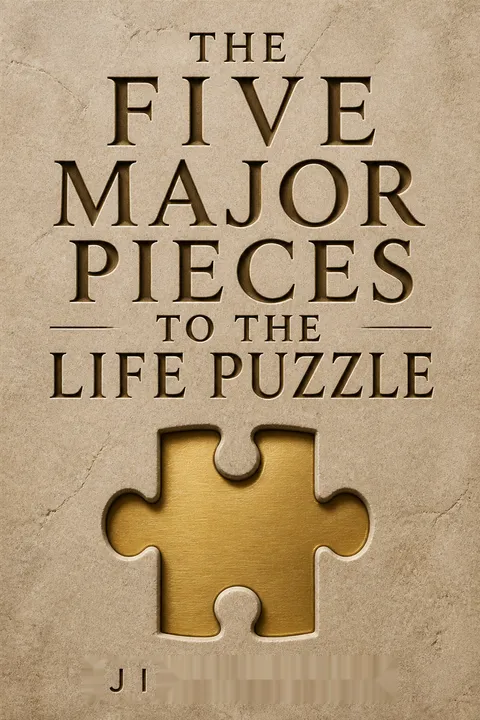


Key Takeaways
Change your life upstream, where beliefs become feelings, actions, and outcomes
A connected chain. Rohn organizes personal development into five linked pieces: philosophy, attitude, activity, results, and lifestyle. Philosophy is what a person thinks and believes. Attitude is how those beliefs feel. Activity is what the person does. Results are the consequences of that activity, and lifestyle is the way those results and values shape daily life. The sequence matters: changing an outcome often requires changing the cause that produces it.
Steer through change. Rohn compares philosophy to the way a ship sets its sail. Circumstances are the wind, but beliefs and responses help determine direction. A setback may be unavoidable; how someone responds to it can still be examined and adjusted. The framework is a reminder to look upstream rather than simply resent the current destination.
What's useful here is the causal map: it turns a vague wish for a better life into a search for leverage. A person can ask whether the difficulty lies in information, emotional response, action, or the outcome being pursued. That resembles systems thinking, where a visible result is traced back through the processes that generated it. The map is not a guarantee of control, however. Health, discrimination, economic conditions, and chance can shape outcomes beyond individual choice. Its strongest use is to identify available agency without pretending that every circumstance is self-created.
Feed your philosophy better information before trusting your first conclusions
Inspect your inputs. Rohn uses personal philosophy to mean the accumulated ideas and conclusions through which people interpret events and decide what matters. Those conclusions are shaped by books, family, work, media, conversation, and experience. New information is often filtered through old beliefs, so people may accept ideas that confirm their views and reject ideas that challenge them.
Build a better record. Rohn recommends learning from both personal experience and other people's successes and failures. He urges readers to seek objective counsel, observe carefully, listen selectively, read, and keep a journal. Writing down events and decisions preserves details that memory may blur and slows thinking enough to examine assumptions. His point is not to collect information endlessly, but to revise conclusions when they repeatedly lead to poor choices.
This is a practical account of how belief systems become self-reinforcing: expectations influence what gets noticed, and what gets noticed can seem to confirm those expectations. Journaling and trusted outside counsel create useful friction in that loop. They make it easier to compare intention with behavior and to hear interpretations that familiarity might obscure. Still, information alone does not guarantee better judgment. Sources can be persuasive and wrong, while advisers can share the same blind spots. The most valuable habit is not reading indiscriminately, but checking claims against experience, evidence, and perspectives that genuinely differ.
Use the past for lessons, and the present to build a future
Change your time frame. Rohn argues that the past can teach without dictating what comes next. Regret and blame keep attention fixed on events that cannot be changed; reviewing what happened can instead clarify which choices or assumptions need revision. The present is where those lessons become action. He reminds readers that each person has the same 24 hours in a day, though their circumstances and responsibilities differ.
Make the future visible. Rohn advises imagining a desired future clearly enough to guide present decisions. Goals give that vision shape, while the effort required to reach them is their price. A vivid future can make difficult work feel worthwhile, but a wish without a plan or sustained effort remains only a wish. The task is to learn from yesterday, act today, and use tomorrow as a direction rather than an excuse.
The three-part time model offers a useful balance: reflection without rumination, attention without drifting, and future thinking without fantasy. In psychology, mental rehearsal can help people make a goal more concrete, while plans that specify actions are more likely to survive competing demands than broad intentions. The distinction between imagining an outcome and preparing for its costs is especially important. A compelling vision can motivate, but it can also become a substitute for practical work. The test is whether a future picture changes what someone does in the present, not merely how inspired they feel.
Choose your influences before their small nudges redirect your life
Notice the social current. Rohn treats associates as a major source of both information and feeling. Their habits, opinions, and expectations can gradually affect a person's own choices. He suggests asking three questions: Who is nearby? What effect do they have? Is that effect acceptable? If a relationship repeatedly undermines growth, he proposes limiting time together, finding more encouraging company, or, in serious cases, stepping away.
Spend attention consciously. Rohn also offers an 80/20 rule of thumb: in his account, a smaller share of one's associations may contribute most of the useful results, while a larger share can consume disproportionate time. The point is to protect time for people who educate, encourage, and help make progress possible. Influence can come through books and recorded talks as well as face-to-face relationships.
The insight is broader than avoiding pessimists: social environments distribute attention, normalize behavior, and make some ambitions feel plausible while making others seem foolish. Deliberately seeking mentors and peers can supply both knowledge and encouragement. The caution is that the book's productivity-based 80/20 framing should not become a measure of people's worth. Relationships also matter for care, loyalty, and belonging, none of which can be reduced to measurable output. A sound application distinguishes harmful influence from ordinary disagreement and sets boundaries without treating every less ambitious friend as an obstacle.
Put every talent to work instead of burying it in caution
Use what you have. Rohn tells the Parable of the Talents, in which a master entrusts three servants with different sums. Two put their money to work and increase it; the third hides his share to avoid risk. Rohn draws a lesson about responsibility: people should develop and use the abilities and opportunities available to them, rather than waiting for ideal conditions.
Turn potential into action. Knowledge and a positive attitude can raise someone's potential, but they do not by themselves produce achievement. Activity is the step that makes inner resources visible and useful. Rohn argues that people with fewer virtues can sometimes advance because they work consistently toward their aims, even when their methods are wrong. For people seeking constructive success, effort needs both commitment and sound judgment.
The parable makes a memorable distinction between preserving potential and exercising it. In learning and skill development, capability generally grows through use, feedback, and correction, not by waiting until failure is impossible. The framework is strongest when it encourages responsible experimentation rather than reckless risk. It also needs a humane qualification: not every person has equal time, health, capital, or freedom to act, and caution can be rational when the downside is severe. Using one's talents matters, but the appropriate scale of action depends on both opportunity and the risks a person can afford.
Replace tiny recurring neglects with disciplines before they harden into failure
Small choices accumulate. Rohn describes failure not as one dramatic collapse, but as repeated errors that seem harmless because their costs arrive slowly. Skipping reading, neglecting exercise, or postponing a necessary conversation may not cause an immediate crisis. Repeating those choices can gradually weaken skills, confidence, and results. In his account, neglect can start a downward spiral: guilt reduces confidence, lower confidence reduces activity, and poorer results weaken attitude further.
Make discipline contagious. The same cumulative effect can work in a positive direction. A regular reading habit, a journal entry, or a task completed on time can support other constructive behaviors. Rohn stresses that daily disciplines are easy to do and easy to skip, which is precisely why they need attention. He recommends looking ahead to the likely consequences of today's habits before deciding that a small omission does not matter.
This emphasis on delayed consequences captures a real challenge of self-management: actions with immediate comfort and distant costs are easy to repeat. Small routines can also create evidence that a person is capable of following through, which supports further effort. Yet the language of discipline can overstate how much behavior depends on character alone. Fatigue, illness, caregiving, and unstable schedules can interrupt routines without revealing a moral failure. A useful interpretation treats lapses as information about the design of a routine or the demands on a person, then resumes without turning one missed day into a verdict.
Give ambition a written plan, practical skills, and disciplined execution
Make the aim operational. Rohn recommends writing down both short-term goals and long-range objectives. Near-term goals act as landmarks; larger goals give the work direction. He calls a strongly imagined central objective a magnificent obsession: a major aim clear enough to pull daily effort toward it. The plan should remain simple, since not every obstacle can be predicted and excessive complexity can stall action.
Pair effort with skill. Hard work without knowledge can waste time or cause harm, so activity needs planning and learning as well as intensity. Rohn illustrates the value of skill by comparing someone chopping a tree with a hammer to someone using an axe. The same task becomes much easier once the method improves. He also warns that affirmations cannot replace truthful assessment or action. A plan matters when it guides repeated work.
This section joins motivation to execution: a goal supplies direction, while skills and a workable plan reduce the distance between intention and results. That combination resembles project design, where a desired endpoint is translated into intermediate milestones and reviewed against actual capacity. The caution is that a single all-consuming objective can crowd out health, relationships, or changing priorities. Clear goals are useful as tools, not as identities. A plan should be ambitious enough to focus effort and flexible enough to absorb new information when the chosen method proves ineffective.
Measure the harvest often, then adjust before a small error compounds
Treat results as evidence. Rohn compares effort to farming: seeds planted in one season produce a later harvest, and a poor crop cannot be repaired by wishing for an advance. Current results offer clues about whether earlier choices and efforts are working. He suggests looking at material assets, but also at what a person has become: the quality of relationships, integrity, respect, and personal conduct.
Correct the course. When the harvest disappoints, the useful response is to examine the plan, skills, activity, and assumptions behind it. Rohn warns against waiting years to discover that a strategy is off course. Regular checks can reveal whether the work is producing progress and whether the method needs to change. Results are not only rewards; they are feedback that can inform the next round of effort.
The farming image helps explain why outcomes may lag behind effort, while regular measurement prevents patience from turning into passive waiting. This is close to feedback control: compare the intended direction with observed results, then make a correction. The choice of measures matters. Income or possessions can illuminate financial progress, but they cannot capture every form of health, security, or contribution. Outcomes are also shaped by changing conditions and unequal access to opportunity. Measurement is most useful when it diagnoses a process, rather than ranking a person's worth or inviting blame for every disappointing result.
Live richly now, rather than postponing joy until you are wealthy
Lifestyle is practiced. Rohn defines lifestyle as the way people choose to live, not simply the level of wealth they possess. Enjoying a concert, a sunset, or a thoughtful gesture does not require a fortune. He argues that happiness and sophistication can be practiced with current resources, while a larger income alone cannot guarantee either.
Be present with people. One example is a father who could share a concert with his daughter by buying an affordable ticket and attending with her, rather than waiting until he could buy an extravagant gift. Rohn also emphasizes listening, appreciation, and giving time. He describes lifestyle as learning to experience the moment rather than remaining mentally at work, in the past, or in an imagined future. Ordinary experiences become meaningful through attention and care.
The argument usefully separates well-being from status consumption. Attention, shared time, and thoughtful gestures can enrich daily life without waiting for a major change in income. This connects with a broad insight from well-being research: the meaning people draw from an experience can depend on relationships and engagement, not only on its price. Still, happiness is not always a choice available on demand. Grief, chronic stress, and material hardship can narrow what feels possible. The idea works best as an invitation to notice available sources of meaning, not as pressure to feel grateful in difficult circumstances.
Start before comfort turns another tomorrow into a lost year
Comfort can conceal drift. Rohn argues that having basic needs met can make change feel optional. People may keep postponing important work because there seems to be plenty of time. He illustrates this with a man fishing in a small boat on the Niagara River. Distracted, the man drifts toward the falls and recognizes the danger only when escape is nearly impossible. The story makes gradual inattention visible as a series of small, accumulating losses.
Use time deliberately. Rohn also points to the final two minutes of a football game, when teams often intensify their effort because the clock makes the stakes unmistakable. His lesson is to act before crisis supplies that urgency. The clock does not guarantee success, but it does make delay consequential. A present opportunity is worth examining and using, rather than assuming it can always be taken up tomorrow.
The Niagara story gives the book's argument about neglect a concrete shape: a person can move toward danger without noticing a dramatic turning point. That makes periodic course-checking more than a productivity trick; it is a way to notice whether daily routines are carrying life somewhere unintended. Urgency, however, is not the same as constant acceleration. Alarm can produce impulsive choices, and rest is necessary for sustained effort. The more durable lesson is to take finite time seriously, choose what deserves attention, and begin without waiting for either panic or perfect conditions.
Analysis
Rohn's book is a compact theory of personal agency, organized as a chain from interpretation to emotion, behavior, outcomes, and lived experience. Its strongest contribution is not any single piece of advice, but its insistence that outcomes should be traced backward. A disappointing result becomes a question about methods, skills, habits, beliefs, and social influences, rather than an occasion for endless complaint. The recurring farming and sailing images make delay and direction easier to grasp: actions may take time to yield, while small deviations can accumulate into a very different destination.
The argument also joins two forms of change that are often separated. Reflection matters because people need better information and more accurate self-understanding; action matters because insight without implementation changes little. Reading, journaling, observation, counsel, goal-setting, and measurement are presented as a practical learning cycle. The book's emphasis on lifestyle adds a valuable counterweight to achievement culture by insisting that presence, relationships, and pleasure need not wait for financial success.
Its central limitation is an overly broad account of personal control. The language of choice and deserved results can make unequal circumstances look like individual failures. Opportunity, health, discrimination, family obligations, and economic shocks influence both the options available and the consequences of effort. Further, associations should not be evaluated only by their productivity, and a positive attitude cannot erase grief or hardship. These limits do not invalidate the framework; they define its proper scope. It is most helpful as a method for finding the choices a person can influence, not as a claim that every outcome is earned or controllable.
The book's practical test is therefore neither relentless work nor positive thinking alone. It is whether someone can examine a result honestly, learn from the evidence, make a proportionate change, and keep living meaningfully while pursuing improvement. That combination of agency, feedback, and present-tense appreciation is more durable than the promise that success follows automatically from effort.
Review Summary
"The Five Major Pieces to the Life Puzzle" by Jim Rohn receives high praise from readers, with an average rating of 4.42 out of 5. Reviewers describe it as life-changing, inspiring, and full of wisdom. The book focuses on five fundamental aspects of life: philosophy, attitude, activity, results, and lifestyle. Many readers appreciate Rohn's simple yet profound teachings and his ability to connect these elements cohesively. While some find the ideas familiar, they value how Rohn presents them. Many readers consider it a must-read for personal development and recommend revisiting it regularly.
People Also Read





Glossary
The Five Major Pieces to the Life Puzzle
Five linked life factorsRohn's framework connects philosophy, attitude, activity, results, and lifestyle. Philosophy concerns the beliefs and knowledge a person uses to interpret life; attitude concerns emotional responses; activity is the application of beliefs and feelings; results are the consequences of activity; lifestyle is how a person lives. The framework presents these factors as connected causes and effects.
Personal philosophy
Beliefs guiding daily choicesA personal philosophy is the collection of information, beliefs, and conclusions through which someone interprets experience and decides what matters. It develops from sources such as family, school, work, books, media, and personal observation. Because it shapes values and decisions, Rohn argues that it should be reviewed and revised when its conclusions repeatedly lead to poor choices.
Magnificent obsession
A compelling central objectiveRohn's term for a major goal imagined clearly enough to sustain ambition and organize effort. It is more than a casual wish: the objective should be specific and personally compelling, while daily activity and intermediate goals move the person toward it. The term highlights the motivational force of a vivid future, though it does not remove the need for practical planning.
Intelligent activity
Planned, skilled effortIntelligent activity is work that combines effort with planning, learning, skill, and consistent execution. Rohn distinguishes it from mere motion: activity should be directed toward a defined objective and refined when the results show that a method is not working. It makes knowledge and attitude practical, while recognizing that intensity without judgment can be ineffective or harmful.
Comfort zone
Comfort that delays changeRohn uses this term for a condition in which basic needs and familiar routines make improvement seem unnecessary or safely postponable. Because there is no immediate crisis, a person may assume there will always be time to act. The danger is that repeated delay can consume opportunities gradually, without a single dramatic moment that signals the loss.
Lifestyle
A chosen way of livingRohn uses lifestyle to mean the way a person designs and experiences daily life, not simply the amount of money or status they possess. It includes how someone spends time, treats people, responds emotionally, and appreciates ordinary experiences. In this account, a satisfying lifestyle can be practiced before wealth arrives, through attention, generosity, and meaningful activity.
FAQ
What's "The Five Major Pieces to the Life Puzzle" about?
- Personal Development Focus: The book by Jim Rohn is a guide to personal success, emphasizing the importance of self-improvement and personal growth.
- Five Key Areas: It outlines five major components—Philosophy, Attitude, Activity, Results, and Lifestyle—that are essential for achieving success and happiness.
- Holistic Approach: Rohn integrates these elements to create a comprehensive framework for living a fulfilling life.
- Practical Advice: The book provides actionable insights and strategies to help readers transform their lives by focusing on these five areas.
Why should I read "The Five Major Pieces to the Life Puzzle"?
- Proven Strategies: Jim Rohn is a renowned success counselor, and his book offers time-tested strategies for personal and professional growth.
- Comprehensive Framework: It provides a structured approach to understanding and improving various aspects of life.
- Inspiration and Motivation: The book is designed to inspire readers to take action and make meaningful changes in their lives.
- Universal Principles: The principles discussed are applicable to anyone seeking to enhance their quality of life, regardless of their current situation.
What are the key takeaways of "The Five Major Pieces to the Life Puzzle"?
- Philosophy Shapes Life: Your personal philosophy influences your attitude, actions, and ultimately, your results.
- Attitude Matters: A positive attitude is crucial for overcoming challenges and achieving success.
- Action is Essential: Knowledge and good intentions must be translated into consistent, disciplined activity.
- Results Reflect Effort: The outcomes you achieve are directly proportional to the effort and discipline you apply.
- Lifestyle as a Reflection: Your lifestyle is a manifestation of your values, choices, and the integration of the other four pieces.
What is Jim Rohn's philosophy on success in "The Five Major Pieces to the Life Puzzle"?
- Success is Attracted: Rohn emphasizes that success is not pursued but attracted by the person you become.
- Personal Growth is Key: To have more, you must first become more; personal development is the foundation of success.
- Cause and Effect: Your philosophy, attitude, and actions are the causes that determine the effects—your results and lifestyle.
- Continuous Improvement: Constantly refine your philosophy and actions to improve your results and quality of life.
How does Jim Rohn define 'Philosophy' in "The Five Major Pieces to the Life Puzzle"?
- Cornerstone of Success: Philosophy is the foundational element that influences your thoughts, habits, and behaviors.
- Formed by Knowledge: It is shaped by the information you gather and the conclusions you draw from it.
- Influences Values: Your personal philosophy determines your value system and what you consider important.
- Guides Decisions: It affects your decision-making process and ultimately the direction of your life.
What role does 'Attitude' play according to "The Five Major Pieces to the Life Puzzle"?
- Emotional Influence: Attitude governs your emotional responses and significantly impacts your daily conduct.
- Determines Quality of Life: A positive attitude can propel you toward success, while a negative one can hinder progress.
- Interconnected with Philosophy: How you feel about what you know shapes your attitude and influences your actions.
- Affects Relationships: Your attitude impacts how you interact with others and the quality of your relationships.
What does Jim Rohn say about 'Activity' in "The Five Major Pieces to the Life Puzzle"?
- Action is Crucial: Activity is the application of your knowledge and attitude; it is essential for achieving results.
- Disciplined Effort: Consistent, disciplined activity is necessary to convert dreams into reality.
- Avoiding Complacency: Rohn warns against the dangers of ease and emphasizes the importance of enterprise over rest.
- Intelligent Planning: Activity should be planned and executed with intelligence to ensure progress and success.
How are 'Results' explained in "The Five Major Pieces to the Life Puzzle"?
- Measure of Effort: Results are the harvest of your past efforts and are directly proportional to the work you put in.
- Indicator of Progress: They serve as a barometer for assessing how well you are using your opportunities.
- Reflect Personal Growth: The results you achieve are a reflection of who you have become.
- Continuous Evaluation: Regularly check your results to ensure you are on the right path and make necessary adjustments.
What is the significance of 'Lifestyle' in "The Five Major Pieces to the Life Puzzle"?
- Reflection of Values: Lifestyle is a reflection of your attitude and values, showcasing how you choose to live.
- Not Dependent on Wealth: Rohn emphasizes that a rich lifestyle is not about wealth but about living fully and appreciatively.
- Art of Living: It involves doing ordinary things extraordinarily well and appreciating life's simple pleasures.
- Immediate Experience: You can live richly now by changing your mindset and appreciating what you have.
What are the best quotes from "The Five Major Pieces to the Life Puzzle" and what do they mean?
- "To have more we must first become more." This quote encapsulates the essence of personal development as the foundation for success.
- "Success is not to be pursued; it is to be attracted by the person you become." It highlights the importance of self-improvement in achieving success.
- "Discipline is the bridge between goals and accomplishment." This emphasizes the role of discipline in turning dreams into reality.
- "Happiness is not something you postpone for the future; it is something you design for the present." It underscores the idea that happiness is a choice and can be experienced now.
How can I apply the principles from "The Five Major Pieces to the Life Puzzle" in my life?
- Start with Philosophy: Reflect on your current beliefs and values, and seek to expand your knowledge and understanding.
- Cultivate a Positive Attitude: Work on developing a positive outlook and emotional resilience to face challenges.
- Take Consistent Action: Translate your knowledge and intentions into disciplined, consistent activity.
- Evaluate Your Results: Regularly assess your progress and make necessary adjustments to stay on track.
- Enhance Your Lifestyle: Focus on living fully and appreciating the present, regardless of your current circumstances.
What makes Jim Rohn's approach in "The Five Major Pieces to the Life Puzzle" unique?
- Holistic Framework: Rohn provides a comprehensive approach that integrates philosophy, attitude, activity, results, and lifestyle.
- Practical and Actionable: The book offers practical advice and strategies that readers can implement immediately.
- Timeless Wisdom: Rohn's insights are based on universal principles that have stood the test of time.
- Inspirational Style: His engaging and motivational style encourages readers to take action and make meaningful changes.
About the Author
Other books by Jim Rohn


Download PDF
Download EPUB
.epub digital book format is ideal for reading ebooks on phones, tablets, and e-readers.








