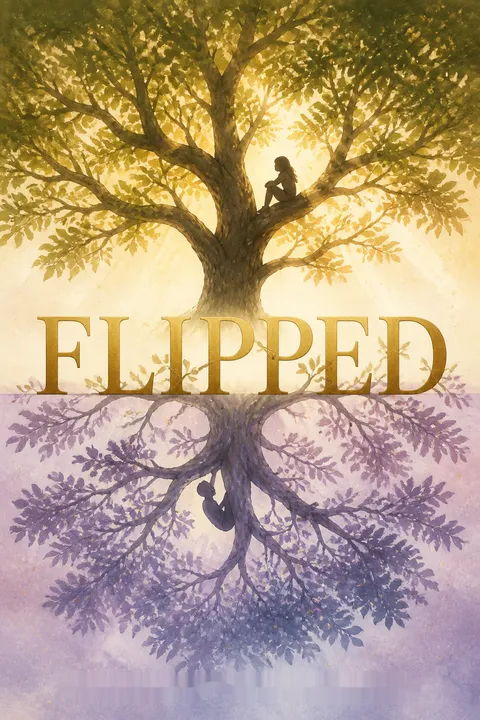


Plot Summary
A Hand She Won't Release
When the Loskis2 move across the street, seven-year-old Juli Baker1 charges into their van to help, then grabs Bryce's2 hand as he tries to escape inside. Bryce2 feels trapped; Juli1 mistakes the moment for the beginning of a romance and keeps seeking him out. At school, her exuberance makes him the target of teasing, so he tries to dodge her and later asks Shelly Stalls13 out to make Juli1 jealous.
The plan humiliates Shelly13 and backfires. In sixth grade, Juli1 sits near Bryce,2 shares spelling answers, and sniffs his hair, while Bryce2 quietly benefits from her help. As junior high approaches, he expects the larger school to finally separate them. Their early bond is real, but only Juli1 recognizes it as one.
The opening establishes the novel's central mismatch through a small physical accident: Bryce experiences contact as exposure, while Juli turns it into a cherished origin story. Their memories do not merely differ in detail. Each child uses the event to support a private theory of the other. Bryce protects himself by treating avoidance as control; Juli interprets closeness as evidence of a future connection. Her assistance with spelling complicates his dismissal, since he accepts what she offers while refusing its emotional implications. The alternating accounts invite readers to notice how quickly self-interest can masquerade as an objective description.
The View Above Mayfield
In fifth grade, Juli1 follows her dog Champ16 to the old sycamore after Bryce's2 kite catches in its branches. She climbs high enough to retrieve it, then pauses above the rooftops and discovers a view that makes the neighborhood feel newly vast. Bryce2 takes his kite and leaves, but the tree gives Juli1 a pleasure independent of his attention.
She returns often, especially before the school bus arrives, finding beauty in the changing sky and a place to think. Her father,4 Robert,4 has taught her that a landscape becomes more than its separate pieces when seen together. In the tree, Juli1 finally understands what he means. She keeps climbing, though classmates refuse to join her, and the solitary perch becomes part refuge, part revelation.
The sycamore gives Juli a way to perceive value that does not depend on being chosen by Bryce. From its branches, ordinary rooftops become a landscape, and her father's idea about art becomes something bodily: height, wind, color, and stillness felt together. The tree also marks a tension in Juli's independence. She finds a private source of wonder, yet longs for someone who might share it. Her invitations to classmates reveal that she wants connection, not simply solitude. Bryce's kite brings him briefly into this experience, but the meaning she carries away belongs to her.
The Tree Comes Down
When work crews arrive to remove the sycamore for a new house, Juli1 climbs into its branches and refuses to come down. She asks Bryce2 and the other students to join her, but they board the bus, leaving her to face the workers alone. Police and firefighters gather, and Robert4 finally rides a cherry picker up to bring his daughter1 down.
The tree is cut apart while Juli1 watches from safety, and she grieves for weeks. Robert4 later gives her a painting of the sycamore, preserving the view and the girl who once climbed it.1 Bryce,2 meanwhile, sees the damage and regrets leaving her, though he still cannot approach her. His grandfather,3 Chet,3 reads about Juli1 and urges Bryce2 to look past his irritation.
The tree's destruction turns Juli's private source of wonder into a public conflict over who gets to decide what deserves protection. Her classmates' departure hurts because it confirms that an experience can be vivid to one person and invisible to everyone nearby. Robert's rescue places care above spectacle: he will not let his daughter's devotion cost her safety. His painting does not restore the tree, but it gives Juli a durable way to keep its meaning. Bryce's regret begins as discomfort at having witnessed loss, a feeling he has not yet learned to convert into action.
Eggs in the Trash
Juli's1 sixth-grade science project begins with six eggs, an incubator her father4 helps build, and the chicks she raises into hens. When the hens start laying, Juli1 sells most of the eggs to neighbors but gives the Loskis cartons for free, hoping to be kind and enjoy a few moments with Bryce.2
Years later, after the sycamore is gone and Champ16 has died, Bryce2 resumes taking her eggs, but secretly throws them away because his family fears salmonella from the Bakers'1 untidy yard.
When Juli1 catches him carrying a carton toward the garbage, he admits the reason and mentions the mess. Juli1 learns he has discarded her gifts for years and realizes she could have sold them. She goes home hurt, while Bryce2 recognizes that his silence has made him complicit.
The eggs are a concrete measure of the unequal terms on which the children have been relating. Juli spends time, labor, and potential income to create a ritual of closeness; Bryce receives the ritual while hiding his rejection of it. His embarrassment may explain the deception, but it cannot undo its cost. The discovery also reveals how class judgment works in this neighborhood: the Loskis treat the Bakers' yard as proof of carelessness, without knowing who owns the house or what the family is carrying. Juli's hurt comes from more than lost money. Bryce has made her kindness look foolish without giving her the respect of an honest answer.
A Yard Becomes Home
Trying to understand why the Loskis2 judged her home, Juli1 asks her parents about the neglected yard and discovers they rent the house. Her father,4 Robert,4 has spent their savings caring for his disabled brother, David,11 while avoiding conflict with the landlord.
Her mother,5 Trina,5 fears their sacrifices have become a permanent limit on the family's future. Juli1 begins pruning the bushes and repairing the fence anyway, insisting that the place where they live deserves care. Chet3 crosses the street to help, teaching her practical skills and sharing memories of his late wife.17
Bryce2 watches from his window, then apologizes to Juli1 for discarding the eggs and criticizing her yard. She accepts the apology without pretending the hurt has vanished, and their relationship shifts from pursuit and evasion toward honest uncertainty.
Juli's discovery changes the meaning of the yard from an embarrassing surface into evidence of a family's constrained choices. Her parents' disagreement is not about whether they love one another, but about how much care for David can be sustained without sacrificing their own children's future. Juli responds by working on what she can reach, reclaiming agency without solving the structural problem. Chet's help matters because it is practical rather than pitying: he treats her as capable. Bryce's apology begins to repair trust only when he names his own actions instead of blaming Juli's circumstances.
The View Changes
As Chet3 works beside Juli,1 Bryce2 resents their easy companionship and finally confronts the shame he has been avoiding. At home, Chet3 challenges Bryce's2 father,6 Rick,6 for mocking the Bakers,1 then explains that Robert4 supports David11 because a birth injury left his brother with extensive needs. Rick's6 response makes clear how quickly he judges a family by its appearance.
Chet3 also tells Bryce2 that his own birth could have ended in a similar disability, forcing Bryce2 to imagine how his parents might have treated him. On a walk with Chet,3 Bryce2 begins to question the values he inherited. He rereads the newspaper account of Juli's1 protest and sees a thoughtful person where he had once seen only a nuisance.
Bryce's change begins when information makes his old judgments morally dangerous. David's story connects the Bakers' financial hardship to a family obligation rather than laziness, while Bryce's own birth complication turns that obligation into a possible version of his own life. Chet does not ask Bryce to excuse his father or instantly admire Juli. He makes him confront the contingency beneath his assumptions. The newspaper then serves as a second corrective: Juli's words about the tree have depth that Bryce never bothered to seek. His new perception is earned through discomfort, not sudden romantic insight.
A Birthday at Greenhaven
On David's11 fortieth birthday, Juli1 insists on accompanying Robert4 to Greenhaven, the care residence where his brother lives. She meets staff member Josie and resident Mabel before David11 greets his brother with delight. Robert4 gives David11 a puzzle and a pinwheel, then takes him for ice cream. When David's11 cone collapses, he panics and makes a mess; Robert4 calmly helps him while Juli1 fetches another cone.
On the drive home, Robert4 explains that David11 once lived with him and Trina,5 but their family could not meet all his needs, and Greenhaven gives him care and a life of his own. Juli1 recognizes the burden her father4 has carried and tells him she values him. Later, Trina5 tells her the Loskis2 have invited the Bakers1 to dinner.
The visit gives Juli knowledge that family silence had kept abstract. David is neither a symbol of hardship nor a problem to be solved; he is a person with routines, preferences, limits, and relationships. The ice cream episode shows the labor of caregiving in an unplanned moment, while Robert's practiced response exposes how much experience he has hidden from his children. Juli's reassurance answers his fear that he has failed as a provider, but does not erase the sacrifices she has just seen. Her understanding of family expands through direct contact rather than inherited explanation.
Dinner Under Strain
Before the Loskis'2 dinner, Juli1 overhears Bryce2 and his friend Garrett12 discussing her family. Garrett12 mocks David,11 and Bryce2 laughs rather than openly challenging him. Juli1 decides she is finished with Bryce,2 but attends because her mother5 is glad to be invited.
At the Loskis'2 house, Bryce2 admits he laughed and apologizes; Juli1 does not trust him enough to accept it. Their parents talk while Juli1 and Bryce's2 grandfather3 discuss perpetual motion, and the meal exposes the families' different strengths.
Rick6 probes the Baker brothers'9 music career, then accuses them of dealing drugs after they leave. When Lynetta8 defends them, Rick6 slaps her. Juli1 sees the Loskis'2 polished home differently, and Bryce2 sees his father's6 cruelty more clearly. The evening ends with families unsettled, not reconciled.
The dinner forces appearance and character into the same room. The Bakers arrive as guests, but Rick's suspicion turns their success into grounds for accusation; his polished manners cannot conceal contempt. Bryce's failure in the library matters because Juli has heard him choose social safety over defending her uncle. His apology is sincere, yet sincerity does not grant immediate access to trust. Lynetta's defense of the Baker brothers also exposes the cost of Rick's authority inside his own family. Both teenagers leave the evening seeing more clearly, but neither can make the adults' damage disappear.
The Basket Boy Auction
At the school auction, Juli1 refuses to bid on Bryce2 and spends her limited money on quiet classmate Jon Trulock,15 who otherwise attracts no offers. Shelly13 and Miranda outbid one another for Bryce,2 with help from a record-breaking bid by Jenny, then pool their money to win him.
During lunch, Bryce2 cannot stop watching Juli1 with Jon.15 When Shelly13 and Miranda fight over him, he leaves their table, asks Juli1 if she likes Jon,15 and tries to kiss her. Juli1 pulls away.
Bryce2 then rejects Garrett's12 ridicule, ending their friendship, and tries repeatedly to reach Juli1 after school. When he tells Chet3 what happened, his grandfather3 explains that Juli1 has not changed; Bryce2 has. The public rejection leaves Bryce2 exposed, but also finally honest about whom he wants.
The auction makes attention visible as a transaction: boys are displayed, girls bid, and Bryce discovers that being desired by the crowd is not the same as wanting the crowd. Juli's choice of Jon is not a calculated signal to Bryce; it reflects her attempt to act kindly and move beyond old fixation. Bryce's jealousy reveals how quickly he has shifted from assuming Juli will always be available to fearing he has lost her. His attempted kiss is emotionally genuine but poorly timed, and Juli's refusal protects her right to decide. Rejecting Garrett is the first costly public choice Bryce makes for himself.
A Sapling Across the Street
Juli1 keeps avoiding Bryce,2 unsure whether her old feelings can survive what she has learned about him. Bryce2 looks for a way to show change rather than press another apology. With Robert's4 permission, he digs into the newly seeded lawn and plants a young sycamore in memory of the tree Juli1 lost. He waters the sapling, cleans up the soil, and leaves without asking her to come outside.
Juli1 watches from the window and understands what he has chosen to give back: not the original tree or its view, but the possibility of a future one. She waves when Bryce2 looks across the street. The novel stops before they define what comes next; for the first time, Juli1 considers meeting him without the old story already decided.
The sapling is an act of repair designed around Juli's loss rather than Bryce's need for immediate forgiveness. He cannot restore the tree she climbed, and the novel does not pretend that a gift cancels years of avoidance. Instead, he accepts the slower scale of growth, offering Juli a future possibility and leaving her free to respond. Her wave is modest but meaningful because it is chosen, not extracted by his persistence. The ending also returns the story to the opening image of neighbors across a street: the distance remains, but both characters now have a clearer view of the person on the other side.
Analysis
Flipped treats first impressions as stories people tell to protect themselves. Bryce2 calls Juli1 intrusive because her attention exposes his embarrassment and uncertainty; Juli1 treats Bryce's2 eyes and small kindnesses as evidence of a bond because she wants connection and has not yet learned to distinguish desire from knowledge. Their alternating accounts make neither child wholly reliable about the other, but the structure is fair: each narrator's misreading is visible before the character can admit it.
The sycamore and the eggs give those misreadings material consequences. The tree is not simply a symbol of beauty. Juli1 climbs it, invites others into its view, and loses it to a construction project; Bryce's2 failure to join her becomes an early measure of his fear of social exposure. The eggs are similarly practical: Juli1 raises chickens, earns money, and gives the Loskis2 cartons they discard. Her generosity is not an abstract virtue, and Bryce's2 avoidance does not remain harmless. It costs her both income and trust. Family life deepens the novel's account of looking. The Loskis2 maintain a polished home while Rick6 judges the Bakers1 by their yard, unaware of the caregiving and financial strain behind it. The Bakers' untidy exterior1 conceals a family making difficult choices around David.11 Juli's1 visit to Greenhaven and Bryce's2 encounter with Chet3 unsettle the easy equation between appearance and worth. These revelations do not excuse cruelty or solve poverty; they make ignorance harder to defend.
The book's emotional resolution is deliberately modest. Bryce2 does not win Juli1 through a declaration or a public kiss. He plants a sycamore and leaves her free to respond. Juli's1 small wave opens a possibility rather than guaranteeing romance. Their change lies in learning that attention is a responsibility: to see another person clearly, one must accept evidence that revises the story one already prefers.
Review Summary
Flipped is a beloved young adult novel that follows the evolving relationship between Juli and Bryce from childhood through adolescence. Readers praise the dual perspective narrative, character development, and heartwarming themes of family, personal growth, and seeing beyond appearances. Many found the book funny, relatable, and emotionally impactful. While some felt the alternating viewpoints were repetitive, most appreciated how it revealed the characters' changing perceptions. The book's exploration of first love and coming-of-age resonated strongly with readers of all ages.
People Also Read








Characters
Juli Baker
The wide-eyed climberJuli is curious, energetic, and unusually willing to trust what she finds beautiful. She raises chickens, climbs the sycamore, studies the world closely, and meets awkwardness with directness rather than concealment. Her early certainty about Bryce2 makes her vulnerable to confusing attraction with knowledge, but her attention to people and places is never merely ornamental. She wants companionship, yet can also find meaning without an audience, especially in the tree and in her father's4 art. Her persistence comes from confidence in her own perceptions, though she must learn that looking carefully at someone is not the same as seeing the whole person.
Bryce Loski
The cautious neighborBryce is observant but defensive, quick to label Juli1 intrusive because her attention unsettles him. He uses avoidance, jokes, and the approval of friends to sidestep emotional risk, even while accepting help and kindness from her. His family teaches him to value polish and social standing, and he initially mistakes those measures for sound judgment. Chet's3 questions and the sight of Juli's1 generosity expose the gap between the person Bryce assumes she is and the person she actually is. His central struggle is not simply recognizing affection; it is accepting responsibility for how his evasions affect other people.
Chet Duncan
The patient grandfatherChet, Bryce's2 grandfather, is a widower whose quiet habits conceal a strong moral attention to other people. He first reaches Bryce2 through questions about Juli1, then builds a genuine friendship with her while helping repair her yard. Chet prefers concrete acts and measured observations to lectures, using work, walks, and memories of his wife17 to help the children reconsider their assumptions. He is compassionate without being sentimental, and he understands that character is formed through choices made before a person feels ready.
Robert Baker
The artist and caregiverRobert is Juli's1 father, a mason and painter whose work reflects his habit of seeing beauty in a larger whole. He is devoted to his children and to his brother David11, whose needs shape the family's finances and decisions. His quiet affection can make him seem distant, but he listens carefully when Juli1 shares what matters to her. Robert carries the tension between a promise to care for his brother and the material security he wants for his own family. His example teaches Juli1 both endurance and the cost that love can demand.
Trina Baker
The practical motherTrina is Juli's1 mother, a sensible and hardworking woman who manages a household with limited money and little privacy. She supports her husband's4 care for David11 but also worries that their family has postponed too many hopes. Her practicality is not a lack of imagination; it is how she keeps daily life moving. Trina sees Juli's1 feelings even when her daughter resists explaining them, and she tries to make room for both independence and guidance.
Rick Loski
The status-conscious fatherRick is Bryce's2 father, a polished man who prizes appearances, social standing, and control. He often treats his own opinions as common sense and judges the Bakers1 by their neglected home before understanding their circumstances. His relationship with Bryce2 is shaped by expectations of masculine self-command and by a habit of directing rather than listening. Rick's confidence can make his cruelty difficult for his family to name, especially when it arrives disguised as humor or practical judgment.
Patsy Loski
The anxious hostPatsy is Bryce's2 mother, an attentive homemaker who wants her family to appear gracious and well ordered. She often smooths over Rick's6 remarks and tries to keep conflict from disturbing the household. Her warmth toward neighbors is genuine, but her preference for peace can become a way of avoiding difficult truths. As a parent, she notices changes in Bryce2 and hopes he will speak honestly before his mistakes harden into habits.
Lynetta Loski
The sharp-tongued sisterLynetta is Bryce's2 older sister, quick with sarcasm and practiced at provoking her family. She and Bryce2 bicker, but her bluntness also makes her alert to hypocrisy. Lynetta resists being managed by her parents and is willing to defend people she cares about, even when doing so brings her into conflict. Her hard-edged humor protects a more loyal and emotionally responsive nature than Bryce2 initially gives her credit for.
Matt Baker
The musical brotherMatt is one of Juli's1 older brothers and, with Mike10, forms a band. He is irreverent and energetic, but also willing to work and save toward the music they want to make. Their ambitions reveal a more disciplined side beneath the brothers' jokes.
Mike Baker
The musical brotherMike is Juli's1 other older brother and Matt's9 close collaborator in their band. Like Matt9, he enjoys teasing and testing boundaries, yet takes music seriously enough to invest time and money in recording it. Their shared humor often masks practical determination.
David Baker
Robert's brotherDavid is Robert's4 brother and Juli's1 uncle, a man with significant intellectual and physical support needs who lives at Greenhaven. He enjoys puzzles, pinwheels, and familiar routines, and he has relationships with staff and other residents. David's presence in the family is often kept private, but his care shapes the Bakers'1 choices. The story presents him as a person with preferences and attachments, not merely as the cause of hardship.
Garrett Anderson
Bryce's status-minded friendGarrett is Bryce's2 close friend, quick with gossip and confident in the social rules of school. He encourages Bryce's2 plans to manage girls rather than speak honestly to them, and he treats mockery as harmless when it earns approval. Garrett functions as a reminder of the peer culture Bryce2 has relied on: easy to inhabit, but costly when it asks him to abandon his judgment.
Shelly Stalls
The drama-seeking rivalShelly is a classmate known for elaborate hair, social performance, and a talent for making herself the center of attention. Juli1 distrusts her, while Bryce2 mistakes her friendliness for a convenient way to keep Juli1 away. Shelly's concern with status and romantic competition makes her a recurring source of school drama, though she is also a product of the same audience-driven culture that turns the basket auction into a spectacle.
Darla Tressler
Juli's candid allyDarla is Juli's1 outspoken classmate, observant enough to notice Bryce2 watching her and considerate enough to check on Juli1 after the library incident. She uses humor and direct advice to cut through Juli's1 self-deception, but does not force her to act. Darla offers a grounded friendship in a school where attention and rumors often overwhelm genuine conversation.
Jon Trulock
The overlooked classmateJon is a quiet classmate with a hands-on interest in building a radio-controlled airplane with his father. He is easy for other students to overlook, but patient and engaging when given the chance to talk about what he loves. Juli's1 interest in him grows from fairness and curiosity rather than social calculation.
Champ
The rescued family dogChamp is the Baker family's1 large, affectionate dog, rescued by Robert4 after being hit by a car and left without a home. He becomes Juli's1 companion in the yard and at the sycamore, where his presence links her private adventures to family life. His easy affection suits the Bakers'1 habit of making room for creatures others might overlook.
Renee Duncan
Chet's remembered partnerRenee is Chet's3 late wife, remembered as strong-minded, spirited, and full of life. Chet's3 stories about her help explain why he values Juli's1 independence and energy. Her memory remains part of his daily emotional world and shapes the way he recognizes character in others.
Mrs. Brubeck
The science teacherMrs. Brubeck is Juli's1 fifth-grade teacher, who assigns her the chicken-egg science project and encourages her to learn through the work. Her practical support helps Juli1 build an incubator with her father4 and take responsibility for the chicks.
Mrs. Stueby
The egg-buying neighborMrs. Stueby is a neighbor who buys Juli's1 free-range eggs and treats the girl's1 work as a genuine small business. Her purchases give Juli1 some independence and offer a clear contrast to the Loskis'2 unspoken rejection of the eggs.
Plot Devices
Alternating viewpoints
Two accounts, one truthThe novel alternates between Bryce's2 and Juli's1 first-person accounts, often revisiting the same years from sharply different perspectives. This structure lets readers see how a single gesture can become a cherished sign to one child and an embarrassing threat to another. It also makes each narrator's blind spots part of the plot: Bryce2 misreads Juli's1 persistence, while Juli1 gives Bryce's2 attention more meaning than it can yet bear. As the characters mature, the reader tracks not just what happens, but how each learns to revise a private story about the other.
The sycamore tree
A view that changesThe sycamore is Juli's1 refuge, a place where height and distance alter how she sees her neighborhood and herself. Her defense of the tree reveals how seriously she takes beauty, while its removal gives Bryce2 a first glimpse of the cost of dismissing what matters to her. The tree's meaning later connects Juli's1 father's4 painting, Chet's3 counsel about perception, and Bryce's2 final effort to make amends. It functions as more than a symbol because specific events happen there: Juli1 rescues a kite, climbs to watch the sky, and refuses to abandon the tree when crews arrive.
The egg deliveries
Kindness made measurableJuli's1 eggs begin as the result of a science project, then become a small source of income and a recurring gift to the Loski family2. Their movement across the street measures the growing gap between Juli's1 openness and Bryce's2 reluctance to tell her the truth. Because she could have sold them, his decision to discard them has a concrete cost as well as an emotional one. The eggs also connect the Bakers'1 home life, Juli's1 care for the chickens, and the Loskis'2 assumptions about poverty and cleanliness. Their eventual discovery forces Bryce2 to face what avoidance has done.
The landscape metaphor
Seeing beyond the partsRobert's4 painting practice gives Juli1 a language for understanding how individual details form a larger experience. At first she applies that insight to the sycamore and the view from its branches. Chet3 later extends the idea to people, urging Bryce2 to notice more than Juli's1 exuberance or his father's6 appearance. The metaphor does not function as a simple moral instruction: the characters still misjudge one another, and beauty does not excuse harm. Instead, it provides a recurring test of attention. A person must look long enough, and honestly enough, to understand what the visible surface leaves out.
The basket boy auction
Popularity put on displayThe school's annual auction turns boys into public offerings, complete with picnic baskets, bids, and a staged competition for attention. Bryce2 initially fears being paired with someone he does not want, then discovers that winning popularity does not satisfy him when Juli1 is elsewhere. Juli's1 decision to bid on Jon15 instead reflects her effort to move beyond Bryce2, while the event gives Bryce2 a public moment in which to choose his own feelings. The auction compresses the novel's questions about performance, status, and genuine regard into one crowded school event.
FAQ
Synopsis & Basic Details
What is Flipped about?
- Alternating perspectives reveal growth: Flipped tells the story of Bryce Loski and Juli Baker, whose lives become intertwined from second grade through eighth grade, narrated through their alternating perspectives.
- Initial dislike transforms: Initially, Bryce is annoyed by Juli's persistent affection, while Juli is immediately smitten with Bryce. The story explores how their perceptions of each other and themselves evolve over time.
- Themes of perspective and change: The novel delves into themes of misjudgment, social pressure, personal growth, and the importance of seeing the whole picture, not just surface appearances.
Why should I read Flipped?
- Unique dual perspective: The alternating viewpoints offer a rich understanding of the characters' motivations and the complexities of their relationship, creating a compelling and engaging reading experience.
- Exploration of universal themes: Flipped tackles relatable themes such as first love, self-discovery, social dynamics, and the importance of empathy, making it relevant to readers of all ages.
- Heartwarming and thought-provoking: The story is both heartwarming and thought-provoking, prompting readers to reflect on their own perceptions and the impact of their actions on others.
What is the background of Flipped?
- Suburban American setting: The story is set in a typical suburban American neighborhood, providing a familiar backdrop for the characters' experiences and highlighting the social dynamics of middle school.
- Focus on personal growth: The novel primarily focuses on the internal and interpersonal development of the characters, rather than being heavily influenced by specific historical or political events.
- Timeless themes resonate: While the story is set in a contemporary time, the themes of self-discovery, empathy, and changing perspectives are timeless and universally relatable.
What are the most memorable quotes in Flipped?
- "Some of us get dipped in flat, some in satin, some in gloss….": This quote, spoken by Chet Duncan, encapsulates the theme of individuality and the rare beauty of finding someone truly unique, highlighting the importance of looking beyond superficial qualities.
- "The whole being greater than the sum of its parts": Juli's understanding of this concept, inspired by her father's painting, reflects her ability to see the interconnectedness and deeper meaning in life, contrasting with Bryce's initial narrow perspective.
- "One's character is set at an early age, son. The choices you make now will affect you for the rest of your life.": Chet's words to Bryce emphasize the lasting impact of one's actions and the importance of making ethical choices, serving as a catalyst for Bryce's moral growth.
What writing style, narrative choices, and literary techniques does Wendelin Van Draanen use?
- Alternating first-person narration: Van Draanen employs a dual first-person narrative, allowing readers to experience the story through the distinct voices and perspectives of Bryce and Juli, creating a dynamic and engaging reading experience.
- Simple and accessible prose: The writing style is straightforward and accessible, making the story relatable to a wide range of readers, particularly young adults. The language reflects the characters' ages and personalities.
- Humor and wit: The novel incorporates humor and wit, particularly through Bryce's cynical observations and Juli's quirky enthusiasm, adding levity to the story and making it more enjoyable.
Hidden Details & Subtle Connections
What are some minor details that add significant meaning?
- Matching turquoise shirts: Bryce and his father wearing matching turquoise polo shirts when they first move in subtly highlights the pressure Bryce feels to conform to his father's expectations, a theme that develops throughout the story.
- Lemon Bundt cake foreshadows connection: Juli's mother giving the Loskis a lemon Bundt cake symbolizes Juli's initial generosity and desire for connection, which is later contrasted with the Loskis' rejection of her eggs.
- Champ's death mirrors loss: The death of Juli's dog, Champ, shortly after the sycamore tree is cut down, subtly underscores the theme of loss and the interconnectedness of Juli's emotional state with her environment.
What are some subtle foreshadowing and callbacks?
- Early hand-holding embarrassment: Bryce's initial embarrassment over holding Juli's hand in second grade foreshadows his later struggles with accepting her and his own feelings, while also serving as a callback to their initial connection.
- Kite rescue foreshadows character: Juli rescuing Bryce's kite from the sycamore tree foreshadows her persistent efforts to "rescue" him from his own narrow-mindedness and social pressures, highlighting her unwavering character.
- "Bryce and Juli sitting in a tree": The childhood taunt "Bryce and Juli sitting in a tree, K-I-S-S-I-N-G" subtly foreshadows the eventual romantic feelings that develop between them, despite Bryce's initial resistance.
What are some unexpected character connections?
- Chet's connection to Renée: Chet's connection to Juli through her resemblance to his late wife, Renée, is unexpected, revealing a deeper layer to his character and providing a catalyst for Bryce's transformation.
- Lynetta's musical taste: Lynetta's appreciation for Matt and Mike's music, despite her rebellious exterior, reveals a hidden depth to her character and a potential for connection beyond her family's social expectations.
- Patsy's hidden artistic side: The revelation that Bryce's father played guitar in a band connects him to Juli's artistic father, challenging Juli's initial perception of him as shallow and materialistic.
Who are the most significant supporting characters?
- Chet Duncan's guiding wisdom: Chet's wisdom and guidance are crucial in helping Bryce see Juli's true worth and challenging his own prejudices, making him a pivotal figure in Bryce's development.
- Darla Tressler's social commentary: Darla's gossipy nature and observations provide a social commentary on the superficiality and pressures of middle school, highlighting the challenges Bryce and Juli face in navigating their social environment.
- Matt and Mike Baker's creative influence: Matt and Mike's musical aspirations and unconventional lifestyle add depth to the Baker family dynamic and challenge the Loskis' more traditional values, influencing Lynetta's rebellious streak.
Psychological, Emotional, & Relational Analysis
What are some unspoken motivations of the characters?
- Bryce's fear of nonconformity: Bryce's initial avoidance of Juli stems from a fear of nonconformity and a desire to fit in with his peers, highlighting the social pressures he faces and his struggle for self-acceptance.
- Juli's need for validation: Juli's persistent pursuit of Bryce is driven by a deep-seated need for validation and a desire to be seen and appreciated for who she is, reflecting her vulnerability and longing for connection.
- Rick's insecurity and control: Rick's critical behavior and focus on appearances stem from his own insecurities and a need to maintain control, revealing a deeper layer of vulnerability beneath his judgmental exterior.
What psychological complexities do the characters exhibit?
- Bryce's internal conflict: Bryce exhibits a complex internal conflict between his desire to conform and his growing awareness of Juli's true worth, leading to feelings of guilt, confusion, and ultimately, self-discovery.
- Juli's resilience and vulnerability: Juli demonstrates resilience in the face of rejection and social pressure, but also reveals vulnerability in her longing for connection and her disappointment when her expectations are not met.
- Rick's repressed artistic desires: Rick's repressed artistic desires and his unfulfilled potential contribute to his bitterness and judgmental nature, highlighting the psychological toll of sacrificing personal fulfillment for societal expectations.
What are the major emotional turning points?
- Egg discovery shatters Juli's image: Juli's discovery that Bryce has been throwing away her eggs is a major emotional turning point, shattering her idealized image of him and forcing her to re-evaluate their relationship.
- Sycamore tree loss impacts Bryce: The cutting down of the sycamore tree, while initially dismissed by Bryce, becomes an emotional turning point as he witnesses Juli's pain and begins to understand the depth of her connection to nature and her values.
- Auction kiss attempt backfires: Bryce's attempt to kiss Juli at the basket boy auction is a major emotional turning point, revealing his true feelings but also highlighting his lack of understanding and respect for her boundaries, leading to further conflict.
How do relationship dynamics evolve?
- Bryce and Juli shift power: The relationship between Bryce and Juli evolves from a dynamic of pursuer and pursued to one of mutual respect and understanding, as Bryce begins to appreciate Juli's true character and Juli learns to see beyond his superficial charm.
- Chet and Bryce bridge gap: Chet's relationship with Bryce evolves from distant to supportive, as Chet's wisdom and guidance help Bryce to confront his own prejudices and develop a more empathetic perspective.
- Loski parents reveal cracks: The relationship between Rick and Patsy Loski evolves from seemingly stable to strained, as Patsy begins to question Rick's values and their shared life choices, leading to conflict and a re-evaluation of their marriage.
Interpretation & Debate
Which parts of the story remain ambiguous or open-ended?
- Juli's long-term feelings: The extent of Juli's long-term romantic feelings for Bryce remains somewhat ambiguous at the end of the story, leaving open the possibility that their relationship may evolve into something more or remain a deep friendship.
- Rick's potential for change: The degree to which Rick Loski will truly change his judgmental and materialistic ways remains open-ended, suggesting that while he may have gained some insight, his fundamental character may be difficult to alter completely.
- Lynetta's future path: Lynetta's future path and her relationship with her family remain somewhat ambiguous, leaving open the possibility that she may continue to rebel or eventually find a way to connect with her family on a deeper level.
What are some debatable, controversial scenes or moments in Flipped?
- The basket boy auction: The basket boy auction is a controversial event, raising questions about objectification, gender roles, and the ethics of school fundraising activities, prompting debate about the appropriateness of such events.
- Rick's comments about David: Rick's insensitive comments about Juli's uncle, David, are highly debatable, sparking discussion about prejudice, empathy, and the responsibility to treat others with respect, regardless of their differences.
- Juli's initial pursuit of Bryce: Juli's persistent pursuit of Bryce, despite his clear disinterest, raises questions about consent, boundaries, and the potential for her actions to be interpreted as harassment, sparking debate about the complexities of teenage relationships.
Flipped Ending Explained: How It Ends & What It Means
- Sycamore tree symbolizes growth: Bryce planting a sycamore tree in Juli's yard symbolizes his genuine remorse and his commitment to personal growth, representing a new beginning for their relationship.
- Meeting in proper light: The final line, "Maybe it's time to meet him in the proper light," suggests that Juli is open to seeing Bryce in a new, more authentic way, leaving the future of their relationship hopeful but uncertain.
- Flipped perspectives lead to understanding: The ending emphasizes the importance of empathy and understanding, as both Bryce and Juli have "flipped" their perspectives and are now able to see each other and themselves more clearly, paving the way for a more genuine connection.
Neighbor from Hell Series


Download PDF
Download EPUB
.epub digital book format is ideal for reading ebooks on phones, tablets, and e-readers.








