

Key Takeaways
Follow the demanding Jesus, not a comforting character of your own making.
The book’s central claim. Wright argues that studying Jesus matters because the real Jesus calls people into a life of service, not merely private reassurance. The Gospels tell his story in ways that place a decision before their readers: follow him into the world he came to heal. An invented Jesus who asks little of anyone may comfort, but cannot explain the sharp ethical demands of the New Testament.
A reading practice. The first part surveys several biblical books, tracing how each presents Jesus and summons discipleship. Wright encourages readers to take in whole books, rather than relying only on isolated passages, so the argument and its force become visible.
The distinction between a demanding faith and a convenient one gives the book its organizing test: what kind of life does a picture of Jesus produce? That is a useful guard against reducing religion to identity or mood. It also invites scrutiny. Strong moral demands do not prove a religious portrait is true; readers still need to ask whether the resulting action is compassionate, truthful, and attentive to those with less power.
Read Hebrews as a story that reaches its destination in Jesus.
A human, exalted guide. Hebrews presents Jesus as both God’s Son and fully human. He has experienced suffering and temptation, and remains a sympathetic high priest through whom people can approach God. Wright stresses that Jesus does not discard his humanity in heaven. He leads his followers toward the promised future as someone who has already walked the human road.
An unfinished story. Hebrews reads Israel’s scriptures as pointing toward a completion they do not themselves supply. Its themes of rest, kingship, priesthood, and covenant converge in Jesus’ death. Earlier sacrifices, in this account, anticipate his final offering, which deals with sin and cleanses the conscience. The practical result is not passivity: freed from the burden of earning their own restoration, followers can run their course with perseverance.
The chapter makes an obscure biblical argument matter by linking interpretation to moral freedom: grace is not a prize for the already successful, but the ground from which a changed life can begin. Its reading of earlier scripture as an unfinished narrative is coherent within Christian theology, though it is not a neutral reading shared by every Jewish tradition. That distinction matters when describing a Christian interpretation without treating Judaism as merely an incomplete version of Christianity.
Name the powers that enslave people, then live as if Christ disarmed them.
Forces beyond individuals. In Colossians, the powers are created structures and forces that shape human life. They become destructive when people surrender responsibility to them. Wright applies this idea to money, sexual desire, political systems, and economic conditions that seem to govern people beyond any one person’s control.
Victory becomes practice. The cross, he argues, exposes these powers as no longer ultimate. They are not erased, but are brought under Christ’s rule and can be redirected toward human good. That conviction grounds Paul’s call to gratitude and changed conduct: reject greed, anger, and violence not by pretending they are irresistible, but by living as people set free. Prayer, shared meals, and the Eucharist become acts of allegiance to this new order.
This account refuses two easy extremes: blaming every harm on individual bad choices, or treating large systems as untouchable facts of nature. It encourages both personal responsibility and institutional critique. Its strength depends on holding those together. If structural language excuses individual decisions, it weakens moral agency; if personal virtue is the only answer, entrenched injustice remains unnamed. The framework is most useful when it identifies who benefits from a system and who bears its costs.
Follow a king whose victory refuses both armed revolt and passive retreat.
A different kind of rule. Matthew presents Jesus as the king who saves his people and embodies God’s presence. His authority becomes clear through crucifixion and resurrection, not military success. The story ends by sending his followers to teach and form disciples across nations, so his kingship has consequences beyond private belief.
The Servant King. Mark presses the political challenge: Jesus rejects both violent revolt and withdrawal from public life. His followers are called to serve, confront injustice, and bear costs without copying the domination they oppose. James and John seek prominent places in Jesus’ kingdom, but Mark’s story reveals that those beside Jesus at his enthronement are condemned men on crosses. The image overturns ordinary expectations of status and power.
The refusal of both violence and withdrawal is a demanding political ethic, not a call to neutrality. It asks whether resistance reproduces the hierarchy it seeks to defeat. Yet self-sacrifice can be misused to tell vulnerable people to endure abuse. A contemporary application needs safeguards: service should challenge domination, not sanctify it, and communities should distinguish voluntary risk from suffering imposed by those who already hold power.
See the cross as God’s glory, then carry its healing outward.
John’s signs point onward. John’s Gospel frames Jesus’ acts of healing and abundance as signs that direct attention beyond themselves. Wright reads the cross as their culmination: Jesus’ public humiliation becomes the revealing of divine love. The Gospel’s language of being lifted up carries both meanings, execution and exaltation.
A living temple. In John’s account, Jesus takes on the role of the Temple, the place where God and humanity meet. After his death and resurrection, his followers receive a share in his mission and become channels of life and healing for the world. Discipleship therefore means more than recognizing Jesus’ identity. It means carrying his self-giving love into relationships and communities, without confusing Christian glory with worldly prestige.
The striking interpretive move is to treat the cross not as an interruption of Jesus’ mission, but as its clearest disclosure. That reorients power around vulnerable love rather than spectacle. It also gives worship a public consequence: ritual remembrance should form people capable of care. The metaphor of followers as channels of healing is inspiring, but it should not imply that communities can repair every wound by goodwill alone; some injuries require material change and accountable institutions.
Read Easter as the beginning of creation’s renewal, not escape from it.
A world-changing event. Revelation presents the risen Jesus through vivid images: a slain Lamb, a throne, a sealed scroll, and a final city descending to earth. Wright reads the Lamb’s victory as the opening of God’s plan to rescue and remake creation. The story’s destination is not a disembodied escape, but a world without death, pain, or oppression.
Hope has a task. Mary’s grief outside Jesus’ tomb stands for people mourning personal loss and public violence. Easter does not deny those tears; it promises that they will not have the last word. Followers are called to anticipate that future by comforting mourners and challenging tyranny now. Revelation’s imagery is not merely a puzzle about dates. It trains its readers to imagine a world that existing powers cannot claim as their own.
Apocalyptic imagery can enlarge moral imagination by making present arrangements look temporary rather than inevitable. Its hope is strongest when it sustains action among people facing suffering, rather than offering an excuse to wait for rescue. The images are symbolic and theological, not a simple forecast that can be decoded into a timetable. That distinction protects the book’s ethical urgency from being lost in speculative prediction.
Build for embodied resurrection through work that serves God’s coming world.
Resurrection means bodily life. Wright distinguishes resurrection from the survival of a disembodied soul. In the Jewish setting he describes, resurrection meant the dead being raised to share in God’s renewal of the world. He argues that the first Christians used this language because they believed something decisive had happened to Jesus’ body, not merely that his influence continued.
Present work matters. The future is renewed human life in a renewed creation; being with God after death is not the final destination. This hope gives ordinary actions lasting significance. Work done honestly, beauty made, justice pursued, and care offered to someone in need can be understood as building toward God’s future. They do not bring that future about by human effort alone, but they are not wasted.
This view connects bodily dignity to ecological and social responsibility: bodies and the material world are not disposable props on the way to a spiritual afterlife. The historical argument also has a clear hinge. Wright reasons from early Christians’ use of resurrection language to the event they believed occurred. Readers who reject bodily resurrection may dispute that inference, but the chapter makes the stakes legible: the claim concerns what kind of future, and what kind of present, Christianity announces.
Let resurrection meet fear at its deepest, even when crisis strips control.
Fear runs deep. Wright calls the command not to fear one of scripture’s most frequent instructions, yet one of the hardest to live by. Belief in resurrection, he argues, means trusting that the creator can bring life where human resources end. This is not a promise that exams, work, money, illness, or loss will turn out as hoped.
Paul’s crisis. In a letter to Corinth, Paul describes being crushed by hardship and despairing of life. Wright reads the experience as a painful deepening of reliance on the God who raises the dead. The image of a miller laboring by hand while the windmill stands idle captures the danger of treating self-reliance as the only source of strength. Trust may take years to penetrate ordinary fear.
The chapter gives spiritual language room for real distress rather than treating fear as simple disobedience. Its account of Paul also suggests that a crisis can expose how much a person’s identity depends on success. That is a humane insight, but religious reassurance is not a substitute for practical help or mental-health care. Trust can accompany treatment, community support, and changes to the conditions causing distress; it need not deny any of them.
Offer ordinary life to God, and let renewed convictions expose compromise.
Worship beyond a service. Paul’s image of a living sacrifice means offering the whole person to God, not only performing a religious ritual. Wright illustrates the challenge with Naaman, a Syrian general healed by Israel’s God. Naaman recognizes that his beliefs must change, but knows he will still face compromises when he returns to his duties at home. Elisha sends him away in peace rather than demanding instant perfection.
Two directions. Naaman’s uneasy but sincere movement toward God contrasts with Gehazi, Elisha’s servant, who uses religious proximity to pursue money through deceit. Wright’s point is not that compromises do not matter. It is that honesty, forgiveness, and continuing change distinguish an imperfect step toward truth from a deliberate turn toward greed.
Naaman’s story makes ethical change look gradual without making it morally weightless. That is a useful alternative to perfectionism, which can produce concealment, and to cynicism, which can excuse anything. The hard question is when patience becomes permission. Grace is most credible when it helps a person name a compromise and take a concrete next step, rather than simply making peace with the arrangement that causes harm.
Treat temptation as good desire distorted, not proof that creation is bad.
Desire is not the enemy. Wright argues that temptation often starts with something good, such as food, sex, or emotion, and urges a person to use it outside its proper context. In biblical language, he explains, the “flesh” means human rebellion against God, not the physical body itself. Treating the body or created things as inherently evil can foster self-hatred rather than holiness.
Understand the distortion. Instead of simply suppressing desire, a person should ask what is out of shape, painful, or seeking relief through it. Prayer, fasting, and wise support can help. The immediate choice is still real, and failure does not cancel God’s love. Self-denial, in this account, protects human flourishing; it is not contempt for the self.
This framework avoids the familiar trap of confusing restraint with disgust toward the body. It also treats temptation as meaningful information about unmet needs, habits, and pain. That can make moral change more psychologically realistic. Still, understanding a desire’s roots is not the same as excusing its consequences. Compassion for the tempted person and protection for those affected by their actions must remain part of the same response.
Resist hell on earth by confronting choices that dehumanize whole societies.
A warning, not a wish. Wright cautions against taking pleasure in the idea of other people being punished. He also argues that many biblical warnings commonly read as descriptions of postmortem punishment refer instead to historical judgment. He uses Jesus’ warnings about Gehenna, Jerusalem’s refuse site, to explain a warning about the consequences of national rebellion.
A social danger. Wright treats the dehumanization of people, individually and collectively, as a movement away from the image of God. He gives examples such as prioritizing wealth over human need, tolerating homelessness, and spending on weapons while essential care is cut. The urgent task is not to speculate about who is damned, but to resist arrangements that make life on earth hellish.
The shift from imagined punishment after death to preventable suffering in public life gives the doctrine an immediate ethical test. It asks what policies and habits do to actual people. The chapter’s historical readings of biblical judgment are interpretive claims, not uncontested conclusions, and they should be presented as such. Its broader warning remains powerful: certainty about another person’s fate can distract from responsibility for harms that can be reduced now.
Follow the ascended human Jesus by replacing control with costly love.
Heaven is near, not remote. Wright defines heaven as God’s dimension of reality, present with earthly life though not ordinarily visible. The ascended Jesus remains human, bearing the marks of his death; his exaltation affirms rather than diminishes human life. The final hope is for heaven and earth to be joined, not for creation to be abandoned.
Power changes shape. The ascension does not authorize Christians to defeat opponents by imitating their methods. Wright contrasts the love of power with the power of love: God’s rule restores and enables people rather than crushing them. Followers are asked to practise that difference in public work and personal relationships, refusing manipulation and domination while helping make the world more just and humane.
This account makes Christian hope less escapist and gives it a practical political implication: power is judged by whether it makes people more fully human. The idea is demanding because love alone does not dissolve unequal structures or settle every conflict. Its best use is not as a slogan against authority, but as a standard for authority: who is protected, who can speak, and whether power can be challenged without retaliation.
Analysis
The book’s form is part of its argument. Its first half moves across biblical books, treating each as a distinct witness to Jesus; its second half draws out consequences for fear, desire, moral failure, judgment, and hope. The repeated movement is from contemplation to participation: Jesus is not simply an object of belief, but the pattern and source of a public way of life.
Wright’s most distinctive interpretive choice is to keep theology material. Sacrifice concerns conscience and human responsibility; resurrection concerns bodies and the future of creation; heaven concerns the relation between God’s reality and earthly life; the powers name social forces as well as spiritual ones. This prevents discipleship from shrinking into private virtue. A church that worships a crucified king must also question the use of force, money, and institutional influence.
The argument’s strength is also where its risks lie. Biblical interpretation is strongly Christ-centered, and readers outside that framework may not accept its account of Jewish scripture as a story completed in Jesus. Likewise, the conviction that the cross has defeated evil sits beside visible, persistent violence. Wright answers that tension by describing a decisive victory whose effects remain to be implemented. That model can sustain action, but it can also sound too assured unless paired with honest attention to setbacks and institutional failure.
The most useful reading is therefore neither passive assent nor simple imitation. It asks whether practices actually resemble the servant love they claim to express, and whether hope for a renewed world produces care for vulnerable people now. The book’s central measure is concrete: following Jesus should change how a person treats others, understands power, and responds to suffering.
Review Summary
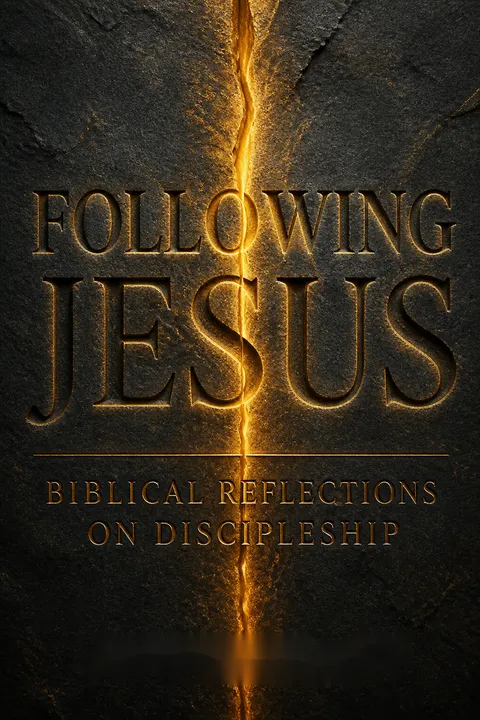
Following Jesus by N.T. Wright receives mostly positive reviews (4.26/5). Readers praise Wright's accessible yet scholarly approach to exploring New Testament books and Christian discipleship. The book combines biblical exposition with practical theology, making complex ideas understandable for general readers while maintaining depth. Reviewers appreciate Wright's pastoral warmth, cultural context, and focus on following Jesus authentically. Some express disagreement with certain theological positions, particularly regarding heaven and hell. The book's structure—six chapters on New Testament books, six on theological concepts—is widely praised as effective for devotional reading or group study.
People Also Read








Glossary
powers
Forces shaping human lifeIn Wright’s reading of Colossians, the powers are created forces and structures that influence the world, including political, economic, and spiritual realities. They become destructive when people surrender responsibility to them or treat them as ultimate. Christ’s cross defeats their claim to final authority, while their proper purpose is redirected toward serving God’s creation.
new covenant
God’s renewed relationshipIn Hebrews, the new covenant is the relationship between God and humanity inaugurated through Jesus. Wright presents earlier biblical promises and sacrifices as pointing toward this completion. Jesus’ self-offering deals with sin and enables people to approach God with cleansed consciences, rather than relying on repeated animal sacrifices.
Son of Man
God’s representative human kingWright connects this title to Daniel’s vision of a human figure who receives authority after the oppressive monsters are judged. Matthew applies the image to Jesus, whose suffering, vindication, and rule define the kingdom. The title therefore joins human representation, royal authority, and victory achieved through the cross and resurrection.
Servant King
A ruler who servesWright’s description of Mark’s Jesus, who embodies kingship through service and self-giving rather than domination. Jesus rejects both violent revolution and withdrawal from the world. His followers are called to serve others, confront destructive power, and accept costs without reproducing the coercive methods they oppose.
new creation
Renewed life and worldThe new creation is God’s renewal of human life and the created world, begun with Jesus’ resurrection and brought to completion in the future. It is not an escape from physical existence. Wright uses the idea to explain why embodied life, justice, beauty, and compassionate work matter in the present.
living sacrifice
Whole-life worshipPaul’s phrase in Romans, as explained by Wright, for offering one’s whole self to God in everyday life. Worship includes formal acts such as the Eucharist, but cannot be confined to them. It also involves service, ethical choices, gratitude, and the continuing renewal of one’s thinking and conduct.
Gehenna
Jerusalem’s judgment warningGehenna refers to a valley outside Jerusalem associated with refuse and fire. Wright argues that Jesus’ warnings using this image often concern the historical disaster facing Jerusalem if its leaders pursue violent rebellion, rather than a description of punishment after death. The term carries a warning about the consequences of destructive choices.
heaven
God’s dimension of realityWright uses heaven to mean God’s dimension of reality, which intersects with earthly life while remaining partly unseen. It is not simply a distant location or a private state of mind. Christian hope culminates in heaven and earth joined in renewed creation, rather than the permanent abandonment of the material world.
thanksliving
Gratitude expressed in conductWright’s term for a life shaped by gratitude for what God has done in Jesus. In his reading of Colossians, thanksgiving is more than a feeling or spoken prayer: it leads to changed behavior, resistance to destructive powers, and a way of living that reflects freedom and allegiance to Christ.
resurrection
Bodily life beyond deathWright distinguishes resurrection from the survival of a disembodied soul. It means that the dead are raised to embodied life through God’s action, as he argues happened to Jesus. This hope belongs to a larger promise: renewed human beings living in a renewed world, where creation is restored rather than discarded.
About the Author
Other books by N.T. Wright




Download PDF
Download EPUB
.epub digital book format is ideal for reading ebooks on phones, tablets, and e-readers.








