

Key Takeaways
Ask who Jesus claimed to be before deciding what faith asks of you.
Start with the unsettling question. At Jerusalem, Jesus’s supporters hail him as a king, but he weeps over the city. The scene captures Wright’s central puzzle: Jesus did claim authority, yet he refused the kind of power his admirers expected. Understanding him means asking what he thought he was doing, why he was executed, and why his followers declared him ruler after his death.
Hold history and faith together. Wright challenges both a devotional portrait detached from first-century events and a skeptical portrait that rules out extraordinary claims in advance. The Gospels are committed accounts, not neutral transcripts, but treating them only as moral lessons also obscures their historical claims. Wright argues that readers must enter the world the Gospels describe rather than shrink Jesus to fit modern preferences.
The opening question is powerful because it separates familiarity from understanding. A person can recognize the stories, rituals, and cultural images of Jesus without asking what kind of authority those stories attribute to him. Historical inquiry helps expose assumptions on both sides: belief does not make every reading accurate, and skepticism does not become neutral simply by rejecting religious claims. Still, the Gospels are theological narratives, so historical conclusions require interpretation, not just extraction of facts. Wright’s invitation is strongest when it encourages scrutiny without pretending that scrutiny settles every theological question.
Reconstruct first-century Jewish hopes before fitting Jesus into modern categories.
Three pressures converge. Wright’s organizing image is a storm gathering around Jesus in Jerusalem. Rome imposed taxes and military control while promoting the emperor as ruler and divine son. Many Jews, meanwhile, remembered the Exodus from slavery and the later exile in Babylon, and hoped God would again rescue Israel. A third force was the belief that God might return to rule, but not necessarily in the nationalistic way people expected.
The setting changes the meaning. Passover was more than a religious holiday: it retold Israel’s liberation while Roman soldiers watched the crowds. Jesus’s entry on a donkey therefore carried political and scriptural meaning. Wright cautions that ancient Jewish groups were diverse, but argues that this shared history helps explain why Jesus’s words about God’s rule sounded urgent and dangerous.
Collective memory helps explain how an event can carry more meaning than its visible actions suggest. A procession, a festival, or a familiar story can signal who belongs, who rules, and what future a community expects. Wright’s account makes that context legible without reducing Jesus to a simple opponent of Rome. The necessary caution is that a people’s shared story never produces one uniform political program. The book acknowledges Jewish diversity, and readers should keep that diversity in view rather than treating the historical backdrop as a single consensus.
Treat God's kingdom as a public claim, not private spirituality.
Announcement becomes action. Jesus proclaimed that God’s rule was arriving, then made that claim visible through healings, forgiveness, and meals with people regarded as sinners. For Wright, these acts were not merely private kindness. They were signs that God was beginning to repair a world marked by illness, exclusion, oppression, and death. Jesus’s choice of twelve close followers also signaled a renewed Israel gathered around his campaign.
The small scale mattered. A paralysed man receives forgiveness and healing; tax collectors and other outsiders are welcomed to the table. These encounters connect personal restoration with the larger hope of Israel’s return from exile. Yet John the Baptist remains imprisoned and is executed. The kingdom has begun, Wright argues, but its arrival is partial, contested, and not a promise that every injustice disappears immediately.
This account resists the false choice between personal care and public change. Restoring someone’s body or place in a community can challenge social arrangements that treat some people as disposable. The language of political proclamation also clarifies why Jesus’s activity threatened local authorities. At the same time, reports of healing do not by themselves establish every theological explanation offered for them. The distinction matters: the stories show how the early movement understood Jesus’s actions, while questions about what happened remain part of historical and religious inquiry.
Read Jesus's stories as arguments about who belongs in Israel's future.
Stories did political work. Jesus’s parables were not simply illustrations attached to general moral advice. Wright reads them as indirect arguments about Israel’s hopes and the people who might miss their fulfillment. The sower, for example, evokes scriptural images of God planting Israel again after disaster, while warning that the message will not take root in everyone. A vineyard story portrays leaders rejecting the owner’s messengers and son, inviting listeners to recognize the accusation aimed at them.
The audience must decide. Stories about feasts, debt, and lost people press hearers to consider whether they will join a community shaped by forgiveness and welcome. Their open edges make listeners do interpretive work; their sharper endings warn that inherited identity or religious status offers no automatic protection. Wright sees Jesus using familiar stories to announce a surprising future that includes outsiders and judges established leadership.
Narratives can persuade by making listeners occupy a role before they realize they have done so. A parable invites an audience to judge a character, then turns that judgment back toward the audience’s own assumptions. This is a sophisticated form of moral and political communication, especially when direct accusation would invite immediate suppression. Yet parables are not always self-interpreting, and their ambiguity can support more than one reading. Wright’s contextual approach is valuable because it anchors interpretation in Israel’s scriptures and history, rather than treating every story as a timeless slogan.
Recognize the cross as Jesus's royal victory over evil and death.
The king refuses the usual battle. Many contemporaries expected a liberator to defeat Rome, restore Israel’s political power, and cleanse the Temple. Wright argues that Jesus redefined the enemy: beneath imperial violence and Israel’s distorted ambitions lay the forces of evil, accusation, and death. Jesus’s conflict with the satan, understood as a power associated with evil, runs through his healings, temptations, and confrontations.
Suffering becomes the strategy. Wright connects Jesus’s royal identity with the suffering servant in Isaiah, who carries the burden of a people who have failed their vocation. At Passover, Jesus gives his death the meaning of a new Exodus: he represents Israel, bears the consequences of its rebellion and Rome’s violence, and refuses retaliation. The cross is not a detour from his campaign, but the means by which he believes its decisive victory will come.
The argument reframes power as the capacity to absorb violence without reproducing it, a theme that connects political ethics with restorative approaches to conflict. It also offers a more historically grounded account of the cross than a purely abstract transaction: Jesus dies under Roman power as a would-be king, within a crisis shaped by competing political hopes. The theological claim that his death defeats cosmic evil goes beyond what historical method alone can demonstrate. Wright’s interpretation is most persuasive when it shows how the Gospels join political history, scriptural imagery, and claims about salvation.
See Jesus as the new meeting place of sacred space and time.
The Temple’s role shifts. Many Jews understood Jerusalem’s Temple as the place where God’s presence met human life. Wright argues that Jesus acted as if this meeting place was now centered on his own work: people encountered God’s healing and forgiveness through him. His dramatic interruption of Temple commerce signaled judgment on an institution he believed had become bound up with debt, power, and failed leadership.
Time shifts too. The Sabbath marked sacred time and pointed toward God’s promised future. Jesus’s healings on the Sabbath, Wright argues, announced that the future was already arriving. The Transfiguration, where Jesus appears radiant with Moses and Elijah, gathers this claim into a vivid scene: God’s presence, Israel’s story, and Jesus’s mission converge in a human life. These events are not presented as simple proofs, but as signs of a world being renewed.
Wright’s treatment of space and time makes religious symbols more than abstract doctrine. Buildings, calendars, and rituals organize a community’s sense of reality; changing their meaning can change who has authority and where people expect to encounter the sacred. The Temple critique is therefore not simply an argument against religious institutions. It is a claim that institutions must answer to the purpose they represent. The interpretive challenge is that Jesus’s symbolic actions are reconstructed from theological sources. Their significance is compelling, but individual details should not be mistaken for an uncontested historical record.
Read Easter as creation's renewal beginning with Jesus's embodied life.
Resurrection means a beginning. Wright argues that Jesus’s followers encountered him as bodily alive after his execution, not merely as a comforting memory or ghost. He points to the Gospels’ combination of an empty tomb and encounters in which followers see, touch, and share food with Jesus. In his reading, Easter launches the new creation God intends for the world. It is not simply evidence that individuals may survive death.
The reign is real, not complete. The ascension means Jesus is enthroned as ruler, not that he has escaped to a distant heaven. Wright describes heaven and earth as dimensions meant to be joined. Jesus’s return will complete that renewal, bringing justice and healing to the whole creation. Until then, his rule is present but unfinished, a source of hope that also refuses to treat suffering and injustice as final.
This account gives resurrection a public and cosmic horizon, rather than reducing it to private consolation. It also avoids treating the body as a disposable shell, a significant departure from views that make salvation an escape from material life. The historical case and the theological interpretation should remain distinct: an empty tomb and reported encounters are evidence to assess, while new creation is the meaning Wright draws from them. That distinction need not weaken the argument. It makes clear what kind of claim each part is asking readers to consider.
Make the church a public witness, not a refuge from public life.
The reign works through people. Wright argues that Jesus’s followers, empowered by the Spirit, are meant to continue his work as a community shaped by worship and allegiance. The Beatitudes describe the character of that community: the meek, merciful, peacemaking, and justice-seeking become agents of change. In Acts, announcing Jesus as Lord challenged rulers, but the movement did not imitate imperial violence.
Service makes the claim visible. Wright points to work such as debt relief, care for the sick, support for vulnerable neighbors, and speaking truth to political power. These are not ways to earn God’s favor or claim that the church is flawless. Churches can fail and must confront their own wrongdoing. Their public role is to serve, challenge injustice, and model reconciliation, while recognizing that God’s final renewal remains God’s work.
The chapter’s strongest practical insight is that worship forms public loyalties. A community’s rituals teach its members what deserves fear, admiration, and sacrifice, so worship can shape civic behavior as surely as private belief. Wright’s emphasis on service also resists the temptation to confuse Christian influence with control of the state. His proposal requires institutional humility: churches that challenge public wrongdoing must be willing to expose their own. Without transparent accountability, a call to moral witness can become a cover for the very power it criticizes.
Analysis
Wright’s central interpretive move is to put Jesus back inside the political and scriptural imagination of first-century Judaism. That changes the usual question from whether Jesus offered private salvation or public revolution to how his actions redefined kingship, liberation, and God’s presence. The result is a coherent narrative: healings and meals inaugurate renewal, the cross confronts violence without copying it, Easter begins new creation, and the church becomes a community through which that claim takes public form.
The book’s great strength is its integration of history and theology. Roman rule, Passover memory, Temple symbolism, and scriptural hopes are not background decoration; they explain why particular actions could be understood as politically charged. Wright also exposes how modern readers can mistake their own assumptions about religion, heaven, and power for universal categories. His reading makes Jesus more historically situated and, paradoxically, more disruptive to contemporary religious habits.
The main pressure point is the distance between contextual reconstruction and theological conclusion. The Gospels are indispensable sources, but they are also narratives written by communities convinced of Jesus’s significance. Wright’s synthesis gives those narratives explanatory unity, yet the same unity can make an inference seem more certain than the evidence permits. The historical case that Jesus announced God’s kingdom and was executed as a royal threat is not identical to the theological claim that his death defeated cosmic evil or that he now rules creation.
Keeping those levels distinct strengthens rather than diminishes the book. Readers can recognize the plausibility and historical force of Wright’s account while still asking how far the evidence supports its supernatural claims. Its lasting challenge is not merely to revise a portrait of Jesus, but to reconsider what counts as political, what religious symbols do, and whether hope for a renewed world can shape life before that renewal is complete.
Review Summary
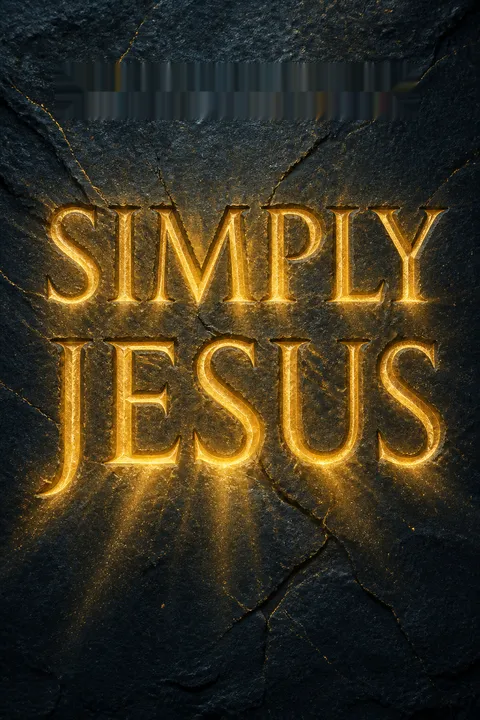
Simply Jesus explores Jesus' historical context, mission, and relevance today. Wright presents Jesus as the fulfillment of Jewish hopes and God's plan, challenging both conservative and liberal views. He emphasizes Jesus' role in establishing God's kingdom on earth, not just offering salvation or moral teachings. Readers appreciate Wright's fresh perspective, though some find it complex. The book provides insights into first-century culture and Jesus' actions, encouraging readers to reconsider their understanding of Christ and his ongoing work through believers.
People Also Read




Glossary
Kingdom of God
God's active ruleIn Wright’s account, the Kingdom of God is not a place people simply enter after death. It is God’s sovereign rule taking effect in the world, bringing justice, healing, forgiveness, and renewed human life. Jesus announces that this rule has begun through his work, while its complete realization remains a future hope.
New Exodus
Renewed liberation storyThe New Exodus is Wright’s description of Jesus’s mission as a fresh act of liberation echoing Israel’s escape from slavery in Egypt. It includes a tyrant to overcome, a people to rescue, a representative leader, sacrifice, a renewed vocation, God’s presence, and an inheritance. Jesus reshapes these themes around his death and resurrection.
Perfect storm
Converging historical pressuresWright uses the perfect storm as an organizing metaphor for forces converging on Jesus in Jerusalem. Roman imperial power, Jewish hopes for liberation and restoration, and the unpredictable purposes of Israel’s God combine in a crisis. The image also frames modern debates about Jesus, where skepticism, Christian certainty, and historical complexity collide.
Son of Man
Representative human rulerThe phrase appears in the Gospels and echoes Daniel’s vision of a humanlike figure who receives lasting authority after the beasts representing oppressive kingdoms are judged. Wright argues that Jesus draws on this image to express a royal vocation in which he represents God’s people, suffers, and is vindicated. The phrase can also function as an indirect way to refer to oneself.
Jubilee
Release from accumulated burdensIn Israel’s law, Jubilee was a designated year associated with release, debt cancellation, and the restoration of family and property. Wright connects it to Jesus’s announcement of forgiveness and liberation. In this reading, Jesus presents the hoped-for Jubilee as beginning through restored lives and communities, while extending its benefits beyond Israel to outsiders.
New creation
Renewed world under GodNew creation is the renewal of the material world according to God’s purpose, rather than an escape from physical existence. Wright treats Jesus’s resurrection as its beginning and prototype. The renewal remains incomplete in the present, but the Christian hope is that Jesus’s return will bring justice, healing, and the joining of heaven and earth.
Apocalyptic
Heavenly purpose revealedWright uses apocalyptic for visions and symbolic stories that disclose how God’s purposes are unfolding in earthly events. In this sense, apocalyptic is not simply a prediction of the world’s end. Jesus’s parables can work apocalyptically by showing listeners a heavenly perspective on Israel’s crisis and calling them to recognize God’s rule in the present.
The satan
Accusing power behind evilWright explains the satan as a figure associated with accusation and the forces of evil that deform individuals, institutions, and political systems. Jesus’s exorcisms and confrontations are presented as signs of conflict with this power. The book cautions against identifying the satan exclusively with an opposing person, nation, or political group.
FAQ
What's Simply Jesus about?
- Exploration of Jesus' Identity: Simply Jesus by N.T. Wright examines who Jesus was, what he did, and why he matters, portraying him as the embodiment of God's kingdom on earth.
- Historical Context: The book situates Jesus within first-century Judaism, highlighting the political and social dynamics of the time, including Roman occupation and Jewish expectations.
- Thematic Focus: Key themes include the nature of God's kingdom, Jesus as the Messiah, and the implications of his death and resurrection, which are crucial for understanding his mission.
Why should I read Simply Jesus?
- Deepens Understanding: The book offers a fresh perspective on Jesus, challenging conventional views and providing a deeper understanding of his life and teachings.
- Engaging Narrative: Wright combines scholarly insight with storytelling, making complex theological concepts accessible and engaging for both lay readers and theologians.
- Relevance Today: The insights are applicable to modern discussions on faith, politics, and social justice, encouraging readers to consider Jesus' message in contemporary contexts.
What are the key takeaways of Simply Jesus?
- Jesus as King: Wright emphasizes Jesus as the rightful king who inaugurated God's kingdom on earth, shifting focus from a distant deity to a present ruler.
- The Role of the Cross: The crucifixion is highlighted as essential to Jesus' mission, confronting evil and establishing a new way of life for humanity.
- Resurrection and New Creation: The resurrection is presented as the beginning of God's new creation, reconciling heaven and earth and central to Jesus' ongoing reign.
What are the best quotes from Simply Jesus and what do they mean?
- "Your moment has come.": Reflects Jesus' confrontation with religious authorities and the urgency of recognizing God's action in the world.
- "He will command peace to the nations.": Emphasizes Jesus' role as a peace-bringer, contrasting with violent messianic expectations and highlighting transformative kingship.
- "The time is fulfilled.": Encapsulates Jesus' message that God's kingdom is breaking into reality, calling for a human response to embrace this new reality.
How does N.T. Wright define the concept of the Kingdom of God in Simply Jesus?
- Present Reality: Wright argues that the Kingdom of God is a present reality initiated by Jesus, establishing God's reign on earth as in heaven.
- Involvement of Humanity: God intends to work through humans to bring about his kingdom, calling followers to actively participate in this mission.
- Transformation of Society: The Kingdom involves social justice, healing, and reconciliation, challenging power structures and inviting believers to embody these values.
What role does Jesus' death play in Simply Jesus?
- Atonement and Sacrifice: Jesus' death is presented as a sacrificial act addressing sin and evil, confronting darkness and offering redemption.
- Fulfillment of Prophecy: Connects Jesus' death to Old Testament prophecies, particularly Isaiah's suffering servant, underscoring the divine plan.
- New Covenant: Establishes a new covenant characterized by forgiveness and new life, transforming the relationship between God and humanity.
How does Wright interpret the resurrection in Simply Jesus?
- Beginning of New Creation: The resurrection is the starting point of God's new creation, signifying the defeat of death and reconciliation of heaven and earth.
- Validation of Jesus' Claims: It affirms Jesus' identity as Messiah and King, confirming his teachings and actions as part of God's redemptive plan.
- Hope for Believers: Offers hope for humanity, assuring believers of future resurrection and ultimate restoration of creation.
What does Simply Jesus say about the relationship between Jesus and the Temple?
- Jesus as the New Temple: Jesus redefines the Temple, presenting himself as the true dwelling place of God, shifting God's presence from a physical structure.
- Judgment on the Old Temple: Jesus' actions in the Temple symbolize judgment on the corrupt religious system, foreshadowing its destruction.
- Access to God: By becoming the new Temple, Jesus democratizes access to God, moving away from the exclusivity of the old Temple system.
How does Wright address the concept of evil in Simply Jesus?
- Evil as a Dark Force: Evil is presented as a malevolent force behind human actions, emphasizing the complexity of moral choices.
- Jesus' Confrontation with Evil: Jesus actively confronts evil through his ministry, healings, and death, central to his mission and God's kingdom.
- Hope for Redemption: Despite evil's presence, there is hope for redemption through Jesus, offering a path to overcome sin and darkness.
What implications does Simply Jesus have for modern Christians?
- Active Participation: Christians are called to engage in God's kingdom work, addressing social injustices and embodying Kingdom values.
- Understanding Jesus' Identity: Encourages believers to deepen their understanding of Jesus, shaping their faith and actions in the world.
- Living Out the Kingdom: Challenges Christians to reflect Jesus' love, justice, and mercy in all aspects of life, both personally and socially.
About the Author
Other books by N.T. Wright





Download PDF
Download EPUB
.epub digital book format is ideal for reading ebooks on phones, tablets, and e-readers.








