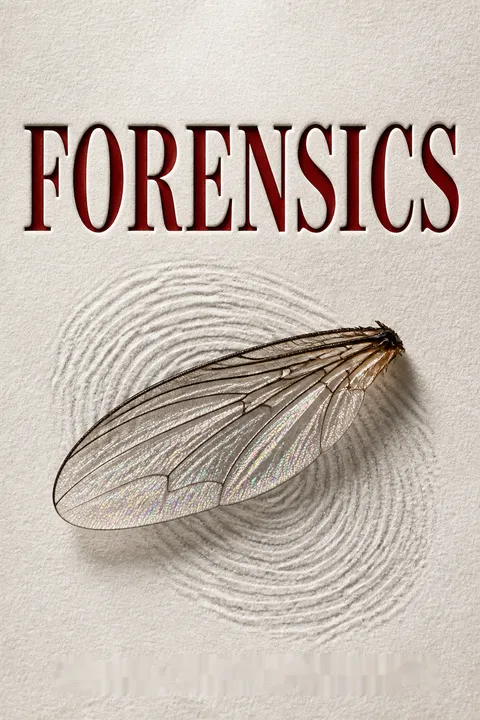


Key Takeaways
Build justice from traces, not from suspicion.
Contact leaves evidence. Forensic science offers a way to replace status, prejudice, and guesswork with evidence that can be tested. The Locard Exchange Principle holds that contact between people, objects, and places transfers traces in both directions. A criminal may leave fibres or blood behind, while carrying away material from the scene. Edmond Locard used pink cosmetic powder under a suspect’s fingernails to connect him to his murdered girlfriend. The trace mattered because it could be examined, not because investigators already believed his story was false.
Protect the scene. In the murder of officer Sharon Beshenivsky, investigators worked across the street, a travel agency, getaway vehicles, and locations the robbers visited afterward. A scene log and careful packaging helped preserve the chain of continuity, the documented history of who handled each exhibit and how. Without that record, a clue may become impossible to trust in court.
The book’s strongest premise is that an investigation begins by resisting the urge to turn a suspicion into a story. Traces are valuable precisely because they can challenge a preferred account, as well as support it. But physical evidence does not narrate itself: pink powder becomes meaningful only through comparison and a plausible connection to the victim. The discipline lies in preserving the material while keeping interpretation open. This is also why scene management is not mere administration. It protects the difference between what investigators found and what they later conclude.
Treat forensic clocks as ranges, not timestamps.
Insects mark minimum time. Forensic entomology uses insect development and colonisation to help estimate how long a body has been exposed. Blowfly eggs may hatch within a day in summer, and maggots grow at rates shaped by temperature and other conditions. Their oldest surviving stage can indicate when flies reached the body, which establishes a minimum interval since death, not the precise hour of murder. A body may have been dead before insects arrived, and weather, access, and the body’s condition all affect the estimate.
Fire leaves uncertainty too. At Dublin’s Stardust disco, investigators disagreed over whether the 1981 fire began deliberately or through an electrical fault. Later analysis suggested the original reconstruction did not explain the blaze’s rapid spread, but the suspected origin had been destroyed. The official record was ultimately clarified to say the cause was unknown.
Forensic estimates become more useful, not less, when their limits are made explicit. An interval can still test an alibi or rule out a proposed sequence, even when it cannot identify an exact moment. The Stardust investigation shows the harsher limit: sometimes the most important evidence has been consumed before investigators can examine it. The temptation to turn a range into a crisp answer is understandable, especially in court, but precision of wording is not the same as precision of knowledge. Uncertainty should be reported as information, not concealed as weakness.
Let each specialist answer only what the evidence can support.
The body is evidence. A forensic pathologist examines injuries and organs to help establish how someone died, while toxicologists test bodily samples for drugs and poisons. In Rachel McLean’s case, bruises, tiny haemorrhages, and fractures in the throat supported a conclusion of strangulation. In other cases, an apparently natural death required chemical analysis: toxicologist Julie Evans found a fatal quantity of morphine in tissue from Harold Shipman’s final victim, Kathleen Grundy. The initial examination alone had not revealed the cause.
Results need context. Toxicology depends on what substance was used, how it entered the body, and where it is measured. Drug levels can change after death, and hair can preserve a longer record of exposure, though hair colour and cosmetic treatment affect what remains detectable. Such findings can illuminate a death, but they do not automatically establish motive or intent.
Specialization earns its value through bounded claims. A pathologist can describe injuries; a toxicologist can identify a substance; neither fact, by itself, supplies a complete account of a relationship, motive, or state of mind. The Shipman case illustrates how chemical evidence can expose a pattern that ordinary certification missed, while the discussion of post-mortem change warns against treating a laboratory number as self-explanatory. The careful question is not simply what a test found, but what that result can distinguish among competing explanations.
Use DNA as a powerful lead, never as a whole investigation.
A match has limits. DNA profiling transformed investigations: in the murders of Lynda Mann and Dawn Ashworth, it cleared a young man who had confessed to one killing and showed that the same unknown person had committed both. Colin Pitchfork was eventually identified through DNA, after he tried to evade a mass screening by sending a colleague in his place. Later, low copy number DNA profiling made it possible to analyse extremely small traces, expanding the kinds of evidence investigators could examine.
The route matters. Tiny samples can be transferred indirectly or contaminated. Adam Scott spent four and a half months in jail after a lab error linked his DNA to a rape in a city he had not visited. Familial DNA searching can identify a suspect through a close relative’s database profile, as in the case that identified Joseph Kappen, but it also raises questions about privacy and unequal surveillance.
DNA is exceptionally strong at answering a narrow question about biological source, but that answer is not equivalent to proof of a crime. The distinction is easy to lose when a profile appears mathematically decisive. The cases here show why the entire path matters: collection, storage, laboratory handling, and interpretation all involve people and procedures. Familial searching adds a further complication because a relative’s profile can direct suspicion toward someone who never agreed to be searched. Analytical power therefore brings a duty to explain both the inference and its boundaries.
Treat fingerprint matches as opinions, especially when prints are partial.
Comparison can mislead. Fingerprint identification became a celebrated forensic tool after the Stratton brothers were convicted in 1905 using a thumbprint on a moneybox. Yet a latent print, meaning a mark not readily visible to the eye, may be smudged or incomplete, and its interpretation depends on an examiner’s judgment. In Scotland, experts wrongly identified a thumbprint as belonging to Detective Shirley McKie. The error damaged her career and contributed to the quashing of another man’s murder conviction.
Context can bias judgment. In the Madrid bombings investigation, FBI examiners wrongly matched a partial print to Brandon Mayfield, despite Spanish experts’ objections. Later discussion highlighted the risk of comparing a mark while already searching for a particular person. Fingerprint evidence remains useful, but the book argues that courts should hear it as an expert opinion, not an infallible fact.
The history of fingerprinting shows how a method can become culturally more certain than its actual practice. Clear prints may be highly discriminating, but difficult comparisons invite disagreement, and an examiner’s expectations can influence what appears to match. The McKie and Mayfield cases are not reasons to discard the method. They are reasons to separate observation from comparison, seek independent review, and describe uncertainty honestly. A method’s long record of success cannot guarantee that a particular judgment is correct.
Use bones and reconstructed faces to restore names, not invent certainty.
Fragments can identify people. Forensic anthropology studies human remains, especially bones, to help establish identity and investigate death. In Kosovo, Sue Black separated the remains of a father’s eleven family members from a shared grave. A garment helped distinguish one of the twin boys, but she also prepared an extra bag rather than claim certainty where the fragments did not justify it. The work served both the legal investigation and the family’s need to bury each person separately.
A face prompts recognition. Facial reconstruction estimates the soft tissues over a skull to create an image that may help relatives or the public recognise someone. Caroline Wilkinson’s reconstruction helped identify five-year-old Rowena Rikkers. Such a model is a search aid, not courtroom proof. Dental records and other evidence confirmed identities in cases described in the book.
These cases make identification more than a technical endpoint. A name can return a person to family history, permit mourning, and give investigators a clearer case. At the same time, the Kosovo example shows why compassion cannot justify pretending that uncertain fragments belong to particular individuals. Facial reconstruction has a similar boundary: its emotional force can make a face seem like a recovered portrait, even though it is an informed approximation. The method is most responsible when it opens a path to corroboration rather than closing the question on its own.
Preserve digital evidence before curiosity changes it.
Devices hold timelines. Digital forensics examines computers, phones, and other devices for records of activity. Analysts may recover deleted messages, locations, images, and metadata, information embedded in a file about its creation or handling. In Suzanne Pilley’s disappearance, changes in David Gilroy’s phone activity helped investigators infer when he may have transported and disposed of her body, even though they never found her remains. In another case, linguistic habits in a text message exposed an uncle’s attempt to make his missing niece appear to have left voluntarily.
Preserve the original. Opening a file or altering a device can change records that matter. Analysts therefore make a copy when possible and document any unavoidable changes. Cloud storage, synchronisation, and anti-forensic tools complicate the task because information may move, disappear, or be altered across devices and locations.
Digital evidence feels less tangible than blood or bone, yet it is vulnerable to the same basic problem: handling can change what investigators later claim to have found. Its abundance creates a second risk. A phone’s location is not automatically the owner’s location, and a message’s presence does not explain why it was sent. The Pilley case shows the value of combining small digital anomalies with other evidence. A timeline is persuasive when its assumptions are visible and its pieces corroborate one another.
Let offender profiles narrow a search, never choose the culprit.
Profiles are hypotheses. Offender profiling uses crime details and patterns of behaviour to suggest characteristics that may help investigators manage a large suspect pool. In the Railway Killer investigation, psychologist David Canter’s analysis helped move John Duffy up the list, in part because Duffy lived near early attacks and had a history of violence against women. The profile helped direct attention; forensic evidence then helped secure the conviction.
A fit is not proof. In the Rachel Nickell murder inquiry, a profile led investigators to Colin Stagg, who matched several proposed traits. Police used an undercover officer to elicit incriminating fantasies, but the evidence was excluded, and Stagg was later cleared by DNA. The killer was Robert Napper. A profile can generate useful questions, but a suspect’s resemblance to a description does not establish guilt.
Profiling is most defensible as a search tool rather than a verdict-producing instrument. It can help investigators notice geography, routines, and behavioural patterns that otherwise sit unnoticed in a large file. The Nickell case demonstrates the danger of letting an attractive hypothesis organise every new fact around itself. Once a suspect appears to fit, contradictory evidence may receive too little attention. A good profile should remain revisable, include qualifying language, and never substitute for evidence tying a specific person to a specific crime.
Demand courtroom scrutiny, but do not confuse performance with truth.
Evidence must survive challenge. In the Stephen Lawrence case, new examination of Gary Dobson’s old jacket found a tiny bloodstain and fibres linking it to Lawrence. The defence challenged how the jacket had been stored and whether contamination could explain the traces. Documentation and testing helped the prosecution evidence withstand that challenge. Cross-examination can reveal weaknesses, but courtroom skill can also distract from substance.
Bad reasoning has consequences. In Sally Clark’s case, expert Roy Meadow presented a statistic that vastly overstated the improbability of two infant deaths in one family. Clark was convicted, then freed after further evidence emerged. The case shows why jurors need transparent methods and why experts must explain assumptions, not just conclusions. Fair scrutiny also depends on both sides having competent lawyers and experts.
The courtroom is both a quality-control mechanism and a theatre with incentives that do not always align with scientific caution. Cross-examination can expose missing variables, as well as test whether a chain of custody is sound. But confidence, vivid demonstrations, and memorable numbers can overpower careful qualifications. The standard should not be whether an expert sounds persuasive, but whether the method can be inspected and the inference independently assessed. Scrutiny is meaningful only when the defence has enough expertise and resources to perform it.
Treat forensic science as a process of correction, not a truth machine.
Failure can improve methods. Early arsenic testing failed to persuade a jury because the result had deteriorated before it could be presented. Chemist James Marsh responded by developing a more sensitive test, which became a major advance in toxicology. The book repeatedly traces this pattern: new techniques open investigative possibilities, then errors and challenges reveal where they need better validation or restraint.
Authority is no substitute for testing. Pathologist Bernard Spilsbury’s courtroom confidence helped restore public trust in forensic pathology, but later scrutiny raised serious doubts about some of his conclusions. DNA, fingerprints, blood patterns, and digital records all have limits, even when they are useful. Reliable forensic practice depends on documented procedures, independent challenge, and willingness to revise a conclusion when the evidence no longer supports it.
The book’s history is not a straight march from ignorance to certainty. It is a record of better tools, old assumptions exposed, and new forms of error created by increased sensitivity. The Marsh example captures the productive side of failure: a weak test prompted a stronger one. Spilsbury shows the danger of allowing reputation to become a substitute for review. The deeper lesson is institutional. Science serves justice best when it can admit uncertainty, correct its methods, and make its reasoning inspectable by people outside the laboratory.
Analysis
The book’s central argument is that forensic science gives justice a material basis, but never a frictionless route to truth. The crime scene, body, insect life, fingerprints, DNA, bones, devices, and witness behaviour each preserve different fragments of an event. None is a complete account. Their value emerges through disciplined collection, comparison, and interpretation, then through the attempt to make those interpretations withstand challenge.
That structure makes the book more than a tour of clever techniques. It repeatedly distinguishes evidence from the story built around it. A fingerprint may link a person to a surface without proving when or why it was touched. DNA may identify a biological source without establishing how the material arrived. A profile may direct attention without identifying a perpetrator. The method becomes persuasive when distinct forms of evidence converge, and dangerous when one powerful clue is allowed to dominate every other question.
The historical cases also show that forensic progress is uneven. Better instruments can reduce some uncertainty while producing new risks: highly sensitive DNA tests detect traces whose route of transfer is hard to reconstruct; digital records multiply while moving into systems investigators cannot readily access; expert testimony can clarify a finding or distort it through overconfidence. Sensitivity and certainty are not synonyms. The courtroom is therefore both necessary and imperfect. Adversarial challenge can expose weak methods, but legal performance may reward certainty, simplify nuance, and disadvantage people unable to fund competent experts. The book’s most persuasive ethical standard is procedural rather than heroic: preserve evidence, disclose limits, document handling, allow independent scrutiny, and revise conclusions when new findings demand it. Forensics is not a machine that produces justice. It is a set of human practices that can make justice more evidence-based, provided their own fallibility remains visible.
Review Summary
Forensics by Val McDermid is a comprehensive exploration of various forensic disciplines, from crime scene analysis to digital forensics. Readers praised the book's accessible writing style, fascinating case studies, and thorough research. Many found it informative and engaging, appreciating McDermid's balanced approach to the strengths and limitations of forensic science. Some criticized the audiobook narration and occasional dry sections. Overall, it's highly recommended for true crime enthusiasts and those interested in the science behind criminal investigations.
People Also Read
Glossary
Locard Exchange Principle
contact transfers tracesThe principle that contact between people, objects, and places transfers material in both directions. A person may leave fibres, fingerprints, or biological traces at a scene while carrying away material from it. The principle guides investigators to search for physical connections, but the trace must still be collected and interpreted carefully.
chain of continuity
documented evidence handlingThe documented record of how an exhibit has been collected, identified, stored, transferred, and examined. It allows investigators and courts to assess whether an item presented as evidence is the same item recovered from a scene and whether its handling created a reasonable possibility of contamination or alteration.
inceptive evidence
fast-track investigative evidenceEvidence selected for rapid testing because it may quickly help identify an offender or guide an urgent police decision. Examples in the book include blood suitable for a fast DNA profile and items from a getaway vehicle that can be checked for fingerprints or DNA. Prioritisation matters when investigators face limited time and laboratory capacity.
forensic entomology
insects used as evidenceThe application of insect biology to criminal investigations. Entomologists identify insects found on or near remains and assess their developmental stages alongside temperature and environmental conditions. This can estimate the minimum time insects had access to a body, and sometimes provide clues about where a body was first exposed.
low copy number (LCN) DNA profiling
profiling tiny DNA tracesA DNA profiling method developed to analyse extremely small quantities of biological material, sometimes only a few cells. It expanded the range of items investigators could test, including traces on small objects. Because minute samples can be transferred indirectly and results may be difficult to reproduce, interpretation and corroboration are especially important.
familial DNA searching
searching for genetic relativesA database search that looks for profiles partially similar to crime-scene DNA, suggesting that a close relative of the unknown person may be in the database. Investigators can use the relationship as a lead toward identifying a suspect. The technique raises privacy concerns because it can draw relatives into an investigation without their own profiles matching the crime-scene sample.
offender profiling
inferring likely offender traitsThe use of crime-scene details, behavioural patterns, and knowledge of offenders to suggest characteristics that may help police narrow a suspect pool. Profiles can propose likely age, habits, relationships, or familiarity with a location. They are investigative hypotheses, not proof of identity, and should remain open to rejection when evidence conflicts with them.
psychological autopsy
reconstructing a deceased person's stateAn investigation into a person’s state of mind and circumstances before death, often used when physical examination cannot determine whether a death was suicide, murder, or accident. Psychologists may review diaries, emails, online activity, mental health history, and accounts from people who knew the deceased.
E-FIT
computer-assisted witness portraitAn Electronic Facial Identification Technique used to create a suspect image from an eyewitness’s recollection. The witness selects among computer-generated facial features and images, with each selection guiding a more focused set of options. The result is a recognition aid, not a definitive identification.
FAQ
What’s Forensics: What Bugs, Burns, Prints, DNA and More Tell Us About Crime by Val McDermid about?
- Comprehensive forensic science overview: The book traces the history, evolution, and application of forensic science in criminal investigations, covering disciplines like DNA analysis, pathology, toxicology, fingerprinting, digital forensics, and forensic psychology.
- Real-life case studies: Val McDermid uses famous and lesser-known cases to illustrate how forensic techniques solve crimes, highlighting both breakthroughs and challenges.
- Human and ethical dimension: The narrative explores the dedication, creativity, and emotional resilience of forensic experts, as well as the ethical and legal issues they face.
- Accessible and engaging: McDermid makes complex forensic concepts understandable for general readers, blending scientific detail with compelling storytelling.
Why should I read Forensics by Val McDermid?
- Demystifies forensic science: The book offers an authoritative, behind-the-scenes look at real forensic work, moving beyond TV dramatizations to reveal the painstaking reality of crime-solving.
- Historical and modern perspectives: Readers gain insight into the evolution of forensic methods, from early cases to cutting-edge techniques like virtual autopsies and digital forensics.
- Ethical and societal implications: McDermid discusses the impact of forensic science on justice, privacy, and public perception, encouraging critical thinking about its role in society.
- Compelling storytelling: The book’s vivid narratives and expert interviews make it engaging for both lay readers and professionals interested in crime, science, or justice.
What are the key takeaways from Forensics by Val McDermid?
- Science transforms justice: Forensic science has revolutionized criminal investigations, providing objective evidence that can exonerate or convict suspects.
- No method is infallible: Every forensic discipline, from DNA to fingerprinting, has limitations and is subject to human error, bias, and interpretation.
- Collaboration is crucial: Successful investigations rely on teamwork between scientists, police, lawyers, and psychologists, each contributing unique expertise.
- Ethics and integrity matter: The book emphasizes the importance of evidence integrity, ethical practice, and the emotional toll on forensic professionals.
What are the main forensic disciplines covered in Forensics by Val McDermid?
- Crime scene investigation: Techniques for preserving, documenting, and collecting evidence, with emphasis on scene management and contamination prevention.
- Pathology and toxicology: Determining cause and time of death, detecting poisons and drugs, and the evolution of autopsy methods.
- Fingerprinting and DNA analysis: The development, strengths, and limitations of these identification methods, including notable cases and controversies.
- Forensic anthropology and facial reconstruction: Identifying victims from skeletal remains and reconstructing faces using scientific and digital methods.
- Digital forensics and psychology: Investigating cybercrime, analyzing digital evidence, and profiling offenders based on behavior and crime scenes.
How does Val McDermid explain the importance of the crime scene in forensic investigations?
- Crime scene as silent witness: The scene holds vital clues that can reconstruct events, especially when victims or suspects are unreliable.
- Locard’s Exchange Principle: Every contact leaves a trace, meaning criminals inevitably leave and take evidence from the scene.
- Complexity of multiple scenes: Investigations often involve several related locations, each requiring careful processing to avoid contamination.
- Case examples: Real cases, like the murder of PC Sharon Beshenivsky, illustrate the importance of meticulous scene management.
What role does forensic entomology play in Forensics by Val McDermid?
- Estimating time of death: Insect succession and development on corpses provide a biological clock, especially when traditional methods are unreliable.
- Species identification and analysis: Experts identify insect species and growth stages, using temperature data and advanced imaging to refine estimates.
- Case applications: Historic and modern cases demonstrate entomology’s evidential power, despite challenges like weather and body concealment.
- Courtroom impact: Forensic entomology often provides crucial evidence in court, helping to establish timelines and corroborate other findings.
How does Forensics by Val McDermid describe the evolution and challenges of forensic pathology?
- Historical development: The book traces the field from ancient autopsies to modern practices, highlighting key figures and controversies.
- Modern autopsy techniques: Pathologists use external and internal examinations, microscopic analysis, and virtual autopsies to determine cause of death.
- Interpreting time of death: Multiple variables affect precision, requiring scientific rigor and unbiased fact-finding.
- Case studies: Real cases, like Rachel McLean’s murder, show pathology’s role in securing convictions and advancing justice.
What insights does Val McDermid provide about forensic toxicology and famous poisoning cases?
- Foundations of toxicology: The book covers pioneers like Mathieu Orfila and the development of reliable poison detection methods.
- Historical and modern cases: From arsenic poisoners to the Radium Girls and Harold Shipman, the book explores motives, detection, and legal consequences.
- Modern techniques: Chemical tests, mass spectrometry, and hair analysis are used to detect drugs and poisons, with challenges in post-mortem interpretation.
- Workplace safety and accountability: The evolution of toxicology has influenced legal standards and workplace protections.
How does Forensics by Val McDermid explain the science and controversies of fingerprinting?
- Historical origins: The book traces fingerprinting from early use in India to global adoption and the development of classification systems.
- Techniques and standards: Examiners recover and compare prints using powders, chemicals, and databases, with evolving standards for identification.
- Limitations and errors: Cases of misidentification highlight the fallibility of fingerprint evidence and the need for probabilistic reporting.
- Expert opinion in court: Fingerprint evidence is treated as expert opinion, not absolute fact, requiring careful explanation to juries.
What does Val McDermid reveal about DNA profiling and its impact on criminal investigations?
- Revolutionary identification tool: DNA profiling links suspects to crime scenes with high accuracy, but is not infallible due to human error and contamination risks.
- Familial DNA searching: This technique identifies suspects through relatives’ profiles, solving cold cases but raising privacy and civil liberty concerns.
- Contamination and error: Real cases show how lab mistakes can lead to wrongful arrests, emphasizing the need for strict protocols.
- Ethical debates: The book discusses issues like database retention, racial bias, and the potential misuse of genetic information.
How does Forensics by Val McDermid portray forensic anthropology and facial reconstruction?
- Identification of the dead: Anthropologists analyze skeletal remains to determine identity, age, sex, and cause of death, crucial in mass fatalities and war crimes.
- Facial reconstruction science: Artists use skull measurements and tissue data to rebuild faces, aiding identification but not serving as courtroom evidence.
- Case studies and innovations: The book highlights successful reconstructions and new techniques like digital modeling and vein pattern analysis.
- Global and educational impact: Forensic anthropology knowledge is shared worldwide, advancing identification efforts and human rights investigations.
What are the best quotes from Forensics by Val McDermid and what do they mean?
- On DNA evidence: “DNA doesn’t lie. It’s an exceptionally good lead and exceptionally strong evidence but there is human interaction in the process... the error rate is exceptionally low but it’s not zero … DNA shouldn’t be a lazy way to not do an investigation.” This underscores DNA’s power and the need for thorough police work.
- On science and justice: “The methods of science and justice have much in common. Both attempt to shine a clarifying light on obscurity and uncertainty... as they try to go beyond assumption and arrive at the truth though demonstrable facts.” This highlights the shared goal of truth-seeking.
- On courtroom challenges: “When lawyers fail in their efforts to attack the evidence, they turn on the person who’s giving it instead.” This reflects the adversarial nature of trials and the pressures on expert witnesses.
- On the human side of forensics: The book’s quotes emphasize the emotional and ethical complexities faced by forensic professionals, reminding readers of the discipline’s profound societal impact.

Download PDF
Download EPUB
.epub digital book format is ideal for reading ebooks on phones, tablets, and e-readers.








