

Key Takeaways
Treat a forest walk as sensory recovery, not a workout to complete
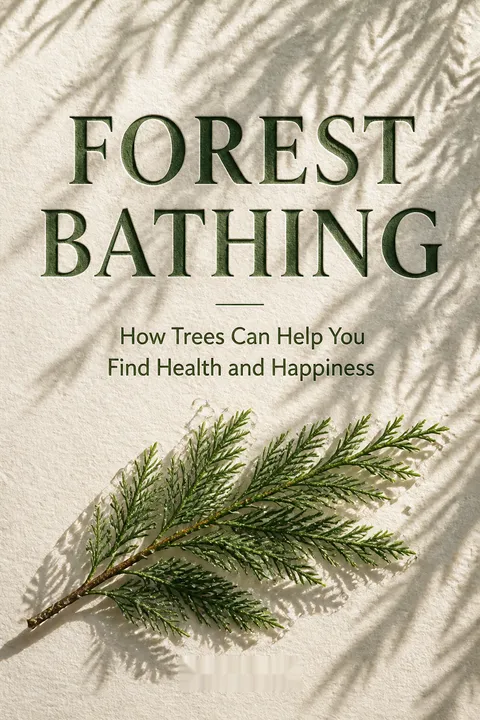
A different kind of walk. Shinrin-yoku, Japanese for forest-bathing, means taking in the forest atmosphere through the senses. It is not a hike with a distance target. The practice emerged in Japan in 1982, combining a public-health idea with an incentive to help people value forests. Its starting point is simple: slow down enough to notice light, birdsong, tree scents, fresh air, and the feel of wind or bark.
Connection is the point. Li argues that modern indoor, screen-heavy routines leave people stressed and detached from nature. A forest bath offers a deliberate pause from those demands. The book suggests about two hours as a useful visit, but the essential feature is attentive presence, not reaching a particular trail marker or achieving athletic exertion.
What's striking is the shift from nature as scenery to nature as an environment for attention. A walk can become restorative not only because trees are present, but because the walker stops dividing attention among messages, schedules, and goals. That makes the practice adaptable: a park visit can count when a remote forest is out of reach. The evidence supports taking nature seriously as a health resource, but the language of a universal biological need should not erase differences in preference, culture, or access. Some people find restoration in social spaces or built environments, too.
Two hours among trees can shift stress, mood, and sleep
The body changes gear. The book describes stress as a tilt toward the sympathetic nervous system, the body's alert, fight-or-flight mode. Relaxation is associated with greater parasympathetic activity, which supports rest and recovery. In forest-walking studies, researchers measured lower stress hormones, blood pressure, and pulse, alongside changes in heart-rate variability. These findings suggest that a forest visit can affect more than how someone says they feel.
Sleep and mood also shifted. In a small study of twelve middle-aged men, average sleep rose from 383 minutes before a forest trip to 452 minutes during it, then measured 410 minutes the following night. Other research in the book found that both city and forest walks reduced some negative moods, while forest walks also improved vigor and fatigue scores. The author reports that two hours can produce effects similar to longer outings.
The value here is the convergence of subjective reports and physiological measures. When people feel calmer and their stress indicators move in the same direction, the case for a real short-term response becomes stronger. Yet a forest outing bundles several influences: walking, time away from work, quiet, novelty, and often companionship. Small samples and short follow-up make it difficult to isolate which ingredient matters most or how long benefits last. The sensible reading is that nature can be a useful recovery setting, not that trees replace sleep care or treatment for chronic stress.
Forest air may support immunity, but immune markers are not cancer cures
A measurable immune signal. Natural killer, or NK, cells are white blood cells that can attack virus-infected and tumor cells. In one three-day forest trip, Li measured NK-cell activity rising from 17.3 percent to 26.5 percent, with increases in several proteins involved in cell killing. In a separate study, the elevated NK activity was reported to persist for as long as thirty days.
One possible pathway. Trees release volatile substances called phytoncides, including compounds that produce familiar conifer scents. Li tested tree oils in a laboratory and diffused hinoki oil in hotel rooms for twelve men. The study reported increased NK activity and lower stress hormones. These findings suggest a possible link between forest compounds and immune response. They do not show that forest visits prevent or treat cancer.
The distinction between a biological marker and a health outcome is crucial. NK-cell activity offers a plausible window into immune function, but a temporary change in a lab measure cannot establish lower cancer risk, much less prove a cancer treatment. The evidence is still interesting because it gives researchers a mechanism to test rather than relying only on the feeling of calm. Replication, larger samples, and longer clinical follow-up would clarify how much the change matters. For readers, the strongest practical case remains stress relief and time outdoors, not a promise of disease prevention.
Let nature hold attention gently when concentrated thought gets depleted
Not all attention costs the same. The book contrasts effortful, directed attention, used for demanding tasks and navigating a busy street, with what William James called soft fascination. In nature, attention may settle on moving leaves, clouds, water, or birds without requiring a deliberate effort to concentrate. Li argues that this gentle engagement gives fatigued attention room to recover.
Studies suggest cognitive benefits. A University of Michigan study found participants remembered 20 percent more after a walk among trees than after a city-street walk. A Stanford study reported less rumination after a nature walk than after a walk beside heavy traffic. Research involving several days immersed in nature found a 50 percent increase in problem-solving and creative reasoning. That last result concerns extended immersion, not a guaranteed boost from a brief stroll.
Soft fascination offers a useful account of why a break can feel restorative without being empty. The mind remains engaged, but it is not forced to filter urgent, competing signals. This connects naturally to cognitive ergonomics: people often need recovery from sustained directed attention, not simply more discipline. The reported memory and creativity results are compelling, although a walk or retreat can change mood, sleep, and expectations at the same time. Nature is a promising context for mental reset, while claims of durable cognitive enhancement require more than short experiments.
Build your forest bath around sensations that reliably calm you
Choose what draws you in. Li recommends finding a place that feels comfortable, then moving slowly and letting the senses guide attention. One person may settle into the sound of a stream; another may respond more to spring leaves, damp earth, or a breeze. A guide can help beginners slow down, but the practice can also be done alone in a park or garden.
Make the visit simple. Leave the phone and camera behind when possible. Notice sounds and colors, breathe in the local scents, touch a tree or the ground, and pause when tired or thirsty. The book suggests a two-hour visit as a useful target, with about 2.5 kilometers of slow walking. It also describes yoga, meditation, and quiet sitting as ways to connect with the setting.
Personal preference is more than a pleasant detail: it can determine whether a restorative practice becomes repeatable. This resembles a basic principle in behavioral design, where a routine is easier to maintain when it fits a person's surroundings and temperament. Sensory attention also gives the walk a clear focus without turning it into another performance task. The advice to put devices away is practical, but it should remain flexible. A phone may be necessary for navigation, safety, or accessibility, and mindful attention can still happen without enforcing a rigid device-free rule.
A small green pause can restore attention inside the city
Nature need not be remote. The book points to urban parks, trees outside a window, and even pictures of nature as ways to bring natural cues into daily life. One University of Melbourne study found that a 40-second look at a green roof helped sustain attention. Other studies cited in the book report cognitive benefits from viewing nature images and improved workplace experience when employees have a natural view or hear natural sounds.
Change the workday setting. A brief look away from a screen, a lunchtime walk through a nearby green space, or birdsong in a noisy office can create a small interruption in work's demands. Li also recommends indoor plants and natural scents. These options are not identical to being in a forest, but they may make daily environments more welcoming and less mentally taxing.
This is a valuable dose of realism: public health advice is most useful when it survives contact with ordinary schedules and dense cities. A window, courtyard, or short park visit can lower the barrier to trying the practice. Still, the book groups together interventions with different levels of evidence. A view of greenery, indoor plants, essential oils, and actual forest exposure should not be treated as interchangeable therapies. In particular, the simple attention-restoration finding supports a brief visual break, not every broader claim about indoor air quality or scent-based treatment.
Plant and protect urban trees as public-health infrastructure
Trees do work cities need. Urban trees offer shade, help reduce heat, absorb some air pollutants, and intercept stormwater. The book cites a London tree survey estimating that trees removed 2,241 tonnes of pollution and captured more than 3.4 million cubic meters of stormwater annually. Green space also provides places for residents to walk, rest, and experience less traffic noise.
Loss can carry human costs. A study tracking emerald ash borer damage across fifteen US counties found higher mortality in affected areas, including deaths from heart and lower respiratory diseases. The analysis associated tree losses with thousands of deaths, though it cannot prove that each death was caused by the missing trees. Together, such findings support treating the urban canopy as valuable infrastructure, rather than decoration left over after roads and buildings are planned.
The strongest policy implication is that urban nature has multiple benefits at once. Shade, cleaner air, recreation, and psychological restoration can reinforce one another, making trees a potentially cost-effective part of city planning. The ash-borer study is especially suggestive because a large environmental disturbance offers a real-world comparison, but ecological events can affect neighborhoods in several ways beyond tree cover. Equity matters, too: planting targets should prioritize communities with little shade and high pollution, while ensuring that residents can actually use the green space. A canopy average can hide profound differences block by block.
Give children outdoor freedom before asking them to save nature
Experience comes before stewardship. The book describes Richard Louv's term nature deficit disorder for the perceived costs of children having too little contact with nature. Louv links that gap with problems including stress, obesity, and behavioral difficulties. Li emphasizes a more direct point: outdoor play gives children room to explore, move, and build confidence, rather than only learning facts about plants from a classroom.
Make nature part of ordinary childhood. Japanese forest kindergartens take children outdoors throughout the week, whatever the weather, for activities such as climbing, exploring, and getting muddy. The aim is not simply to train future environmentalists. Regular, enjoyable time outdoors helps children form a relationship with places and living things. The book argues that adults who feel connected to nature are more likely to care for it, so childhood access has consequences for both well-being and conservation.
The emphasis on unstructured play is important because it treats nature as a setting for childhood, not merely a teaching aid. Curiosity, movement, and manageable risk can make outdoor time intrinsically rewarding. That relationship may support later care for local environments, although stewardship is not guaranteed by childhood exposure alone; family, culture, and public policy also shape it. The phrase nature deficit disorder is evocative, but it should not be mistaken for a formal clinical diagnosis. The practical lesson is to make safe, welcoming outdoor experiences routine, rather than framing every muddy afternoon as a prescription.
Analysis
The book's argument moves from a familiar intuition, that time among trees feels restorative, toward a layered account of why that feeling might matter. It links sensory attention to stress regulation, mood, sleep, immune markers, and cognition, then widens the frame from an individual's walk to parks, city planning, and children's access to nature. That progression is persuasive because it gives the practice both an intimate scale and a civic one: a quiet walk can help a person pause, while a tree canopy also cools neighborhoods and filters pollution.
Its central strength is practical modesty. Forest-bathing does not require athletic ability, special equipment, or wilderness travel. Slow attention in a city park is presented as meaningful, which makes the idea usable by people whose lives are mostly urban. The book also draws on different kinds of evidence, including physiological measurements, mood questionnaires, hospital observations, and ecological comparisons. Their convergence makes the broad proposition credible: natural settings can support short-term well-being.
The evidence is less uniform than the narrative sometimes suggests. Some experiments involve only a dozen participants, and studies measuring NK-cell activity or mood do not establish prevention of cancer or long-term disease. Observational findings about trees and mortality can be affected by income, housing, pollution, and other neighborhood conditions. Nor should forest exposure, a window view, essential oils, indoor plants, and grounding products be assumed to have equivalent effects. These are distinct interventions with different evidentiary bases.
A careful reading therefore preserves the book's strongest practical claim while narrowing its medical claims. Accessible time outdoors is a low-cost way to invite attention away from screens and daily demands, and it may improve mood and relaxation. It is not a substitute for clinical care. At the policy level, the argument gains depth when trees are valued both for human benefits and as living systems with worth beyond their usefulness to people. Public access, disability accommodations, and fair distribution of green space determine who can benefit, not just how many trees a city counts.
People Also Read

Glossary
shinrin-yoku
Sensory time in a forestA Japanese term meaning forest-bathing. It refers to spending unhurried time in a wooded setting and taking in the surroundings through sight, hearing, smell, taste, and touch. It is not defined by hiking distance or strenuous exercise. The practice can also be adapted to parks and other places with trees.
Forest medicine
Health research on natureThe field Li uses for research into how forest environments affect human health and well-being. It examines psychological responses, such as mood and relaxation, alongside physiological measures, including stress hormones, blood pressure, and immune-cell activity. The book presents forest medicine as a developing area of research, not a replacement for conventional medical care.
phytoncides
Volatile substances released by plantsNatural volatile compounds released by plants, including trees, as part of their defense and signaling systems. Some phytoncides contribute to the characteristic scents of forests, especially coniferous forests. Li discusses laboratory and hotel-room studies in which exposure to tree oils was associated with changes in immune measures and stress indicators.
soft fascination
Effortless attention to natureA form of attention that is drawn to surroundings without requiring sustained mental effort. In the book, natural details such as clouds, moving leaves, streams, and birdsong engage attention gently. The concept helps explain how time in nature may give effortful concentration a break and support recovery from mental fatigue.
POMS
Profile of Mood StatesA psychological questionnaire used to assess mood across several scales, including anxiety, depression, anger, vigor, fatigue, and confusion. Li describes administering it before and after forest walks to compare participants' reported emotional states. The book's appendix includes an adapted questionnaire, while noting that mood scores are subjective measures.
nature deficit disorder
A proposed nature-contact gapA term introduced by Richard Louv to describe the perceived effects of children's separation from the natural world. The book connects reduced outdoor experience with concerns about children's physical and psychological well-being, including stress, obesity, and behavioral difficulties. It is a descriptive idea, not a recognized clinical diagnosis.
View through a Window May Influence Recovery from Surgery
Study of nature views and recoveryRoger Ulrich's study compared surgical patients whose hospital-room windows faced trees with patients whose windows faced a brick wall. As described in the book, those with a tree view recovered more quickly, needed less pain medication, and experienced less depression. The finding helped establish the idea that views of nature may affect recovery in healthcare settings.
Download PDF
Download EPUB
.epub digital book format is ideal for reading ebooks on phones, tablets, and e-readers.








