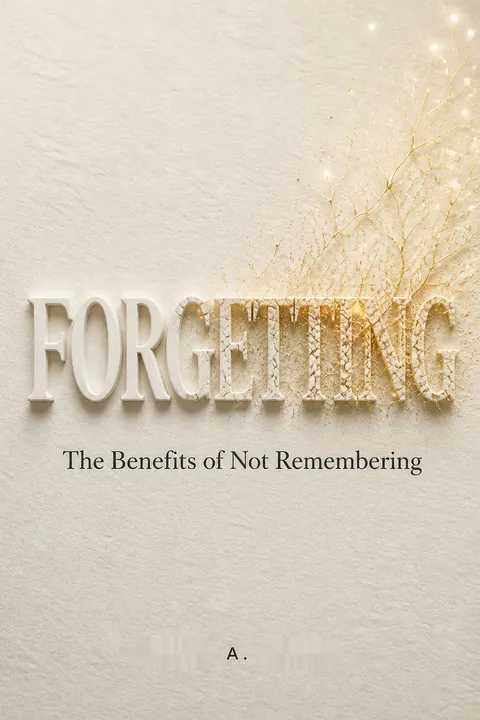


Key Takeaways
A perfect memory would make thought harder, not life easier.
Forgetting is active. The brain does not simply store memories like files on a hard drive. Experiences change the strength of connections between neurons, partly by growing tiny structures called dendritic spines. Small argues that separate molecular processes also shrink those connections during normal forgetting. Forgetting, then, is not automatically a memory system failing. It is one of the brain's ways of managing information.
Karl's case shows the distinction. The lawyer feared that forgetting a client's name meant his mind was failing. Tests eventually showed age-related decline in his hippocampus, but no evidence of Alzheimer's disease. His normal forgetting was a different matter: it helped keep the mind from being overwhelmed by details. Borges's fictional Funes, who remembered every perception, could not generalize or think clearly.
The computer analogy makes memory easy to picture, but it can also mislead: human memories are reconstructed, not retrieved as perfect files. The more useful insight is that cognition depends on selection. A mind that retained every detail would have trouble deciding which details matter. This resembles a broader design principle in complex systems: stability requires both persistence and controlled change. The distinction between ordinary forgetting and disease is crucial, too. A helpful process can become harmful when it accelerates or spreads beyond its normal range.
Use forgetting to update old memories when your world changes.
Adaptation needs revision. In animal experiments, mice that learned a route through a maze could learn a changed route faster when normal forgetting was active. Turning up memory alone helped them repeat the old route, but forgetting helped loosen that established pattern so the new one could take hold. The brain's flexibility depends not just on adding information, but on modifying what is already there.
Freddy needed sameness. The chapter describes a young autistic boy who became distressed when familiar routines or objects changed. Small presents reduced forgetting as one possible contributor to inflexibility, and notes that some autism-linked genes affect the pathways involved in forgetting. This is a proposed explanation, not a complete account of autism, which is highly varied. In the book's model, weakened updating can make change harder to absorb.
This account usefully separates learning a new rule from unlearning an old one. In everyday life, a person can know that circumstances have changed yet keep responding as if the previous conditions still hold. That gap helps explain why flexibility can feel harder than acquiring information. The autism discussion needs especially careful framing: a proposed molecular pathway cannot explain every autistic person's experience, strengths, or needs. Its value here is narrower. It offers one way to investigate how memory updating and tolerance of change may be related.
Keep the gist, or familiar things will look perpetually new.
Thinking filters variation. To recognize the same person across different lighting, angles, hairstyles, and expressions, the brain cannot treat every visual detail as equally important. It must retain a useful pattern and let some particulars fade. Small connects this to artificial intelligence: neural-network methods such as dropout limit how strongly a system relies on particular details, helping it recognize patterns it has not encountered in precisely the same form before.
Funes could not generalize. Borges's character saw each version of a dog as a separate thing, because he could not forget the differences between them. Small links this literary idea to studies of visual processing in autism. In one experiment, children had to recognize faces suggested by arrangements of fruit and vegetables; on average, autistic children took longer, consistent with greater attention to individual parts before integrating a whole.
The connection to pattern recognition gives forgetting a precise computational role: it can keep a system from fitting itself too tightly to yesterday's examples. In machine learning, this is the difference between memorizing a training set and recognizing a pattern in new data. Human minds face a similar problem, though they also attach meaning and emotion to what they perceive. The analogy has limits: performance on a visual task is not a measure of a person's overall ability to understand wholes, and different autistic people may process information differently.
Let the emotional alarm fade without erasing what happened.
Facts and feelings can diverge. A traumatic memory can remain vivid while its emotional force diminishes. Small describes wartime comrades who remembered a brutal battle but did not experience the recurring distress and impairment required for a PTSD diagnosis. In his account, the amygdala helps attach emotional significance to events; when its threat response stays excessively active, reminders can trigger fear or rage long after danger has passed.
Extinction changes the response. In psychology, extinction is the weakening of a learned response when a once-threatening cue is repeatedly encountered in a safe setting. Exposure therapy uses this principle under controlled conditions. Small also describes humor and social support as ways his unit may have softened the emotional charge of their memories. The goal is not to deny the event, but to reduce the alarm it continues to provoke.
Separating what happened from how intensely it is felt is an important distinction in trauma care. Emotional recovery need not require factual erasure, and a calmer response does not imply that an event was insignificant. The chapter's cellular account makes this process intuitive, although real trauma is shaped by more than one brain region or learning mechanism. Exposure is also not simply repeated contact with a distressing memory: clinical context, pacing, and a person's sense of safety matter. Social connection adds a dimension that purely individual models can miss.
Build safety and connection before fear hardens into temperament.
Threat can shape social behavior. Small compares chimpanzees, typically more aggressive, with bonobos, typically more tolerant and cooperative. Brain-imaging studies found differences in several social regions, including the amygdala. He argues that repeated fear can reinforce defensive responses, while the brain's sensitivity to oxytocin may help reduce amygdala activity during social bonding. In this view, connection can help quiet the systems that keep people on guard.
The claim is not a prescription for drugs. The chapter discusses alcohol, anxiety medications, and MDMA because they can affect amygdala activity, but does not recommend self-medication. It also describes studies in which foxes selected over generations for less fearful aggression developed more affiliative behaviors. These comparisons suggest that fear and social disposition can be linked, but they do not mean that all aggression is pathological or that one chemical explains kindness.
The argument usefully treats social safety as part of emotional regulation, not as a decorative extra. Relationships can change what feels threatening and how readily a person approaches others. Yet animal comparisons should be read as clues, not direct templates for human personality. Chimps and bonobos live within species-specific social worlds, and human behavior is influenced by history, institutions, and choice as well as biology. The distinction also helps avoid a common mistake: calming a threat response is not the same thing as creating genuine trust.
Sleep prunes weak associations, making room for creative recombination.
Sleep may reset the cortex. Small presents Francis Crick's proposal that dreaming helps the brain forget. During sleep, the hippocampus replays selected fragments of experience, while many newly formed but weak neural connections are not reinforced and fade. Research cited in the book found a net reduction in synaptic strength during sleep. The proposed benefit is to preserve useful learning while preventing the cortex from accumulating too much activity and information.
Loose links invite insight. Creativity often joins familiar ideas in an unexpected way. In a word-association test, for example, the words elephant, lapse, and vivid can point to memory. Strong, fixed associations can make such a connection harder to notice. Small links sleep and the gradual loosening of associations to improved creative performance. The claim is not that sleep supplies ideas from nowhere, but that it may leave existing ideas less rigidly connected.
The creative payoff here is not blankness but flexibility: the mind can recombine stored material when its associations are not all locked in place. This offers a productive answer to the false choice between remembering and forgetting. Creative work needs knowledge, but it also needs room to use knowledge in ways that are not routine. Sleep research supports a role for synaptic regulation, though sleep has multiple functions and the idea that forgetting is its primary purpose remains a model, not a complete account of why sleep is necessary.
Treat fast answers as provisional when memory supplies the evidence.
Memory can bias judgment. Daniel Kahneman and Amos Tversky showed how mental shortcuts can produce confident but incorrect answers. Small adds a neurological complication: a 2012 study found that hippocampal activity can drive implicit associations that influence choices, even when people are unaware of them. A person might prefer a product because it has been paired with something appealing, without consciously recalling that connection.
Dr. X's doubt helped him slow down. This physician had weaker hippocampal memory but strong reasoning skills. He believed his awareness of his memory limits made him less likely to trust his first diagnosis and more willing to revise it. Small and Kahneman considered this plausible, but not established: strong prefrontal reasoning may explain his accuracy better. The practical lesson is not that poor memory improves judgment, but that confidence should be checked and first impressions revisited.
This account distinguishes knowing that a memory is influencing a decision from simply having the memory. A person may sincerely experience a preference or hunch as direct perception, even when associations have helped shape it. That makes intellectual doubt useful as a method: not generalized self-distrust, but a deliberate check on how a conclusion was reached. The proposed link between weaker memory and better decisions remains uncertain. Doubt is most valuable when paired with evidence and reasoning, not when it becomes reflexive indecision.
Remember shared harms accurately, but loosen the rancor that fuels them.
Names carry care. Joan, a woman with Alzheimer's disease, began to forget her daughter Barbara's name while still recognizing her warmly. Small explains that memories of people are networks of facts and feelings, so losing a name does not by itself prove that affection has disappeared. The episode also shows why names matter socially: remembering them signals attention and regard.
Communities need two kinds of memory. Small describes Nobel laureate Eric Kandel's gradual reconciliation with Vienna, the city his Jewish family fled after Nazi persecution. Public discussion preserved the historical record while allowing some emotional release. The book argues that communities, like individuals, can remember injustice without keeping every grievance emotionally aflame. After 9/11, Small saw shared vigils and memorials help channel grief away from generalized hostility toward Arabs and toward remembrance of victims.
The distinction between factual remembrance and emotional release matters at both personal and political scales. A community cannot repair harm by pretending it did not occur, but an inherited grievance can also become a tool for renewing hostility toward people who did not commit the original wrong. Public rituals can help make room for both accountability and reconciliation. The balance is difficult: pressure to forgive can silence victims, while endless retaliation can keep injury politically useful. Neither forgetting nor remembrance is automatically ethical.
Age-related memory decline and Alzheimer's damage different hippocampal regions.
Similar symptoms can have different causes. Karl's memory decline came from normal aging, while Joan's progressive loss of memory reflected Alzheimer's disease. Small's research found that normal aging most affected the dentate gyrus, while Alzheimer's disease first affected the entorhinal cortex. This anatomical distinction helped establish that age-related decline is not simply Alzheimer's in disguise, though clinicians still need time and testing to distinguish causes in individual patients.
Progression matters. Alzheimer's typically begins with trouble forming new memories, then spreads into cortical regions that store and retrieve information. In late-life cases, family history can affect risk, but the book notes that about 1 percent of cases involve a rare deterministic mutation associated with early onset. For ordinary cognitive aging, Small recommends physical exercise, the lifestyle intervention he says meets the standard for a clinical recommendation.
The distinction guards against two damaging errors: treating every lapse as disease, and dismissing progressive impairment as inevitable aging. It also shows why diagnosis depends on patterns over time, not one forgotten name or isolated test score. The anatomical findings offer a promising route toward better classification, but a population-level brain map cannot substitute for individual clinical judgment. The chapter's emphasis on exercise is appropriately cautious: it presents a supported recommendation, not a cure or guarantee against cognitive decline.
Analysis
Small's central move is to replace the image of memory as a flawless archive with a dynamic system that must continually choose what to preserve, revise, and release. The book makes this argument unusually tangible by moving among synapses, patients, wartime recollections, art, computer algorithms, and public memory. Each setting reveals a different cost of excess: details can obstruct abstraction, old routes can resist new ones, emotional alarms can outlast danger, and familiar associations can distort judgment. Forgetting is not simply a deficit. In balance with memory, it helps cognition remain usable in a changing world.
The most persuasive sections link mechanisms to recognizable experience without pretending that one mechanism explains everything. The difference between Alzheimer's disease and normal aging, for example, becomes clearer through the contrasting hippocampal regions Small's lab identifies. The stories of Karl and Joan give that distinction human stakes: similar complaints can arise from different processes, and a name forgotten is not necessarily a relationship forgotten. The book also handles forgiveness with a useful distinction between preserving historical facts and reducing the emotional hold of injury.
The argument is strongest as a framework, less certain as a universal causal theory. Animal studies, human clinical observations, and computational models illuminate one another, but they are not interchangeable forms of evidence. The proposed connection between reduced forgetting and autistic inflexibility is explicitly partial, and should not be mistaken for a complete account of autism. Likewise, synaptic pruning may contribute to sleep and creativity without being sleep's sole purpose. These qualifications do not undercut the thesis; they clarify its proper scale.
The lasting value is a change in the question. Instead of asking only how to remember more, readers can ask what information deserves to remain vivid, what needs updating, and what should lose its emotional grip. The book's answer is not indiscriminate forgetting. It is a mind capable of preserving useful knowledge without being ruled by every detail it has ever encountered.
Review Summary
Reviews for Forgetting are generally positive, averaging 3.76 out of 5. Readers appreciate the book's accessible exploration of why forgetting is a beneficial brain function, covering topics like autism, PTSD, sleep, and Alzheimer's disease. Many praise the author's clear writing style and use of patient anecdotes to illustrate scientific concepts. Common criticisms include the book feeling unfocused or meandering, with some feeling the second half strays too far into general neurology and Alzheimer's research rather than staying focused on the core thesis about forgetting's benefits.
People Also Read








Glossary
forgetting toolbox
Molecules that weaken connectionsSmall's term for the molecular mechanisms that actively reduce the strength or size of synaptic connections. These processes are distinct from the mechanisms that strengthen connections during memory formation. They help explain why ordinary forgetting is not merely a passive failure of memory, but a regulated part of brain function.
memory toolbox
Molecules that strengthen connectionsSmall's shorthand for the molecular machinery that helps neurons strengthen their connections during learning. When neurons are activated together in a coordinated way, dendritic spines can grow and synaptic communication can strengthen. These changes support the formation of memories, including associations among different parts of an experience.
hub-and-spoke
Layered sensory processingA model in which sensory information is processed through connected levels. Lower-level regions represent basic elements, such as shapes or colors, and feed information into higher-level regions that combine those elements into a recognizable whole. Small uses the model to explain how the brain processes faces, names, and other complex information.
extinction
Weakened learned fear responseA psychological process in which a learned response to a cue diminishes after the cue is repeatedly encountered without the harmful event it once predicted. In the book's discussion of trauma, extinction can reduce the fear response while leaving factual knowledge of the event intact. Exposure therapy is designed to use this process in a safe clinical context.
metacognition
Awareness of one's thinkingAwareness of one's own cognitive abilities, limitations, and biases. Small uses the term for the capacity to reflect on how the mind is working, including whether a judgment may be distorted or a memory may be unreliable. It can help people recognize when confidence should be questioned and further evidence considered.
metamemory
Awareness of memory accuracyA form of metacognition concerning how accurately a person's subjective sense of memory matches their actual memory performance. Someone with good metamemory can recognize and acknowledge their memory difficulties. Some people with Alzheimer's disease lose this awareness as well as memory, making it harder for them to recognize risks caused by their decline.
smart forgetting
Sleep-related synaptic resetA hypothesis, originating with Francis Crick and discussed by Small, that sleep helps the brain retain selected, useful information while allowing many weaker neural connections to diminish. On this account, sleep reduces accumulated synaptic activity and helps preserve the capacity to learn. Small presents evidence supporting this model while recognizing that sleep serves broader functions.
anatomical biology
Linking disease to brain regionsAn approach to understanding brain disorders by identifying the brain regions or neuronal populations affected first. Locating a disorder's early anatomical source can help researchers distinguish conditions that produce similar symptoms and investigate the proteins and mechanisms involved. Small applies this reasoning to separate Alzheimer's disease from normal age-related memory decline.
cognitive reflection
Checking confidence before actingThe process of assessing how confident one should be in a judgment before acting on it. Small discusses it in relation to mental shortcuts that can produce quick but mistaken answers. Reflection can lead someone to reconsider an initial response, although it depends on more than simply taking extra time.
Download PDF
Download EPUB
.epub digital book format is ideal for reading ebooks on phones, tablets, and e-readers.








