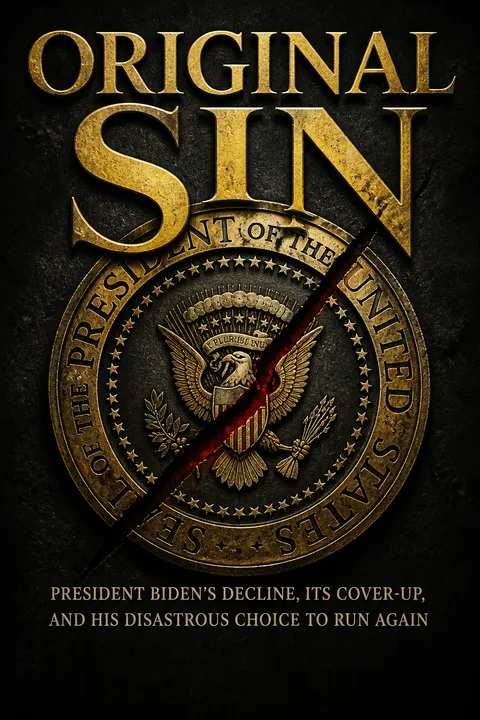


Key Takeaways
Biden's reelection bid turned private decline into a national trust crisis
The book's central charge. Tapper and Thompson argue that the decisive mistake was not Biden's age alone, but choosing another campaign while his abilities were diminishing and his circle concealed how much. Their reporting draws on interviews with about 200 people, many conducted after the 2024 election. They reject both caricatures: Biden was not incapable throughout his presidency, but neither was he consistently fit for another four years.
The political cost. Biden withdrew on July 21, leaving Kamala Harris 107 days to introduce herself and run. Trump beat her, though the three Blue Wall states Biden had needed to win were decided by a combined margin of roughly 230,000 votes. The authors contend an earlier exit could have enabled a stronger contest and nominee, while acknowledging that the counterfactual cannot be proved.
What's striking is how the book shifts the question from whether Biden had good days to whether the public could trust the process that assessed his fitness. That is a governance question, not merely a campaign postmortem. Still, a close election does not establish that another nominee would have won. The strongest case here is institutional: a party facing a consequential risk had no credible, transparent way to test its incumbent's capacity or prepare an alternative. That failure matters even if the electoral outcome in a different timeline remains unknowable.
Treat resilience as a reason to adapt, not proof you must continue
A survival story became a rule. Biden understood his life through repeated recoveries: a stutter mocked in childhood, the deaths of his first wife and infant daughter, a near-fatal aneurysm, political defeats, and the death of his son Beau. His father's lesson was that setbacks should be followed by getting back up. That identity helped Biden persist through grief and political failure, including his 2020 victory over Trump.
Persistence turned against candor. The authors describe a family culture that resisted uncomfortable facts, including secrecy about Beau's cancer and repeated efforts to protect Hunter amid addiction and legal troubles. Some aides believed the stress of Hunter's plea deal collapsing and his 2024 trial weighed heavily on Biden, though that does not establish what caused his changes. Loyalty and endurance made hard truths feel like betrayal.
Resilience is valuable when it restores agency after hardship. It becomes hazardous when every warning is recast as another obstacle to outlast. In organizations, a leader's admired origin story can quietly become an immunity claim: the person who has survived everything must be able to survive this too. The book makes that conversion visible. Its family material also calls for care. Grief, addiction, and aging are not evidence of incapacity by themselves, and the narrative cannot establish a clinical cause. The relevant lesson is narrower: affection should make difficult conversations more humane, not less possible.
Widen access before loyal aides become the only witnesses
A tight circle filtered reality. Biden's longtime advisers Mike Donilon, Steve Ricchetti, and Bruce Reed were nicknamed the Politburo. The book describes an unusually insular operation in which a small group shaped access, schedules, decisions, and the information reaching the president. Some cabinet members and aides reported seeing him less often as concerns grew. Others received repeated assurances that he was fine despite noticing troubling moments themselves.
Gradual change is hard to spot. Staffers invoked boiling frog syndrome, the idea that people may miss a worsening condition when it changes slowly. The book notes that the familiar frog story is apocryphal: frogs tested in heated water jumped out. In the White House, however, frequent exposure, loyalty, and practical accommodations could make each new limitation seem manageable, while outsiders noticed the accumulated change.
This is a classic information-design problem: when every route to a decision passes through the same small circle, dissenting observations can be filtered out before they reach the person with authority. A wider set of observers is not automatically wiser, but independent access makes it harder for one group's assumptions to become the only accepted account. The comparison to organizational groupthink is useful, especially because the aides need not have planned a deception for their assurances to mislead. The practical test is whether people closest to power can safely report what they actually see.
A president's ability to explain decisions is part of governing
Communication is not decoration. Some Biden aides believed his judgment remained sound even as his ability to speak and respond reliably worsened. The authors argue that these functions cannot be cleanly separated in a presidency. In 2021, Biden left two House meetings without making the specific request needed to advance legislation. In a January 2024 meeting on Ukraine aid, lawmakers recalled that he read from notes, trailed off, and deferred questions to aides.
The public record narrowed. By July 2022, Biden had given 38 interviews, compared with 116 for Trump at the same point. Meetings and remarks were increasingly scripted, shortened, or moved to the middle of the day. These choices could preserve energy, but they also limited opportunities to demonstrate command, explain policy, and hear unfiltered questions.
The distinction between private judgment and public communication is real, but it is not a clean division of labor. A president's words help coordinate agencies, persuade allies, reassure the public, and make officials answerable for choices. Communication trouble does not prove poor judgment, just as eloquence does not prove competence. The more defensible standard is functional: can the leader convey intent, absorb challenge, and respond when circumstances change? Treating these duties as superficial mistakes a central mechanism of democratic accountability for mere performance.
Run an open primary before a crisis leaves successors only 107 days
No serious succession process existed. Biden had once described himself as a transitional president, yet his reelection decision was made without a formal senior-team review of the risks of serving until age eighty-six. The White House told the Democratic National Committee that Biden was running, and the party scheduled no sanctioned debates for challengers. It also moved South Carolina to the first primary contest, a choice party officials privately acknowledged helped protect Biden from an early embarrassment.
The alternative had little room. Congressman Dean Phillips ran against Biden but struggled to get a hearing and had to sue to appear on Wisconsin's ballot. When Biden withdrew, Harris inherited a 107-day sprint, with little time to introduce herself, test messages, or distinguish herself from an unpopular administration. A competitive primary might have produced a stronger nominee, the authors argue, but cannot guarantee one.
A primary is more than a selection ritual. It is a stress test: voters see candidates answer questions, handle setbacks, and clarify differences before the general election compresses every decision. The book's account shows how incumbency can turn a party's machinery into a shield against that test. Yet an open contest also carries costs, including division and uncertain outcomes. The point is not that primaries always choose well. It is that eliminating competition leaves a party with less information, fewer rehearsed alternatives, and a succession scramble when the stakes are highest.
Do not confuse protecting the party with protecting the public
Fear supplied a ready excuse. Many Democrats viewed Trump as an existential threat and believed that criticizing Biden could help him. Inside the administration and party, people who saw concerning changes often stayed quiet because they expected to be dismissed, blamed for a loss, or excluded if Biden won. The book describes a recurring logic: Biden may have limitations, but Trump must be stopped. That reasoning made silence feel like loyalty.
Silence weakened credibility. Pollsters found that voters worried about Biden's age and inflation, yet they say the campaign did not fully act on that data or share it directly with him. After the debate, some officials still defended Biden's fitness while privately doubting it. As one campaign veteran later reflected, telling voters their eyes were wrong damaged the party's credibility on other issues too.
This resembles pluralistic ignorance: individuals privately doubt a shared claim, but each assumes others still believe it, so nobody speaks plainly. The danger is especially acute when dissent is framed as helping an adversary. Political loyalty can be a real public good, but only when it protects shared principles rather than a leader from evidence. A useful safeguard is to separate the question of who benefits politically from the question of what is true. The latter needs a channel that does not depend on permission from the people being evaluated.
Treat public failure as evidence to investigate, not spin away
The debate made private concerns visible. On June 27, 2024, Biden struggled to complete thoughts, lost his train of thought, and gave answers that were difficult to follow. The authors report that these problems were not wholly new to people around him. What made the debate different was that millions of viewers saw them at once, without the editing, prompting, or controlled setting used in many earlier appearances.
The first response was defense. Biden's team initially blamed a cold and a bad night, while allies emphasized Trump's lies and Biden's record. But the public event did not establish a medical diagnosis. It did establish a pressing question about whether Biden could campaign effectively and serve another term. The authors describe a growing gap between what staffers had witnessed and what the campaign was prepared to acknowledge.
A visible failure is not a clinical assessment, and a single bad performance should not be treated as conclusive proof of a condition. But it can be a trigger for independent review, especially when it matches concerns reported across settings. The debate became a coordination point: people who had privately wondered whether something was wrong could now see that others had witnessed the same thing. In a high-stakes institution, the correct response to a focal event is neither instant diagnosis nor automatic dismissal. It is transparent fact-finding.
Give successors time to earn trust before crisis makes them nominees
Harris inherited the clock, not a clean slate. When Biden withdrew, his vice president had 107 days to campaign. She had to persuade voters that she represented a change while remaining loyal to the president who had chosen her. She had also defended his fitness after the debate and could not easily explain why he had left without seeming inconsistent. Her campaign struggled to articulate differences from Biden on inflation, immigration, and other issues.
Her constraints were real, not total. Harris gained energy and support after becoming the nominee, and she performed strongly in her debate with Trump, according to the book. But she lacked the years of public scrutiny and preparation that a normal primary could provide. The authors also note her campaign made its own mistakes. Biden's delay narrowed her options; it did not determine every choice she made.
Succession planning is a form of political resilience. It gives a deputy visible responsibilities, lets voters evaluate potential leadership, and reduces the shock of a sudden handoff. The Harris dilemma also shows how loyalty can become a strategic trap: a successor may be expected to embody change while defending the very record voters dislike. That tension cannot be solved with messaging alone. Earlier preparation would not guarantee voter approval, but it could give candidates time to establish a distinct rationale and demonstrate competence before the campaign becomes an emergency.
Require independent health disclosure and a credible succession protocol
The safeguards were largely informal. Biden's public medical summaries in 2021, 2023, and 2024 did not include a cognitive test. His physician described him as fit, while some doctors cited in the book said cognitive screening can help identify concerns but cannot by itself diagnose impairment. The authors do not establish a definitive diagnosis for Biden, and caution against treating public footage as a substitute for examination.
The constitutional question remains. The Twenty-Fifth Amendment allows the vice president and a majority of cabinet members to declare that a president cannot discharge the office's duties, but using it would demand unusual political courage. The book raises the possibility of legally requiring fuller, independent presidential health reporting. Its broader point is that a public cannot judge what a government chooses not to disclose.
Transparency rules should protect both the public and the person in office. A screening result is not the same as a capacity judgment, and a diagnosis alone cannot answer whether someone can meet the demands of a particular role. Any reform would need independent clinical standards, clear privacy boundaries, and a process for resolving disagreement without turning medicine into partisan ammunition. Still, relying entirely on a president's own circle to decide what the public may know creates an obvious conflict of interest. Trust requires more than a reassuring physician's letter.
Analysis
Original Sin is a reported political narrative, not a clinical evaluation or a neutral reconstruction of every relevant medical fact. Its central argument is that Biden's decision to seek another term, and the effort to manage perceptions of his decline, prevented the Democratic Party from testing alternatives in time. The narrative's force comes from accumulated scenes: scripted meetings, restricted access, private doubts, repeated assurances, and finally a debate that made those doubts widely visible. This structure shows how institutional failure can emerge without a single mastermind. Loyalty, personal affection, fear of Trump, and belief in Biden's record each supplied a plausible reason to postpone confrontation.
The book is strongest when it distinguishes dimensions of capacity. Biden could make consequential decisions and show command in some settings, while also appearing unable to communicate consistently, manage a full schedule, or respond reliably in public. Those are not interchangeable claims. Nor does the reporting establish a diagnosis. That restraint matters, because retrospective interviews by people with political interests can be shaped by blame, self-exoneration, or the clarity that hindsight seems to provide. Anonymous sourcing can protect witnesses, but readers cannot weigh every account equally. The authors acknowledge this uncertainty, yet the forceful framing sometimes makes the causal story feel more settled than the evidence can make it.
The most durable lesson is procedural. Political systems should not depend on an aging leader's self-assessment, a family member's judgment, or a handful of loyal advisers' assurances. Parties need credible contests, private channels for unwelcome assessments, and succession plans that do not begin only after a televised crisis. Such safeguards cannot identify the perfect candidate or eliminate partisan calculation. They can make concealment harder and correction less catastrophic. The book's charge is not that every stumble disqualifies a leader. It is that when signs of reduced capacity accumulate, an institution that suppresses inquiry risks losing both the election and the public's confidence in its own honesty.
Review Summary
Original Sin by Jake Tapper and Alex Thompson receives mixed reviews. Critics praise its readability but question its journalistic integrity, citing heavy reliance on anonymous sources and lack of clinical evidence. Some view it as a necessary examination of Biden's cognitive decline and the Democratic Party's failures, while others see it as opportunistic and lacking new insights. The book's focus on Biden's age and alleged mental deterioration is controversial, with some readers finding it ageist and others considering it an important critique of political leadership.
People Also Read





Glossary
original sin
The initiating political mistakeThe book's label for Biden's decision to run for reelection while his physical and communicative abilities were diminishing, followed by efforts to conceal or minimize those changes. The phrase frames the decision as the initiating mistake that narrowed the Democratic Party's choices and contributed, in the authors' account, to the 2024 election crisis.
the Politburo
Biden's inner advisory circleAn informal nickname for a small group of longtime Biden advisers, especially Mike Donilon, Steve Ricchetti, and Bruce Reed. The book uses the term to describe their concentrated influence over campaign strategy and White House operations. It also conveys the authors' argument that an unusually close, loyal group limited the flow of contrary information.
the Bidenness
Biden's familiar verbal quirksA shorthand used by Biden aides and observers for his long-standing tendency toward gaffes, rambling stories, misremembered names, and awkward remarks. Because these traits predated his presidency, they sometimes made it difficult for people to distinguish familiar habits from newer signs of deterioration. The term could explain individual moments, but also risked dismissing meaningful change.
boiling frog syndrome
Missing gradual deteriorationAn analogy used by Biden aides for how people who see someone daily may fail to notice gradual changes, while occasional observers see a sharper contrast. The book notes that the familiar story of a frog remaining in gradually heated water is apocryphal, since frogs tested under such conditions jumped out. Here, the phrase describes a perception problem, not a scientific finding about Biden.
the Block
Biden's internal scheduleThe name used for Biden's detailed internal schedule. Reporters and aides cited it to show how the president's day was organized, including blocks marked for meetings, desk work, or private time. The schedule became relevant to arguments about his limited working hours, the placement of events around midday, and the shrinking amount of unscripted public activity.
news card
Prepared answers for reportersA set of cue cards prepared for Biden with news of the day and possible responses to questions. The book says the practice began as a way to help the president handle press encounters, then expanded into multiple daily cards with basic reminders. The cards are presented as one of several accommodations that helped structure appearances while obscuring how much support he needed.
What If? Committee
Election contingency planning groupA group convened by Democratic National Convention chair Minyon Moore to consider unexpected disruptions and prepare backup plans. Its topics included protests, changes to the primary calendar, and the possibility that Biden would not be the nominee. After the debate, members examined how a different nominee could be substituted and how delegates might respond.
Montreal Cognitive Assessment (MoCA)
Brief cognitive screening testA short screening instrument used to look for possible signs of cognitive impairment. The book notes that it can be administered in roughly ten minutes and is not a definitive diagnosis. Some physicians considered a cognitive assessment relevant for an older president, while Biden's physician argued that his frequent contact with the president made the test unnecessary.
Twenty-Fifth Amendment
Presidential incapacity procedureA constitutional amendment that clarifies presidential succession and provides a process for transferring authority when a president cannot discharge the office's duties. In the procedure discussed in the book, the vice president and a majority of cabinet members can submit a declaration of incapacity to congressional leaders. Its use is legally possible but politically demanding.
FAQ
1. What is Original Sin: President Biden's Decline, Its Cover-Up, and His Disastrous Choice to Run Again by Jake Tapper about?
- Detailed account of decline: The book investigates President Joe Biden’s cognitive and physical decline during his presidency, especially leading up to the 2024 election.
- Behind-the-scenes revelations: Drawing on interviews with about two hundred insiders, it exposes how Biden’s inner circle concealed his deterioration from the public and even from many within the administration.
- Broader political themes: Tapper explores the consequences of this cover-up, the decision for Biden to run again, and the resulting impact on the Democratic Party and American democracy.
2. Why should I read Original Sin by Jake Tapper?
- Unprecedented insider access: The book features interviews with top White House officials, lawmakers, aides, and donors, many of whom had not spoken publicly before.
- Reveals hidden dynamics: It provides a rare, comprehensive look at the internal workings of the Biden administration, the Democratic Party, and the 2024 campaign.
- Timely and consequential: Understanding the factors behind Biden’s decline and the 2024 election outcome offers important insights into leadership, political accountability, and the impact of age and health on governance.
3. What are the key takeaways from Original Sin by Jake Tapper?
- Consequences of denial: The book shows how groupthink and denial within Biden’s circle led to disastrous political decisions.
- Impact on democracy: It highlights the dangers of hiding a president’s health issues and the need for transparency and institutional safeguards.
- Lessons for the future: Tapper frames Biden’s saga as a cautionary tale about the corrupting influence of power and the importance of honesty in leadership.
4. What were the main factors contributing to President Biden’s decline according to Original Sin?
- Physical and cognitive deterioration: Biden experienced significant decline in energy, memory, communication skills, and physical mobility, with frequent moments of confusion and forgetfulness.
- Personal and family struggles: The death of his son Beau and ongoing issues with Hunter Biden’s addiction and legal troubles added immense stress.
- Protective inner circle: Close advisers and family members shielded Biden from bad news and scrutiny, creating an environment where honest assessment was discouraged.
5. How did Jake Tapper describe the cover-up of Biden’s health issues in Original Sin?
- Deliberate concealment: The White House and Biden’s closest aides actively hid the extent of his decline from the public and many within the party.
- Filtered information: Polling data and medical information were spun or withheld, with only select advisers controlling what Biden himself was told.
- Ethical concerns: The book raises questions about the responsibility of political leaders to be transparent about a president’s fitness and the failure to invoke constitutional mechanisms like the Twenty-Fifth Amendment.
6. What is the "Politburo" and what role did it play in Original Sin by Jake Tapper?
- Inner circle of advisers: The "Politburo" refers to Biden’s small, loyal group of senior advisers—Mike Donilon, Steve Ricchetti, and Bruce Reed—who wielded outsized influence.
- Insular and protective: This group was highly insular, often shielding Biden from dissenting views and bad news, contributing to a lack of transparency.
- Control over decisions: They managed much of the White House’s operations and campaign strategy, sometimes sidelining other officials and limiting broader input.
7. How did First Lady Jill Biden and her aide Anthony Bernal influence events in Original Sin?
- Chief protector role: Jill Biden was a staunch defender of the president’s condition and a key supporter of his reelection, often denying or downplaying his decline.
- Powerful aide: Anthony Bernal, Jill’s top aide, controlled access to the president, influenced staffing, and acted as a gatekeeper within the White House.
- Maintaining the narrative: Both were central to upholding the "Biden theology" of unwavering faith in the president, discouraging acknowledgment of his limitations.
8. What were the key moments that revealed President Biden’s decline in Original Sin?
- Hunter Biden’s legal troubles: The stress from Hunter’s conviction and upcoming trials visibly affected Biden’s focus and energy during critical campaign moments.
- June 2024 fundraiser: At a high-profile Los Angeles fundraiser, Biden appeared frail and confused, shocking attendees like George Clooney and Julia Roberts.
- June 27, 2024 debate: Biden’s disastrous debate performance, marked by confusion and physical frailty, triggered panic among Democrats and donors.
9. How did the 2024 presidential debate impact Biden’s campaign according to Original Sin?
- Turning point: The debate exposed Biden’s cognitive and physical struggles to a national audience, confirming private fears.
- Demoralizing effect: It led to widespread disillusionment among party leaders, donors, and voters, with some Democrats openly calling for Biden to withdraw.
- Campaign consequences: The debate marked the start of “the Bad Times,” a period of internal strife, fundraising challenges, and strategic uncertainty.
10. How did Kamala Harris’s campaign unfold after Biden’s withdrawal in Original Sin?
- Rapid transition: Harris inherited Biden’s campaign infrastructure with only about three months before the general election, facing a divided party.
- Loyalty and limitations: Her loyalty to Biden limited her ability to differentiate herself and address voters’ concerns about the administration.
- Mixed results: Despite some gains and a strong debate performance, Harris’s campaign was hampered by the short timeline and the lingering effects of Biden’s decline.
11. What constitutional and political implications does Original Sin discuss regarding presidential decline?
- Twenty-Fifth Amendment: The book explains the amendment’s provisions for presidential incapacity and notes the lack of courage to invoke it in Biden’s case.
- Minimum vs. optimal fitness: Tapper argues that while Biden had moments of coherence, his overall decline raised doubts about meeting even the minimum requirements for presidency.
- Call for reforms: Experts in the book advocate for legally mandated, detailed health disclosures to prevent future cover-ups and maintain public trust.
12. What are the best quotes from Original Sin by Jake Tapper and what do they mean?
- “He totally fucked us.” — David Plouffe’s blunt assessment of Biden’s decision to run again, reflecting campaign frustration and betrayal.
- “We are not going to win in November with this president.” — George Clooney’s op-ed, capturing the private consensus among many Democrats.
- “Get up!” — Biden’s lifelong mantra, symbolizing his resilience but also the tension between his mythology and his physical decline.
- Orwell’s warning: “We are all capable of believing things which we know to be untrue...” frames the book’s theme of denial and the eventual confrontation with reality.
- “You have bigger balls than anyone I’ve ever met.” — Biden’s remark to Schumer, showing the personal and emotional complexity of the situation.
Download PDF
Download EPUB
.epub digital book format is ideal for reading ebooks on phones, tablets, and e-readers.








