

Key Takeaways
Forgive without pretending the past was harmless
Keep the whole memory. After discovering her husband’s affair, Lysa tried removing photographs and keepsakes from her home. The pain remained, while treasured memories disappeared too. She came to see that a memory can hold genuine joy and painful betrayal at once. Forgiveness does not require forgetting, excusing abuse, or rewriting what happened. It means releasing the demand to make the offender suffer, so the injury no longer dictates the injured person’s future.
Separate release from reunion. Forgiveness can happen without reconciliation. Rebuilding a relationship requires mutual willingness, changed behavior, and safety. Where there is abuse or danger, distance and outside help may be necessary. The book’s Christian framing sees forgiveness as cooperating with grace already received from Jesus, rather than forcing kind feelings through sheer willpower.
The insistence on preserving mixed memories is psychologically astute: people need not choose between honoring what was meaningful and naming what was damaging. That both-and stance resists the common impulse to simplify a painful history into either a fraud or a perfect past. The distinction between forgiving and reconciling also protects the concept from becoming pressure to resume contact. Its limit is important: spiritual forgiveness cannot replace accountability, safeguarding, or professional support when harm continues. The book is strongest when release concerns retaliation, not the removal of consequences.
Name each injury, then forgive its facts and ongoing effects separately
Make the hurt specific. In counseling, Lysa wrote individual injuries from her marriage on index cards, one fact at a time. Naming each betrayal aloud made an overwhelming tangle more manageable and gave her pain a witness. She paired each card with a symbol of Jesus’ forgiveness, a practice rooted in her Christian faith. The exercise did not erase the event or instantly change her feelings; it marked her willingness to release the claim for revenge.
Keep working with the impact. The book distinguishes a decision to forgive what happened from the longer process of addressing what it continues to do. A car crash, for example, may be one event, while a lasting limp and fear of running are continuing effects. Later triggers can bring anger back without making the original decision false. They are prompts to process new layers of loss, fear, and mistrust.
This distinction prevents a damaging all-or-nothing test: if anger returns, the person must not have forgiven sincerely. The card exercise also converts vague distress into discrete, speakable pieces, a useful form of cognitive organization. The author’s religious symbol provides meaning for Christian readers, but the method can be adapted without it by naming the injury and its current effects in a journal or with a therapist. Care is needed not to treat recurring trauma responses as moral failure. Re-experiencing pain calls for support and safety, not self-accusation.
Stop making your recovery wait for the offender to cooperate
Reclaim your part. Lysa expected her husband’s repentance, restitution, or visible consequences to make healing possible. Her counselor challenged that dependency: even a perfect apology could not undo the past, and it might never come. In Jerusalem, she connected this lesson to two Gospel stories of healing, where Jesus gives an instruction and the person responds without waiting for bystanders to act. For her, the stories became a faith-based reminder to take the next step she could control.
Own responses, not the original harm. The person who caused the injury is responsible for causing it. The book asks the wounded person to take responsibility for managing their reactions and choices, rather than handing that power to the offender. This is not a claim that recovery is easy or that trauma is voluntary. It is a way to avoid making progress conditional on another person’s remorse.
The distinction between responsibility for harm and agency in recovery is crucial. It offers a route out of paralysis without pretending that the injured person caused the injury. Still, the language of choosing healing can sound overly individualistic if detached from context. Trauma may require time, medical care, therapy, social support, or protection before a person can take particular steps. Self-direction is most useful when it expands available choices, not when it becomes another standard by which survivors are judged.
Trace today's reactions back to the beliefs childhood taught you
Find the old script. Lysa describes childhood abuse, her father’s absence, and a schoolyard betrayal. As a child, she expected adults to identify the wrongdoer, enforce consequences, and restore the relationship. When that did not happen, she learned to collect evidence against people and to hide vulnerable feelings. Those early expectations shaped how she interpreted later conflicts, including her marriage.
Use the three-part map. Her counselor’s process is to collect, connect, and correct the dots. First, record memories without demanding a tidy timeline. Next, notice the beliefs they produced about yourself, other people, God, and relationships. Finally, question whether those beliefs still help. A friend named Colette traced her avoidance of sunrises and sunsets to childhood fear, then began to reclaim those times of day. The past stayed fixed; her interpretation changed.
This framework treats reactions as learned adaptations rather than personality defects. That can make self-examination less shaming and more precise: a strong response may reflect an old danger map being activated in a new setting. The sunrise example shows how a belief can outlast the circumstances that formed it. Yet connecting present behavior to childhood is a hypothesis, not proof. Memory is selective, and not every difficulty has a single origin. Testing interpretations with a trusted counselor or friend keeps reflection curious instead of turning it into amateur diagnosis.
Set limits where rescue attempts are consuming your capacity
Stop trying to control change. Lysa describes exhausting herself trying to prevent a loved one’s destructive choices. She compares the effort to trying to stop rain by arguing with the sky. Repeated warnings and rescue attempts may postpone consequences, but they cannot create lasting change if the other person is unwilling to pursue it. Compassion can remain; the rescuer’s role must change.
Make boundaries practical. A boundary states what someone will or will not do, such as declining to provide money for an irresponsible decision or stepping away from a conversation that escalates. The book calls it enabling when a person repeatedly covers for another, shields them from consequences, or works harder on their problems than they do. Forgiveness does not require unlimited access. In abusive or dangerous situations, the author urges readers to seek qualified help and involve appropriate authorities when needed.
The chapter’s central insight is that limits can protect a person’s capacity to remain compassionate rather than serve as punishment. This is particularly useful in relationships where repeated rescue turns concern into control and leaves everyone more depleted. The distinction between support and enabling is not always easy to apply, especially with addiction, financial dependence, or caregiving duties. The book appropriately points toward counselors and trusted advisers. In serious danger, however, safety planning and professional guidance should take priority over preserving a relationship or demonstrating forgiveness.
Treat bitterness as grief that needs tending, not shaming
Look beneath the anger. The book presents bitterness as accumulated hurt and grief, not simply a sign of a cruel personality. After a funeral, Lysa felt newly tender and recognized how loss had hardened her toward people. She suggests that unresolved grief can disguise itself as cynicism, resentment, revenge fantasies, suspicion, or anger at others for seeming happy. Naming these reactions makes it possible to address the loss beneath them.
Let sorrow soften, then reconsider. The author compares this work to loosening dry soil with water before turning it over and adding compost. In a Jewish mourning practice she discusses, friends sit with grieving people for seven days, bringing food and making room for stories. Her point is that loss needs company and acknowledgment, not isolation. Grief does not excuse harmful behavior, but attending to it can make room for a less defensive view of oneself and others.
Describing bitterness as grief beneath a protective shell offers a compassionate route into self-awareness. It also clarifies why simply condemning resentment may deepen defensiveness: the person can hear judgment where they need help identifying pain. The communal mourning example emphasizes that sorrow is relational, not merely an inward task. At the same time, grief does not explain every cruel act, and compassion for an offender should not require access or trust. The most balanced reading preserves both truths: pain can illuminate behavior, and boundaries can still be necessary.
Do not mistake unanswered prayer for proof of God's absence
Separate hope from prediction. During her marital crisis, Lysa prayed for a specific rescue and watched for signs that it would happen. When it did not, she feared God had abandoned her. She later interpreted the long, uncertain period as a slow process she could not see at the time. Her Christian argument is that divine work may be hidden, and that a person’s immediate view cannot establish the whole meaning of events.
Notice the provision you have. She uses three biblical images of bread: a loaf people make, manna given in the wilderness, and Jesus as spiritual sustenance. The images distinguish desired, controllable outcomes from forms of support that may arrive differently. This perspective does not promise that a spouse returns, an illness ends, or grief disappears. It invites trust while acknowledging that some suffering remains unexplained.
The chapter speaks directly to a painful spiritual question: when circumstances contradict expectation, does that mean care has vanished? Its answer offers believers a way to sustain trust without demanding immediate resolution. The distinction between the hoped-for outcome and present sources of support can also help people notice care they otherwise overlook. But this remains a theological interpretation, not evidence that a tragedy serves a discernible purpose. Readers should be allowed to grieve, doubt, and seek practical help without being told that faith requires certainty about why suffering occurred.
Look for shared grief before reducing someone to the side they represent
Begin with the human loss. In Israel, Lysa joined women whose religious and political identities divided them and whose families had suffered deaths in conflict. One woman held a photograph of her daughter; another mourned her husband. The group did not settle political disputes or agree on every account of what had happened. They listened, held hands, and later made fruit jam together. The day gave them a shared task and a way to meet one another as grieving people.
Do not confuse empathy with agreement. The story suggests that common sorrow can make conversation possible across deep differences. It does not make responsibility disappear or require anyone to surrender their convictions. The practical lesson is to listen for the human being beneath a position, especially when anger makes an entire group seem like a single opponent. Compassion may interrupt the urge to return hurt with more hurt.
This encounter offers a modest but credible model of dialogue: not a grand settlement, but a temporary space where people can listen and act generously without first resolving every historical disagreement. Shared mourning can reveal a common vulnerability that slogans obscure. Its limits matter. Personal connection does not dissolve political asymmetry, establish facts, or substitute for justice. Still, refusing to reduce people to group labels is a meaningful beginning. The story shows how compassion can coexist with unresolved disagreement rather than depending on consensus.
Practice forgiveness daily, but measure progress instead of perfection
Prepare before the next hurt. The book ends by treating forgiveness as a daily practice, not a one-time achievement. In the Lord’s Prayer, the author counts 46 of its 94 words in the NIV as addressing forgiveness and related debts. She recommends regular confession and forgiveness so resentment is noticed before it governs a response. In one example, praying with a friend after a painful conflict did not instantly solve the dispute, but helped them avoid adding fresh injury.
Use a simple review. Choose a Bible verse about relationships, write its theme and opposite, then reflect on where you are progressing, resisting, or acting against it. Add anything to confess and anyone to forgive. The point is not flawless behavior. A better conversation, a boundary kept, or a shorter period of resentment counts as movement toward healthier relationships.
A routine matters because forgiveness is easiest to discuss abstractly and hardest to recall when emotions surge. Reviewing a principle in advance creates a pause between feeling injured and acting on the injury. The progress standard also counters perfectionism, which can turn a setback into an excuse to abandon the work. For readers outside the book’s faith tradition, the structure can be translated into a daily reflection on repair, accountability, and boundaries. The essential safeguard is that spiritual practice should support honest engagement, not suppress anger or pressure someone into unsafe contact.
Analysis
The book’s most useful move is to separate forgiveness from several ideas that are often fused together: forgetting, excusing, feeling warmly toward an offender, restoring trust, and resuming a relationship. Once these are distinguished, forgiveness becomes less like denying an injury and more like ending the injured person’s ongoing duty to pursue private revenge. The author then makes the process concrete: name the event, identify its continuing effects, examine the beliefs attached to it, and set boundaries that prevent new harm.
The memoir gives this framework emotional credibility. The author’s marital betrayal, childhood abuse, and repeated grief are not interchangeable, and the account generally resists treating them as such. Her examples show why an identical trigger can carry very different weight for different people. The progression from personal story to counseling exercise and Christian interpretation also gives readers several entry points: narrative recognition, practical reflection, and spiritual meaning.
The framework is most persuasive when it preserves agency without assigning blame. A survivor cannot choose whether trauma occurred, whether an offender repents, or whether a relationship can be restored. They can sometimes choose how to respond, but that capacity may depend on safety, time, treatment, and support. The book acknowledges counseling and abuse-related help, though its exhortation to forgive can still feel demanding to readers whose pain is acute. Its distinction between forgiveness and reconciliation is therefore essential, not incidental.
The theology offers a coherent account for Christian readers: human forgiveness flows from divine forgiveness, and unseen events need not prove divine absence. That belief can sustain hope, but it cannot function as a public explanation for every tragedy. The book is strongest when it offers faith as a resource for enduring uncertainty, rather than claiming certainty about why suffering happened. Its central promise is not that every relationship will be repaired, but that a painful past need not retain unlimited authority over the future.
Review Summary
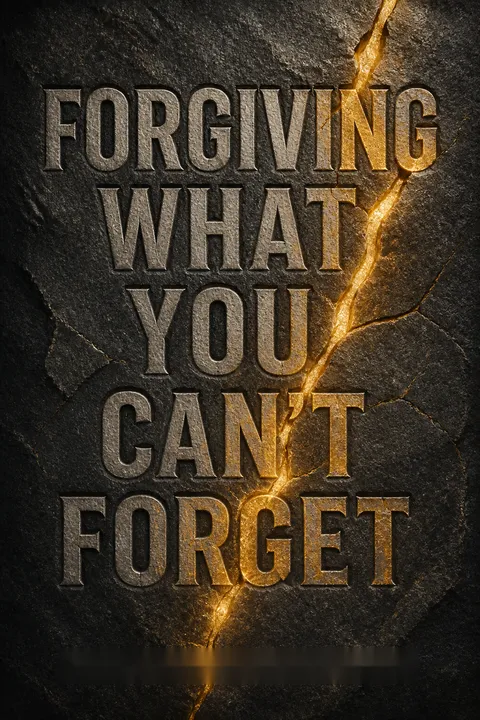
Forgiving What You Can't Forget received mostly positive reviews, with readers praising its biblical approach to forgiveness and personal growth. Many found it emotionally impactful and appreciated the author's vulnerability. Some critics felt it was more memoir than self-help, and a few found it repetitive or too focused on the author's personal experiences. The book's Christian perspective resonated with many readers, while others wished for more practical advice. Overall, reviewers found it insightful and helpful in dealing with forgiveness and healing.
People Also Read









Glossary
Collect the dots, connect the dots, and correct the dots
Trace and revise old beliefsA three-part reflection process for understanding how earlier experiences shape current reactions. First, record memories and events. Next, identify the beliefs formed from them about oneself, other people, God, and relationships. Finally, examine whether those beliefs remain accurate or helpful, and revise interpretations that keep old pain controlling present choices.
decision and process
Two stages of forgivenessThe book’s distinction between deciding to forgive the facts of an injury and continuing to work through its effects. The decision can be made at a particular moment, while fear, grief, damaged trust, and emotional triggers may need ongoing attention. Renewed distress does not automatically mean the original decision was insincere.
marked moment of forgiveness
A specific act of releaseA deliberate point at which someone names a particular injury and states a willingness to forgive it. In the author’s counseling exercise, she wrote separate injuries on cards and covered them with red felt as a Christian symbol. The act makes the decision tangible, while leaving room for continued emotional healing.
Resurrected Hope
Hope beyond devastationThe author’s faith-centered name for a source of hope beyond the dividing line of crisis and its aftermath. It refers to the possibility of new life and forward movement grounded in the Christian belief in Jesus’ resurrection. It does not mean painful events are erased or that a particular outcome is guaranteed.
FAQ
What's "Forgiving What You Can't Forget" about?
- Focus on Forgiveness: The book by Lysa TerKeurst explores the complex journey of forgiveness, especially when dealing with deep, painful memories.
- Personal and Theological Insights: It combines personal experiences with theological and therapeutic research to provide a comprehensive guide on how to forgive.
- Healing and Moving On: The book aims to help readers make peace with their past and create a beautiful life again, despite the pain they have endured.
Why should I read "Forgiving What You Can't Forget"?
- Practical Guidance: It offers practical steps and insights for those struggling with forgiveness, making it a valuable resource for personal growth.
- Emotional Freedom: The book provides tools to achieve emotional freedom and healing, which can lead to a more fulfilling life.
- Spiritual Perspective: It integrates biblical teachings, offering a spiritual perspective on forgiveness that can deepen one's faith.
What are the key takeaways of "Forgiving What You Can't Forget"?
- Forgiveness is a Process: Forgiveness is both a decision and a process, requiring ongoing effort and commitment.
- Separate Healing from Others' Actions: Your healing should not depend on others' repentance or actions; it is a personal journey.
- Boundaries and Compassion: Establishing boundaries is crucial, but so is maintaining compassion for those who have hurt you.
How does Lysa TerKeurst define forgiveness in the book?
- Not Just a Feeling: Forgiveness is not about feeling forgiving; it's a decision to release the burden of resentment.
- Cooperation with God's Work: It involves cooperating with what Jesus has already done, allowing His grace to flow through you.
- Freedom from the Past: Forgiveness is about freeing yourself from the control of past hurts and moving forward.
What are the best quotes from "Forgiving What You Can't Forget" and what do they mean?
- "Forgiveness is a complicated grace...": This quote highlights the dual nature of forgiveness as both challenging and liberating.
- "Forgiveness isn’t an act of my determination...": It emphasizes that forgiveness is made possible through cooperation with divine grace.
- "The beauty of forgiving...": This phrase captures the transformative power of forgiveness in creating a life filled with peace and beauty.
How does Lysa TerKeurst suggest dealing with bitterness?
- Acknowledge Bitterness: Recognize bitterness as a sign of unresolved hurt and a barrier to healing.
- Revisit Grief: Allow yourself to grieve losses, as this can soften bitterness and open the heart to healing.
- Replace with Perspective: Use perspective to transform bitterness into fertile ground for new growth and understanding.
What role does setting boundaries play in forgiveness according to the book?
- Protect Yourself: Boundaries help protect you from further harm while you work on forgiveness.
- Not About Exclusion: They are not meant to shut people out but to maintain your emotional and physical well-being.
- Facilitate Forgiveness: By establishing boundaries, you create a safe space to process your feelings and move towards forgiveness.
How does "Forgiving What You Can't Forget" address the concept of forgiving God?
- Misplaced Blame: The book discusses how we might wrongly blame God for our pain when people are the true cause.
- Trust Over Understanding: It encourages trusting God's bigger plan, even when we don't understand His actions.
- God's Faithfulness: Reminds readers that God's faithfulness is not dependent on our circumstances aligning with our desires.
What is the significance of the "gray table" in the book?
- Symbol of Community: The gray table represents a place of gathering, sharing, and processing pain with others.
- Safe Space: It is a metaphor for a safe space where one can be vulnerable and honest about their struggles.
- Collective Healing: The table signifies the power of community and collective healing in the journey of forgiveness.
How does Lysa TerKeurst suggest handling relationships that can't be reconciled?
- Forgiveness Without Reconciliation: Forgiveness does not always lead to reconciliation, especially if the relationship is unsafe.
- Focus on Peace: Aim to live at peace with everyone, as far as it depends on you, even if reconciliation isn't possible.
- Boundaries and Distance: Maintain appropriate boundaries and distance to protect yourself while still practicing forgiveness.
What does the book say about the connection between forgiveness and emotional freedom?
- Release from Burden: Forgiveness releases the emotional burden of resentment and anger, leading to freedom.
- Healing Process: It is a crucial step in the healing process, allowing you to move forward without being held back by past hurts.
- Empowerment: Forgiving empowers you to take control of your emotional well-being and live a more fulfilling life.
How does "Forgiving What You Can't Forget" integrate biblical teachings on forgiveness?
- Scriptural Foundation: The book uses biblical teachings as a foundation for understanding and practicing forgiveness.
- Jesus' Example: It highlights Jesus' example of forgiveness as a model for how we should forgive others.
- Daily Practice: Encourages making forgiveness a daily practice, as emphasized in the Lord's Prayer, to maintain spiritual and emotional health.
About the Author
Other books by Lysa TerKeurst





Download PDF
Download EPUB
.epub digital book format is ideal for reading ebooks on phones, tablets, and e-readers.








