

Key Takeaways
Intelligence helped end the Troubles, but left a bill of blood and secrecy.
A conflict transformed. When British troops arrived in Derry in 1969, many Catholics welcomed them as protection from a discriminatory police force. After Bloody Sunday in 1972, when soldiers killed fourteen unarmed protesters, that trust collapsed. The conflict would kill 3,720 people and injure more than 47,000.
The book traces how intelligence work later helped contain IRA operations and move its leaders toward politics. Its human cost emerges through Frank Hegarty, recruited as a British agent, and Freddie Scappaticci, an agent embedded in the IRA's unit for interrogating suspected informers. Their stories expose both intelligence's strategic power and the violence hidden behind it.
The account challenges the comforting idea that security and justice naturally reinforce each other. Intelligence can prevent attacks, but secrecy also shields the decisions that put sources and civilians at risk. In counterinsurgency, public trust is not decoration: it affects whether communities share information, accept authority, or support armed groups. The 1969 welcome and its collapse show how quickly legitimacy can be lost. Yet effectiveness cannot be the only measure of success. A state that reduces violence while leaving families without answers has achieved a result, but not a complete resolution.
Trust recruits agents more effectively than threats do.
Rapport opened doors. The army's first approach to Frank Hegarty failed. For a second attempt, the Force Research Unit chose a handler who shared his interest in dogs, learned about his family, and arranged to meet him while both were walking their dogs. Frank entered the van because the man seemed to understand him, not because he was formally compelled.
Freddie Scappaticci's recruitment also grew from personal vulnerability. After a tax fraud arrest, he agreed to give police information about other builders. A soldier named Peter then built a friendship with him, paying attention to Scappaticci's anger at the IRA and his appetite for intrigue. That relationship eventually drew him into British intelligence work inside the IRA.
Personal rapport is a practical intelligence tool, but it complicates the meaning of consent. Frank and Scappaticci made choices, yet their decisions unfolded amid fear, financial pressure, grievance, and danger. This resembles a broader problem in social psychology: people are more persuadable when a trusted relationship makes a request feel like loyalty rather than a transaction. That can produce unusually candid cooperation. It can also make refusal feel costly, even without an explicit threat. The story therefore makes trust look powerful, but never morally neutral.
Political participation can open peace while carrying coercion into democracy.
Ballots joined bullets. In the late 1970s, Martin McGuinness and Gerry Adams developed a strategy for a prolonged struggle, with a stronger political wing alongside the IRA's armed campaign. Sinn Féin began contesting elections after the 1981 hunger strikes raised its profile. The goal was not an immediate end to violence, but a route into political power.
British intelligence did more than observe this turn. Agent Willie Carlin reported plans for extensive voter personation in the 1982 election. According to his account, his MI5 handler urged him to help ensure McGuinness was elected, despite the fraud. The election gave Sinn Féin a foothold, but the episode shows that state support for political change could involve undermining the democratic process it was meant to encourage.
This is a difficult distinction between supporting an outcome and respecting the process that gives it legitimacy. Political inclusion can offer an armed movement incentives to negotiate, but manipulating votes risks weakening the credibility of that very route. The episode also complicates simple stories of democratic transition: institutions may be shaped by clandestine actors as well as voters and public debate. Such intervention might seem defensible when the alternative is continued violence. Still, a peace strategy that treats electoral rules as expendable creates a precedent that can outlive its original purpose.
Keep a backchannel open when public politics makes contact impossible.
Private contact mattered. British intelligence officer Michael Oatley and Derry businessman Brendan Duddy built a discreet channel to the IRA. Duddy could speak with both sides, and Oatley used him to pass messages rather than simply recruit him as a conventional agent. Their 1975 peace talks failed, but the relationship endured.
During the 1981 hunger strikes, the channel helped carry proposals between the government and IRA representatives, although all ten hunger strikers died. In 1990, Oatley met McGuinness through Duddy and urged him to pursue peace. That contact helped launch Operation Chiffon, a secret initiative to create talks. In public, the government denied engagement; privately, intermediaries kept communication alive until an IRA ceasefire in 1994.
Backchannels are valuable when public negotiation would expose participants to political punishment or physical danger. They let adversaries test proposals without immediately committing their reputations, a function familiar in diplomacy and conflict mediation. Duddy's credibility came from relationships across the divide, not formal authority. But secrecy carries a democratic cost: citizens cannot easily judge what was offered, who was represented, or what compromises were made. A backchannel can create room for peace, but it needs eventual public accountability if the resulting settlement is to command lasting trust.
Treat intelligence as a life-and-death trade, not a free advantage.
Every source creates a dilemma. A spymaster's dilemma is the choice between acting on intelligence to prevent immediate harm and withholding action to protect a source who may provide greater value later. Frank reported where he had hidden weapons in Derry City Cemetery. His handlers considered removing them, but instead tested them and returned them, hoping the information might reveal future IRA activity.
One rifle was used to kill British soldier Neil Clarke during an attack days later. The handlers' choice did not make them the killers, but it shows how intelligence strategy can expose people to foreseeable danger. They were weighing a possible future gain against an immediate risk, without any guarantee that the balance would work in their favour.
This dilemma resembles moral problems in medicine and public policy, where a decision made to reduce aggregate harm can impose severe costs on identifiable people. The temptation is to count future lives saved while treating present victims as unfortunate inputs. That calculation may sometimes be necessary, but estimates of future benefit are uncertain and often controlled by the institution that benefits from waiting. The book's example makes one safeguard especially important: decisions to preserve a source should be documented, reviewed, and revisited as circumstances change, rather than defended indefinitely as strategic necessity.
Never confuse an adversary's promise of safety with protection.
Home became dangerous. After Irish police seized a large weapons cache that Frank had helped arrange, British handlers moved him to England. He missed his children, partner, mother, and home in Derry. McGuinness repeatedly told Frank and his family that he could return safely. Frank eventually came back, hoping to resume his life and settle matters with the IRA.
In May 1986, Frank was taken to meet senior IRA figures. His body was found the next day near the border, with masking tape over his eyes. Police found four bullets at the scene. Later accounts and investigative evidence pointed to McGuinness as the person who approved the killing, although the precise roles of those involved remain uncertain. The promise of safety had helped draw Frank back into reach.
This story shows how protection depends on power, not reassurance. McGuinness had authority within the IRA, while Frank had little ability to verify that a promise would be honoured or enforce it if broken. The broader lesson applies wherever someone must rely on an interested party for safety: guarantees matter only when backed by independent monitoring, credible consequences, and a route to escape. At the same time, the uncertainties around the murder's participants matter. A careful account can identify a strong body of evidence without converting disputed conclusions into settled fact.
Unregulated agents turn national security into cover for criminal impunity.
Rules lagged behind operations. British handlers in Northern Ireland lacked clear, adequate guidance on what agents could do, what crimes must be reported, or how to respond if an agent became involved in violence. Existing material was outdated and poorly suited to the conflict. Some handlers relied on personal judgment; others were left unsure where their legal responsibilities began.
The government later debated legislation allowing intelligence agencies and police to authorize covert sources to take part in criminal conduct. The bill set no absolute list of forbidden crimes, including murder, and did not apply retrospectively to the Troubles. Its supporters argued that hard limits could expose agents; critics feared that broad authority would excuse serious wrongdoing. The dispute revealed how easily secrecy can substitute for rules unless oversight is built in.
Operational secrecy can be necessary, but it does not erase the difference between permission and accountability. Without clear limits, handlers face incentives to protect an asset, agencies protect their reputations, and victims may have no practical way to challenge either. This is a classic principal-agent problem: the public delegates dangerous work to institutions it cannot continuously observe. Strong oversight need not reveal sources or tactics to everyone. It can require independent authorization, recorded reasoning, and later review. The harder the work is to scrutinize in real time, the more important those safeguards become.
Peace agreements can silence victims when neither side accepts defeat.
Peace left history unsettled. The 1998 Good Friday Agreement created shared political institutions, recognized the right of people in Northern Ireland to identify as British, Irish, or both, and supported the release of paramilitary prisoners. It said little about how to investigate the conflict's many killings. Because neither side accepted a simple defeat, the political priority became maintaining peace rather than conducting a comprehensive reckoning.
That choice did not make the past disappear. Frank's son Ryan was taunted as a child because his father was labelled an informer, and he struggled to find answers about the killing. Families such as his faced both grief and stigma. The book shows the gap between a settlement that stops violence and a settlement that gives victims a way to understand what happened.
Transitional justice often has to balance prosecution, truth-telling, reconciliation, and the risk of renewed conflict. Those aims can support one another, but they can also collide. An agreement that prioritizes stability may be politically achievable while leaving families to carry the unresolved costs privately. Conversely, prosecutions decades later may be difficult, selective, or destabilizing. The useful question is not whether peace or justice matters more in the abstract, but who bears the price when one is prioritized. The Hegarty family's experience makes that distribution of costs impossible to treat as theoretical.
When trials fail, give families documented truth instead of managed silence.
An investigation can still matter. Operation Kenova began in 2016 to investigate alleged crimes linked to Stakeknife, the media name for the British agent identified as Freddie Scappaticci. Its team gathered thousands of records, interviewed families, and submitted case files recommending charges against Scappaticci and others. The investigation cost more than £31 million and involved over seventy detectives.
Scappaticci died in April 2023 before a prosecution could resolve the allegations against him. His death closed the possibility of trying him, but not the families' need to know what happened. Jon Boutcher told some relatives information privately when they were near death. The book ends with an unresolved distinction: criminal justice may be lost, while careful disclosure can still give families a more truthful account.
Truth is not a substitute for a fair trial: it cannot test evidence in court, impose a sentence, or fully answer public questions about responsibility. Yet a transparent, evidence-based account can correct decades of rumor and acknowledge families whom institutions ignored. The strongest historical investigations distinguish established facts, allegations, and inference, especially when key witnesses are dead. That discipline makes findings more credible, not less forceful. The final measure is also relational: whether families are treated as partners entitled to information, rather than as obstacles to secrecy or public relations.
Analysis
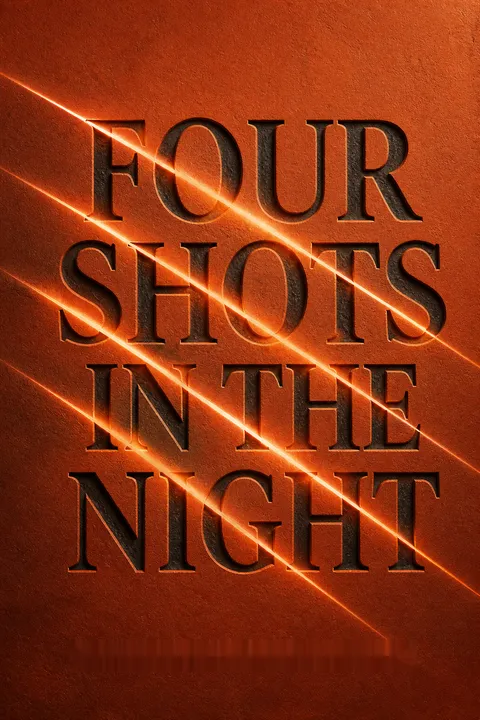
Four Shots in the Night is a history of the Troubles told through espionage, but its central subject is the price of using secrecy to manage political violence. Frank Hegarty's story supplies the human scale: a dog owner and father becomes an agent, enters the IRA, helps handle weapons, is exiled, returns on assurances of safety, and is murdered. Around him, the book builds a larger account of the British intelligence operation, the IRA's internal security apparatus, and the political turn that helped make a settlement possible.
The book's strongest argument is not that intelligence alone ended the conflict. It shows how intelligence could disrupt attacks, reveal the movement's direction, and give British officials a way to communicate with leaders who were publicly treated as unreachable. But the same methods created moral hazards. Agencies protected sources, tolerated legal ambiguity, and sometimes allowed known risks to continue. Political usefulness could shield individuals from prosecution, while victims' families were left with rumor and stigma.
That structure resists a clean victory narrative. Sinn Féin's electoral rise and the Good Friday Agreement helped end large-scale violence, but did not settle who deserved punishment or how much truth could be made public. Operation Kenova embodies the tension: a vast investigation assembled evidence, yet the death of its central suspect removed the possibility of a trial. The book therefore distinguishes peace from justice and information from accountability.
Its narrative method is also a strength and a risk. Vivid scenes bring archival history to life, while the author repeatedly signals uncertainty about private conversations and disputed actions. Readers should retain that distinction. The case against particular actors is not always a court-tested finding. Still, the record assembled here makes a persuasive broader point: when governments authorize covert work without clear limits, they may gain tactical advantage while creating harms that outlast the conflict. A durable peace needs more than silence. It needs institutions capable of explaining what they did, and families able to hear what happened to their dead.
Review Summary
Four Shots in the Night explores the complex world of British intelligence operations during the Troubles in Northern Ireland, focusing on the story of Frank Hegarty, an IRA informant killed in 1986. Readers praise Hemming's thorough research, engaging writing style, and ability to navigate ethical dilemmas. Many compare it favorably to other books on the Troubles, particularly "Say Nothing" by Patrick Radden Keefe. While some criticize potential bias or speculative elements, most reviewers find it an insightful and thought-provoking examination of a pivotal period in Irish history.
People Also Read
Glossary
Force Research Unit
Army agent-running unitA secret British Army unit established to recruit and run agents in Northern Ireland. Initially known as the Forward Research Offices, it became the Force Research Unit, or FRU. Its agents supplied tactical information about planned attacks and strategic knowledge about IRA activity. The unit's role in managing sources, including Freddie Scappaticci, later became central to questions about criminal conduct and state responsibility.
Nutting Squad
IRA internal spy huntersA name used for the IRA's Internal Security Unit, which vetted recruits, investigated suspected informers, and interrogated people believed to be passing information to the security forces. Confessed informers could be sentenced to death by the IRA leadership. The unit became feared for abductions, coercive interrogations, and killings. Freddie Scappaticci was alleged to have served as its deputy while secretly working for British intelligence.
Stakeknife
Alleged IRA insider agentThe media name for a high-value British agent who operated inside the IRA, particularly within its internal security structure. The book identifies the agent as Freddie Scappaticci, who denied being Stakeknife. His access produced valuable intelligence, but allegations that he was involved in kidnappings, torture, and murders raised questions about what British handlers knew, permitted, or failed to prevent.
Operation Kenova
Stakeknife criminal investigationAn independent police investigation launched in 2016 into alleged crimes linked to Stakeknife and others involved in the IRA's internal security operations. Led by Jon Boutcher, it examined thousands of sensitive records, interviewed families, and submitted case files recommending prosecutions. Scappaticci died in 2023 before a trial could test the allegations against him.
Operation Chiffon
Secret peace initiativeA covert British initiative developed to create contact with the IRA and support movement toward a ceasefire. It relied on a private channel linking SIS officer Michael Oatley, intermediary Brendan Duddy, and IRA leaders including Martin McGuinness. Publicly, the government denied negotiating with the IRA. Privately, the channel helped sustain communication that contributed to the peace process.
Long War
Prolonged IRA strategyA strategy developed by Martin McGuinness, Gerry Adams, and other IRA leaders after concluding that a quick military victory over Britain was unrealistic. It aimed to make the IRA smaller and more disciplined, sustain its armed campaign over many years, and strengthen Sinn Féin's political work. The strategy eventually connected electoral politics with continued paramilitary activity.
inside agent
Spy embedded in an adversaryAn agent who remains inside an organization while secretly providing information to an opposing service. Unlike a source on the margins, an inside agent can observe leadership, internal deliberations, and planned operations. The position offers unusually valuable intelligence, but carries extreme risk because discovery may bring imprisonment, torture, or death.
spymaster's dilemma
Protecting sources versus actingThe recurring decision about whether to act on intelligence to prevent an immediate threat or hold back to protect a source who may provide valuable information in the future. In the book, British handlers confront this choice over IRA weapons that could be seized to prevent attacks but might expose an agent or reduce future intelligence access.
Download PDF
Download EPUB
.epub digital book format is ideal for reading ebooks on phones, tablets, and e-readers.








